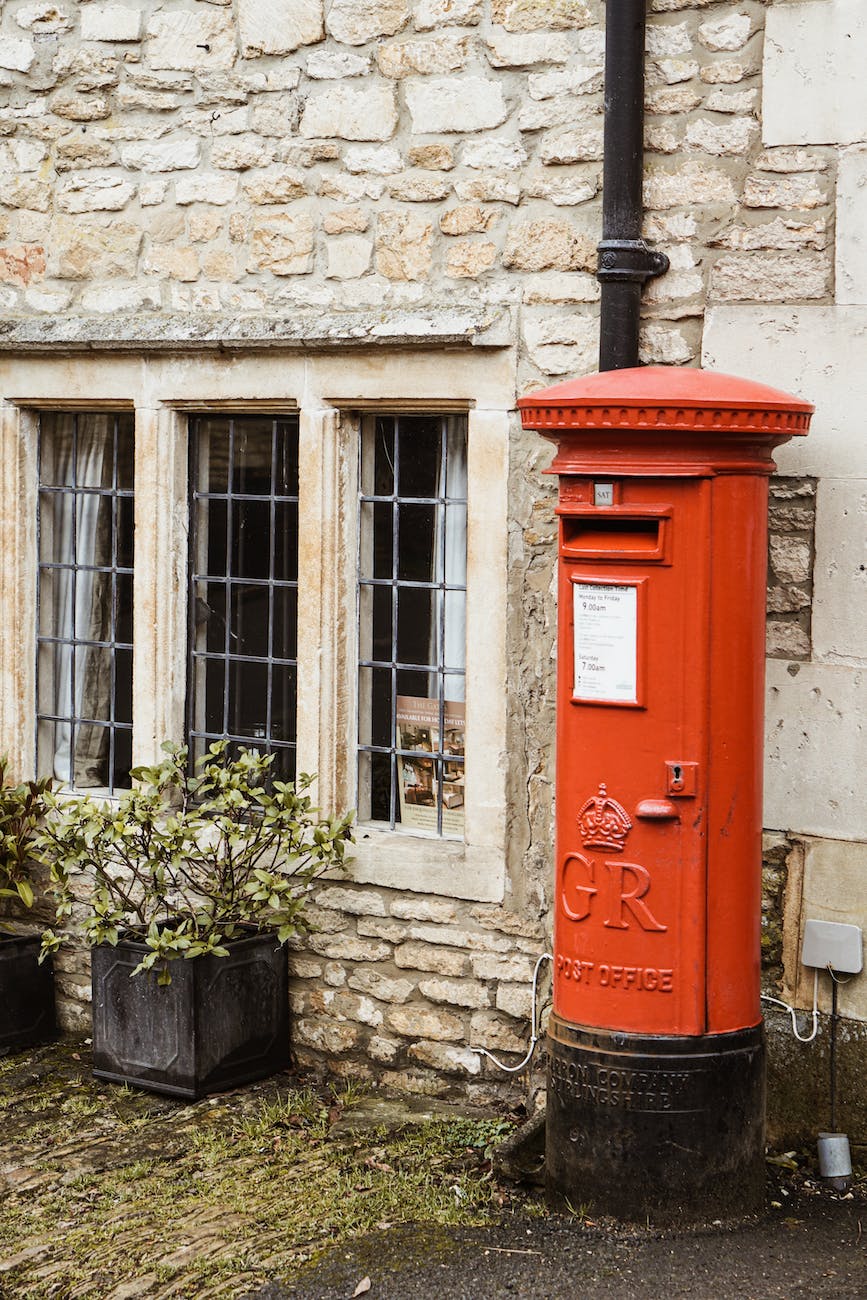
Crown

It’s a difficult time to be a British republican. A couple of reactions to mention of an alternative to having a monarchy is – don’t be a spoil sport or the alternative would be worse.

The national celebrations coming up are not the problem in my mind. Nothing at all wrong with having a big nationwide event in May. Especially given the grim time the hospitality industry has just been through and the natural inclination to celebrate springtime.

Sadly, I have to say that the British republican movement, such as it is, is throwing away the opportunity to pose the questions on the good and bad of having a prominent monarchy in a modern country. “Not My King” is a ridiculous campaign slogan[1]. I believe we’d be better off as a republic but that belief lives with the pragmatic acceptance that there will be a King and he will be the Head of State. Pretending that is not so doesn’t help win the case for change.

Generally, I think there’s an ambivalence[2] about the whole subject amongst the British public. That is however much the BBC talks-up the whole coronation. Nobody much is complaining about having an extra Bank Holiday. Nevertheless, a widely held view is that Charles III will be on probation as a King. If the British monarchy continues to be embroiled in controversy and exist primarily as source of a tabloid headlines, then it will continue to decline as a symbol of the national and last no longer than a decade. The feeling that a monarchy interested in survival should have skipped a generation is a strong one. Their past survival has been mostly because of relative modernisation and not wallowing in ancient rituals.

According to polls, public support for the monarchy is age dependent. This maybe because of the claimed propensity for people to become more conservative, with a small “c”, with age. On the other hand, this is a new age. We have never had the global information revolution that is shaking the foundations of society in the way it is now.

I’m a supporter of British republicanism because we are citizens and not subjects. Although, I do recognise that the different status of people can be of dreadful intricacy given our history.

In Britain, some aspects of our unwritten constitution are “too easy” to change because of a passive Head of State. Conversely, some aspects of our unwritten constitution are “too hard” to change because of being constrained by custom, tradition, and the power of veto by those with inherited influence.

Ironically, post-Brexit, British republicanism is more allied to maintaining sovereignty than our crumbling[3] existing system of governance. That is as much about the sovereignty of the individual citizen as it is of our society or the State. Republicanism has always been about liberty. A few passages from Tom Paine (1737–1809) are enough evidence in that respect.

Good luck to His Majesty King Charles III. He’ll need it.

POST: Not me or, no relation in so far as I know: John Vincent (historian) is a British historian and professor emeritus of modern history at the University of Bristol. He is known for his works on political history, especially the 19th and 20th centuries, and for his controversial views on democracy and monarchy.


[1] https://www.theguardian.com/uk-news/2022/oct/27/notmyking-billboard-campaign-launched-by-anti-monarchy-activists

[2] https://natcen.ac.uk/news/british-social-attitudes-monarchy

[3] The last six years have illustrated the weakness of the current settlement.  

Head in Sand

Well, it’s happened. A debate. Are we any wiser? Well, not much. So many good points are raised but so many good points are dismissed by current Government Ministers. So deep are they in a mess of their own making.

On Monday, 24 April at 16:30, a UK Parliamentary debate[1] took place on the impact of the UK’s exit from the European Union (EU). This was consideration of e-petition[2] 628-226 relating to the impact of the UK’s exit from the EU. On the day of this debate this petition had attracted over 178 000 signatures. Petition debates are “general” debates which allow UK Members of Parliament (MPs) from all political parties to discuss important issues raised by the public.

The petition reasons that the benefits that were promised, if the UK exited the EU have not been delivered. Not at all. Although this fact might be self-evident it never-the-less warranted a timely debate. Public support for Brexit is falling as every day that goes by.

The petitioners called upon the UK Government to hold a public inquiry to assess the impact that Brexit has had on this country and its people. Given that other less impactful events have been subject to a public inquiry it seems only right that Brexit be investigated.

The call for an independent public inquiry, free from ideology and the opinions of vested interests is only fair, right, and proper in an accountable democratic 21st Century country. Transparency is a mark of good governance.

Today’s, Brexit is damaging the UK’s economy, opportunities for young people and rights of individuals. It’s well past the time that the people of the UK were told the full story. There needs to be a way out of this mess.

In the debate the point was made that the two biggest Westminster political parties continue to be committed to Brexit despite the harm that it’s doing to the UK. A long list of disbenefits were rattled off as speakers paced through the evidence. A long list that is growing.

The Government’s current approach is to ask UK Parliamentarians to stop talking about Brexit. It’s the ultimate ostrich with its head in the sand[3]. Brexit is a gigantic strategic mistake. Unfortunately, there remains a significant number of English politicians so entrenched in the mythology of Brexit that change is slow in coming. The public are way ahead of the politicians.

Stereotyping people as being in one camp or another, with the aim of continuing to divide the public is the unscrupulous tool of those people without a rational or coherent argument to make. It’s clear, progress will not be made until Ministers recognise that Brexit was a mistake. We may have to wait until after the next UK General Election before a real change is possible. Let’s hope that day comes soon.

POST 1: UK Press reports on the debate MPs debate consequences of Brexit for first time | The Independent MPs debate Brexit impact ‘for the first time since leaving the EU’ | The National Brexit: MPs call for public inquiry into impact of leaving EU – BBC News

POST 2: Brexit is a drag on the UK Sunak Grins And Bears It As Boss Hits Out At Brexit’s ‘Drag On Growth’ | HuffPost UK Politics (huffingtonpost.co.uk)


[1] https://youtu.be/iHzf1BQFXq8

[2] https://petition.parliament.uk/

[3] It’s a myth ostriches bury their head in the sand. Though this isn’t true, Ostrich Syndrome is a popular belief. It’s avoidance coping that people use to manage uncomfortable feelings or rather, not deal with them.

Cider pigs

Out the back of the farmhouse was a scruffy orchard. It was through the east facing garden, then over an awkward cobbled together fence. The orchard was an L-shape with a soggy wet depression in the middle. The trees at the top end of the orchard had long since gone by the time of my childhood. The lower part of the orchard was populated with the most venerable but neglected cider apple trees. Never pruned with that crusty, mossy look of years of struggle against the elements.

There was no money in growing cider apples in the 1960s and besides the ones that still stood were probably originally grown for homemade home consumed cider. The orchard was a piggery.  Several well-made timber pig huts stood in the field. Except for one. In a corner there was strange construction made of used railway sleepers, arranged vertically, and covered with a round tin roof. It was the only hut that was not moveable. A rough concrete floor kept the railway sleepers in place.

Now, that was a good set-up. There’s a thing that most pigs like and it’s ripe cider apples. Trouble is that they don’t know when to stop. So, when they fell, we had to find something to do with them by the bucket load. For us boys, that wasn’t a problem. Cider apple[1] wars were a feature of the autumn.

If I’d taken a shine to farming in those early years, it would have been keeping pigs. That orchard was always as carved up as a fresh battle ground. Nothing more satisfying to a happy pig than rooting through the dirt. In good weather making our way across the ground was easy. In bad weather getting stuck in the sticky clay mud was guaranteed. The thick mud was ideal in the summer. Wallows would form so the pigs could do what they do best when it gets hot.

All that said, I can’t imagine domesticated pigs in any other setting than outdoors. As I drive around, it makes me pleased to see so many examples of outdoor reared animals. Pigs are inquisitive and intelligent animals that deserve the freedom to roam around in an open space.

At one time or another, I kept a British Saddleback[2], a Landrace[3], and a Large White[4] pig.  The Large White pigs could be a handful if the pig took a disliking to you. Saddlebacks were the best when it came to temperament. Agreeable, content, and excellent mothers.

My brothers and I were being tutored in animal husbandry from a young age. The principle aim was not to pamper a pet but to look after the pigs with the aim of having as big a litter of piglets as possible. That’s where profit lay. We kept records of the cost of the pig food, bedding needs and everything that went into our mini farming enterprises.

Encouraged by my parents, my brother and I were often in competition.  I remember once sitting up late into the evening with a sow and being so proud of having helped 14 piglets into the world alive. This could be a hazardous business in a confined space of a small pig hut. The job was making sure the piglets found their way to their mother’s teat and didn’t get squashed on the way. If they let out a loud squeal the sow could move and could unwittingly squash one of the litter.

In my mind, Somerset cider is tied with pigs. The two go hand in hand.


[1] https://ciderappletrees.co.uk/

[2] https://www.britishpigs.org.uk/british-saddleback

[3] https://www.britishpigs.org.uk/british-landrace

[4] https://www.britishpigs.org.uk/large-white

Minister walks

In the news this week is a British politician who has served as Deputy Prime Minister in the UK, resigning because of a report into his conduct[1]. The Prime Minister (PM) has been accused of dither and delay in addressing the outcome of an investigation into bullying that has now been published.

Certain Government Ministers are entitled to be addressed as “Right Honourable” in the UK Parliament. What’s clear in this case is that the conduct described in the report is neither right nor honourable. The findings of the investigation report were set before the PM for his judgement[2]

A senior lawyer had been asked to investigate whether the Conservative politician Dominic Raab had bullied civil servants during his time as both Foreign Secretary from 2019 to 2021, and then Justice Secretary from 2021 to 2022.

Raab has been Member of Parliament (MP) for Esher and Walton in Surrey Country since 2010. He has been a prominent supporter of Britain’s exit from the European Union (Brexit) and known for his forthright style in asserting the virtues of that ill-planned project.

Unsurprisingly, his resignation has stirred up a host of conspiracy theories and finger pointing.

I’m left wondering what it would have been like to have been a civil servant working in the indescribably complicated environment where Brexit is treated as a religion. It must have been a high-pressure situation offering practical and pragmatic options to a Government Minister so wedded to one singular belief, especially under Boris Johnson’s failed premiership.

Bullying behaviour is a serious matter. Whereas some Press commentators are trying to blame the accusers who stepped forward, the evidence shows that it’s not the former Minister who is the victim here. I think it’s disingenuous to paint Dominic Raab as a victim.

Yet again the Conservative Party is in turmoil. It seems to be a perpetual state of play. When Government priorities should be focused on the cost-of-living crisis, instead they are engulfed on their own unending bad behaviour.


[1] https://www.bbc.co.uk/news/uk-politics-65333983

[2] https://www.gov.uk/government/publications/letter-from-the-prime-minister-to-the-rt-hon-dominic-raab-mp

Coffee

Earwigging. Don’t be too proud. Everyone does it. Mostly by accident. Sit down in a coffee shop. A conversation wafts in your direction. It’s not as if we can close our ears and switch off the sound. A group chats about day-to-day trivia without any care for whose listening. Students in this town broadcast their thoughts about exams and summer jobs as loudly as a foghorn echo across the sea.

Conversations overheard can invite a stranger to join in. The British preoccupation with the weather is an excellent ice breaker. Not so much – turned out nice again[1] as when will it ever stop raining?

What’s the point of this scribbling? There I was sitting quietly minding my own business in the corner of a local coffee shop. Three friends turned up and sit next to me. Not that I knew them, but they were very amicable folk. There was plenty of space, but I must have been sitting in their favourite spot. It was light and had a good view of the comings and goings in the place. There was no doubt that all three friends were more than a decade older than me. That’s puts them somewhere in their mid to late 70s.

I wasn’t secretly listening. I didn’t have much choice but to overhear their pleasantries and general chit-chat. The flow of the conversation got me thinking. It wasn’t as if great pearls of wisdom where being exchanged between the three. It was more the context and points of reference that struck me.

Two had done national service[2]. That ended in 1963. There was mention of shooting and being shot at somewhere in the Arab world and a spell of time in Cyprus. Then followed reflections on waitress service in coffee shops and the famous people they had once met. Interspersed with medical complaints and both the good and bad of doctors encountered over the years.

What a huge gulf there is between the experiences of those whose youth was in the 1950s and 60s in contrast with people, like me, whose youth straddled the 1960s and 70s. The massive changes this country underwent in just over a decade are underestimated. I suppose it’s true to say that about any decade. What’s perhaps most striking is this country’s experience as it transformed over those years. Britain’s empire faded into the pages of history. Technology raced ahead relentlessly. Personal freedom grew but so did a sense of insecurity. Popular culture has exploded.

As the cycle of life turns, so each generation reflects on where they have been, what they have seen and how it has affected them along the way. There are more than a few of theories as to how this changes our society. Some say – not at all. Others say – profoundly. For me, I think the next decade will see a major political shift. What’s intriguing is the question – will the lessons we have learned amount to anything or not?


[1] http://www.screenonline.org.uk/film/id/1019246/index.html

[2] https://www.nam.ac.uk/explore/what-was-national-service

Pointless Brexit

Democracy’s malleable frame. I don’t recall the people of the UK being given a referendum on joining a trade block in the Pacific. Nice thou it is to have good relations with trading nations across the globe it seems strange that the other side of the world is seen as good and next door is seen as bad. It’s like a person looking through a telescope through the wrong end.

Back on 23rd June 2016, voters in the UK were asked if Britain should leave the EU. No one really knew what “leave” meant as all sorts of, what now turns out to be blatant lies were told to the public. The words “customs union” were not spoken in 2016. If they were it was in a tone of – don’t worry about all that, we hold all the cards, nothing will change.

Today, UK sectors from fishing to aviation, farming to science report being bogged down in ever more red tape, struggling to recruit staff, and racking up losses. Sure, Brexit is not the only trouble in the world, but it was avoidable unlike the pandemic and Putin’s war.

We (UK) became a country that imposed sanctions on itself. A unique situation in Europe. If some people are surprised, we have significant problems the really ought to examine what happened in 2016. It’s a textbook example of how not to do thing. The events will probably be taught in schools and universities for generations to come as a case of national self-harm.

Democracy is invaluable but when a government dilutes a massive question into a simple YES or NO, they dilute democracy too. It’s the territory that demigods thrive in. Mainly because this approach encourages the polarisation that then drives ever more outlandish claims about opponents. The truth gets buried under a hail of campaign propaganda, prejudice, and misinformation.

What Brexit has stimulated. A growth sector, I might say. Is the blame game. Now, when things go wrong, UK politicians can always blame those across the other side of the Channel. Standing on the cliffs in Dover its easy to survey the mess and point a finger out to sea.

If some people’s motivation for voting for Brexit was to control borders and stopping immigration the failures are so obvious that they hardly need to be pointed out. Yet, politicians persist with they myth that a solution is just around the corner if only UK laws were made ever more draconian. A heavier hand, criminalisation and the blame game are not solutions. These acts will merely continue the round of calamities and failures.

Brexit has unlocked a grand scale of idiocy. The solution is to consign this dogma to the past.

Pause

An open letter has been published[1]. Not for the first time. It asks those working on Artificial Intelligence (AI) to take a deep breath and pause their work. It’s signed by AI experts and interested parties, like Elon Musk. This is a reaction to the competitive race to launch ever more powerful AI[2]. For all technology launches, it’s taking fewer and fewer years to get to a billion users. If the subject was genetic manipulation the case for a cautious step-by-step approach would be easily understood. However, the digital world, and its impact on our society’s organisation isn’t viewed as important as genetics. Genetically Modified (GM) crops got people excited and anxious. An artificially modified social and political landscape doesn’t seem to concern people quite so much. It maybe, the basis for this ambivalence is a false view that we are more in control of one as opposed to the other. It’s more likely this ambivalence stems from a lack of knowledge. One response to the open letter[3] I saw was thus: A lot of fearmongering luddites here! People were making similar comments about the pocket calculator at one time! This is to totally misunderstand what is going on with the rapid advance of AI. I think, the impact on society of the proliferation of AI will be greater than that of the invention of the internet. It will change the way we work, rest and play. It will do it at remarkable speed. We face an unprecedented challenge. I’m not for one moment advocating a regulatory regime that is driven by societal puritans. The open letter is not proposing a ban. What’s needed is a regulatory regime that can moderate aggressive advances so that knowledge can be acquired about the impacts of AI. Yesterday, a government policy was launched in the UK. The problem with saying that there will be no new regulators and regulators will need to act within existing powers is obvious. It’s a diversion of resources away from exiting priorities to address challenging new priorities. That, in of itself is not an original regulatory dilemma. It could be said, that’s why we have sewage pouring into rivers up and down the UK. In an interview, Conservative Minister Paul Scully MP mentioned sandboxing as a means of complying with policy. This is to create a “safe space” to try out a new AI system before launching it on the world. It’s a method of testing and trials that is useful to gain an understanding of conventional complex systems. The reason this is not easily workable for AI is that it’s not possible to build enough confidence that AI will be safe, secure and perform its intended function without running it live. For useful AI systems, even the slightest change in the start-up conditions or training can produce drastically different outcomes. A live AI system can be like shifting sand. It will build up a structure to solve problems, and do it well, but the characteristics of its internal workings will vary significantly from one similar system to another. Thus, the AI system’s workings, as they are run through a sandbox exercise may be unlike the same system’s workings running live. Which leads to the question – what confidence can a regulator, with an approval authority, have in a sandbox version of an AI system? Pause. Count to ten and work out what impacts we must avoid. And how to do it.

Policy & AI

Today, the UK Government published an approach to Artificial Intelligence (AI)[1]. It’s in the form of a white paper. That’s a policy document creäte by the Government that sets out their proposals for future legislation.

This is a big step. Artificial Intelligence (AI) attracts both optimism and pessimism. Utopia and dystopia. There are a lot more people who sit in these opposing camps as there are who sit in the middle. It’s big. Unlike any technology that has been introduce to the whole populous.

On Friday last, I caught the film iRobot (2004)[2] showing early evening on Film 4. It’s difficult to believe this science fiction is nearly 20-years old and the short story of Isaac Asimov’s, on which it’s based is from the 1950s. AI is a fertile space for the imagination to range over a vast space.

Fictional speculation about AI has veered towards the dystopian end of the scale. Although that’s not the whole story by far. One example of good AI is the sentient android in the Star Trek universe. The android “Data” based on the USS Enterprise, strives to help humanity and be more like us. His attempt to understand human emotions are often significant plot points. He’s a useful counterpoint to evil alien intelligent machines that predictably aim to destroy us all.

Where fiction helps is to give an airing to lots of potential scenarios for the future. That’s not trivial. Policy on this rapidly advancing subject should not be narrowly based or dogmatic.

Where there isn’t a great debate is the high-level objectives that society should endeavour to achieve. We want technology to do no harm. We want technology to be trustworthy. We want technology to be understandable.

Yet, we know from experience, that meeting these objectives is much harder than asserting them. Politicians love to assert. In the practical world, it’s public regulators who will have to wrestle with the ambitions of industry, unforeseen outcomes, and negative public reactions.

Using the words “world leading” successively is no substitute for resourcing regulators to beef-up their capabilities when faced with rapid change. Vague and superficial speeches are fine in context. Afterall, there’s a job to be done maintaining public confidence in this revolutionary technology.

What’s evident is that we should not delude ourselves. This technical transformation is unlike any we have so far encountered. It’s radical nature and speed mean that even when Government and industry work together they are still going to be behind the curve.

As a fictional speculation an intelligent android who serves as a senior officer aboard a star ship is old school. Now, I wonder what we would make of an intelligent android standing for election and becoming a Member of Parliament?


[1] The UK’s AI Regulation white paper will be published on Wednesday, 29 March 2023. Organisations and individuals involved in the AI sector will be encouraged to provide feedback on the white paper through a consultation which launches today and will run until Tuesday, 21 June 2023.

[2] https://en.wikipedia.org/wiki/I,_Robot_(film)

Progress?

For 99p in a well-known charity book shop, I picked up a tidy little paperback book. It’s wonderfully illustrated, mixing humour with one or two earnest thoughts. Originally, it would have been about 3 shillings[1] (15 new pence) to buy. So, I may have paid over the odds.

Was C. Northcote Parkinson[2], right? Certainly, when I listen to the epic tale on HS2[3] it does get me wondering if Parkinson’s Law works as well in the 2020s as it did in the late 1950s. Progress is slow, as work expands. The more there is to do, the more there is to do.

The UK’s number one railway project, High Speed Two, HS2 is a massive project. It’s image of yellow jacketed workers stomping across chewed-up fields is a long way from the reality. In the back rooms and offices are thousands of planners, managers, and administrators toiling intensely. Politicians posture over reams of reports and change their minds at every juncture. There’s a hitch every week.

Given my experiences, I should be able to make some judgements about Parkinson’s Law. That is to say that: work expands so as to fill the time available for its completion. It’s generally associated with Government administration and the operation of a civil service. My observation is that large scale industry is just as guilty of this characteristic. 

It can be said that a large aircraft could not be certified until the pile of paper needed to do so weighted as much as the finished product. This tong-in-cheek saying stems from the frustration that builds-up when progress is slower than people would like it to be. What a “pile of paper” means in the digital world is more difficult to ascertain but it’s a lot of stuff. 

Whatever the merit of Parkinson’s Law, the arguments made for it have been undermined as employment practices have changed dramatically since the 1950s. Internal structures of bureaucratic and deep hierarchical organisation are no longer the fashion. The whole phenomena of Buggins’ turn[4] still exists but is in abeyance. Much of industry may have shaken it off, but the political world still clings-on and offers jobs on seniority rather than by merit. Hierarchical organisations that feed on a certainty of their continued existence remain plentiful, but they are now more subject to more disruption.

Parkinson does mock the large organisations of his time. Some of his anecdotes resonate perfectly with the world of the 2020s. These are observations of human behaviour.

One that rings a bell with me is the description of a board meeting were agenda items are methodically addressed in order. Let’s say, the subject of item 9 on an agenda is for a major investment expenditure and the next item, item 10 addresses staff car parking spaces. No prizes for guessing which one gets the most discussion time. When faced with complex financial arguments and detailed pages of figures there’s a tendance to defer to those who know about that sort of stuff. When faced with a subject that everyone understands and impacts everyone in an obvious way, the temptation to engage in discussion about the later is overwhelming.

Let’s conclude that progress that doesn’t take account of the human factor is going to hit the rails or maybe worse.


[1] https://www.royalmintmuseum.org.uk/journal/curators-corner/shilling/

[2] Parkinson’s Law or The Pursuit of Progress, John Murry Paperbacks, 1958.

[3] https://www.hs2.org.uk/

[4] https://english.stackexchange.com/questions/171256/who-was-buggins-of-buggins-turn

Radio on the hill

We take radio for granted. I’m listening to it, now. That magic of information transferred through the “ether[1]” at the speed of light and without wires. This mystery was unravelled first in the 19th century. Experimentation and mathematics provided insights into electromagnetics.

The practical applications of radio waves were soon recognised. The possibility of fast information transfer between A and B had implications for the communications and the battlefield.

It’s unfortunate to say that warfare often causes science to advance rapidly. The urgency to understand more is driven by strong needs. That phrase “needs must” comes to mind. We experienced this during the COVID pandemic. Science accelerated to meet the challenge.

It wasn’t until after he failed as an artist that Samuel Morse transformed communications by inventing the telegraph with his dots and dashes. There’s a telegraph gallery with a reproductions of Morse’s early equipment at the Locust Grove Estate[2] in Poughkeepsie. I’d recommend it.

The electromagnetic telegraph used wires to connect A and B. Clearly, that’s not useful if the aim is to connect an aircraft with the ground.

The imperative to make air-ground communication possible came from the first world war. Aviation’s role in warfare came to the fore. Not just in surveillance of the enemy but offensive actions too. Experimentation with airborne radio involved heavy batteries and early spark transmitters. Making such crude equipment usable was an immense challenge. 

Why am I writing about this subject? This week, on a whim I visited the museum at Biggen Hill. The Biggin Hill Museum[3] tells the story the pivotal role played by the fighter station in the second world war. The lesser-known story is the origins of the station.

It’s one of Britain’s oldest aerodromes and sits high up on the hills south of London. Biggin Hill is one of the highest points in that area, rising to over 210 metres (690 ft) above sea level. 

It’s transformation from agricultural fields to a research station (south camp) took place in 1916 and 1917. Its purpose was to explore the scientific and technical innovations of that time. Wireless in particular.  141 Squadron of the Royal Flying Corps (RFC) was based at Biggin Hill and equipped with Bristol Fighters.[9] RFC were the first to take use of wireless telegraphy to assist with artillery targeting.

These were the years before the Royal Air Force (RAF) was formed.

100 years later, in early 2019, the Biggin Hill Museum opened its doors to the public. It’s a small museum but well worth a visit. I found the stories of the early development of airborne radio communications fascinating. So much we take for granted had to be invented, tested, and developed from the most elemental components.

POST 1: Now, I wish I’d be able to attand this lecture – Isle of Wight Branch: The Development of Airborne Wireless for the R.F.C. (aerosociety.com)

POST 2: The bigger story marconiheritage.org/ww1-air.html


[1] https://www.britannica.com/science/ether-theoretical-substance

[2] https://www.lgny.org/home

[3] https://bigginhillmuseum.com/