F2F with a machine

Daily writing prompt
Describe one of your favorite moments.

Coming face to face with a Cyberman. It’s walking towards me. The crowd is clearing. I’m directly in its path. It’s got an evil stare. A dramatic sound fills the air. I don’t want to be converted into a mindless machine. Help!

Hang on. I’m standing on the floor of the Royal Albert Hall in London. It’s full to the brim with excited people. It’s hot. It’s August. How did this happen to me?

To make sense of this I can see an orchestra on stage pounding out a science fiction theme. Yes, I’m at the Doctor Who BBC Prom[1] a year ago. That was fun moment. Quite a few in fact.


[1] https://www.bbc.co.uk/events/e5drn3

Challenges to Liberty

We live in interesting times. Conflict and turbulence, shifting political loyalties, and rapid technology advances. What a mix.

I don’t want to say – twas ever so. That’s a resignation. To say that challenges and tragedies are of exceptional magnitude in any one era. Since forecasting is such a fragile art, better or worse maybe just around the corner.

What’s unique is our societal expectations. Whereas a serf in a feudal country had little hope of a better life. Today, our higher expectations come from generations of struggle having improved the circumstance of the individual and our communities. Improvements in standards of living, economic, social, environmental, are maintained by an adherence to the “rule of law”. However, imperfect that might be.

The basic stuff still matters. English liberties, in great part, stem from the Magna Carta of 1215[1]. It may have not been immediately successful, as Monarchs and Popes quickly tried to kill it. What’s amazing is that its core content has echoed down the centuries.

Democratic societies have taken on rights, human rights, in their simplest essence. Each of us expects a day in court. A means to defend ourselves from the exercise of arbitrary power.

Yes, for hundreds of years English Monarchs continued to assert what they claimed to be God given powers. Until that came to a head. Literally so. The English Civil War set the rights of the citizen against the arbitrary power of a King.

Where I am now there are signs of that past conflict. In fact, I can see one of from my kitchen window. Surrounded by trees, on the brow of a hill, overlooking a fast-flowing river, is the remains of a castle. Most of Donnington Castle[2] was destroyed but the gate house tower remains. The winning side, Parliament ordered its destruction.

You can understand why I get nervous when politicians assert that they are on a mission from God. Centuries of conflict have bought a citizen’s protections from arbitrary power. To see it return under the guise of personal ambition and careless action is sad.

Yes, there are lots of undemocratic places in the world where this does not apply. Even so, with all its imperfections, English liberty did spread far and wide. It made its way across the Atlantic Ocean. Constitutional practices maybe different but common law prevails.

I hope democratic societies will emerge stronger from this turbulent period. Shifting sand is everywhere. Values are being assailed. Nevertheless, there’s every good reason to believe that a strengthening of our society is possible. A progressive vision offers so much more than a backside into a dark past.


[1] https://www.magnacartatrust.org/

[2] https://www.battlefieldstrust.com/resource-centre/battleview.asp?BattleFieldId=89

Evolution Politics

Wake up John. The herald of today was there in the late 1990s. There was me fascinated by the possibilities of the INTERNET. Buzzing modem squeaking down a phone line. With such peculiarities as Y2K behind us the new century provided broadband access to everyone. Almost everyone. Eventually, being off grid became a sales tag for remote rural settings.

Meanwhile, good old-fashioned popular entertainment media was desperately trying to make itself relevant to the new era. Proliferation of reruns were not enough. Stale formats dwindled. In that maelstrom, reality television was born. Technology shaped what became possible. It was a horror to me but then again, I was just out of touch.

Big Brother is a strange beast. Watching joe average or minor celebrities make complete fools of themselves for big bucks – how could that work? It did, bigtime. Undeniably scoring with the public. It spawned lots of similar shows bombarding us with unscripted chat seen through the tight lens of an edited television show.

Not quite like throwing Christians to the lions, familiar to Romans, but a social experiment open to participants combative as much as caring behaviour. Watching relatable and unrelatable volunteers try their best to seem nice or nasty as they thought appealing.

25-years on, now British politics begins to resemble reality television. That creation provided a pathway through our screens to capture our attention. To make names out of relatively unknowns. Or to revive careers waning.

I said “begins to resemble” without realising that I’m being a dinosaur. It’s here. A politician can’t anymore stand on a soap box and pontificate about the world. The grand ark of a well written speech is destined for the dustbin. Every presentation needs to be framed as if they are in the jungle (I’m a Celebrity…Get Me Out of Here![1]).

Reality shows are becoming a training ground for political personalities. Forget the serious need to do an apprenticeship. That one has been hijacked too. The basic grind of administration and casework can be bypassed if the candidate is a good enough showman or woman.

Going back to the 1990s, I think a lot of us were naive about the coming technologies. There was an imagining of the information superhighway[2] as a great educator. A positive liberator. A forum for better communication. Making it easier for people to have a real dialogue with the elected officials. Thus, solving problems, cutting down bureaucracy and engaging communities.  

Of course it is those things. The naivety came with the blindness to the huge entertainment possibilities. How reality and make-believe can get intermingled. How dominant personalities would capture the cameras like Hollywood stars.

With that fuzziness between reality and make-believe storytelling takes on a new importance. That’s what political managers have discovered in abundance. Medium and message have always been closely linked. Now, a would-be star or demigod must take that ever more seriously to win.


[1] https://www.itv.com/imacelebrity

[2] https://www.bbc.co.uk/videos/czv20818q2no

The Evolution of Travel

Nothing is stationary. As our solar system circulates the milky way and everything we know is in motion. Nature abhors the stationary. Movement is a part of all living things. Even on dead worlds, like Mars, dust devils whiz across barren surfaces to get caught on camera.

The more we move the more we change. History’s long tail shows that the rooting of people to a place is a temporary affair. What’s changed is our means of locomotion. In the stone age great distances were traversed but not in a hurry. Speed is a modern acquisition.

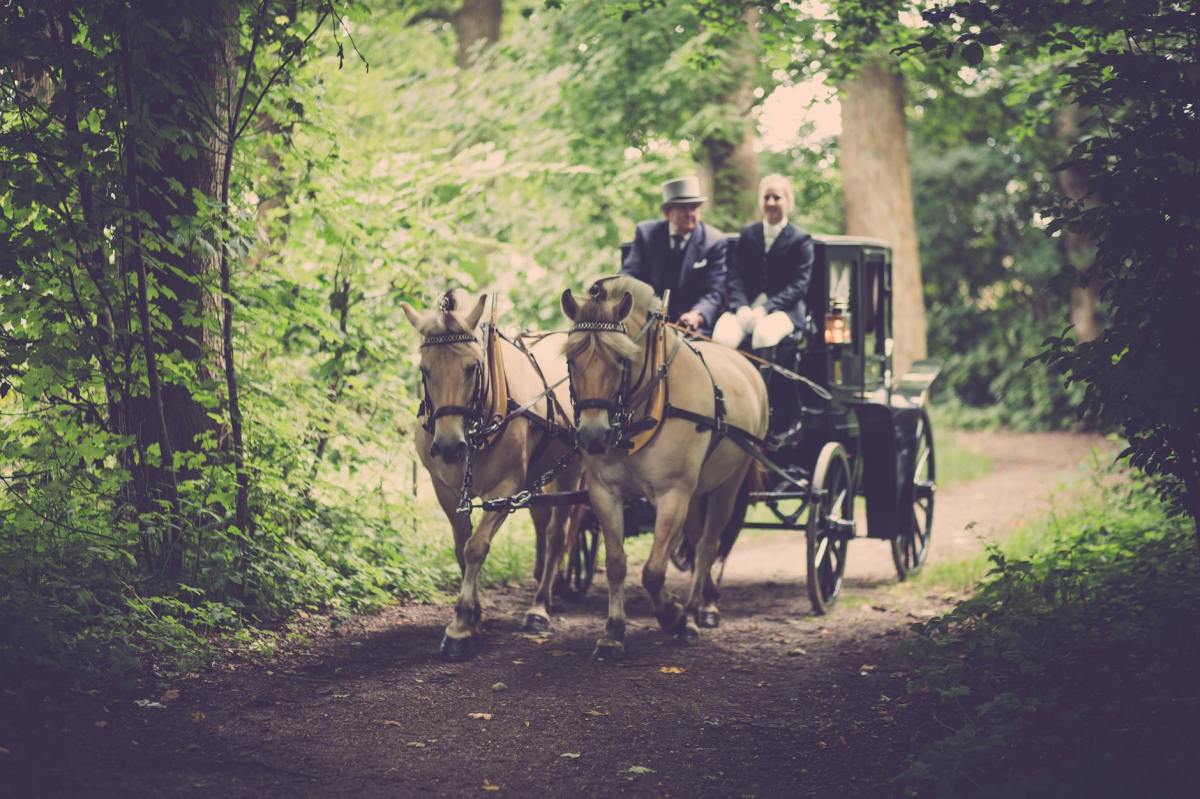
It is modern. Where I live now is, and has been, a route from East to West and vice versa for much more than a thousand years. For most of that time either our feet or horses where the means of locomotion. Time had to be set aside for perilous and uncomfortable journeys

Travel is a wonderful experience. Even if the time spent between A and B is tedious, draining and eventful in an unwanted way. Adventure beckons in a manner that has always overcome the inconvenience. Certain airlines would never have succeeded if comfort was a must.

In the 17th century getting from London to Bath was a major undertaking. A speed of 30 or 40 miles per day on rain-soaked roads of poor repair there was need to rest up and take a journey in stages. It’s these habits that have shaped the view of traditional England. Gone are the toll houses and the highwaymen but the routes and public houses remain. Well, fewer and fewer of them as business is tough[1].

Travel is that perennial hope, that there is a silver lining to every cloud, that good times are only just around the corner. That in travel we will see, hear and experience something new and to our benefit. It’s not a free lunch. Effort must be made to reap this benefit. It’s there in the word. It’s the Norman-French origins of travel. Travail is to work and labour.

Ironically, although there are exceptions, modern society is trying to make travel as little effort as is possible. Even to the extent of automating vehicles when the demand for such innovations is minuscule. It’s not increased comfort or convenience that’s the aim. No, it’s to dissect time into even smaller parts so that people do not “waste” time travelling.

In an age before concrete and steel carved a path through the English countryside, a journey was a venture to be planned and considered with trepidation. A land of fields and meadows, rivers and streams, and notoriously changeable weather.

Comparisons with today do fall by the wayside. Towards the end of the 17th century the population of the whole of the country was only about 5 million. Creeping industrialisation was drawing people into the cities. Change was on the way.


[1] Hard Times of Old England https://www.youtube.com/watch?v=MoWEiq_Z0aw

A Day at the Bath and West Agricultural Show

It’s a part of my childhood. It’s fascinating to see how it has changed over the decades. There’s hardly a year go by when I don’t go to at least one agricultural show in the UK.

Last year, I visited the Lincoln show and the Newbury show for the first time. Most of the summer rural shows in the UK have a long history that is kept going by an Agricultural Society. The bigger ones have dedicated show sites and some permanent buildings. The smaller ones can be a large field that’s set aside for a couple of days a year. Each show reflects the nature of the farming, the crops, the animals, in its region.

This Friday, my day out was a trip to the Bath and West show[1] in Somerset. The show site is large. Spread over a south facing gently sloping hillside. To the south of the town of Shepton Mallet, at the base of Prestleigh Hill.

That’s my family connection. My mother grew-up on a small farm in Prestleigh. It’s not named on the map anymore as a couple of the buildings are now dwellings. Yew Tree Farm was situated on a dangerous bend on the main A371 road where traffic must veer right as it comes down the hill. The alternative being to hit a wall and end up in the farmyard. If I remember correctly, my grandad got free tickets to the Bath and West as they used one of his fields for a car park. As children we would hop over the fence to go straight to the show.

This year, the ground was as hard as rock underfoot. Spring has been unusually dry. There’s more dust than mud. That’s good for the show. There have been years when the wind and rain have swept the exposed show site and blown down tents and made mini rivers. Making welly boots mandatory.

What has changed? Although this annual event is predominantly a showcase for West Country food and farming it’s gone beyond that formula to become an atypical half-term family day trip. It’s no longer a place where local farmers strike deals with machinery salesman or learn about the latest breeds or cropping methods. That post-war image of mucky tractors and trailers turning up in droves is for vintage postcards.

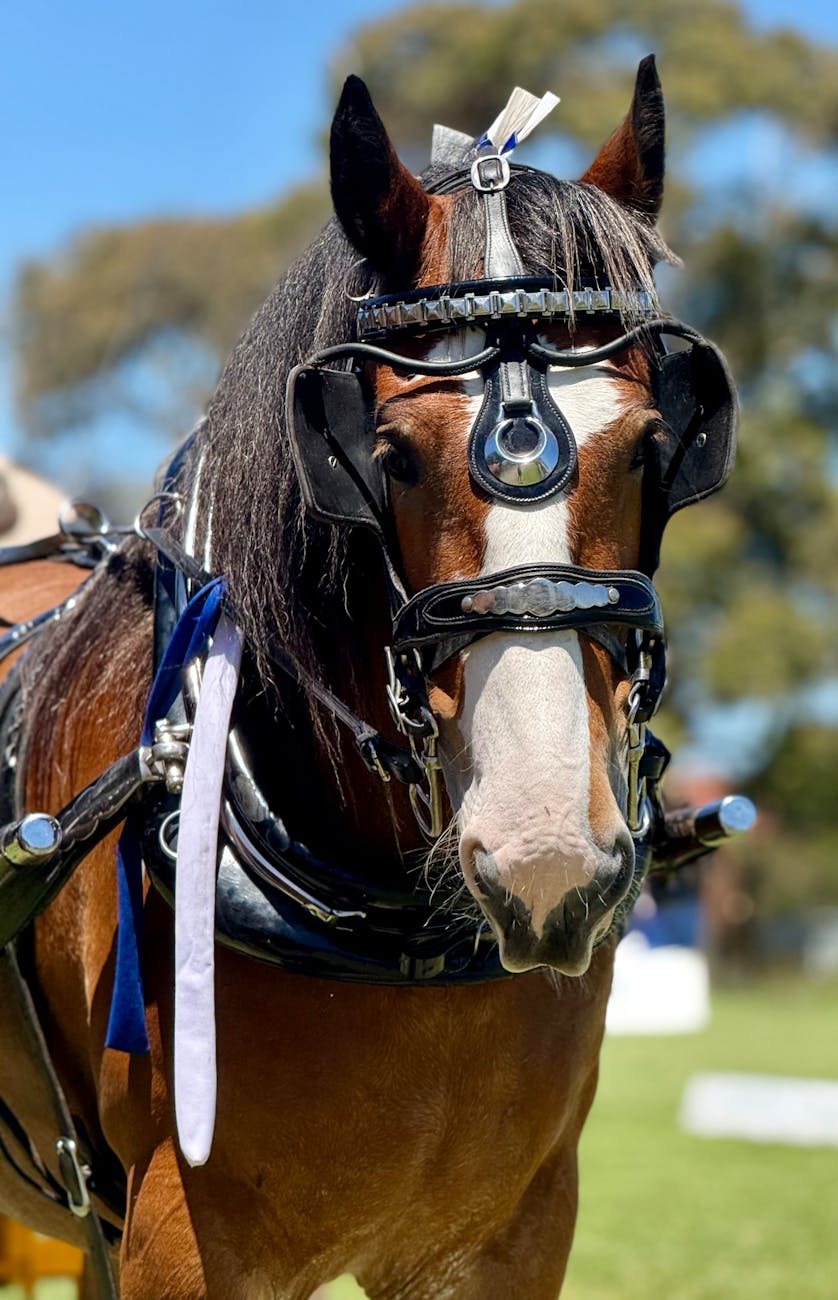
What’s nice is that there’s something for everyone with an interest in the English countryside. Beekeepers, cider markers (and drinkers), cheese makers, traction engine enthusiasts, rare breeds, heavy horses along with tea and cake in the WI tent.

Sheep started big this year. Cattle and pigs less so. Again, the word is enthusiasts. Breeds rare and commercial ones all cleaned up for display and judging. Handlers, young and old, parading their animals for picky judges to prod and score. Then colourful rosettes displayed with pride.

It’s not a cheap day out for townsfolk and county people anymore. Car parking might be free but the price of entry and just about anything on-site can quickly rack up. Everywhere, even in a field, we have become a cashless society. A tap here, a tap there, no longer do we dig into our pockets for loose change.

For the good weather and crowds, I expect this year’s 3-day event will be evaluated as a great success. Keeping the tradition going.


[1] https://www.bathandwest.com/royal-bath-and-west-show

Protecting Green Spaces

Listening to a Labour Minister use the word “streamlining” I reached for the off switch. My morning radio was bubbling away with a spokesperson justifying changes that remined me of that moment when the Earth was about to be demolished in the HHGTTG. I could imagine him saying; houses must be built because houses must be built.

Labour have been in power for less then a year but more and more they sound like the people they displaced. My thought was, with these recent land planning proposals, what’s the difference between what the Conservatives did and what Labour is doing now?

Let’s go back in time. One of the most dreadful planning changes of the past was the selling-off of school playing fields[1]. Green space, often surrounded by dwellings were erased. Countrywide, bricks, concrete and tarmac were prioritised over green spaces, local sports and nature. Not much to guess as to why the national is not as healthy as it should be.

It’s not new to say – what we learn from history is that we don’t learn from history.

Don’t get me wrong. I’m in favour of building more affordable houses where they are needed. It’s eminently reasonable to provide support for small and medium sized housebuilders. There are spaces that can take more dwellings provided the associated infrastructure comes along too.

By law, let’s not tip the balance in a way makes us all poorer. Our natural environment has taken one hell of a bashing in my lifetime. One of the indicators is the bug count. If I travelled any distance in the summer, in the early 1980s, in my bright red Sunbeam Imp, it wouldn’t be long before I’d need to stop to clean the windscreen of dead bugs. Today, drive as far as you like through the English countryside and there’s no such problem to address.

Labour’s Minister doing the morning rounds, spoke from a prepared script. Everything is above board. Government consulted on the proposals. Houses must be built because houses must be built. Consultations are fine. However, doing it and ignoring what people are saying is tantamount to manipulative deception.

Concreting over nature is not the way to go. Especially for small pockets of green spaces that still bring nature into cities, towns and villages. Infill and the eradication of small green spaces is just as bad as the momentous school playing field mistakes. It’s a one way trip. Watering down measures designed to protect nature is not the way to go.

Pushing forward with an aggressive approach to building foregoes long-term benefits for short-term political gain and blinkered treasury wishes. With the lessons learned over decades, priority to protecting our natural environment should not be sacrificed[2]. The Labour Government’s Planning & Infrastructure Bill needs amendment. Let’s hope that happens.


[1] https://www.itv.com/news/update/2012-08-17/how-previous-governments-compare-on-selling-off-playing-fields/

[2] https://www.wildlifetrusts.org/news/planning-bill-breaks-labours-nature-promises-say-wildlife-trusts-and-rspb

Collecting First Editions

Somewhere in several cardboard boxes I have books. Now, I know not where they are. Most of these books were published by Hodder and Stoughton. There were numerous print runs. Popular fiction.

What attracted me to these books was a character played by Roger Moore. No, I’m not talking about James Bond. Moore is probably best known for his portrayal of Bond. This was before he got that cinema role and global fame.

Author Leslie Charteris created a character called The Saint. That is Simon Templar. Roger Moore, as The Saint ran as a British TV series in the 1960s. What ran was an honest crime mystery series, with a Robin Hood style hero, who always won the day. His nemesis was a police inspector, even if they did cooperate towards righteous ends. The Saint didn’t always play by the rules. He fought tooth and nail to topple the ungodly.

Collectables are first editions of Leslie Charteris books. At one time they would appear forgotten in High Street charity shops. That day has gone.

The Saint Plays With Fire is worth revisiting. It’s a warning – especially now.

Relationship with the EU

Monday, Monday[1]. It’s a wonderful 60s song. Harmonies and mood are perfect. I wonder if the harmonies and mood will be perfect for the Prime Minister (PM) on Monday. Already the Sunday Press are setting the stage for Monday’s performance.

Reset, recalibration, reheat, rekindle, re-whatever. It’s a moment when relations between the UK and the European Union (EU) can make realistic progress[2]. In world full of uncertainty (could be a song in that one), for once the direction of travel is a constructive and positive.

I think the word “deal” is getting overplayed. Indications are that there’s no fundamental shift from Brexit meaning Brexit, as one former PM liked to say. In fact, the current PM is being highly cautious in the light of his Party’s reading of the latest opinion polls. For no sane reason I can think of, the swivel-eyed loons of the far-right are making hay.

It’s astonishing me how dim-witted the Conservative Party is in objecting to something when they don’t even know, for sure, what it is. Mind-blowing. And the rum cult of Reform Party doing the same with extra bile. What a load of prehistoric fruit loops.

Brexit supporters are spreading misinformation, again. Saying that UK has no influence. It’s true, the UK doesn’t have votes in the European Council or Parliament, but significant influence can be exercised on standards, and regulatory guidance, nevertheless. A better “deal” can bring much greater influence. Absolutely vital in the digital world, and for the UK, a country with a services-based economy.

Brexit has cost the UK dearly. The UK Treasury would have billions more in its coffers if the 2016 referendum had never taken place. The standard of living of every person in the UK is lower because of Brexit bungling. Ideally, that great mistake is an event to be written up for the history books and then forgotten.

On top of the above, uncharacteristic moves in the US, with Trump tariffs there’s nasty hit at the UK’s future prosperity. There couldn’t be a better time to repair relationships with the UK’s nearest neighbours. The countries with which we share most of our long history.

Even for those on the political right, practically, the EU is never going away, so until the day the UK rejoins the block, it’s wise to have the best possible relationship in all matters. Goods, services and people need to connect as a case of mutual benefit.

It’s time for hope. An optimistic tone should be set. A smile. Let’s hope we are singing Monday, Monday so good to me, Monday morning was all I hoped it would be. Naturally, that there be no crying, come Monday evening.


[1] https://genius.com/The-mamas-and-the-papas-monday-monday-lyrics

[2] https://www.independent.co.uk/news/uk/politics/brexit-uk-eu-reset-trade-deal-starmer-b2752285.html

Exploring a Riverside

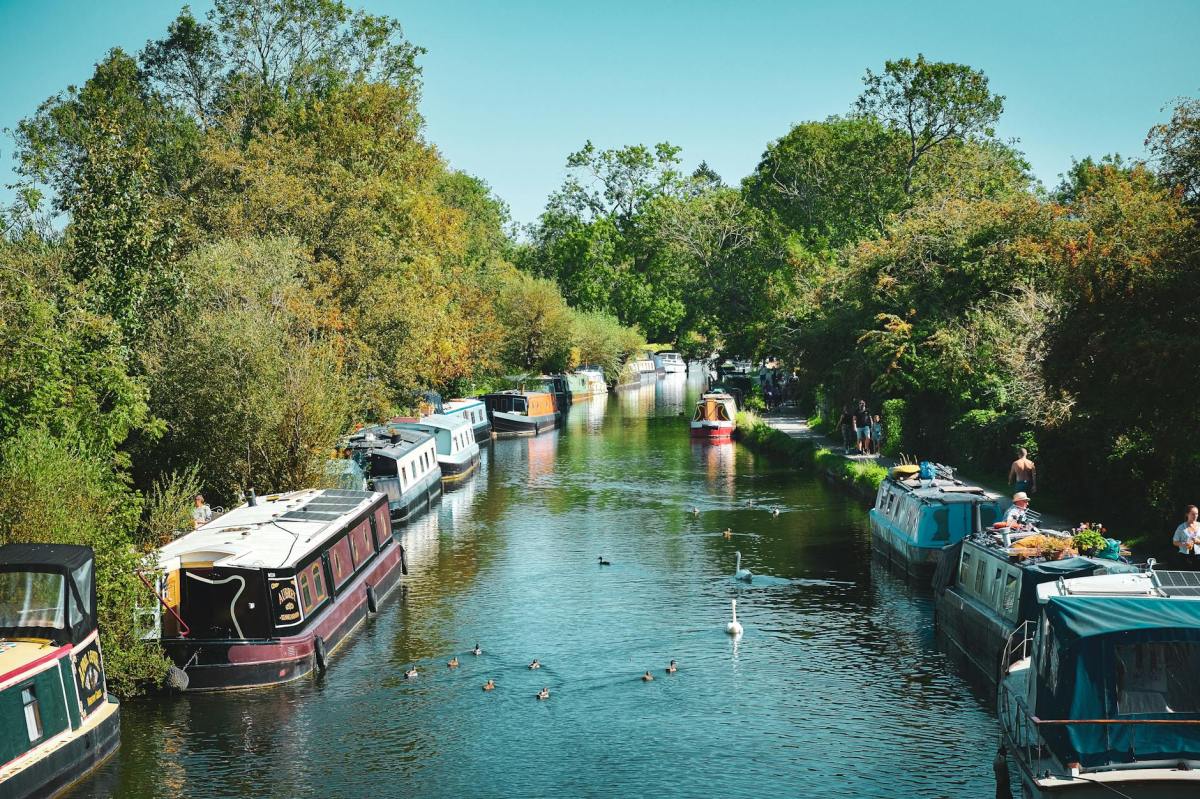
Riverside walks can be pleasant ways of spending a sunny spring evening. That’s what I did on Friday. Sun shining with a cool breeze sweeping through the trees. Underfoot even the unmade-up paths were dry, which is testament to the rainless weather of recent weeks. Even so, the riverbank showed signs of the flooding of the winter.

Reading is a town[1]. It’s England’s largest town. Now, I didn’t know that until I looked it up. The largest English town that I’ve been familiar with over the years is Crawley in Sussex. I think of that as a large town but it’s less than half the size of Reading. It’s the railway that makes Reading. Reading railway station was the last stop on the Great Western Railway (GWR)[2] when it was first opened in 1840. After that the railway forged west to be what we know now as the main thoroughfare across southern England.

Reading town has a long history. That’s no surprise given its position on the river Thames. It’s where the river Kennet, the canal and the river Thames meet. An obvious place for trading since Roman times. It’s a commercial town. Glass sided office blocks and Victorian brick work. For all that it doesn’t stand out as an architectural masterpiece.

Another surprise for me was leaning that town twinning is alive and well. That Reading in twined with Düsseldorf in Germany. A city more than twice the size of Reading. In fact, until this last year, I’ve been more familiar with Düsseldorf.

Our walk ended at The Fishermans Cottage[3]. I’m happy to recommend this small riverside pub.

From there, on the walk back to the railway station I did see the one of the more notable sites in Reading. That’s the Banksy’s Great Escape artwork[4] on Reading prison wall. Oscar Wilde spent time in that jail. The artwork has got a Perspex cover to keep the pigeons off. And anyone else who might think of spraying it.

That reminds me. It’s not unusual to have a phobia about dogs. Although dog owners mostly have a difficulty in getting their heads around the fact. On my riverside walk dogs were not the problem. Amongst our small group of walkers had a different phobia.

As we got to the confluence of the Thames and the Kennet, we discovered the phobia of one of our walkers. Alfred Hitchcock would approve. The Kennet’s tow path attracts Swans. These Swans are attracted by people with food. With no inclination to get out of the gently flowing river these lazy Swans wait for passers-by to pay attention to their needs. That’s no problem.

It’s called Ornithophobia. A fear of birds. Birds flock when free food is on offer. The worst of these can be thought of as flying rats. I talk of pigeons. That how I think of pigeons. Tom Lehrer[5] had the right idea about these annoying birdies. Frightening them away, at least for a moment, cleared our pathway. Like a flash they returned as we strolled into the pub.


[1] https://www.reading.gov.uk/

[2] https://www.gwr.com/stations-and-destinations/travel-inspiration/blogs/history-of-the-railways

[3] https://www.tripadvisor.co.uk/Restaurant_Review-g186363-d7363678-Reviews-The_Fishermans_Cottage-Reading_Berkshire_England.html

[4] https://banksyexplained.com/create-escape-march-2021/

[5] https://youtu.be/yhuMLpdnOjY

Europe Day Highlights the Need for Unity

Keeping the peace is never easy. There’s an irrational propensity to conflict in human nature. Keeping the peace is not a passive task. First, it requires communication and engagement. When those two go, trouble is not far behind. It’s by expressing concerns that each side knows where the other stands. Escalation can come when ignorance and propaganda take over.

After the second world war, institutions were established to ensure that communication and engagement became a non-stop affair. With only a small number of exceptions, the countries of the regions of the world engaged in these institutions. Those measure have contributed to making a more prosperous world.

“Never again” are two words that refer to the atrocities of war. The moto is to remind everyone that the worst can and does happen, and that perpetual effort is needed to ensure that history does not repeat itself. The concept of “lessons learned” is essential for safety and security. This is as much true for micro day to day activities as it is for the macro events that shape the path global ahead. Taking teaching not from narcissistic demigods and snake oil salesman but from the pages of history. Appeasing tyranny is not an option.

This week has been a reminder of the lessons learned from the world wars. For most people it’s been a continuing commitment to ensure such events never happen again in Europe. Sadly, let’s not be coy. Despite an overwhelming desire for peace, conflict in still Europe is a reality. But the lesson is there in black and white, appeasing tyranny never works.

Today, Friday 9th May is Europe Day. That’s because a speech by Robert Schuman[1] changed the course of European history on this day. Five years after the war in Europe had come to an end, he put forward a proposal that would make a future similar conflict impossible. The idea was to create an interdependence that would secure peace, unity and solidarity.

It worked. His proposal led to the creation of a European Coal and Steel Community. That measure lay solid foundation for what would later become the European Union (EU). Behind this is move is the echo of “Never again”. Europe has seen centuries of war. This was a moment in time to bring that to an end.

For now, 75-years on, this has been a success. It’s not a regional project with a defined end, even if it has a defined beginning. Where the EU chooses to go next is in the hands of its Member States and its citizens. Changing the course of European history doesn’t stop because the EU exists. Without the cooperation and dialogue, it provides there’s always a chance that ancient rivalries will be reignited. In fact, unscrupulous right-wing politicians[2] are trying to do that just now.

Sadly, in the UK, we stand on the sidelines, looking across the water at continental Europe. Brexit has done a great deal of damage. But as I have said, nothing is static, the world is entering an ever-uncertain phase. The opportunity for the UK to restore EU relations is open. I see the wisdom in the words of the Governor of the Bank of England. He has said the UK now needs to “rebuild” Britain’s relationship with the EU. Amen to that.


[1] www.europa.eu/!9JbCd9

[2] https://www.politico.eu/article/germany-spy-agency-walk-back-extremist-label-afd/