Pragmatism in British Politics

Pragmatism has long been a part of British life. Idealism too but to a lesser extent. That said, the shelves of literary works probably tip in the balance of idealism. There’s always an “insightful” quote to pull of the shelf and plonk into a speech or scribblings like this.

There’s a comfort in putting important decisions down to known facts and up-to-date realities. This way of working tends to favour short-term action based on weighing-up the here and now. What’s best for us where we stand at this moment? How much money have we got?

If you are an ardent socialist or committed liberal or dyed-in-the-wool right-winger, then pragmatism can make your flesh crawl. It leads to the question – what do you really believe in? Intellectual prowess is challenged by a call to make it up as we go along.

Pragmatism encourages hypocrisy. Now, that might be phrased as an uncomfortable negative. The truth is that no successful organisation has ever escaped a great deal of honest hypocrisy. Positions on even the most hard-fought issues do change. That’s not a negative. Just a couple of minutes surveying the history of the last half century, more than proves the case.

So, when I hear the UK Prime Minister (PM) talk of “ruthless pragmatism” I do wince a bit. It’s not that pragmatism per-se is an evil. No way. Mere survival in any political landscape and someone must react to the here and now in a way that doesn’t sink the ship.

PM Keir Starmer talking on Europe[1] is like listening to a rich Victorian woman having on extremely tight underwear. There’s no way she can loosen it in public. Her peers would disown her. When no one is looking an immense sense of relief can be gained in shedding the constraining garments. Behind closed doors the ridiculous restraints are shed.

Frankly, UK opposition to joining youth mobility schemes[2] in Europe is a stupid as stupid can get. I mean stupid times a billion. Now, some madcap idealists might be scared that British youth might, if taught early, be influenced in ways that would last throughout their lives. Such would be their indoctrination that eventual the push on the UK to join to European Union (EU) would be overwhelming.

There’s another word beginning with “p”. Take pragmatism and replace it with paranoia. The later seems to be fashionable just now. Forget the idealist approach where at least views tend to be based on a plausible creed. Paranoia is such that no previous experience is necessary. It’s all-over social media and more and more conventional media. Pragmatism is met with disbelief. So, is it wise for Keir Starmer to make that word a number one headliner?

A philosophical political pragmatism has been long practiced in the UK. I don’t see that stopping anytime soon. But what’s to be gained by headlining it? Not a lot I’d say. In fact, it gives ammunition to the light blue swivel-eyed loons[3].


[1] https://www.independent.co.uk/voices/editorials/keir-starmer-brexit-reset-europe-b2692118.html

[2] https://lordslibrary.parliament.uk/youth-mobility-schemes/

[3] https://www.independent.co.uk/news/uk/politics/swivelgate-david-cameron-goes-to-war-with-the-press-over-swiveleyed-loons-slur-8622277.html

Discontent with Conservatives

Those who stuck with the Conservatives at the last UK General Election must be regretting it. After their appalling record in government there are still 121 Conservative Party members of Parliament (MPs). This is the lowest number in the history of the Conservative Party. Parliamentary consistencies, like Reigate[1] and Staines[2], places where I have lived, have little, or no effective representation as the new year gets into its stride.

For what worth they are at this time in the electoral cycle, the Conservative Party and Reform Party (or company) are scrambling around trying to salvage any influence they can get. Both parties are no longer supported by their signed-up membership preferring major donors to pay the bills instead.

Frankly, we have no idea of their real membership numbers[3]. Political party membership hasn’t exactly been booming across the board. What’s clear is that the residual Conservative Party and Reform people are fishing in the same pond.

Last night, I happened to catch part of a Conservative political broadcast on the BBC. The general theme was politicians have let you down. This was said by Conservative leader Kemi Badenoch in a non-specific way to avoid saying Conservative politicians have let you down.

I did begin to wonder if she wouldn’t have done better by hosting a daytime cooking show from her immaculate kitchen. Now, I want to know if her mug had coffee or tea in it or was it just and empty prop? It seems to me every time Conservative rebrand, we see a different shade of blue being presented in the media. They are lucky that so many shades of blue are possible.

In the News too is Nigel Farage’s cold shouldering in the US. He may no longer be the far-right’s political great hope for the future. Reform may have to look elsewhere for its champion.

The 650 MPs that were elected by you and me to the House of Commons, at the 4 July 2024 UK General Election are likely to get a full-term. I’d guess that the new government can live with being relatively unpopular for at least a couple of years. After that they had better start showing that life has got better, public services work otherwise they will be a one hit wonder.

For political watchers its going to be fascinating to see how the pseudo-war on the right of politics will pan out in the UK. Will they combine? Having lived through the SDP–Liberal Alliance back in the 1980s, I know how hard it can be to restructure and reorientate in the British context.

There’s a lot of spinning of the wheels. Interim pain and uncomfortable partnering. The certainty being that not everyone will be happy or contented. Some notable people will go off in a huff. Eggs will get broken.

Or are we in a new era media where all that’s needed is tons of fakery and magical thinking. Plush marketing and dramatic assertions backed up by absolutely nothing.


[1] https://www.bbc.co.uk/news/election/2024/uk/constituencies/E14001442

[2] https://www.bbc.co.uk/news/election/2024/uk/constituencies/E14001505

[3] https://www.bbc.co.uk/news/articles/cq62qv3486qo

Financial Pressures and Local Government Restructuring

It was a long time ago, but I remember the travails of local government reorganisation. A massive amount of councillor and officer time was consumed. Endless discussions going backwards and forwards. Loads of heat but little light.

I had my one term as a Surrey County Councillor between 1993 and 1997. Now, that is 30-years back. A lot of water has passed under the bridge since. That said, the issues are still hanging in the air. The outcome of that Conservative attempt at local government reorganisation was no change for the one million people in Surrey. That meant one large County Council and eleven smaller Boroughs and Districts. Not forgetting several Town and Parish Councils.

Having moved, my concern is now local government reorganisation in Berkshire. The situation here is that the two-tier structure of local government has already been swept away. We pay our council tax to one unitary local authority.

Here we are in a different time and place. Labour’s first six months in government behind us. A new era. All smiles to begin. Sadly, the write-ups of the last six-months are less than flattering[1]. It would be reasonable to think that during a period of opposition in Parliament. Those 14-years. The prospective future government would have put in place policies and plans that would have been “oven ready,” to use a term an unsuccessful past Prime Minister would use.

Just as it was 30-years ago, English local government is facing huge financial pressures. Residents are struggling to access good services. Local issues, like potholes, planning, special educational needs and social care are as intractable as they always have been.

So, is this the time to bring out local government reorganisation again? Regardless of what I think, it’s clear that Jim McMahon MP, Minister of State (Minister for Local Government and English Devolution) has local government reorganisation on his agenda[2].

From what I hear, existing county Boroughs and Districts are going to become history. Small unitary authorities had better watch out too. Council leaders are being asked to find ways of building scale. That means no English local authority smaller than a population of half a million.

Will this turn around performance? Economies of scale may have some benefits. The problem that strikes me is the notion that “local”, meaning a natural community, is generally much less than 500,000 people. Especially in rural areas.

The Government White Paper that sets out these plans is called “English Devolution”. An interesting use of that nice word. In the circumstances that the new Minister imagines it could be that local government becomes more and more an implementing arm of central government. No more or less. To some extent this is already the cases, but localism and community are not completely extinguished. The tension continues to be one between governance being top-down or bottom-up driven.

The Labour government might imagine this “silver bullet” will harmonise, sanitise and make local services run like clockwork. I wonder if it will.


[1] https://inews.co.uk/news/messy-muddled-starmer-struggles-worse-rebellion-3444812

[2] https://www.instituteforgovernment.org.uk/event/government-2025-conference

Political Challenges: A 2025 Outlook

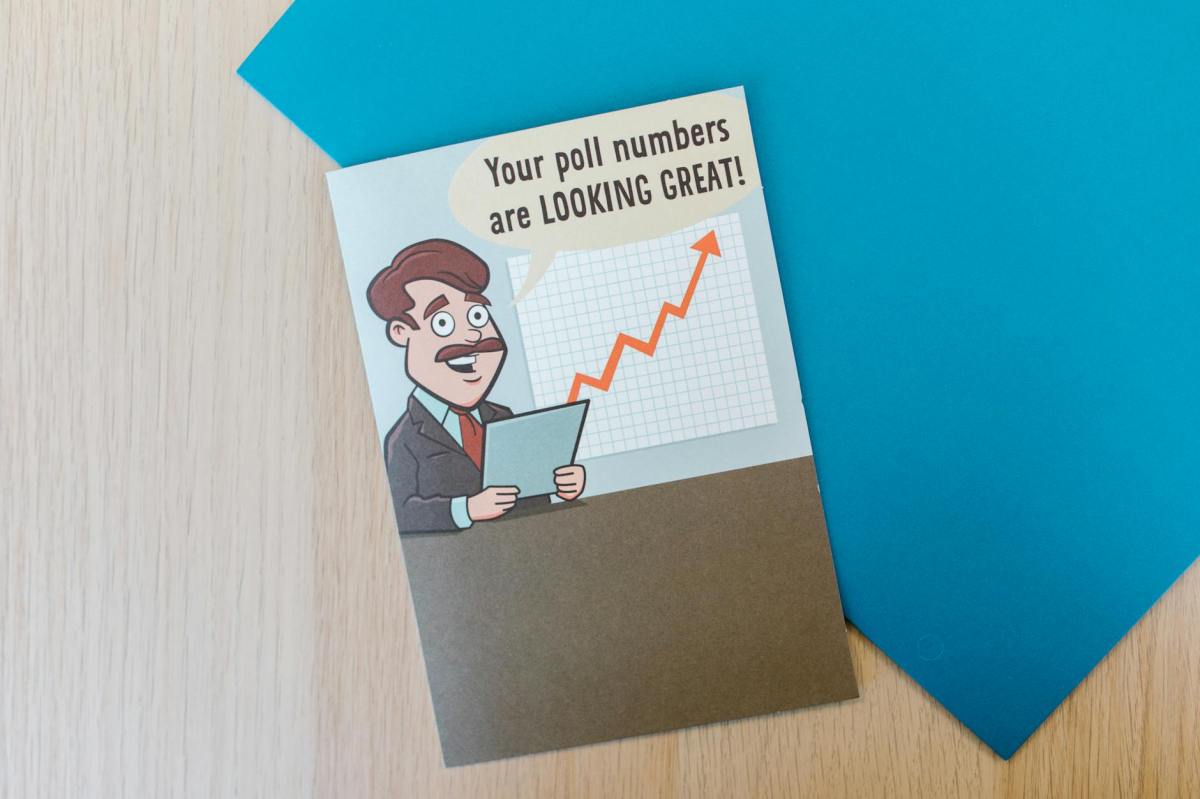
British Prime Minister Keir Starmer’s dive to an incredibly low level of popularity is notable. In fact, it’s a bit more than that. It’s record breaking.

A commonly held view seems to be that we elected the Labour Party government in July as the least bad choice. The Tory years had got so utterly terrible that even their devoted supporters bulked at giving them yet another term in office. Combine that with an inexplicable inability to frame a simple story about what Labour stands for and the problem is less surprising.

Keir Starmer is no fool. He’s an intelligent and experienced politician. He’s taken the hard knocks. He’s climbed the slippery pole. But, and there’s a but, something doesn’t jell.

I my humble opinion, the ingredients missing or in excess are categorised like so.

Charisma. It’s so much easier if leader has that indefinable quality. I remember this of Paddy Ashdown. One: you know when they are in the room. No question. People look. Two: they never lack inspiring ideas. Even if they could be off-the-wall. Three: what they say makes an impact.

Eloquence: That ability to coin words and phrases that resonate with lots of everyday people (not just supporters). To speak persuasively, in a way that says we are going on a great journey together. Scripted or not, fluency that appears natural and unforced. Lightness of touch.

Managerialism: Everyone expects confident, capable, competent governance (although we rarely get it). However, we don’t want to see it live on the mainstage, all the time. That phrase about political policy and making sausages is a good one. Lots of people like sausages but few like to know how they are made.

Now, the question I have is: are the “local difficulties” of present fixable?

2025 is going to be a roller coaster of a year. We have washed away any residual millennial mysticism that hit the world in 2000. A whole generation has slipped by. Babies born as London’s Millennium dome was both viewed both with amazement and distain, have jobs that didn’t exist as the fireworks went off.

The so called “smart” phone, and tablets have carved a way into our lives that’s deep and unmovable. Even if the next leap in technology will surely leave them as obsolete.

So, what’s the narrative for 2025 – 2050? Will we sink into the quicksand of nostalgia or herald a new era full of promise? I don’t know. I’ll just keep topping up my glass to ensure it’s half full.

Classic Christmas Movies

So few days to Christmas. It’s a well-known fact that time accelerates at the end of the year. All those jobs that I’d promised I’d get done by the end of the year now seem hopeless. Schedules get shredded. Looming over the horizon is the prospect of a new year diary.

With the weather blowing a gale and travel being intermittently unadvisable it’s better to slump on the sofa. Switch the box on and see if any of the streaming services have anything entertaining to watch. And wow there’s a lot of complete tosh out there in digital streaming land. Two hours can easy be lost in a gravy wasteland of TV nothingness.

Here’s my list of movies that I’m not disappointed to see turn-up every year. Christmas favourites bound to bring in an audience. The list changes a little every year and so does the world. Not for me candy coated Technicolor, snooze making romance flicks. Put aside the family hijinks and plots out of the script writer’s dustbin. Let’s have some real classics.

Starting where the movie that is almost immortal.

A Christmas Carol.

Charles Dickens’ Christmas ghost story has been made and remade more often than a roman road. My favourite is Alastair Sim as the “real” Scrooge. From 1951, this black and white version of the story has every magic ingredient. A grumpy old man on the road to Damascus.

The Muppet Christmas Carol.

People and puppetry blend seamlessly with Scrooge’s well-trodden voyage. Those universals of past, present and future entwine. The very word entertainment was made for this movie.

Elf.

It does matter who plays the part. Will Ferrell is ungainly, innocent and overflowing with goodness. He’s an elf on a quest. Beautifully knitted together, Buddy’s journey is unmissable.

It’s A Wonderful Life.

Again, supernatural contrivances shape a man’s destiny. This well-worn movie is a roller-coaster of emotions. From the deepest depression to the highest joys. Happy endings are why such tales hook us every time.  

The Grinch.

The creature who stole Christmas. Borrowing from the meanness of Scrooge, this character shows us how the seasons joy expels the little green monster of envy. A film with a message and the message is – have fun.

White Christmas.

Unquestionably a song-and-dance movie that transcends song-and-dance. We all hope that we could have comrades and colleagues who would think so much of us. A celebration of life well lived.

Miracle on 34th Street.

Fine it’s Americana write large. That said, Richard Attenborough is so much the part that I start to believe in Father Christmas. It’s a reminder that Department Store’s have a special place at Christmas despite Tom Lehrer’s “Christmas Carol”. 

I’m sure others should be added to this short list. What’s here are first thoughts written on a scrap of paper now sent to recycling.

John Gray’s Critique

If a dose of despondency is your Sunday morning tipple, I recommend BBC Radio 4’s “A Point of View[1]”. I often catch it as an alternative to listening to the driving rain bashing against the window as I wake-up on a Sunday morning.

What I dislike the most about John Gray’s analysis is that it dismisses all the hard-working people who daily strive to make the world a better place. I know, you are asking who John Gray is and what does he know? Well, he’s a British philosopher and author of a pile of serious books. He dabbles in political thinking and doom mongering.

On Sundays in the past, I relied heavily on Will Self creating an air of depressed inevitability that all the bad things about humans will eventually overcome us. A dower British journalist and political commentator who always seems to see the dark cloud instead of the silver lining.

Despite the grim tales of these speakers, they often have, lost in their rhetoric, a smidgen of wisdom. This morning John Gray argues that we need a new response to the growth of the right-wing charlatans who are rapidly climbing the greasy pole of national political life.

Naturally, a lot of us thought that’s what the UK General Election last July was all about. A reoccupation of the centre ground of British politics by the Labour Party. A renewed liberal democratic political consensus would emerge and save us all. Strangely, it doesn’t seem to be working out that way. Although, it might be a bit harsh to judge after only a few months.

Last night, I watched the second episode of the BBC’s period drama Wolf Hall[2]. My God, it’s good entertainment. A little heavy in places. Sharp and brilliantly executed. That last word being the key one. Tudor history is a reminder of how vicious political manoeuvring can be. Having a master, a King, who is determined to make the world turn around him and no one else.

So, should I agree with the likes of John Gray? That a darkness slithers around in human hearts. That we’d better be prepared, shake-off the status-quo and look for new ways to head-off the marketing men’s populist politics. Voiced by bombastic demigods and radical twerps.

He’s right in the sense that today’s politics is behind the curve. British political parties were forged in a different age. Largely, baring the virtues they espouse, they are outdated. Sure, fairness, liberty, and equality have not fallen out of fashion. But maybe the language surrounding them belongs in the 19th and 20th centuries.

One thing is for sure, Willo the Wisps, like Kemi Badenoch offer nothing new. Reform is just a cover for the populist worst of human nature. Yes, we do need someone to break new ground in British politics.

Oh, for a more cheerful Sunday morning.


[1] https://www.bbc.co.uk/sounds/play/m00254hz

[2] https://www.bbc.co.uk/iplayer/episodes/m002473m/wolf-hall

Labour’s IHT Policy: A Threat to Family Farms?

Labour is driving down a road it’s driven before. It’s a shame when the two biggest political parties in Britain are so captured by their past that they can no more look forward than a duck can master arithmetic.

Post Second World War the country was broke. Rising taxes were inevitable to pay down debt. The British State was far more directly involved in everyday economic decisions than it is now.

Inheritance Tax (IHT) got its status as a loathed tax partially because of the necessary actions of the post-1945 Government. At that time, “estate duty” was increased to 80%. This generated increase tax revenue but led to the breakup of large country estates up and down Britain. Ironically, the breakup of country estates created an opportunity for some tenant farmers. As the estates were sold off in lots so tenants could become owners, if they could raise the finance.

So, you might say farmers paying IHT at 20% isn’t so bad by comparison. The amount of generated increase tax revenue isn’t much. With one hand the Government is subsidising farmers and with the other hand it’s taking a cut of their lifetime acquired assets.

Another side of the coin is the cost-of-living crisis. Certainly, winter heating costs have been a matter of great concern for a lot of people. Food too is an absolutely essential expense. Hence, the growth of food banks in every part of the country. This shouldn’t be accepted as the norm.

All of this is happening at a time when the nation’s supermarkets are making healthy profits. Keeping cheap food on the shelves with, in some cases, the philosophy of sell it cheap and pile it high. Industrialised and highly processed food coming in at the lowest prices to the customer. At the other end of the supply chain, forcing down farm gate prices.

You would think that getting national food production, the job done by farmers, right would be an imperative for Government. You would think that a regular dialogue with farmers might be quite important. Wouldn’t you?

The problem with Labour’s 20% IHT and the threshold of 1 million is that it’s not going to have much impact of those who own large country estates to avoid other taxes, like CGT. It’s not going to have much impact on large corporate agricultural enterprises. It may not even have much overall impact on land prices. Afterall, they don’t make it anymore.

But it’s going to clobber small and medium sized enterprises, very often family farms. It will clobber far more than the Treasury’s last-minute calculations say[1]. The reason is clear. The profitability of family farming has been dire over recent years. Add a new tax bill and selling-up will be the most attractive option for many potential next generation farmers.

Then the question must be asked what’s it all about? What are the values underpinning this policy? There I go back to the start. Does Labour perceive these working people as “rich”. Their logic may go, why shouldn’t the rich pay more after the Conservative Government that they supported has made such a mess of the country? One way of seeing where we are.

Trouble is that they have aimed at the wrong target.


[1] https://www.channel4.com/news/how-many-farmers-will-have-to-pay-inheritance-tax

UK Farmers’ Unrest: Budget Shock and Political Implications

Yesterday, central London was full of British farmers. Far more than was anticipated. It’s a countryside revolt. Or at least the seed corn of unrest. It needs to be addressed quickly.

The UK Government Budget sprung an unexpected shock on farmers. Newly elected, everyone expected them to try to correct the spending mess left by their predecessors. However, few expected them to make-up last minute figures to do something they said they wouldn’t do.

Lots of family farmers could be singing the classic Beatles song “Yesterday”. Troubles seemed so far away before the general election. Now, they seem here to stay.

Like androids, and the Tories before them, Labour Members of Parliament (MPs) are trotting out lines prepared for them by their masters. The political excuse trotted out robotically is that the theoretical threshold for taxation is £3 million and not £1 million as everyone is saying. Therefore, they say, fewer farm businesses will be impacted by their new death tax.

When something goes wrong in Government one of the best strategies is to address the facts immediately, apologies for any error, take the temporary hit and move on quickly. Stonewalling and wibbling is an extremely poor approach.

For a start, many farmers will not be able to take-up the tax reliefs Labour MPs are talking about. Farming is a hazardous profession. Sadly, unexpected deaths are not unusual. If such an event occurs this could then result in compounded tragedy, that is the death of a family business too.

Farmers are pointing out that significantly wealthy people will still use land purchase to avoid tax. They will have complex and detailed tax planning services at their fingertips.

Agricultural land values have increased dramatically in recent decades. Yes, there is an issue to be addressed with respect to land value. Housing development land is an astronomical price. It’s one of the drivers that is making house prices unaffordable for many people.

Labour needs to recognise that it’s not food producers who are driving these negative phenomena. It’s not small and medium sized family farms who are the problem makers.

Not only is this new inheritance tax very poor politics by Labour, but it’s also not going to crack the problem that they might wisely wish to crack. I’d say, think again. At least consult.

Haunting Classics

Five more for Halloween. Yesterday’s blog listed a selection of scary tunes to get everyone in the right mood for the weekend. Digging into the classics one song stands tall. Meat Loaf’s “Bat out of Hell” is so iconic[1]. I can close my eyes. A cassette player in a past motor belts out the bat and suddenly the car is transformed into a likeness of the scene in “Waynes World”.

AC/DC and “Highway to Hell” continues the hellish theme[2]. That song has as much energy as a nuclear power station. Several power stations all connected.

“Zombie” by the Cranberries[3] has a soulful lament that seems hopelessly lost. It’s ring of despair goes beyond its time. Quite a song for this sad time too. A powerful video kicks at the fact that horror is not just imagined – it’s us.

Lost in the gloom of a dire recession and the Midlands in the 1980s, “Ghost Town” by The Specials[4] is seasonal. It’s dark nights, clocks go back, dangerous streets and closed shops. Weary nightclubs sloshing with supressed violence.

Finally, the TV series Twin Peaks intro theme[5]. Why, because it’s so spooky, mystical and endless. Once heard its impossible to unhear. It vainly tries to lift in the middle. That’s nothing as the haunting strums of the bass guitar endlessly plot a path into infinity. I was going to choose the main title music to The Shining. That’s great but not as memorable as eery atmospherics created by the Twin Peaks instrumental.

Although, “Ghostbusters,” by Ray Parker Jr. is so popular I’d put it at the bottom of my list. It’s far to upbeat and has that air of niceness like bubble-gum. Like “Little Shop of Horrors”. It’s good fun but not the stuff of nightmares.


[1] https://youtu.be/3QGMCSCFoKA

[2] https://youtu.be/gEPmA3USJdI

[3] https://youtu.be/6Ejga4kJUts

[4] https://youtu.be/RZ2oXzrnti4

[5] https://youtu.be/nCn3LYqCnrk

Halloween Timeless Spooky

He’s a legend but I don’t agree with DJ Tony Blackburn on this one. The headline reads: “BBC radio legend Tony Blackburn says, ‘modern music won’t last’ 60 years[1]”. Maybe it’s newspaper click bait but there’s a sentiment in those words that will resonate widely.

To me, every new generation does something different. To even think that you or I can predict what’s going to be listened to in 2084 is way off the scale. One hundred years from the infamous 1984.

Stepping back 60-years there’s a nicely curated version of 1964 to entertain us. I’ll bet there are those long gone, whose tapes and vinyl records have been trashed, who thought they would echo down the generations and haven’t. To match that there’s those who’ve had a few unexpected days of fame but that we still listen to their music with great affection.

Tony, in his Radio One role inspired me. I remember trying to put on a school disco and even proposing a school radio station. I found that our “modern” 60s built secondary school had been wired for an audio system but that it was never used. Probably for the best, the headmaster at the time was not so enthusiastic. As a 14–15-year-old who’s hobby included dismantling electrical bits and pieces, wiring up an audio system wasn’t a big deal.

It’s almost Halloween. That’s a time for the spooky singles of the past start to surface from the crypt. The first one to rise from the dead is the one that I played in my teenage school days. The Monster Mash[2] got a re-release. It came out in 1962. I’m sure it was charting around 75 too. Boris Pickett and The Crypt Kickers have stood the test of time, as all good monsters should.

Next on my horror list is the Werewolves of London by Warren Zevon[3]. Ah-hoo. Better not let him in. Comic and scary at the same time.

Having started a list, I suppose I’d better keep going. Don’t Fear the Reaper by Blue Oyster Cult has to be up there, on the top[4]. Although strangely this song has an upbeat feeling about it.

The video is as B movie lookalike as possible. Made by a man who did transform throughout his life. Michael Jackson left us with a seminal music video, half of which no one needs to watch[5]. “Thriller” has to be part of a Halloween list. Zombies have never been so popular. They ought to have their own prime time Stickly Come Dancing show.

For number five, for all its devilish despair I call up: “Paranoid[6]“. Black Sabbath, just the name of the band is enough to qualify. So, the line goes: Happiness, I can’t feel. The sound is enough to explode any gramophone. The louder the better. It will wake the dead.

POST: Here the AI generated image is bizarrely spooky. In the gloom, the tone arm of the record player hovers over the disk playing. Is that because the AI was being clever or is it because the AI hasn’t got a clue how a recorder player works? I think maybe the later.


[1] https://metro.co.uk/2024/10/26/bbc-radio-legend-tony-blackburn-says-modern-music-wont-last-60-years-21843219/

[2] https://youtu.be/-tHyRQOdqf0

[3] https://youtu.be/c6M89iDabwM

[4] https://www.youtube.com/watch?v=m-4G18t5se8

[5] https://youtu.be/sOnqjkJTMaA

[6] https://youtu.be/0qanF-91aJo