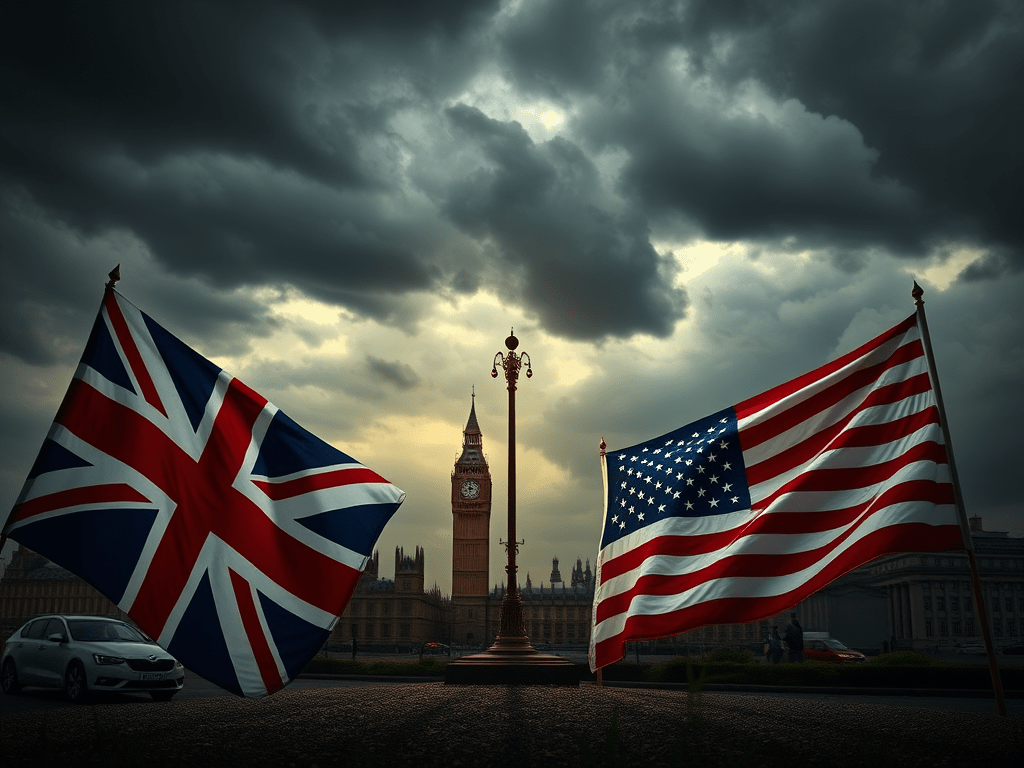
The Greasy Pole

I think we should be indebted to the writers of “Yes Minister.” And the brilliance of Paul Eddington, Nigel Hawthorne, and Derek Fowlds[1]. No mobile phones, lap-tops or tablets, wood panelled offices, a Minister with all the backbone of a jellyfish and the cunning and mountainous pomposity of Oxbridge’s best.

It’s the ultimate lesson for aspiring British politicians. Fresh faced, with ambition and desire to make a difference they are confronted with the custom and practice of centuries. A bureaucratic minefield that tops anything Brussels can produce.

At first, it’s easy to see Jim Hacker as naive to the point of merely being indulged by the civil service. He learns fast, as a good parliamentarian should always do. Fun being seeing him turn the tables on the Whitehall establishment. Often at the expense of hysterically awkward moments and sporadic cynical manoeuvrings.

Last night, I watched “The greasy pole”[2]. Without a doubt this episode remains 100% relevant. It first went out in 1981. The story’s themes are universal.

A proposed industrial development offers secure jobs and potential prosperity. It comes with a hitch. Activism and noisy protests aimed against the project. Industry and the civil service want the factory to get built. The Right Honourable James Hacker sits on the fence. Blows hot and cold but realises that his political career pivots around sinking the project. The Minister wins out in the end much to the discomfort of the department officials.

It would be easy to write the entire plot in terms of 2025’s political difficulties. This morning’s News ran a story that wasn’t so far off the plot of “The greasy pole.”

A new Labour government minister tells of publishing a report that favours a point of view he wishes to get across. He continually mentions the name of the author of the report. Mimicking Jim Hacker as he makes sure everyone knows the report’s author, just in case he’s made a mistake.

Although, with the complete ridiculousness of the past British Conservative governments it may have been said that satire is dead. No, it certainly isn’t. Here it was playing out on the BBC on my kitchen radio at breakfast time.

This is the stubborn reality. In Britain we have a new absurdly named political party called “Reform.” They are flying high in the opinion polls because some people think the word has a political meaning. However, if these would be politicians were to gain a position of power, would they conduct long-needed reforms? Well, given the competence of the people involved and given the historic clashes between elected officials and civil servants the answer is most certainly – no.

It seems to me that new Labour government ministers are slowly getting the hang of the job. One year in they are still a bit wet behind the ears. Gradually, they are climbing the greasy pole. At any moment, because of the nature of the job, down they can come, and they know it.


[1] https://www.bbc.co.uk/iplayer/episodes/b006xtc3/yes-minister

[2] https://www.imdb.com/title/tt0751819/

Challenges to Liberty

We live in interesting times. Conflict and turbulence, shifting political loyalties, and rapid technology advances. What a mix.

I don’t want to say – twas ever so. That’s a resignation. To say that challenges and tragedies are of exceptional magnitude in any one era. Since forecasting is such a fragile art, better or worse maybe just around the corner.

What’s unique is our societal expectations. Whereas a serf in a feudal country had little hope of a better life. Today, our higher expectations come from generations of struggle having improved the circumstance of the individual and our communities. Improvements in standards of living, economic, social, environmental, are maintained by an adherence to the “rule of law”. However, imperfect that might be.

The basic stuff still matters. English liberties, in great part, stem from the Magna Carta of 1215[1]. It may have not been immediately successful, as Monarchs and Popes quickly tried to kill it. What’s amazing is that its core content has echoed down the centuries.

Democratic societies have taken on rights, human rights, in their simplest essence. Each of us expects a day in court. A means to defend ourselves from the exercise of arbitrary power.

Yes, for hundreds of years English Monarchs continued to assert what they claimed to be God given powers. Until that came to a head. Literally so. The English Civil War set the rights of the citizen against the arbitrary power of a King.

Where I am now there are signs of that past conflict. In fact, I can see one of from my kitchen window. Surrounded by trees, on the brow of a hill, overlooking a fast-flowing river, is the remains of a castle. Most of Donnington Castle[2] was destroyed but the gate house tower remains. The winning side, Parliament ordered its destruction.

You can understand why I get nervous when politicians assert that they are on a mission from God. Centuries of conflict have bought a citizen’s protections from arbitrary power. To see it return under the guise of personal ambition and careless action is sad.

Yes, there are lots of undemocratic places in the world where this does not apply. Even so, with all its imperfections, English liberty did spread far and wide. It made its way across the Atlantic Ocean. Constitutional practices maybe different but common law prevails.

I hope democratic societies will emerge stronger from this turbulent period. Shifting sand is everywhere. Values are being assailed. Nevertheless, there’s every good reason to believe that a strengthening of our society is possible. A progressive vision offers so much more than a backside into a dark past.


[1] https://www.magnacartatrust.org/

[2] https://www.battlefieldstrust.com/resource-centre/battleview.asp?BattleFieldId=89

Evolution Politics

Wake up John. The herald of today was there in the late 1990s. There was me fascinated by the possibilities of the INTERNET. Buzzing modem squeaking down a phone line. With such peculiarities as Y2K behind us the new century provided broadband access to everyone. Almost everyone. Eventually, being off grid became a sales tag for remote rural settings.

Meanwhile, good old-fashioned popular entertainment media was desperately trying to make itself relevant to the new era. Proliferation of reruns were not enough. Stale formats dwindled. In that maelstrom, reality television was born. Technology shaped what became possible. It was a horror to me but then again, I was just out of touch.

Big Brother is a strange beast. Watching joe average or minor celebrities make complete fools of themselves for big bucks – how could that work? It did, bigtime. Undeniably scoring with the public. It spawned lots of similar shows bombarding us with unscripted chat seen through the tight lens of an edited television show.

Not quite like throwing Christians to the lions, familiar to Romans, but a social experiment open to participants combative as much as caring behaviour. Watching relatable and unrelatable volunteers try their best to seem nice or nasty as they thought appealing.

25-years on, now British politics begins to resemble reality television. That creation provided a pathway through our screens to capture our attention. To make names out of relatively unknowns. Or to revive careers waning.

I said “begins to resemble” without realising that I’m being a dinosaur. It’s here. A politician can’t anymore stand on a soap box and pontificate about the world. The grand ark of a well written speech is destined for the dustbin. Every presentation needs to be framed as if they are in the jungle (I’m a Celebrity…Get Me Out of Here![1]).

Reality shows are becoming a training ground for political personalities. Forget the serious need to do an apprenticeship. That one has been hijacked too. The basic grind of administration and casework can be bypassed if the candidate is a good enough showman or woman.

Going back to the 1990s, I think a lot of us were naive about the coming technologies. There was an imagining of the information superhighway[2] as a great educator. A positive liberator. A forum for better communication. Making it easier for people to have a real dialogue with the elected officials. Thus, solving problems, cutting down bureaucracy and engaging communities.  

Of course it is those things. The naivety came with the blindness to the huge entertainment possibilities. How reality and make-believe can get intermingled. How dominant personalities would capture the cameras like Hollywood stars.

With that fuzziness between reality and make-believe storytelling takes on a new importance. That’s what political managers have discovered in abundance. Medium and message have always been closely linked. Now, a would-be star or demigod must take that ever more seriously to win.


[1] https://www.itv.com/imacelebrity

[2] https://www.bbc.co.uk/videos/czv20818q2no

Protecting Green Spaces

Listening to a Labour Minister use the word “streamlining” I reached for the off switch. My morning radio was bubbling away with a spokesperson justifying changes that remined me of that moment when the Earth was about to be demolished in the HHGTTG. I could imagine him saying; houses must be built because houses must be built.

Labour have been in power for less then a year but more and more they sound like the people they displaced. My thought was, with these recent land planning proposals, what’s the difference between what the Conservatives did and what Labour is doing now?

Let’s go back in time. One of the most dreadful planning changes of the past was the selling-off of school playing fields[1]. Green space, often surrounded by dwellings were erased. Countrywide, bricks, concrete and tarmac were prioritised over green spaces, local sports and nature. Not much to guess as to why the national is not as healthy as it should be.

It’s not new to say – what we learn from history is that we don’t learn from history.

Don’t get me wrong. I’m in favour of building more affordable houses where they are needed. It’s eminently reasonable to provide support for small and medium sized housebuilders. There are spaces that can take more dwellings provided the associated infrastructure comes along too.

By law, let’s not tip the balance in a way makes us all poorer. Our natural environment has taken one hell of a bashing in my lifetime. One of the indicators is the bug count. If I travelled any distance in the summer, in the early 1980s, in my bright red Sunbeam Imp, it wouldn’t be long before I’d need to stop to clean the windscreen of dead bugs. Today, drive as far as you like through the English countryside and there’s no such problem to address.

Labour’s Minister doing the morning rounds, spoke from a prepared script. Everything is above board. Government consulted on the proposals. Houses must be built because houses must be built. Consultations are fine. However, doing it and ignoring what people are saying is tantamount to manipulative deception.

Concreting over nature is not the way to go. Especially for small pockets of green spaces that still bring nature into cities, towns and villages. Infill and the eradication of small green spaces is just as bad as the momentous school playing field mistakes. It’s a one way trip. Watering down measures designed to protect nature is not the way to go.

Pushing forward with an aggressive approach to building foregoes long-term benefits for short-term political gain and blinkered treasury wishes. With the lessons learned over decades, priority to protecting our natural environment should not be sacrificed[2]. The Labour Government’s Planning & Infrastructure Bill needs amendment. Let’s hope that happens.


[1] https://www.itv.com/news/update/2012-08-17/how-previous-governments-compare-on-selling-off-playing-fields/

[2] https://www.wildlifetrusts.org/news/planning-bill-breaks-labours-nature-promises-say-wildlife-trusts-and-rspb

Peaceful Border

It’s superfluous to say so. Canada is not the US, and the US is not Canada.

It quickly becomes clear. I’ve been fortunate to visit places east-west and north south. Although not the far snowbound North. The two countries do share geography. Rocky Mountains stretch across the North America. From British Columbia to New Mexico. The Great Plains span North America. A stark contrast to the mountains, as a huge expanse. In the East, the rolling landscape of the Appalachian Mountains runs from Newfoundland to Alabama.

It’s not the same with social and economic geography or history. A profound difference has been forged by Canada’s citizens over a couple of hundred years.

If we look back to the late 17th and early 18th centuries the new world was a hugely different place than it is now. Britain, France, Spain, and their allies were fighting over vast territories. European conflicts translated into competition and trade wars. Eventually, America colonialist brought about a revolution, so there would be no need for royalty, aristocracy, or an imposed church. Rejecting their British masters, even if they did keep their system of laws.

At the start of the 19th century, the US did invade Canada with a couple of conflicts. So, the idea that the US may wish to annex a part, or all of Canada is not entirely new. I’m going to have to read up on the Battle of Stoney Creek of 1813. It seems a namesake of mine played a pivotal role in preventing the US from taking Canada[1]. No relation – I’m (almost) sure. Irish heritage.

My assumption is that US President Trump is doing what he has done times before. Mark out an extreme position from which then to shape future negotiations. That’s not so mad as it might appear. It’s not nice when considering the cordial relationships that have characterised so much of the recent past. Kicking at the sides of an ally.

Stretching over thousands of kilometres (or miles if you prefer), the boarder between the US and Canada is one of the most peaceful in the world. To reignite conflicts of a couple of hundred years ago is not a wise option. I’m sure Canada could call upon a great deal of support if the worst-case scenario were to prevail.

Mutuality may not be fashionable. It needs to be made fashionable, again. The notion of a win-win scenario where both parties benefit, it’s real, it’s not mythical. Both US and Canada are sovereign. It’s best for the world that it stays that way.


[1] https://www.biographi.ca/en/bio/vincent_john_7E.html

The Legacy of Paine

Reading a little of Thomas Paine’s rantings about the inequities of monarchy, it’s clear why he is remembered as a key part of the story of American Independence.

It’s not surprising that he viewed the British institutions of the 17th Century as arbitrary and tyrannical. An Englishman fervently attacking his country of birth. Pointing out every flaw and deficiency in respect of the condition of the common man.

He was a revolutionary provocateur and a provocateur of revolutions. His widely read pamphlets, the social media postings of the day, stimulated the American Revolution. A cry for freedom and escape from everything he thought rotten in Europe. America being a potential beacon of hope. Denouncing the English aristocracy sealed his fate. Now, he known as a founding American. So, where are we after 250 years[1]?

Europe to a great extent, slowly but surely, followed the American experiment. The power of privilege, the monarch, the aristocracy diminished, and the common man, and eventually woman too, asserted their rights through the ballot box.

Britain, although there are committed republicans, hasn’t thrown off the monarchy. It’s adapted its role in such a way that it retains popular public support. Europe has many “bicycling” monarchs who hold colourful ceremonial roles mostly as a celebration of traditions.

Are the roles of the continents reversing? Are the American States drifting towards a new monarchy? That concentration of arbitrary power and privilege in one place. It’s a situation for political philosophers to ponder.

Take recent utterings in the News that are wholly wrong. The European Union (EU) is in part, so that Europeans can be more like Americans. That’s not a popular thing to say so I’d better step with care. Although, much as changed in the post-war world, federalism isn’t coming to Europe any time soon.

The EU solves the historic diplomatic problem of asking – I want to call Europe. Who do I call? Recent generations in both continents have benefited tremendously from the constructive and positive dialogue across the Atlantic.

Back to my question. Are the roles of the continents reversing? Imagine Europe as the premier global bastion of freedom, democracy and liberty. A renaissance of enlightenment, of free speech and human rights. Perhaps it is already.

Sadly, it would be wrong of me to record this as fact. With the rise of populism and right-wing fantasists, we would do well to go back and read Thomas Paine. Although, that’s not an entirely a clear-cut line to take. Paine was very much in favour of small government and self-reliance. Traditional Republican themes. I’ll take his revulsion at tyranny.


[1] The Bicentennial culminated on Sunday, July 4, 1976, with the 200th anniversary of the adoption of the Declaration of Independence.

Relationship with the EU

Monday, Monday[1]. It’s a wonderful 60s song. Harmonies and mood are perfect. I wonder if the harmonies and mood will be perfect for the Prime Minister (PM) on Monday. Already the Sunday Press are setting the stage for Monday’s performance.

Reset, recalibration, reheat, rekindle, re-whatever. It’s a moment when relations between the UK and the European Union (EU) can make realistic progress[2]. In world full of uncertainty (could be a song in that one), for once the direction of travel is a constructive and positive.

I think the word “deal” is getting overplayed. Indications are that there’s no fundamental shift from Brexit meaning Brexit, as one former PM liked to say. In fact, the current PM is being highly cautious in the light of his Party’s reading of the latest opinion polls. For no sane reason I can think of, the swivel-eyed loons of the far-right are making hay.

It’s astonishing me how dim-witted the Conservative Party is in objecting to something when they don’t even know, for sure, what it is. Mind-blowing. And the rum cult of Reform Party doing the same with extra bile. What a load of prehistoric fruit loops.

Brexit supporters are spreading misinformation, again. Saying that UK has no influence. It’s true, the UK doesn’t have votes in the European Council or Parliament, but significant influence can be exercised on standards, and regulatory guidance, nevertheless. A better “deal” can bring much greater influence. Absolutely vital in the digital world, and for the UK, a country with a services-based economy.

Brexit has cost the UK dearly. The UK Treasury would have billions more in its coffers if the 2016 referendum had never taken place. The standard of living of every person in the UK is lower because of Brexit bungling. Ideally, that great mistake is an event to be written up for the history books and then forgotten.

On top of the above, uncharacteristic moves in the US, with Trump tariffs there’s nasty hit at the UK’s future prosperity. There couldn’t be a better time to repair relationships with the UK’s nearest neighbours. The countries with which we share most of our long history.

Even for those on the political right, practically, the EU is never going away, so until the day the UK rejoins the block, it’s wise to have the best possible relationship in all matters. Goods, services and people need to connect as a case of mutual benefit.

It’s time for hope. An optimistic tone should be set. A smile. Let’s hope we are singing Monday, Monday so good to me, Monday morning was all I hoped it would be. Naturally, that there be no crying, come Monday evening.


[1] https://genius.com/The-mamas-and-the-papas-monday-monday-lyrics

[2] https://www.independent.co.uk/news/uk/politics/brexit-uk-eu-reset-trade-deal-starmer-b2752285.html

What Does Freedom Mean?

Daily writing prompt
What does freedom mean to you?

Freedom. There’s as subject that’s banded around as if it’s a simple matter. It’s not.

Let’s start with Thomas Hobbes in the 17th Century.  He says freedom is the absence of external obstacles. Thus, if a person is not restrained from doing what they will then they are free. That’s an individualistic view. However, what happens when the theory is applied to a murderer, a thief or conman? I would like to see such a person presented with obstacles. By the way, I’m taking liberties as Hobbes was more nuanced than my description of his philosophy.

Let’s say I’m more inclined to John Stuart Mill’s thinking. Liberty (freedom) is to be free to think, say, and act as one wishes on condition that resulting actions do not harm others. Autonomy has a condition. This is nice. Hold on, isn’t the range of what might be generally considered as “harm” a wide one? In the past, school children may have chanted: “sticks and stones may break my bones, but words will never hurt me.” Quaint, and in the modern context a saying that is clearly utter nonsense.

In Britain individuals are free. However, boundaries are placed on that freedom by law and by social convention. Freedom of thought, speech and action are to be cherished and defended. In my mind that means challenging boundaries where constraints might be overzealous.

Words used with intent to harm others should face public objection. Words that may annoy or unsettle or question others, well that’s a different matter. A dynamic balance must be sought.

Europe Day Highlights the Need for Unity

Keeping the peace is never easy. There’s an irrational propensity to conflict in human nature. Keeping the peace is not a passive task. First, it requires communication and engagement. When those two go, trouble is not far behind. It’s by expressing concerns that each side knows where the other stands. Escalation can come when ignorance and propaganda take over.

After the second world war, institutions were established to ensure that communication and engagement became a non-stop affair. With only a small number of exceptions, the countries of the regions of the world engaged in these institutions. Those measure have contributed to making a more prosperous world.

“Never again” are two words that refer to the atrocities of war. The moto is to remind everyone that the worst can and does happen, and that perpetual effort is needed to ensure that history does not repeat itself. The concept of “lessons learned” is essential for safety and security. This is as much true for micro day to day activities as it is for the macro events that shape the path global ahead. Taking teaching not from narcissistic demigods and snake oil salesman but from the pages of history. Appeasing tyranny is not an option.

This week has been a reminder of the lessons learned from the world wars. For most people it’s been a continuing commitment to ensure such events never happen again in Europe. Sadly, let’s not be coy. Despite an overwhelming desire for peace, conflict in still Europe is a reality. But the lesson is there in black and white, appeasing tyranny never works.

Today, Friday 9th May is Europe Day. That’s because a speech by Robert Schuman[1] changed the course of European history on this day. Five years after the war in Europe had come to an end, he put forward a proposal that would make a future similar conflict impossible. The idea was to create an interdependence that would secure peace, unity and solidarity.

It worked. His proposal led to the creation of a European Coal and Steel Community. That measure lay solid foundation for what would later become the European Union (EU). Behind this is move is the echo of “Never again”. Europe has seen centuries of war. This was a moment in time to bring that to an end.

For now, 75-years on, this has been a success. It’s not a regional project with a defined end, even if it has a defined beginning. Where the EU chooses to go next is in the hands of its Member States and its citizens. Changing the course of European history doesn’t stop because the EU exists. Without the cooperation and dialogue, it provides there’s always a chance that ancient rivalries will be reignited. In fact, unscrupulous right-wing politicians[2] are trying to do that just now.

Sadly, in the UK, we stand on the sidelines, looking across the water at continental Europe. Brexit has done a great deal of damage. But as I have said, nothing is static, the world is entering an ever-uncertain phase. The opportunity for the UK to restore EU relations is open. I see the wisdom in the words of the Governor of the Bank of England. He has said the UK now needs to “rebuild” Britain’s relationship with the EU. Amen to that.


[1] www.europa.eu/!9JbCd9

[2] https://www.politico.eu/article/germany-spy-agency-walk-back-extremist-label-afd/

Cities Shaped by War

War is failure. Humans being quick to aggression, possessive and slow to reconciliation, it’s plagued every corner of history. Reason to go to war can be imperial, territorial, moral or ethical. In a democratic society, defeating an evil becomes an overwhelming imperative. That was certainly the case in the six years of the second world war. This week, it’s time to look back. To recollect the impact of the world war. To remember the sacrifice and suffering. To be thankful for the last 80-years years of relative peace in Europe.

For me these recollections take me to the experience of living in two cities. Cities on different sides of past conflicts. Severely damaged by the conflict. Targets because of their civic and industrial strength. Both cathedral cities with an ancient heritage.

My student life was spent in Coventry[1]. A decade of my working life was spent in Cologne[2].

Arriving as a fresh-faced student in the heart of the industrial Midlands, the architecture of Coventry city centre was so striking. It was that post-war vision of rebirth at a time when economic decline had set in. With an inner ring-road that was like a go-cart track, 50s style concrete avenues, windblown and neglected, there was little of the Medieval splendour of the pre-war city remaining. Standing proud in the middle of it was, and is, the skeleton of the old cathedral and the new one that ascended like a phoenix from the flames of war. Well worth a visit, the cathedral built in the 60s is a wonderful modern design. It plays with light and space to elevate emotions. A sign that we have a great capacity for reconciliation and regeneration.

Moving on just over 20-years, my encounter with Germany’s fourth largest city was full of hope and optimism. Based in Cologne, I experienced a city with even deeper roots than Coventry. Ironically, it was the destruction of the war that uncovered much of the Roman remains on display. At Cologne’s heart is a magnificent gothic cathedral that is more dominating of the landscape than perhaps ever it has been. Here the citizens of the city took a different approach to post-war rebuilding. Not so much embracing everything that was new, although there’s quite a bit of that approach, but reconstructing the old city in its original style. The culture of the city survives in the traditions of the annual carnival.

These two European cities have taken different paths. All the same, there are threads of common experience. Both have seen industrial decline and a search for a better future to thrive and grow. Both are distinctive and culturally colourful. Both carry the baggage of a brutalist architecture that was fashionable on the drawing boards of the late 1950s.

Visting the past in museums and walking the streets the marks of the last war are there to be seen by everyone. Passed by every day. Yet, mostly ignored in the humdrum of commuting and the busy obsession we have of staring at a “mobile” or call it a “handy”. Now and then it’s as well to look up. To look and see the bullet marks on stone structures, the nicely arranged medieval or Roman stones and cobbles, or the conserved streets that contain the ghosts of past generations. For good or ill, war has shaped the world we inhabit.

Peace is a far far better condition. I think of the “Coventry Cross of Nails[3]” as a symbol of reconciliation and peace. Let’s not forget.


[1] https://www.coventry.ac.uk/

[2] https://www.koelner-dom.de/en

[3] https://www.coventrycathedral.org.uk/reconciliation/community-of-the-cross-of-nails