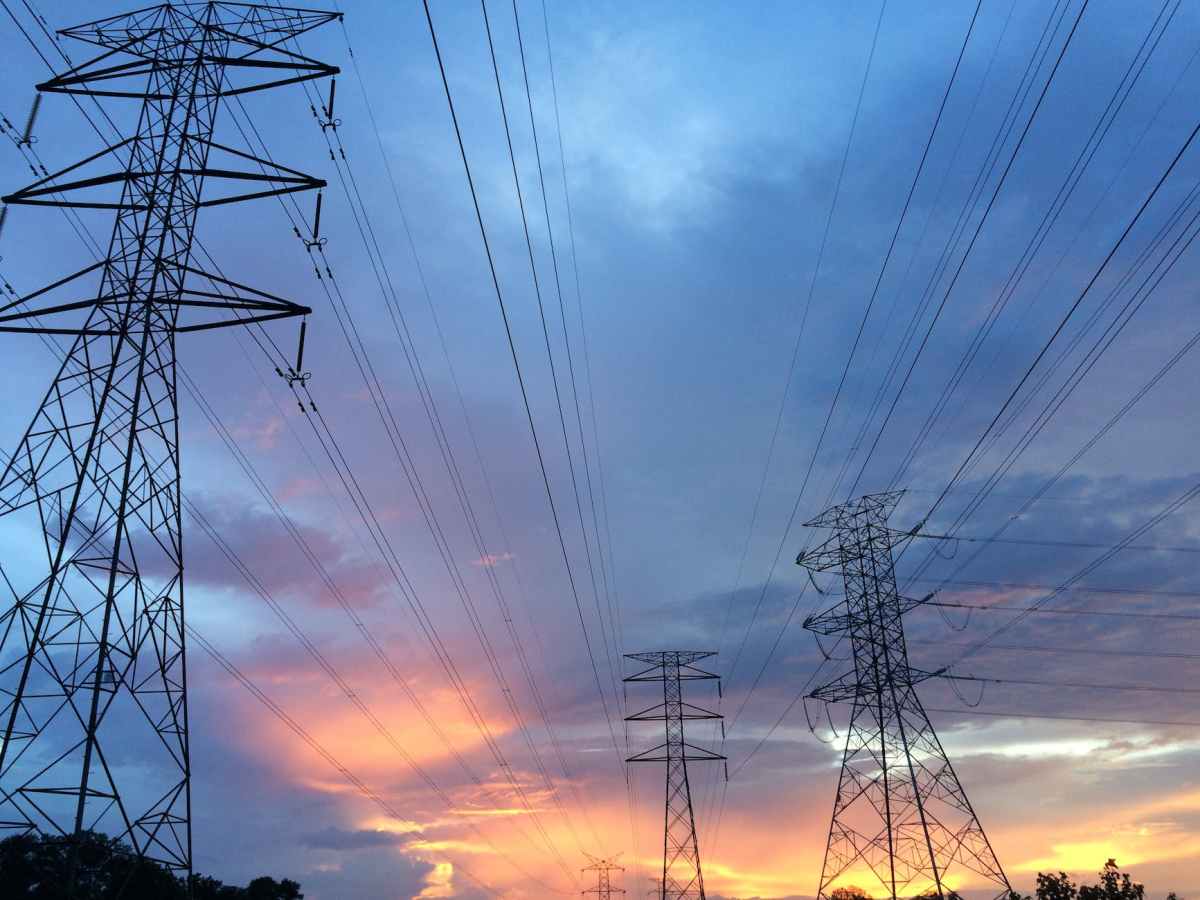
Bad Smell

Where is the accountability?

My desk, that’s the one in the early 1990s, faced towards the London Gatwick airport approach. It was a good reminder of the business we were in at the time. Seeing aircraft land and take-off about 500 m from the sheet glass windows of our office block was the daily background. Being in a rugged hermetically sealed building aircraft noise wasn’t a great concern.

Little more than 300m from the building and looking in the same direction was, and still is, the Gatwick sewage works. Its structures were low rise, so it was often hidden behind the greenery. Every so often, a strong wind would blow from the northeast. When it did a distinct odor filled the air. Yes, you guessed it. The sweet smell of the sewerage works would permeate the air conditioning.

This odor was at its most notable in the metrological conditions called an inversion[1]. In fact, given the seasonal frequency of these weather conditions it could be said that Gatwick wasn’t the most sensible place to build a major airport. These occasional pongs were a bit of a joke. Along with the occasional smells of unburnt aviation fuel it was just life at the airport. Lingering odors didn’t stay for long. A day at most and the wind would change direction back to where it normally came from – the south west.

Airports and sewage works are not a good combination for the health of rivers and streams. Long ago, when Gatwick airport was built the tributaries of the River Mole[2] were diverted. The part of that river, the Gatwick stream going north to south, at the end of the runway, is an unattractive V-shaped gully. Not nice for nature at all. There was a track that ran parallel with the river. In the summer, I’d walk that track at a lunchtime as it was a way of getting to the airport’s south terminal.

In the news, Thames Water are being fined for dumping raw sewage in the River Mole[3]. The consequences of the UK’s water regulator[4] taking a relatively hands-off approach to managing water companies, since privatisation in the late 1980s, has come home to roost.

I must admit, I’m not the least bit surprised. So far, the dance of those who shrug their shoulders astonishing. Ministers, regulators, company chiefs are all pointing fingers at each other.

The sequence of events is mind blowing when looked at over several decades[5]. Chief executives attracting massive salaries. Companies being loaded up with debt. Generous payouts to shareholders. Investments in infrastructure not keeping pace.

Ofwat, the regulator talks with incredible complacency. Such weak regulators are no more than a piggy in the middle as the powerful forces of unethical commercial behaviour and disinterested government oversight combine. As millions of families struggle with the cost of living this kind of failure is intolerable. Where is the accountability?


[1] https://www.metoffice.gov.uk/weather/learn-about/weather/types-of-weather/temperature/temperature-inversion

[2] https://www.southeastriverstrust.org/river-mole/

[3] https://www.independent.co.uk/news/uk/crime/thames-water-sewage-spill-gatwick-airport-b2368707.html

[4] https://www.ofwat.gov.uk/

[5] https://www.bbc.com/news/business-66103356.amp

Glasto 2

The weekend music city in the land of the summer people has had a vintage year. Normally, west country fields are covered in lush green grass. One of the most rugged plants on the planet. With the blue sky, overhead sun, and hundreds of thousands of feet, the green of Worthy Farm hides in the hedgerows. The land has browned in the heat. Music filled the air. Sound was everywhere. Now, thousands of revellers belong to a family of festival goers who want to do the whole thing over again, and again.

Yes, I know there’s a lot that’s mainstream. It’s probably an anathema to anyone under the age of 20. Looking at the audiences, a man over-60, like me, wouldn’t have felt out of place. Especially watching The Pretenders[1] Saturday night session. Which was excellent, by the way.

Watching the festival from afar, BBC Music has excelled with its coverage of this mega outdoor event. They curated material from the thousands of acts, catering for a good selection of tastes. Rick Astley and indie band Blossoms performing songs from The Smiths was a sight to see. The “Never Gonna Give You Up” 80s star crossed over to do a bang up job. Astley playing drums while thundering out the AC/DC anthem “Highway to Hell” – don’t tell me there’s nothing weird about Glastonbury.

What we got to see was a snap. New artists took to stages across the site. Some tried, some failed, some won and others are better for the exposure. Viewers of the box, like me, got only a small a window on the Glastonbury world.

On my last visit to Glastonbury, a couple of months ago, I sat in a tea shop with my mum. The town is an amalgam of the ancient and modern. The counterculture of the shops selling healing crystals mixes with the Abbey[2] and cake shops. I was remembering it as a child going to Glastonbury cattle market[3] with my granddad. It was to sell pigs, hobnob with local farmers and do a bit of shopping. He had a small box trailer which he towed up and down the Somerset hills on-behind a lovingly polished Mk III Humber Sceptre[4]. The heady blend of mystical traditions and local history makes Glastonbury a unique place. Its landmarks stand out picture postcard.

Last night, Elton John played a magical set. In perfect weather, in a perfect setting he pulled out all the stops. Had he awakened from his long slumber, King Arthur would have been dancing. Elton’s performance was legendary.

Elton gives a steping stone to new artists. Lifting up the next generation adds to his huge legacy. Songs that span the decades rang out over the hills. On my small screen, in the living room those fields looked like the best place to be for any festival goer this year. Glastonbury festival’s status as a foremost event in British culture is sealed.


[1] https://www.rollingstone.com/music/music-features/chrissie-hynde-pretenders-new-album-1029689/

[2] https://www.glastonburyabbey.com/

[3] https://www.glastonburyantiquarians.org/site/index.php?page_id=175

[4] https://en.wikipedia.org/wiki/Humber_Sceptre

Weight

Projects aiming to electrify aviation are numerous. This is one strand to the vigorous effort to reduce the environmental impact of civil aviation. Clearly, feasible aircraft that do not use combustion are an attractive possibility. This step shows signs of being practical for the smaller sizes of aircraft.

Along the research road there are several hurdles that need to be overcome. One centres around the source of airborne power that is used. State-of-the-art battery technology is heavy. The combinations of materials used, and the modest power densities available result in the need for bulky batteries.

For any vehicle based on electric propulsion a chief challenge is not only to carry a useful load but to carry its own power source. These issues are evident in the introduction of electric road vehicles. They are by no means insurmountable, but they are quite different from conventional combustion engineered vehicles.

The density of conventional liquid fuels means that we get a big bang for your buck[1]. Not only that but as a flight progresses so the weight of fuel to be carried by an aircraft reduces. That’s two major pluses for kerosene. The major negative remains the environmental impact of its use.

Both electricity and conventional liquid fuels have a huge plus. The ground infrastructure needed to move them from A to B is well understood and not onerously expensive. It’s no good considering an aircraft design entirely in isolation. Any useful vehicle needs to be able to be re-powered easily, not too frequently and without breaking the bank[2].

Back to the subject of weight. It really is a number one concern. I recall a certain large helicopter design were the effort put into weight reduction was considerable. Design engineers were rushing around trying to shave-off even a tiny fraction of weight from every bit of kit. At one stage it was mooted that designers should remove all the handles from the avionics boxes in the e-bay of the aircraft. That was dismissed after further thought about how that idea would impact aircraft maintenance. However, suppliers were urged think again about equipment handling.

This extensive exercise happened because less aircraft weight equated to more aircraft payload. That simple equation was a massive commercial driver. It could be the difference between being competitive in the marketplace or being overtaken by others.

Aviation will always face this problem. Aircraft design is sensitive to weight. Not only does this mean maximum power at minimum weight, but this mean that what power that is available must be used in the most efficient manner possible.

So, is there a huge international investment in power electronics for aviation? Yes, it does come down to semiconductors. Now, there’s a lot of piggybacking[3] from the automotive industries. In my view that’s NOT good enough. [Sorry, about the idiom overload].


[1] https://dictionary.cambridge.org/dictionary/english/bang-for-the-buck

[2] https://dictionary.cambridge.org/dictionary/english/break-the-bank

[3] https://dictionary.cambridge.org/dictionary/english/piggybacking

Sound in Water

We are all used to what light does around us. For the most part light travels in straight lines. I see you because of the light reflected off you. With our stereoscopic vision, I can estimate how far away you are from me. So, humans are equipped to detect range and direction. That’s incredibly useful in everyday life. We’ve evolved with a good ability to sense of our local environment.

We have two ears. So, to a degree we can judge the direction a sound is coming from in the air. That does get more complicated as the wind blows, with reflections and other noises clutter up our environment. How far away something is presents us with guess work. In the dark, a loud person close to us isn’t too difficult to guess. A quest person, far away is much more difficult to guess.

Sound in water behaves with some of these characteristics but temperature has a significant impact.

Our human experience of sound in water isn’t all that good. That’s down to the interface between air and water. For us water is not our natural environment. Our ears are attuned to sounds in the air.

There’s a device called an expendable bathythermograph (XBT). A nice title that makes this device sound high-tech and whizzy. The truth is that it’s remarkably simple. It’s a thermocouple, for measuring temperature at the end of a long wire that uncoils as it descends in water.

Thrown overboard at sea, the XBT sinks. At the surface a chart is drawn of the temperature profile of that point in the sea. Knowing the temperature profile, it’s possible to calculate what the sounds will do in that seawater. There are variations in the speed of sound in water with temperature.

Key factors to consider with the propagation of sound in water is pressure and temperature. Depth and pressure are simply related. Salinity has an impact too but that’s not the major factor at greater depths. At the deepest point in the sea the temperature is relatively constant.

A student project of mine was to design a sound velocity meter for use in the sea. The idea was to directly measure the speed of sound in water. It was what’s called a “sing‐around velocimeter.[1]

What all this amounts to is that sound may not travel in a straight line in sea water. So, if a sensor on a surface boat picks-up a sound it may not be so easy to say where it’s coming from without a lot of additional information.

Those searching for the missing submersible in the North Atlantic are aware of the tricks that sound can play in seawater. Let’s hope that the sounds that have been reported as being detected prove to be useful in finding those in peril.


[1] https://pubs.aip.org/asa/jasa/article/85/S1/S112/649512/Measurement-of-the-sound-speed-in-air-by-sing

Time for Change

….people have been living, loving, and telling tales for thousands of years on this great European island.

The past is another country. So, it’s said. We now hear those who claimed Boris Johnson was the only man who could unite the Conservative Party eating their words. Eating them with a shovel. It wasn’t as if their support for the former Prime Minister was measured and rational, earlier it reached blind obedience as the troubles of the last decade accumulated. Lies, monstrous errors and blatant foolishness were defended by many who claim to be – working for you. 

I know loyalty is important. Any team, or institution needs a degree of unity to go forward with confidence that it can deliver. It’s the miss-appropriation of that loyalty and its twisting into unquestioning conformity that corrupts democratic processes. Politician minions will tramp along under any flag that will give them gongs.

It’s fascinating how flamboyant and raucous personalities can steamroller over convention and Pied Piper[1] like lead us into misfortunes. Hang about – we have a recuring problem here. This week, I was reminded of Itay’s challenges of a couple of decades ago. I remember Italian colleagues quietly apologising for Silvio Berlusconi[2].

A common feature of these personalities is an immense sense of self-importance. Whatever the story, it’s always about them. This is playing out with Boris Johnson’s departure from parliament. It’s playing out with Trump’s ambitions in the US. There are others but the mere act of using their names is distasteful.

Vulgar, scandal-ridden, and manipulative characters make good drama. On the pages of plays or the big or small screen we like to see rampage and for them get their just deserts. Classic stories of the rise and fall of demi-gods, showmen and tyrants are a literary staple. They are fictional warnings that can, and do, get copied into real life. We should, more often, heed those warnings.

There such a thing as a free lunch. Having your cake and eating it too, is a myth.

It’s coming up to Brexit’s 7th birthday and the annual pagan midsummer celebrations at Stonehenge[3]. Of the two, one reminds us of how foolish we can be. The other, reminds us of the enduring nature of our beautiful landscape and heritage. It comforts me every time I go up and down the A303. The reason being that whatever folly we encounter in our era, people have been living, loving, and telling tales for thousands of years on this great European island.

The people of Stonehenge were not isolationists. Artifacts found show that they traded widely. They communicated over large distances as part of a widespread prehistoric society. Brexit will be consigned to the dustbin of history in coming years. What counts about this wonderful land will endure for generations.


[1] https://www.bbc.com/travel/article/20200902-the-grim-truth-behind-the-pied-piper

[2] https://www.bbc.co.uk/news/world-europe-65877241

[3] https://www.english-heritage.org.uk/visit/places/stonehenge/things-to-do/solstice/

Link Box

It’s the petite agricultural tractor commonly known as the Little Grey Fergie

The Mendip Hills in Somerset are known for quarrying. A variety of rock types end up in construction and road building. For farmers, not far under the soil that rock is both good and bad. When it comes to grazing land and the annual ritual of haymaking, hard rock is a menace to machinery.

I’m going back in time. I did this, this week. One or two memories flashed through my head as I walked around the vintage tractors at the South of England Show[1] in Ardingly, West Sussex. I’m glad I went on Friday. A large agricultural showground in the heat of this summer weekend must have been quite testing. It was dry, hot, and breezy on Friday. Every other stall was selling hats. It was a day for suncream and plenty of drinking water.

There was a good selection of livestock at the show but no poultry, for obvious reasons this year. Bird flu. The animal numbers were not large, as they might have been in former times, but the quality was clear to see. Sitting under the shade of a large oak tree watching the pigs being judged was more entertaining than it sounds. Pigs have a mind of their own, and go the way they want.

In the 1960s, farm machinery was miniature in comparison with the massive high-tech machines on display to serious buyers. It was basic. Much like the cars and vans of the time. An average village mechanic could fix just about anything. Everything was manual. Everything was raw metal. Everything wasn’t made for comfort, or safety for that matter.

Seeing the simple cast iron seat of a Fordson Major[2], the contrast with an environmentally controlled tractor cabs of today couldn’t be starker. That said, there’s something to love about these heritage farm machines. Often lovingly restored, cherished by their owners and worth more than you would imagine. It’s the petite agricultural tractor commonly known as the Little Grey Fergie that I’m remembering. My granddad had one. A Ferguson TE20 to be precise[3]. And it was grey, or was it red?

On the A371, south of Shepton Mallet, Somerset is a small hamlet called Prestleigh. It was a regular haunt of my early childhood. Yew Tree Farm consisted of an ancient farmhouse on the west side of the main road and buildings and a yard on the eastern side of the road. The farm gate was in a treacherous place. On a corner, on a steep hill. In my time, my grandparents sold the farmhouse and built a bungalow to the south of the farmyard.

As far as I recollect, it was a small business that ticked over keeping my granddad busy. He was an avid gardener too. Nothing is flat in that part of the Mendip countryside. The rolling slope of the land formed a shallow valley. You couldn’t avoid the local landmark. The Somerset & Dorset railway traversed the valley by an impressive viaduct. Granddad’s fields went up to the railway and to the other side of the viaduct.

Yes, some of my early childhood conjures up images of The Railway Children. The steam trains trundled along that line until 1965. After that it was a place for us to explore and have mini adventures. It’s more the stories of steam trains than the trains themselves. It’s difficult to believe that the trains acted as a time piece for the countryside. Daily trains signalled milking time or teatime.

Back to stones. Sharp limestones. They littered the field above the Prestleigh railway viaduct. When it came to mowing that field, the abundant stones would blunt the blades of a cutter bar mower[4]. They could do a lot of damage.

There was a job for the Little Grey Fergie, my granddad, my brother, and me. He had two energetic young boys in his service. He’d drive the tractor at a snail’s pace across the field. We’d jump in and out of the link box on the back. Strong summer sun turned the grass brown.

Arm outstretched granddad pointed out the bigger stones and, like a couple of retrievers we’d run off, pick them up and then stash them in the tractor link box. It was the task of Sisyphus[5]. There was no beginning and no end to the task. The sun backed ground brought stones to the surface every season. At the end of the day we measured our work by the weight of the link box.

That’s what the vintage tractors at the South of England show reminded me of, amongst other childhood farming memories of an era gone forever.


[1] https://www.seas.org.uk/south-of-england-show/

[2] https://heritagemachines.com/tractors/the-fordson-major-story/

[3] https://www.coventrytelegraph.net/news/coventry-news/massey-ferguson-coventry-manufacturing-giant-15739539

[4] https://www.pinterest.at/pin/121034308718777099/

[5] Sisyphus is punished in the underworld by the god Zeus, who forces him to roll a boulder up a hill for eternity.

UAP

….none of us are familiar with the variety in shape and size of flying machines currently being designed and developed for general use

There was a time when anyone raising the issue of the potential for an asteroid to send humans back to the stone age was mocked and derided. Anyone bringing apparent sci-fi plots into Parliament was jeered. Now, the subject is studied with intensity and considerable resources. The probabilities of Near-Earth Object[1] (NEO) impact is calculated, and small asteroid and comet orbits are monitored in detail.

Really bad films, like the one starring Bruce Willis have a lot to answer for. That space between fiction and reality gets filled with more than a few eccentrics and conspiracy theories. Trouble is that gives you, and me licence to smirk anytime cosmic occurrences come into discussion.

I must admit I like the term Unidentified Anomalous Phenomena (UAP) better than UFO. They are airborne phenomena, they are unidentified until we know better, and they are anomalous. Although, most reports are attributed to things that are known, even if they are rare events. Some are pooly reported and only scant evidence is avialable.

Discovering all there is to know about such airborne phenomena is a matter of both safety and security. However remote it might seem, part of this is the safety of aircraft in flight. I know of no examples of extra-terrestrial objects colliding with aircraft but it’s not impossible. I’m reminded of that classic picture of a bullet hitting a bullet in-flight and fusing together. It’s from the Battle of Gallipoli.

We might be entering a new era of transparency in the scientific study of UAP. This is a wholly good thing and highly necessary given the coming expansion in the number of air vehicles in flight. If Advanced Air Mobility (AAM) is going to do anything, it’s going to led to an increase in aviators and public reports. For one, none of us are familiar with the variety in shape and size of flying machines currently being designed and developed for general use. It’s likly that red and green lights moving through the sky at night is going to prompt public reports of the “unknown”.

Perspective plays a part too. A small drone close can look like a large airship at distance. As environmental conditions change so the perception of airborne objects can change dramatically. So, what we might observe and confidently attribute to be a drone or helicopter or aircraft in-flight is not always definitive. Applying disciplined scientific analysis to the data that is available has benefits.

Given that our airspace is likely to become ever more crowded, NASA’s study[2] of UAP has much merit. Recognising that resources are needed for this work is a lesson most nations need to learn. We can sit on our hands or giggle at the more ridiculous interpretations of observations, but this kind of reporting and analysis will be advantageous to aviation safety and security. It’s part of giving the public confidence that nothing unknown, unmanaged or uncontrolled is going on abover their heads too.

POST: UFOs: Five revelations from Nasa’s public meeting – BBC News


[1] https://neo.ssa.esa.int/home

[2] https://www.youtube.com/watch?v=bQo08JRY0iM

Ban

Some policies are directly targeted to fix a problem, other policies maybe aimed at indicating a direction of travel. I think the measures in France to ban domestic flights on short routes is the later.

Internal routes that can be flown in less than two-and-a-half hours, are prohibited[1]. That can be done because high-speed rail transport offers a means of connecting certain French cities.

The calculation being that greenhouse gas emissions will be reduced by this control. There had been many calls for even stricter restrictions on flying in France. Lowering carbon emissions is a priority for many European governments. Sovereignty is primary in this respect. A State can take measures to control domestic flying much more readily than they can internationally. Connecting flights will not be changed by this new legislation.

High-speed trains do take passengers from airlines and take cars off the roads. Where a mature rail network exists, there are significant benefits in focusing on rail transport between cities. Often rail and air are complementary, with major high-speed rail stations at airports.

Given the rhetoric surrounding the “climate emergency” these restrictions are a modest measure that will make only a small difference to carbon emissions. The symbolism is significant. It’s a drive in a transport policy direction that may go further in time and other States may do the same.

Flying between Paris and Lyon doesn’t make much sense when a good alternative is available. Flying between London and Birmingham doesn’t make much sense either. However, changes like these need to be data-driven transformations. There needs to be a measure reduction in greenhouse gas emissions because of their implementation. For example, displacing travellers onto the roads would be a negative outcome.

The imperative of greenhouse gas emission reduction means creative and new measure will happen. It’s far better for aviation to adapt to this framework of operations rather than push back. The direction of travel is set.


[1] https://www.bbc.co.uk/news/world-europe-65687665

Bad Moon

Despite climate change, economic downturns, war, and recovery from a pandemic no one was prepared for, this is a good time to be alive. We are a long way from the end of days. Or at least I hope we are.

The past is another country. Only that can be said of the future too. The difference is a record book. Behind us we have the chronicles, from the first written words to this next key I’m about to tap. In front of us spreads a great deal of uncertainty.

What’s with the gloom and doom? Media of all kinds seems to bathe in a pool of pessimism. I can hear Creedence Clearwater Revival singing Bad Moon Rising[1] in the background. Despite climate change, economic downturns, war, and recovery from a pandemic no one was prepared for, this is a good time to be alive. We are a long way from the end of days. Or at least I hope we are.

In so far as fiction is concerned, I love a good dystopia. Unfortunately, some of the movies on this theme are quite ridiculous or dammed right annoying. The Day After Tomorrow[2] is a bucket load of piety and the remake of The Day the Earth Stood Still[3] has me throwing things at the TV.

Last night, I tried to get through the first half of a more recent movie called Reminiscence. It does amaze me that what must have seemed like such good ideas on paper can be transformed, at great expense, into a relatively average film. Yes, we are going to have to cope with rising sea levels and it will change the way people live.

What I’m addressing is the assertion made by a journalist who covers the cultural effect of science and technology[4]. It’s basically, that all this focus on the end of the world stuff stops us from planning a positive future. I can quite understand the basis for such a proposition.

Dare I make a HHGTTG reference? Well, I’m going to anyway[5]. It’s that society collapses if we spend all day looking at our feet, or to be more precise our shoes. Looking down all the time is equated with being depressed about the future. That leads to people buying more colourful shoes to cheer themselves up. Eventually, that process gets out of control and civilization collapses.

For someone like me who has spent a lot of time looking at accidents and incidents in the aviation world, I’m not on-side with the notion that bad news leads to gloominess and then immobility. I guess it does for some people. For me, it’s almost the reverse.

What we learn from disasters and calamities is of great benefit. It stops us from making the same mistakes time and time again. Now, I know that doesn’t last forever. Human memory is not like a machine recording. We are incredibly selective (hence films like Reminiscence).

In my mind, none of this persistent immersion in stories with bad outcomes stops us from planning. To be positive, it stops us taking our plans for what we can do into the realms of pure fantasy. Or at least it should.


[1] https://youtu.be/zUQiUFZ5RDw

[2] https://en.wikipedia.org/wiki/The_Day_After_Tomorrow

[3] https://en.wikipedia.org/wiki/The_Day_the_Earth_Stood_Still_(2008_film)

[4] https://www.newscientist.com/article/mg25834380-100-why-we-shouldnt-fill-our-minds-with-endless-tales-of-dystopia

[5] https://hitchhikers.fandom.com/wiki/Shoe_Event_Horizon

Deregulation

There’s nothing wrong with making an argument for deregulation. What’s absurd is to make that argument as an unchallengeable dogma. It’s the irrationality of saying that deregulation is good, and regulation is bad, de-facto. This kind of unintelligent nonsense does permeate a particular type of right-wing political thinking. It pops it’s head up in a lot of Brexiters utterances. For advocates of Brexit their great goal is to throw away rules and lower standards. Mostly, this is for financial gain.

Let’s take some simple examples. The reasons for rules and regulations can often be found in recent history. Hazards are recognised and action is taken.

There’s still lead paint to be found in many older houses. There was a time when such paint was used on children’s toys. Toy safety has been a confusing area of law, and there have been several sets of regulations since the 1960. From our current perspective this past laxness seems insane, but such lead paint mixtures were commonplace. In fact, all sorts of toxic chemicals have been used in widely used paints.

I remember working in one factory building where a survey was done of the surrounding grounds. Outside certain windows there were small fluorescent flags placed at in the grass verges. They marked places where minor amounts of radiation had been detected. This came from discarded paint brushes and tins that had accumulated in the war years. At that time radioactive luminescent paint was used to paint aircraft instrument dials.

Any arguments for the deregulation of toxic chemicals in commonly used paints should be one that is quashed instantly. However, some deregulation fanatics are only to happy to endorse a loosening of the rules that protect the public from toxic chemicals.

One result of the loosening of public protection is often to put greater profits in the hands of unscrupulous industrialist. Across the globe there are numerous cases studies of this sad folly. Newspapers and political parties that push the line that rules, regulations and regulators, by their very nature are crushing our freedoms are as bad as those unscrupulous industrialists.

Yes, there’s a case to be made for pushing back over-regulation. There’s risks we are prepared to take where the risks are low, and the benefits are large. This is a matter for intelligent debate and not throwing around mindless slogans. We should not be cowed by loud voices from small corners of society intent on tearing down decades of learning and sound practical laws. I could come up with an encyclopaedic list of examples. Opponents rarely, if ever want to address a particular case since it’s much easier for them to thunder off sweeping assertions. Beware these siren voices.

NOTE: The Toys (Safety) Regulations 2011 implemented the requirements of Directive 2009/48/EC, whose purpose is to ensure a high level of toy safety.