Tariffs Fail

Do you need to be a monster brain in economics to get the hang of tariffs? If you deep-dive into all the complexities surrounding every possibility, maybe you do. Nevertheless, the basics are the basics. Much like erecting a wall. Putting up a barrier makes it harder to do business. Harder to communicate. Harder to understand common concerns.

It’s a perfectly human thing to do. We erect barriers all over the place. That garden hedge, wooden fence or brick-built wall are a statement that says, this bit is mine and that bit is yours. Rarely is this absolute. Both sides of these unnatural barriers have mutual interests. Not admitting that reality is a problem. In fact, disputes between neighbours are one of the most common forms of dispute.

A barrier isn’t an invitation for you to disregard the concerns of your neighbours, and vice versa. That all night party, with the music turned up to eleven, maybe fine once a year but don’t do it every week. Well, don’t do it unless you are quarrelsome.

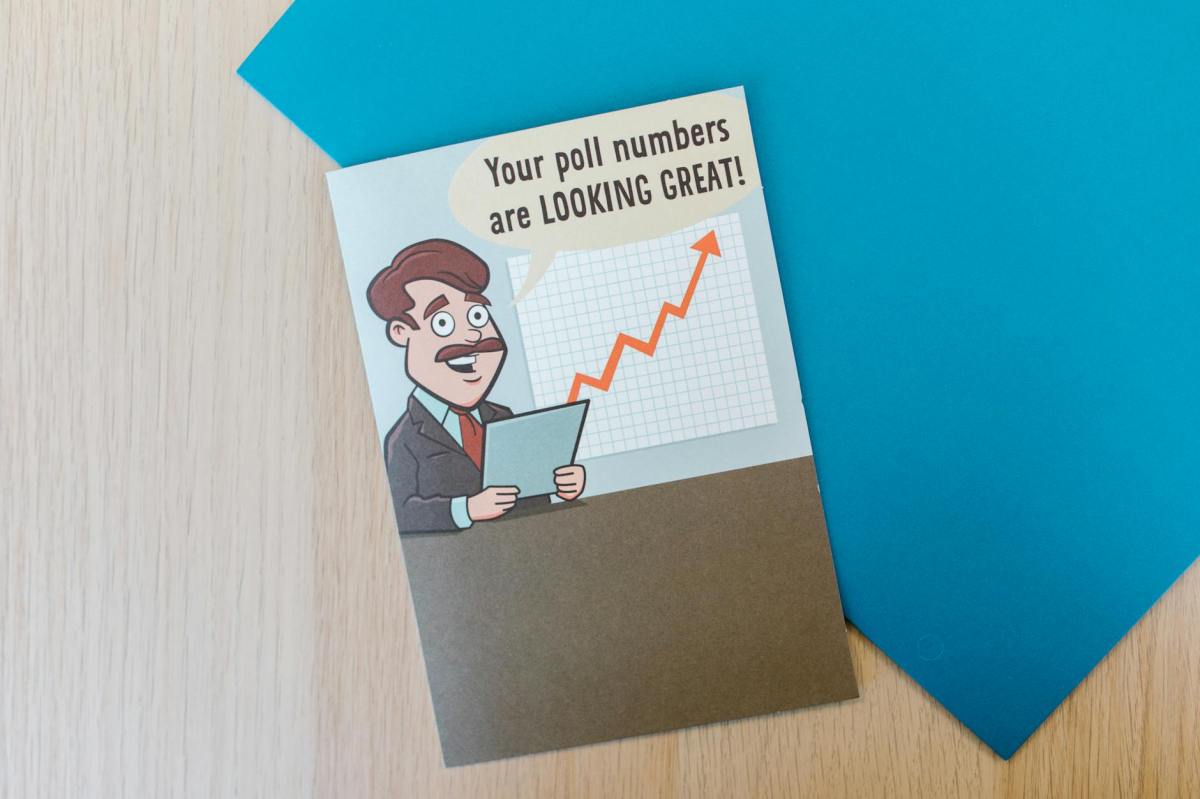
Economic barriers, like tariffs, are going to happen. When perception is all, the idea that one party can protect itself from those who would wish to do harm or take advantage, is very powerful. I say “perception” because a threat doesn’t need to be real. Politics is much about perception.

Trouble is that erecting barriers has a painfully poor history of failure. If we go back to walls, there’s not one that has stood the test of time. Maginot Line[1] is a case in point. The lesson there is that a barrier concentrates the opponents mind on how to overcome it. The elaborate nature of a barrier is no defence to the inventive mind. Barriers are time limited.

Tariffs, and non-tariff barriers are much the same. They may work to advantage for a while only to crumble when their weaknesses have been discovered. Although, I would say that non-tariff barriers are more powerful than straightforward economic barriers. The point being that the former is far more difficult to understand, counter and control.

2025 is a year of volatility, at least so far. Talk of tariffs is on, then it’s off, then it’s on again. It’s the real cat on the hot tin roof. A hop, a jump, and a skip. Everyone is left wondering what comes next. Even if there’s to be any return to a form of reasonable stability anytime soon. That’s the point.

Disruption offers opportunities. At least, for those quick inventive minds with resources to hand. If you don’t fit into that category, then chances are there’s a big downside and a lot of hurt.

To give the monopoly of the home market in the produce of domestic industry…………………must, in almost all cases, be either a useless or hurtful regulation. Adam Smith. The Wealth of Nations (1776).


[1] https://www.britannica.com/topic/Maginot-Line

Laughing Through Politics

Maybe it’s not a new seam to mine. That rock of British popular culture that puts up a mirror to entertain us or even shock us. There’s always a space for the public to be tickled by the absurd or hamming up of clichéd characters. It’s struck me, particularly on rewatching British TV comedy, how what we find humorous is an indicator of how we might think more generally. Or there’s a peculiar connection.

Obviously, it would be good to look at this subject in an objective way. To see what the evidence says. However, it’s almost impossible to separate personal experiences from any general observations. Afterall, I went to school where we endlessly repeated lines from Monty Python’s Flying Circus. This had our poor teachers totally bemused. Long forgotten is the “woody and tinny words” sketch. It only took a teacher to say a woody word and we’d have hysterics.

Not that Python didn’t offer one or two educational opportunities. In imagination, if nothing else. Try “The Man Who Speaks in Anagrams[1]” as an example.

When Mrs Brown’s Boys[2] became popular, I knew we were in serious trouble. I may be a real snob, but this kind of British “comedy” is a throwback to the worst of the 1970s (almost). To me the show has no merit whatsoever. It’s a sop to a grim set of stereotypes.

Jamilla Smith-Joseph’s short article[3] does point out that British culture is one of seeing the funny side of both us Brits and those strange foreigners. Problem is that in a simmering Brexity climate, we find it so much easier to lampoon our nearest neighbours, European foreigners.

I matured from Python to then enthusiastically embrace “The Young Ones” in my anarchic student days[4]. Now, I rewatch the series and the impacts are curious. In so many ways 21st Century Brits have become tame and unadventurous. The sheer destructive energy that let rip on TV screens delighted in upsetting established norms. Now, lots of people are embarrassed by what was called “alternative” comedy at the time.

Then we grew-up and got jobs. Tony Blair came onto the scene. Born out of that period of change was such masterpieces as “The Think of It”. Hope and optimism descended into spin and panic.

Popular culture and politics do connect. Is it a mirror like refection or is it a subconscious trend indicator? Or even a driving force that sustains a current way of thinking?

British popular culture is not going through a creative period. In 2025, there’s not a lot to recommend. Oddly it’s a series that started with a low budget movie from New Zealand that I find is the best comedy of the moment. “What We Do in the Shadow[5]” is variable in places but has horrendously funny moments.

So, come on British writers it’s time to better lampoon the toolmakers son who sits on the fence. One leg here, and one leg there. Labour’s latest adoption of conservative attire is surly worth funny lines. Something original. Maybe even out of this world.


[1] https://youtu.be/Q1sXeUHBHgk

[2] https://www.imdb.com/title/tt1819022/?ref_=ttep_ov

[3] https://ukandeu.ac.uk/a-very-british-euroscepticism-the-popular-culture-politics-nexus/

[4] Yes, I really did live in a rundown brick terrace, with a hole in the wall as space for a payphone, and a dodgy builder come landlord. Carpets with slug trails and an icebox as a shower.

[5] https://www.imdb.com/title/tt7908628/

Life on Mars Remains a Dream

Exploration is part of our DNA. There are parts of the planet that we don’t know well. That said, there are not so many spots where a human foot has not trod. The mysteries of the deep ocean remain to be better known. Only we more often look heavenward than we study deep waters.

Looking up at the night sky the fascination with a twinkling red dot runs through history. It’s surprisingly recent that the notion that Mars might be inhabited prevailed. A 100 years ago a scientist might be frowned upon but wouldn’t get locked up for such a conjecture.

The possibility of Martian life still gets discussed. If existing, it would be extremely rare and unlike the life we take for granted on Earth. Discoveries are more likely to tell us about the history of Mars than the present.

A search for other civilisations goes on. Today, Mars is a planet for robots. Rovers and other contrivances are best equipped to deal with the harshness of the natural environment. If the radiation doesn’t get you the wide-ranging temperature fluctuations will. Humans are not well suited to live in extremely harsh environments.

On a trip to Phoenix in the United States about 30-years ago, I drove out into the desert. This was to have a look at the Biosphere[1]. A curious experiment in human behaviour. The experiment attempted to reproduce what it would be like to live as extraterrestrials. We’d be the alien civilisation on Mars. Living in a huge greenhouse on Earth. As much as to say this brave but shaky experiment proved that extraterrestrial living is very hard. In fact, impossible in the way it was conceived. The lesson from such empirical experiments is to value our unique circumstances even more. Polluting and trashing Earth is about the stupidest act “intelligent” but fragile beings could do.

There are plenty of extremely harsh environments on Earth. Wisely we (humans) choose not to live in them on a permanent basis although we like to make documentaries about them. For example, there must be an exceptional motivator to get people to live in a box in Antarctica.

It’s reported that Musk says that Space X will go to Mars next year. Adding more robots to the Martian population. In the field of exploration this makes sense to me. What doesn’t make any sense at all is the determination to put humans on the surface of Mars.

The only civilisation that is likely to inhabit Mars successfully, in the next century, is an android one. Every sign is that the capability of robotic life will advance ever more rapidly. They can be designed to thrive where we would fall by the wayside. What better use can we put our future robotic friends to than advancing exploration?

Putting a date on the first human footsteps on Mars is about as ridiculous as last century’s imaginative speculation about a Martian invasion. Although, such popular stories make great science fiction.

POST: This remote station has had reported problems. A case in point. Antarctic scientists plead for help after colleague ‘threatens to kill’ team members | The Independent


[1] https://www.euronews.com/green/2022/01/29/living-in-a-bubble-did-this-failed-90s-experiment-predict-the-future

Dealing with Difficult Individuals

Dealing with an objectionable person. There’s a title for a book. Could be 101 things you didn’t know about objectionable people or maybe objectionable people for dummies. I can see it now. Airport bookshelves full of such books. You know those colourful sections on management and self-improvement books that you don’t often see in “normal” book shops.

It’s something I suffer from when travelling. I see an enticing book title in the moments of boredom waiting for my flight to come up on the large electronic display board. The ridiculous thought goes through my head after reading a random page. Now, this erudite tone, obviously read by millions, will help me be a better person. Naturally, the book’s future is to sit in a cardboard box and be moved around, never to be read again.

Back to my theme. How to deal with an objectionable person. Of course, the context matters a lot. If I said the person is your boss, then one approach might be in order. If the person in question is a world leader, you and I are a little removed from impacting the prevailing situation. Quite different. Never-the-less, why not have an opinion?

There’s strength in numbers. Through the whole of human history. Let’s face it, we are puny creatures when faced with natures most threatening circumstances. What we do is gather together and hey-presto[1] suddenly solutions start to bubble to the surface. I’m not talking about escaping a woolly Mammoth. More of a woolly Man-mouth.

Unity is powerful. Trouble is that unity is difficult to assemble. It becomes somewhat easier to assemble when a real threat is looming. An example that is of the moment is Canada. Over the last few weeks Canadians, if the media is to be believed, seemed to be becoming unified. I expect the same is true of Greenlanders.

Europeans are, as we often are, struggling to find unity. It’s there at the core but it’s beset with voices of doubt and voices of unfriendly adversaries. Over intellectualising is a common trait of mature democracies. We like to study the woolly Mammoth before we run away or make a lot of noise and throw spears at it.

Here’s a potential solution for dealing with an objectionable person, or more than one. It’s a borne of primitive schoolboy politics. Smart folk will wince. Push that to one side. Lets’ face it, smart folk have led us down the path we are currently on.

Send them to Coventry[2]. I don’t mean literally send them to the ancient English cathedral city in the West Midlands. If you are fed-up with hanging on every word of someone who is a menace, one approach is to stop listening and walk away. That English idiom about sending someone “to Coventry” is to deliberately ostracise. Avoid their company and act as if they aren’t really that important. You’ve bigger fish to fry.

Just like that. A good way to deal with Colin Robinson[3] is to walk away before it’s too late.


[1] https://www.phrases.org.uk/meanings/hey-presto.html

[2] https://www.coventrytelegraph.net/news/coventry-news/phrase-sent-coventry-originate-from-12137441

[3] https://www.imdb.com/title/tt11582982/

Review: The Autobiography of a Cad at Watermill Theatre

I’ve not done it. I’m always tempted. When I see Boris Johnson’s latest book on the shelf, to turn it around. Anything to discourage the good people of this parish from reading it. The picture of his smiling mug on the front of the book is a horrible reminder of the Brexit years. We’re still in them, and I dearly wish we weren’t.

A wasted decade. What for, I ask? It hits me that this is England. A society that is liberal to the core is obsessed with class. We don’t so much have a class system of the Edwardian era but what we have divides people almost as much. Every day the media trades on stereotypes borne of this embedded class perspective. Having lived in another country for over a decade, I can see it perhaps more than most.

We do joke about it. The pages of the satirical magazine Private Eye would have nothing to write about if “class” was truly a thing of the past. Today’s Parliament remains way overrepresented by a certain class of individual. Usually male.

Last night, I went to see “The Autobiography of a Cad.[1]” This is a story of an Edwardian. You might first think that there’s no relation to any politician of our time. It’s a about a man who has one true love – himself. It’s about how, even events as calamitous as WWI, offer him an opportunity to advantage himself usually at the cost of others.

The toff in question is fictitious. The play is a satirical comedy. It’s a highly entertaining evenings romp through the life of a rampaging chancer. Trust, truth and rules are as nothing in the face of his need to get what he wants. A faithful product of English public schools.

The cad is hazardous to anyone in his orbit. He has no idea of the havoc left in his wake. Ensuring others get the blame for his misdemeanours occupies much of his time. You are left wondering if this is instinctive or learnt this at Eton and Oxford.

Edward Percival Fox-Ingleby claims the title of political titan in his own made-up world. Comedy comes from his efforts to create a story of a colossus.

The play starts as it finishes. Fox-Ingleby standing at a lectern in the rain. Now where have we seen that before?

Watching this, with the intimacy of the Watermill theatre, I was in admiration for the three actors on stage. Galloping at the speed they were, throwing props around and transitioning from year to year was astonishing. I’d recommend this play. Best take a cushion. It’s a long romp.


[1] https://www.watermill.org.uk/events/the-autobiography-of-a-cad

Navigating Change

Theres’s wisdom in having flexibility when making decisions. Being too high bound by ridged beliefs or a dogmatic creed isn’t a way of sustaining success. The saying, “When the facts change, I change my mind. What do you do, sir?” is attributed to John Maynard Keynes. It’s nice to have a quote like that to validate the wisdom of flexibility. Is it always true? Well, this is not a physical law like Force equals Mass times Acceleration. So, using the word “always” is not the least bit appropriate.

In the first months of 2025 the US seems to be going through a cycle of extreme plasticity. It goes like this; propose policy that’s drastic and disruptive and that shocks or puts everyone on edge. Let it ride for a day. Watch what happens. Then either double-down or reverse the whole move and start something else equally shocking. Meantime saying how great the achievement has been even if there’s no positive achievement.

Conventional wisdom isn’t wrong because it’s conventional. Reacting to conventional or traditional ways of working by deeming them automatically bad doesn’t add up. I know it’s conservative philosophy, but wisdom is acquired over time.

You could say, I’m burdened with being rational (or reading too much). That’s not wrong. What’s difficult is that a rational person must stretch the imagination a long way to see any good coming from a rapid cycle of change, often for the sake of change.

Setting the cat amongst the pigeons (or bull in a China shop) makes economies and financial systems quiver. Without a certain amount of understanding, or the perception of understanding, assessing risk becomes almost impossible. That’s the first months of 2025.

Where’s the vision? Maybe underlying the impulsiveness is a desire to get from here to there as quickly as possible.

75 years ago, after WWII, America entered a “golden age”. Baby boomers, technology and a sense of optimism drove the good times. The 1950’s ushered in a commercial exposition. Modern marketing and a proliferation of brands changed society, both in America and across the globe. Over the past decade, there’s not been that shiny newness or unbounded naivety that captured the imagination of the time.

If the overall vision is to get back to those times, then reality is going to bite. A sea change in circumstances could happen but it’s unlikely to be the one painted above.

Legacy, A Cautionary Tale

English is full of pithy phrases that echo through the pages of history. One of the greatest contributors to this phenomenon was Shakespeare. Lots of quips and quotes and snippets of wisdom come from his numerous plays (and other literary imitations).

The phrase or maximum that I have in mind is: “Beware of an old man in a hurry.” It’s not the only one on the same basic theme. My dad used to say that there’s “No fool like an old fool”. Honestly, as a child I had no idea what he was getting at. I guess it was to sum-up an observation of someone’s behaviour. It’s not a complementary saying.

There’re several ways of interpreting the “old man in a hurry” saying.

For one, and I’m just about to clock 65 years, the way the world seems is conditioned by the fact that one’s final moments are a lot closer than they were as an ambitious young man.

Another interpretation is that we might expect an older person, with more experience, will be guided to make better life decisions. However, in reality, the reverse is so often true.

I could go as far as to say that the “beware” part is to beware of imbedded prejudices and reduced peripheral vison that can come with age.

Doing a quick bit of research the source of this short English saying is not ancient wisdom from a Greek scholar or scribbling Roman sage. Not even a contemplative Medieval monk.

No, it’s a young British Conservative politician talking about an old Liberal. In fact, probably the most successful old Liberal that has ever graced Parliament. The one who left this county with the world’s biggest Empire. When he passed at 88 years, Britain was the most developed, most prosperous nation and biggest manufacturer the world had ever known. If we were ever to call to Make Britain Great Again, we’d call for an old Liberal. MBGA doesn’t exactly flow of the tongue. Anyway, GB (Great Britain) endures as a name.

The young British Conservative politician was Churchill’s father, Randolph, and the old Liberal was an energetic, fired-up Gladstone.

Can I now use “Beware of an old man in a hurry” as I reflect on the week’s News? Does President Trump see the world as a racing clock? Knowing that mortality looms. Knowing that any marks that are to be made need to be made – now. The “long-game” is for others to play.

When time is almost up the tendency to rashness can be understood. A lot depends on whether the subject of legacy looms large in the thinking of a leader. Through the millennia legacy has mattered a great deal to leaders.

Gladstone’s success was marred by the eventual destruction of the Party he led. He did transform government from a boys-club of privilege, at least in part, but the future of Ireland became his achillea heel. As a Liberal, he found building a powerful country didn’t mean granting privilege for politician’s and friends’ private businesses but ensuring that the working class were represented.

Trump’s haste, and lack of longer-sighted goals, appears real. Constitutions, democracy and the public good will endure. Mean-time hang on to your hats.

About Animals and Flying

Pigs do fly[1]. But only the more privileged ones. Yes, animals that fly are not restricted to those with their own wings. It’s true that the animal kingdom has been showing us how to fly long before powered flight took-off. Nothing more graceful than a bird of pray swooping and diving. We (humans) can’t match much of what they do with our flying machines however hard we try.

Birds long inspired great thinkers. They opened the prospect of human flight. If they can do it – why can’t we? Surely the right combination of aerodynamic structures and a source of power would solve the problem. Shocking, in a way, that it wasn’t until a couple of keen bicycle repair men and a smart mechanic persisted until they had a working machine. That was only just over a hundred years back.

So, today’s novelty News item[2] of a cat that didn’t want to leave an aircraft puts a smile on my morning face. For all the farm cats I have known, the story doesn’t surprise me at all. It’s the sort of situation where humans are almost powerless in the face of the preferences of a feline.

Naturally, the engineering staff of an airline will have a good look at where the cat has been in its wanderings. There’s always the remote chance for a rogue moggy to play with something they shouldn’t ought to play with. Even on a modern Boeing 737.

I used the word “remote” but there are definite cases of loose animals causing air safety hazards. Looking this one up, because it sits vaguely in my memory, I do recall a dog that crewed through electrical cables after it got free in a cargo hold. Now, however lovable and cuddly a dog maybe that’s a place that no one wants to be in.

Back in 2002, American Airlines Flight 282 approached New York’s JFK. It was a Boeing 757 that landed with chewed-up electrical cables. Crew members heard noises coming from the cargo hold and found that some aircraft radio and navigational equipment wasn’t working. A dog had chewed its way through a cargo bulkhead and attacked wires in an electronics compartment. 

A quick search reveals that there are more cases of incidents caused by loose animals than might first be thought. Animals are potentially hazardous cargo. Sadly, often these flight incidents are not good for the animals concerned.

One thing to remember is that a large aircraft, at flight altitude, is pressurised. That’s not at the air pressure on the ground (unless an airport is a long way up a mountain range). A dog with breathing difficulties is going to find an aircraft environment distressing. Dogs can be skillful escape artists. Myself, I’m not keen to share a flight with them.


[1] https://intradco-global.com/livestock-transport/

[2] https://www.thesun.co.uk/news/33273791/cat-causes-chaos-ryanair-plane-rome/

Pragmatism in British Politics

Pragmatism has long been a part of British life. Idealism too but to a lesser extent. That said, the shelves of literary works probably tip in the balance of idealism. There’s always an “insightful” quote to pull of the shelf and plonk into a speech or scribblings like this.

There’s a comfort in putting important decisions down to known facts and up-to-date realities. This way of working tends to favour short-term action based on weighing-up the here and now. What’s best for us where we stand at this moment? How much money have we got?

If you are an ardent socialist or committed liberal or dyed-in-the-wool right-winger, then pragmatism can make your flesh crawl. It leads to the question – what do you really believe in? Intellectual prowess is challenged by a call to make it up as we go along.

Pragmatism encourages hypocrisy. Now, that might be phrased as an uncomfortable negative. The truth is that no successful organisation has ever escaped a great deal of honest hypocrisy. Positions on even the most hard-fought issues do change. That’s not a negative. Just a couple of minutes surveying the history of the last half century, more than proves the case.

So, when I hear the UK Prime Minister (PM) talk of “ruthless pragmatism” I do wince a bit. It’s not that pragmatism per-se is an evil. No way. Mere survival in any political landscape and someone must react to the here and now in a way that doesn’t sink the ship.

PM Keir Starmer talking on Europe[1] is like listening to a rich Victorian woman having on extremely tight underwear. There’s no way she can loosen it in public. Her peers would disown her. When no one is looking an immense sense of relief can be gained in shedding the constraining garments. Behind closed doors the ridiculous restraints are shed.

Frankly, UK opposition to joining youth mobility schemes[2] in Europe is a stupid as stupid can get. I mean stupid times a billion. Now, some madcap idealists might be scared that British youth might, if taught early, be influenced in ways that would last throughout their lives. Such would be their indoctrination that eventual the push on the UK to join to European Union (EU) would be overwhelming.

There’s another word beginning with “p”. Take pragmatism and replace it with paranoia. The later seems to be fashionable just now. Forget the idealist approach where at least views tend to be based on a plausible creed. Paranoia is such that no previous experience is necessary. It’s all-over social media and more and more conventional media. Pragmatism is met with disbelief. So, is it wise for Keir Starmer to make that word a number one headliner?

A philosophical political pragmatism has been long practiced in the UK. I don’t see that stopping anytime soon. But what’s to be gained by headlining it? Not a lot I’d say. In fact, it gives ammunition to the light blue swivel-eyed loons[3].


[1] https://www.independent.co.uk/voices/editorials/keir-starmer-brexit-reset-europe-b2692118.html

[2] https://lordslibrary.parliament.uk/youth-mobility-schemes/

[3] https://www.independent.co.uk/news/uk/politics/swivelgate-david-cameron-goes-to-war-with-the-press-over-swiveleyed-loons-slur-8622277.html

Investigating the Black Hawk and American Eagle Collision

What’s mysterious about the recent tragic collision between a US Army Sikorsky UH-60 Black Hawk helicopter and the American Eagle Flight 5342, was the failure of the normal procedure of “see and avoid” and the lack of an avoiding manoeuvre from the helicopter[1].

Taking the timings from reports of the investigators’ work so far, the air traffic controller’s instruction to the military helicopter to pass behind the commercial jet was seventeen seconds before the catastrophic collision impact. Given the trajectory of the commercial jet, as the pilots were focused on a landing, they had little possibility for an evasive manoeuvre other than a go-around. I imagine the commercial pilots and the tower controller reasonably assumed that the military helicopter would comply. In fact, why would they have any reason to question that assumption?

A question has arisen about night-vision goggles. Were the crew of the military helicopter using these devices? Night Vision Imaging System (NVIS) are not new[2]. They are used in both in military and commercial flying. There are a series of technical requirements that address their safe use. For commercial flying helicopters, that use such visual systems, they must additionally be equipped with a Terrain Avoidance and Warning System (TAWS). 

One of the down sides of night-vision systems are that the greatly enhanced capability can lead to overconfidence and potential misjudgements by pilots. When used by pilots these systems amplify ambient light and thus help pilots maintain visual references. That’s good for night flying over difficult terrain at low altitude. It’s not so good when there are multiple bright light sources all around, as there are in a big city.

I’m sure that the accident investigators will be giving the above subject a great deal of consideration. Afterall, the evening of this tragic accident was one of fine weather and fair visibility. The investigators have a significant task ahead analysing data and verifying the performance of both humans and machines in the accident situation.

NOTE 1: Worth a watch https://youtu.be/hlMTpIAlpw0

NOTE 2: Key safety system off in Army helicopter that collided with American Airlines jet, senator says | Reuters

NOTE 3: Night Flying “there are factors that can make it more challenging, like the lack of visual references and encountering visual illusions”. Flying into the Dark. What You Need to Fly at Night | by FAA Safety Briefing Magazine | Cleared for Takeoff | Jan, 2025 | Medium


[1] Evidence of a last-minute manoeuvre may still come to light. Sadly, the outcome remains the same.

[2] https://skybrary.aero/articles/night-vision-imaging-system-nvis