Civilization’s Edge

Civilizations rise and fall. That’s not new in the human experience of the last couple of thousand years. One of the causes of failure is an encounter with an entirely unexpected threat. When I say “unexpected” I mean unprepared for threat. Then finding that the defences that have been constructed fall simply and quickly because they didn’t anticipate that threat.

Another reason for failure is a perpetual human characteristic. Arrogance. Everyday imagining that the pinnacle of achievement is – now. Look how smart we are in the 21st Century. Capable, Superman like, of leaping so far ahead of our forefathers.

I’m a child of the analogue age. I was born into the space age. What that brought us, by necessity, was the digital computer in all its myriads of forms. Yet, from day one, it’s no better that a mass of fast switches. Ones and noughts. Nothing more. Nothing less.

With miniaturisation and an understanding of how materials work a massive, global, interconnected digital system, called the INTERNET, has been constructed. It’s flexibility and utility are undeniable. Its extended human capabilities way beyond that of past generations.

Now, I can start a sentence with “however” or “but” or despite this fact. The whole enterprise is still an unfathomable, dynamic number of ones and noughts.

There’s a kind of vulnerability that is elemental. Whatever might be written about powerful Artificial Intelligence (AI) systems it’s fair to say that the “A” is entirely accurate but the “I” is a bit of a myth. Mimicking intelligence is more the order of the day. That does make people shudder because that mimicking is so fast and draws on a massive amount of information. Seemingly that surpasses human capabilities. It doesn’t.

I write not of the machines that we have today but of those to come. I’ll resist the mention of the number 42. What’s happening is an acceleration of developments. These highly versatile tools that are permeating every aspect of life are not frozen in time. They overhaul themselves on a regular basis. What comes next is indeed machines that make machines. Algorithms that write algorithms.

Humanity is unprepared for the emergence of an intelligence that genuinely fits that bill. The whole idea of sovereignty and human autonomy might go out of the window. The ability to exercise control over where we are going is lost.

There are a lot of wealthy folks who are of a libertarian frame of mind who don’t seem too concerned about this race to the point of loss of control. This could be an expression of arrogance or ignorance or both. It could be the ultimate expression of short-termism.

It’s going to require real effort to hang on to democratic systems where we all have a stake in the direction of travel of our society. Money buys influence. Now, that influence is adverse to the idea of trying to regulate or moderate the advance of technology.

Civilizations rise and fall. Are we racing towards a cliff edge? Put aside climate change for a moment. Stop me from any tendance to doom-monger. My thought is that a comfortable, stable, prosperous society needs regulator instruments that work to mitigate threats. Let’s not be persuaded to ignore that reality.

UK’s Digital Dependency

Under the title of “Culture” The Guardian newspaper offered an article that caught my eye this weekend. The author, Tim Wu was offering a point of view about the economic landscape that we inhabit in Britain. The theme was the drift that has taken place whereby we find that a huge dependency has grown-up over the last couple of decades. That is the unassailable dominance of a small number of US companies throughout the whole of our country.

What am I using to write this remark? It’s a computer program called “Word” sold to me by a multinational company called “Microsoft.” What’s strange is that this way of expressing my relationship with Microsoft isn’t commonplace. There’s a tendance to treat software, like Word as if it has always been with us and always will be. Like the public roads I drive my car on. Completely taken for granted. That is until a problem arises.

This Saturday article wasn’t about computer software per-se. Although the world of computing is riddled with intellectual property rights there remains a kind of openness to new ways of doing business. Digital ones and noughts are like the text on this page. They can be rearranged in all manner of diverse ways. The combinations and permutations are almost infinite.

Tim Wu argues that we should look to the way transport systems developed as an analogy to the electronic communications infrastructure we use.

Roads developed in the era of the horse. More than 200-years ago, before the time of the railroad. In fact, they go back a lot longer than a few hundred years ago. The Romans were particularly good road builders. However, that was a state enterprise aimed at getting armies around a sprawling empire.

The condition of roads in Britain took a leap forward when commercial enterprise found a way of getting an income from the primary land transport system of the day. Road tolls were a way of building and maintaining a network of highways. This network was physical. Fixed in place.

Digital infrastructure is more than cables, wireless systems, and databanks. Without the human interface all that extensive structure is unusable. That’s were a small number of US companies dominate the marketplace. This complete extra territorial dominance is, like my comment about Word above, taken for granted.

Tim Wu’s analogy doesn’t cut the mustard. It does illuminate an inconvenient truth. The reason the big US companies are driving the future of communication and technology is because they have captured a massive global income stream. However, much of that position depends on the laws that prevail in each nation. That prevail at a time when globalisation was seen as almost unquestionable. Now, the question arises has national sovereignty been sacrificed on the alter of progress? If so, what next?

There’s often been a hard kick-back against anticompetitive behaviour. Monopolies are not considered the best way to serve the public interest. Nevertheless, throughout history they have been pivotal in our story. Like it or not, that’s how the elegant country houses and castles of Britain were paid for and furnished. The same experience can be witnessed at the Newport Mansions[1] in the US.

How do we democratise rapidly advancing technology? There’s a mighty big question.


[1] https://www.newportmansions.org/

Wealth and Power

No history buff, need you be. That’s Yoda speak for saying that there are one or two matters that bubble to the surface through human history. Let’s shelve the fact that the sun rises in the morning and sets in the evening. It’s a subject that a whole religion could be based upon.

I could encapsulate the phenomenon in the words: “Let them eat cake”. An example of a stratified society where those people that the top have completely lost sight of the lives lived by the majority. There’s a recognition that others exist but no great empathy or care.

That detachment can be exhibited in signs like gold plated panelling, crystal chandlers bedecking breathtaking halls and spare no expense expressions of power and wealth.

That’s one of my memories of my one visit to Russia. A port of call during a Baltic cruise itinerary. A trip that highlighted fascinating contrasts but shared histories. A good reminder of dramatic events. The Winter Palace in Saint Petersburg[1] is truly stunning. Lavish in every sense. A sign of the last century intense competition between major European powers.

To top a list, the Palace of Versailles[2] is the premier example of draw dropping magnificence. Naturally, these are global statements of power and wealth that are celebrated as part of our common heritage. They are, however, a lesson that history has posted for us to read.

What do both have in common?

Today, Kings and Queens are familiar with that lesson. Possibly apart from a small number who haven’t yet embraced modernity. If I must write it in the minimum number of words, it’s that distance that can grow between those who have great privilege and those who don’t. Then what happens when that becomes truly unstainable.

Revolution is bookmarked in any history book. These are moments, and their consequences are when a break point is reached. Although signs are there in hindsight predicting such events is a fraught with uncertainty. It’s usually thought that the price of destruction and devastation are a dam that keeps thoughts of revolution at bay. Change that happens, as if a dam breaks, are notoriously difficult to predict and cost. Not only that but such thoughts are rarely in the minds of any revolutionaries and their opponents.

Let me be clear. We are no where near a breakpoint in this moment. If I must write something, it’s more about the subtle signs that the direction of travel is not a positive one. Fine to dismiss my point of view as being that of a dyed-in-the-wool liberal. I get that.

It’s the consequences of the concentration of power and wealth that’s concerning. The rise of the global billionaires and their reach beyond national boundaries is of the age. Nation states are no longer the biggest players in the writing of the story of the future. This is not always entirely bad, some are altruistic, but growing economic inequality[3] is bad. Outcomes from situations where inequality exceeds certain limits, that’s not where anyone sane should go.


[1] https://www.historyhit.com/locations/the-winter-palace/

[2] https://whc.unesco.org/en/list/83/

[3] https://sites.manchester.ac.uk/global-social-challenges/2022/07/12/widening-of-the-wealth-gap-the-rise-of-billionaires/

The Future of Our Shared Values

That’s done. Reflecting on the last nine years. Time to look to the future. There’s no shortage of articles about the past and the present. Huge numbers of column inches crunch every detail of the current twists and turns of public life. Social media vibrates with repeated daily stories.

I watch a rebroadcast of HIGNFY[1] to quickly get the message that a headline is no basis for figuring out where we are going. Moments pass. Yes, there are reoccurring themes. What’s fascinating is that prominent personalities have their moments in the sun, and that they last a fraction of a second (metaphorically). The world moves on.

Yesterday’s scribblings concerned a degree of nostalgia. If only we could go back to some mythical age where current affairs seemed to make sense. Where people cooperated towards a common good. Where conflict was the exception not the rule.

Don’t look back. Don’t look back, too much. It’s a habit of the British to romanticise the past. Having such a colourful past to draw upon there’s always a story to tell. This inclination is at the root of our difficulties. It would be better to set a shared history as a foundation stone rather than always trying to build the same house.

Here in 2025, the world is being reshaped. There’s only so much that can be extrapolated from experience. Like a tsunami there’re changes happening that are unlike anything that has gone before. Early predictions of the benefits of digital technology imagined a borderless world. Information and learning spreading freely to enlighten and educate. So much for that.

It becomes clear that there are steps needed to protect and preserve our values. Enduring values underpinning our culture. They are not immutable. Forces acting at a global scale can, and do, shape how we think about our nation and what binds us together.

Whether we like it or not, many of the forces that shaped the colours on the world map are being played out in the digital sphere. Boundaries, barriers, conflicts, possessions, passions and powerplay are all there. Maybe they are not so visible to the man and woman on the Clapham omnibus, but they are there in abundance. As if we needed any indication, the experience of Jaguar Land Rover[2] and the cyber-attack they are dealing with, is there as a siren light.

I my mind these are not forces to confront in isolation. They do not respect lines on a map. Back to where I started. It’s by working with others, on an international level, that the harmful elements can be addressed.

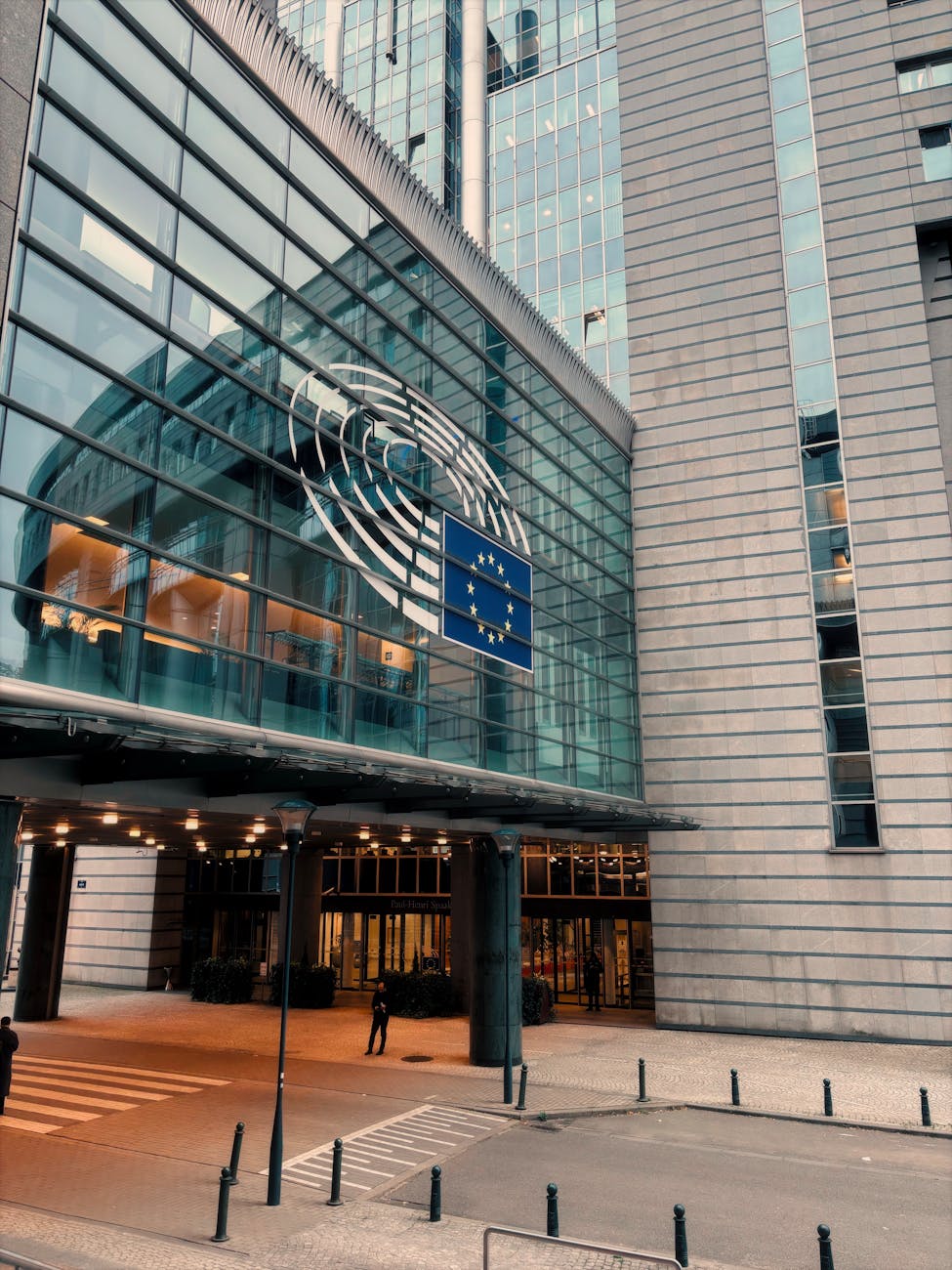
The European Union (EU) envisions a Digital Single Market. That’s a project to be on-board. It’s essential to have standards that safeguard privacy and data security. Government Ministers who promote a hands-free laissez-faire approach are naive in the extreme. This is a practical field where Britian urgently needs to rebuild relations with its neighbours.


[1] https://www.bbc.co.uk/programmes/b006mkw3

[2] https://www.ft.com/content/6f2923b3-2a4b-4c9b-9cde-eb5f0d5b9ce3

Trust in Voluntary Reporting

Hard data is immensely useful. Now there’s a surprise. That’s facts and figures. That’s accurate descriptions of occurrences. That’s measurements and readings of important factors. From this kind of data, a picture can be painted of events good and bad. However, this picture is not complete. It’s certainly not complete for any system that involves the interactions of humans and machines.

What’s often less visible is the need for what I might call – soft data. As such it’s not “soft”. I’m just using that loose term to distinguish it. Fine, you could say that social media is littered with the stuff. Vast qualities of instant judgements and colourful opinions. An array of off-the-shelf solutions to life’s ills. That’s all well and good for entertainment. It’s not so useful as a means of getting to the truth.

In civil aviation voluntary reporting systems have been around for several decades. They are not always successful, mainly because there’s a fair amount of trust required to use them when something major happens. When volunteering information there needs to be a level of assurance that the information will not be misused.

The human inclination to seek to blame is intrinsic. We wake-up in the morning, look out the window, and if it’s rainy and windy then someone is to blame. Probably a weather reporter for not warning us of a coming storm. Blame is a way of making sense of negative events without having to do lot of tedious investigation and analysis.

Don’t get me wrong. Accountability is vital. If someone does something unspeakably bad, they must be held accountable. That is a form of blame. Tracing the bad event back to the root cause. If that cause is found to be negligence or malicious intent, then blame can be assigned.

Where a good safety culture exists, as it often the case in civil aviation, then it is wrong to assume that undesirable outcomes can always be linked to a bad actor of some kind.

Human error is forever with us. Even with the absolute best of intent no one is immune from this pervasive creature. It can be illusive. There are environments where owning up to making mistakes is fine. Sadly, I’m sure it’s not uncommon to have worked in environments where such openness is punished. The difference between a good culture and a bad one.

One of my past jobs involved negotiation with a contactor. Every change that we made to a complex contact had a cost attracted to it. So, there was an understandable sensitivity to making changes. At the same time our customer for the product kept asking for changes. There’s nothing worse than being in a tense meeting with a contactor and having my boss pull the rug from under my feet. Seeking to blame a change on my error rather than a customer request. Introducing a voluntary reporting system in such an environment is pointless.

My message here is clear. Voluntary reporting in aviation is a powerful tool. Reports submitted by employees can offer insights that are not available by just looking at hard data. These reporting systems maybe required by regulation or company policy. However, without a good sound safety culture they can be all but useless. A safety culture that is defended and supported by employees and the senior management of an organisation.

National Digital ID: Balancing Security and Liberty

We are in an age where identity is as important as it has ever been. Those line of demarcation that put us in one camp or another. It’s not a simple subject give the myriads of different combinations and permutations of distinct categories that can describe a person.

Without a doubt, I’m English, British, and European. A West Countryman, a husband, a graduate, a homeowner, a taxpayer, a liberal, an engineer and a gardener to name a few.

So, what of the current debate about the merit of identity cards or their digital equivalent. I remember, more than 15 years ago, the debate that surrounded this subject. Saying, as a Liberal Democrat I was against the introduction of ID cards as a matter of principle. A matter of principle seems like it should be an immovable statement. However, that which was a matter of principle in the context of the times does warrant revisiting.

It’s a transformation that was allowed to sweep much before it. From a paper-based analogue world full of mechanical processes to a ubiquitous high-speed digital one that has made life unrecognisable from the 1980s/90s. Digitisation is as much a social change as it is a bureaucratic change.

Past agreements range from the assertion that it will be impossible to control illegal migration without ID cards to the fear of big brother tracking every stage of our lives from cradle to grave. What’s moved on is the context within which arguments for and against are conducted.

A starting position is that each of us has multiple identities. It’s undeniable that these exist and they impact our daily lives. Some of these identities entitle us to specific privileges. This means permitting our access and restricting or stopping others. This can be as simple as a workplace security badge that allows access to a building.

A State-run identity recording system is not a universal cure all. Also, a State-run ID card and national database system has the potential to fundamentally change the relationship between a Citizen and the State. I could say that there’s nowhere to hide. This is not a subject to go into with one’s eyes closed. The operational and associated implementation costs would be significant. Not to mention ongoing maintenance. These must be weighed against the benefits that might be accrued. I hope this becomes a rational discussion where costs and benefits are studied, published, and debated.

Can a national digital ID system prevent terrorist attacks, illegal immigration, identity fraud, and human trafficking? I don’t know. I do know that it will not be perfect.

On the political side, will people feel more secure and that State benefits or services are more fairly distributed as a result? That’s a big question.

To work effectively such a system will need to be required to by law. How much will that nibble away at the intrinsic perception of British liberty that we continue to hold? Will there be a backlash against a State that seeks to acquire more leavers of control?

My view is that the mandating of a national digital ID system needs to be balanced with a better clarification of the rights of citizenship in Britan. Without a written constitution there remains the vulnerability that a government of an extreme political type could misuse this innovation.

Evolving Communication

What happens when only a small percentage of the population can read and write? A historical perspective on that question gives the answer: feudalism. If texts are all in Latin and only the priesthood can read Latin, then it’s obvious what the results will be. That the priesthood acquires a superior power to that of the ordinary citizen.

Our interactions are what gives us our freedom. It’s difficult to challenge authority if that authority is holding all the cards. The means to communicate, and the willingness to do so, are integral to a free society. A democratic society.

Speculation about a future where humans spend most of their time interacting with machines is reasonable. In the last couple of decades, the increase in the number of machines that occupy more of our time is notable. Every trip to the supermarket[1] there’s the opportunity to enter a shop and leave without a single word to anyone. Not even a simple greeting or snippet of small talk. This is often sold as a benefit, faster, easier, less hassle.

If life can be conducted without the need for human communication, there are those who will take that path. Some will be by default and others willingly walk that path. If a majority do this then the balance of power shifts to advantage those who control the machines.

Before I go off on some dystopian movie plot, it may be as well to say that lot of new forms of communication have sprung up too. Those who play computer games and interact with other players all over the world. Such capabilities never existed until relatively recently.

What’s most concerning is the gradual distancing that is happening in politics. This might account for some of the disillusion that’s now evident. Gone are the days of major names addressing crowds directly. The idea that a political candidate would stand on a soapbox[2] in a public place and drum out their views and beliefs is getting remote. Such old-fashioned grass-roots campaigning methods are seen as dangerous and riddled with pitfalls.

Better a short video on a social media site is seen to be the substitute. Certainly, safer than standing up to a protest group or alternatively standing with them. Although, to be accurate, security has always been a matter of concern for public speakers. Taking onboard changes, verbal human to human communication is far from dead. It’s taking different forms. Mediated by the digital world we now act and speak differently. Post-COVID a degree of social etiquette has been lost.

Maybe this is why the UK Liberal Democrats are making so little impact on the national stage. With so many more elected members than one of their right-wing adversaries they still command less newspaper column inches (another old-fashioned term).

Like King Cnut[3], it’s foolish to think that the digital tide can be stopped. People must roll with it. If that means having a virtual pet or an artificial friend that will all become part of life’s colourful pageant. Small talk at a bus stop will never go away. However new ways of talking about the things that matter are happening – better adapt.


[1] https://www.theguardian.com/global/commentisfree/2025/aug/24/are-we-heading-for-a-world-where-no-one-ever-needs-to-talk-to-another-human-being

[2] http://news.bbc.co.uk/onthisday/hi/dates/stories/march/30/newsid_3739000/3739176.stm

[3] https://www.historic-uk.com/HistoryUK/HistoryofEngland/King-Cnut-The-Great/

Regulatory Insights

I can’t remember if my teacher was talking about maths or physics. His scholarly advice has stuck with me. When things get complex, they can seem overwhelming. Problems seem insolvable. So, it’s good to take a deep breath, step back and see if it’s possible to reduce the problem to its most basic elements. Do what could be called helicopter behaviour. Try to look at the problem top-down, in its simplest form. Break it into parts to see if each part is more easily comprehended.

Today’s international aviation regulatory structure, for design and production, follows the arrow of time. From birth to death. Every commercial aircraft that there ever was started as a set of ideas, progressed to a prototype and, if successful, entered service to have a life in the air.

This elementary aircraft life cycle is embedded in standards as well as aviation rules. Documents like, ARP4754(), Aerospace Recommended Practice (ARP) Guidelines for Development of Civil Aircraft and Systems are constructed in this manner. There are as many graphs and curves that represent the aircraft life cycle as there are views on the subject, but they all have common themes.

That said, the end-of-life scenarios for aircraft of all kinds is often haphazard. Those like the Douglas DC-3 go on almost without end. Fascinatingly, this week, I read of an Airbus A321neo being scrapped after only 6-years of operations. Parts being more valuable than the aircraft.

Generally, flight-time lives in operational service are getting shorter. The pace of technology is such that advances offer commercial and environmental advantages that cannot be resisted. Operating conditions change, business models change and innovation speeds forward.

My earlier proposition was that our traditional aviation regulatory structure is out of date. Well, the detail is ever evolving – it’s true. Some of the fundamentals remain. The arrow of time, however fast the wheels spin, mixing my metaphors, remains an immobile reality.

In airworthiness terms an aircraft life cycle is divided into two halves. Initial airworthiness and continuing airworthiness. This provides for a gate keeper. A design does not advance into operational service, along the aircraft life cycle, until specified standards have been demonstrated as met. An authority has deemed that acceptable standards are met.

I’m arguing, this part of the aviation regulatory structure is far from out of date. However much there’s talk of so called “self-regulation” by industry it has not come into being for commercial aviation. I think there’s good reason for retaining the role that a capable independent authority plays in the system. A gate keeper is there to ensure that the public interest is served. That means safety, security and environmental considerations are given appropriate priority.

To fulfil these basic objectives there’s a need for oversight. That is the transparency needed to ensure confidence is maintained not just for a day but for the whole aircraft life cycle. And so, the case for both design and production approvals remain solid. The devil being in the detail.

Action Shapes Outcomes

There’s a foolishness that comes with great power. It gets played out every day over the News media. It’s when notable person x or y says words to the effect; nothing will happen unless I do it. This common notion gets projected to us through mass reporting and commentary.

Every second is a pivotal moment. A last chance to move, or a last chance to act. As if time stops when we know it branches into countless possibilities. Fine, pivotal life or death moments do exist. It’s only that they are less numerous than we might be led to think. Drama takes its place in the theatre of the everyday[1].

There’s an ancient lesson to learn. It goes like this, in a simple demonstration. Place any finger into a glass of clear water. Now, remove the finger and observer the hole.

It’s a lesson Archimedes would appreciate. Although he’s famous for displacement being an indicator of what’s doing the displacement. Between the two it’s the water that’s the constant. The ebbing and flowing of time. At least as we humans perceive it.

It’s not that an individual can’t make a difference. Far from it. Individual action can make a dramatic difference. Doing the right thing at the right time, if the opportunity arises, can be the difference between catastrophe and nothing much in particular, as an outcome. In the world of major accidents, designers and operators desperately try to avoid the possibility that a single act or failure that leads to catastrophe, but it does, on rare occasions happen.

The point in discussion is the matter of what is indispensable. How often do we get to choose what is indispensable? After an event, it’s easier to answer the question. Looking back, it can be said that the factor that made the most difference was this one or that one. Before an event, we are in the land of probabilities and shiny crystal balls. Mathematics and mysticism.

The Cuban Missile Crisis[2] offers a lesson. It was only in retrospect that people learned of the action of a Soviet Naval officer who prevented a submarine from launching a nuclear torpedo.

History tells how the pivotal moment arrived. That said, there was no way the man concerned knew before time that his role would be indispensable. History would be written dramatically differently if a nuclear engagement had happened.

In the end it comes down to doing the right thing at the right time when the opportunity arose. Sometime swimming against the tide of events. Not magic exuded by a powerful individual strolling the stage.

POST: A better one. All The World’s A Stage By William Shakespeare · Jim Broadbent https://youtu.be/gUJBEy-tbo0?si=NMkIRpIr8H0wdTgv


[1] https://youtu.be/caaPlIX6AkM

[2] https://www.jfklibrary.org/learn/about-jfk/jfk-in-history/cuban-missile-crisis

Sustainable Aviation: Innovations and Challenges

Gas guzzling continues to be one of aviation’s problems. Combustion remains that the heart of most aircraft power plants. Taking large amounts of fossil fuel. Squeezing energy out of every drop of gasoline. Gobbling up more day after day. Pushing out emissions.

As I look out across the garden, I see gliding effortlessly as the warm air rises, a Red Kite[1] gracefully circling. Wings outstretched they hardly move them as they climb. They’re a distinctive small bird of prey, easily spotted because of their forked tail. Now, that’s what I call efficient flying. Using all that nature provides and wasting little energy.

Human attempts at flying are a million miles behind these magnificent birds. There’s still so much to learn about aerial navigation. It’s a matter of control. The sensing of ambient conditions and the precision movements needed to ascend and dive at will.

The search is on for effective change. There’s no pretence that the way commercial aviation operates is unsustainable. It’s true that the gas guzzlers of the air guzzle less gas now than they ever have but the physical facts remain.

None of this is new. I’m about to send a book called “Towards Sustainable Aviation” to a charity shop. It’s not that there’s anything wrong with it. The book is full of pertinent analysis and observations. Trouble is that it’s dated 2003.

I’m led to ask – what’s changed in over 20-years? In answering my own question – quite a lot but not enough. Discourse has moved on from academic quarters to the political sphere. Aircraft have become more fuel efficient. Driven by economic imperatives as much as any concern for the climate. Research initiatives are generously funded to come up with answers. Solutions like hydrogen, electric propulsion, and SAF (sustainable aviation fuel) are slowly moving from theory to practice. A few prototypes are flying. Limited supplies of SAF are flowing.

Unmistakable that’s where the problem lies. For all the hype, policy and government funding the pathway to genuinely sustainable aviation disappears way off into the horizon. There are setbacks too. Gas guzzling is back in fashion. Certainly, in Trump’s America.

We could make a much more of the technology that’s currently available. Yes, there are costs involved. Change is not a free ride. That said, sticking with the status-quo isn’t free either. Legacy costs mount up. One reason why older jets disappeared from fleets so quickly.

The next generation of commercial aircraft must make major steps forward. Since the life of a typical aircraft type can easily extend to 30-years, then change must happen in design now.

Typically, commercial aviation moves with graduated change. There’s an inherent conservatism in the system, as might be expected when safety and security are paramount. Facing this global challenge, there’s a need for a degree more radicalism.

Since high impact disruption is also in fashion, it’s time for airlines and manufacturers to adopt a pioneering spirt. It’s been done before. In the 1960s, that pioneering spirt gave us the Boeing 747, the Jumbo jet. That opened flying to a whole generation.


[1] https://www.rspb.org.uk/birds-and-wildlife/red-kite