The River

What a contrast. From plus 12 earlier in the week to minus 2. There’s a sheet of white frost covering the fields this morning. The flood water shimmers in the morning sun. Not cold enough to ice over as the water tries to escape back to the river.

I get woken-up to the sound of the 18 or so Canadian Geese who make the boggy grassland next to the River Lambourn[1] their feeding ground. I can understand how they get so big as they graze from dawn to dusk. Their take-off from the water is a long one as they flap furiously to get their great mass airborne. It’s quite a sight as they fly in formation.

These formidable geese are not alone. A few Mallards stray into their territory. For the most part they all seem to get along fine. Plenty of food for everyone. Little grass islands form where the water swirls around. I named one of them duck island.

The geology here is Valley Gravel according to the council’s local plan. I’m not sure what that means but I guess the riverbank will drain fast when the flood water abates. Standing on the ancient bridge on the Oxford Road, I can see that the river Lambourn is shallow and fast running.

I say ancient bridge given the Priory on the other side of the river. The north side. That bridge site certainly dates to the 16th Century. The road must have a long history as it leaves Newbury town and enters the village and environs of the castle of Donnington[2].

I’m imagining the role the area played in the 17th Century. The site of the English Civil War battle, the Second Battle of Newbury. The castle was held by Royalists. It was under siege from the Roundheads camped on this side of the river. The south side.

From what I’ve read so far, the siege was a long one. When it was broken, the defending forces were allowed to escape in honour of the brave fight that they had put up. For whatever reason, in 1646, Parliament voted to demolish the canon damaged castle. Today, only the grounds and gatehouse of the castle remains standing.

It’s nice to be able to look out of my kitchen window and see on the hill such a significant part of English history. The ruin sits on the horizon looking north. Often both the rising and setting sun light it up.


[1] https://www.kennetcatchment.org/catchment/lambourn/

[2] https://www.english-heritage.org.uk/visit/places/donnington-castle/

Protest

Experience of protest can range from the exhilarating and heartwarming to the frightening and intimidating. There’s a huge range of different experiences. Here’s a few:

During our Brexit phase of rocky turbulence, I stood in High Streets and marched through the city. Everything on the part of the remain protestors I met was peaceful and good natured. That can’t be said of those who took a different view. I distinctly remember a couple of in-your-face moments when approached by emotional and irrational individuals who seemed only to want to shout aggressive slogans in as intimidating manner as possible.

Overall, I’ve been fortunate. Every time I stood as a parliamentary candidate, more than 6-times, I was part of public events where people freely assembled. One of the mainstays of a British election campaign is an open event at a school or college where people can see and talk with candidates in-person and up close. These public events are essential for a functioning democracy. Voters can ask questions and draw their own conclusions from the performance of candidates answering in a local setting about key issues.

My work gave me the privilege of traveling to different countries. In my time off, I’d often look around and get a sense of what was driving political debate in that part of the world.

I remember a couple of occasions when the pure innocence of being a tourist brought be in contact with situations that if I’d known at the time I would have surely avoided. There’s one moment when walking through a huge square in Rome when I suddenly became aware that there were an unusual number of paramilitary police around. I was walking through crowds in the Piazza del Popolo. I looked back from where I’d been and noticed big green water cannon pointing towards the people around me. Inadvertently, I’d strode into a gathering of far-right political protestors. Once I’d clocked what was happening, I was out of there like a shot. 

Today’s, discussion about the nature of protest is one that should be handled in a careful and considered manner. There are threats and dangers that lurk in free and open public settings, but the answer is not to shut them down. Maintaining a balance is vital.

I do not agree with the Just Stop Oil protestors that their cause justifies the exceptional measure of parking themselves outside the homes of elected or would be politicians. Now, that maybe different when considering their places of work but it’s a basic human right – the right to a family life without intimidation. The families of those who work in politics must not be fair game.

In our media saturated world there are more ways of making a strong point about an issue now than there ever has been. There are more opportunities for creative and imaginative peaceful protests, more outlets, and more coverage. Maybe that’s part of the problem. Saturation.

Assemblies of people have and always will be, since classical times, a manner by which collective views will be openly expressed. They can become disruptive. That requires a degree of restraint and management. However, tightening restriction to the point of elimination of uncomfortable and troublesome protest will only make the overall situation much worse.

Protest can be the release of a pressure cooker. They signal where we all need to pay attention. They may not solve problems, but they are part of the equation.

Rain

It’s Thursday. Heavy rain is expected during the day. More rain. Soaking ground that is already soaked. Greening this green country. Forecasts are saying that the temperature high will be 12 degrees C. Now, that sort of temperature in mid-February is on the high side.

I’m doing that typical British small talk routine of talking about the inclement weather. Brezzy, wet and overcast. Not the sort of winter weather to raise the spirits. Spring like but it’s not spring. Although my daffodils are happy to smile in a spring like way.

It’s a time of the year when ice and snow should, at least be possible. That’s down South too. Surly we should have a couple of days of irrational panic as public transport systems slow to a halt and long-lost woolly jackets are pulled from dusty cupboards. Instead, there’s an almost permanent warm dampness.

With over 10-hours of daylight the garden is slowly beginning to wake up. One cheerful annual sight is the Camellias[1]. This year, they have an abundance of buds and flowers. Even with the wind shaking-off some of the flowers, the bushes are an array of colour. What’s more is they have survived the sandy soil and its inclination to be chalky as we sit at the base of the North Downs. In my sheltered south facing garden I’ve got two long lived bushes that flower in sequence. Both pink but one slightly redder than the other.

In my days in Cologne one of the delights of this time of year was a visit to Die Flora, der Botanische Garten[2]. It’s free. The Camellia house there was full of an amazing collection of varieties. The garden greenhouse is open every year between January and April. There’s a pathway through the house that shows off the plants at their best. Just as mine, they flower at different times and so there’s always something to see.

The sky is a blanket of grey. The trees are shimmering in the wind. Everything hangs with a wetness that rests heavy on the branches. It’s a major umbrella day.

Dangers to avoid. Those huge puddles that accumulate on corners where the drains are blocked by fallen leaves. The cars and trucks that take no heed of pedestrians crammed onto narrow pavements. The fountain of water that shoots into the air and covers all around.


[1] https://www.rhs.org.uk/plants/camellia/spring-flowering

[2] https://www.cologne-tourism.com/arts-culture/sights/detail/flora-and-botanical-garden-cologne

EVs

I do find the anti-EV campaigning on social media a bit peculiar. It’s a bit like the arguments for smoking that were made in the 1950s and 60s. Combustion engine vehicles are slowly but surely going to become history. The time for that change is the subject that should be discussed and not whether it’s a good idea or not[1].

One “argument” out there is that adding together all the elements that make-up an electric vehicle there’s a lot of environmental cost in their production. There’s no doubt that nothing is for free. For example, mining lithium and cobalt are not nice in every respect. There’s the concern that demand could quickly eat-up global supply too.

The “arguments” I’ve seen fall apart when considering not only the vehicle production environmental costs but the lifetime costs of an EV when compared with an internal combustion engine vehicle. 20-years of belching out toxic emissions stacks-up. 20-years of using renewable electricity is a far better solution. In theory the potential for recycling valuable materials is high with EVs too. However, we have yet to see if that works successfully in practice.

Other “arguments” look to demean the performance of EV’s when compared to conventional vehicles. Naturally, the time taken to recharge is one of the biggest gripes. For a conventional fuelling at a petrol station a tank can be filled with 500 miles worth of fuel in 15 minutes. For a current EV more preparation, planning and patience are needed to achieve a lesser range.

Some EV performance figures are far superior to conventional air breathing vehicles. Acceleration is one. Powerful electric motors unencumbered by complex mechanical transmission systems react immediately to demands[2]. EVs use power better.

There’s another gripe or moan and that’s about weight. Taking two comparable vehicles, in performance terms, the electric one will be heavier. That’s the technology we have now.

It’s a different kind of weight if that makes any sense. What I mean is that an EV is roughly the same weight whatever the state of the machine. Whereas a vehicle that uses liquid fuel varies in weight according the amount of fuel on-board. Of course, all vehicles vary in weight depending on the payload they carry (goods or passengers or both).

What’s a little difficult to take from the anti-EV lobby is that those who complain about EVs impacting roads, due to their weight, are rarely the same people who express concerns about heavy diesel delivery trucks or Chelsea tractors thundering down residential roads.

There’s one hazard that must be managed for all types of vehicles. A view of a serious fire involving either an EV or a conventional vehicle quickly shows what that threat can do. What we have now less experience dealing with EV fires. They can be severe and difficult to supress.

Regulation is often reactive. The fire threat is real. In this case maybe we do need fire suppression systems in integrated household garages. Multistorey car parks packed full of EVs are going to be a real challenge if a major fire sparks off. That said a fire started with a “diesel-powered vehicle” can be just as challenging[3].


[1] https://www.ft.com/video/95f86c5d-5a94-4e63-bbe8-6cc5ffb59a2b

[2] https://www.caranddriver.com/features/a38887851/why-are-evs-so-quick/

[3] https://www.bbc.co.uk/news/uk-england-beds-bucks-herts-67077996

Hero to Zero

How to go hero to zero in 30 seconds. I hired a large van for a week. From a company that had done a good job for me in the past. I had a lot of confidence in their offer. Fine their location had changed. Once the company was in Redhill in Surrey. The office was easy walking distance from my house. Now, they have an office in the small town of Dorking. So, it’s a short train ride away.

The Surrey towns of Reigate and Dorking are separated by about 8 miles. They both sit under the North Downs. The main A25 road links the two towns and probably has done for centuries. Without delays that’s about 20 minutes door to door. Normally.

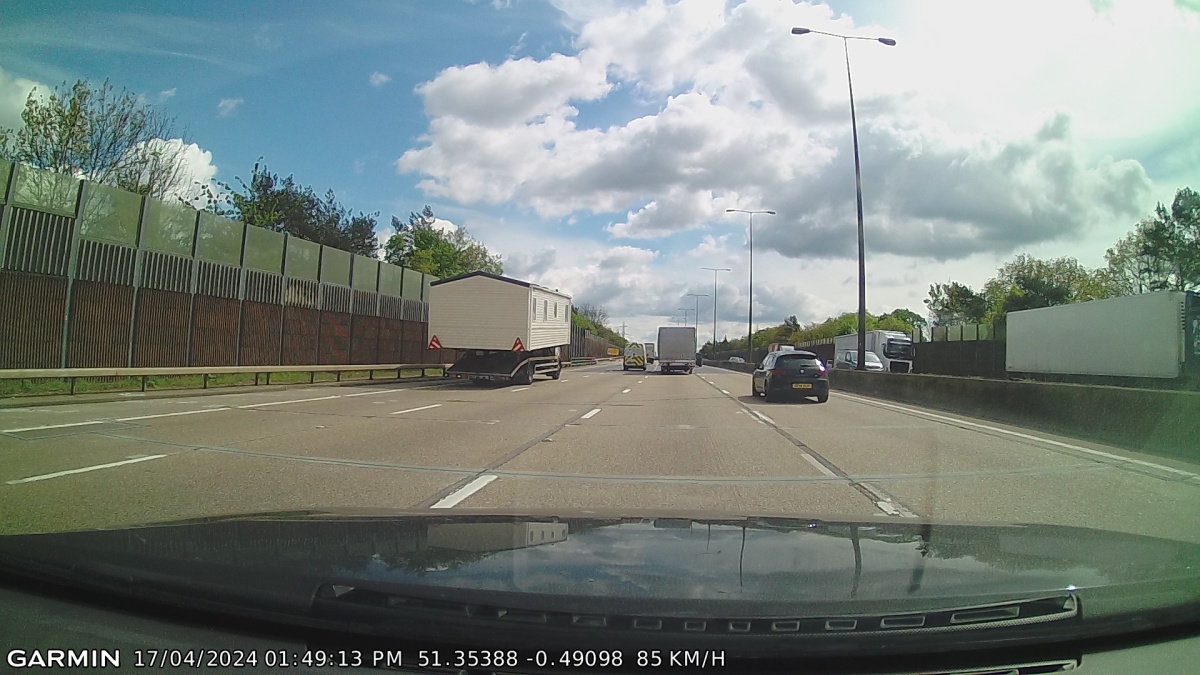
Moving house is one of the most stressful events in life. That’s what we are currently about. It’s a move further West. It’s a move to take us away from the dreadful mess that the M25 motorway has become in the last couple of decades. From 3 lanes to 4 lanes, it’s got worse not better. Why do we think we can build our way out of traffic jams?

So, for the last week I’ve been driving a large van backwards and forwards from Reigate to Newbury. The hired van was everything I needed. Only about 7000 miles on the clock and plenty of space. If I had one niggle it was the need for a reversing camera. Beepers are just not enough.

The rental company, named after a famous starship, that went where no man has gone before, was topping my hero list. What I needed when I needed it and at a good price. With only a minor inconvenience when picking-up and dropping-off. Or, so I though.

Named storms are popular this year. Driving through one of them is no fun. Traffic slows and the inevitable bump or blown down tree holds everyone up. Nothing moves the way it does on a sunny day. It’s times like these when planning can be more guess work than science. Whatever a satnav calculates.

In my wisdom I thought – let’s try a cross country route home. Get off the habit of using the M4 and M25 motorways. Programmed the satnav and away I went. Leaving Newbury lunchtime thinking that getting the van back to the rental company by 5pm would be no sweat.

My route took me from Newbury to Basingstoke and then to the M3 motorway. Then towards London and coming off the motorway to take the Blackwater valley route to the Hogs Back. Those references are for Surrey residents because they will know what I’m talking about. Trundling along the Hogs Back I then hit the main A3 into Guildford. Now, my logic went like this. I’ll avoid the Wisley junction reconstruction or permanent hold-up by taking the main A25 all the way back to Reigate. So, I did. All going well until I reached the closure of that main road[1]. At that point I was committed to getting back to Reigate to unload my packing boxes. Can’t carry them on the train.

When road closures happen in Surrey, at rush hour the mess is insane. The diversion I took up over the North Downs and back down again onto the A217 road was miserably slow. What’s worse is that I knew I had to turn around and go back to Dorking to return the rental van. The clock was ticking. 

Anyway, enduring the tedious frustration of doing a short journey, by miles, over a long time wore away at my generally cheerful disposition. Thus, I was glad to get back to the rental company office in Dorking only about 20 minutes late, after 5pm.

I was committed to leaving the van and taking the train home. That trading estate rental office closes at 5pm. A dark and empty parking space was free, but nowhere could I see anywhere to drop the van’s keys? It seems inconceivable to me that an international rental company would not have a key drop. I searched the plot. There was nowhere. All there was an unhelpful notice on the door of the company’s office. So, I locked the van, kept the keys, and walked to the train station. Idea being to return the keys as soon as the office reopened next morning. Seemed logical.

Next morning, I got up early and set off for Dorking. Sadly, the closure of the A25 was still an on-going problem. All the rush hour traffic had the same issue to contend with on their way to work. This is why I’m happy to be leaving Surrey. A short journey turns into a tedious trek at the drop of a hat. The county’s roads are unable to cope with the levels of traffic. But, as planned I get to the Dorking office of the rental company at 8am when the office opened. Enterprise were still in my hero category as the van was inspected and the mileage typed into a company handheld device. I would have given them 10 out of 10. Job done.

In the warm, in the rental office, just as I thought the paperwork had been done – hold on a moment it’s charging you an extra day for a late return. Computers do these sorts of things. They have no awareness of the world other than the numbers they crunch. Unthinking beasts.

I’ll have a word with my manager. Those were the words spoken. Me being me, I though that’ll be no problem given the effort I’ve made to return the keys. Let’s face it if there was a drop box last night they would be doing exactly as they are now. Van returned in 100% condition and keys in hand.

Then to my surprise the office manager, who insisted on using my first name, says no we are going to have to change you for an extra day. In 30 seconds, Enterprise went from being my number one van rental choice to a huge bottomless zero. I argued the logic of my position and the unforeseen local conditions that prevailed. I outlined the best efforts that I’d made.

Then I got the most galling response – it’s company policy. I suggested that the office manager might use a little judgement or digression in this case. I hit nothing but a stone wall. The computer says so. The charge is the charge. No deviation possible. It’s astonishing that an office manager can’t make a reasonable judgement. If that’s Enterprise company policy I don’t want that kind of service. Other companies are available.

What didn’t help either was the prospect of the return journey in my car knowing that the main Reigate Road was closed. As per my prediction the short journey home again was awful.

Hero to zero – Enterprise. Hero to zero in 30-seconds. My future business will go elsewhere.

POST: This quote from the Enterprise website is meaningless. “We understand that things don’t always go to plan so, if you are running a few minutes late we won’t charge you for an extra day, we give you a grace period of up to 29 minutes to cover unforeseen delays“.

Part 2.

Change is always welcome. The above rental made me think twice about using the services of Enterprise. In my new town, they have a much more easy to get to office. It’s a 20 minute walk from the house. So, I ate my pride and booked a big van for a couple of days. The job was much the same as before. It’s all part of a house move that is lasting far too long.

Here I am renting from Enterprise Rent-A-Car once more. This time I’ll drop the label “zero”. From picking up the van to dropping it off everything worked as it should. My large commercial van took a heavy book case and a king sized bed from Reigate to Newbury without a hitch.


[1] https://www.getsurrey.co.uk/news/surrey-news/live-a25-traffic-updates-after-28495765

Votes count

Sneaking past the national news this week was a change that is of more than a little significance.

For more than a decade, I did live outside these shores. All the time that I did, I continued to vote in local and national elections. At that time, I still had an address in the UK. What would have happened if I’d continued to live abroad, for more than 15-years, is that my right to vote would have been taken away. This so-called 15-year rule meant that millions of British citizens were excluded from voting.

During the referendum of 2016 a great number of British citizens living abroad were unable to vote for or against Brexit. At the time this was seen as a great injustice. This was especially true for those who maintained strong links with the UK.

Now, almost without anyone noticing, the UK is aligning itself with other major democracies in the world. The 15-year rule has been scrapped. Some people estimate that the change to the franchise could mean an additional 3 million British citizens will have the right to vote restored.

British citizens living abroad, who no longer have an address in the UK, can now register to vote in UK General Elections. Which is convenient given that one is imminent. Naturally, this still requires those who are eligible to know about the change and to register to vote.

Interestingly, it’s the Conservatives who promised to enact “Votes for Life” in three previous election manifestoes. It’s taken a long time but the reality of the extension of the franchise is now with us[1].

The ability to donate to political parties comes with these changes. Maybe that’s one reason that Conservatives were persuaded of the need to change voting rights for the British abroad.

There’s still a possible Brexit related uncertainty. Should they occur, each UK referendum has different voting rules. So, the general restoration of the franchise may not impact any future vote on the reversal of Brexit. That would be a matter for specific legislation.

Lifelong voting rights have both a plus and a minus. For most people who retain interests in the UK it’s a matter of natural justice. They may have UK pensions, pay taxes, or have family members that are directly affected by changes that British politicians can, and do make.

For those people who have completely severed ties with the UK it maybe argued that this restored right to vote is generous. However, there’s no obligation for those who have no interests in British governance to register to vote.

Given that the British abroad can all participate in national elections, it will be interesting to see if future UK governments take more interest in their situations.

Starting on 16 January 2024, if you are a British citizen living abroad, now is the time to act. Register to vote.


[1] https://www.gov.uk/voting-when-abroad

On my radio

Out on the edge of the city of Coventry is the campus of Warwick University. At the heart of the campus is the Warwick Arts Centre. I recall “Rockpile[1]” when they played a UK university tour in 1978 or 9. One of their concerts was at the Warwick Arts Centre and I was there.

It was a fantastic night. No idea how I got there or got home to my rundown student accommodation in Coventry. My student days were at what was then called the Lanchester Polytechnic. A clumsy group of post-war modernist buildings strung up in the centre of a struggling city.

Music-wise I was living at the centre of the known universe. Between 1978 and 82 Coventry was alive. Venues were full. It was a youthful eruption of music. There was an air of decay in the crumbling manufacturing heart of the West Midlands. The brutalist and raw concrete architecture of the city was gathering moss, springing leaks, and not living up to the idealism that built it. Maybe the cost of living was not so hight, but something kicked-off an explosion of creativity. The energy of 40-years ago made its mark on popular culture.

Anyway, what I’m recalling here is a BBC Radio 1 DJ. She was that at the time. This week Annie Nightingale[2] has passed away. It seems fit to remember her with her finger on the pulse of what was happening. She was at the Rockpile Warwick Arts Centre concert, seeing and being seen. Much senior to the students in that hall. That didn’t matter one bit. Whispers went around in respect – that’s Annie Nightingale. We knew we were at a special event.

There’s another recollection I want to get off my chest. It involves cassette tape and an amber-red Sunbeam Imp[3]. Making compilations was all the rage with cassette tape. In this case it was Annie Nightingale’s compilation. Probably in the early 1980s.

Who knows which Halloween it was, but I had one recoding of one radio show she did that was my favourite car tape. Her instincts were prefect. It was one of those tapes that could be played repeatedly wherever I was going. My school days echo with the “Monster Mash.” A smile comes over my face when I hear Barnes & Barnes and Fish Heads[4]. Or “Werewolves of London” by Warren Zevon[5]. Don’t Fear the Reaper by Blue Öyster Cult. A great selection of fun packed horror-themed tunes.

Annie’s Halloween radio show was a masterpiece. She defined cult classics. Her earnest side aside she was mischievous. In a box. I know not where that tape may still exist. I’ve a mind to look for it. Thanks Annie.


[1] https://en.wikipedia.org/wiki/Rockpile

[2] https://www.theguardian.com/tv-and-radio/2024/jan/12/annie-nightingale-radio-1-dj-dies-aged-83

[3] https://classicmotorsports.com/articles/not-mini-sunbeam-imp/

[4] https://youtu.be/cn73Wtem0No

[5] https://youtu.be/c6M89iDabwM

Snow

In Hertford, Hereford, and Hampshire, hurricanes hardly ever happen. Good job too, I’d say. The phrase is from a song called: “The Rain in Spain,” in the musical My Fair Lady. That was a Christmas treat. It’s antiquated but still a wonderful classic film[1]. Yes, some of the miming is rather questionable but the story is told in a leisurely and wonderfully warm way. It’s just enjoyable entertainment.

It’s not pitching. What’s not pitching? The snow. The snow is not pitching, I said. This morning when we had flurries of half-hearted snow. Snow not sleet. The sort of light snow that I could be confident in saying was going nowhere. It danced around in the air more for performance than doing anything that was going to mess-up my day. Fluffy and gentle and certainly no hurricanes.

Sue looked at me. She’s done this before. You see London folk are hardly acquainted with the term I used to describe what the wispy snow was doing. Strangely, I thought Chat GPT would draw the same blank on the use of this verb of mine, namely to pitch. It didn’t. Whereas Microsoft’s AI hadn’t a clue when I asked did about “Hertford, Hereford, and Hampshire”, for my simple West Country verb it got it right away. Although, the AI’s explanation was to say that the word was from the city of Bristol. How could it have known any better?

It’s an alternative word for settle. The snow fell but it didn’t settle. I’d say the snow fell but it didn’t pitch. I’d say that instinctively. So, ingrained I’d wonder why anyone would use a different word. It means that the snow that was falling disappears as soon as it hit the ground. In other words, it’s too warm or the snow not plentiful enough for any accumulation or hazard for that matter.

Fictional professor Henry Higgins would no doubt have looked at me with disdain. Londoners have this way of thinking that theirs is the only valid English language spoken. What will the proliferation of digital bots do to innocent regional quirks? Will Chat GPT become a snobbish tyrant like Higgins? Or will it become like a journalist writing for The Sun newspaper? Writing as if my reading age was about 10 years old? I have no answer to that one.

It would be a shame if inevitable electronification stuffed us all into the same box. Ironed out the ripples and variations in langauage. Gave the pedants a leg-up and arrogantly kicked the rest of us. Will we need a Campaign for Real Speaking?

On another point. Conversations can go off at abstract tangents. One thing I’ve noticed about AI is that when it’s fumbling for an answer it will throw-up anything with a vague link to the subject of interest. It’s saying – I’m still not sure what you’re asking so I’ll take a blunderbuss approach.

Today, I learnt something I already knew. I knew it because last year I did a lecture at the University of Hertfordshire. However, the information had disappeared into the far corners of my brain. The University of Hertfordshire has an American Football Club called the Hertfordshire Hurricanes. I wonder if some cocky smart alec[2] named the team because of the musical. I’ll bet – not.

POST: An answer could be that the site of the University is the site of a former British aircraft factory. The de Havilland Aircraft Company Limited. However, the Hawker Hurricane was not produced on that site. de Havilland did produce propellers for the Hurricane.


[1] https://www.imdb.com/title/tt0058385/

[2] https://grammarist.com/usage/smart-alec-and-smart-aleck/

Time

My watch is playing up. It tends to freeze its screen. Any amount of pressing of buttons doesn’t have the desired effect. This is the third Garmin watch that has graced my arm. This one is full of smart features. Not, that I need a fraction of what it can do. Up until now it’s been faithful. So, I’m annoyed that it’s behaving badly.

These trails and tribulations led me to going back to a conventional watch. Dial and hands. A slightly more up-market Swiss watch that has been worn more on special occasions than the everyday Garmin. I like it. Only it’s metal, chunky and weighty. More of a real proper watch than the plastics of the Garmin. More residual value too.

This moment of reflection is about the demise of the traditional wristwatch. They haven’t gone out of fashion entirely. In fact, there’s more fashion watches displayed in shop windows than ever. But I wonder who buys them? I’m reliably led to believe that young people use their phone to tell the time. That simple but essential act. Since the mobile phone is almost inseparable from the human hand it’s pushed other devices into the wilderness. It does it all.

Maybe a couple of decades ago, I’d feel awkward if I’d forgotten to put my watch on in the morning. It would sit there expectantly. Its role was essential. Although timepieces were ubiquitous, around the house, car, and work, the only one that was personal was my own watch.

There wasn’t the necessity for a device to be “smart” either. A watch was a watch. A camera was a camera. A phone was a phone. A Walkman was a Walkman. The list goes on. Making this point makes me feel like a primitive relic from a long-forgotten past.

In the land that time forgot. No, not me. Time has always been important. If it’s not planning or scheduling, I’ve a fair amount of project management activity in my past. Deadlines, milestones, and critical paths coloured up on Gantt Charts[1]. Yes, time and tide wait for no man. A nice little idiom.

Time can be personal. At one time my mother had the kitchen wall clock set about 5-minutre in advance. The underlying idea being that if you were a moment or two late in starting or finishing a job then you were not late in reality. Even better when the deception instilled a bit of urgency into a task when in-fact there was time enough.

Going back further, I remember a childhood conversation with an ancient distant relative who lived in the shadow of a towering railway viaduct. Time then, in the small hamlet where he lived, was linked to the time of the steam trains on the Somerset and Dorset line. No need for clocks. Farm routines, like bringing the cows in for milking were arranged according to passing trains.

I expect I’ll get my Garmin watch, with its accurate navigation functions, up and running again. It may need a new battery. I do wonder if I need the precision or the range of its capabilities. Like the technology packed in my phone, its use is more habit than necessity, in a lot of cases. We are beguiled by “can do” technology.


[1] The first Gantt chart was devised in mid 1890s by Karol Adamiecki, an engineer who ran a steelworks in southern Poland.

Comment

Custom and practice are as important as the rules and regulations that are part of our lives. Now and then, someone is criticized for applying the letter of the law without care for the spirit of the law. The same is true for custom and practice. Whereby, acting outside past norms can trigger a backlash.

Because, in free countries we believe in a free press, the rules and regulations that imping on what should and should not be said about events are always hard fought over. The banner of the “public interest” is touted as overriding. It may or may not be, but there’s an argument to be had.

In the aviation safety profession, I’ve grown up with an instinctively “need to know” disposition. I’ve shaken it off, mostly but there are signs that the attitude persists. This instinct can run counter to the transparency and openness that most people expect to see.

Why talk about the way major events are talked about?

A case in point is the recent runway collision in Tokyo. There’s much already written about the newsworthy aspects of the event, so I’ll desist from adding much more. There’s a lot of speculation too.

Graphs can be drawn of the media attention given to such tragic events against time. It’s typical that from moments after a major aviation accident until a few days after most initial facts are known there’s a huge surge in activity. This used to be described as newspaper column inches.

Today, wide ranging speculation is inevitable. It can be highly literate, and, on the other side of the coin, it can be badly informed, and now and then damaging.

In over three decades, I’ve been dealing with aviation accidents and incidents there has been notable changes in media and communications. For one, the universality of the INTERNET is now unquestionable. For another, the deference offered to authorities has diminished markedly. For yet another, the speed of with which images can travel around the globe is astonishing.

Most aviation professionals are tempered by caution. Aware of the techical complexities that can arise in aviation accident scenarios. What can seem in the heat of the moment to be an obvious cause and effect, after detailed analysis turns out to be wrong, or only a partial picture.

So, should aviation professionals be scathing about the enormous growth in commentary and public speculation? Especially when some of it is wild and or even outrageous on social media. No. I don’t think so. Like it or not this is our digital world. The freedom it affords to throw-up any opinion or theory can only be tempered a bit. The hope is always that the pure dross fades away when a reputable authority challenges it.

That then puts a responsibility on someone, with professional knowledge to challenge ill-founded speculation. Or, at least, to ensure that the major media outlets have reliable sources of trustworthy information. I don’t think aviation professionals should remain silent concerning speculation. That may have been the strategy decades ago. It no longer works. The greatest degree of transparency and openness, based on verifiable facts, should be the aim.

Comment?