Election

US President Donald Trump a second time around. Now, there’s a thought to concentrate minds.

It was our summer holiday in 2015. Doesn’t seem all that long ago. In July, we took a British Airways flight out of London Heathrow to Boston[1]. Picked up a car and drove. This may have been my last flight on a jumbo, a Boeing 747-400 before COVID struck and pensioned them off[2].

It was a terrific adventure as we had about 10 days to explore New England and the Hudson Valley. Sue and I had done a similar trip before but this time we had a well-thought-out itinerary that took us to new places. A couple of nights here and a couple of nights there, as we drove through the beautiful countryside in the sunshine.

This is not a travelog. A part of the story of the trip is of arriving at a motel after a long day, switching on a scruffy TV and watching practically whatever comes on first. On this road trip, often, the News was first. The News had a focus on the selection process for Republican candidates for the coming Presidential race. That’s the November 2016 United States presidential election.

The News was really like a scene from The Usual Suspects[3]. A line of suited and booted candidates vying for position, looking uncomfortable and one strange turbulent outlier. It was as if an alien had landed at a bank clerks’ convention. Commentators were going out of their way to say that the outlier didn’t have what it took to win a grown-up race. Of course, you know who I’m taking about.

As we went from motel to motel it became apparent from the viewing that we snatched that the Republican selection was not a normal one. The orthodox candidates had no idea how to deal with a bawdy cocky Donald Trump. The idea that Trump might serve as the 45th president of the United States was way off the chart. This media personality, come self-proclaimed successful businessman was hammering away at the mild-mannered dull opposition somewhat like a man with a chainsaw might attack a chicken coop. Still commentators derided the idea that he might win.

Let’s just say we have all learnt a lot since mid-2015. There are few people who can claim to have predicted what was to happen for the next 8-years. That is with 2017 to 2021, with Trump installed as the most powerful man on Earth. It sends shivers down my spine thinking about it. That said, the golf courses of world probably gained a lot and social media has never looked back.

The habit of spewing out constant streams of falsehoods and odious propaganda worked first-time around. Aided and abetted by shadowy media forces and with loads of funding the real estate man won. Surprisingly, all of this is alive and kicking in 2023. Ready for the same outcome.

Millions of people believed Trump, and guess what, they still do. By urging his supporters to march on Capitol Hill, when the last election result was being certified, he showed what he might do next. An insurgency, the like of which the United States hasn’t ever seen. The Usual Suspects maybe two movies in one. 2016 and 2024 maybe two elections with one outcome. It doesn’t seem like the law, however it’s interpreted, will prevent him standing for public office.


[1] BOS Boston United States, Logan International

[2] https://www.stroudnewsandjournal.co.uk/news/18590175.boeing-747-jumbo-jet-graveyard-gloucestershire/


[3] https://www.imdb.com/title/tt0114814

Pod

Will podcasts overtake broadcast radio? It’s a question that it had not occurred to me to ask until yesterday. I’ve not been a first adopter as far as listening to podcasts. There’s a routine of turning the radio on at a particular time of day to listen to news and current affairs. That daily routine or habit is born of a long tradition. The morning starts with the Today programme on BBC Radio 4.

Yes, I’m way behind the curve. Go into any large electrical shop, one wall of the warehouse will be filled with earpieces and headphones of every size and shape. The variety of choices is staggering. Sit on bus, train, or aeroplane and more than half the people around will be turned into a source of audio entertainment. Music and talk fight for our attention.

This is great for the streamers and downloaders but lossy for conversation. Sitting next to an interesting person on a long flight is a wonderful way of occupying a couple of hours. That opportunity is diminishing as people become absorbed in digital media. Even the smallest of phones has become a multipurpose entertainment system.

I have long been converted to digital media. FM radio is great for its universality but with less DAB[1] blind spots its life expectancy must be diminishing. Broadcast digital radio based on DAB is a global standard even though coverage is not universal. The digital avalanche is pushing aside any remaining analogue system that populate our lives. Ironically, as far as physical media ownership is concerned, vinyl and even cassettes are resurgent. On the airwaves it’s less likely there will be a romance for analogue radio.

Why have I reassessed the virtues of podcasts? Yesterday, I listened to The Rest Is Politics[2]. This podcast has a conversational style. It’s Alastair Campbell and Rory Stewart talking about current affairs in the UK. Two people who have had their moment in the political sun but remain articulate and inquisitive. They have something to say and it’s engaging.

This is a bridge to podcasts from broadcast radio in that the material is up to date. The topics discussed are wrapped around the news. It’s refreshing too. The ability of the two to argue in a calm and collected manner is unusual in our time. So much of the presentation of news is calamitous and confrontational that this is shocking to say.

Maybe that’s the role of podcasts. Reflection and analysis can be better done in slow time. Broadcast radio news is crammed full of snippets of what’s happening. It would loose its edge if it drifted off into too much extended investigations or drawn-out interviews. So, what may seem like competition between two forms of readily accessible media should be viewed as complementary. Both can fulfil an appealing role in the digital media landscape.


[1] https://www.worlddab.org/

[2] https://podcasts.apple.com/gb/podcast/the-rest-is-politics/id1611374685

Good News

It’s good to see. Sad, in terms of so many lost years. Now, the UK has rejoined the Horizon Europe and Copernicus programmes with a new agreement with the EU.

The evidence is clear. Most people in the UK have recognised the mistake of Brexit. What public polling there is shows a strong trend going one way and one way for sure. A post-TCA Brexit poll of polls shows a stable rejection of Brexit. The British public worried about the economy, inflation, and the NHS. Brexit is a minority interest[1].

Even those who voted for Brexit, including the current Prime Minister (PM) have come to recognise that the UK needs a new set of agreements with the European Union (EU).

Announced back in September[2], a new customised deal opens the world’s largest research programme to UK scientists, researchers, and businesses. It could be seen as baby steps, but the direction of travel is towards much more collaboration with our closest friends and neighbours across Europe is on the cards[3].

This week, the UK was welcomed back to the Horizon research family. Starting from 1 January 2024, UK citizens will be able to participate in the EU’s research and innovation programme. This is a tremendous victory for common sense and a win-win outcome for global scientific advancement. British researchers and scientists will now be able to apply for grants and projects with certainty.

The UK joins Canada and New Zealand with an association agreement[4]. Other non-EU countries are also negotiating for an association to Horizon Europe. The current version of Horizon Europe began in 2021 and runs until 2027.

I’d written before about how the UK had shot itself in the foot by being so dogmatic about Brexit that it had severed links that it had no need to sever. One day we will look back on the post 2016 madness and wonder what it was all about. Historians and social scientist will write voluminous tones on every aspect of the subject. Textbooks will fill libraries. They will do so to warn of the mistakes that can be made by headline chasing Conservative politicians.

The economy continues to be seen as a most important issue for the country. Reconstructing a productive relationship with our European partners is an absolute must.

Let’s hope this move will reestablish some of the wonderful industrious links between universities across Europe and with other global partners. In the past UK researchers led a high percentage of projects. Life will be different as a non-EU country. Nevertheless, participation in the programme is a great boost. It’s not free but it is worth every penny or cent.


[1] https://www.ipsos.com/en-uk/ipsos-issues-index-september-2023

[2] https://www.gov.uk/government/news/uk-joins-horizon-europe-under-a-new-bespoke-deal

[3] https://www.gov.uk/government/news/landmark-moment-for-scientists-researchers-and-businesses-as-uk-association-to-80-billion-horizon-research-programme-officially-sealed

[4] https://sciencebusiness.net/news/horizon-europe/uk-primed-rebuild-its-standing-eu-research-after-officially-joining-horizon

GE2024

Let me spectate. I’m no professional commentator, pollster or political pundit but do try to keep myself up to speed with the current affairs. The question in the mind of a lot of people is: when will the next UK General Election take place?

In these days before Christmas, it’s possible the Prime Minister (PM) doesn’t even know the answer to this question. It’s a balance of how strategic or opportunist he will be when it comes to making such big decisions. Most current predictions are that the Conservatives are destined to be defeated. The gap in the national opinion polls is substantial. That makes the decision of timing of an election one that could mark the end of the current PM’s term of office or elevation to Conservative saviour. Currently, political parties are desperately selecting candidates for each constituency. Something is afoot. Better stop there before I get tempted into a pun.

Let’s put aside any consideration of a winter vote. Arctic weather gloom hovers like cold mist. With the prospect of large heating bills upsetting most of the population there’s no politician who will want to accept the blame for that situation. Naturally, they will say that they are working at pace to tame inflation and overseas conflicts are the root of the pain.

The first step on the road ahead is next year’s springtime. Local elections are expected. Every year, they take place on the first Thursday in May. This is when a third, or less of the electorate put a cross in a box. At the same time London’s next mayor will be elected. So, 2nd May 2024 will be like a mini political barometer. Real votes in real ballot boxes are always a better indicator than sampling or sage views.

The European Parliament election is scheduled for 6th to 9th June 2024. You may think this European Union (EU) election has no bearing on the UK, but I beg to differ. If there’s a significant advance of right-wing political parties across Europe, then the impact will be felt in the UK.

The 2020 United States (US) presidential election was quite a show. In prospect, for the 2024 US presidential election is a gripping event despite the weak selection of candidates. That US national election is scheduled for Tuesday, 5th November 2024. Guy Fawkes day[1] in the UK.

Let’s assume the Conservative party will want to hang on, not to the bitter end, but to get as much time elapsed after the pandemic shockwave, Partygate, mini budget madness and the cost-of-living crisis as they can. We are still reeling from the post-Brexit political earthquakes that have trashed confidence and the economy. Will the cost of government be political exile? That all said, people have shifted a long way since last year. The big question is: who do you trust?

The UK’s Labour party opposition should be confident and smiling. However, the opposition probably feels aggrieved having to wait so long for others to fail before getting an opportunity to win a general election. What doesn’t help is that the electorate are now pessimistic about any sustained recovery. Sadly, the public mood is beset with quite a sense of decline-ism.

Traditionally, in the UK, September is party conference season. That leaves October open for an election. But as noted above there’s a news media attention getting clash between what’s happening in the UK and US. Since significant geopolitical tensions are going to be raging throughout 2024, I think that topic may not be an influencing factor on the UK election date question.

Rolling the dice as late as October 2024 has several advantages for the incumbents. If there’s good summertime news, say inflation reduced and a modicum of economic growth the government will claim a great success. The struggle between democracy or autocracy around the globe could give a UK PM a platform on which to make one or two grand gestures. Also, with nearly a year to go, the opportunity for the opposition parties to trip-up increases.

When polls ask is Britain a better place to live than it was ten years ago or a worse place to live than ten years ago the pointer points at worse. It’s hard to imagine this will not impact voter intentions. 

#ukpolitics #ukpolitics #politics #generalelection


[1] https://www.parliament.uk/about/living-heritage/evolutionofparliament/parliamentaryauthority/the-gunpowder-plot-of-1605/overview/people-behind-the-plot/guy-fawkes-/

Ineptitude

Yesterday’s announcement went like this: “The government will also increase the minimum income required for British citizens and those settled in the UK who want their family members to join them.” This Conservative view, that families are a burdening the State persists like a stubborn stain.

The Universal Declaration of Human Right says: The family is the natural and fundamental group unit of society and is entitled to protection by society and the State.

Clearly, by the measures announced, in the case of this UK Government the family is not a fundamental group unit of society. In fact, family members based overseas will be required to separate in the event of a person accepting a low income in the UK. That low income in the UK maybe relatively large when compared with what is available in their home country.

I guess this is fine for lawmakers when considering the level of a Minister or Member of Parliament’s salary and benefits. There’s no impediment that will impact their lives in this respect regardless of the nationality of their partner and children.

What I’m wondering is: what will be the case if a British pensioner, living in a European country, who wishes to return with a partner or children who don’t have British passports? If the increased threshold of £38,700 applies, then that will effectively ban them from returning unless they have a generous pension. It may be the case that they have worked on overseas and accumulated a non-UK pension, but this would be irrelevant if the deciding factors is a UK earnings threshold.

I don’t think there’s much disagreement that those who wish to move to the UK should be able to support themselves. The UK minimum wage is set at £21,673.60 for a 40-hour week. So, is the UK Government saying that no one can support themselves on the UK minimum wage?

Ministers have been quick to deny any responsibility for the chaotic state of the immigration system in the UK. Instead, they pretend that they are adapting to changing circumstances. The fact that they are 100% responsible for the current circumstances is brushed aside.

Having persisted for years with one set of flawed notions Ministers now announce another set of ill-thought-out proposals. The Brexit slogan of Take Back Control did not envisage giving control to a cabal of incompetence. In stark reality, that is what has happened.

The knee jerk reactions and ever shifting sand of the last decade need to come to an end. The British people should not be denied a General Election. More months of more chaos and ineptitude are incredibly damaging.

POST: U-turn. Minimum income requirement will not be increased as much as originally announced. A new threshold will be applied from the spring. A policy designed to exclude people from entry to the UK has been watered down for practical reasons.

Two upfront

One of the fundamentals that remains a part of civil aviation is having two pilots in the cockpit. It’s an indication of the safety related activities of the crew of a civil aircraft. Today, we have a mixture of human control and management. Pilots still fly hands-on when the need arises. The expectation is that throughout their working lives pilots have the competence to do so, at any stage in a flight.

Progressively, since the establishment of aviation’s international order in the 1940s the required crewing of aircraft has changed. Back in September, I visited the de Havilland Aircraft Museum in Hertfordshire. There I walked through the fuselage of a de Havilland DH106 Comet[1]. This was the first turbojet-powered airliner to go into service and it changed the experience of flying forever and a day.

That passenger aircraft, like aircraft of the time, had four crew stations in the cockpit. Two pilots, a navigator and flight engineer. It was the era when electronics consisted of valves in large radio sets and such long since forgotten devices as magnetic amplifiers. The story from the 1940s of IBM saying, “I think there is a world market for maybe five computers” is often repeated.

For modern airliners the navigator and flight engineer have gone. Their functions have not gone. It’s that having a crew member dedicated to the tasks they performed is no longer required. As the world of vacuum-tube electronics gave way to transistors and then to integrated circuits so computing got more powerful, cheaper, and abundant.

With a few significant failures along the way, commercial flying got safer and safer. The wave of change in a human lifetime has affected every mode of transport. More people travel to more places, more safely than ever could have been imagined 80-years ago. Does that mean the path ahead will take a similar shape? Excitable futurologists may paint a colourful picture based on this history.

Let’s get away from the attractive notion of straight lines on graph paper. That idea that progress is assumed to be linear. Tomorrow will be progressively “better” by an incremental advance. That’s not happening now. What we have is differential advances. Some big and some small. 

The aviation safety curve is almost flat. The air traffic curve, with a big hole made by COVID, is climbing again. The technology curve is rapidly accelerating. The environmental impact curve is troubling. The air passenger experience curve may even be at a turning point.

Touchscreen tablets already help flight preparation and management[2]. Flight plan changes can be uploaded and changed with a button press[3]. The squeezing of massive computing power into small spaces is being taken for granted. What does this leave a crew to do?

Back to the start. Two pilots in the cockpit, with executive responsibilities, remains the model that maintains public confidence in civil aviation. The golden rules still apply. Fly, navigate and communicate in that order. Crews, however much technology surrounds them, still need to act when things do not go as expected. Does this mean two cockpit crew forever? I don’t know.


[1] https://www.dehavillandmuseum.co.uk/aircraft/de-havilland-dh106-comet-1a/

[2] https://aircraft.airbus.com/en/newsroom/news/2021-02-electronic-flight-bag-the-new-standard

[3] https://simpleflying.com/datalink-communications-aviation-guide/

Flight Ahead

Although, I’m an advocate of having people in control of machines it isn’t people that are opening new opportunities in transport. Technology is racing ahead and making the past illustrations of popular science magazines become a reality. I can do without the hype in the headlines of flying cars. Building expectations of one in every garage remains a 1950s dream or nightmare, dependent upon your point of view. Aside from that hot air viable new electric vehicles are in the works.

Heavier-than-air machine that do more than buzz around our heads are going to proliferate. The inevitability of this is open to question but if I was to assign a probability to it, the number would be close to one. If we stretch our minds back to an unobserved small corner of the planet in late 1903, a couple of diligent brothers flew a machine that hopped a short distance into the air under its own power. Many newspapers of the time didn’t bother to print this breakthrough story because wise and eminent scientists had told them that it was impossible for people to fly.

It’s clear, getting into the prediction business should be done with humility.

We have a dilemma. It’s so rare of us to turn away from advancing technology when we know it can be made. It’s even more irresistible when the economics scream out buy me. So, a ticket to ride in the realm of Urban Air Mobility (UAM) will need to be no more than a typical taxi ride. Given that a taxi ride from my home to Gatwick Airport is about £20 then that’s the mark to hit. True that short journey may not be commonplace by air at that price until around 2033, a decade away, but it will be irresistible when it comes.

This chapter in air transport, that is being written is as significant as that in late 1903. I know that’s a mega statement, but the signs do point that way.

Eventually, UAM will become a network of piloted and autonomous electric air vehicles operating between cities and major destinations like airports.

Now, a couple of solvable challenges stand in the way. One is the endurance and portability of the energy storage devices. The other is complexity and mastering the science and art of functional safety. There’s plenty of confident hyperbole to suggest that these two are short-term barriers to progress. I say they are not.

Weight is one of aviation’s biggest enemies particularly on small vehicles. Batteries are expensive, heavy and require tailored control. Autonomy or the semi autonomy, needed to make the economics click is challenging systems engineering orthodoxy. Both tasks require the meticulous diligence of the Wright brothers to get past. No fanfare or flashy investor can push them aside.

Making the absolute most of energy storage technology is essential. Finding the optimal configuration of batteries, transmission and control electrics means iteration and the tolerance of a good handful of failures. The engineering of what’s becoming a system of systems, with the complexity of vehicles and the complexity of traffic management, interacting at great speed demands extensive analysis and testing.

These tasks can be accomplished. Rushing them would be foolish. That’s difficult to resist when everyone wants to be first.

D minus PM

In the second decade of the 21st century we should be surprised that a British Prime Minister should behave as if he lived in the 19th century. Common problems, future collaboration and an alliance of decades are too important to jeopardise. Relations between Britain and Greece are of great importance. Today’s spat is foolish.

There’s a joke going around the social media. It asks the question: Why are the pyramids in Egypt? The answer being: Because they were too heavy for the British to carry-off. In other words, if they were smaller, they would be in the British Museum. That light-hearted quip highlights an inherited problem. Although, the same line could have been written about many imperial European countries. It was the fashion. Here British country houses were not properly dressed unless they had a sprinkling of ancient Greek artefacts. Those artefacts were often taken by the powerful. That’s our history.

The Parthenon is not any old relic. Its image is as heavily identified with modern Greece as it was with ancient Greece. As a symbol of western civilisation, it’s unmatched. Its sculptures are high points of classical Greek art.

Once upon a time, the argument was made that the Parthenon Sculptures were better protected by British Museum than they would be elsewhere. During the turbulent periods before the birth of modern Greece that argument was probably a fair one. Greek indepenence, helped by a famous British poet, became the start of the modern European State.

Lord Byron’s early death, at 36, was grieved both in Britain and Greece. His remains were returned to Britain where he was laid to rest. It was respectful to return to the great man to the land of his origins.

In 2023, Britain and Greece are friendly nations. We benefit immensely from the excellent relationship between the peoples of both countries. Thus, I can fully understand the Greek Prime Minister “annoyance” at being snubbed while in the country. The British Prime Minister being to busy to see his counterpart.

Athena is an ancient Greek goddess connected with wisdom. The Parthenon is a temple on the Athenian Acropolis. Well, there doesn’t seem to be much wisdom in Number 10 Downing Street. If there was, then such disagreements as there are over the future of the Parthenon Sculptures, would never have created the situation, we have this morning. It’s sad.

Politicians have a duty to address problems and not to run away from them for minor reasons. It’s only through dialogue that a solution will be found to the conflicting claims made about the Parthenon Sculptures. The day they return to the city where they belong will be one of great joy.

Duck

I take for granted that everyone knows the saying: “Red Sky at night Shepherd’s delight. Red Sky at morning Shepherd’s warning”. It’s not superstition. In the sense that calamitous events will descend on us because the rising sun happens to colour early morning clouds. It’s more the practical reality that British weather most often comes from the North Atlantic. So, clouds hovering in the West can be the signs of a cold front coming our way.

Being born in the countryside these ditties are bread and butter to me. Rural sayings about different times of the year, or nature in general endure, even in the mobile phone age. Now, up to date weather predictions, based on proven science are only a touch screen stroke away. Even so, memorable adages stick.

Last week, I heard a new one. New to me. A rhyming prognostic on the coming winter. This is not only a saying confined to rural areas. It adds to a long list of observations about the habits of birds.

This is not witchcraft. Birds’ behaviour can help us predict the weather, even if the means they use can be obscure. Our feathered friends are much more in-touch with nature than we can be.

“If the ice in November can bear a Duck. The rest of the Winter will be slush and muck”.

What’s going on with this traditional bird proverbs stumps me. OK, this suggest that a hard frost in November is an indicator that a warm, wet, and soggy winter is ahead. The duck as a measure of weight may be incidental. However, some ducks do migrate to find warmer places to overwinter. So, does the saying mean that because the duck is still here, it’s decided that the winter will be mild?

That’s contradictory to the presence of the thickness of ice needed to hold a three-pound bird. If a duck can stand on the ice and is happy with that situation. They are in the local park. Then that could mean a blast of cold air from the North before the year ends, has some meaning in terms of what happens next. What’s that got to do with slush and mush? I wonder.

Is this saying somehow linked to the past when hunting ducks was an annual event. Some strange observation that ducks are easier to hunt earlier in the winter. Or is that nonsense on my part.

This folklore saying about winter can be put to the test. Although we are close to the end of November, the frost has been hard enough to bear a duck. Not a huge duck but an average mallard.

If this means a mild winter, we’ll soon know. Maybe duck barometers will work as long-term predictors. Showing us a sign of coming foul weather. Ho, ho.

Divided

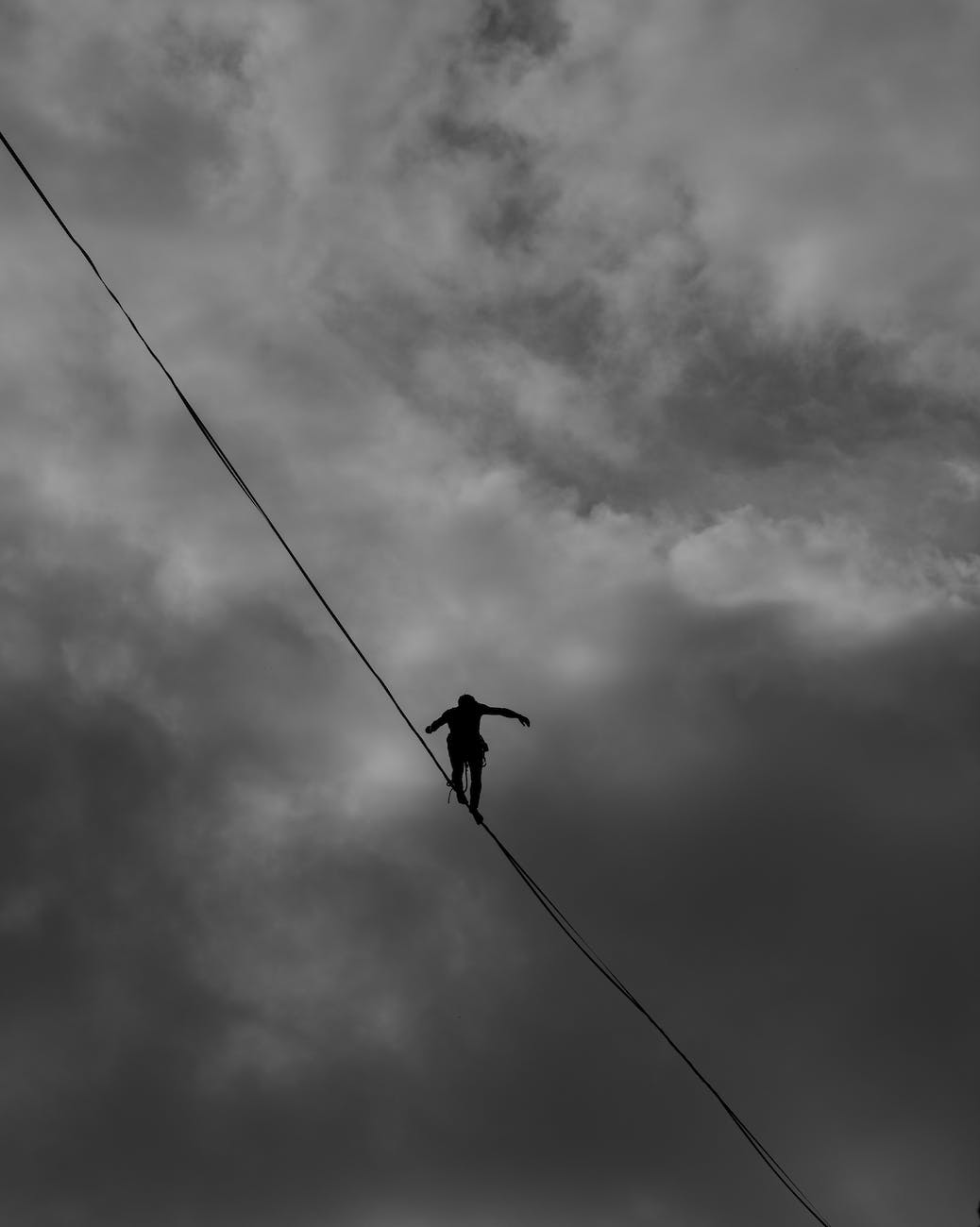
Away for a week. I’ve been in Canada. In Montreal. On return to the UK, I see the next step in the convolutions of the Conservative Party have littered newspaper column inches. If ever there was a thin man on tight rope balancing a can of worms on one arm and a broken bicycle on the other, then it’s the current Prime Minister.

I’m sure he never trained for the Cirque du Soleil. Maybe Rishi Sunak should take up traditional circus disciplines like the swinging trapeze and flying hand to hand. Certainly, he could make a living that way even if he doesn’t need the money. Circus or pantomime would be a good opening for a great number of pending unemployed politicians.

Suella Braverman’s second sacking as Home Secretary opens the opportunity for her to take to the stage. In her case the audience would know when to boo without any prompting. The world of the pantomime villain[1] might revive a flagging political career.

Nigel Farage, former leader of the UK Independence Party is off the jungle[2]. Most suitably he’ll be featured alongside comedians anxious to keep themselves in the public eye. The cartoonists are having a field day with this oddity.

Boris Johnson’s trying his hand with comedy too. His new position as a GB News broadcaster will be pandering to a small but loyal right-wing audience. That will not put him off, I’m sure. I wonder what kind of studio wallpaper will be his backing?

Others have gone to ground or are typing WhatsApp messages to a 101 groups all fighting to be the next star of the right. The Brexit brigade of the past is finding a natural home in entertainment. It’s one way of jumping ship before the poltical Rapid Unscheduled Disassembly (RUD) to come. This is a wonderfully inventive acronym for a complete disaster.

If I was to make a guess as to what Rishi Sunak might be attempting, it’s a rebranding the likes of which we haven’t seen since the chocolate bar Marathon changed to Snickers. I seem to remember that name change was a marketing curiosity. The British public didn’t understand it. After decades past the rebrand, the name Marathon was brought back. Is the Conservative Party that chocolate bar fallen out of favour and looking desperately for a retro-look?

Sweeping a decade of chaos under the carpet is a tall order. Even with the maxim that a week is a long time in politics. I don’t think the British public are so forgiving or forgetful. The roots of our problems are the results of poor political judgement and poor actions over a long trem of office.

No doubt the Conservatives will try to jerrymander, as much as slight of hand will allow them to get away with in the media spotlight. Voter ID rules will keep some potential voters at home come the next general election. Shifting the boundaries of some constituencies has benefits too. A pre-election bag of goodies is being put together to stiffen the resolve of wavering traditional conservatives. Expect Springtime give aways.

My overall sense is that major change is coming. Abraham Lincoln said, “a house divided against itself cannot stand,” and that applies more broadly than the reason it was said in the 1850s. The strands of conservatism that have been so politically successful in Britain are divided amongst themselves. Not just a few small gaps. Hulking great chasms exist between entrenched groups. That situation never goes well. Not for anyone.


[1] http://celebratepanto.co.uk/toptipsforvillainy/

[2] https://www.entertainmentdaily.com/tv/im-a-celebrity-nigel-farage-backlaash-from-celebrities/