Key Ingredients

Daily writing prompt
What are the most important things needed to live a good life?

Let’s say that the rudimentary basics are already at hand. Air, water and food are right at the top of the pyramid of needs. If that’s all that was available to me huddling in my damp cave, a good life it certainly wouldn’t be.

I was going to go to Roman times and quote Cicero: “If you have a garden and a library, you have everything you need”. With that one I think it would be reasonable to expand “garden” to mean the whole of the natural world. A garden’s gifts, a variety of plentiful decent sustenance. Not just beans and potatoes.

Next to satisfy the intellect. A library, in the conventional sense, sitting here in the digital 21st Century, isn’t enough. But do I really want to say – INTERNET access? This is too worthy.

Cut to the chase. There is no good life without fun. That meaningless, pointless, misdirection of effort for no other reason than it’s fun. Difficult to define universal fun. So, what’s needed is the freedom to do whatever it is that amuses and entertains (within civilised boundaries).

The Evolution of Travel

Nothing is stationary. As our solar system circulates the milky way and everything we know is in motion. Nature abhors the stationary. Movement is a part of all living things. Even on dead worlds, like Mars, dust devils whiz across barren surfaces to get caught on camera.

The more we move the more we change. History’s long tail shows that the rooting of people to a place is a temporary affair. What’s changed is our means of locomotion. In the stone age great distances were traversed but not in a hurry. Speed is a modern acquisition.

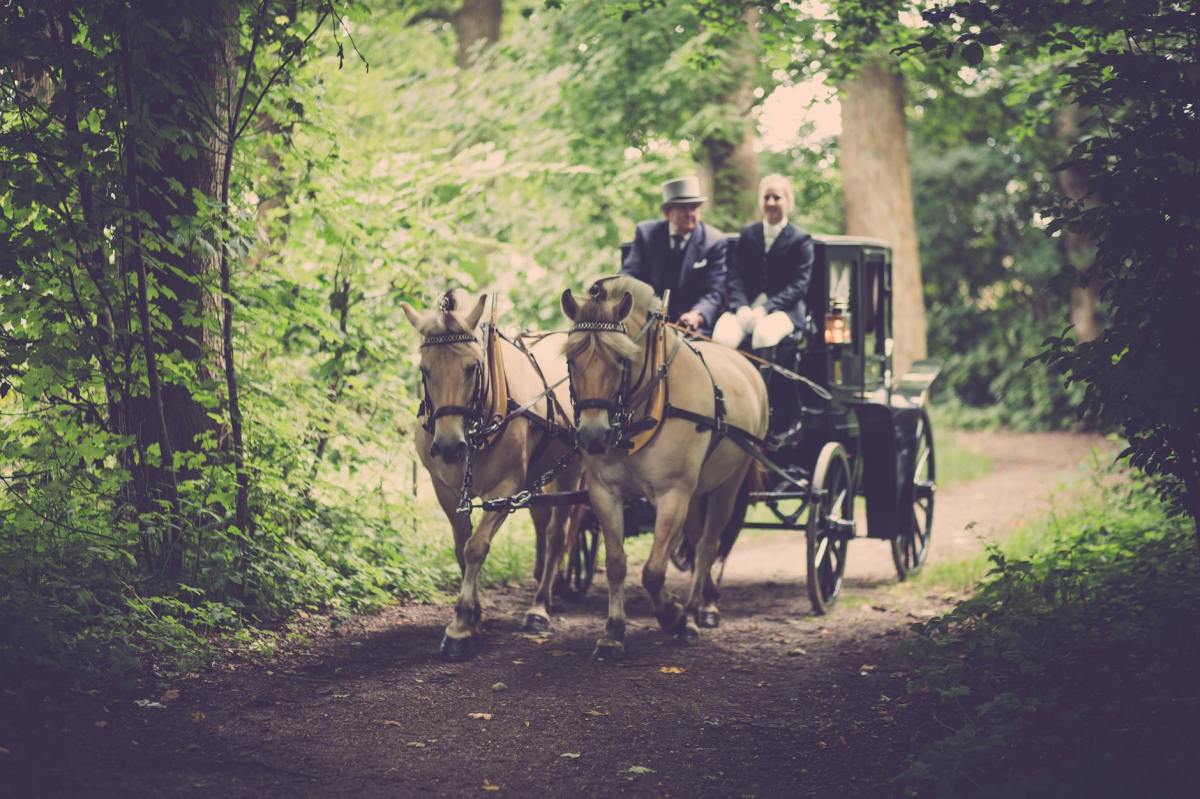
It is modern. Where I live now is, and has been, a route from East to West and vice versa for much more than a thousand years. For most of that time either our feet or horses where the means of locomotion. Time had to be set aside for perilous and uncomfortable journeys

Travel is a wonderful experience. Even if the time spent between A and B is tedious, draining and eventful in an unwanted way. Adventure beckons in a manner that has always overcome the inconvenience. Certain airlines would never have succeeded if comfort was a must.

In the 17th century getting from London to Bath was a major undertaking. A speed of 30 or 40 miles per day on rain-soaked roads of poor repair there was need to rest up and take a journey in stages. It’s these habits that have shaped the view of traditional England. Gone are the toll houses and the highwaymen but the routes and public houses remain. Well, fewer and fewer of them as business is tough[1].

Travel is that perennial hope, that there is a silver lining to every cloud, that good times are only just around the corner. That in travel we will see, hear and experience something new and to our benefit. It’s not a free lunch. Effort must be made to reap this benefit. It’s there in the word. It’s the Norman-French origins of travel. Travail is to work and labour.

Ironically, although there are exceptions, modern society is trying to make travel as little effort as is possible. Even to the extent of automating vehicles when the demand for such innovations is minuscule. It’s not increased comfort or convenience that’s the aim. No, it’s to dissect time into even smaller parts so that people do not “waste” time travelling.

In an age before concrete and steel carved a path through the English countryside, a journey was a venture to be planned and considered with trepidation. A land of fields and meadows, rivers and streams, and notoriously changeable weather.

Comparisons with today do fall by the wayside. Towards the end of the 17th century the population of the whole of the country was only about 5 million. Creeping industrialisation was drawing people into the cities. Change was on the way.


[1] Hard Times of Old England https://www.youtube.com/watch?v=MoWEiq_Z0aw

Technology and Probability

Everyday numbers don’t scare me. The day, the date, the time are important and simply communicated. I can throw a couple of round numbers at anyone, and they should know what’s happening. Yes, convention does matter. Standards matter. I don’t know how, but I know some people struggle with the 24-hour clock notation.

When we get to small scales and tiny numbers, less familiarity means that it’s not so easy to communicate. To make those numbers meaningful media people like to use analogies. A common one is saying that a thing is: less than the width of a human hair. If you still have it, and I do, hair is an everyday item.

Let’s say a human hair is typically 100,000 nanometres wide. Sounds big in nanometres. That’s a tenth of a millimetre. Now, I can get a plastic ruler and visualise that size. My perception of scale depends on where I put the decimal point. Remember in SI Units a “nano” is 1 x 10⁻⁹[1]. Something to think about when seeing newspaper headlines about nanotechnology.

Visual depictions do help. Even if they can be slightly misleading when comparing dissimilar objects. Our planet, Earth is about 12,756 kilometres in diameter. So, for a bit of fun I could say the Earth is about 128 x 109 times wider than a hair on my head. Nice but not so useful. Tiny probability numbers like the range from 1 x 10⁻⁶ to 1 x 10⁻⁹ require some imagination.

It’s not such a big leap. Let’s say that I make mistakes. That said, I’m well trained at a specific simple task. Flicking a switch at the right time. My measured error rate is about 1 in 100. However hard I try, I make mistakes, not necessarily the same one, but with a reasonably quantifiable average frequency when nothing changes.

A well-designed machine, doing the same mechanical task, can do better than me. It’s measured error (or failure) rate is about 1 in 10,000. That might be considered good if it’s merely to switch on a toaster at precisely 6 am. It might not be so good if the result of a single mistake is instant death. In other words, I’ve become highly dependent on this mythical machine.

To do better, I could devise a means of checking the results of this machine. If I did this checking perfectly, entirely independently and without distraction, then experiencing a negative result might get up to a rate of one in a million. With this arrangement, I’m still not happy enough to place my life, or the lives of my colleagues in the hands of such a system.

Instead, I’ll construct two entirely independent well-designed machines, each doing the same simple task and each constantly checking the other one. Now, I’m cooking on gas, as the expression goes. Will this result in a negative outcome rate of around 1 in 1 x 10⁸? One in a ten million. At least it’s an analysis worth doing. However, calculations may not give the result as one in a ten million. That result can hinge on the notion of what is entirely “independent”.

To make my general point here I have grossly oversimplified a problem. What I hope I have conveyed is that tiny probability numbers can be grasped without entertaining rocket science or nuclear physics. In the world of computational systems, we can make machines that are exceptionally good at performing consistently, persistently and error free. Not perfect. Not at all. Not prefect in so much as making life and death decisions.


[1] https://www.nano.gov/about-nanotechnology/just-how-small-is-nano

Probabilistic Predictions

Uncertainty is the only certainty. Not a radical statement. As long as I live, dealing with uncertainty is inevitable. Unavoidable everywhere. I wouldn’t have it any other way, even if it can be uncomfortable.

Prominent Ancient Greeks may have travelled to Delphi for advice as to what the future may hold. There’re those three enigmatic witches who warn Macbeth of his fate. History and fiction are littered with references.

For me, I can pick-up a newspaper and look for a daily astrological prediction. One I like. I can flick around social media and see more prophecies than ever. Mostly gibberish. There are those convinced of their foresight.

Despite a cynical disposition towards the above, science can be applied to the world of uncertainty. Generally, the proposition is that an element of the past and present will be reproduced in the future. This is not absolute. However, human engineered systems tend to behave with a degree of predictability.

Empirical methods, where society collects data from the past and present, can be useful in trying to forecast what may happen next. The more deterministic the systems under study, the more useful acquired data can be. For these, forecasting challenges mount for the new, novel, or radically altered.

I’m writing this given the interest there is in probabilistic safety. There are figures that hit the headlines that are almost incompressible. If the rationale behind the numbers is not clear then incorrect assumptions result. Tiny numbers from 1 x 10⁻⁶ to 1 x 10⁻⁹ are quoted in the News (SI Units). What do they mean? Let’s start with simple probability.

If an occurrence is certain then a numerical value of “1” can be given to it.

Absolute certainty is a rare thing. I can say that the Sun will rise tomorrow, and most people will take that as a statement of certainty. Intriguingly there’s the most incredibly improbable case where the solar system is thrown into instability and the Sunrise isn’t as expected.

If an occurrence never happens then a numerical value of “0” can be given to it.

Absolute impossibility is only possible with absolute knowledge. So, again it’s rare. I can say that human time-travel, to and from the distant past, is only fiction to next discover that a way has been found.

Let’s say we live in a world where the probability of occurrences ranges from the 0.99999, with ever more “9s”, to a number as small as 1 x 10-30[1]. A quecto.

These extreme numbers are nice for physicists and astronomers to play with, but they are outside normal engineering practices. As yet, we do not have the means to operate at the level of these limits. Time will tell. Or I maybe wrong.

By the way, I used the word “occurrence” above to denote anything that can happen in an instant. When talking about undesirable happenings, that can mean an incident, accident, mishap, slip, failure, or error. Each of these has a definition. Often more than one.

Next. I’ll go back to the tiny numbers more commonly quoted.

POST: For extraordinary numbers we need look no further than the nimble electron. So far, the best measurement for the life of an electron suggests that one now will still be around in 66,000 yottayears (6.6 × 1028 yrs). That’s about 5-quintillion times the current age of our universe. 


[1] https://www.nist.gov/pml/owm/metric-si-prefixes

A Day at the Bath and West Agricultural Show

It’s a part of my childhood. It’s fascinating to see how it has changed over the decades. There’s hardly a year go by when I don’t go to at least one agricultural show in the UK.

Last year, I visited the Lincoln show and the Newbury show for the first time. Most of the summer rural shows in the UK have a long history that is kept going by an Agricultural Society. The bigger ones have dedicated show sites and some permanent buildings. The smaller ones can be a large field that’s set aside for a couple of days a year. Each show reflects the nature of the farming, the crops, the animals, in its region.

This Friday, my day out was a trip to the Bath and West show[1] in Somerset. The show site is large. Spread over a south facing gently sloping hillside. To the south of the town of Shepton Mallet, at the base of Prestleigh Hill.

That’s my family connection. My mother grew-up on a small farm in Prestleigh. It’s not named on the map anymore as a couple of the buildings are now dwellings. Yew Tree Farm was situated on a dangerous bend on the main A371 road where traffic must veer right as it comes down the hill. The alternative being to hit a wall and end up in the farmyard. If I remember correctly, my grandad got free tickets to the Bath and West as they used one of his fields for a car park. As children we would hop over the fence to go straight to the show.

This year, the ground was as hard as rock underfoot. Spring has been unusually dry. There’s more dust than mud. That’s good for the show. There have been years when the wind and rain have swept the exposed show site and blown down tents and made mini rivers. Making welly boots mandatory.

What has changed? Although this annual event is predominantly a showcase for West Country food and farming it’s gone beyond that formula to become an atypical half-term family day trip. It’s no longer a place where local farmers strike deals with machinery salesman or learn about the latest breeds or cropping methods. That post-war image of mucky tractors and trailers turning up in droves is for vintage postcards.

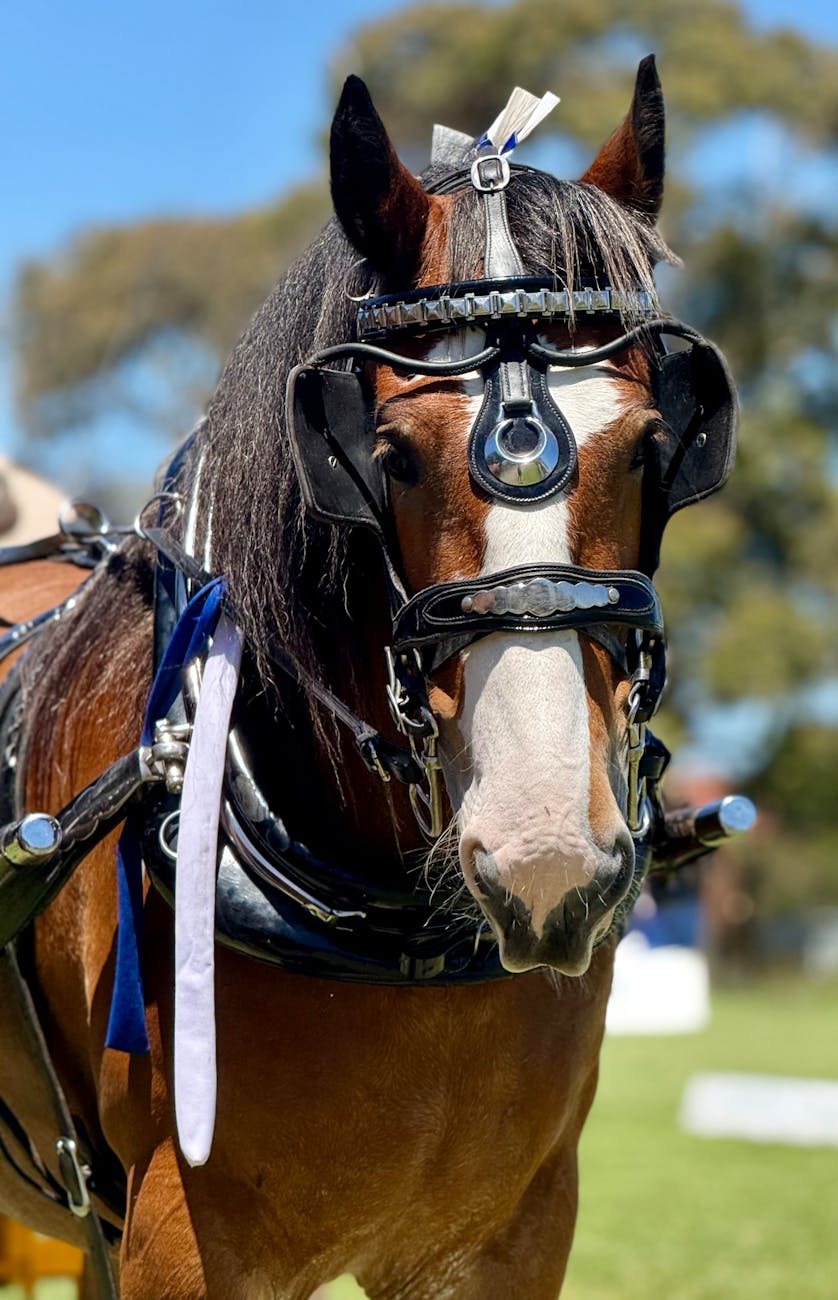
What’s nice is that there’s something for everyone with an interest in the English countryside. Beekeepers, cider markers (and drinkers), cheese makers, traction engine enthusiasts, rare breeds, heavy horses along with tea and cake in the WI tent.

Sheep started big this year. Cattle and pigs less so. Again, the word is enthusiasts. Breeds rare and commercial ones all cleaned up for display and judging. Handlers, young and old, parading their animals for picky judges to prod and score. Then colourful rosettes displayed with pride.

It’s not a cheap day out for townsfolk and county people anymore. Car parking might be free but the price of entry and just about anything on-site can quickly rack up. Everywhere, even in a field, we have become a cashless society. A tap here, a tap there, no longer do we dig into our pockets for loose change.

For the good weather and crowds, I expect this year’s 3-day event will be evaluated as a great success. Keeping the tradition going.


[1] https://www.bathandwest.com/royal-bath-and-west-show

Protecting Green Spaces

Listening to a Labour Minister use the word “streamlining” I reached for the off switch. My morning radio was bubbling away with a spokesperson justifying changes that remined me of that moment when the Earth was about to be demolished in the HHGTTG. I could imagine him saying; houses must be built because houses must be built.

Labour have been in power for less then a year but more and more they sound like the people they displaced. My thought was, with these recent land planning proposals, what’s the difference between what the Conservatives did and what Labour is doing now?

Let’s go back in time. One of the most dreadful planning changes of the past was the selling-off of school playing fields[1]. Green space, often surrounded by dwellings were erased. Countrywide, bricks, concrete and tarmac were prioritised over green spaces, local sports and nature. Not much to guess as to why the national is not as healthy as it should be.

It’s not new to say – what we learn from history is that we don’t learn from history.

Don’t get me wrong. I’m in favour of building more affordable houses where they are needed. It’s eminently reasonable to provide support for small and medium sized housebuilders. There are spaces that can take more dwellings provided the associated infrastructure comes along too.

By law, let’s not tip the balance in a way makes us all poorer. Our natural environment has taken one hell of a bashing in my lifetime. One of the indicators is the bug count. If I travelled any distance in the summer, in the early 1980s, in my bright red Sunbeam Imp, it wouldn’t be long before I’d need to stop to clean the windscreen of dead bugs. Today, drive as far as you like through the English countryside and there’s no such problem to address.

Labour’s Minister doing the morning rounds, spoke from a prepared script. Everything is above board. Government consulted on the proposals. Houses must be built because houses must be built. Consultations are fine. However, doing it and ignoring what people are saying is tantamount to manipulative deception.

Concreting over nature is not the way to go. Especially for small pockets of green spaces that still bring nature into cities, towns and villages. Infill and the eradication of small green spaces is just as bad as the momentous school playing field mistakes. It’s a one way trip. Watering down measures designed to protect nature is not the way to go.

Pushing forward with an aggressive approach to building foregoes long-term benefits for short-term political gain and blinkered treasury wishes. With the lessons learned over decades, priority to protecting our natural environment should not be sacrificed[2]. The Labour Government’s Planning & Infrastructure Bill needs amendment. Let’s hope that happens.


[1] https://www.itv.com/news/update/2012-08-17/how-previous-governments-compare-on-selling-off-playing-fields/

[2] https://www.wildlifetrusts.org/news/planning-bill-breaks-labours-nature-promises-say-wildlife-trusts-and-rspb

Peaceful Border

It’s superfluous to say so. Canada is not the US, and the US is not Canada.

It quickly becomes clear. I’ve been fortunate to visit places east-west and north south. Although not the far snowbound North. The two countries do share geography. Rocky Mountains stretch across the North America. From British Columbia to New Mexico. The Great Plains span North America. A stark contrast to the mountains, as a huge expanse. In the East, the rolling landscape of the Appalachian Mountains runs from Newfoundland to Alabama.

It’s not the same with social and economic geography or history. A profound difference has been forged by Canada’s citizens over a couple of hundred years.

If we look back to the late 17th and early 18th centuries the new world was a hugely different place than it is now. Britain, France, Spain, and their allies were fighting over vast territories. European conflicts translated into competition and trade wars. Eventually, America colonialist brought about a revolution, so there would be no need for royalty, aristocracy, or an imposed church. Rejecting their British masters, even if they did keep their system of laws.

At the start of the 19th century, the US did invade Canada with a couple of conflicts. So, the idea that the US may wish to annex a part, or all of Canada is not entirely new. I’m going to have to read up on the Battle of Stoney Creek of 1813. It seems a namesake of mine played a pivotal role in preventing the US from taking Canada[1]. No relation – I’m (almost) sure. Irish heritage.

My assumption is that US President Trump is doing what he has done times before. Mark out an extreme position from which then to shape future negotiations. That’s not so mad as it might appear. It’s not nice when considering the cordial relationships that have characterised so much of the recent past. Kicking at the sides of an ally.

Stretching over thousands of kilometres (or miles if you prefer), the boarder between the US and Canada is one of the most peaceful in the world. To reignite conflicts of a couple of hundred years ago is not a wise option. I’m sure Canada could call upon a great deal of support if the worst-case scenario were to prevail.

Mutuality may not be fashionable. It needs to be made fashionable, again. The notion of a win-win scenario where both parties benefit, it’s real, it’s not mythical. Both US and Canada are sovereign. It’s best for the world that it stays that way.


[1] https://www.biographi.ca/en/bio/vincent_john_7E.html

illusion

Daily writing prompt
What does “having it all” mean to you? Is it attainable?

Not a phrase I find the least bit appealing. Could be applied to the movie The Truman Show. Those three words, “having it all” are an illusion and not a comic one. Even the concept of “all” is dodgy. Our universe is so complex and astonishing that it’s impossible to know what’s around the next corner. At least that’s true for any current day human.

The only way to satisfy these criteria is to give-up on ambition, learning and wonder and settle for the here and now, whatever. Even if I say the criteria is now satisfied, the troublesome problem of doubt will inevitably creep in.

If you don’t believe me, just flip a decade. In 10-years, in our time, change occurs so quickly that what I once thought important is now way down the list. We are not meant to be static creatures. Our whole essence is change and the ability to adapt to it.

The Legacy of Paine

Reading a little of Thomas Paine’s rantings about the inequities of monarchy, it’s clear why he is remembered as a key part of the story of American Independence.

It’s not surprising that he viewed the British institutions of the 17th Century as arbitrary and tyrannical. An Englishman fervently attacking his country of birth. Pointing out every flaw and deficiency in respect of the condition of the common man.

He was a revolutionary provocateur and a provocateur of revolutions. His widely read pamphlets, the social media postings of the day, stimulated the American Revolution. A cry for freedom and escape from everything he thought rotten in Europe. America being a potential beacon of hope. Denouncing the English aristocracy sealed his fate. Now, he known as a founding American. So, where are we after 250 years[1]?

Europe to a great extent, slowly but surely, followed the American experiment. The power of privilege, the monarch, the aristocracy diminished, and the common man, and eventually woman too, asserted their rights through the ballot box.

Britain, although there are committed republicans, hasn’t thrown off the monarchy. It’s adapted its role in such a way that it retains popular public support. Europe has many “bicycling” monarchs who hold colourful ceremonial roles mostly as a celebration of traditions.

Are the roles of the continents reversing? Are the American States drifting towards a new monarchy? That concentration of arbitrary power and privilege in one place. It’s a situation for political philosophers to ponder.

Take recent utterings in the News that are wholly wrong. The European Union (EU) is in part, so that Europeans can be more like Americans. That’s not a popular thing to say so I’d better step with care. Although, much as changed in the post-war world, federalism isn’t coming to Europe any time soon.

The EU solves the historic diplomatic problem of asking – I want to call Europe. Who do I call? Recent generations in both continents have benefited tremendously from the constructive and positive dialogue across the Atlantic.

Back to my question. Are the roles of the continents reversing? Imagine Europe as the premier global bastion of freedom, democracy and liberty. A renaissance of enlightenment, of free speech and human rights. Perhaps it is already.

Sadly, it would be wrong of me to record this as fact. With the rise of populism and right-wing fantasists, we would do well to go back and read Thomas Paine. Although, that’s not an entirely a clear-cut line to take. Paine was very much in favour of small government and self-reliance. Traditional Republican themes. I’ll take his revulsion at tyranny.


[1] The Bicentennial culminated on Sunday, July 4, 1976, with the 200th anniversary of the adoption of the Declaration of Independence.

Two Centuries

The News can be overwhelming. It’s a constant barrage of terrible calamities, inadequacies, and past failures. I guess, that’s the manner of the daily News cycle. Put out a positive press release and watch it get ignored. Report of catastrophes and every media outlet copies the stories.

It’s as well to remember that within a week a new round of headlines displaces what was there before. It’s as well to step back. Perspective is an interesting phenomenon. It condenses the past, so that we see the major events more clearly. The nitty gritty of the everyday often fades and only the significant happenings remain.

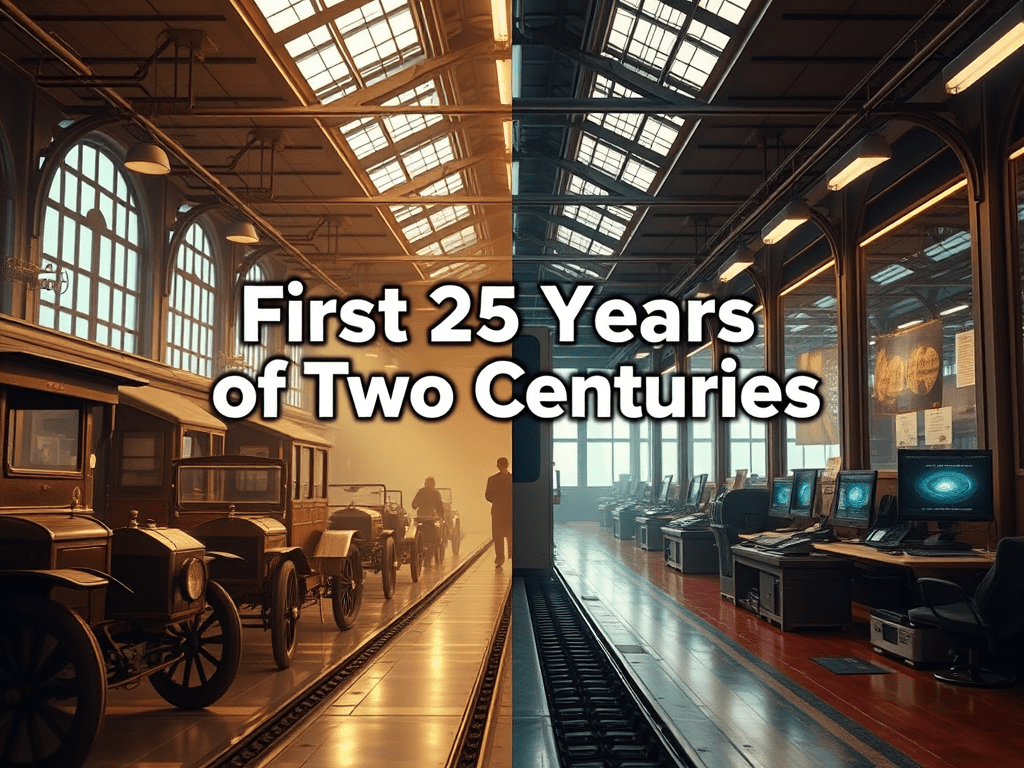
Let’s dabble in the macro and not the micro. What’s the big picture? It’s time to do a simple comparison. Take the first 25-years of the 20th Century and compare with the first 25-years of the 21st Century. Certainly, at the end of this year a complete summing-up could be done.

For now, I’ll do a random sweep across those two generations separated by a century.

Let’s think. There were no powered aeroplanes in 1900[1]. Few had an inkling that a world war was on the way. We were just figuring out what an Atom might be. Even the motor car was mostly for wealthy folk. The railways were king.

In 2000, I remember the optimistic fireworks and the controversy over the millennium dome. The forgotten panic of Y2K now seems strange. The World Wide Web[2] was getting traction amongst geeks. Mobile phones were gaining ground. Few saw the attack of 9/11 coming.

Being a child of the last century it’s easier to appreciate the changes. Let’s face it, today’s 25-year-olds had history lessons about subject that many people lived through. Although, there are a growing number of centenarians, most of them were in inkling in the parents’ eyes or babies pre-1925. Thus, we need to relay on the writers of history.

Here’s a proposition that warrants testing. Compared with the first 25-years of the 20th Century nothing much has happened in the first 25-years of the 21st Century. I know any division in time is an arbitrary matter. The Earth spinning on its axis cares little for human affairs. 24 hours in a day come and go whatever we do. That said, my proposition above does run contrary to the way people may feel about time passing. If indeed it does pass.

In both periods we might measure significance by the impact events have on people. There’s a propensity to say that world wars top the list in any account. That may well be fair. However, if we look at the growth in global population and the general improvements in human health despite that fact, then this is the greatest point to note.

When I say, nothing much has happened between 2000 and 2025, by comparison, it’s more to do with the pivotal moments that led to the creation of the technologies that we all now take for granted. Mastering the elements of science has made the biggest difference.

I’d say, in the public and social field, of politics, philosophy and economics[3] and we are as perhaps foolish as we have ever been. Convince me otherwise.


[1] https://www1.grc.nasa.gov/beginners-guide-to-aeronautics/powered-aircraft/

[2] https://www.w3.org/People/Berners-Lee/Weaving/Overview.html

[3] https://www.theguardian.com/education/2017/feb/23/ppe-oxford-university-degree-that-rules-britain