Regulatory Insights

I can’t remember if my teacher was talking about maths or physics. His scholarly advice has stuck with me. When things get complex, they can seem overwhelming. Problems seem insolvable. So, it’s good to take a deep breath, step back and see if it’s possible to reduce the problem to its most basic elements. Do what could be called helicopter behaviour. Try to look at the problem top-down, in its simplest form. Break it into parts to see if each part is more easily comprehended.

Today’s international aviation regulatory structure, for design and production, follows the arrow of time. From birth to death. Every commercial aircraft that there ever was started as a set of ideas, progressed to a prototype and, if successful, entered service to have a life in the air.

This elementary aircraft life cycle is embedded in standards as well as aviation rules. Documents like, ARP4754(), Aerospace Recommended Practice (ARP) Guidelines for Development of Civil Aircraft and Systems are constructed in this manner. There are as many graphs and curves that represent the aircraft life cycle as there are views on the subject, but they all have common themes.

That said, the end-of-life scenarios for aircraft of all kinds is often haphazard. Those like the Douglas DC-3 go on almost without end. Fascinatingly, this week, I read of an Airbus A321neo being scrapped after only 6-years of operations. Parts being more valuable than the aircraft.

Generally, flight-time lives in operational service are getting shorter. The pace of technology is such that advances offer commercial and environmental advantages that cannot be resisted. Operating conditions change, business models change and innovation speeds forward.

My earlier proposition was that our traditional aviation regulatory structure is out of date. Well, the detail is ever evolving – it’s true. Some of the fundamentals remain. The arrow of time, however fast the wheels spin, mixing my metaphors, remains an immobile reality.

In airworthiness terms an aircraft life cycle is divided into two halves. Initial airworthiness and continuing airworthiness. This provides for a gate keeper. A design does not advance into operational service, along the aircraft life cycle, until specified standards have been demonstrated as met. An authority has deemed that acceptable standards are met.

I’m arguing, this part of the aviation regulatory structure is far from out of date. However much there’s talk of so called “self-regulation” by industry it has not come into being for commercial aviation. I think there’s good reason for retaining the role that a capable independent authority plays in the system. A gate keeper is there to ensure that the public interest is served. That means safety, security and environmental considerations are given appropriate priority.

To fulfil these basic objectives there’s a need for oversight. That is the transparency needed to ensure confidence is maintained not just for a day but for the whole aircraft life cycle. And so, the case for both design and production approvals remain solid. The devil being in the detail.

Aviation Regulations Outdated?

Machines, like aircraft started life in craft workshops. Fabric and wood put together by skilful artisans. Experimentation being a key part of early aviation. It’s easy to see that development by touring a museum that I’d recommend a visit. At Patchway in Bristol there’s a corner of what was once a huge factory. In fact, somewhere where I worked in the early 1980s. Aerospace Bristol[1] is a story of heritage. A testament to the thousands who have worked there over decades.

Fabric and wood played part in the early days. The factory at Filton in Bristol started life making trams. An integral part of turn of the century city life. Carriage work brought together skilled workers in wood, metal and fabrics. It was soon recognised that these were just the skills needed for the new and emerging aircraft industry. The Bristol Aeroplane Company (BAC) was born.

It’s war that industrialised aviation. Demonstration of the value of air power led to ever more technical developments. Lots of the lessons of Henry Ford were applied to aircraft production. Factories grew in importance, employing a large workforce.

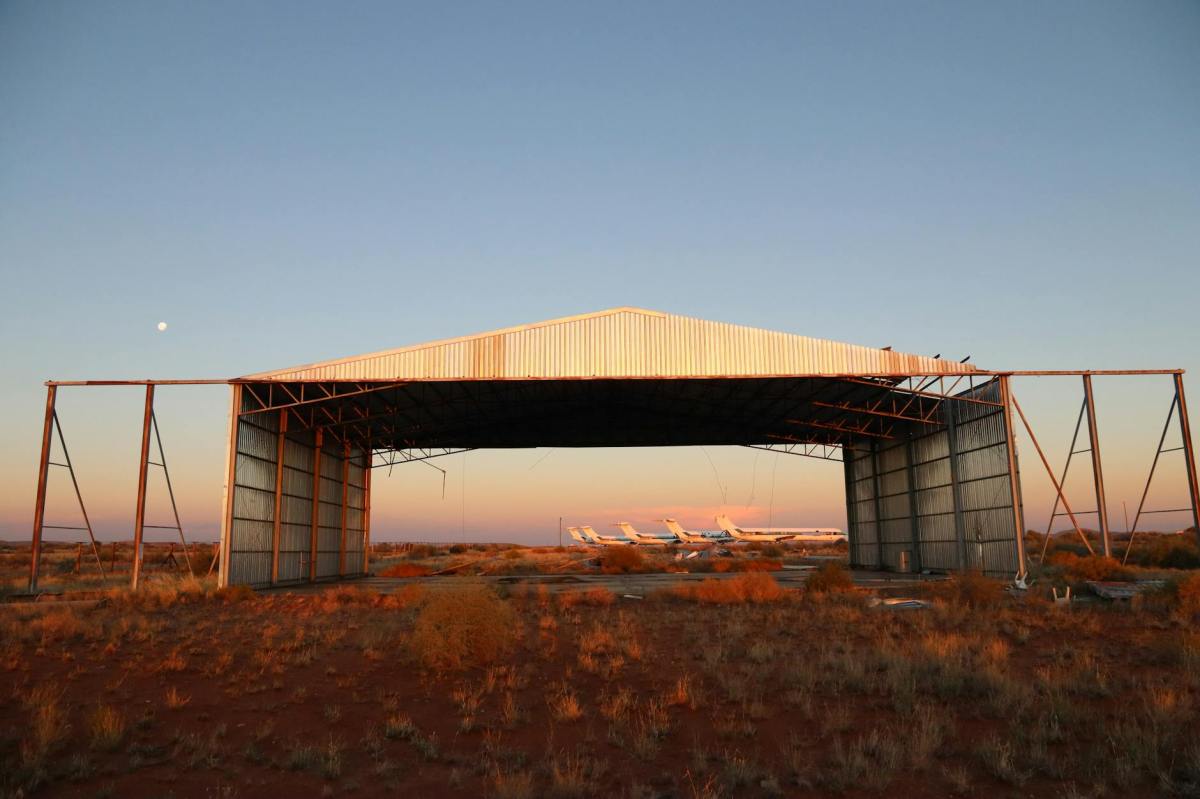
My time at the Filton site was in a building next to a hanger where the Bristol Bulldog[2] was originally produced. This was a single engine fighter, designed in the 1920s, in-service with the Royal Air Force (RAF).

Right from the start orderly processes and regulatory oversight formed part of aircraft design and production. The management of production quality started as a highly prescriptive process. As aviation grew into a global industry, the risks associated with poor design or faulty production became all too apparent.

In the civil industry, regulatory systems developed to address the control of design and production as two different worlds. Airworthiness, or fitness to fly, depended on having a good design that was produced in a consistent and reliable manner. So, now we have a regulatory framework with two pivotal concepts: DOA (Design Organisation Approval) and POA (Production Organisation Approval). It took about a century to get here. Now, these concepts are codified within EASA Part 21, FAA regulations, and other national aviation authorities’ frameworks.

Here’s my more controversial point. Is this internationally accepted regulatory model, that has evolved, conditioned by circumstances, the right one for the future? Are the airworthiness concepts of DOA and POA out of date?

This is a question that nobody wants to hear. Evolution has proved to be a successful strategy. At least, to date. What I’m wondering is, now the world of traditional factories and large administrative workforces is passing, how will regulation adjust to meet future needs?

Maybe I’ll explore that subject next.


[1] https://aerospacebristol.org/

[2] https://en.wikipedia.org/wiki/Bristol_Bulldog

Understanding Boeing 787 Avionics

In what I’ve written so far, I’ve taken the humancentric view much as most commentators. The focus of interest being on what the two Air India crew members were doing during the critical moments of this tragic flight. Let’s shift perspective. It’s time to take an aircraft level view.

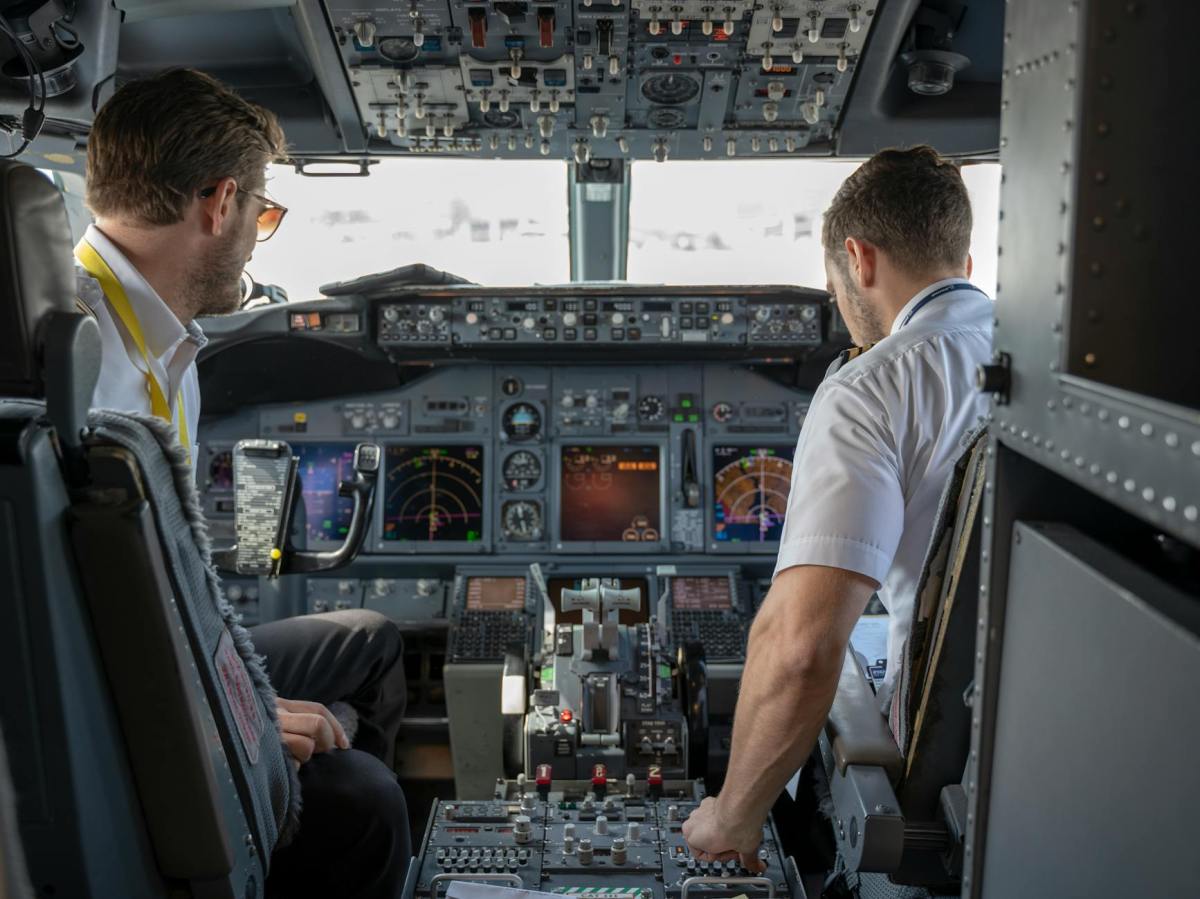
On the Boeing 787-8 “Dreamliner”, the flight deck has two crew seats and two observer seats. One observer seat is directly behind and between the two crew seats. Since these observer seats are not mentioned in the preliminary report, it’s responsible to assume that they were unoccupied.

In my days working on civil aircraft certification, it was often as a part of a multidisciplinary team. I suppose one of the privileges of working on aircraft avionic systems is that they touch every part of a modern civil aircraft. That meant working with highly experienced specialist in every technical field, including flight test pilots and engineers.

When it came to reviewing aircraft system safety assessments, we’d often put it like this, you look at the aircraft from the inside out and well look at the aircraft from the outside in. Meaning that the flight test team looked at how the aircraft flew and performed. Systems engineering specialists focused on how the aircraft functioned. What was the detailed design, the means and mechanisms. It was by putting these differing perspectives together that a comprehensive review of an aircraft could be established.

Here’s where I need to be careful. Although, I worked on the technical standards1 for complex aircraft systems, I did not work on the Boeing 787 at initial certification.

If I go back 25-years, a major change that was happening with respect to aircraft systems. It was the move to apply Integrated Modular Avionics (IMA). This was a move away from federated systems, where just about every aircraft function had its own box (autopilot, autothrottles, instruments, etc.) There was a fundamental architectural difference between federated and IMA systems.

The Boeing 787 has what is called a Common Core System (CCS). As an analogy let’s think of a time before the smart phone became universal. I had a Nokia mobile phone, a Canon camera, a HP calculator, a Dell lap-top, lots of connectors and pen and paper. Now, the only one that has survived the passage of time is the pen and paper.

So, it is with modern civil aircraft. An Integrated Modular Avionics (IMA) hosts the applications that are necessary for safe flight and landing. The IMA hosts functions that provide, Environmental Control, Electrical, Mechanical, Hydraulic, Auxiliary Power Unit (APU), Cabin Services, Flight Controls, Health Management, Fuel, Payloads, and Propulsion systems.

Information is digitised (sensors, switches and alike), processed and then acted upon. General Processing Modules (GPM) inside the aircraft CCS perform the functions needed. There’s an array of these GPMs and redundancy to provide a high integrity aircraft system.

An aircraft’s Fuel Shutoff Valve Actuator depend on the above working as intended in all foreseeable circumstances. No doubt the accident investigators are undertaking an analysis of the Boeing 787 avionics architecture to gain assurance that it worked as intended.

  1. Standards: EUROCAE started a working group (Number 60) in September 2001, which was tasked to define guidance. Later, in November 2002, there was a merge with an RTCA steering committee (Number 200). ↩︎

Fuel Control Switches

I’ll not go any further than the investigation report that’s in the public domain. The Air India AI171 Boeing 787-800 Preliminary Report is published for all to read. The aircraft’s Enhanced Airborne Flight Recorder (EAFR) has been replayed. Sadly, this report raised questions as much as it closes down erroneous theories.

It warrants saying again, and again. My thoughts are with the friends and families of those affected. They deserve to know exactly what happened and as far as is possible, why. Not only that but the global travelling public need to be confident that any necessary corrective action is being taken to prevent a recurrence of such a rare fatal accident.

What requires a one or two words is one of the commonest ways we interact with electrical and electronic systems. The humble switch. In fact, they are far from humble and come in lots of shapes and sizes. The general idea is that a mechanical device, that can be manipulated with a purpose in mind, is used to control the flow of electrical current. There are non-mechanical switches, but I’ll not go there for the moment.

I remember conversations with my aircraft electrical engineering colleagues. It goes like this – you deal with the small currents (avionic systems), and we will deal with the big ones (power systems). Also, a mantra was that all electrical systems are, in part, mechanical systems. Switches, cables, generators, control valves, relays, bonding, you name it, they are in part, mechanical systems. In the past traditional electrical engineers got a but jittery when faced with “solid state” controls (semiconductors).

Switches. I’ve seen the words “cognitive engagement” used. In simpler terms, by design, pilots interact with switches with a purpose in mind. Equally, as in the world of human factors, unprotected switches can be operated in error, unintentionally or by physical force.

So, what are the chances of two protected Fuel Control Switches moving, within seconds of each other, at the most critical phase of an aircraft’s flight?

[There is a discussion to be had in respect of timing. Remember the record from the flight recorders is a sampling of events. The sampling rate maybe as low as one per second. Note: EASA AMC2 CAT.IDE.A.190.]

These cockpit switches are designed and certificated to perform as intended under specified operating and environmental conditions. That’s a wide range of vibration and temperature (shake and bake).

Switch operation is indicated by their physical position[1]. In addition, operation of these switches will be evident by cockpit indications. The concept being that a flight crew can confirm that the Fuel Control Switches have moved by their effect on the engines. If a crew need to take corrective action it is in relation to the information presented to them by the engine instrument system.

The report makes it clear that both mechanical switches transitioned from ‘RUN’ to ‘CUT-OFF’ almost immediately as the aircraft became airborne. That is a worst-case scenario. The time available to recognise and understand the situation, for training to kick-in, and then to take appropriate corrective action was insufficient.

This leads me to think that there may be a case for disabling the Fuel Control Switch function up until at least an altitude where aircraft recovery is possible. Now, these switches need to be available up until the V1 speed is achieved (Example: aborting a take-off with an engine fire). After that an aircraft is committed to becoming airborne.

I suspect the reason there is no inhibit function is the possibility of adding another potential failure condition. Inadvertent and unrecoverable disabling of ‘CUT-OFF’ are scenarios that would need to be considered. No doubt a reasonableness argument was used. No crew would shut-down both engines down immediately an aircraft became airborne, would they?

POST: I hope I haven’t given the impression that this is a case of simple switches and wires. The Boeing 787 is a digital aircraft.  Mechanical fuel technology plays its part but control functions are digital.


[1] Designs that offer switch illumination are not used in this case.

Insights from AAIB Report on Boeing 787 Accident

Now, we know more about the most tragic aviation accident of recent years. The report by India’s Aircraft Accident Investigation Bureau (AAIB) about the June 12 fatal accident of a Boeing 787 raises new questions.

The careful wording of the preliminary report[1] is eminently sensible. The facts are what they are, but it remains difficult to construct a scenario around these facts. I suspect that all the parties involved in this fatal accident investigation had a hand in ensuring that the words used where as clear as can be at this early stage. As I said, the facts are what they are.

It’s good that the report shuts down some of the fervent and erroneous speculation that was filling the international media. For this accident, fuel supply being the substantive issue, decisions around flying controls and other aircraft performance issues can be put to one side.

The crew encountered, or were responsible for a situation that once established led to one inevitable sad outcome. The time available to react, at such low altitude, was less than that which was needed to continue a safe flight.

A focus at this point is on the Boeing 787 aircraft’s fuel control switches. These switches are installed in the flight deck and used by a pilot to cutoff fuel to the engines. When correctly installed, these fuel control switches have a locking feature to prevent inadvertent operation.

Clearly unintended switch movement between the fuel supply and fuel cutoff positions can be hazardous. Inadvertent operation of one or both switches could result in an unintended consequence, e.g. engine(s) shutdown. What we know is that sufficient fuel was supplied to the aircraft engines to conduct a take-off. Then for some unknown reason that fuel supply did not continue as it should.

So far, the respectable technical speculation I’ve read (pilot and aircraft engineer led), raises a limited number of possibilities.

One being that the crew acted in an inappropriate or inadvertent manner. Another being that the aircraft’s fuel control switches failed or were caused to fail. Another being that aircraft’s fuel control system (including wiring) failed or were caused to fail. The movement of the flight deck switches may or may not have been involved. What we know is that the record on the accident flight recorder shows a condition occurred that should not occur.

There is no doubt that this would have been a highly stressful situation in the cockpit whatever the root cause. Normally, immediately after the aircraft is leaving the runway the pilot-in-command would have no good reason to look at the aircraft’s fuel control switches. They would be looking forward at the aircraft instruments.

We can take it that every aviation authority/agency/administration with a Boeing aircraft on its aircraft register will be closely watching the progress of this accident investigation. Since, to date, no Airworthiness Directive (AD) has been issued, related this fatal accident, it is reasonable to assume that aircraft systems and equipment failure or maintenance error has not been found. That said, it is worth noting FAA Special Airworthiness Information Bulletin (SAIB) No. NM-18-33 dated December 17, 2018.

We cannot rule out the possibility that this fatal accident was intentional. However, in the whole history of civil aviation this is one of the most extreme explanations. Looking at evidence, a situation when a competent and sane pilot is found to choose to act in an irrational manner is hard to diagnose.

POST: Just over 3-years ago, I wrote “The case for video”. That case to update the rules is now stronger than ever. The case for video.


[1] https://aaib.gov.in/

Avoiding Contrails and Enhancing Operations

Here I’m expanding on my earlier words on aircraft Contrails.

Airspace is a busy place. It’s most busy over Europe and the US. Over the oceans there’s more room, although on certain routes, like the North Atlantic, there’s plenty of daily air traffic.

Those who manage the airspace are primarily concerned with ensuring that aircraft collisions do not occur. The impact of mid-air collisions is devastating. There’re few people in aviation who can forget the events of an evening in July 2002. Over Überlingen, Germany[1], 71 people lost their lives at a time when the sky was not busy at all.

Managing the use of airspace is more than collision avoidance. Flying is perpetually concerned with the weather. What’s it doing, how is it changing and is it a hazard? It’s not just the safety of flying that demands up-to-date meteorological information. Knowing about the winds can enable more efficient operations, and that’s less fuel use for a given route.

Large thunderstorms need to be avoided. Regions of the world (example: intertropical convergence zone) make this a dynamic challenge. Manoeuvres may be planned but flight crews must be ready to act based on the information they have, like weather radar.

Turbulence is another phenomenon to be avoided, if possible. This can occur in clear air. It can be difficult to detect. Which explains the unpleasant examples that hit the News now and then[2].

Back in 2010, aviation had a reminder that avoidance encompassed any hazardous airspace. That was when an unpronounceable volcano in Iceland was spewing out ash at high altitudes. Plumes of volcanic ash, if ingested into aircraft engines, can cause major difficulties.

I’ve written these words to emphasise that the avoidance of contrail formation cannot be done as a stand-along consideration. It becomes one factor in a whole mix of factors.

Avoidance of contrail formation is about considering the mechanism that cause them to form. Clearly, the warmer the air is the harder it is for a contrail to form. The more humidity there is in the air, the easier it is for a contrail to form. Outside Air Temperature (OAT) and atmospheric humidity vary at each altitude. That relationship interacts with the aircraft inflight, and the outcome may be different for each aircraft type.

At least one academic study[3] says that adjustments of aircraft altitude of around 2000 ft could have a useful effect on contrail formation. That’s good to know but let’s not forget that Reduced Vertical Separation Minima (RVSM) [4] means a vertical spacing of 1000 ft in busy airspace.

My take on this fascinating subject is that there both a tactical and operational approach that can be practically taken by aviation.

At the tactical level, airlines can factor contrail avoidance into flight planning. Creating an algorithm that will weigh all the relevant flight factors. Improved sources of accurate and timely meteorological data and predictions will be needed.

At the operational level, it’s down to the flight crews to take advantage of environmental conditions as the opportunity arises. Much as dealing with turbulence, that is when safety and operational rules permit. To change altitude when its beneficial, computational help is likely to be needed. Over the ocean, air-ground communications systems may need to be further improved. An altitude change that avoids contrail formation but increases fuel consumption would not be a sustainable solution.

These computational tasks may well be well suited to machine learning. A useful application of artificial intelligence. I can imagine a cockpit weather radar display with a new set of symbology that indicates a low probability contrail formation zone ahead.

[Back in the 1990s, I worked on RVSM when the ARINC organisation was creating international standards. Safely increasing traffic in the North Atlantic region. Additionally, I participated in the certification of Future Air Navigation System (FANS) 1/A for use over the ocean. FANS led to more efficient aircraft operation due to shorter flying times and decreased fuel burn.]

POST: Looks like data crunching is underway Flight plans, but greener: The ICCT and Google’s mission to refine the Travel Impact Model – International Council on Clean Transportation


[1] https://www.bfu-web.de/EN/Publications/FinalReports/2002/Report_02_AX001-1-2_Ueberlingen_Report.pdf?__blob=publicationFile&v=1

[2] https://www.flightglobal.com/safety/turkish-777-rapidly-descended-during-crews-aggressive-response-to-turbulence-encounter/162937.article

[3] https://www.imperial.ac.uk/news/195294/small-altitude-changes-could-contrail-impact/

[4] https://skybrary.aero/articles/reduced-vertical-separation-minima-rvsm

Future of Single Pilot Operations in Aviation

Flying embraces automation. Now, there’s a statement that didn’t ought to be controversial, but it can be. Even before we became engulfed by the modern digital age, analogue autopilots could assist in the task of flying. Some early ones were mechanical.

The need for full-time hands-on piloting of the physical controls that linked a human and an aircraft’s control surfaces is not fundamental. Large transport aircraft have stepped further, somewhat mimicking what their military counterparts did, and fly-by-wire systems have become commonplace.

As far as technological evolution is concerned, we remain in a transitionary phase. Commercial aircraft that fly overhead are a mixed community. Some, like the Boeing 737 series continue to have cables and pulleys that link aircraft systems and controls. Others, like the Airbus A320 series are the fly-by-wire digital aircraft types in regular service.

Between the pilots in the cockpit and the motion of an aircraft there is a computer. In fact, several computers arranged in a manner so that they continue to work even when subject to failures. A great deal of thought and effort has gone into designing aircraft systems that will be reliable in-service.

Looking at the safety numbers, starting in the 1980s when fly-by-wire was introduced, the overall service experience is extremely good. The practice of system safety assessment has delivered dependable and robust aircraft. Rigorous certification processes are applied. 

Through the technical developments that marched on from the 1980s one requirement has remained. That is that two pilots are needed in the aircraft cockpit. Granted there are exceptions to this rule for smaller transport aircraft. Single pilot operations are not new. For example, in many countries, the Cessna Caravan[1] is approved for a single pilot.

It’s 2025. It’s difficult not to notice the debate around Single Pilot Operations (SPO). That is to open large transport aircraft operations to a new rule. Lower operating costs may be achievable by making a change. It’s even said that this move is a way of continuing aviation’s growth as it becomes more and more difficult worldwide to increase the number of qualified pilots.

It’s good to see this subject being taken up in a forthcoming conference.

RAeS Flight Operations Conference 2025: Single Pilot Operations – Logical Progression or a Step Too Far?[2] 19 March 2025 – 20 March 2025. Royal Aeronautical Society Headquarters in London.

SPO may be enabled by use of complex systems to help make mission-critical decisions. The next step maybe with real-time “artificial” copilots and intelligent monitoring. Will this move the aviation industry toward safer and more efficient aircraft operations? That is the question.


[1] https://cessna.txtav.com/en/turboprop/caravan

[2] https://www.aerosociety.com/events-calendar/raes-flight-operations-conference-2025-single-pilot-operations-logical-progression-or-a-step-too-far

Advancements in Flight Recorder Technology and Regulations

My last posting addressed accident flight recorders and airworthiness requirements. That’s not enough. It’s important to note that aircraft equipage standards are addressed in operational rules. So, the airworthiness requirements define what an acceptable installation looks like but as to whether an operator needs to have specific equipage or not, that’s down to the operational rules in each country.

Internationally, the standards and recommended practices of ICAO Annex 6 are applicable. These cover the operation of aircraft. Flight recorders are addressed in para 6.3.1. and Appendix 8. Let’s note that ICAO is not a regulator. There are international standards but operational rules in each country apply to each country’s aircraft.

One of the major advances in accident flight recorders technology is the capability to record more data than was formerly practical. This has led to standards for Cockpit Voice Recorders (CVRs) advancing from 2-hour recording duration to 25-hours.

Proposed rule changes have been hampered by the impact of the global pandemic. Some new operational rules apply only to newly built aircraft. That means some existing aircraft can retain their 2-hour CVRs.

Another technology advance is what’s known as Recorder Independent Power Supply (RIPS). RIPS can provided power to the CVR for at least 10 minutes after aircraft electrical power is lost. The RIPS is often offered as a relatively straightforward aircraft modification.

I do not know if the South Korea Boeing 737-800 was required to have accident recorders with the capabilities listed above. If they were not, then there’s a good basis for recommending that changes be made to existing aircraft.

Spectacular Sighting

There’s steep hills. Some more interesting than others, you might say. In my youth this one was known for the road that climbed the hill. That’s the B3081, if you want the detail. It’s an opportunity to journey through wonderful English countryside. The area being Cranborne Chase, a protected landscape.

Zigzag hill was great fun for us as children. Probably not so much fun for my parents as our jet black Wolseley16/60 strained to get around the corners and climb to the top. The car packed with the six of us. This was a route we’d take to get from home to Bournemouth, and the seaside.

On the way, I remember the finger post signs to Compton Abbas Airfield[1]. My thought being what an interesting place for an airfield, right up here high on the chalk hills. Looking down on the surrounding Dorset countryside and the town of Shaftsbury.

Normally, I have to go to flying displays to see historic aircraft fly. This Sunday afternoon, I travelled no further than my back door. Sitting outback in the steaming 30C-degree summer weather all I had to do was look-up. Not that I’d planned to look skyward.

That doesn’t happen every day. First there was a distant rumbling sound. Then it developed into the hum of multiple piston engines. It’s only when the distinctive sight of a Lancaster bomber appeared over the roof of my house did all become clear what was happening.

As soon as I fixed my eyes on the aircraft it was already off over the garden and out across the neighbouring field. This was Avro Lancaster PA474 passing right overhead[2]. It was heading off in a north easterly direction at a notably low altitude. Quote a spectacular sight.

I had to do a little research once the aircraft had disappeared over the horizon. Looking at what was happening on Sunday, I assume it was flying back from Compton Abbas Airshow[3] to its home in Lincolnshire. Given the high summer weather, this was a great day for flying.

This Second World War heavy bomber first flew in 1941. It’s part of the Battle of Britain Memorial Flight (BBMF), based at RAF Coningsby. It’s the only Avro Lancaster that remains airworthy and flying in the UK. It’s only recently returned to the air after a tragic accident involving the BBMF.

Later in the day, off in the distance, looking north, three other historic aircraft trundled across the sky. After dark, with the heavens clear, I caught the Perseid meteor shower. So, for watchers of the skies, 11th August was a noteworthy day.


[1] https://www.comptonairfield.com/

[2] https://www.bbc.co.uk/news/articles/clyg7e7x319o

[3] https://comptonabbasairshow.co.uk/participants/

Objects falling from the sky

In so far as I know, no person on the ground has been killed by an object falling from a commercial aircraft in flight. I’m happy to be corrected if that situation has changed. Strangely, in contrast there are plenty of reports of people falling from aircraft and being killed as a result[1]. Additionally, there are cases of parts shed by aircraft that subsequently contribute to an aircraft accident[2].

The most frequent reports of falling objects, in and around airports are not parts of an aircraft but that which is in the atmosphere all the time. Namely, ice. When it hits the ground in the form of a hailstorm it can be damaging. In flight, it can be seriously damaging to an aircraft.

What I’m writing about here are the third-party risks. That’s when an innocent individual finds themselves the target of an improbable event, some might call an act of God. Ice falls are rare. However, given the volume of worldwide air traffic there’s enough of them to be alert to the problem. As soon as ice accretes to create lumps bigger than a kilo there’s a real danger.

Can ice falls be prevented? Here again there’s no doubt some are because of poor maintenance or other preventable factors, but others are just nature doing its thing. Regulators are always keen to collect data on the phenomena[3]. It’s something that goes on in the background and where the resources allow there can even be follow-up investigations.

Near misses do make the newspaper headlines. The dramatic nature of the events, however rare, can be like a line from a horror movie[4]. Other cases are more a human-interest story than representing a great risk to those on the ground[5].

It’s worth noting that falling objects can be quite different from what they are first reported to be. That can be said about rare events in general.

I remember being told of one case where a sharp metal object fell into a homeowner’s garden. Not nice at all. The immediate reaction was to conclude it came from an aircraft flying overhead. Speculation then started a new story, and the fear of objects falling from aircraft was intensified.

Subsequently, an investigation found that this metal object had more humble terrestrial origins. In a nearby industrial estate a grinding wheel had shattered at highspeed sending debris flying into the air. Parts of which landed in the garden of the unfortunate near-by resident.

One lesson from this tale is that things may not always be as they first seem. Certainly, with falling objects, it’s as well to do an investigation before blaming an aircraft.  

POST 1: There’s a threat outside the atmosphere too. The space industries are ever busier. That old saying about “what goes up, must come down” is true of rockets and space junk. More a hazard to those on the ground, there is still the extreamly unlikly chance of an in-flight aircraft getting hit Unnecessary risks created by uncontrolled rocket reentries | Nature Astronomy

POST 2: EASA Safety Information Bulletin Operations SIB No.: 2022-07 Issued: 28 July 2022, Subject: Re-Entry into Earth’s Atmosphere of Space Debris of Rocket Long March 5B (CZ-5B). This SIB is issued to raise awareness on the expected re-entry into Earth’s atmosphere of the large space object.


[1] https://nypost.com/2019/07/03/man-nearly-killed-by-frozen-body-that-fell-from-plane-is-too-traumatized-to-go-home/

[2] http://concordesst.com/accident/englishreport/12.html

[3] https://www.caa.co.uk/Our-work/Make-a-report-or-complaint/Ice-falls/

[4] https://metro.co.uk/2017/02/16/10kg-block-of-ice-falls-from-plane-and-smashes-through-mans-garage-roof-6453658/

[5] https://www.portsmouth.co.uk/news/national-ice-block-falls-aircraft-and-smashes-familys-garden-1078494