Aviation Regulations Outdated?

Machines, like aircraft started life in craft workshops. Fabric and wood put together by skilful artisans. Experimentation being a key part of early aviation. It’s easy to see that development by touring a museum that I’d recommend a visit. At Patchway in Bristol there’s a corner of what was once a huge factory. In fact, somewhere where I worked in the early 1980s. Aerospace Bristol[1] is a story of heritage. A testament to the thousands who have worked there over decades.

Fabric and wood played part in the early days. The factory at Filton in Bristol started life making trams. An integral part of turn of the century city life. Carriage work brought together skilled workers in wood, metal and fabrics. It was soon recognised that these were just the skills needed for the new and emerging aircraft industry. The Bristol Aeroplane Company (BAC) was born.

It’s war that industrialised aviation. Demonstration of the value of air power led to ever more technical developments. Lots of the lessons of Henry Ford were applied to aircraft production. Factories grew in importance, employing a large workforce.

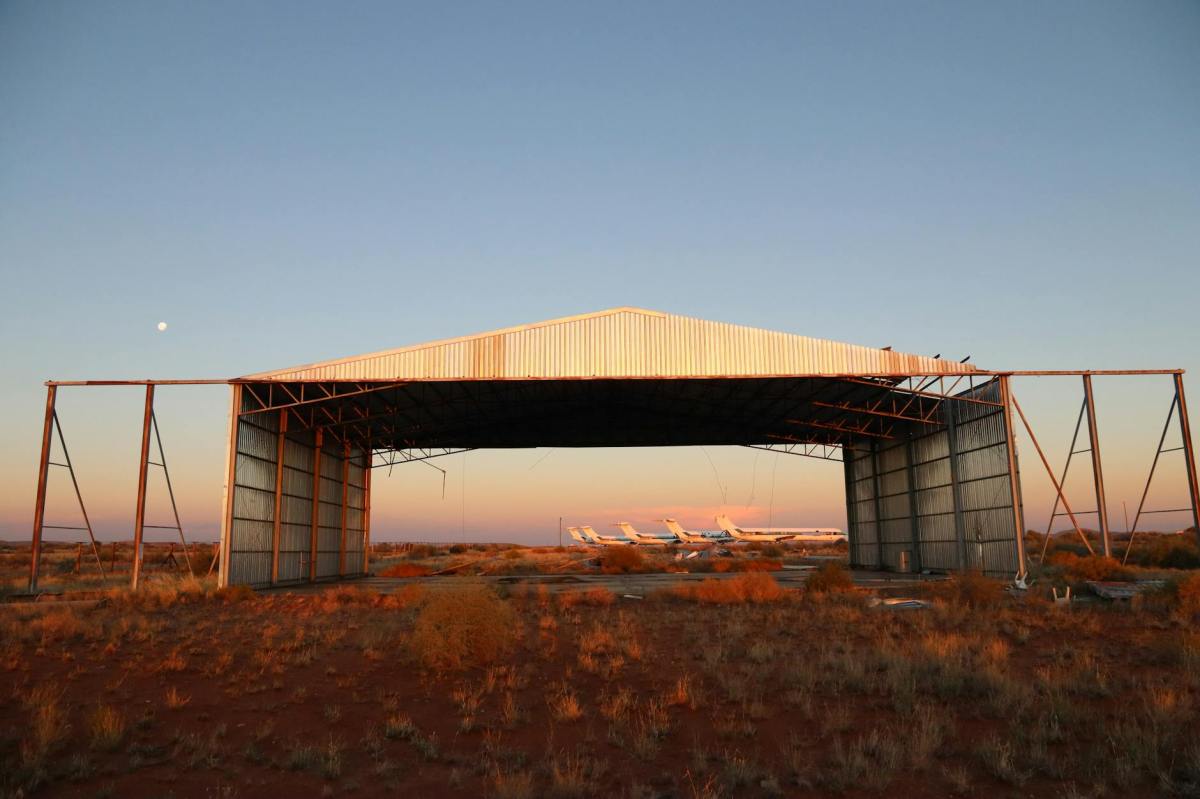
My time at the Filton site was in a building next to a hanger where the Bristol Bulldog[2] was originally produced. This was a single engine fighter, designed in the 1920s, in-service with the Royal Air Force (RAF).

Right from the start orderly processes and regulatory oversight formed part of aircraft design and production. The management of production quality started as a highly prescriptive process. As aviation grew into a global industry, the risks associated with poor design or faulty production became all too apparent.

In the civil industry, regulatory systems developed to address the control of design and production as two different worlds. Airworthiness, or fitness to fly, depended on having a good design that was produced in a consistent and reliable manner. So, now we have a regulatory framework with two pivotal concepts: DOA (Design Organisation Approval) and POA (Production Organisation Approval). It took about a century to get here. Now, these concepts are codified within EASA Part 21, FAA regulations, and other national aviation authorities’ frameworks.

Here’s my more controversial point. Is this internationally accepted regulatory model, that has evolved, conditioned by circumstances, the right one for the future? Are the airworthiness concepts of DOA and POA out of date?

This is a question that nobody wants to hear. Evolution has proved to be a successful strategy. At least, to date. What I’m wondering is, now the world of traditional factories and large administrative workforces is passing, how will regulation adjust to meet future needs?

Maybe I’ll explore that subject next.


[1] https://aerospacebristol.org/

[2] https://en.wikipedia.org/wiki/Bristol_Bulldog

Data Interpretation

More on that subject of number crunching. I’m not so much concerned about the numerous ways and means to produce reliable statistics as the ethical factors involved in their production.

Two things. One is the importance of saying truth to power and the other the importance of seeing things as they really are rather than how you or I would like them to be.

Starting with the first. If ever it was a hard day to say this but asserting truth is not one of several options, it’s the best option.

Whatever any short-term gains there are in distorting a description of a current situation, in the longer term the truth will out. Now, that may not have always been so. It’s often said that the victors write history. That famous view had some validity when literacy was not universal or when texts were chained in church libraries. Now, information speeds through the INTERNET (and whatever its successor will be). Controlling or supressing information has become like trying to build a castle out of sugar on a rainy day.

The second factor is more troublesome and, for that matter, more difficult. It could be the tug of war between subjectivity and objectivity. What we see is so much dependent upon the observer. What we hear is conditioned by what we’ve heard in the past.

I saw this often in the interpretation of a written narrative. Aviation accidents and incidents are reported. Databases full of multivarious reports of different origins siting there waiting to be read. This is a good thing.

It’s the choice of language that shapes our understanding of past events. That can be voluminous and contradictory. It can be minimalist and ambiguous. It can have peculiar expressions or fuzzy translations. Even if reporters are asked to codify their observations, with a tick box, there remains wide margins.

The writer of a story often knows what they want to say. It might be obvious to them what happened at the time of writing. Then it’s the reader who takes that up. A text could be read years later. Read by many others. Similar stories may exist, all written up differently. Hopefully, slight variations.

Seeing things as they really are, rather than how you would like them to be, without bias, requires more than a degree of care. A great deal of care.

It’s hard enough for an enlightened and skilled analysist to take a sentence and say “yes” I know exactly what happened. Not just what but all six of these – who, what, were, when, how and why. In future, the artificial intelligence tools that get used by authorities will have the same challenge.

For all our technological wonders, it’s the writers of reports that shapes our understanding. From a couple of sentences to a massive dissertation.

Try telling that to a maintenance engineer whose last job of the day, before going home, is to file an occurrence report after a terrible day at work. In a damp hanger with a job only half done. Tomorrow’s troubles looming.

POST: Rt Rev Nick Baines and his Thought for the Day on BBC Radio 4 is thinking the same this morning. Truth is truth. In his case it’s Christian truth that he has in mind. There lies another discussion.

Why 12,500 Pounds?

Regulation is a strange business. It often means drawing lines between A and B. Bit like map making. Those lines on a map that mark out where you are and the features of the landscape. You could say that’s when all our troubles start but it’s been proven unavoidable. As soon as our vocabulary extends to words like “big” and “small” someone somewhere is going to ask for a definition. What do you mean? Explain.

For a while you may be able to get away with saying; well, it’s obvious. That works when it is obvious for all to see. An alpine mountain is bigger than a molehill. When you get to the region where it’s not clear if a large hill is a small mountain, or not then discussion gets interesting. Some say 1000 ft (about 300 m) others say much more. There’s no one universal definition.

[This week, I drove through the Brecon Beacons. Not big mountains but treeless mountains, nevertheless. Fine on a clear day but when it rains that’s a different story. This week Wales looked at its best].

Aviation progressed by both evolution and revolution. Undeniably because of the risks involved it’s a highly regulated sector of activity. Not only that but people are rightly sensitive about objects flying over their heads.

For reasons that I will not go into, I’ve been looking at one of these lines on a regulatory map. One that’s been around for a long time.

I cannot tell you how many discussions about what’s “minor” and what’s “major” that have taken place. That’s in terms of an aircraft modification. However, these terms are well documented. Digging out and crewing over the background material and rationale is not too difficult, if you are deeply interested in the subject.

The subject I’m thinking about is that difference between what is considered in the rules to be a “large” aeroplane and a “small” aeroplane. Or for any American readers – airplane. So, I set off to do some quick research about where the figure of weight limit: maximum take-off weight of 12,500 pounds or less originated for small airplanes (aeroplanes).

I expected someone to comment; that’s obvious. The figure came from this or that historic document and has stuck ever since. It seems to work, most of the time. A confirmation or dismissal that I wanted addressed the question, is the longstanding folklore story is true. That the airplane weight limit was chosen in the early 1950s because it’s half the weight of one of the most popular commercial transport aircraft of that time.

There is no doubt that the Douglas DC-3[1] is an astonishing airplane. It started flying in 1935 and there are versions of it still flying. Rugged and reliable, this elegant metal monoplane is the star of Hollywood movies as well as having been the mainstay of the early air transport system is the US. Celebrations are in order. This year is the 90th anniversary of the Douglas DC-3[2].

What I’ve discovered, so far, is that the simple story may be true. Interestingly the rational for the weight figure has more to do with economic regulation than it has with airplane airworthiness. The early commercial air transport system was highly regulated by the State in matters both economic and safety. Managing competition was a bureaucratic process.  Routes needed approval. Thus, a distinction established between what was commercial air transport and what was not.

POST 1: There is no mention of 12,500 pounds in the excellent reference on the early days of civil aviation in the US. Commercial Air Transportation. John H. Frederick PhD. 1947 Revised Edition. Published by Richard D. Irwin Inc. Chicago.

POST 2: The small aircraft definition of 12,500 pounds max certificated take-off weight first appears in US CAB SPECIAL CIVIL AIR REGULATION. Effective February 20, 1952. AUTHORIZATION FOR AIR TAXI OPERATORS TO CONDUCT OPERATIONS UNDER THE PROVISIONS OF PART 42 OF THE CIVIL AIR REGULATIONS. This was a subject of economic regulation in the creation of the air taxi class of operations.


[1] https://airandspace.si.edu/collection-objects/douglas-dc-3/nasm_A19530075000

[2] https://www.eaa.org/airventure/eaa-airventure-news-and-multimedia/eaa-airventure-news/2025-07-17_dc3_society_celebrate_90_years_douglas_dc3_airventure25

Rapid Change: Social Media’s Role

I don’t think we understand the impact our world of superfast global communication is having on human behaviour. A digital event happens with a group looking on, and gasping, and within hours it’s a talking point across great swaths of the INTERNET and social media. Worldwide in seconds.

We could be at a pivotal moment of human evolution. Every time humans have progressed there’s been something in our environment that has necessitated change. If we go back tens of thousands of years, it was the climate. People moved, searching for better prospects. When the rains disappear, migration happened. This still happens. Millions live in that time warp.

However, for those of us who live in communities where our basic needs are met, bar disasters, it’s different forces that motivate change. I say this after having watched a couple episodes of “Human[1]” a BBC series about the origins of modern humans. Billions of us fixate not on finding enough food or shelter but on scrolling.

I’m talking about a couple who got caught on camera. Obviously, they thought that their evening out at a rock concert was a private matter. It turned out to be anything but private. Suddenly these two people spark controversy and debate without any intention of doing so[2]. We live in a time where global social media can thrust a spotlight on any event, almost anywhere. The proliferation of high-definition cameras and the ease with which pictures spread has all speeded up in the last couple of decades. Any picture or video can go anywhere on Earth at lightning speed.

Past moments of human evolution never had these superfast phenomena to adapt to. Sure, we have had great steps in technology. I read that people are taller now than they were in medieval times. Industrialisation may have had downsides, but we are mostly better fed as a result.

Social media is not benign. It grabs attention, it demands an opinion, it drives rapid judgement and gets passed on to spark more cycles of comment and opinion. This conveyor-belt of comment and opinion takes on a life of its own.

There’s such a mix that it’s not always easy to determine what’s true and what’s people pushing their own certainties and prejudices. Judgements are expected to be immediate. Any appeal to caution and considered thought can be seed sown on fallow ground. Like a Vicar in an empty church.

These behaviours are being applied to the daily News and events like the recent Air India accident. Attention increases when there’s tragedy and mystery. There’s wisdom in saying that people should wait for the formal accident investigation to conclude. Only this does nothing to impede a rain forest of judgements. Real and self appointed experts fight to get their view top billing.

Maybe these are ephemeral and of no great consequence. I don’t believe that because, like it or not, decision makers are influenced by social media’s compelling nature. What this says to me is that adaptation isn’t an option it’s a necessity. Appealing to past custom and practice isn’t going to work. I don’t have an answer as to the nature of this adaptation. Sitting quietly waiting for attention to subside isn’t a good course of action.

POST: It’s kinda funny that a magazine like WIRED highlights how to dump social media. How to Delete All of Your Social Media Accounts: Instagram, X, Facebook, TikTok, and More | WIRED


[1] https://www.bbc.co.uk/iplayer/episodes/m002fc72/human

[2] https://www.nbcnews.com/tech/tech-news/astronomer-responds-coldplay-concert-kiss-cam-moment-rcna219678

Aircraft Safety and Fuel Starvation

Unsafe. In common language it’s the opposite to being safe. So, take a definition of “safe” and reverse it. Let’s say to be safe is to be free from harm (not a good definition). That would lead to “unsafe” being subject to harm or potentially being subject to harm. The probabilistic element always creeps in since it’s the future that is of concern. Absolute safety is as mercurial or unreal as absolute certainty.

Let’s apply this to an aircraft. The ultimate harm is that of a catastrophic event from which there is no escape. Surprisingly, taking a high-level view, there are few of these situations that can occur.

Flying, and continuing to fly, involves four forces. Lift, Weight, Thrust and Drag. It’s that simple. An aircraft moves through the air with these in balance. Flying straight and level, lift opposes weight and thrust opposes drag.

Yes, there are other safety considerations. If there are people on-board. For example, it’s important to maintain a habitable environment. At higher altitudes that requirement can be demanding. Structural integrity is important too. Otherwise flying is a short-lived experience.

In the recent Air India fatal accident, the four forces of flight were not maintained so as to make a continued safe flight possible. The wings provided lift but the force that was deficient was thrust.

Two large powerful engines, either of which could have provided enough thrust, were unable to do so. The trouble being fuel starvation. Fuel starvation occurs when the fuel supply to the engine(s) is interrupted. This can happen even when there is useable fuel on board an aircraft[1].

Sadly, in the records there are numerous aircraft incidents and accidents where this has happened. Quite a few fuel starvation incidents and accidents occur because of fuel mismanagement. This can result from a pilot selecting an incorrect, or empty, fuel tank during a flight.

Now and then, it is the aircraft systems that are at fault. The pilot(s) can be misled by a faulty fuel indication system[2]. In one notable case, a major fuel leak drained the aircraft’s fuel supply[3].

When there is useable fuel on-board an aircraft, the imperative is to restart and recover. It is not uncommon or unreasonable for there to be a delay in restarting engine(s), especially when a fuel starvation event is entirely unexpected. Diagnosis takes time given the numerous potential causes of a starvation event.

In cruise flight there is time available to perform a diagnosis and take appropriate corrective action. Both take-off and landing have their hazards. Both are busy times in the cockpit. When looking at the worldwide safety numbers, less fatal accidents occur on take-off than landing. The numbers Boeing provide put take-off at 6% and landing at 24% of fatal accidents. Each one only occupies about 1% of the total flight time.

Although these are the numbers, my view is that, even though take-offs are optional and landings are mandatory, the requirements for adequate thrust are most critical during take-off. This is arguable and it reminds me that safety assessment is never simple.


[1] https://www.faa.gov/lessons_learned/transport_airplane/accidents/G-YMMM

[2] https://asn.flightsafety.org/asndb/322358

[3] https://asn.flightsafety.org/asndb/323244

Understanding Boeing 787 Avionics

In what I’ve written so far, I’ve taken the humancentric view much as most commentators. The focus of interest being on what the two Air India crew members were doing during the critical moments of this tragic flight. Let’s shift perspective. It’s time to take an aircraft level view.

On the Boeing 787-8 “Dreamliner”, the flight deck has two crew seats and two observer seats. One observer seat is directly behind and between the two crew seats. Since these observer seats are not mentioned in the preliminary report, it’s responsible to assume that they were unoccupied.

In my days working on civil aircraft certification, it was often as a part of a multidisciplinary team. I suppose one of the privileges of working on aircraft avionic systems is that they touch every part of a modern civil aircraft. That meant working with highly experienced specialist in every technical field, including flight test pilots and engineers.

When it came to reviewing aircraft system safety assessments, we’d often put it like this, you look at the aircraft from the inside out and well look at the aircraft from the outside in. Meaning that the flight test team looked at how the aircraft flew and performed. Systems engineering specialists focused on how the aircraft functioned. What was the detailed design, the means and mechanisms. It was by putting these differing perspectives together that a comprehensive review of an aircraft could be established.

Here’s where I need to be careful. Although, I worked on the technical standards1 for complex aircraft systems, I did not work on the Boeing 787 at initial certification.

If I go back 25-years, a major change that was happening with respect to aircraft systems. It was the move to apply Integrated Modular Avionics (IMA). This was a move away from federated systems, where just about every aircraft function had its own box (autopilot, autothrottles, instruments, etc.) There was a fundamental architectural difference between federated and IMA systems.

The Boeing 787 has what is called a Common Core System (CCS). As an analogy let’s think of a time before the smart phone became universal. I had a Nokia mobile phone, a Canon camera, a HP calculator, a Dell lap-top, lots of connectors and pen and paper. Now, the only one that has survived the passage of time is the pen and paper.

So, it is with modern civil aircraft. An Integrated Modular Avionics (IMA) hosts the applications that are necessary for safe flight and landing. The IMA hosts functions that provide, Environmental Control, Electrical, Mechanical, Hydraulic, Auxiliary Power Unit (APU), Cabin Services, Flight Controls, Health Management, Fuel, Payloads, and Propulsion systems.

Information is digitised (sensors, switches and alike), processed and then acted upon. General Processing Modules (GPM) inside the aircraft CCS perform the functions needed. There’s an array of these GPMs and redundancy to provide a high integrity aircraft system.

An aircraft’s Fuel Shutoff Valve Actuator depend on the above working as intended in all foreseeable circumstances. No doubt the accident investigators are undertaking an analysis of the Boeing 787 avionics architecture to gain assurance that it worked as intended.

  1. Standards: EUROCAE started a working group (Number 60) in September 2001, which was tasked to define guidance. Later, in November 2002, there was a merge with an RTCA steering committee (Number 200). ↩︎

Fuel Control Switches

I’ll not go any further than the investigation report that’s in the public domain. The Air India AI171 Boeing 787-800 Preliminary Report is published for all to read. The aircraft’s Enhanced Airborne Flight Recorder (EAFR) has been replayed. Sadly, this report raised questions as much as it closes down erroneous theories.

It warrants saying again, and again. My thoughts are with the friends and families of those affected. They deserve to know exactly what happened and as far as is possible, why. Not only that but the global travelling public need to be confident that any necessary corrective action is being taken to prevent a recurrence of such a rare fatal accident.

What requires a one or two words is one of the commonest ways we interact with electrical and electronic systems. The humble switch. In fact, they are far from humble and come in lots of shapes and sizes. The general idea is that a mechanical device, that can be manipulated with a purpose in mind, is used to control the flow of electrical current. There are non-mechanical switches, but I’ll not go there for the moment.

I remember conversations with my aircraft electrical engineering colleagues. It goes like this – you deal with the small currents (avionic systems), and we will deal with the big ones (power systems). Also, a mantra was that all electrical systems are, in part, mechanical systems. Switches, cables, generators, control valves, relays, bonding, you name it, they are in part, mechanical systems. In the past traditional electrical engineers got a but jittery when faced with “solid state” controls (semiconductors).

Switches. I’ve seen the words “cognitive engagement” used. In simpler terms, by design, pilots interact with switches with a purpose in mind. Equally, as in the world of human factors, unprotected switches can be operated in error, unintentionally or by physical force.

So, what are the chances of two protected Fuel Control Switches moving, within seconds of each other, at the most critical phase of an aircraft’s flight?

[There is a discussion to be had in respect of timing. Remember the record from the flight recorders is a sampling of events. The sampling rate maybe as low as one per second. Note: EASA AMC2 CAT.IDE.A.190.]

These cockpit switches are designed and certificated to perform as intended under specified operating and environmental conditions. That’s a wide range of vibration and temperature (shake and bake).

Switch operation is indicated by their physical position[1]. In addition, operation of these switches will be evident by cockpit indications. The concept being that a flight crew can confirm that the Fuel Control Switches have moved by their effect on the engines. If a crew need to take corrective action it is in relation to the information presented to them by the engine instrument system.

The report makes it clear that both mechanical switches transitioned from ‘RUN’ to ‘CUT-OFF’ almost immediately as the aircraft became airborne. That is a worst-case scenario. The time available to recognise and understand the situation, for training to kick-in, and then to take appropriate corrective action was insufficient.

This leads me to think that there may be a case for disabling the Fuel Control Switch function up until at least an altitude where aircraft recovery is possible. Now, these switches need to be available up until the V1 speed is achieved (Example: aborting a take-off with an engine fire). After that an aircraft is committed to becoming airborne.

I suspect the reason there is no inhibit function is the possibility of adding another potential failure condition. Inadvertent and unrecoverable disabling of ‘CUT-OFF’ are scenarios that would need to be considered. No doubt a reasonableness argument was used. No crew would shut-down both engines down immediately an aircraft became airborne, would they?

POST: I hope I haven’t given the impression that this is a case of simple switches and wires. The Boeing 787 is a digital aircraft.  Mechanical fuel technology plays its part but control functions are digital.


[1] Designs that offer switch illumination are not used in this case.

Insights from AAIB Report on Boeing 787 Accident

Now, we know more about the most tragic aviation accident of recent years. The report by India’s Aircraft Accident Investigation Bureau (AAIB) about the June 12 fatal accident of a Boeing 787 raises new questions.

The careful wording of the preliminary report[1] is eminently sensible. The facts are what they are, but it remains difficult to construct a scenario around these facts. I suspect that all the parties involved in this fatal accident investigation had a hand in ensuring that the words used where as clear as can be at this early stage. As I said, the facts are what they are.

It’s good that the report shuts down some of the fervent and erroneous speculation that was filling the international media. For this accident, fuel supply being the substantive issue, decisions around flying controls and other aircraft performance issues can be put to one side.

The crew encountered, or were responsible for a situation that once established led to one inevitable sad outcome. The time available to react, at such low altitude, was less than that which was needed to continue a safe flight.

A focus at this point is on the Boeing 787 aircraft’s fuel control switches. These switches are installed in the flight deck and used by a pilot to cutoff fuel to the engines. When correctly installed, these fuel control switches have a locking feature to prevent inadvertent operation.

Clearly unintended switch movement between the fuel supply and fuel cutoff positions can be hazardous. Inadvertent operation of one or both switches could result in an unintended consequence, e.g. engine(s) shutdown. What we know is that sufficient fuel was supplied to the aircraft engines to conduct a take-off. Then for some unknown reason that fuel supply did not continue as it should.

So far, the respectable technical speculation I’ve read (pilot and aircraft engineer led), raises a limited number of possibilities.

One being that the crew acted in an inappropriate or inadvertent manner. Another being that the aircraft’s fuel control switches failed or were caused to fail. Another being that aircraft’s fuel control system (including wiring) failed or were caused to fail. The movement of the flight deck switches may or may not have been involved. What we know is that the record on the accident flight recorder shows a condition occurred that should not occur.

There is no doubt that this would have been a highly stressful situation in the cockpit whatever the root cause. Normally, immediately after the aircraft is leaving the runway the pilot-in-command would have no good reason to look at the aircraft’s fuel control switches. They would be looking forward at the aircraft instruments.

We can take it that every aviation authority/agency/administration with a Boeing aircraft on its aircraft register will be closely watching the progress of this accident investigation. Since, to date, no Airworthiness Directive (AD) has been issued, related this fatal accident, it is reasonable to assume that aircraft systems and equipment failure or maintenance error has not been found. That said, it is worth noting FAA Special Airworthiness Information Bulletin (SAIB) No. NM-18-33 dated December 17, 2018.

We cannot rule out the possibility that this fatal accident was intentional. However, in the whole history of civil aviation this is one of the most extreme explanations. Looking at evidence, a situation when a competent and sane pilot is found to choose to act in an irrational manner is hard to diagnose.

POST: Just over 3-years ago, I wrote “The case for video”. That case to update the rules is now stronger than ever. The case for video.


[1] https://aaib.gov.in/

Causal Chains in Accidents

It becomes apparent to me that there’s much commonplace thinking about accidents. What I mean by this is that there’s simple mental models of how events happen that we all share. These simple models are often not all that helpful. Commonplace in that journalists and commentators use them as a default. It’s a way of communicating.

Don’t worry I’m not going on a tirade of how complex the world happens to be, with a dig in the ribs for anyone who tries to oversimplify it. We need simple mental models. Answering questions and explaining as if everything is an academic paper doesn’t help most of us.

I talk of no less than the causal chain. That’s a love of putting the details of events into a chronological sequence. For an aviation accident it might go like this – fuel gets contaminated, fuel is loaded onto aircraft, engine stops, pilot makes an emergency landing, aircraft ends up in a field and an investigation starts. The headline is dominated by the scariest part of the sequence of events. Key words like “emergency” are going to command the readers attention.

In my example above it’s reasonable to assume that there’s a relationship between each link in the chain. The sequence seems obvious. It’s easy to assume that’s the way the situation developed and thus made the accident or incident. However, it doesn’t have to be so. Let’s say there was contaminated fuel but not sufficient to stop an engine. Let’s say for entirely unrelated reasons (past events) the spluttering of the engine led the pilot to think that there was a fire on-board. Fuel was shut down. Thus, events took a different sequence.

Anyway, my point is an ancient maximum. Question what you first hear (or see). The recent tragic fatal accident in India is an example of much speculation often based on a proposed orderly sequence of events. Many commentators have lined them up as, this happened, and then that happened and then something else happened. QED.

What I’ve learned from reading and analysing accident reports over the years is that such major accidents are rarely, if ever, a simple sequence or only a couple of factors combined.

Yes, adding circumstantial factors to a causal chain adds realism. Even that is not so easy given that each factor has a different potential influence on the outcome. Atypical circumstantial factors are time of day or night, weather, atmosphere conditions and the human and organisational cultural ones.

To make sense of the need to put events in an order a more sophisticated model is the fishbone diagram[1]. The basic theme is the same. A core causal chain. What’s better is the injection of multiple factors to make a more authentic accident model.

Although, we do think in a cause-and-effect way about the world, if there are more than 4 or 5 factors combined in a random manner these models are far from authentic. My message is not so sophisticated, beware of simple sequences as being definitive.


[1] https://asq.org/quality-resources/fishbone

Managing Risk After Aircraft Accidents

Let me clarify. I can no more predict the future than is illustrated in the humour of this news report. “Psychic’s Gloucester show cancelled due to ‘unforeseen circumstances[1]‘”

Predicting the outcome of an aircraft accident investigation is just as fraught with unforeseen circumstances. For a start, the evidence base is shallow in the first weeks of an investigation. As the clock ticks so increasingly, new information either confuses or clarifies the situation.

Despite the uncertainty, aviation professionals do need to try to anticipate the findings of a formal investigation before they are published or communicated in confidence. It’s not acceptable to sit back and wait to be told what has been found.

In aviation, post-accident there is an elevation of operational risk. The trouble is that assessing that elevation is hindered by the paucity of reliable information. Equally, a proliferation of speculation can escalate risk assessments beyond what is needed. The reverse is true too.

Let’s look at the difference between commentary and speculation. One is based on evidence and the other may not be. One takes the best professional assessment and the other may be more to do with beliefs, prejudices or the latest fashionable thinking.

In reality, it’s not quite as binary. Since speculation in the financial sense may be based on a lot of calculation and risk assessment. Generally, though there is an element of a leap of faith. Opinions based upon past experiences commonly shape thinking.

Commentary on the other hand, like sports commentary is describing what’s happening based upon what’s known. Sometimes that includes one or two – what ifs. In football, that match deciding penalty that was only missed but for a small error.

Commentary includes analysis and study of past accidents and incidents. Trying to pick-up on any apparent trends or patterns is of paramount importance.

Those responsible for aircraft operations, whether they be airlines or safety regulators, need to have an immediate response. That maybe done in private. Their decision-makers need to have a theory or conjecture based on as much analysis and evidence as is available. Like it or not, the proliferation of commentary and speculation does have an impact.

In a past life, one of the actions that my team and I took was to compile a “red book” as quickly as possible post-accident. That document would contain as much reliable information as was available. Facts like aircraft registration details, a type description, people, places and organisation details that were verifiable. This was not a full explanation. It was an analysis, compilation and commentary on what had happened. The idea being that decision-makers had the best possible chance of acting in a consistent manner to reduce risk in the here and now.


[1] https://www.gloucestershirelive.co.uk/whats-on/whats-on-news/psychics-gloucester-show-cancelled-due-7250094