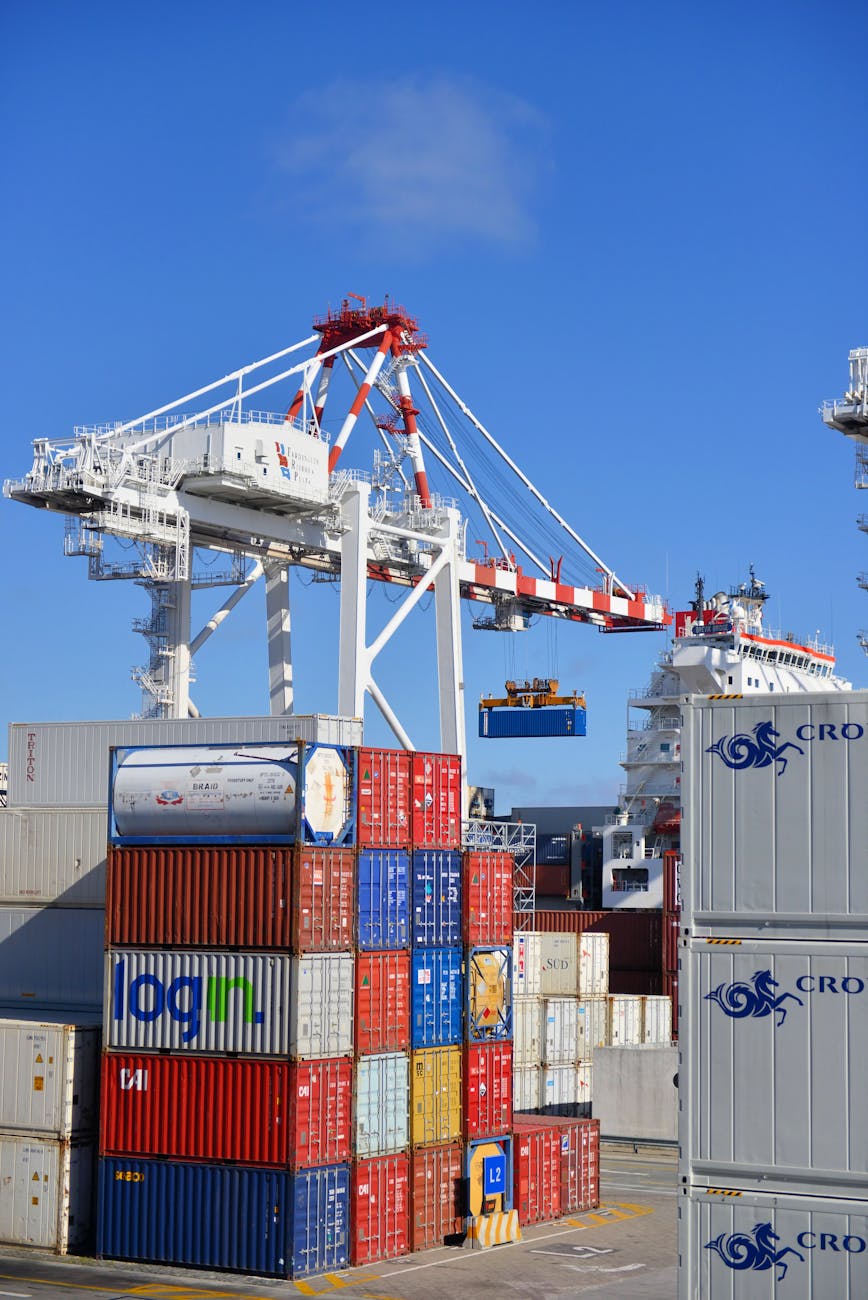
Revitalising Manufacturing

Yes, it’s good to have good trading relations with other countries. With a degree of pragmatism – as many as possible. Naturally, there are lines drawn in cases where countries share little of the UK’s values or are dictator run aggressors. Counting the hundreds of sovereign countries there are around the globe, a majority are friendly and mostly interested in mutual wellbeing.

However, post-2016[1] we are still living in strange times in the UK. In the same breath as some people talk of sovereignty and surrender, they say an extremely wealthy man in the US can solve all the UK’s problems. This nonsense defies any kind of logic.

There’s a peculiar celebration of the UK joining the Asia-Pacific Comprehensive and Progressive Agreement for Trans-Pacific Partnership (CPTPP) bloc. As if we didn’t have a huge trading block on our immediate doorstep. Joining one that offers a tiny gain overtime whilst leaving the other has cost a massive economic hit. The one thousands of miles away is significantly culturally different but the one next door is one where we share a common history.

I learn that there’s no point even thinking that logic has any influence on a Brexit supporter. Non whatsoever. Their view of the world comes from some lost imperial age.

Sadly, Brexit talk is only mumbled in darkened corners. That whopping great elephant in the room continues to get ignored. Even the UK’s new Labour Government is carrying on as if there were the former Conservative bunglers. There’s some woolly talk of reconciliation. There’s a lot of right-wing scaremongering. Practically, not a lot is changing.

In real terms, both UK exports and imports of goods are lower than in 2016, having shrunk by 1% and 2%, respectively[2]. Which is crazy given the new economic horizons. Especially in the switch to the need for more environmentally responsible goods. We should be modernising and strengthening UK design and manufacturing. Not just a bit but putting a rocket under both. Half hearted nice words by minor Ministers don’t cut it.

International trade fantasies will not build a stronger domestic economy and that illusive positive growth that’s often talked about in political speeches. With the coming of highly advanced computing, like artificial intelligence, countries with predominantly service based economies are gong to struggle. Basic service orientated jobs are going to get more automated. Like the traditional factories Henry Ford would have recognised, office complexes are hollowing out.

At least the new Labour Government isn’t pushing wholesale reopening coal mines or returning to a dependency on North Sea oil rigs. That said, I’m unsure what their attitude and policy is to rock fracking and imported gas supplies.

To make real economic progress we (UK) must make Brexit history. With our colleagues in Europe, we can be an innovation powerhouse. Making home grown products for the world markets of the future. Not languishing in a tepid imperial past or tugging at the shirt tails of some mega weird pugilist.


[1] UK referendum result: Of those who voted, 51.89% voted to leave the EU (Leave), and 48.11% voted to remain a member of the EU (Remain).

[2] https://personal.lse.ac.uk/sampsont/BrexitUKTrade.pdf

Travelling Post-Brexit

Ever since Brexit, I’ve had to have my passport stamped in and out of European countries. It’s like a reversion to the days when I got my first British passport. That was back in the late 70s.  It has a frighteningly youthful picture. Occupation – student.

I’m not so phased by the coming changes to European Union (EU) border controls. Naturally, it’s worth asking if Britian has become a more dangerous nation since the time before Brexit when we enjoyed freedom of movement. It’s a pity we didn’t value that freedom a lot more. It was thrown away far too easily.

Today, the electronic border controls expect us to stare at a camera. A securely held, I hope, database is used to check a list of biometric numbers against my image. I guess that’s a sure-fire way of saying that Mr Blogs is indeed someone who looks very much like Mr Blogs. Facial recognition technology has come a long way.

The next steps in tightening-up controls will be fingerprinting[1]. Not in the manner of Sherlock Holmes, with an ink pad. No, in the digital age an ominous machine will scan our fingers and check its records to see that not only does Mr Blogs look as he should but that he’s got the essential characteristics of Mr Blogs.

Certainly, in this new regime British citizens will not be able to overstay in European countries. Ones travel records will be a lot more quantifiable and precise than stamping a piece of paper. That is assuming such digital border control machines will be relatively error free.

One of the benefits of Brexit is that it will be easier to track the movements of British criminals in and out of the EU. The reciprocal will not be true. It will not be easier for British authorities to track continental European criminals in an out of the UK.

Ah the luxury of being a Third Country. Longer ques. More uncertainty. Less privileges.

What’s more is the introduction of the new EU border control systems will be “phased[2]”. This change will not be one big bang. So, different ports and airports will be doing different things at different times. Now, it doesn’t take a genius to see that confusion is most likely.

Travelling in 2025 is going to be more than the usual adventure.


[1] https://commonslibrary.parliament.uk/the-eu-entry-exit-system-and-eu-travel-authorisation-system/

[2] https://www.independent.co.uk/travel/news-and-advice/eu-biometric-border-fingerprint-entry-delay-b2627645.html

Illusion of Sovereignty

Desperate for something to say because their arguments have been shot down in flames, those who continue to support Brexit raise the subject of sovereignty. It’s as big a red herring as you are likely to find. That said, the notion of complete autonomy does have a resonance with one part of the political class.

One example of reality being different from political rhetoric is one I regularly see. I’m driving more than I have done in a while. Mostly, on the M4, M3 and M25 motorways. In this country some freight goes by rail, but the overwhelming amount of freight goes by road.

A sign of our times has been the construction of massive warehouses close to motorway junctions. Strategic non-motorway routes too. I do mean massive steel sheds. Counting the number of football fields covered by these structures doesn’t help. I’ll bet some of them can been seen from space.

Back to the British roads. 6-wheelers, 8-wheelers, 12-wheelers, big heavy trucks often showing the wear and tear from journeying great distances depend on the motorway system. A constant flow of heavy goods moves day and night.

Looking at the trucks, some have UK registration plates, some have UK registration plates thrown over their original plates. Most drive under the registration plates of a country of origin or wherever their commercial operations are based. Each plate tells a story. LT is Lithuania. PL is Poland. H is Hungary. NL is Netherlands. D is Germany.

So, every day we have tens of thousands of trucks maintained and operated to standards set by the European Union (EU) on our roads. They are left-hand-drive. Their speedometers are in kilometres per hour.

It occurs to me – what does “sovereignty” mean when everyday looks like a day driving?

For sure, no British inspector checks the condition of each one of these trucks on a regular basis. For sure, truck driver’s hours are only occasionally checked. For sure, maintenance records are locked away in a filing cabinet.

In the world of absolute sovereignty none of this should be allowed. In fact, much of the above-described transport operations are continuing as they did before Brexit but with extra paperwork attached. Extra costs.

It’s an observation. It’s easily made when stuck between a couple of heavy goods vehicles on the motorway. Pragmatism may have led to a blind eye being turned to reality. We shouldn’t delude ourselves that Brexit has delivered anything useful in this respect.

Why the UK Should Rejoin

Fine, I’m happy to admit that my march, with thousands of others, through the streets of London on Saturday was not everyone’s cup of tea. There are a lot of people who support the idea of a return to European Union (EU) membership but are reluctant to raise the issue just now.

Often cited is the wave of right-wing politicians who are gaining ground in Europe’s larger countries. It’s as if they are going through their own Brexit like political moment but without anyone of any consequence advocating throwing away their EU membership.

Maybe the UK is ahead in this respect. We’ve been through the confusion and turbulence of the political right-wing eccentrics moment in the sun. They were never mainstream. However, they did hold the reins of power for some disastrous years. Thank God they are now behind us.

I have marched year-after-year because it’s the right thing to do. Tens of thousands from all over the UK have done the same as me. Millions if the numbers added-up from 2016 onward. Our future can be based on cooperation and mutual interests. Ideologically driven conflict and disruption have brought nothing but a lose – lose outcome.

So, what are the arguments for the rejoin movement? It’s all very well to shout at the thing we don’t like. Now, is the time to make the sound solid arguments for the thing we favour.

Let’s take trade for a start. The last UK Government wallowed in gushes of self-praise every time they signed an agreement with any country that was not European. Conservative Members of Parliament wanted to tower over the world like imperial overseers. It was an illusion.

Most of the so called “new” deals that were signed were simply a rollover that meant no change. In fact, more was given away than was gained. All in a desperate attempt to show progress. British farming was effectively shafted by Ministers.

One of the most touted possible “streets paved with gold[1]” was the prospect of a super new trade deal with the United States (US). Under President Trump, the prospect of an advantageous UK-US trade deal was an illusion.

Ironically, a claimed success was the joining of a regional trade block. I know it’s crazy that leaving a gigantic trade block on the UK’s doorstep was followed by joining one covering the Pacific. Yes, the other side of the world. Not only that but the projected gains are minuscule.

EU membership offers, as it did before, access to enormous trade benefits by comparison with what has been achieved since 2016. The numbers speak for themselves.

If the new Labour Government continues with a form of the fibs told during the “Get Brexit Done” phase, then trouble lies ahead. Next door, the UK has the world’s largest trading block. The value to the British economy of Single Market membership exceeds a mishmash of remote and small deals. There’s a positive way forward and it’s staring us in the face.

POST: It’s worth noting that the 1960 European Free Trade Association (EFTA ) was created, to promote free trade and economic integration included: Austria, Denmark, Norway, Portugal, Sweden, Switzerland and the United Kingdom.


[1] https://dictionary.cambridge.org/dictionary/english/streets-are-paved-with-gold

National Rejoin March: Unity for a European Future

The European Movement[1] has been around for 75-years. Yesterday, I was surrounded by a good number of their membership. That, and many Liberal Democrats. People, young and old, from communities up and down Britain. There were lots of people from the creative industries, so badly hit by Brexit. In fact, there were people of every political background marching through the streets of central London.

Everybody had gathered in central London with the aim of reversing the tragedy that is Brexit. I say “is” and not “was” because the disaster continues to have marked repercussions on everyday life. Reclaiming the freedoms that we once had has brought people together in large numbers.

On Saturday, pro-European campaigners made their way from Park Lane to Parliament Square for the third annual National Rejoin March (NRM)[2]. The weather smiled on the gathering. It couldn’t have been better in the light of torrential rain and the endless storms of past days. The sunshine and blue skies warmed my sprit.

The occasional chant of “Boll*cks to Brexit” has been replaced by Reset, Repair, Rejoin. As is the tradition of these events, posters ranged from the more obvious slogans, like #BinBrexit to the imaginative and sometimes bizarre. The group dressed in eye catching elephant costumes had a point to make. The elephant in the room being the protesters theme.

Standing next to me, one young lad asked his mate why he had decided to be on this rejoin march. I thought his response most was appt: “Because I want to be on the right side of history”. To me that just about sums it up. Brexit is an aberration. Eventually, after a great deal of to-and-fro the strong likelihood is that the UK will rejoin the European Union (EU), or its successor. Everything we know points in that direction. It may take a decade. It may take more.

The Labour Party won the 4th July UK General Election, and while it pledged not to reopen the main parts of Britain’s deal to leave the EU, does claim to want a significant reset. So far, the indications are that this policy line is typical political rhetoric, and little more. But it must be said that this is the early days of a new British government. If their claim to want growth in the economy to fuel spending on public services is honest, they would be mighty foolish to discount rejoining the European Single Market.

Thousands gathered in London. This will go on year after year. The diminishing number of objectors, who chant from the sidelines, remind me of the “Dead Parrot Sketch”[3]. For all intents and purposes all the arguments for Brexit have perished, much like the poor parrot. Even when that’s an obvious fact there are still those few people who will defend it to the hilt. As we walked down St James’s Street a well dressed bloke in a side street seemed most agitated. Shouted abuses and ran off. I looked around. We all shrugged our shoulders. I certainly thought – what a sad man.

I’m sure Britain can reclaim its place in Europe. It will take resolve and continuous effort but, as has been pointed out, this campaign is on the right side of history.


[1] www.europeanmovement.co.uk

[2] https://uk.news.yahoo.com/protesters-call-uk-rejoin-european-154046221.html?

[3] https://youtu.be/vZw35VUBdzo

Two Issues

It’s all to play for, as they say. The UK General Election starting pistol has been fired. Politicians are out of the gate. We are in for six weeks of intense competition for every place where the poll result isn’t a horribly foregone conclusion. Even in some of those places there’s a renewed sense that anything is possible. So, far gone is the public image of the Conservatives that Westminster constituencies, formerly thought to be a wilderness of opposition parties are now possibilities.

What are, yes, I know it’s not new to say so, the elephants in the room? The political parties seem set on what they want to talk about but it’s not a couple of remarkably big issues.

One is Brexit, and its overall impact and the other is Social Care. Two massive pressing issues that politicians are ducking and weaving to avoid. Discussions about the UK’s economy should not happen without discussing Brexit effects. On the other issue, the big truth is that the population of the UK is aging. Yet, we really don’t like talking about it.

One point of agreement is that we need the UK economy to do better. That’s a conditional on generating the funds needed to be able to repair the damage done over the last decade. The overall performance of the UK economy during the Conservative period in power has been undeniably poor. A big part of that poor performance comes from the disruption caused to the UK’s primary marketplace by Brexit. It has been a self-inflicted wound.

On Social Care the Conservatives made a succession of promises. If we look at their record on delivery, there’s nothing to show. Local government has been beaten up over the last decade. Report after report has shown ways forward for social care. Sadly, politicians in power have not been brave enough to push hard enough to implement recommendations that can ease the heavy burden placed on many families.

In my view, our best hope on these two issues is to back the Liberal Democrats. The Conservatives have demonstrated their inability to address these issues. Labour has been timid on both. Fearful that the tabloid newspapers will attack them at a critical moment.

There’s an excellent case for rebuilding the UK’s relationship with the European Union. Single Market membership wouldn’t happen overnight but surely, it’s the direction to head in. The free flow of trade, in a marketplace that is so large, and on our country’s, doorstep would boost the UK’s economy overnight.

For the sake of a few billion of public spending. Set in the context that annual government spending of a thousand billion, then priority action could be taken on Social Care. The difference this would make in helping those in extreme difficulty would be enormous.

I dare say MP Micheal Gove, who is standing down at this election, is right. It’s time for a younger generation to take up leadership roles and to sort out the mistakes that have been made over the last decade. Our liberal democracy needs to get back on track.

Choice

Desperate British Prime Minister (PM) comes out with the line that the future will be troubled and fast paced change will outstrip past progress. Ok, so what’s new? Hasn’t that been the path of the world since the invention of the computer? Acceleration of change is now locked into humanities destiny.

The audacity of the man is astonishing. Having been intimately associated with calamitous failures of the past decade he espouses his unique abilities to keep us safe and secure.

Hell, I thought former PM Boris Johnson had a big ego. Monday’s speech goes beyond ridiculous[1]. When he says: “People are abusing our liberal democratic values” what comes to my mind is the right-wing government he leads.

We all know, it’s reported continuously, how dangerous the world has become. Noone in any major political party would dismiss that reality. That is bar the eccentric, downright crazy and maybe the fringes of the Greens party.

Interestingly, as far as I know, PM Rishi Sunak isn’t a climate change denier, but he doesn’t have much to say on this monumental global issue. When he says: “And in this world of greater conflict and danger, 100 million people are now displaced globally.” It should occur to him that competition for resources in a world where the climate is changing is at the root of this movement. By the way, there are 8 billion people in the world[2]. So, let’s get our reality in proportion. True, the 0.1 billion people now displaced globally is a figure likely to grow in the next decade. But they are not the enemy.

I had to laugh when I came to the mention in the speech of “robust plans”. The thing that has been characteristic of this Conservative period of government is the distinct lack of planning.

The country’s whole relationship with its neighbours was changed without any plan (Brexit). The ups and downs of the COVID epidemic were endured without a plan, other than that which was made up day-to-day. Year-on-year cuts in defence spending have only been reversed in the wake of global events not a plan of any kind. Surely the Conservatives can only offer a – make it up as we go along – way of governing? It’s what they’ve always done. Hence, the slow decline that has afflicted the country.

The PM lapses into a lazy “needs must” argument that sprinkled with Brexit bull****. Shakespeare would have approved. One example, in All’s Well That Ends Well:

Countess: Tell me thy reason why thou wilt marry.

Clown: My poor body, madam, requires it: I am driven on by the flesh; and he must needs go that the devil drives.

Nothing wrong with being positive about the future. As a country we can do great things. What the PM claims is to have a plan. What he hasn’t got is a plan. And if he did have a plan the likelihood of his own side following that plan is absolutely minimal. He only goes where the devil drives. 


[1] https://www.gov.uk/government/speeches/pm-speech-on-security-13-may-2024

[2] https://www.census.gov/popclock/world

1997 & Today

Thursday was the anniversary of a moment of great political change in Britian. In fact, it was more than political change. It was a renaissance. 1997 was the year Tony Blair became Britain’s youngest Prime Minister (PM) in 185 years. Recession lingered as the British economy had been stumbling along since the previous General Election (GE). People were ready for change. Where have we heard that before?

Paddy Ashdown’s leadership secured a net gain of 28 seats for the Liberal Democrats. That made their total in Parliament to be 46 MPs. Blair landed with 418 seats in the Commons and the Conservatives fell to 165 seats. And to think, for all his failings, former PM John Major was nothing like as ineffective as the current crop of Conservative MPs.

In 1997, there was an air of excitement. What was suppressed energy and optimism burst to the surface. For a short while there was a great sense of possibilities. The chaos of past years could be put behind the country and a new era could start. OK, that positivity had a shadow. There were one or two signs of more chaos to come less than 20 years later. The Referendum Party failed to secure any seats in Parliament, but their troublesome movement did not die.

It was the year I stepped down from Surrey County Council. My four-year term on the council had come to an end. Happily, I won a seat on Reigate and Banstead Borough Council. Surrey has a two-tier system of local government.

How do I describe the feelings of that that spread through that Thursday and the weekend of almost 27 years ago? Wow. It seems such a long time ago when I spell it out in numbers. Those years have passed quickly.

“It was a new age. It was the end of history. It was the year everything changed.” For Science Fiction fans that’s a few words from the series called: Babylon 5. Probably the keenest to tackle “political” stories of any popular Science Fiction series. It was certainly littered with great monologues and speeches.

“It was the year of fire, the year of destruction, the year we took back what was ours.” It’s that last bit that echoes in today’s gloomy situation. I think most of the nation wants a General Election – now. They want that opportunity take back what was ours. To take back our democracy. For good or ill, it’s people’s votes that should determine what happens next.

It’s 2024. We’ve got a PM that we didn’t vote for, a Foreign Secretary that is unelected and rouge right-wing MPs, on his own side, clawing at the PM day-by-day. Not to mention a stack of discredited former PMs. And discredited MPs. And a long line of capable one-nation conservative MPs who have been hounded out of their party.

Putting the personality politics to one side, polluted rivers and seas, overstretched public services, crumbling infrastructure, failure to sort out social care for an aging population, lack of industrial policy, you name it there’s a massive list of issues that need attention.

The Conservatives have stollen what was ours. The story of the last decade is a sad one. Distractions, broken promises and divisive pandering have taken center stage putting sound governance firmly on the back burner.

Now, we are at the dawn of a new age. Or at least we could be. Our best hope for peace and prosperity is to welcome change. Embrace it. Not delay it. Change is coming one way, or another. Let’s return the UK to be a shining beacon in Europe. A shining beacon in the world. I could be as dramatic as to say: “All around us, it was as if the universe were holding its breath . . . waiting.”

We have the power to put chaos and despair behind us. We must choose to use it. The ballot box is the place to start.

POST: Change is happening. The local election results are in. Local election results 2024 in England – BBC News

Responsibility

What do I have in common with former Prime Minister Liz Truss. Well, not much, I hope. Only I will stop myself from jumping on the band waggon and rubbishing the entirety of what she has to say. It’s astonishing to think that she was once a fully paid-up Liberal Democrat member. Her exit to the dark side is the stuff of decades past pulp fiction.

Truss’s published plans are clearly as mad a bag of frogs. Damming and disbanding anything and everything that you personally don’t like is a page out of the Trump playbook. Oh yes, there’s a community of enraged folks who will not read the detail and pied piper like follow the music. That will sell a tiny number of books before they pile-up in the high street charity shops of the country. Even they might flinch at stocking her castoffs in print. 10p would be too much.

Now, comes the; ah but. If I go back to the mid-1990s, I was writing about the proliferation of QANGOS[1]. Being a local Councillor at the time I felt a great deal of irritation in finding that so much government policy was focused on taking power away from elected local government and giving it to appointed bodies with no local accountability.

The Liberal Democrat approach has long been that power should be decentralised from central to regional and local government. A great deal of what we have seen in the last three decades has been exactly the opposite. Devolution in Scotland and Wales being the exception. Although, that didn’t make much difference when Brexit came along.

Giving specific powers to executive agencies is not the problem. You might think I’d say it was. No, the problem is the relationships between elected bodies and those who act as its agents. Once a democratically elected body has determined a course of action there’s benefit in having expert agencies, given clear terms of reference and a job to implement specific policies.

Politicians, generally make lossy managers. This is where the Truss / Trump doctrine, that politicians should control or manage everything as being extremely foolish. Centralisation does help when unified action is needed but for the most part keeping all decision making in-house degrades administration and enables it to become detached from reality.

Politicians are great critics. Their skills are best used to scrutinises activities at a high level. To exercise oversight and provide feedback derived from real life experiences (The Post Office scandal being an exception to this general assertion).

The former Prime Minister who holds the record for being the shortest in office had to take responsibility for her actions. In that most peculiar way, UK democracy worked. No well, but at least corrective action was taken in reaction to a calamitous situation.

Take back control in my mind means returning powers to regional and local government. Where QANGOS are necessarily then make sure they are kept under effective scrutiny. A lot of what I have said here is better said in a policy paper from 2007[2]. We know what to do but rarely do we do it.


[1] In the UK, the term QUANGO addresses “arm’s-length” government bodies, including “non-departmental public bodies” (NDPBs), non-ministerial government departments, and some executive agencies.

[2] https://www.libdemnewswire.com/files/2016/02/77.-Green-and-Prosperous-Communities-Local-Regeneration-for-the-21st-Century.pdf

Reform

It’s not a name that represents their reality. Although, a couple of the political polices they have on their books do mean significant restructuring. Proportional representation being one of those policies. They are a British political party that wants to continue the destructive arguments that brought about Brexit. Created in 2021 the Reform Party are the rump of the Brexit Party.

For poll watchers they are stripping voters away from the Conservative Party. In fact, their aim is to replace the mainstream Conservative Party. Unashamidly populist and right-wing, Reform is sending shivers down the spine of the centrist Conservatives. More libertarian than liberal, abolishing and leaving institutions is more their meat and potato pie.

It’s not at all unusual for such populist political parties to point at everyone else as a problem and assert that simple solutions can be magicked up in an instant. Reform is going for those issues that greatly trouble unhappy “conservative” voters. Taxes, immigration, green initiatives, mainstream media, and that nebulous topic “woke”. Failures in Parliament, at the Home Office and in the NHS are targets too. It’s the sort of stuff that gives a type of British voter a sugar rush.

There’s a deliberate attempt to follow in the footsteps of Donald Trump in the US. The dynamics of politics are different in the UK but there’s an appetite for harking back to a mythical era when Great Britain was great and how that could be recreated.

If the Reform Party does nothing else, it’s tipping the existing Conservative Party to go ever more to the right of politics. This, to some extent, explains the ridiculous obsession with current Rwanda legislation that’s as likely to work as a square wheel.

One prediction can be made with confidence is that the coming Geneal Election is not going to be much like the one in 2019. What on earth would happen if well-known personalities like Boris Johnson backed the Reform Party who knows where we would go next. To me this is horribly like Germany in the 1930s. Taking a hard line on immigration is one thing but calling for the UK to leave the European Convention on Human Rights is a slippery slope.

Politics with a noisy and truculent style has its place. Jam tomorrow and promoting “easy” solutions to complex problems are not new. Red-faced shouting and finger pointing has been around since Roman times. It’s the way a lot of people feel when things do not go well. Trouble is that putting people in power who tout this style always ends in bad consequences and disillusionment. It’s guaranteed.

Reform is polling in double digits. However, with the UK’s traditional First Past the Post (FPTP) electoral system this means very little. Reform may influence the conservative climate of opinion only. Revolution is not in the air – yet. What niggles me a bit is that Brexit caught many people on the hop when it happened. Its legacy has been wholly negative. The question arises, are we in for another round of shooting ourselves in the foot? I hope not.