Rethinking Taxation Strategies

The whole subject of land value tax is not one to get into if you are looking for something to read while waiting for a bus or looking for a light-hearted story. Yes, that could be said about any discussion about taxation. Probably one of the reasons why so few people engage in conversations about the nitty gritty of this subject.

LVT (Land Value Tax) is not new. This idea has been on the block for decades. One of the underlying reasons for its popularity is that instead of taxing things society likes, like business, commerce and employment, this tax scheme aims at an asset value. In a country where land is a valuable commodity, at least in populated areas, here’s a tax base that this solid.

The part LVT could play in UK tax reform is a major one. That’s where this subject gets twisty. How to get from where we are now to a new scheme that is understandable, straightforward, and acknowledged as fair. That is, at least in comparison with the existing taxation schemes.

One provision needed is to distinguish between public land to private land. There’s no point in raising revenue to fund local government and then getting that entity to use those funds pay the same tax. If private organisations lease public land, then there would need to be a provision too.

Then there’s the difficult issue of revaluations of private land such that the result is fair and genuinely reflects “value”. A city car park and a golf course are very different in that respect. Fine there is a national land registry, although there are still packets of land unregistered.

Quite a bureaucratic set-up establishing a Valuation Agency. Even if most of the necessary information is already held by lots of existing organisations. Every set of accounts is going to have value for assets held or owned. The range of accuracy of these values can be wide.

I’m not making a case against LVT. What I am saying is that tax reform is not easy. Those proposing it must have a long-term perspective. Must be committed to getting away from making ever more complicated fragmentary changes to legacy schemes. Adding ever more complexity to an unreadable tax code.  

Tax reform is not easy. Facing up to those who gain an advantage from the status-quo is often one of the greatest pressures that a government faces. Making life simpler and less burdensome for small businesses, shops, pubs and restaurants is a great ambition. Facing up to the owners of golf courses and sprawling country estates, now that’s not so easy.

Now, when I wonder what the New Year will bring it doesn’t seem that the current government is not brave enough to make radical changes. Their approach, over the last year, has been one of cautious incremental tinkering. If they have core principle, no one is quite sure what they are.

Pitfalls of Messaging

Listening to a Government minister bleat on the radio this morning, I do wonder how they ever became a person of influence. It’s as if the elevation to Westminster has wiped all their political sensibilities and replaced brain cells with wet putty.

The general theme is that this UK Labour Government has got to get its act together. It seems obvious to say. However, as they plod on talking of aims and ambitions the trend of public opinion is shifting against them with potentially dire consequences. The sad reality is that this Labour team has only been in power for a little over a year. Although they are really struggling, in our heart of hearts, most of us know that they are nowhere near as pathetically appalling as the past Conservative rabble of May, Johnson and Truss.

Here’s something that I don’t thinks works. It’s trying to scare supporters, and the public by saying repeatedly that if we don’t win you over the evil ones will grab power. In this case it’s the spectre of the Reform party extremists. It’s not a return of the Conservatives. They are going down their own freshly dug rabbit hole never to be seen again.

It’s almost to admit that – we (Labour) are pathetic but those who could come next are even more pathetic and dreadful with it. That approach doesn’t win an argument. Maybe it does scare a cohort of political activities to deliver one or two more leaflets. It doesn’t make, as was once said, the man or woman on the Clapham omnibus feel any better.

To me this morning’s Labour minister sounds like they are saying: sod it, this is harder than I thought it would be, but don’t you dare blame me. If you do blame me then monsters will devour the land and there will never be another chance to make the world a better place.

Let’s just say, for good measure there are no Elysian fields where every day the British tabloid newspapers sing the praise of a Labour government. Where cuddly commentators heap praise on Government’s achievements. Where opposition politicians have nothing to say because they are stunned into silence. Contentment sweeps across the land.

For me one of Labour’s most stupid lines is that there are certain subjects that can’t be mentioned or at least mentioned as if something was going to be done. That these subjects merely fuel the opposition and although we (Labour) may have strong feelings about these subjects we must be silent and non-committal.

Talking about Brexit for more than a minute, and the harm that it has done the country, is too dangerous. It’s like giving the Reform party dog a bone. As if right-wing extremists wouldn’t do what they do regardless of any bones, thrown or otherwise. They will do what they do.

The Labour party comes across as with the same caution that they had in the run-up to the last UK General Election. It has been described as carrying a valuable Ming vase. So scared of dropping this metaphoric vase that extreme caution dictates every move. Constantly looking over their shoulder anticipating an avalanche that might consume any possible success. A kind of neurotic sterility that’s as attractive as grey paint on a grey wall on a grey day.

There was a time when I joked about former UK Prime Minister (PM) John Major’s attempts at regain public support. His wooden soap box in the streets. His slogan – back to basics. He was living under a shadow. Maybe his timing was poor. Maybe for each political idea there’s a time and place.

That standing and talking honestly on a tatty soap box, that human touch is perhaps what the current PM needs. Can he do it?

A New Customs Union

Let’s not put up taxes. Let’s trade more. Seem obvious. Well not in late 2025 in Britain. This possibility must be forcefully put on the agenda for debate in parliament. Raise revenue, rather than raising new taxes, has got to be the better way to go. The bigger the pot the more chance that a government has got to balance the books. Taxes have their place but not to be the default opinion, in all cases.

The Labour Party has been talking the talk on growth in the economy but frequently marching in the opposite direction. It’s as if they embrace the comfort blanket of domestic tax increases too readily without thinking of the long-term impact. Habits are hard to change.

Before, what a majority agree was a mistake, Brexit, trade with our next-door neighbours was in a much healthier position than it is now. We’ve (UK) created barriers and obstacles that have diminished our trading position to no advantage whatsoever. Coming up for a decade of backward thinking.

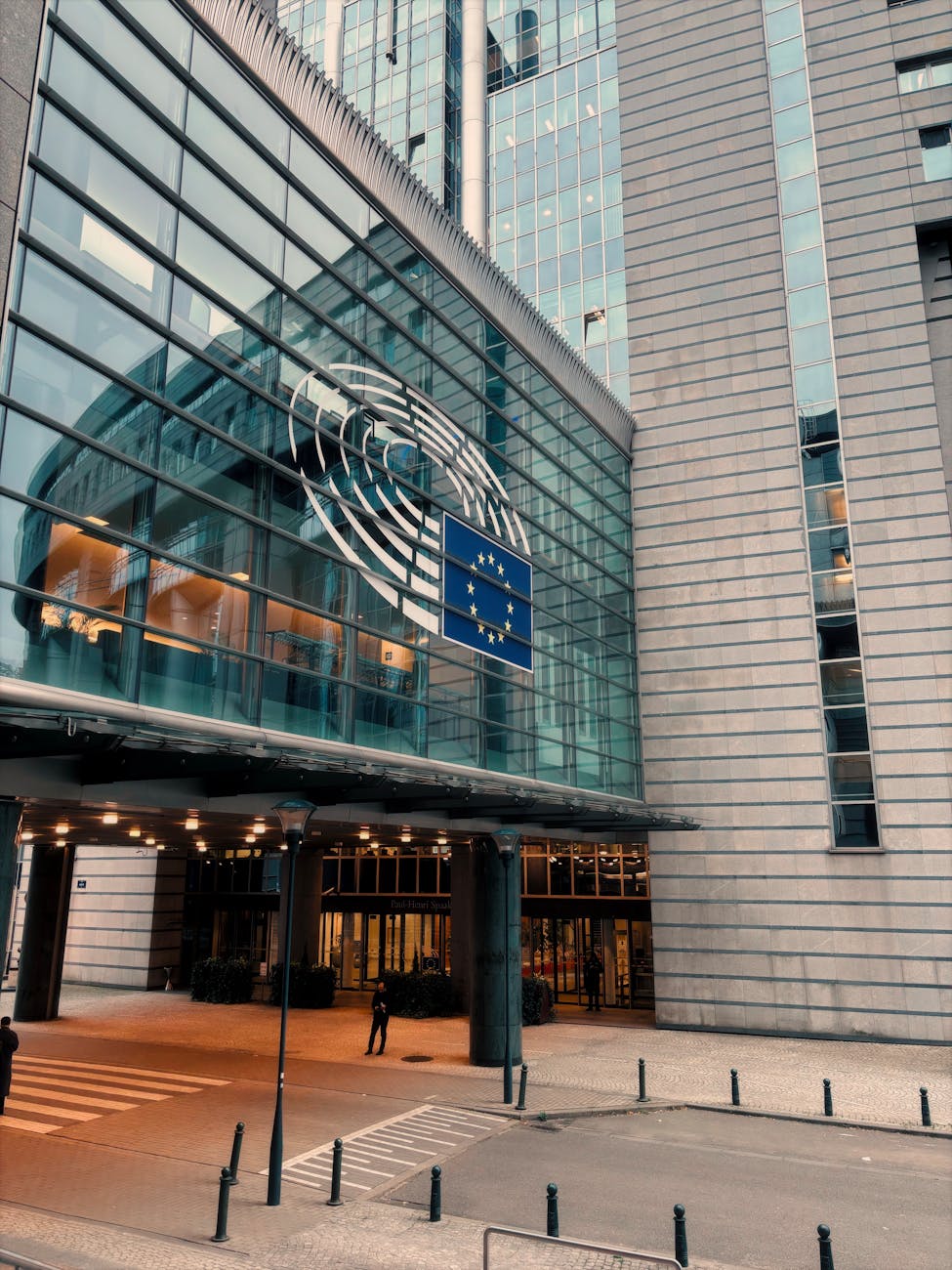
In parliament, the Liberal Democrats are tabling a bill that calls for creating new Customs Union (CU) with the European Union (EU).

What is a CU? Simply put, it’s a trade agreement between countries to abolish tariffs on the goods they trade with each other. So, instead of barriers and obstacles to trade, the whole process becomes easier and cheaper.

Yes, such an agreement with the EU would have implications for relations with non-EU countries. What I’d say in that respect is that such negotiations with non-EU countries on tariffs haven’t been going so well in the last year. The UK has been buffeted by the policy of other nations, where their policy often spins on a dime. On / off fragile agreements don’t add enduring value.

Such a new CU with our next-door neighbours would boost the UK’s GDP by a significant amount. A boost of £25bn a year for the public finances is predicted. Thus, the growing demands that drive for domestic tax increases would be abated or at least be affordable.

Do you remember? So, many advocates of Brexit said we’d never leave the CU. It’s easily forgotten but some of the most ardent Brexit supports were saying this to the electorate. In essence being untruthful.

Back in January 2017, the Conservative Prime Minister (PM) of the time confirmed that the UK would not remain in the EU CU. What a massive mistake PM May made. The repercussions have been devastating for businesses and the public up and down the UK. It was an act of disfigurement that damaged our economy for nothing more than political dogma.

Sadly, we are where we are. I wouldn’t start from here. Wouldn’t it be great if negotiations started to take the UK into a new CU with our nearest, biggest trading neighbours and partners.

Sadly, the way the parliamentary vote will go is rather predicable. The Labour Party, in its current form, is not the internationalist Labour Party of its history and traditions. Currently, government support is not forthcoming. They prefer to talk the talk without walking the walk.

Post: Fix Britain’s Trade – Liberal Democrats

Public Broadcasting Value

It seems to be the season to have a downer on the BBC. As the gloomy light of winter gathers all around. The trees are shedding their leaves and that hunkering down mentality is invading my thoughts. Lawns no longer need mowing. Soden with moss and leaf fall.

I understand the dislike that partisan commercial broadcasters have for publicly funded broadcasters. The question of a “level playing field” and “bias” is always likely to come up.

Making a living from commercial advertising is highly competitive. Demands never stop. Seeking income from a marketplace that rises and falls with fashion and fad. That’s hard. Admittedly, there’s the compensating factor of wealthy benefactors or owners, prepared to make a loss, pumping funds into like minded companies. Shifting sands of political influence.

So, looking across the aisle at a major broadcaster that gets funds from the public, as a matter of law, must seem rather disconcerting. Certainly, it’s the sort of issue the wealthy benefactors or owners of media are going to kick at. Some to the extent of wanting to destroy chartered institutions with an ethos unlike their own.

What is a “level playing field” in the British media landscape? Can there ever be such a thing? That’s not an easy question to address. Shifting sands of public likes and dislikes shape the playing field (sorry about the metaphor overload). What might have been considered as independent, objective and neutral in the 1990s is way different from that now, 30-years on.

The British media landscape is not static, nor should it be so. In the period of three decades digital communication has advances at lightning speed. The sheer diversity of channels of communication has multiplied (even if they do repeat the same messages).

One sign of a healthy debate is the self-flagellation that the BBC often undergoes. As an institution, doesn’t it like to agonise about itself. With good reason considering some of the grave errors it’s made in the past. Supporting presenters whose behaviours have been found to be appallingly bad, and even criminal.

Let’s not tar everyone with the same brush. To be able to make mistakes and then correct them, with a good degree of learning in-between, is a strength. Some partisan commercial broadcasters seem unable to do this with any conviction. They just move on.

A publicly accountable broadcaster has no choice but to stand in the dock and take a reprimand, when appropriate. That’s no reason to shut it down. It’s a reason to make sure lessons are learned and not forgotten.

Doing a simple intuitive cost-benefit analysis. Taking the BBC as an example. What it offers, when it works well, far outweighs the costs. Listing three points, these have significant value: unifying impact of having a trusted national broadcaster, quality, broad base and originality of its output and editorial independence (not selling products or ideology).

Overseas critics may get upset, now and then, but that’s for them to get over. There’s no way such critics should shape the future of the broadcast media in Britain. That would be untenable.

Reinventing Debate

Once upon a time. A wise sage of great age, a not so bright mean-minded troll, a flighty light-headed dreamer and a jobsworth cog in a lumbering bureaucratic machine all met round a table. Bright lights shone on them so they could not see the masses assembled in ranks who had come to gawk at them in their deliberations.

What a strange tale can be told of their troublesome quarrels. To keep the peace, rarely with success, a queen of spades presided over their preordained disorder. Weekly viewers were invited to take a winding decent down the rabbit hole. Rarely was that rabbit hole decked with anything other than predicable hewn earth.

That’s how I think of the BBC’s Question Time in 2025.

Once upon a time. A programme of thoughtful debate, conducted by articulate men and women who wrestled over current affairs, each with a slice of insight however different their perspectives. Painting contrasting visions of the rights and wrongs of the day. Getting to the heart of the matter as their chairperson questioned and tested their opinions. Or so I thought.

Whereas I’d only hide behind the sofa when the Cybermen stomped around on Dr Who, now I desperately search for the TV remote control whenever Question Time is announced.

It’s not that I don’t enjoy debate. Far from it. It’s a wonderful thing to witness, if it’s done well. Honest debate is much needed given the complexities of our world’s trouble. The idea that everyday people question those who make a career of espousing their opinions is undoubtably a sound one. A little slice of accountability is a powerful medicine.

Sadly, a programme format, that was created for black and white TV, lingers on like the ghost of a smartly dressed long-gone presenter. The audience is treated as if they were merely brought in the shout and howl like citizens of Rome, as the lions’ devoir some poor sap. Playing the crowd both at home and in the theatre, the chosen names of the day become as predictable as cabbage butterflies seeking cabbages.

My fantasy would be to have a real-time on-line forum. A virtual and physical place where answers to questions and rational opinions could be sought. No lack of drama but where the focus was on discovery and inquiry. Another dimension that takes account of the new media landscape. That is, providing a civilised and respectful space where, by the end of the show advancing new ideas or changing minds becomes possible.

If regular topical debate just means reinforcing polarisation the rabbit hole will get deeper. Much deeper. All sense of common sense will be lost. A routine of gainsaying each other will thunder on as a pointless parade. Like an ever-darker version of The Prisoner. I’ll switch off.

#BBC

Wealth and Power

No history buff, need you be. That’s Yoda speak for saying that there are one or two matters that bubble to the surface through human history. Let’s shelve the fact that the sun rises in the morning and sets in the evening. It’s a subject that a whole religion could be based upon.

I could encapsulate the phenomenon in the words: “Let them eat cake”. An example of a stratified society where those people that the top have completely lost sight of the lives lived by the majority. There’s a recognition that others exist but no great empathy or care.

That detachment can be exhibited in signs like gold plated panelling, crystal chandlers bedecking breathtaking halls and spare no expense expressions of power and wealth.

That’s one of my memories of my one visit to Russia. A port of call during a Baltic cruise itinerary. A trip that highlighted fascinating contrasts but shared histories. A good reminder of dramatic events. The Winter Palace in Saint Petersburg[1] is truly stunning. Lavish in every sense. A sign of the last century intense competition between major European powers.

To top a list, the Palace of Versailles[2] is the premier example of draw dropping magnificence. Naturally, these are global statements of power and wealth that are celebrated as part of our common heritage. They are, however, a lesson that history has posted for us to read.

What do both have in common?

Today, Kings and Queens are familiar with that lesson. Possibly apart from a small number who haven’t yet embraced modernity. If I must write it in the minimum number of words, it’s that distance that can grow between those who have great privilege and those who don’t. Then what happens when that becomes truly unstainable.

Revolution is bookmarked in any history book. These are moments, and their consequences are when a break point is reached. Although signs are there in hindsight predicting such events is a fraught with uncertainty. It’s usually thought that the price of destruction and devastation are a dam that keeps thoughts of revolution at bay. Change that happens, as if a dam breaks, are notoriously difficult to predict and cost. Not only that but such thoughts are rarely in the minds of any revolutionaries and their opponents.

Let me be clear. We are no where near a breakpoint in this moment. If I must write something, it’s more about the subtle signs that the direction of travel is not a positive one. Fine to dismiss my point of view as being that of a dyed-in-the-wool liberal. I get that.

It’s the consequences of the concentration of power and wealth that’s concerning. The rise of the global billionaires and their reach beyond national boundaries is of the age. Nation states are no longer the biggest players in the writing of the story of the future. This is not always entirely bad, some are altruistic, but growing economic inequality[3] is bad. Outcomes from situations where inequality exceeds certain limits, that’s not where anyone sane should go.


[1] https://www.historyhit.com/locations/the-winter-palace/

[2] https://whc.unesco.org/en/list/83/

[3] https://sites.manchester.ac.uk/global-social-challenges/2022/07/12/widening-of-the-wealth-gap-the-rise-of-billionaires/

The Future of Our Shared Values

That’s done. Reflecting on the last nine years. Time to look to the future. There’s no shortage of articles about the past and the present. Huge numbers of column inches crunch every detail of the current twists and turns of public life. Social media vibrates with repeated daily stories.

I watch a rebroadcast of HIGNFY[1] to quickly get the message that a headline is no basis for figuring out where we are going. Moments pass. Yes, there are reoccurring themes. What’s fascinating is that prominent personalities have their moments in the sun, and that they last a fraction of a second (metaphorically). The world moves on.

Yesterday’s scribblings concerned a degree of nostalgia. If only we could go back to some mythical age where current affairs seemed to make sense. Where people cooperated towards a common good. Where conflict was the exception not the rule.

Don’t look back. Don’t look back, too much. It’s a habit of the British to romanticise the past. Having such a colourful past to draw upon there’s always a story to tell. This inclination is at the root of our difficulties. It would be better to set a shared history as a foundation stone rather than always trying to build the same house.

Here in 2025, the world is being reshaped. There’s only so much that can be extrapolated from experience. Like a tsunami there’re changes happening that are unlike anything that has gone before. Early predictions of the benefits of digital technology imagined a borderless world. Information and learning spreading freely to enlighten and educate. So much for that.

It becomes clear that there are steps needed to protect and preserve our values. Enduring values underpinning our culture. They are not immutable. Forces acting at a global scale can, and do, shape how we think about our nation and what binds us together.

Whether we like it or not, many of the forces that shaped the colours on the world map are being played out in the digital sphere. Boundaries, barriers, conflicts, possessions, passions and powerplay are all there. Maybe they are not so visible to the man and woman on the Clapham omnibus, but they are there in abundance. As if we needed any indication, the experience of Jaguar Land Rover[2] and the cyber-attack they are dealing with, is there as a siren light.

I my mind these are not forces to confront in isolation. They do not respect lines on a map. Back to where I started. It’s by working with others, on an international level, that the harmful elements can be addressed.

The European Union (EU) envisions a Digital Single Market. That’s a project to be on-board. It’s essential to have standards that safeguard privacy and data security. Government Ministers who promote a hands-free laissez-faire approach are naive in the extreme. This is a practical field where Britian urgently needs to rebuild relations with its neighbours.


[1] https://www.bbc.co.uk/programmes/b006mkw3

[2] https://www.ft.com/content/6f2923b3-2a4b-4c9b-9cde-eb5f0d5b9ce3

Rebuilding Relations

Here I’ve posted a thousand posts. So, it might be a good time to reflect. It was back in April 2016 that this blog started. The provocation being the then pending UK referendum vote. What was to become Brexit and a long litany of mistakes and missteps.

I’d not long returned to the UK from my time in Germany. I had a what I thought was a reasonable sense of the UK political landscape, only to find I was wrong. Here’s what I wrote:

“It’s the biggest event since the Berlin Wall fell. Yes, not to mince my words the UK referendum on EU membership could change the political landscape for a generation or more. It could be a terrible gamble that erects dark walls all over Europe or it could start a new period of enlightenment within the European project.”

I wasn’t far wrong with that statement. The landscape suffered a landslide. Even though the results of the votes were practically even- evens, for reasons that now seem bizarre the electorate swung in favour of leaving the European Union (EU). If the polls are to be believed, then the overwhelming majority now regret that choice[1].

“I’m firmly convinced that our place is in Europe. We are strong enough, we are clever enough and we are determined enough to make that project work. What a bonus that would be: Expanding a market that covers half a billion people on our doorstep. Guaranteeing that the world sits-up and listens to Europe. Unlocking a diverse creative powerhouse where the UK would thrive.”

My then time arguments were coherent, logical and straightforward. I didn’t know we were entering a phase when such attributes were to decline in importance. Should I have been wiser? With hindsight it’s easy to say that the campaign to remain in the EU was appallingly poor. Even if, at the time, I did wonder if the pomposity of the then UK Prime Minister would play a negative part in the outcome.

“The frightening alternative is to gamble with millions of jobs and invite a plunge into recension. If this happens it’s the younger generation who will pay the price. We should not condemn them to isolation and struggle for reasons of narrow nationalism.”

Oh brother. With something like 4% knocked off the country’s prosperity and a government struggling to finance public services, sadly I was spot on the money.

“I’m not saying the EU is perfect. In fact, I wouldn’t say Westminster or my local council are perfect – far from it. But the EU is a work-in-progress and not a finished project. It’s better for British pragmatism. It’s a two-way street as free movement brings people to these shores who then go home with a positive view of what we have to offer. In the next generation that means more trade and better international relations.”

Having seen at first hand the workings of both the British civil service and the European Commission, British parliamentarians and European ones, I could see a common thread. The foolish notion that escaping into glorious isolation would produce prosperity was nuts.

Here we are in 2025. It would be nice to say that – I wouldn’t start from here – but that’s useless. The thing to do is to reconcile, reaffirm and rebuild relations with Europe.  


[1] https://yougov.co.uk/politics/articles/52410-nine-years-after-the-eu-referendum-where-does-public-opinion-stand-on-brexit

Trust in Voluntary Reporting

Hard data is immensely useful. Now there’s a surprise. That’s facts and figures. That’s accurate descriptions of occurrences. That’s measurements and readings of important factors. From this kind of data, a picture can be painted of events good and bad. However, this picture is not complete. It’s certainly not complete for any system that involves the interactions of humans and machines.

What’s often less visible is the need for what I might call – soft data. As such it’s not “soft”. I’m just using that loose term to distinguish it. Fine, you could say that social media is littered with the stuff. Vast qualities of instant judgements and colourful opinions. An array of off-the-shelf solutions to life’s ills. That’s all well and good for entertainment. It’s not so useful as a means of getting to the truth.

In civil aviation voluntary reporting systems have been around for several decades. They are not always successful, mainly because there’s a fair amount of trust required to use them when something major happens. When volunteering information there needs to be a level of assurance that the information will not be misused.

The human inclination to seek to blame is intrinsic. We wake-up in the morning, look out the window, and if it’s rainy and windy then someone is to blame. Probably a weather reporter for not warning us of a coming storm. Blame is a way of making sense of negative events without having to do lot of tedious investigation and analysis.

Don’t get me wrong. Accountability is vital. If someone does something unspeakably bad, they must be held accountable. That is a form of blame. Tracing the bad event back to the root cause. If that cause is found to be negligence or malicious intent, then blame can be assigned.

Where a good safety culture exists, as it often the case in civil aviation, then it is wrong to assume that undesirable outcomes can always be linked to a bad actor of some kind.

Human error is forever with us. Even with the absolute best of intent no one is immune from this pervasive creature. It can be illusive. There are environments where owning up to making mistakes is fine. Sadly, I’m sure it’s not uncommon to have worked in environments where such openness is punished. The difference between a good culture and a bad one.

One of my past jobs involved negotiation with a contactor. Every change that we made to a complex contact had a cost attracted to it. So, there was an understandable sensitivity to making changes. At the same time our customer for the product kept asking for changes. There’s nothing worse than being in a tense meeting with a contactor and having my boss pull the rug from under my feet. Seeking to blame a change on my error rather than a customer request. Introducing a voluntary reporting system in such an environment is pointless.

My message here is clear. Voluntary reporting in aviation is a powerful tool. Reports submitted by employees can offer insights that are not available by just looking at hard data. These reporting systems maybe required by regulation or company policy. However, without a good sound safety culture they can be all but useless. A safety culture that is defended and supported by employees and the senior management of an organisation.

Global Ambitions to National Introspection

When did it start? At least in recent times. When did we start looking inward rather than outward? That introverted xenophobia that’s infected about a third of the country. If the polls are to be believed (and that’s a leap).

It’s strange, isn’t it? Britain, a country that spanned the globe with its trading accomplishments went from imagining a transformed world to sitting in front of an iPad complaining about either putting up Union flags on lampposts to taking them down. Painting roundabouts with red crosses or decrying the idiocy of it. Dressing up as crusader knights and thundering on about some lost imaginary England.

Pictures tell a story. Being in the aviation business, a global business, one picture that sticks in my mind involves a handkerchief and a British Prime Minister (PM). It seems a long time ago, now. Nearly 30-years ago. Back in 1997 British Airways (BA) took to celebrating their global coverage by getting international artists to produce new artworks for their aircraft fleet[1]. This was not to the liking of a former PM at the time.

For me this slippery slope was particularly evident. Living in the Surrey town of Reigate. An affluent former Conservative Party supporter, James Goldsmith set-up a new political party dedicated to one issue. The name gives it away. The Referendum Party took to the stage in 1994. Initially, seen as a joke and merely a plaything of a wealthy man, it captured the Member of Parliament for my town. For all the good it did (not), for a couple of weeks in 1997, George Gardiner, the MP for Reigate, joined the new party.

So, the British political mood in 1997 was evident, or so it may have been thought. Nothing of the sort. Of course that was the year of Tony Blair’s Labour landslide victory.

It’s possible to trace a lot of strangeness back to Margaret Thatcher. Although initially internationalist in outlook, she broke a domestic consensus and crushed a lot of hopes. Yes, the country needed radical change. It was the brutality of that change that people reacted against.

In 2001, BA succumbed and returned the Union flag to its tailplanes. Lots of poor excuses were made as to the reason for reverting. A Boeing 747 model and the handkerchief bit back.

Can I construct a thread of events from that moment to the European referendum in 2016? Certainly, there are connections as the country shook off the Blair and Brown years and plunged into a messy 14-years of incoherence. The financial crisis of 2008 didn’t help in the slide to introspection. A government that bailed out the bankers whilst making the population pay did nothing to earn a moral reputation. It further encouraged a growth of a blame culture.

So, if you supported the Referendum Party, the UKIP Party and the Brexit Party that followed, and now the Reform Party surely, it’s possible to see that you are barking up the wrong tree. It’s an empty cul-de-sac. It’s a fruitless orchard. It’s a road to decline.

These are not the heirs to Margaret Thatcher. They are bandwagon hopping con men. Money men who like their pockets lined. They will not help those who have missed out on their share of the country’s prosperity – past, present or future.


[1] https://www.flickr.com/photos/linda_chen/albums/72157625997434719/