Seasonal Shifts

I’m going to accept the theory that Halloween is a celebration of the dead derived from pagan times. It’s a regular festival that Christians cleverly converted into a Christian holiday. I don’t think Europeans started the remembrance of our ancestors. That act maybe as ancient as modern humans. What a good time to mark a transition. At a change of the seasons. Nature shows us the power of death and rebirth most acutely as the leaves fall and winter’s cold winds sweep in. To think the trees that invested all the energy in making leaves cast them aside. But they do so confident that one day there will be springtime again.

Hunker down as the clocks go back on the last Sunday of the month. Slightly lighter in the mornings. Darkness falling as soon as the workday ends. It’s a time for adjustment. That’s one marker of season change in the northern hemisphere.

I’m ready. Already there’s a distance from the summer months of parched grass and constant watering. Withering plants and rock-hard ground. It’s as if they never existed. I need my wellington boots to walk about the lawn. Watering can hung-up till next year.

Warmth is ebbing away. The exception being the moments when the low sun still baths me in bright sunlight. In the shad there’s no such relief. Shadows grow longer. I’m in a mood to prepare for winter. Ruffling through the bedroom wardrobe for warmer cloths.

Where does the TOG number come from? It’s that time of year. Time to TOG-up. Take the summer duvet and replace it with the winter one. When the temperature outside starts to hang below single figures it’s time to change the duvet. It’s obvious. Change to a fuller warmer one. Warmer by numbers but what does that mean? Do I need to know?

Try telling the kids of today. I grew-up in a house without central heating. Grabbing an extra woolly blanket. Creating a secure cocoon. Desperate not to break the seal. That was the bedroom of my youth. Howling winds and rain swept across the open fields. Thick farmhouse walls kept them at bay. Shakey sash windows equalised the temperature inside and out.

Now, piles of blankets are outdated. Primitive times. Generous heating and a fluffy duvet insulate me from the tormented autumn weather. The passing south westerly storms.

Keeping it simple the higher the TOG the better the insulation. Not that the word TOG has a scientific meaning. However, underlying it is a system of measurement but it’s almost pointless relating the number crunching. I would have thought the T in TOG would be “thermal” but no.

It’s a slang word. I do it every day. I’m putting on my togs. My gear. My garments. My clothes. It’s that basic.

Embracing Uncertainty

Imagine siting under a great wide spreading old oak tree. Acorns falling all around. The ground littered with whole ones, crashed ones and half eaten ones. It’s more the half-eaten hazelnuts that the squirrels leave behind that I’m thinking of. On one of those cool days, like this morning, when the rain has abated and the sun beams are streaming across the glistening fields. It was lower than 2 degrees, early this morning, so a heavy drew rests on the grass and leaves.

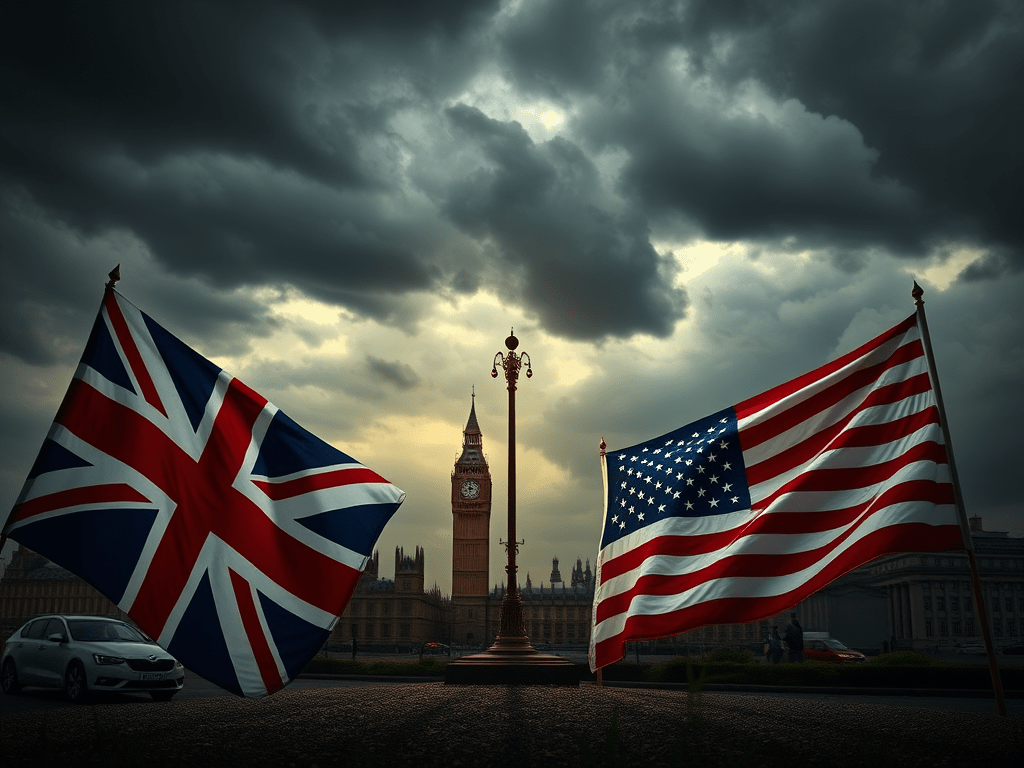
Think of title for a book or film that sums up the state of current affairs. I’m tempted to say “All the President’s Men” but that’s been well done in the 1970s. Not only that but the word “scandal” may have lost its meaning. Political fiction and reality are melding into one. Anyway, I don’t want to follow the crowd and obsess about America.

Was there ever an age when prosperity seemed assured and the population was happy. When men and women of honourable intentions and wisdom, judicially ruled the land? Maybe not. Or when it happened, to some limited extent it didn’t last beyond a generation.

Any title for a book or film would have to encompass the persistence of change. Nothing upon nothing ever stands still. In fact, that’s one of the few things I can write that is an absolute. A real natural absolute phenomenon. Everything we know of moves relative to something else and movements mean change. We never breath the same air.

In a storage box of my books there’s a title: “Thriving on chaos[1]“. That’s more to do with an attitude to change. It doesn’t sum up the moment although it does imply that chaos is normal. I’m not going there fully since not all change is chaotic. Life is punctuated with regularity. It’s the traditional saying about death and taxes. Those two are regular occurrences.

A financial crisis or stock market crash or bursting bubble seem to hit us as an unexpected instant of violent change. Unexpected that is until hindsight kicks in and we all wish we’d listed to siren voices. Analysis streams from the outcome of a crisis[2].

A title for a book or film would need to include the recurrent nature of both good and bad consequences. It would need to emphasis our inability to accurately predict what’s going to happen next. That is even if one or two of us may get it right.

All this leads me down the road of a manner of thinking that’s all too common to me. That’s the world of probabilities. Addressing that slippery ell called uncertainty. So, what could be better as a title than: “The Age of Uncertainty.” Oh look, that’s been taken back in the 1970s. What could be better than the title chosen by John Kenneth Galbraith[3]?

He looked at the chaotic but repetitious nature of our common history. Going way back. Unsurprisingly a little cynical and monosyllabic at times. I’ve been rewatching his BBC television series. It’s impressive.

Acorns are falling all around. An unusually large number, this year. Next year – who knows? If I could find some reliable data, I could do some probability calculations based on past seasons. But with certainty, I can say that we are in an age of uncertainty. Acorns will fall. How many – well that’s the question isn’t it.


[1] https://tompeters.com/thriving-on-chaos/

[2] “The Storm” by Vince Cable, the Liberal Democrat politician, looking at the 2008 global economic crisis.

[3] https://www.bbc.co.uk/iplayer/episodes/m002l6sc/the-age-of-uncertainty

The Future of Our Shared Values

That’s done. Reflecting on the last nine years. Time to look to the future. There’s no shortage of articles about the past and the present. Huge numbers of column inches crunch every detail of the current twists and turns of public life. Social media vibrates with repeated daily stories.

I watch a rebroadcast of HIGNFY[1] to quickly get the message that a headline is no basis for figuring out where we are going. Moments pass. Yes, there are reoccurring themes. What’s fascinating is that prominent personalities have their moments in the sun, and that they last a fraction of a second (metaphorically). The world moves on.

Yesterday’s scribblings concerned a degree of nostalgia. If only we could go back to some mythical age where current affairs seemed to make sense. Where people cooperated towards a common good. Where conflict was the exception not the rule.

Don’t look back. Don’t look back, too much. It’s a habit of the British to romanticise the past. Having such a colourful past to draw upon there’s always a story to tell. This inclination is at the root of our difficulties. It would be better to set a shared history as a foundation stone rather than always trying to build the same house.

Here in 2025, the world is being reshaped. There’s only so much that can be extrapolated from experience. Like a tsunami there’re changes happening that are unlike anything that has gone before. Early predictions of the benefits of digital technology imagined a borderless world. Information and learning spreading freely to enlighten and educate. So much for that.

It becomes clear that there are steps needed to protect and preserve our values. Enduring values underpinning our culture. They are not immutable. Forces acting at a global scale can, and do, shape how we think about our nation and what binds us together.

Whether we like it or not, many of the forces that shaped the colours on the world map are being played out in the digital sphere. Boundaries, barriers, conflicts, possessions, passions and powerplay are all there. Maybe they are not so visible to the man and woman on the Clapham omnibus, but they are there in abundance. As if we needed any indication, the experience of Jaguar Land Rover[2] and the cyber-attack they are dealing with, is there as a siren light.

I my mind these are not forces to confront in isolation. They do not respect lines on a map. Back to where I started. It’s by working with others, on an international level, that the harmful elements can be addressed.

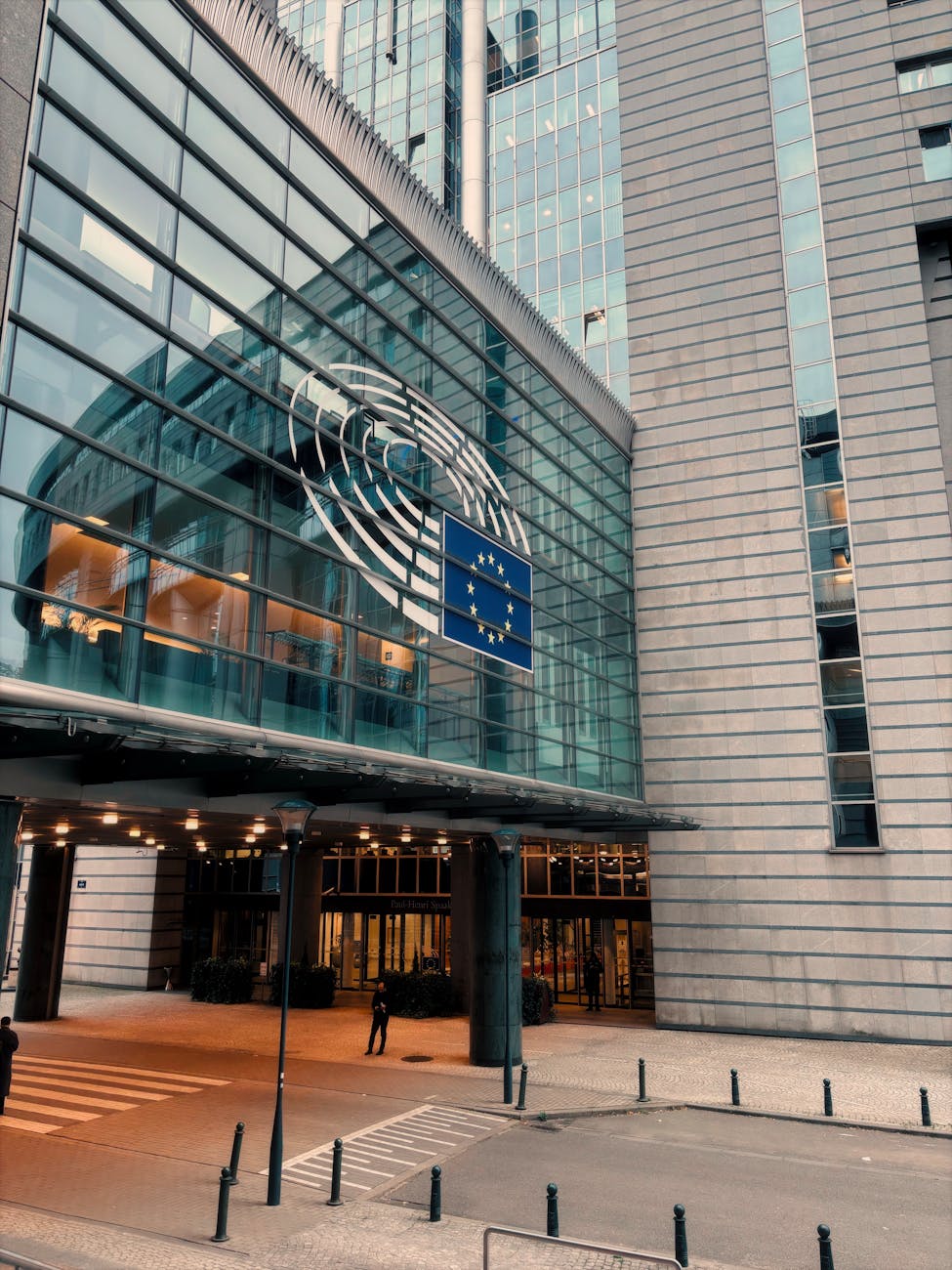
The European Union (EU) envisions a Digital Single Market. That’s a project to be on-board. It’s essential to have standards that safeguard privacy and data security. Government Ministers who promote a hands-free laissez-faire approach are naive in the extreme. This is a practical field where Britian urgently needs to rebuild relations with its neighbours.


[1] https://www.bbc.co.uk/programmes/b006mkw3

[2] https://www.ft.com/content/6f2923b3-2a4b-4c9b-9cde-eb5f0d5b9ce3

Rebuilding Relations

Here I’ve posted a thousand posts. So, it might be a good time to reflect. It was back in April 2016 that this blog started. The provocation being the then pending UK referendum vote. What was to become Brexit and a long litany of mistakes and missteps.

I’d not long returned to the UK from my time in Germany. I had a what I thought was a reasonable sense of the UK political landscape, only to find I was wrong. Here’s what I wrote:

“It’s the biggest event since the Berlin Wall fell. Yes, not to mince my words the UK referendum on EU membership could change the political landscape for a generation or more. It could be a terrible gamble that erects dark walls all over Europe or it could start a new period of enlightenment within the European project.”

I wasn’t far wrong with that statement. The landscape suffered a landslide. Even though the results of the votes were practically even- evens, for reasons that now seem bizarre the electorate swung in favour of leaving the European Union (EU). If the polls are to be believed, then the overwhelming majority now regret that choice[1].

“I’m firmly convinced that our place is in Europe. We are strong enough, we are clever enough and we are determined enough to make that project work. What a bonus that would be: Expanding a market that covers half a billion people on our doorstep. Guaranteeing that the world sits-up and listens to Europe. Unlocking a diverse creative powerhouse where the UK would thrive.”

My then time arguments were coherent, logical and straightforward. I didn’t know we were entering a phase when such attributes were to decline in importance. Should I have been wiser? With hindsight it’s easy to say that the campaign to remain in the EU was appallingly poor. Even if, at the time, I did wonder if the pomposity of the then UK Prime Minister would play a negative part in the outcome.

“The frightening alternative is to gamble with millions of jobs and invite a plunge into recension. If this happens it’s the younger generation who will pay the price. We should not condemn them to isolation and struggle for reasons of narrow nationalism.”

Oh brother. With something like 4% knocked off the country’s prosperity and a government struggling to finance public services, sadly I was spot on the money.

“I’m not saying the EU is perfect. In fact, I wouldn’t say Westminster or my local council are perfect – far from it. But the EU is a work-in-progress and not a finished project. It’s better for British pragmatism. It’s a two-way street as free movement brings people to these shores who then go home with a positive view of what we have to offer. In the next generation that means more trade and better international relations.”

Having seen at first hand the workings of both the British civil service and the European Commission, British parliamentarians and European ones, I could see a common thread. The foolish notion that escaping into glorious isolation would produce prosperity was nuts.

Here we are in 2025. It would be nice to say that – I wouldn’t start from here – but that’s useless. The thing to do is to reconcile, reaffirm and rebuild relations with Europe.  


[1] https://yougov.co.uk/politics/articles/52410-nine-years-after-the-eu-referendum-where-does-public-opinion-stand-on-brexit

Why Timely Aviation Safety Reporting Matters

Waiting for accident reports can be frustrating. I’ve found this to be the case in past experiences. When a major fatal aviation accident happens the demand for information is exceptionally high. That means that every credible source of information will be drawn upon.

I don’t think anyone expects professional aviation accident investigators to come up with instant answers. Extensive and meticulous work is required to arrive at detailed findings. When it’s possible accident investigators publish interim reports to ensure that relevant information becomes generally available.

Countering this reality is the need to ensure that the aviation system is not operating at elevated risk during the period that investigation is being conducted. Information needs to flow to those who are empowered to take corrective action.

Given the nature of international civil aviation, accidents can occur anywhere at any time. There’s no rule, statistical or otherwise, that can stop these extremely rare events occurring. Much as it’s fine to promote an ambition for zero accidents, it’s not going to happen.

The frustration I’ve pointed to is shared by industry and authorities. As time goes by the level of speculation and misinformation always increases where there is an absence of verifiable facts. There’s always a need for industry, authorities and investigators to cooperate. As often each one will have a part of the jigsaw that when put together describes what happened.

For all sorts of reasons, this necessary cooperation does not always exist or exist as a smooth pathway to resolving a situation and initiating corrective action. Where barriers exist and delays accumulate the collective aim of assuring aviation safety is harmed.

The International Air Transport Association (IATA), at their recent conference, highlighted this as being a significant issue[1]. There are international standards, but these standards are not always applied in the manner with which they were intended. It seems obvious to say. It’s essential to learn safety lessons and take corrective action as soon as it’s humanly possible.

Where sufficient resources are an issue then there must be cooperative arrangement to allow others to help. It’s by sharing expertise and equipment that the time between occurrence of an event and the implementation of risk reduction measures can be reduced.

Risk reduction measures do not always need to be the final measure. There are the conventional strategies for addressing aviation safety risk – reduce, eliminate or mitigate. Even if publication of a final accident report is a year or more away, there’s often much that can be done in the interim.

Bureaucratic protocols, political sensitivities and commercial interests are real. However, most governments have signed up to obligations within the ICAO convention and its standards. It’s recognised that timeliness is vital.


[1] https://www.iata.org/en/pressroom/2025-releases/2025-10-14-02/

Recent Aviation Accidents: Lessons Learned, or not

I start from a position of apprehension. Making aviation accidents, documentary style, the subject of a television series does give me some concern. Obviously, there’s the importance of being respectful to those involved. To reveal something that is of genuine public interest.

Accident investigation and journalism seek to answer the six questions – Who, what, where, when, why and how. When it comes to addressing aviation accidents that have occurred in the last 18-months some of the process of investigation may still be ongoing.

My apprehension starts with – what is the purpose of the series? Does it go some way to answering the question – why? That’s especially the case given that word is in the title[1]. Practically the “why” is turned into a probable cause because the “why” can include multiple factors. It’s rare for there to be a lone factor that results in a tragic outcome.

Broadcast last night by the BBC, this series took a selection of the accidents that recently commanded international headlines. The fatal events have been much discussed within informed professional communities and across social media. I’ve written on them too.

[Fatal Boeing 737 Crash in South Korea, Investigating the Black Hawk and American Eagle Collision, Aircraft Safety and Fuel Starvation, Understanding Boeing 787 Avionics.]

We do this to seek to understand. If there are always lessons to be learned, it’s imperative that those lessons be learned without delay. Lack of an informed and timely response exposes the flying public to further risks.

Sadly, a few of the lessons learned in the past have not been translated into change. The fatal accident at Muan International Airport in South Korea is a case in point. Brid strikes are not new. The dangers of flocking birds have been highlighted time and time again. Whilst airports are built near large bodies of water this will continue be a risk. However, it wouldn’t be right to say this is the only cause of the accident outcome at Muan.

Truly tragic are what may be called: avoidable accidents. This is where the event is purely made up of human actions that need not have take the course they took. Processes and procedures were inadequate, and known to be inadequate, for the situation. To me, this is the case of the military helicopter that collided at low altitude with a passenger flight in Washington DC. It’s mystifying as to why past occurrences of near misses didn’t prompt a change to operations.

I’ll say this because it’s not often given credit. A testament to the good design of an aircraft, and the extensive certification work done and the rigorous training of crews, an accident in the Canadian snow did not become fatal. Upon a spectacular heavy landing in Toronto everyone escaped.

On take-off, a London bound, fully loaded Air India Boeing 787 failed to climb. The results were catastrophic in every sense. Not only were all on-board killed but there were multiple fatalities on the ground.  This tragic fatal accident remains mysterious. The published preliminary report is a source of more questions than answers. Facts so far published do not explain the sequence of events.

What connects this spate of aviation disasters? Nothing, that I can determine. Although, there is the importance of lessons learned. They are not that compilation of dusty past accident reports that sit on a shelf. They are a source of everyday learning. That is learning that needs to be put into action. Timely action. Not waiting for a final publication.


[1] https://www.bbc.co.uk/iplayer/episode/m002kw1n/why-why-planes-crash

Trust in Voluntary Reporting

Hard data is immensely useful. Now there’s a surprise. That’s facts and figures. That’s accurate descriptions of occurrences. That’s measurements and readings of important factors. From this kind of data, a picture can be painted of events good and bad. However, this picture is not complete. It’s certainly not complete for any system that involves the interactions of humans and machines.

What’s often less visible is the need for what I might call – soft data. As such it’s not “soft”. I’m just using that loose term to distinguish it. Fine, you could say that social media is littered with the stuff. Vast qualities of instant judgements and colourful opinions. An array of off-the-shelf solutions to life’s ills. That’s all well and good for entertainment. It’s not so useful as a means of getting to the truth.

In civil aviation voluntary reporting systems have been around for several decades. They are not always successful, mainly because there’s a fair amount of trust required to use them when something major happens. When volunteering information there needs to be a level of assurance that the information will not be misused.

The human inclination to seek to blame is intrinsic. We wake-up in the morning, look out the window, and if it’s rainy and windy then someone is to blame. Probably a weather reporter for not warning us of a coming storm. Blame is a way of making sense of negative events without having to do lot of tedious investigation and analysis.

Don’t get me wrong. Accountability is vital. If someone does something unspeakably bad, they must be held accountable. That is a form of blame. Tracing the bad event back to the root cause. If that cause is found to be negligence or malicious intent, then blame can be assigned.

Where a good safety culture exists, as it often the case in civil aviation, then it is wrong to assume that undesirable outcomes can always be linked to a bad actor of some kind.

Human error is forever with us. Even with the absolute best of intent no one is immune from this pervasive creature. It can be illusive. There are environments where owning up to making mistakes is fine. Sadly, I’m sure it’s not uncommon to have worked in environments where such openness is punished. The difference between a good culture and a bad one.

One of my past jobs involved negotiation with a contactor. Every change that we made to a complex contact had a cost attracted to it. So, there was an understandable sensitivity to making changes. At the same time our customer for the product kept asking for changes. There’s nothing worse than being in a tense meeting with a contactor and having my boss pull the rug from under my feet. Seeking to blame a change on my error rather than a customer request. Introducing a voluntary reporting system in such an environment is pointless.

My message here is clear. Voluntary reporting in aviation is a powerful tool. Reports submitted by employees can offer insights that are not available by just looking at hard data. These reporting systems maybe required by regulation or company policy. However, without a good sound safety culture they can be all but useless. A safety culture that is defended and supported by employees and the senior management of an organisation.

Global Ambitions to National Introspection

When did it start? At least in recent times. When did we start looking inward rather than outward? That introverted xenophobia that’s infected about a third of the country. If the polls are to be believed (and that’s a leap).

It’s strange, isn’t it? Britain, a country that spanned the globe with its trading accomplishments went from imagining a transformed world to sitting in front of an iPad complaining about either putting up Union flags on lampposts to taking them down. Painting roundabouts with red crosses or decrying the idiocy of it. Dressing up as crusader knights and thundering on about some lost imaginary England.

Pictures tell a story. Being in the aviation business, a global business, one picture that sticks in my mind involves a handkerchief and a British Prime Minister (PM). It seems a long time ago, now. Nearly 30-years ago. Back in 1997 British Airways (BA) took to celebrating their global coverage by getting international artists to produce new artworks for their aircraft fleet[1]. This was not to the liking of a former PM at the time.

For me this slippery slope was particularly evident. Living in the Surrey town of Reigate. An affluent former Conservative Party supporter, James Goldsmith set-up a new political party dedicated to one issue. The name gives it away. The Referendum Party took to the stage in 1994. Initially, seen as a joke and merely a plaything of a wealthy man, it captured the Member of Parliament for my town. For all the good it did (not), for a couple of weeks in 1997, George Gardiner, the MP for Reigate, joined the new party.

So, the British political mood in 1997 was evident, or so it may have been thought. Nothing of the sort. Of course that was the year of Tony Blair’s Labour landslide victory.

It’s possible to trace a lot of strangeness back to Margaret Thatcher. Although initially internationalist in outlook, she broke a domestic consensus and crushed a lot of hopes. Yes, the country needed radical change. It was the brutality of that change that people reacted against.

In 2001, BA succumbed and returned the Union flag to its tailplanes. Lots of poor excuses were made as to the reason for reverting. A Boeing 747 model and the handkerchief bit back.

Can I construct a thread of events from that moment to the European referendum in 2016? Certainly, there are connections as the country shook off the Blair and Brown years and plunged into a messy 14-years of incoherence. The financial crisis of 2008 didn’t help in the slide to introspection. A government that bailed out the bankers whilst making the population pay did nothing to earn a moral reputation. It further encouraged a growth of a blame culture.

So, if you supported the Referendum Party, the UKIP Party and the Brexit Party that followed, and now the Reform Party surely, it’s possible to see that you are barking up the wrong tree. It’s an empty cul-de-sac. It’s a fruitless orchard. It’s a road to decline.

These are not the heirs to Margaret Thatcher. They are bandwagon hopping con men. Money men who like their pockets lined. They will not help those who have missed out on their share of the country’s prosperity – past, present or future.


[1] https://www.flickr.com/photos/linda_chen/albums/72157625997434719/

Exploring Space: A Journey

I haven’t got many of my childhood Ladybird books. One I have kept in good condition is “Exploring Space.” It’s got the characteristic illustrations and simple stories that are made to captivate. This book is the revised edition that must date from sometime after 1971[1]. The front cover has an illustration of a moon lander floating above the moon. It’s a picture that says – look what we can do, this is the tip of the iceberg. Such an optimistic outlook.

Most of my career has been in the aerospace business. More specifically civil aviation. For short while, I did get involved in building ground test equipment for satellite systems. Some of the people I worked with built the Giotto spacecraft in the UK. The mission was to study Halley’s Comet. This spacecraft, launched in 1985, took close-up images of the comet. It discovered organic material within the comet and proved that a spacecraft could cope with the harsh conditions of such a flyby. 

My interest in space, and the complexities of getting there has been with me for a long time. It’s the ultimate adventure. It also shows what can be done by international cooperation. Giotto was the European Space Agency (ESA) first deep-space mission.

Mention the word interplanetary and what comes to mind? For people of my age. The Carpenters’ version of the song “Calling Occupants of Interplanetary Craft”. It’s an eccentric, but successful 1970s pop song about talking to aliens. It’s a cry for help that is as relevant now as it was then. “Please come in peace and help us in our earthly problems.” If ever we humans could do with help from a more advanced civilization, it’s right now.

A sense of wonder about the heavens is as old as our human story. What’s up there? Could we live there? Are there others living there already?

I like the idea of an English bishop[2] in the 1630s. An early science fiction writer he imagined a flight into space in a craft pulled by a flock of wild swans. Ten to be precise. Since there are plenty of swans here in the English town of Newbury, I thought about investigating that idea. Maybe not.

Last evening, for the first time, I visited the British Interplanetary Society (BIS)[3] at Arthur C. Clarke House in London. Their HQ is in Lambeth. Can’t say I like that part of London at all. It’s a peculiar mix of sterile skyscrapers and spaces waiting to be re-developed. Old London has been pushed aside.

The BIS has a long history. It’s no fly by night organisation. Not as far back as the English bishop mentioned above, but more than 90-years extant. They have promoted thoughts and ideas that go way beyond past achievements. Trying to imagine what a future may look like if our capabilities and drive for exploration continue to advance here on earth. I think there’s always a need for that creative imagination to push the boundaries of what’s possible.

This week has been Space Week[4]. A week to highlight all things space. Back in 1999, the United Nations (UN) declared that World Space Week would be every year from 4 to 11 October. For this celebration, this year, the BIS had put on an evening event called: Living in Space: A World Space Week Special Panel.

I won’t say too much only that it was a fascinating evening. We were a small gathering full of questions. BIS had assembled a prestigious panel of experienced individuals. There wasn’t much in terms of the practicalities of living and working in space that didn’t get discussed.

I’m reminded that despite the hostility of the space environment for our biology, what we know is that all the materials of which the earth is made are there waiting for us. Constructing habitats, with the robotics we now have, isn’t just science fiction anymore.


[1] https://www.royalmint.com/discover/decimalisation/

[2] Francis Godwin (1562–1633)

[3] https://www.bis-space.com/

[4] https://www.worldspaceweek.org/

Music to Dance Under the Moon

Flicking through the vinyl albums that no one wants there’s one I should have rescued this week. In a corner, charity shops usually have a pile of gifted vinyl records. I like to look for a hidden gem. Unfortunately, what’s left is the tatty and practically valueless disks. Versions of musicals that have fallen out of fashion, scratched classical concerts and embarrassing compilations.

It’s harvest time. Autumn is undeniable. A colourful carpet of leaves litters the pavements. Remarkably warm. Monday’s blue skies set of the spectacle of the trees display. When the October weather is like this there’s not much to complain about. Crisp walks through the dappled light as the low sun’s rays shine through the branches. Good to be alive.

Looking out of the window in the early morning it was as if it was a spooky daytime. In a monochrome light the outline of the tree line was like a cutout silhouette. Nothing could move without being seen. Grass glittered. Hedges stood like army ranks. All because of the intensity of the moonlight. Constant in the cool air.

The pop tune that entered my head was there for the taking but I’d left it to one side. This is a song that resonated from my boyhood. Some might cringe a bit. Let’s suspend judgement and let the 1970s be the 1970s. “Under the moon of love” is about as catchy as it gets. Showaddywaddy[1] dressed up in their brightly coloured exaggerated 1950s garb. They were not the only ones to do that for Top of the Pops. What’s memorable is the danceability of their pop classics. It makes me want to move. Don’t tell anybody. Sadly, my long hair has long gone.

It’s the time of the harvest moon. So, it’s a time for moon tunes. Not just any moon but the first supermoon of the year will grace the sky tonight, Tuesday 7th October. This bright full moon of 2025 will light up the nighttime. It will not have a musical accompaniment in my garden even if there’s a lot to choose from. The neighbours wouldn’t like it.

The best of the pile is Neil Young and his Harvest Moon[2]. 180 degrees from the Showaddywaddy pop effort. Neil scores top rating. It’s melodic, melancholy and memorable. Fantastic. Just right for a quite evening gazing at the moon overhead.

On a melodic theme the next one I’d recommend is from Nick Drake[3]. Again, it’s the 1970s that provides the music. It was a decade of variety, to say the least. Song writers were pushing the boat out and coming up with magical results.

And here’s another. Another to dance to in the moonlight. Moondance in fact. Van Morrison[4] this time. Perfect for an October night.

And if anyone has ever doubted the genius of Beethoven there’s the Moonlight Sonata.

The coming night will mark the start of a run of 3 supermoons. November and December will be graced with magical moons. I hope that’s an omen for good. Love and happiness.

POST: For more information BBC Radio 4: In Our Time: The Moon

https://www.bbc.co.uk/sounds/play/p0m77cfm


[1] https://youtu.be/qigUdmLyMBs

[2] https://youtu.be/n2MtEsrcTTs

[3] https://youtu.be/xqe6TF2y8i4

[4] https://youtu.be/7kfYOGndVfU