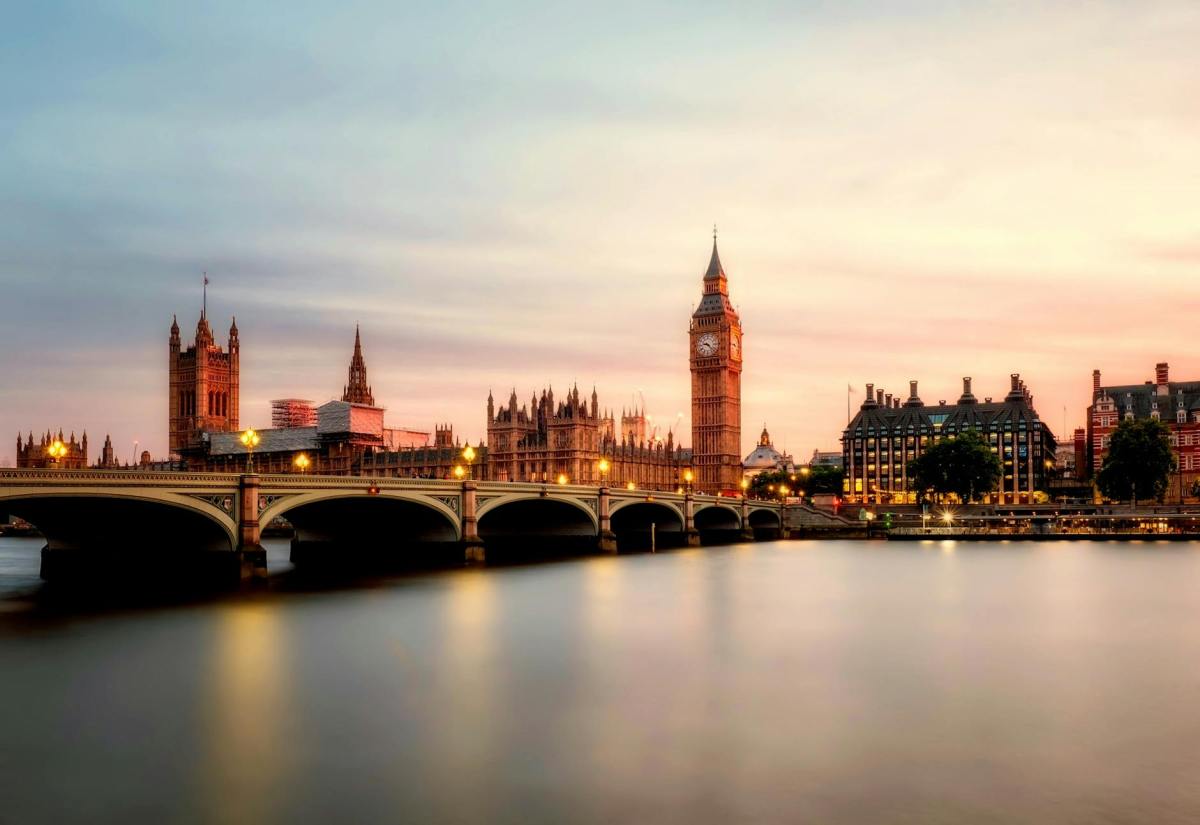
Reform

It’s not a name that represents their reality. Although, a couple of the political polices they have on their books do mean significant restructuring. Proportional representation being one of those policies. They are a British political party that wants to continue the destructive arguments that brought about Brexit. Created in 2021 the Reform Party are the rump of the Brexit Party.

For poll watchers they are stripping voters away from the Conservative Party. In fact, their aim is to replace the mainstream Conservative Party. Unashamidly populist and right-wing, Reform is sending shivers down the spine of the centrist Conservatives. More libertarian than liberal, abolishing and leaving institutions is more their meat and potato pie.

It’s not at all unusual for such populist political parties to point at everyone else as a problem and assert that simple solutions can be magicked up in an instant. Reform is going for those issues that greatly trouble unhappy “conservative” voters. Taxes, immigration, green initiatives, mainstream media, and that nebulous topic “woke”. Failures in Parliament, at the Home Office and in the NHS are targets too. It’s the sort of stuff that gives a type of British voter a sugar rush.

There’s a deliberate attempt to follow in the footsteps of Donald Trump in the US. The dynamics of politics are different in the UK but there’s an appetite for harking back to a mythical era when Great Britain was great and how that could be recreated.

If the Reform Party does nothing else, it’s tipping the existing Conservative Party to go ever more to the right of politics. This, to some extent, explains the ridiculous obsession with current Rwanda legislation that’s as likely to work as a square wheel.

One prediction can be made with confidence is that the coming Geneal Election is not going to be much like the one in 2019. What on earth would happen if well-known personalities like Boris Johnson backed the Reform Party who knows where we would go next. To me this is horribly like Germany in the 1930s. Taking a hard line on immigration is one thing but calling for the UK to leave the European Convention on Human Rights is a slippery slope.

Politics with a noisy and truculent style has its place. Jam tomorrow and promoting “easy” solutions to complex problems are not new. Red-faced shouting and finger pointing has been around since Roman times. It’s the way a lot of people feel when things do not go well. Trouble is that putting people in power who tout this style always ends in bad consequences and disillusionment. It’s guaranteed.

Reform is polling in double digits. However, with the UK’s traditional First Past the Post (FPTP) electoral system this means very little. Reform may influence the conservative climate of opinion only. Revolution is not in the air – yet. What niggles me a bit is that Brexit caught many people on the hop when it happened. Its legacy has been wholly negative. The question arises, are we in for another round of shooting ourselves in the foot? I hope not.

Clear out

The avalanche of information that hits us everyday is enormous. It’s arguably difficult to remain well informed. Under the weight of material streaming towards us at light speed we must be ruthless editors. A nice cartoon summed this up with one person saying to another: I’d like to be well informed, but I’d like to stay sane.

It’s not right to say that this situation is the same as it’s always been. Perhaps in past generations a slowness or paucity of daily News meant that imaginations flourished, and people made up plausible stories to fill the gaps. Now, I could say social media keyboard warriors make up the stories that we have to filter to distinguish what’s real and what’s fake.

Should I lament the passing of paper? I’ve been an advocate of digitisation. Most magazines, journals, newspapers and alike have an on-line version. They must do to stay in business. Boxes of books in a shed don’t add a lot to the quality of life. Colourful aviation and motorcycle magazines weigh a ton.

One aspect of moving house is digging into stratigraphy of times gone by. I’m not especially a person who hordes stuff. However, I do keep far more than is wise. Moving house is an excellent opportunity to recycle, shred paper and visit a charity shop or two with piles of books.

A stack of daily newspapers that sat next to the living room door in a wicker basket and they had to go. At the bottom of the pile were headlines from 2010. Even with this menagerie of News I had to save one or two notable cuttings. The last 14-years are so incongruous that trying to explain them is almost impossible without some references.

Electronic media can pile up too. I’ve several hard disks from past computers that really should be crushed. Photos may sit on them so they will get a reprieve or is that just putting off sorting.

What seemed important at the time eventually fades. I’m unsure that sifting through the layers of accumulated stuff helps gain perspective. I suppose it must, to a degree. This clashes with a phenomenon that comes with age. I can vividly remember moments that happened a decade ago, and more, better than I can remember where I left my car keys. That’s not entirely true but the general idea is that memory is far from linear. The brain stores images of the past in a peculiarly selective manner.

I guess this is one reason for keeping a minimum archive of past events. They trigger the remembering of moments. That fills in the gaps that grow all too quickly. Moving house is one of the most stressful events in life. On the upside, a move creates an opportunity to rethink and take a new path.

Smart

One of the most irritating peak-time adverts on British TV, now, is the one where a fake Albert Einstein wibbles on to a fake dog in a hideously fake humorous manner. It’s condescending and preachy. What on earth the Albert Einstein has to do with household energy meters I can’t imagine. His famous equation is more useful for making nuclear bombs than measuring domestic power consumption. You might think the great man was an annoying Italian computer gaming character.

The smart meter is pushed on the basis that “you can better manage your energy”. I expect that’s true in most cases when they work well. I’ve had one for some time. We recently changed energy supplier. Guess what? In the transition I had to throw away an indicator and replace it with another.

In the news are reports of defunct smart meters causing people concerning problems. Smart meter mode means a meter can automatically send readings to an energy supplier. When they don’t work, lack of meter readings opens the door to energy companies making up bill estimates often to their advantage.

When I informed our power company, I got an education that put me right. Can’t possibly call the whole system a smart meter. No, that would be wrong. So, says the company:

“The smart meter you are enquiring about is actually an In Home Display, the smart meter is the meter on the wall.”

That informative reply reminded me of the Not The Nine O’clock sketch set in a gramophone shop. Foolish householder not knowing that it’s called an In Home Display (IHD). The smart meter is installed on the wall.

I’m in support of energy saving and the role an intelligent meter can play in monitoring the use of domestic energy. What are they trying to do – put me off?

Long gone are the days when meter readers knocked on the door and with a cheery smile jotted down the gas or electricity numbers in the understairs cupboard.

Now, I see the claim is that the “vast majority” of smart meters are operating as intended. That’s good. Those words mean about 88% according to a BBC report[1]. That sounds fine but what about the 12% who are in limbo? That’s not an inconsiderable number of people.

The roll out of smart metering technology started in 2011. There’s a first-generation and second-generation set-up out there in homes. A lot of work has been done to sort out communication problems. However, network coverage is not universal. Those connection issue are familiar to anyone with even the best mobile phone.

The BBC report is right to highlight problems. There ought to be a bigger focus on a plan for maintenance of the system as much as pushing new smart meter installations.


[1] https://www.bbc.co.uk/news/articles/cz9zqn77ezno

Unfair

That’s one way to start a note. “As a member of the post-active population”, I now feel that all the activity I now do is conveniently wrapped up as being somewhat like cosmic dark matter. It’s there in theory but no one knows what it is in fact. It’s activity that’s hidden activity.

There’s a great deal of talk about the large number of those people in their 50s, and above who have left the conventional workforce post-COVID. Unfortunately, much of it is tainted. The general implication being that the protestant work ethic runs deep and those who are not on the traditional 9-5 treadmill are letting society down. As if the only work worth counting is that which statisticians count into that magic number, namely Gross domestic product (GDP). The tyranny of an abbreviation. A great deal of useful productive and valuable activity is excluded from GDP.

Trogging off to Sunshine Deserts[1] every day, electronically or physically, and making or processing stuff and pushing rocks up hill is counted as the gold standard. This way of looking at the society is foolish. It comes from commentators being way behind the curve and politicians living life as if they were stuck in an idyllic childhood.

This way of thinking is especially true in the UK. More so than other European countries, we are dependent up charities and voluntary workers. German visitors are often struck by the number of charity shops in the UK. If you ask how palliative care, emergency services, children’s support, food banks, homeless shelters and crisis support are funded in German the response is simple – taxes.

The amount of unpaid work, like that performed in the home or by volunteers, in a massive range of organisations, is huge in the UK. That’s not wholly a bad thing. Sadly, this reality not recognised in government policy circles, other than being a way of off-loading responsibilities as funding cuts kick in. Of course, there’s politicians who turn-up for photo shoots at election time when there’s smidgen of recognition. If a charity is not in vogue or well known even those opportunities to raise funds and profile are few and far between.

All the above said, I do support the call for some education organisations that are deemed charities to lose the privileges rightly afforded to much more worthy charities. I know that’s a matter of judgement but not all fish in the sea are the same.

Often, it’s has struck me as strange that tertiary colleges (public funded education)[2] must pay Value Added Tax (VAT), but private colleges deemed to be “charities” do not. An uneven distribution of privileges is another characteristic of a way of doing things in this country.

As I understand, it what’s going on looks like this. Staff at Any Town College, where most local young people get their post-16 educational experience, order reams of paper for a printer. They pay 20% VAT. Staff at an expensive Public School, like the Prime Minister’s ex-college, order reams of paper for a printer. They don’t pay 20% VAT. That’s crazy.

No wonder growth is slow. No wonder social mobility is stifled. No wonder people are desperate for political change.


[1] https://en.wikipedia.org/wiki/The_Fall_and_Rise_of_Reginald_Perrin

[2] https://feweek.co.uk/no-plans-to-exempt-colleges-from-vat-says-treasury-secretary/

Flying a kite

Political discussion is much as it often is. One side is an abomination the other is the only way. Reverse that theme and you can sing the song of either Conservative or Labour party. Test yourself and see if you can think of a positive, constructive, cross-party initiative that is making Britian a better place to live. And that it isn’t jam tomorrow.

We are in a particularly febrile season. Holding the front page is mostly for atrocities, resignations, scandals and promises broken. Future quizzes about early 2024 may feature the question – who was Prime Minister or why was the inevitable General Election delayed?

I stripped off the daily one-page calendar for the 15th and the saying presented was – Imagination is the highest kite you can fly. There is a sentence to end the week. In the face of grinding pragmatic reality and the predictability of the worn out adversarial political order what if there was some imagination?

Much daily News concerns conflict, war, crime, funding cuts, inflated claims, and disagreeable personalities. No wonder people are turning off serious News media. A diet of current events remains important in a healthy democracy. Sadly, lots of people are driven to News avoidance[1].

My recommendation is let’s have some daily News that stimulates the imagination. There’s a little tickle through on occasions. Sadly, again this is seen as a minority interest. The need for hope built on a positive vision for the future is great. The more people disengage with dependable, independent, and objective News, the more the spinners of misinformation and lies get a grip.

What is missing is imagination. It’s not so alien. To think we once had a prime-time show called – Tomorrows World[2]. It wasn’t a humours chat on a comfy sofa at teatime. Meandering about the lives of minor celebrities and entertainment plugs for coming shows.

For decades, the likes of Raymond Baxter, James Burke and Judith Hann took us on a weekly adventure. On reflection there’s an immense range in their presentations. From what now seems comical to what has turned out to be profoundly significant.

I propose a next generation version of Tomorrow’s World. It’s the Spirt of Imagination. Each week there would be an accessible, peak time, magazine style show that looks at what’s lighting up the world of science, technology, and engineering.

I’m not asking for a worthy educational STEM[3] fest. No. A show must be engaging. Not a bore fest. It must be led by talented communicators who have a passion and instinct for what people are talking about. It must look a generation ahead. Simultaneously ask grandparents to rediscover wonder.


[1] https://reutersinstitute.politics.ox.ac.uk/news/five-things-news-media-can-do-respond-consistent-news-avoidance

[2] https://en.wikipedia.org/wiki/Tomorrow%27s_World

[3] https://www.stem.org.uk/about-us

Transform

Watching the BBC’s Sort Your Life Out[1] is cathartic. Stacey Solomon and her team are bubbling with enthusiasm. They get in there, and in one big swoop change the lives of a family that has become trapped in their own clutter. Everyday surrounded by way too much stuff.

This is so relatable. I’m in denial. I am not a hoarder. The truth is that there’s no place on a TV programme for me but that doesn’t mean I don’t have one or two “challenges”. Even in that double negative there’s the shifting sand of denial. Just don’t look in the garage.

To transform our lives, we have just moved house. Now, over a month in the new place. That has left the job of clearing out our former house and tidying it up. One thing with clearing out the accumulation of ages is the need for a deadline. Solomon’s show has that built in. Our deadline is a floating one that can’t float for long.

This week, I got temporarily mesmerised by a pile of old newspapers. Yes, it’s down to me. For the strangest of reasons or no reason at all, I’d kept a pile of curious newspapers that went back to 2010. Events like General Elections, Budget days, disasters, the local MP’s misdemeans and the rise and fall of people in public life. A real mix of general interest.

Like Sort Your Life Out, politics in the UK is full of stories of notable names that have come and gone. One or two have been upcycled (Nick Clegg), others were recycled (Lord Cameron[2]), and some previously prominent names disappeared altogether. Acknowledging the obituaries too.

What struck me was not only the names that come and go but the rollercoaster that has been the last 14-years. Underlying that is a cycle that goes bust, boom, bust as that rollercoaster thunders along on rails that disappear into the mists.

Regarding government budgets, we have regularly been promised transformations. Chancellors who don’t promise more for less are rare. Those who deliver it are even rarer. For the most part, in aggregate, our wealth per capita is going in an unhealthy direction. I’d say government budgets are an expression of political priorities, but they are far less important than events.

What do we learn from the whirlpool of public life? One thing is that history is constantly being rewritten. In the longer term what’s said about Johnson, Farage, May, Brown, Blair, Major, Clegg, and Cameron is going to be rewritten time and time again.

Back to my comparison of Sort Your Life Out and General Elections. To quote a quote[3] that is not by Mark Twain but is commonly attributed to him: Politicians are like nappies (diapers), they should be changed regularly.

If we genuinely want transformation, we need to vote for it. In my mind, voting either Conservative or Labour amounts to more of the same.


[1] https://www.bbc.co.uk/programmes/m00116n4

[2] https://en.wikipedia.org/wiki/David_Cameron

[3] https://quoteinvestigator.com/2018/10/17/diaper/

Spring

References to meteorological spring are all well and fine. I accept that those with the expert knowledge and data say that the 1st March[1] marked the transition into spring. For me that’s too early. Jumping the gun a bit.

The occurrence of astronomical spring makes more sense to me. That puts the transition on 20th March. So, a couple more weeks of tapering winter to go. I never like counting on spring before my birthday. I may have said this before, I’ve watched the Cheltenham Gold Cup[2] in a snow shower. That race is on the 15th March this year.

Nature is being the wake-up phases. Those buds that can be seen everywhere there hedges and bushes are a good indicator. Bulbs are well advanced this year. The snowdrops came and went with great speed.

This morning a frosty mist hung over the river. Slowly the sun’s rays burn-off this obscuring icy fog. The vail is lifted. The flood is receding after a couple of days of nothing more than light showers. Gradually the wetland grass is adjusting to a new phase of growth.

Riverbank trees are bare. The stretch up through the mist like a charcoal painting. Shades of grey gradually give way to colour as the dawn takes hold. A cloudless sky frames the outline with a pure morning blue. Backlight as I’m looking North.

Nothing but a troop of stubborn fat geese waddle around at the edge of the slivery water. The mirror like water is their playground. Preening and feeding the empire of Canadian geese numbers more than ten. Their peaceful contentment contrasts with the commuter traffic on the Oxford Road.

All the signs are of a sunny morning further hastening the approach of natures spring.


[1] https://www.metoffice.gov.uk/weather/learn-about/weather/seasons/spring/when-does-spring-start

[2] https://www.thejockeyclub.co.uk/cheltenham/events-tickets/the-festival/gold-cup-day/

Friday evening

I listened. Well, it was unusual. On a Friday night, the country’s Prime Minister (PM) addresses the nation. Not much prior indication it was going to happen. What’s afoot, I thought. Could this be the moment a General Election is called? In the end it wasn’t an earth-shaking moment or likely to change the direction of the course of world events. The intention was good. There’s a strong need to step back. To condemn violent extremism in all its forms. Whether it’s ideological, from a political stance or religious in motivation.

Yes, people have a right to be passionate in pursuit of their beliefs. The limit comes in a liberal democracy when action steps over into aggression, intimidation, hate and violence.

Yes, it’s a sad day when a Westminster byelection results in the election of a maverick who as a disturbing track record of associating himself with alarming people and beliefs.

We (UK) are sure not in a good place, now. That does call for political leadership to step-up and face down those who would corrupt, divide, and wreak havoc. To do that across the board whether it be from the extreme left or extreme right. Wreckers are not new. They pop-up through history. Often using a false narrative to antagonise and stir-up insurrection. The results are always to the detriment of most people and to the advantage of a very few.

Is the PM facing down the those who’d happily wreck our liberal democracy? Friday evening was one attempt.

I agree with some commentators. If a speech is to be made outside the front door of Number 10, such an iconic setting, then there ought to be something of great substance in that speech. Afterall this is the place where PMs come and go, elections are called, and major crises are addressed. In this case there wasn’t much of great substance and vague messages were scattered throughout the PM’s rambling speech.

One problem is the misguided mixing of multiple different concerns in a mishmash. For example, protest is not de-facto bad. Illegal actions during a protest must be addressed much as illegal action any other time. If extra resources are needed to address those illegal actions surely it is for the government of the day to provision them appropriate to the task.

Perception matters. Condemning those who are clearly in opposition to the PMs political stance but turning a blind eye to those in the PMs camp who are just as bad, just smells bad.

Let’s be positive. It’s a good start. Leaders should come out an defend and preserve the liberty we all enjoy. They should craft langauage that unites. They should engage in robust debate on the side of truth. I wonder where we go from here. Will electioneering polticans stop the slurs and cheep remarks – unlikely.

POST 1: The PMs words on extremists and democracy have slipped off the on-line headlines rather quickly. Maybe his aim was for the weekend media to pick-up the debate in a thoughtful manner. Good luck with that one.

POST 2: Now, the PM is facing both ways. Paul Scully’s[1] utterances follow those of former Conservative Lee Anderson. When the majority of his party’s members think Islam is “A Threat To British Way Of Life[2]” and they would prefer a different leader from him no wonder the PM is calling for unity.


[1] https://www.telegraph.co.uk/politics/2024/02/26/paul-scully-no-go-areas-birmingham-london-islamophobia/

[2] https://www.huffingtonpost.co.uk/entry/majority-of-tory-members-believe-islam-is-a-threat-to-british-way-of-life_uk_65df4fd4e4b0e4346d54a740

March

The North wind doth blow and we shall have snow[1]. Well, today on the first day of March and it’s more of a gusty North Westerly wind and heavy rain. The snow maybe falling on high ground in the North of England but here in the South the temperature remains mild. Although, the line on the thermometer is slowly descending.

The flood in the small field out back waxes and wanes but is far from drying up. In fact, the extent of the water is greater now than it has been in a while. A lone Swan rests close to the riverbank. Not fussed by the driving rain. That makes me curious, where is its mate? On previous occasions, we have seen a pair of Swans cruising up and down the river Lambourn.

March comes in like a Lion[2]. That’s as true as it ever was of our weather, but will the next part of the saying happen as the month rolls on? Will March leave like a lamb? Winter may still have a sting in its tale. A misty wet March is in prospect.

March is always a month of transition. It certainly is for me. Having a birthday in the middle of the month is quite a good time to clock up another year. I never count winter as being behind us until I’ve put a candle on a cake. There’s an idea for a folksy modern saying.

There one more snowy white bird prancing around at the waters edge this morning. He or she is rather elegant small bird. It’s interesting to note that this bird was first recorded as breeding in Berkshire in 2007. Our visiting Egret[3] is dipping into the grass surveying the flood water with confidence.

Fishing is not just the exclusive rights of the Egret. There’s a slim tall Heron[1] who looks very regal. My guess is that the flood water has created small pools within which some small fish have become trapped. That’s a nice easy meal for a patient Heron. With spindly legs standing in the wet grassland any small fish would not see their fate coming.

As the sun has come up both Swan and Egret have moved on. The flood has been left to the ducks and geese. I don’t mention the Crows, Magpies and Pigeons. Although I just have. The wildlife seen from my window doesn’t mind gusty, wet, and windy anything like as much as I do.


[1] https://www.rspb.org.uk/birds-and-wildlife/grey-heron


[1] https://songsofchildhood.wordpress.com/2011/10/31/the-north-wind-doth-blow/

[2] https://www.theparisreview.org/blog/2015/03/02/folk-wisdom/

[3] https://www.wildlifetrusts.org/wildlife-explorer/birds/herons-egrets-spoonbill-and-crane/little-egret

Wild

Looked out this morning and there was a couple of geese to add to my list of sightings. The flooded field out the back attracts numerous birds and wildlife. Wet grassland is just right for them to be happy. Egyptian geese[1]. A pair was plodding around. Given their different colouration, I assume they were male and female. One was slightly larger than the other. These two steered well clear of the gaggle of grazing Canadian geese. As geese go these are about twice the size of the Egyptians.

Now there are distinct advantages in having webbed feet. Soggy ground and shallow waters are just right for the duck and goose community. As the light rain returns a couple of pairs of Mallards[2] takeover the riverbank. Swimming around each other and dipping and diving as they go. There’s an abundance of food so I expect to see many more waterfowl in coming days.

It rained overnight so there’s no signs that the flood water as receded this morning. There are ripples on the surface of the flood water as the wind is quite strong and gusty. That has a dying effect. So, the waters may easily follow natures calendar and return to the riverbed in the coming weeks. The trees are still winter bare. Up close they look different with buds already to go. March will be a month of change. The colours will start to change.

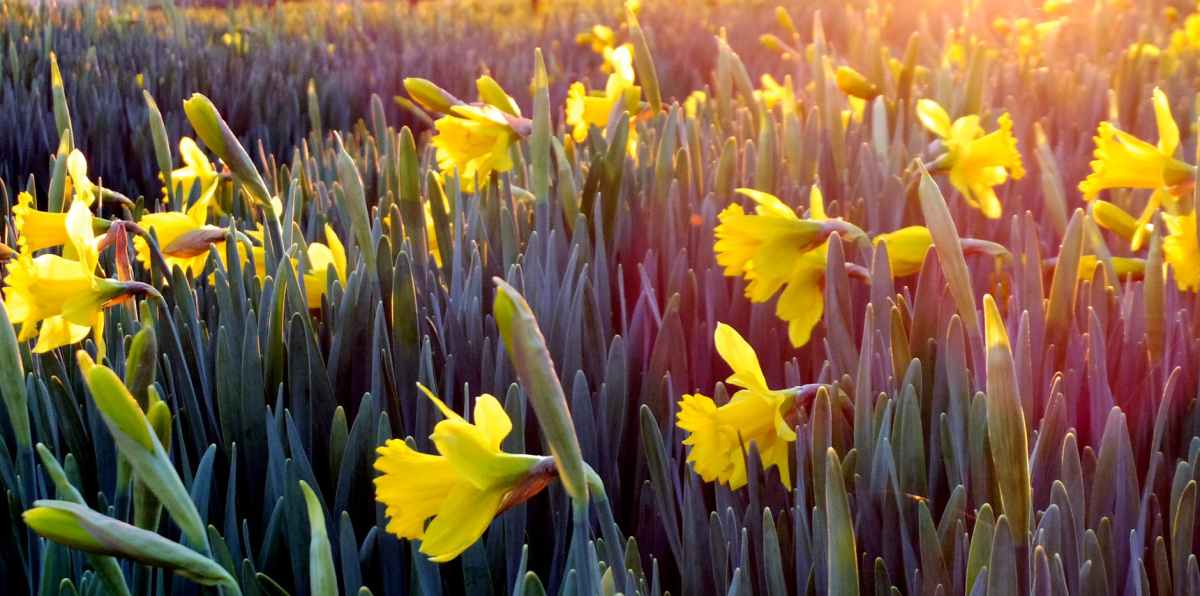
I say these things, but I remember standing in the snow on my March birthday. Winter’s being mild this year. It can still have a sting in its tale if it wants to upset us all. A sudden plunge into ice can still reset the calendar. Snowdrops have almost been and gone. Daffodils are showing at their best. The local hedgerows are full of Blackthorn blooms. That’s early.  

I don’t think I’m confusing the Blackthorn[3] and Hawthorn. The Hawthorn has often been considered a symbol of rebirth. That’s associated with the month of May and Springtime. One comes out before the other and seeing so many white flowers in late-February they must be Blackthorn. Even so, flowering now is a marked indicator that the seasons are changing. Climate change?

The blossom of the two hedgerow thorns is similar in shape and size. When they get buffeted by the wind the ground can get covered by a carpet of bright white petals. The distinction is that the Blackthorn has dark round black berries in the autumn. In fact, I’d refer to the whole thorn bush by the name of the berries, namely Sloes. Birds like them but I’d not recommend tasting them given their sharp bitter nature. The Sloe is better known for what it can become. That’s as English as the hedgerows. Sloe Gin[1] has been round for hundreds of years. It’s well worth a go.


[1] https://www.plymouthgin.com/en/product/plymouth-sloe-gin/


[1] https://www.rspb.org.uk/birds-and-wildlife/egyptian-goose

[2] https://www.rspb.org.uk/birds-and-wildlife/mallard

[3] https://www.woodlandtrust.org.uk/trees-woods-and-wildlife/british-trees/a-z-of-british-trees/blackthorn/