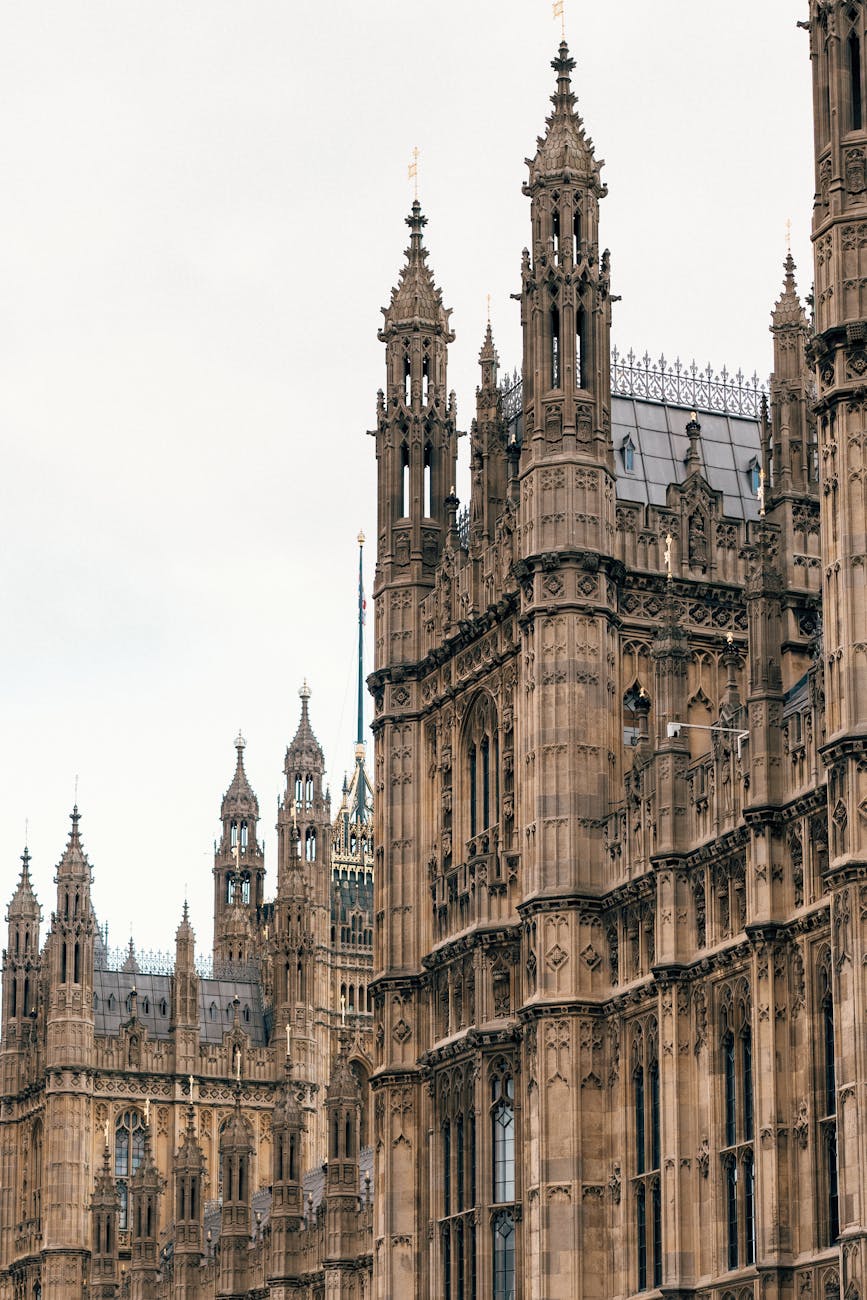
New Form of Monarchy in 2024?

An observation. There’s something strange going on across the Atlantic. You see, I have found inspiration in the story of America’s revolutionary struggle. The writings of Thomas Paine stirring up a radical movement. The strong desire to be independent of the rule of Kings and Queens. There’s a lot to be said for freeing a nation from imperial tyranny.

The Declaration of Independence in 1776 is a bold statement. Rejecting the royal authority of George III to set a new nation on an independent path. It proved to be a dynamic and prosperous democratic path. One that people across the world looked on with admiration.

It’s true that the United States has had its own dynasties. Powerful families and influential individuals that have shaped its history. However, since its independence, none of them have ruled as a monarch. None have wheeled massive power without checks and balances.

Yet here we are in 2024, and a form of pseudo monarch stands ready to take the reigns of power. Sure, democracy has played its part in putting one man in control. That, in of itself, is not unknown in the history books. The question to ask is when does a Republic tip over and become something quite different from what it has been?

I hope my observations are an exaggeration. It’s all to easy to see the News that commentators want us to see. I’ve often found that it’s most difficult to see things as they actual are as opposed to how they are shaped by personal beliefs and fleeting desires. Objectivity isn’t so easy.

This much can be said, the next four years are going to be turbulent ones. There’s a certainty in that conclusion. Even with the Atlantic in the way, just as the Jetstream brings us changeable weather, so unsettling waves of transformation will hit our shores.

The latest commentary coming from supporters of the new Trump regium in the US is one of polarisation. It’s the traditional stick-up. Choose between us and them. Our populous island off the shore of continental Europe must be squeezed into a choice between the US and the EU.

This monosyllabic way of framing a debate gets swallowed by the media. Overall, it’s nonsense. There’s no way that both will not be important for as far over the horizon as anyone can see. Both are going through periods of disruption. For once, domestically, the UK seems relatively stable. That’s putting aside the past damage done by Brexit and a Conservative government that fell into total disrepair. Yes, the UK can plot its path knowing that some internal consistency can be expected.

Everything I’ve written here is overshadowed by issues of global concern. Overshadowed being the sad reality. Climate change will not wait for the dust to settle from ardent disruptors. The planet’s atmosphere knows nothing of the exploits of prominent personalities. We desperately need to rediscover common interests and act on common concerns.

Exploring the Kennet & Avon Canal

It’s the road to the west. The A4 out of London heads towards the west. It’s younger but bigger brother the M4 motorway goes the same way. Going the same way too is the Great Western railway and before that a major waterway, a canal. I guess the ancient roads predate the lot of them given that east-west traffic is an important part of English history. Certainly, the Romans went that way.

I now live at what is roughly the halfway point between London and the west. It’s where what is largely a level route from London starts to rise at a slow pace. That climb made linking rivers, most particularly the London Thames and the river Avon in the west, a challenge. The incentives were evident. So, much potential for trade. Moving heavy commodities around. Canals are truly visionary engineering infrastructure and now an inheritance that’s much treasured.

For people who like to walk, like me, canal towpaths[1] provide flat route between towns. A direct waterside route that wanders through lush countryside. Yesterday, I did the 15km between Newbury and Hungerford. Along that stretch, the Kennet & Avon Canal raises about 150 feet but it’s almost unnoticeable. The main signs are the difference between the fast-flowing waters of the river Kennet and the sober slow canal. A littering of canal locks and small brick-built bridges are a feature too.

The Kennet & Avon Canal was constructed between 1795 and 1810. It was eventually killed-off as a commercial enterprise by the construction of the Great Western railway. Being cheaper and faster along the iron road, transport of goods by water couldn’t compete. It’s in this modern time that the canal was restored. It’s been working again for the last 30 years. Now, it’s a centre of leisure pursuits, small businesses and alternative lifestyles.

The canal’s path follows the River Kennet and its narrowing flood plain. I found looking at how the waterflow is controlled by sluice gates and weirs a fascinating part of the walk. Ambling along the canal’s towpath is a great way to venture into the Berkshire countryside. There are a couple of points where the path changes sides and it’s a bit soggy in one or two places but overall, it’s relatively easy walking.

I did see an Otter on the opposite bank. It was a fleeting glimpse. He, or she, slinked away almost before I realised what I was looking at. Quite different from noisy ducks this Otter made virtually no sound or ripples on the water. 

Dotted along the canal near bridges, decaying concrete World War II-era pillboxes are a reminder that this would have been a defensive line if Britain had ever been invaded.

The walk took me under 4 hours. I was exceedingly fortunate with the weather on the day. A cool breeze and intermittent sunshine. Not bad for November.


[1] https://canalrivertrust.org.uk/things-to-do/walking

Halloween Timeless Spooky

He’s a legend but I don’t agree with DJ Tony Blackburn on this one. The headline reads: “BBC radio legend Tony Blackburn says, ‘modern music won’t last’ 60 years[1]”. Maybe it’s newspaper click bait but there’s a sentiment in those words that will resonate widely.

To me, every new generation does something different. To even think that you or I can predict what’s going to be listened to in 2084 is way off the scale. One hundred years from the infamous 1984.

Stepping back 60-years there’s a nicely curated version of 1964 to entertain us. I’ll bet there are those long gone, whose tapes and vinyl records have been trashed, who thought they would echo down the generations and haven’t. To match that there’s those who’ve had a few unexpected days of fame but that we still listen to their music with great affection.

Tony, in his Radio One role inspired me. I remember trying to put on a school disco and even proposing a school radio station. I found that our “modern” 60s built secondary school had been wired for an audio system but that it was never used. Probably for the best, the headmaster at the time was not so enthusiastic. As a 14–15-year-old who’s hobby included dismantling electrical bits and pieces, wiring up an audio system wasn’t a big deal.

It’s almost Halloween. That’s a time for the spooky singles of the past start to surface from the crypt. The first one to rise from the dead is the one that I played in my teenage school days. The Monster Mash[2] got a re-release. It came out in 1962. I’m sure it was charting around 75 too. Boris Pickett and The Crypt Kickers have stood the test of time, as all good monsters should.

Next on my horror list is the Werewolves of London by Warren Zevon[3]. Ah-hoo. Better not let him in. Comic and scary at the same time.

Having started a list, I suppose I’d better keep going. Don’t Fear the Reaper by Blue Oyster Cult has to be up there, on the top[4]. Although strangely this song has an upbeat feeling about it.

The video is as B movie lookalike as possible. Made by a man who did transform throughout his life. Michael Jackson left us with a seminal music video, half of which no one needs to watch[5]. “Thriller” has to be part of a Halloween list. Zombies have never been so popular. They ought to have their own prime time Stickly Come Dancing show.

For number five, for all its devilish despair I call up: “Paranoid[6]“. Black Sabbath, just the name of the band is enough to qualify. So, the line goes: Happiness, I can’t feel. The sound is enough to explode any gramophone. The louder the better. It will wake the dead.

POST: Here the AI generated image is bizarrely spooky. In the gloom, the tone arm of the record player hovers over the disk playing. Is that because the AI was being clever or is it because the AI hasn’t got a clue how a recorder player works? I think maybe the later.


[1] https://metro.co.uk/2024/10/26/bbc-radio-legend-tony-blackburn-says-modern-music-wont-last-60-years-21843219/

[2] https://youtu.be/-tHyRQOdqf0

[3] https://youtu.be/c6M89iDabwM

[4] https://www.youtube.com/watch?v=m-4G18t5se8

[5] https://youtu.be/sOnqjkJTMaA

[6] https://youtu.be/0qanF-91aJo

Travelling Post-Brexit

Ever since Brexit, I’ve had to have my passport stamped in and out of European countries. It’s like a reversion to the days when I got my first British passport. That was back in the late 70s.  It has a frighteningly youthful picture. Occupation – student.

I’m not so phased by the coming changes to European Union (EU) border controls. Naturally, it’s worth asking if Britian has become a more dangerous nation since the time before Brexit when we enjoyed freedom of movement. It’s a pity we didn’t value that freedom a lot more. It was thrown away far too easily.

Today, the electronic border controls expect us to stare at a camera. A securely held, I hope, database is used to check a list of biometric numbers against my image. I guess that’s a sure-fire way of saying that Mr Blogs is indeed someone who looks very much like Mr Blogs. Facial recognition technology has come a long way.

The next steps in tightening-up controls will be fingerprinting[1]. Not in the manner of Sherlock Holmes, with an ink pad. No, in the digital age an ominous machine will scan our fingers and check its records to see that not only does Mr Blogs look as he should but that he’s got the essential characteristics of Mr Blogs.

Certainly, in this new regime British citizens will not be able to overstay in European countries. Ones travel records will be a lot more quantifiable and precise than stamping a piece of paper. That is assuming such digital border control machines will be relatively error free.

One of the benefits of Brexit is that it will be easier to track the movements of British criminals in and out of the EU. The reciprocal will not be true. It will not be easier for British authorities to track continental European criminals in an out of the UK.

Ah the luxury of being a Third Country. Longer ques. More uncertainty. Less privileges.

What’s more is the introduction of the new EU border control systems will be “phased[2]”. This change will not be one big bang. So, different ports and airports will be doing different things at different times. Now, it doesn’t take a genius to see that confusion is most likely.

Travelling in 2025 is going to be more than the usual adventure.


[1] https://commonslibrary.parliament.uk/the-eu-entry-exit-system-and-eu-travel-authorisation-system/

[2] https://www.independent.co.uk/travel/news-and-advice/eu-biometric-border-fingerprint-entry-delay-b2627645.html

I’m Mandy

It’s something to ague about. My view is that pop songs don’t have to have “official” meanings. If you listen to a song and it means something to you then there’s no point in arguing with someone else about what it means. Well, not much point other than the pure fun of it.

That doesn’t stop an argument. It’s like answers to quiz questions. There’s that strong desire to be the one with the right answer. With a song it’s not so easy to be literally right or wrong. There may be clues left by the song writers or a generally excepted interpretation. It’s not a subject to place major bets on. There’s likely to be no definitive answer.

This week, I popped into a small shop that is full of retro bric-a-brac. In one corner there’s a display of second-hand vinyl records. 45s and LPs nicely arranged in alphabetic order. I find it fascinating what’s fashionable, and thus pricy, and what’s not. This trendy little shop aims at a student market. What caught my eye is an album from the band 10cc[1] from 1976. It has a colourful fold-out album cover which is a story in of itself. It’s a real photographic artwork. And strangely profound in the age of the mobile phone. Lots of people holding telephone handsets.

“How Dare You![2]” is an immensely creative but almost incoherent jumble of wandering songs. It’s a kind of progressive rock music exposé but much more popular, in the sense of pop. And in its time, it did well for the band, giving them two charting singles from the album. It’s a 70s vinyl masterpiece that will not be entirely lost and forgotten.

10cc is part of my student history. From what I could see from the price, it’s not so fashionable with today’s students. In good condition, for £5, I was more than happy to spend my hard-earned cash. At the till, the young lad who was minding the shop took one look at the album cover and asked: do you mind if I take a photo of that? We both agreed that streaming music is fine but there’s something more satisfying about handing physical artwork like this album cover. It’s tangible. It’s real. It’s an artifact.

The most notable song on the album is “I’m Mandy, fly me”. What is known about 10cc and their song “I’m Mandy, fly me” is that it was kicked off by a National Airlines poster. Like so many American airlines, National got swallowed-up and those who swallowed them up suffered the same fate. But in the 70s they were going strong. What they will be remembered for is that one of their publicity stunts caused controversy. It’s the sort of situation that kicked-off protests and rightly so.

In the early 70s, to sell their long-haul seats National’s posters ran a slogan saying: “I’m (flight attendant’s name). Fly me.”. The sexist nature of the advertising slogan got heavily criticised. These airline posters must have been up in Manchester, UK. Enough for seeing them to inspire 10cc to write the song “I’m Mandy, fly me”[3].

What’s it about? I think it’s pure imagination. Wandering a street, seeing the poster and going off on a fanciful muse. In my view it’s not literal. There is no plane crash. The fantasy is that the flight attendant in the poster rescues the singer from the dullness of everyday Manchester. After a few moments he snaps out of it, realises that he’s been daydreaming, and life carries on.


[1] https://www.10cc.world/

[2] https://en.wikipedia.org/wiki/How_Dare_You!_(album)

[3] https://genius.com/10cc-im-mandy-fly-me-lyrics

Ethics of Medication

I don’t know about you but the whole idea of medicating people to increase the prosperity of society has a terrible echo of the worst kind of politics. Now, if we change the “p” word to protection of society, a policy of medication might make some reasonable sense. The COVID pandemic taught use that individual freedoms are not absolute. We know that allowing people to spread infection, whenever their personal beliefs, can kill other people. Reckless actions did exposed people to danger. Big name politicians did some dam stupid stuff just because they wanted to side with those who believed irrational, unscientific nonsense.

A UK Labour Health Minister saying that obese people would benefit from a jab so that they can get back to work makes me feel uneasy. It’s one thing to recognise that society has a problem with obesity but it’s entity another for the States to impose medication on specific groups of citizens. Expensive new medication that that.

I know it can be argued that the cost of obesity to the National Health Service (NHS) is high so there’s no zero cost answer. Having hammered down smoking deaths over decades of work it’s now obesity that’s the great societal challenge. The line between personal freedoms and social demands can be a fuzzy one.

The jab in question may have become fashionable as a weight loss aid[1]. That doesn’t justify a UK Minister, with all the power of the State, suggesting that overweight people be put on a regime of injections. And if they say “no” to the regime then be penalised in some vague manner.

It’s known that these new weight loss drugs have side effects. No everyone can take them without consequences. These drugs should only be used under medical supervision. That said, many people do take them without recourse to advice from a doctor.

To the Minister I say, don’t ague about the cost to the economy of obese people. Please ague for helping people to make weight management work for them as individuals. Obese people are not one amorphous mass of idle slobs who sit on the sofa all day. The Daily Mail characterisation of bludgeoning swarms of people burdening society with their indolent ways may chime with populists and the emerging Conservative Party. It’s no way for a Labour Minister to address a live challenge. 

National proposals to give unemployed obese people a jab to get them back to work has a ghastly ring to it. Yes, it’s not saying we (society) should send them down the salt mines but when the economic argument is the top one it does dehumanise the target audience.

Weight loss jabs may continue to have potential befits for many people. Let’s say that we are talking about health benefits, so that individuals can play their role in our society, whatever that role might be. State officials who attempt bring shame on people living with obesity, that’s just plain nasty.


[1] https://www.bbc.co.uk/news/articles/c981044pgvyo

Illusion of Sovereignty

Desperate for something to say because their arguments have been shot down in flames, those who continue to support Brexit raise the subject of sovereignty. It’s as big a red herring as you are likely to find. That said, the notion of complete autonomy does have a resonance with one part of the political class.

One example of reality being different from political rhetoric is one I regularly see. I’m driving more than I have done in a while. Mostly, on the M4, M3 and M25 motorways. In this country some freight goes by rail, but the overwhelming amount of freight goes by road.

A sign of our times has been the construction of massive warehouses close to motorway junctions. Strategic non-motorway routes too. I do mean massive steel sheds. Counting the number of football fields covered by these structures doesn’t help. I’ll bet some of them can been seen from space.

Back to the British roads. 6-wheelers, 8-wheelers, 12-wheelers, big heavy trucks often showing the wear and tear from journeying great distances depend on the motorway system. A constant flow of heavy goods moves day and night.

Looking at the trucks, some have UK registration plates, some have UK registration plates thrown over their original plates. Most drive under the registration plates of a country of origin or wherever their commercial operations are based. Each plate tells a story. LT is Lithuania. PL is Poland. H is Hungary. NL is Netherlands. D is Germany.

So, every day we have tens of thousands of trucks maintained and operated to standards set by the European Union (EU) on our roads. They are left-hand-drive. Their speedometers are in kilometres per hour.

It occurs to me – what does “sovereignty” mean when everyday looks like a day driving?

For sure, no British inspector checks the condition of each one of these trucks on a regular basis. For sure, truck driver’s hours are only occasionally checked. For sure, maintenance records are locked away in a filing cabinet.

In the world of absolute sovereignty none of this should be allowed. In fact, much of the above-described transport operations are continuing as they did before Brexit but with extra paperwork attached. Extra costs.

It’s an observation. It’s easily made when stuck between a couple of heavy goods vehicles on the motorway. Pragmatism may have led to a blind eye being turned to reality. We shouldn’t delude ourselves that Brexit has delivered anything useful in this respect.

Rain and Life

Rain is inevitable. Rain is perpetual. Rain is ingrained in the fabric of life. Britain is a series of islands that’s buffeted by the winds that sweep across the Atlantic. Not always but mostly. 

We complain about it. We lament it when there’s not enough. We are shaped by it.  If ever there was a better sign of what’s called “small talk” it’s to talk about the weather. Having a conversational default like this one is deeply embedded in our culture.

The line to draw is one between the “normal” amount of rain and the periods when the torrents seem almost biblical. Record breaking is a talking point. Can’t ignore it.

According to the Met Office[1], Berkshire, where I am, received 3 times its average September rainfall. Southern England had its wettest September since 1918, and its 3rd wettest on record in a series from 1836.

Natural variations are to be expected. Afterall, what would there be to talk about if the only thing to say is that the weather is the same as yesterday, or last week. That is the fate of people in some parts of the world. No such predictability for our northern hemisphere islands. Up at above 50 degrees of latitude we see a moderate variation in almost everything.

The key word there being “moderate”. Months that are as wet as this past September, do impact the regular cycles of the seasons. Generally, it’s been warm too. I can’t help thinking it’s been a good year to be a tree. Roots have had a lot to soak up whenever the need arises.

Is what’s happening an indication of climate change? I’m not going to be the one to put my hand up on that one. I suspect that a greater degree of variation in the weather is a broader factor.

For the farming calendar this year has already been a strange one. Almanacks that tell you when to reap and sow might need revisiting. Whether cows will need to develop webbed feet or horded of ducks take over, I’ll leave that to the imagination.

For me, since January, living near a river has become a source of curiosity. Luckily our house is many meters above the worst-case scenario for a sustained flood. The river runs fast. It’s a chalk stream. What’s interesting is that its level is highly dependent upon the degree of soaking that the surrounding land has received. Just now, the green fields around are like sponges that are nearing their capacity. I’m sure, that’s unusual for early Autumn.


[1] https://www.metoffice.gov.uk/about-us/news-and-media/media-centre/weather-and-climate-news/2024/record-breaking-rainfall-for-some-this-september

Changing Political Landscapes

You can tell the type of person I am. I occasionally stop for a morning coffee in Gail’s[1]. Overall, I favour cafe Nero. Better coffee. An Italian vibe. That said, the expanding up-market bakery has a pleasant ambience. They are taking over and restoring the more regal old bank buildings of the High Street. Britain’s national banks have long since moved out.

In the last 9-months, I’ve moved from a town that had both, to a town that until recently had only one. It wasn’t my influence, but a Gail’s has opened a new shop in recent weeks. Post election, I might add. I’ve moved from a Conservative town to one that is no longer a Conservative town.

Anyway, there I was doing a bit of lunchtime shopping in Waitrose. It has a small cafe in one corner of the supermarket. Stopped for a ham, egg and chips and a flat white coffee. On a rack on the wall is a display of daily newspapers. I’m pleased to say that there’s a weekly local newspaper there too.

The Times and The Daily Mail are there for the delight of their customers. Two national newspapers that I am not going to spend my hard-earned cash on unless I’m desperate for something to read. Both tabloids aimed at a broadly conservative readership. 

The Mail is serialising the writings of former Prime Minister Boris Johnson. No doubt he’s getting an astonishing amount of money for his latest scribblings. Journalism was his calling.

To sell a book about political life the book certainly mustn’t be boring. Charity shops are littered with shelves of books from long forgotten personalities. My observation is that Johnson has taken aim at an audience that still thinks of him as a worthy premier.

I couldn’t resist. Had to speed read the parts that spilled the beans. The parts that dug the dirt. The revelations. Except that’s not what I read in speech bubble paragraphs. First off, I was remined of The Beano[2]. The world’s longest-running comic for children. Johnson’s language assumed my reading age to be about 12-years old. A jolly wizard wheeze ticking-off those fancy pants or misery guts who haunted his days in power. Apart from saving the known universe his anecdotes were mostly to the detriment of the people mentioned. One exception being his dad.

In a moment of reflection, it’s astonishing that Johnson once led this great country. He led London too. What on earth were we thinking? How did it happen? One or two more serious books have gone down that road. I was recommended to read “Johnson at 10 by Anthony Seldon[3].” By the way, you can tell the type of person I am. Earlier in the year, that book suggestion came from the person standing next to me, wating to go into the BBC Proms at the Royal Albert Hall.


[1] https://gails.com/

[2] https://shop.beano.com/

[3] https://www.theguardian.com/books/2023/may/24/johnson-at-10-by-anthony-seldon-and-raymond-newell-review-the-great-pretender

Why the UK Should Rejoin

Fine, I’m happy to admit that my march, with thousands of others, through the streets of London on Saturday was not everyone’s cup of tea. There are a lot of people who support the idea of a return to European Union (EU) membership but are reluctant to raise the issue just now.

Often cited is the wave of right-wing politicians who are gaining ground in Europe’s larger countries. It’s as if they are going through their own Brexit like political moment but without anyone of any consequence advocating throwing away their EU membership.

Maybe the UK is ahead in this respect. We’ve been through the confusion and turbulence of the political right-wing eccentrics moment in the sun. They were never mainstream. However, they did hold the reins of power for some disastrous years. Thank God they are now behind us.

I have marched year-after-year because it’s the right thing to do. Tens of thousands from all over the UK have done the same as me. Millions if the numbers added-up from 2016 onward. Our future can be based on cooperation and mutual interests. Ideologically driven conflict and disruption have brought nothing but a lose – lose outcome.

So, what are the arguments for the rejoin movement? It’s all very well to shout at the thing we don’t like. Now, is the time to make the sound solid arguments for the thing we favour.

Let’s take trade for a start. The last UK Government wallowed in gushes of self-praise every time they signed an agreement with any country that was not European. Conservative Members of Parliament wanted to tower over the world like imperial overseers. It was an illusion.

Most of the so called “new” deals that were signed were simply a rollover that meant no change. In fact, more was given away than was gained. All in a desperate attempt to show progress. British farming was effectively shafted by Ministers.

One of the most touted possible “streets paved with gold[1]” was the prospect of a super new trade deal with the United States (US). Under President Trump, the prospect of an advantageous UK-US trade deal was an illusion.

Ironically, a claimed success was the joining of a regional trade block. I know it’s crazy that leaving a gigantic trade block on the UK’s doorstep was followed by joining one covering the Pacific. Yes, the other side of the world. Not only that but the projected gains are minuscule.

EU membership offers, as it did before, access to enormous trade benefits by comparison with what has been achieved since 2016. The numbers speak for themselves.

If the new Labour Government continues with a form of the fibs told during the “Get Brexit Done” phase, then trouble lies ahead. Next door, the UK has the world’s largest trading block. The value to the British economy of Single Market membership exceeds a mishmash of remote and small deals. There’s a positive way forward and it’s staring us in the face.

POST: It’s worth noting that the 1960 European Free Trade Association (EFTA ) was created, to promote free trade and economic integration included: Austria, Denmark, Norway, Portugal, Sweden, Switzerland and the United Kingdom.


[1] https://dictionary.cambridge.org/dictionary/english/streets-are-paved-with-gold