UK’s Digital Dependency

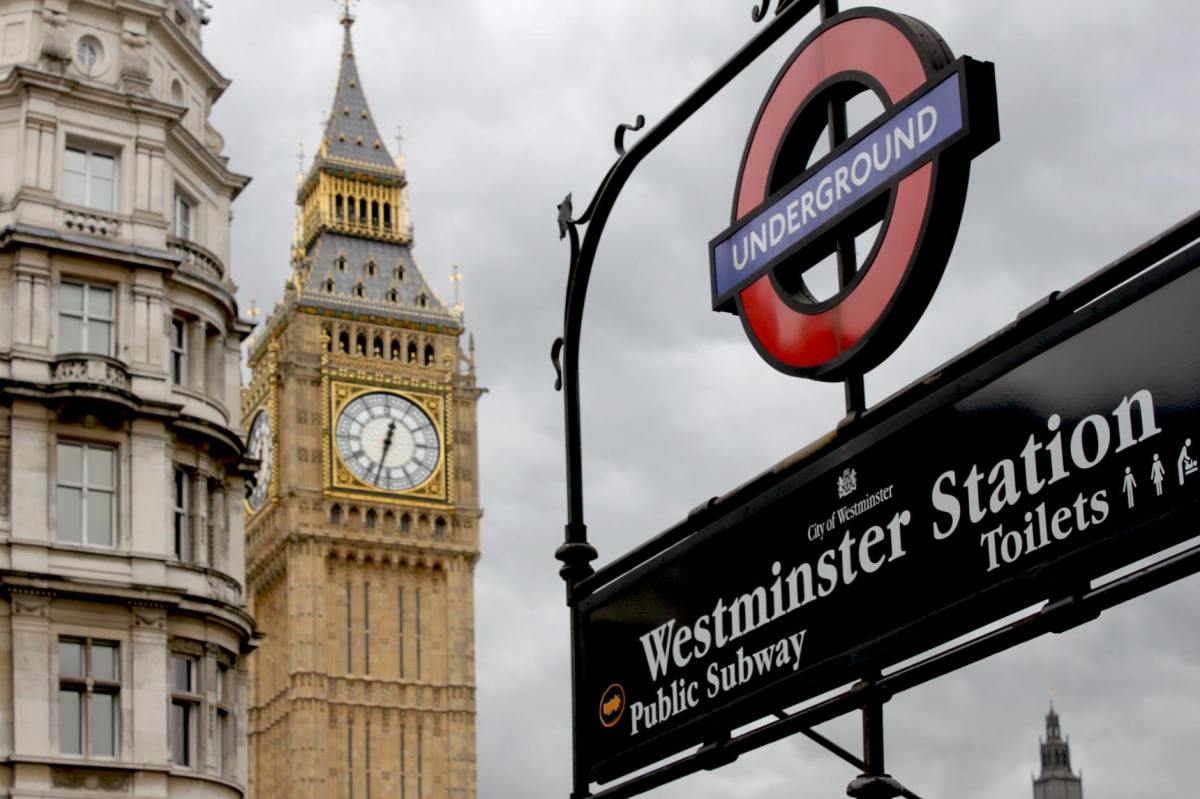
Under the title of “Culture” The Guardian newspaper offered an article that caught my eye this weekend. The author, Tim Wu was offering a point of view about the economic landscape that we inhabit in Britain. The theme was the drift that has taken place whereby we find that a huge dependency has grown-up over the last couple of decades. That is the unassailable dominance of a small number of US companies throughout the whole of our country.

What am I using to write this remark? It’s a computer program called “Word” sold to me by a multinational company called “Microsoft.” What’s strange is that this way of expressing my relationship with Microsoft isn’t commonplace. There’s a tendance to treat software, like Word as if it has always been with us and always will be. Like the public roads I drive my car on. Completely taken for granted. That is until a problem arises.

This Saturday article wasn’t about computer software per-se. Although the world of computing is riddled with intellectual property rights there remains a kind of openness to new ways of doing business. Digital ones and noughts are like the text on this page. They can be rearranged in all manner of diverse ways. The combinations and permutations are almost infinite.

Tim Wu argues that we should look to the way transport systems developed as an analogy to the electronic communications infrastructure we use.

Roads developed in the era of the horse. More than 200-years ago, before the time of the railroad. In fact, they go back a lot longer than a few hundred years ago. The Romans were particularly good road builders. However, that was a state enterprise aimed at getting armies around a sprawling empire.

The condition of roads in Britain took a leap forward when commercial enterprise found a way of getting an income from the primary land transport system of the day. Road tolls were a way of building and maintaining a network of highways. This network was physical. Fixed in place.

Digital infrastructure is more than cables, wireless systems, and databanks. Without the human interface all that extensive structure is unusable. That’s were a small number of US companies dominate the marketplace. This complete extra territorial dominance is, like my comment about Word above, taken for granted.

Tim Wu’s analogy doesn’t cut the mustard. It does illuminate an inconvenient truth. The reason the big US companies are driving the future of communication and technology is because they have captured a massive global income stream. However, much of that position depends on the laws that prevail in each nation. That prevail at a time when globalisation was seen as almost unquestionable. Now, the question arises has national sovereignty been sacrificed on the alter of progress? If so, what next?

There’s often been a hard kick-back against anticompetitive behaviour. Monopolies are not considered the best way to serve the public interest. Nevertheless, throughout history they have been pivotal in our story. Like it or not, that’s how the elegant country houses and castles of Britain were paid for and furnished. The same experience can be witnessed at the Newport Mansions[1] in the US.

How do we democratise rapidly advancing technology? There’s a mighty big question.


[1] https://www.newportmansions.org/

Public Broadcasting Value

It seems to be the season to have a downer on the BBC. As the gloomy light of winter gathers all around. The trees are shedding their leaves and that hunkering down mentality is invading my thoughts. Lawns no longer need mowing. Soden with moss and leaf fall.

I understand the dislike that partisan commercial broadcasters have for publicly funded broadcasters. The question of a “level playing field” and “bias” is always likely to come up.

Making a living from commercial advertising is highly competitive. Demands never stop. Seeking income from a marketplace that rises and falls with fashion and fad. That’s hard. Admittedly, there’s the compensating factor of wealthy benefactors or owners, prepared to make a loss, pumping funds into like minded companies. Shifting sands of political influence.

So, looking across the aisle at a major broadcaster that gets funds from the public, as a matter of law, must seem rather disconcerting. Certainly, it’s the sort of issue the wealthy benefactors or owners of media are going to kick at. Some to the extent of wanting to destroy chartered institutions with an ethos unlike their own.

What is a “level playing field” in the British media landscape? Can there ever be such a thing? That’s not an easy question to address. Shifting sands of public likes and dislikes shape the playing field (sorry about the metaphor overload). What might have been considered as independent, objective and neutral in the 1990s is way different from that now, 30-years on.

The British media landscape is not static, nor should it be so. In the period of three decades digital communication has advances at lightning speed. The sheer diversity of channels of communication has multiplied (even if they do repeat the same messages).

One sign of a healthy debate is the self-flagellation that the BBC often undergoes. As an institution, doesn’t it like to agonise about itself. With good reason considering some of the grave errors it’s made in the past. Supporting presenters whose behaviours have been found to be appallingly bad, and even criminal.

Let’s not tar everyone with the same brush. To be able to make mistakes and then correct them, with a good degree of learning in-between, is a strength. Some partisan commercial broadcasters seem unable to do this with any conviction. They just move on.

A publicly accountable broadcaster has no choice but to stand in the dock and take a reprimand, when appropriate. That’s no reason to shut it down. It’s a reason to make sure lessons are learned and not forgotten.

Doing a simple intuitive cost-benefit analysis. Taking the BBC as an example. What it offers, when it works well, far outweighs the costs. Listing three points, these have significant value: unifying impact of having a trusted national broadcaster, quality, broad base and originality of its output and editorial independence (not selling products or ideology).

Overseas critics may get upset, now and then, but that’s for them to get over. There’s no way such critics should shape the future of the broadcast media in Britain. That would be untenable.

Reinventing Debate

Once upon a time. A wise sage of great age, a not so bright mean-minded troll, a flighty light-headed dreamer and a jobsworth cog in a lumbering bureaucratic machine all met round a table. Bright lights shone on them so they could not see the masses assembled in ranks who had come to gawk at them in their deliberations.

What a strange tale can be told of their troublesome quarrels. To keep the peace, rarely with success, a queen of spades presided over their preordained disorder. Weekly viewers were invited to take a winding decent down the rabbit hole. Rarely was that rabbit hole decked with anything other than predicable hewn earth.

That’s how I think of the BBC’s Question Time in 2025.

Once upon a time. A programme of thoughtful debate, conducted by articulate men and women who wrestled over current affairs, each with a slice of insight however different their perspectives. Painting contrasting visions of the rights and wrongs of the day. Getting to the heart of the matter as their chairperson questioned and tested their opinions. Or so I thought.

Whereas I’d only hide behind the sofa when the Cybermen stomped around on Dr Who, now I desperately search for the TV remote control whenever Question Time is announced.

It’s not that I don’t enjoy debate. Far from it. It’s a wonderful thing to witness, if it’s done well. Honest debate is much needed given the complexities of our world’s trouble. The idea that everyday people question those who make a career of espousing their opinions is undoubtably a sound one. A little slice of accountability is a powerful medicine.

Sadly, a programme format, that was created for black and white TV, lingers on like the ghost of a smartly dressed long-gone presenter. The audience is treated as if they were merely brought in the shout and howl like citizens of Rome, as the lions’ devoir some poor sap. Playing the crowd both at home and in the theatre, the chosen names of the day become as predictable as cabbage butterflies seeking cabbages.

My fantasy would be to have a real-time on-line forum. A virtual and physical place where answers to questions and rational opinions could be sought. No lack of drama but where the focus was on discovery and inquiry. Another dimension that takes account of the new media landscape. That is, providing a civilised and respectful space where, by the end of the show advancing new ideas or changing minds becomes possible.

If regular topical debate just means reinforcing polarisation the rabbit hole will get deeper. Much deeper. All sense of common sense will be lost. A routine of gainsaying each other will thunder on as a pointless parade. Like an ever-darker version of The Prisoner. I’ll switch off.

#BBC

Embracing Uncertainty

Imagine siting under a great wide spreading old oak tree. Acorns falling all around. The ground littered with whole ones, crashed ones and half eaten ones. It’s more the half-eaten hazelnuts that the squirrels leave behind that I’m thinking of. On one of those cool days, like this morning, when the rain has abated and the sun beams are streaming across the glistening fields. It was lower than 2 degrees, early this morning, so a heavy drew rests on the grass and leaves.

Think of title for a book or film that sums up the state of current affairs. I’m tempted to say “All the President’s Men” but that’s been well done in the 1970s. Not only that but the word “scandal” may have lost its meaning. Political fiction and reality are melding into one. Anyway, I don’t want to follow the crowd and obsess about America.

Was there ever an age when prosperity seemed assured and the population was happy. When men and women of honourable intentions and wisdom, judicially ruled the land? Maybe not. Or when it happened, to some limited extent it didn’t last beyond a generation.

Any title for a book or film would have to encompass the persistence of change. Nothing upon nothing ever stands still. In fact, that’s one of the few things I can write that is an absolute. A real natural absolute phenomenon. Everything we know of moves relative to something else and movements mean change. We never breath the same air.

In a storage box of my books there’s a title: “Thriving on chaos[1]“. That’s more to do with an attitude to change. It doesn’t sum up the moment although it does imply that chaos is normal. I’m not going there fully since not all change is chaotic. Life is punctuated with regularity. It’s the traditional saying about death and taxes. Those two are regular occurrences.

A financial crisis or stock market crash or bursting bubble seem to hit us as an unexpected instant of violent change. Unexpected that is until hindsight kicks in and we all wish we’d listed to siren voices. Analysis streams from the outcome of a crisis[2].

A title for a book or film would need to include the recurrent nature of both good and bad consequences. It would need to emphasis our inability to accurately predict what’s going to happen next. That is even if one or two of us may get it right.

All this leads me down the road of a manner of thinking that’s all too common to me. That’s the world of probabilities. Addressing that slippery ell called uncertainty. So, what could be better as a title than: “The Age of Uncertainty.” Oh look, that’s been taken back in the 1970s. What could be better than the title chosen by John Kenneth Galbraith[3]?

He looked at the chaotic but repetitious nature of our common history. Going way back. Unsurprisingly a little cynical and monosyllabic at times. I’ve been rewatching his BBC television series. It’s impressive.

Acorns are falling all around. An unusually large number, this year. Next year – who knows? If I could find some reliable data, I could do some probability calculations based on past seasons. But with certainty, I can say that we are in an age of uncertainty. Acorns will fall. How many – well that’s the question isn’t it.


[1] https://tompeters.com/thriving-on-chaos/

[2] “The Storm” by Vince Cable, the Liberal Democrat politician, looking at the 2008 global economic crisis.

[3] https://www.bbc.co.uk/iplayer/episodes/m002l6sc/the-age-of-uncertainty

Rebuilding Relations

Here I’ve posted a thousand posts. So, it might be a good time to reflect. It was back in April 2016 that this blog started. The provocation being the then pending UK referendum vote. What was to become Brexit and a long litany of mistakes and missteps.

I’d not long returned to the UK from my time in Germany. I had a what I thought was a reasonable sense of the UK political landscape, only to find I was wrong. Here’s what I wrote:

“It’s the biggest event since the Berlin Wall fell. Yes, not to mince my words the UK referendum on EU membership could change the political landscape for a generation or more. It could be a terrible gamble that erects dark walls all over Europe or it could start a new period of enlightenment within the European project.”

I wasn’t far wrong with that statement. The landscape suffered a landslide. Even though the results of the votes were practically even- evens, for reasons that now seem bizarre the electorate swung in favour of leaving the European Union (EU). If the polls are to be believed, then the overwhelming majority now regret that choice[1].

“I’m firmly convinced that our place is in Europe. We are strong enough, we are clever enough and we are determined enough to make that project work. What a bonus that would be: Expanding a market that covers half a billion people on our doorstep. Guaranteeing that the world sits-up and listens to Europe. Unlocking a diverse creative powerhouse where the UK would thrive.”

My then time arguments were coherent, logical and straightforward. I didn’t know we were entering a phase when such attributes were to decline in importance. Should I have been wiser? With hindsight it’s easy to say that the campaign to remain in the EU was appallingly poor. Even if, at the time, I did wonder if the pomposity of the then UK Prime Minister would play a negative part in the outcome.

“The frightening alternative is to gamble with millions of jobs and invite a plunge into recension. If this happens it’s the younger generation who will pay the price. We should not condemn them to isolation and struggle for reasons of narrow nationalism.”

Oh brother. With something like 4% knocked off the country’s prosperity and a government struggling to finance public services, sadly I was spot on the money.

“I’m not saying the EU is perfect. In fact, I wouldn’t say Westminster or my local council are perfect – far from it. But the EU is a work-in-progress and not a finished project. It’s better for British pragmatism. It’s a two-way street as free movement brings people to these shores who then go home with a positive view of what we have to offer. In the next generation that means more trade and better international relations.”

Having seen at first hand the workings of both the British civil service and the European Commission, British parliamentarians and European ones, I could see a common thread. The foolish notion that escaping into glorious isolation would produce prosperity was nuts.

Here we are in 2025. It would be nice to say that – I wouldn’t start from here – but that’s useless. The thing to do is to reconcile, reaffirm and rebuild relations with Europe.  


[1] https://yougov.co.uk/politics/articles/52410-nine-years-after-the-eu-referendum-where-does-public-opinion-stand-on-brexit

Global Ambitions to National Introspection

When did it start? At least in recent times. When did we start looking inward rather than outward? That introverted xenophobia that’s infected about a third of the country. If the polls are to be believed (and that’s a leap).

It’s strange, isn’t it? Britain, a country that spanned the globe with its trading accomplishments went from imagining a transformed world to sitting in front of an iPad complaining about either putting up Union flags on lampposts to taking them down. Painting roundabouts with red crosses or decrying the idiocy of it. Dressing up as crusader knights and thundering on about some lost imaginary England.

Pictures tell a story. Being in the aviation business, a global business, one picture that sticks in my mind involves a handkerchief and a British Prime Minister (PM). It seems a long time ago, now. Nearly 30-years ago. Back in 1997 British Airways (BA) took to celebrating their global coverage by getting international artists to produce new artworks for their aircraft fleet[1]. This was not to the liking of a former PM at the time.

For me this slippery slope was particularly evident. Living in the Surrey town of Reigate. An affluent former Conservative Party supporter, James Goldsmith set-up a new political party dedicated to one issue. The name gives it away. The Referendum Party took to the stage in 1994. Initially, seen as a joke and merely a plaything of a wealthy man, it captured the Member of Parliament for my town. For all the good it did (not), for a couple of weeks in 1997, George Gardiner, the MP for Reigate, joined the new party.

So, the British political mood in 1997 was evident, or so it may have been thought. Nothing of the sort. Of course that was the year of Tony Blair’s Labour landslide victory.

It’s possible to trace a lot of strangeness back to Margaret Thatcher. Although initially internationalist in outlook, she broke a domestic consensus and crushed a lot of hopes. Yes, the country needed radical change. It was the brutality of that change that people reacted against.

In 2001, BA succumbed and returned the Union flag to its tailplanes. Lots of poor excuses were made as to the reason for reverting. A Boeing 747 model and the handkerchief bit back.

Can I construct a thread of events from that moment to the European referendum in 2016? Certainly, there are connections as the country shook off the Blair and Brown years and plunged into a messy 14-years of incoherence. The financial crisis of 2008 didn’t help in the slide to introspection. A government that bailed out the bankers whilst making the population pay did nothing to earn a moral reputation. It further encouraged a growth of a blame culture.

So, if you supported the Referendum Party, the UKIP Party and the Brexit Party that followed, and now the Reform Party surely, it’s possible to see that you are barking up the wrong tree. It’s an empty cul-de-sac. It’s a fruitless orchard. It’s a road to decline.

These are not the heirs to Margaret Thatcher. They are bandwagon hopping con men. Money men who like their pockets lined. They will not help those who have missed out on their share of the country’s prosperity – past, present or future.


[1] https://www.flickr.com/photos/linda_chen/albums/72157625997434719/

Engaging the 70%

A little analysis goes a long way. When that analysis chimes with what I observe, then all the better. Not that just because I agree with something that it therefore makes it beyond question. No, what’s satisfying here is to see that overlap on the Venn diagram of thoughts.

In an entirely off the cuff remark I said that if the major, and not so major, UK political parties all go off hunting for the votes of about 30% of the population, then there’s a huge opportunity for someone to address the 70%.

The UK political conference season is in full swing. Four political parties have completed their annual get together. Spent time agonising over their next moves. Damming and praising in equal measure both of rising and falling stars. Trying to avoid the media instinct to go for the live on-air gotcha moment. Being seen when the spotlight is turned on.

Back to my 70 / 30 relationship. This one strikes a bell for me having been a fan of the Pareto principle. That’s often called the 80 /20 rule.

For example, a lot of work may need to be done but it’s often only about 20% of that work that makes a difference, in certain situations. I could campaign over a wide area, without focus, and find that most of my effort had been wasted. Identifying the most fruitful areas to campaign, namely the 20%, might just as likely result in a win but with a greatly reduced effort.

National opinion polls can be deceptive. However, in the absence of real elections they are what people turn to get an indication of what’s going on – now. Today’s opinion polls have politicians spooked[1]. What the meaning of the Reform Party hovering at 30% is an open question.

Is it just like the days of the Social Democratic Party (SDP) in 1980s? A strong move for change that resulted in a flash in the pan. Well, it did open the door for Tony Blair and Co, years later.

Back to my 70 / 30 relationship. Labour, Conservatives and Reform all see this 30% voting intention. It hardly matters if it’s real. They are attracted to it like a moth to a lamp. There’re both data and a perception of who the 30% might be. Suddenly their importance is magnified out of all proportion. Phrase like “hard working people” are banded around. Classifications are sought to move away from past stereotypes like “white van man.”

I read Ben Ansell’s article[2]. I think he’s right. An enormous number of political campaigners fit into what can be called the Professional Managerial Class (PMC). Lots of people aspire to be of the PMC or think they are when they are not. Why do the two biggest political parties, Labour and Conservatives appear to dislike their activists and members so much?

Back to my 70 / 30 relationship. There is an enormous opportunity here for the Liberal Democrats. Not so much the Greens or nationalists. Just by speaking to the 70%. Just by addressing the issue that concern the 70%. Just signing up the 70%.

Not so much the vital few, more the vital many. Parliament could be a very different place in four years’ time.


[1] https://www.politico.eu/europe-poll-of-polls/united-kingdom/

[2] https://substack.com/@benansell

Unpacking Trust and Suspicion

Tickling the natural suspicion that a politician may say one thing but mean another, is not new. There’s a languid propensity to think the worst of people in power by those who don’t have that power. I wouldn’t argue with that tendency, if that tendency doesn’t become an absolute cover all. There are good people in power, trying to do their best, often against climate set by rogues, troublemakers and opinionated clowns. [A quick summary of the Tory years from 2010].

Natural suspicion is as much a part of the liberal creed as any part. Questions deserve answers because we don’t give politicians a blank cheque after an election. Putting a robust question about past promises and declarations is fair game. Running away is not an option.

However, it’s difficult to defend the blatant distortions that get played out in the daily media. I’m no fan of the UK’s Labour Prime Minister (PM). I don’t think he’s a rogue or troublemaker or dishonest. He’s portrayed as such by his enemies. That’s no surprise. What’s highly disagreeable are blatant distortions of what a person says in all good faith. Populist media outlets that act as propaganda pamphlets do this frequently.

I may say that the declared policies of a right-wing political party are stupid or dangerous or ignorant. What that says is the words used by a spokesperson of that party fit that bill. It does NOT say that that the people who support, even fleeting support, that party are all stupid or dangerous or ignorant.

Reasons for supporting for X or Y or even Z are multifarious and less stable than for past generations. The assumption that most people of a particular “class” will fit into traditional voting patterns is history. That era has passed.

The word “fleeting” is ever more relevant. Often a spokesperson will indeed say something that is merely flying a kite or designed to stir-up controversy. Whereas if they found themselves in power their whole tune would likely change. Reality would bite. Haven’t we seen and heard that before? I may say; do we never learn?

A study rhetoric is as ancient a study as any. Feelings and impressions are as likely to influence us as facts and figures. Performative gestures and colourful language obscure dry reasoning almost always. This basic lesson had to be relearned because of Brexit. There the established facts were clearly against the UK leaving the EU, but it happened anyway. Lots of people regret what happened in 2016. Sadly, such damaging acts are difficult to reverse.

Earthquakes happen because pressure builds up and then there’s a dramatic release. That happens regardless. Events can be quite anarchic and destructive. I guess the trick is to sense that pressure and ensure it doesn’t build up or is redirected. That’s an area where the current PM hasn’t shown a great deal of competence. I wonder if he will learn and adapt.

Sweet Truth

If I could guarantee one thing it would be that there would be a bag of sugar in the kitchen cupboard of my childhood home. The kitchen was the hub of the house. It was a square room with a solid square table right in the middle. Wheelback chairs permanently pushed in to make room to move round. There was one outside wall with a steel framed window that looked out on the farmyard. Looking due west. The evening sun would stream in to light up the side wall where the kitchen sink sat. With the thick walls of the farmhouse the window ledge was a place to sit. There was a full view of the farm gate so no one coming or going would ever be missed.

One wall had the remains of an ancient bread oven and a large alcove. In that alcove was a chucky great Aga. Custard coloured this massive cast iron cooker was the beating heart of the room. Before this cooker was converted to oil it was powered by anthracite. That involved a ritual of stoking and clearing out the ash every day.

The kitchen was the warmest room in the house. It’s where everyone congregated at mealtimes. Farming’s daily rhythm was managed from that room. Cups of tea flowed like a river as a bubbling kettle always seemed to be ready. Now, when I think about the amount of cane sugar that got piled into every cup of tea, I’m surprise that I have any teeth left at all. In fact, more than 50-year on, my last visit to the dentist for a check-up went well. Somehow my teeth have survived this onslaught.

Large bags of cash and carry bought sugar were a staple on the shelves of the larder. Rated today, my family’s rate of sugar consumption would be considered shocking. Not only that but the delight of toast made on the Aga top and then spread thickly with Golden Syrup[1] was normal winter comfort. Breakfast cereals were never eaten without tablespoons of sugar.

Time has passed and we have weaned ourselves off much of this overconsumption of highly refined sugar. There’s still a lot in our regular foods. Now, we have much more awareness of the problems that high sugar use can bring. That doesn’t stop us liking it.

Today, in politics, just it was in the 1960 and 70s, the metaphorical sugar of the day is the saying that there are easy solutions to complicated worries. There’s an appetite for a spoon full of sugar sprinkled on every latter-day problem. I don’t doubt that a spoon full of sugar helps the medicine go down[2]. Again metaphorically. However, Mary Poppins wasn’t saying that all you need is a spoon full of sugar. Far from it.

As the populist bandwagon continues to roll in most western countries, I think we need to remind ourselves of the enlightenment gained over the years. There are a lot of chores that must be done. Roads don’t get repaired by themselves. Hospitals don’t get built in a day. Schools and colleges need well motivated teachers to well motivate the next generation. Necessities like, tax and spend are a tedious inconvenience.

It’s so much easier to sprinkle a little verbal sugar and blame everyone else. Spouting simple solutions to ride the sugar rush. Covering dishonesties with a nice shiny coating. What we know from experience is that any lustre fades fast and decay sets in. The people who call themselves “Reform” are nothing more than peddlers of sugar-coated boloney. Reflect and beware.


[1] https://en.wikipedia.org/wiki/Golden_syrup

[2] https://youtu.be/SVDgTbGZEw4

National Digital ID: Balancing Security and Liberty

We are in an age where identity is as important as it has ever been. Those line of demarcation that put us in one camp or another. It’s not a simple subject give the myriads of different combinations and permutations of distinct categories that can describe a person.

Without a doubt, I’m English, British, and European. A West Countryman, a husband, a graduate, a homeowner, a taxpayer, a liberal, an engineer and a gardener to name a few.

So, what of the current debate about the merit of identity cards or their digital equivalent. I remember, more than 15 years ago, the debate that surrounded this subject. Saying, as a Liberal Democrat I was against the introduction of ID cards as a matter of principle. A matter of principle seems like it should be an immovable statement. However, that which was a matter of principle in the context of the times does warrant revisiting.

It’s a transformation that was allowed to sweep much before it. From a paper-based analogue world full of mechanical processes to a ubiquitous high-speed digital one that has made life unrecognisable from the 1980s/90s. Digitisation is as much a social change as it is a bureaucratic change.

Past agreements range from the assertion that it will be impossible to control illegal migration without ID cards to the fear of big brother tracking every stage of our lives from cradle to grave. What’s moved on is the context within which arguments for and against are conducted.

A starting position is that each of us has multiple identities. It’s undeniable that these exist and they impact our daily lives. Some of these identities entitle us to specific privileges. This means permitting our access and restricting or stopping others. This can be as simple as a workplace security badge that allows access to a building.

A State-run identity recording system is not a universal cure all. Also, a State-run ID card and national database system has the potential to fundamentally change the relationship between a Citizen and the State. I could say that there’s nowhere to hide. This is not a subject to go into with one’s eyes closed. The operational and associated implementation costs would be significant. Not to mention ongoing maintenance. These must be weighed against the benefits that might be accrued. I hope this becomes a rational discussion where costs and benefits are studied, published, and debated.

Can a national digital ID system prevent terrorist attacks, illegal immigration, identity fraud, and human trafficking? I don’t know. I do know that it will not be perfect.

On the political side, will people feel more secure and that State benefits or services are more fairly distributed as a result? That’s a big question.

To work effectively such a system will need to be required to by law. How much will that nibble away at the intrinsic perception of British liberty that we continue to hold? Will there be a backlash against a State that seeks to acquire more leavers of control?

My view is that the mandating of a national digital ID system needs to be balanced with a better clarification of the rights of citizenship in Britan. Without a written constitution there remains the vulnerability that a government of an extreme political type could misuse this innovation.