
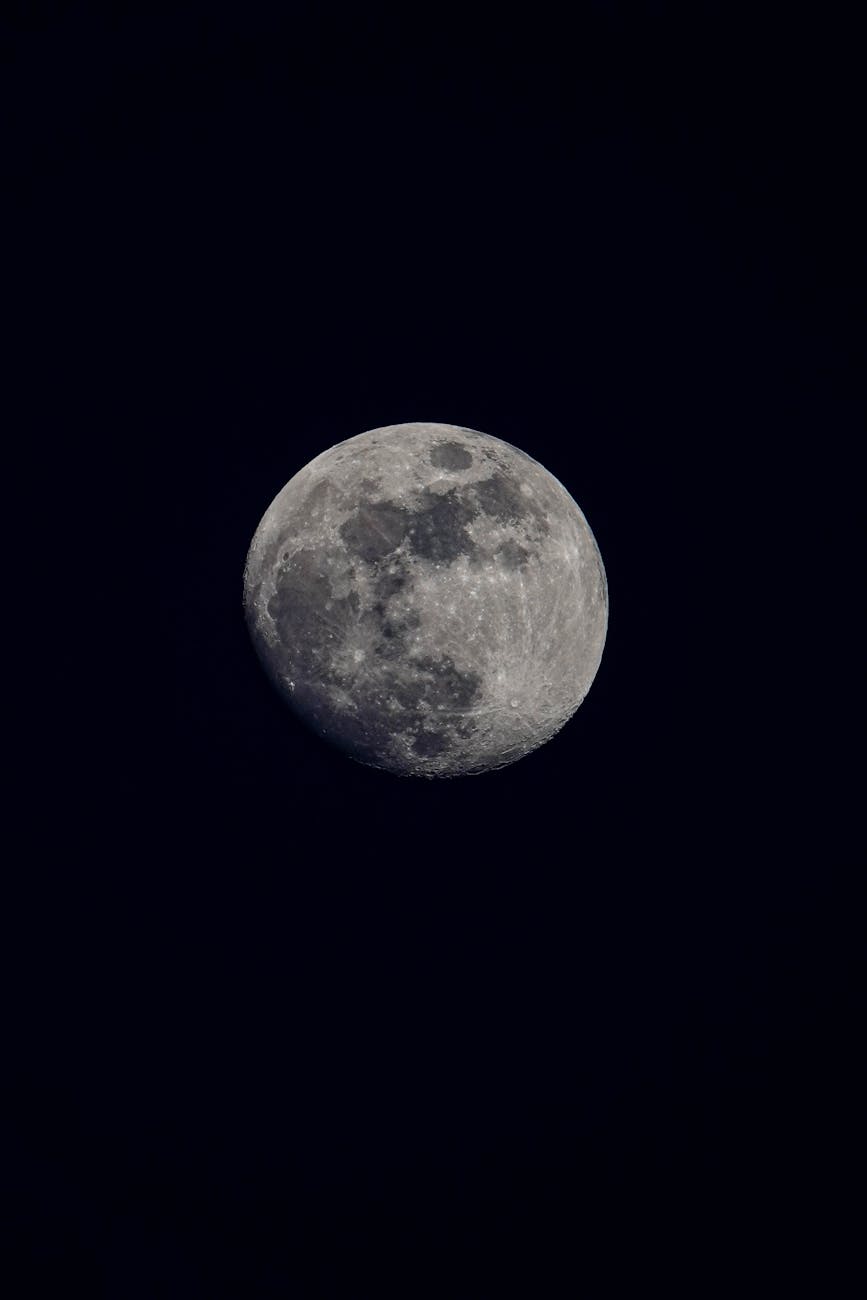
This April the first was marked by a moment that will go down in the history books. Tens of thousands of people who directed their efforts to building a new generation of spacecraft will see their labours rewarded. People with a vision that looks beyond the horizon have set in train a mission that will demonstrate that we are not confined to this rocky planet. Space – the final frontier. A vast frontier that’s there to be explored. Discoveries await.
By venturing beyond any humans in history, four brave astronauts represent us all. They started their journey in America, but when they look back all they will see is Earth. The dark of space with this lush globe brightly illuminated by our Sun. Ahead is a bright rocky sphere.
Not for one moment should we look upon this Moon-bound space mission as straightforward. There’s one thing that is absolute about the void of space. It’s a hostile environment for humans. Every system that is built into a spacecraft must work as intended. Contingencies need to be planned for every possibility.
This space mission is made possible because of partnerships. Europe[1] , US[2] and Canada working together for a common goal. What is known as the Artemis program aims to make the Moon accessible. To effectively shorten the distance between the Earth and its satellite.
There is a whole world benefit in moving from the Moon as a scientific curiosity to a place where humans can live and work. This is not a binary argument. We must solve our problems on Earth as well as exporting our environment.
Space exploration does help us see our fragile Erath in context. Everything beyond Earth shows no concern for our fate. In fact, it’s imperative that we gain as much knowledge as is possible about the near-Earth environment. A Moonbase is a suitable place to do just that.
My hope is that this remains a fundamentally civil enterprise. Such that the findings derived from the Moon’s exploration are for all humanity. It’s not a place to continue the conflicts that scare our home planet. I maybe idealistic. However, it’s for humanity to frame the rules that will apply on the Moon’s surface. Rules will be needed.
My hope is that this Moon mission goes smoothly and that everyone is returned safely back to Earth. That a new generation looks up at the Moon and sees it less distant. With the experience gained the next Moon mission should be able to go further.








 John Vincent