Challenges of Hydrogen Fuel in Civil Aviation

This week has been a Hydrogen week. It’s great to learn more of the projects that are out there and the ambitions of those developing systems. Hydrogen is a live subject. Looking at the possible pathways for civil aviation to take there’s a myriad of choices. However, when it comes to the fuel for propulsion there are not so many potentials.

It’s surely the case that at some time in the future the use of fossil fuels to propel us across the skies will no longer be acceptable. Even if I’m talking to climate change sceptics the point must be made that fossil fuels are a limited resource. Not only that but the air quality around airports is a matter of concern.

It’s there in our basic education. Water is H2O. It’s that combination of Hydrogen and Oxygen that is essential to life on Earth. So, if we have a process that provides aircraft propulsion by using Hydrogen it should be a whole lot better for the environment than using Jet A1.

The problem is, and there’s always a problem, to carry enough Hydrogen it will need to be pressurised and in liquid form. That means extremely low temperatures, robust storage containers and extensive leak free plumbing.

Today, we have cars on the road that run on liquefied petroleum gas (LPG). It’s a novelty. It’s less harmful to the environment and can cost less. However, LPG systems need regular servicing. The point of mentioning this pressured gas in a transport system is that it has been integrated into regular everyday usage. That’s knowing that escape of even small quantities of the liquefied gas can give rise to large volumes of gas / air mixture and thus a considerable hazard[1].

Any analogy between the car and the aircraft can be forgotten. That said, one or two of the issues are similar. Yes, what happens when an escaped volume of gas / air mixture is ignited?

What scenarios would bring about conditions whereby a destructive explosion is possible?

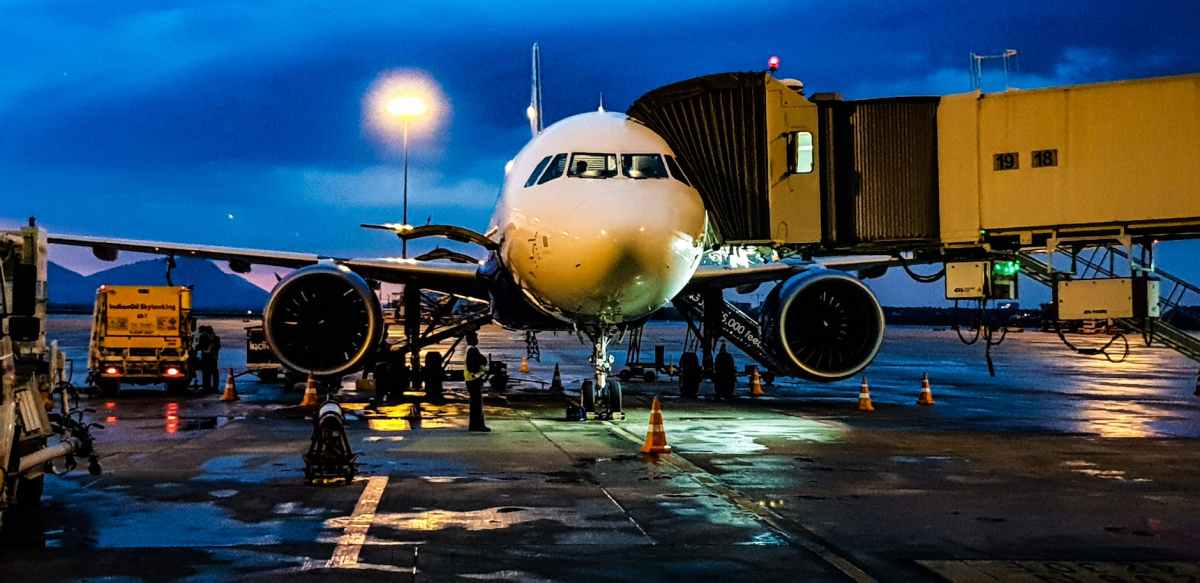
Let’s start with the situations where aircraft accidents most often occur. Take-off and landing are those phases of flight. A surprising number of accident scenarios are survivable. The important part being to get an aircraft in trouble on the ground in such a way that an evacuation is possible. That can mean hitting the ground with a great deal of force[2].

Here’s the matter of concern. An aircraft with large cryogenic tanks and associated complex plumbing hits the ground at a force of many “g”. What then happens? Certainly, pressurised liquefied gas would escape. Being a very light gas, the uncontained Hydrogen would rise rapidly. However, trapped amounts of gas / air mixture would remain a hazard. Would that be ignited?

There are a lot of unknowns in my questions. Although there are unknowns, any post impact situation is likely to be very different from a situation with a conventionally fuelled aircraft.

Today’s, burn through requirements ensure that an external fuel fire is held back. Thereby ensuring enough time to evacuate. For a hydrogen aircraft ventilation may be essential to stop build-up of a gas / air mixture inside a fuselage. That means a whole different approach.


[1] https://youtu.be/AG4JwbK3-q0

[2] https://skybrary.aero/accidents-and-incidents/b772-london-heathrow-uk-2008

Short

Daily writing prompt
What is one thing you would change about yourself?

I’m not going to do a deep dive on this question. Instead, I’ll be remarkably superficial. It’s part of my family tree. Generally, Vincent’s, or at least my variety of that linage, are not tall people.

Believe me there are advantages in being short. For a start, I can fit happily into most aircraft seats while watching others wriggle uncomfortably. When a photographer says, tall people at the back, short people at the front, I’m always in the frame. Squeezing into awkward spaces can be useful now and then.

Wouldn’t it be nice to be a couple of inches taller? I think so. I don’t want to be a lanky six-footer who crashes against any low roof beam. No ambition to play basketball. Or to pick apples without a step ladder. An inch or two would be handy. Size does help when standing at a lectern trying to look authoritative. In a line-up of colleagues or business acquaintance hight often seems magnified.

Put aside everything I’ve said. Because whatever the numerical facts, I am me. No way would I ever think of buying those shoes that elevate. Never would I let myself be intimated by the hight of others (mostly). And I’m no Napoleon.

And by the way Randy Newman[1] was being ironic and sending up prejudice.


[1] https://youtu.be/8bfyS-S-IJs

Light

Daily writing prompt
Are you more of a night or morning person?

Travel with the light. Be awake when the light shines bright. My clock does vary from summer to winter. As the seasons shift so the moment of morning changes. That comes with being up at our comfortable northern latitude.

My megapixels eyesight picks up any hint of the rising Sun. Every day, I like to celebrate Ra’s[1] daily journey across the sky. Light and life are one and the same. The Sun provides life and heat as it banishes the dark of night. We are solar powered.

How could I be anything other than a morning person? Almost medieval, the night is a place of hostile forces and mysterious unknowns. I like to see with full resolution the colours of the universe and all its glory.

Moods swing. To me, most emotional harmony is to be found in sunlight. Even on a dull wet cloudy day when morning creeps slowly into consciousness. That’s still better than watching the Moon’s sombre glow or a distant star set against the emptiness of space.


[1] Of Egyptian mythology fame

Microwave

Daily writing prompt
What technology would you be better off without, why?

Not such an easy question to answer. Most technologies are a two-edged sword. That is that they have both benefits and costs. Advantages and disadvantages. Good uses and bad uses.

And technology itself is usually agnostic. It’s more about how we use it rather than what it is. It’s the application of technology that is of greatest concern. That puts the question back on us. Add to that the fact that technology is not only the new stuff. Achimenes Screw[1] is technology. Archimedes was one hell of a classical technologist. Equally, I could call him a scientist or engineer. Innovator or problem solver.

Let’s put global considerations aside. The question is a personal one. My assumption being that the question is about the rapid removal of a named technology from my life. One of the three wishes I might ask of a friendly genie.

So, I’m going for the Microwave cooker. Reason being that it makes it easy to eat too much chilled highly processed food. The trend is towards more and more convenience[2]. Time poor becomes health poor. Maybe that’s a big reason why “big” is becoming a problem.


[1] https://www.scientificamerican.com/article/lift-water-with-an-archimedes-screw/

[2] https://www.gov.uk/government/news/new-data-reveals-the-nations-changing-tastes

Time

Daily writing prompt
If you didn’t need sleep, what would you do with all the extra time?

Easy. Lot’s more time for social media. No! I joke. I’ve worked hard to resist accumulating hour after hour of screen time. But that addiction will carry a lot of people through an endless night.

Sleep is a luxury. It’s a wonderful restorative time. I’m glad we don’t hibernate like a bear. That would be too much life spent out of touch with the spinning globe. It would be sad if a meteor hit the Earth while I was slumbering. Although, what world I know?

If our bodies were equipped to live without sleep, we’d be machines. Even machines need down time for maintenance. Best resist doing anything productive with that extra time. Maintenance of the mind and body will always be needed. So, better spend that extra time in an activity that keeps the whole person together and sane.

By the way, when I wrote: sleep is a luxury. I was channelling John Cooper Clarke[1]. His line was that not getting sleep is a quick preview of death.


[1] https://johncooperclarke.com/

Societal Change and AI

Societal change is inevitable. It seems hack to analogise with reference to the printing press. Look what happened, an explosion of communication. Dominance of the book for centuries. Expanding literacy. Progressive shaping of society resulting in this era.

We are only where we are because we stand on the shoulders of the giants who went before[1]. Not just the giants. There is massive amount of human contribution that is never accounted. The unseen heroes and the occasionally rediscovered thinkers and doers.

Along the way of history those who battle the battle of glass half full or glass half empty chatter away. We are either in a glorious age or a minute away from Armageddon. Polar ends of our future, both stories have merit. Who has a crystal ball that works?

I’ve been aware of neural-networks and joked about Bayesian Belief Networks for at least two decades. Having been involved in the business of data analysis that’s no surprise. Even so the rapid advance of a multitude of different forms of artificial intelligence (AI) is a surprise.

Talking generally, we have this foolish mental picture of the world that everything is linear. Progression from one state to another takes proportionate steps forward. It’s a hangover from the analogue world which is where we were until the 1960s/70s.

This fetish for straight lines and normal curves is deeply embedded. It’s odd. Although a lot of rules in nature do have a linear form, one that Sir Isaac Newton would recognise, there’s far more that follows other rules.

In the last few weeks this fetish played out at a global scale. We are all treating climate change as if it’s a water clock. Drip, drip by drip the climate changes. A reaction to a progressive degradation. Yet, environmental reality might have a step change in degradation ahead.

In my view it’s right to try to vision ahead about the path AI technology might take. It’s right to consider more than progressive development and evolutionary change. Information systems have a habit of either falling into disuse or marching on at the pace of Moore’s law[2].

Another example. The math of Fourier transforms has been around a long time. Doing Fast Fourier Transform (FFT) in the 1970s required a couple of chunky cabinet full of power-hungry electronics. For the few, not the many. Today, every smart phone[3] in the world can crunch FFT algorithms. For the many, not the few.

Can we use a simple graphical representation to say where AI is going[4]? Will “intelligence” double every year or two? Well, I suspect that developments will go faster than a doubling. Like Moore’s law these conditions tend to become self-fulfilling. It’s a technological race.

[Why? To a machine there’s no sleep. To a machine there’s 86,400 seconds in a day. Everyone is meaningful and useful. To a complete and successful electronic machine only a tiny fraction of its operating time needs to be spent fixing itself. Or that might be one job left to us.]

POST: The impact of this high speed race makes interesting study U.S. Should Build Capacity to Rapidly Detect and Respond to AI Developments – New Report Identifies Workforce Challenges and Opportunities | National Academies


[1] Sir Isaac Newton, English scientist, “If I have seen further, it is by standing on the shoulders of giants.”

[2] https://www.asml.com/en/technology/all-about-microchips/moores-law

[3] https://www.bbc.co.uk/news/business-38320198

[4] https://www.nature.com/articles/d41586-024-03679-6

John Gray’s Critique

If a dose of despondency is your Sunday morning tipple, I recommend BBC Radio 4’s “A Point of View[1]”. I often catch it as an alternative to listening to the driving rain bashing against the window as I wake-up on a Sunday morning.

What I dislike the most about John Gray’s analysis is that it dismisses all the hard-working people who daily strive to make the world a better place. I know, you are asking who John Gray is and what does he know? Well, he’s a British philosopher and author of a pile of serious books. He dabbles in political thinking and doom mongering.

On Sundays in the past, I relied heavily on Will Self creating an air of depressed inevitability that all the bad things about humans will eventually overcome us. A dower British journalist and political commentator who always seems to see the dark cloud instead of the silver lining.

Despite the grim tales of these speakers, they often have, lost in their rhetoric, a smidgen of wisdom. This morning John Gray argues that we need a new response to the growth of the right-wing charlatans who are rapidly climbing the greasy pole of national political life.

Naturally, a lot of us thought that’s what the UK General Election last July was all about. A reoccupation of the centre ground of British politics by the Labour Party. A renewed liberal democratic political consensus would emerge and save us all. Strangely, it doesn’t seem to be working out that way. Although, it might be a bit harsh to judge after only a few months.

Last night, I watched the second episode of the BBC’s period drama Wolf Hall[2]. My God, it’s good entertainment. A little heavy in places. Sharp and brilliantly executed. That last word being the key one. Tudor history is a reminder of how vicious political manoeuvring can be. Having a master, a King, who is determined to make the world turn around him and no one else.

So, should I agree with the likes of John Gray? That a darkness slithers around in human hearts. That we’d better be prepared, shake-off the status-quo and look for new ways to head-off the marketing men’s populist politics. Voiced by bombastic demigods and radical twerps.

He’s right in the sense that today’s politics is behind the curve. British political parties were forged in a different age. Largely, baring the virtues they espouse, they are outdated. Sure, fairness, liberty, and equality have not fallen out of fashion. But maybe the language surrounding them belongs in the 19th and 20th centuries.

One thing is for sure, Willo the Wisps, like Kemi Badenoch offer nothing new. Reform is just a cover for the populist worst of human nature. Yes, we do need someone to break new ground in British politics.

Oh, for a more cheerful Sunday morning.


[1] https://www.bbc.co.uk/sounds/play/m00254hz

[2] https://www.bbc.co.uk/iplayer/episodes/m002473m/wolf-hall

Labour’s IHT Policy: A Threat to Family Farms?

Labour is driving down a road it’s driven before. It’s a shame when the two biggest political parties in Britain are so captured by their past that they can no more look forward than a duck can master arithmetic.

Post Second World War the country was broke. Rising taxes were inevitable to pay down debt. The British State was far more directly involved in everyday economic decisions than it is now.

Inheritance Tax (IHT) got its status as a loathed tax partially because of the necessary actions of the post-1945 Government. At that time, “estate duty” was increased to 80%. This generated increase tax revenue but led to the breakup of large country estates up and down Britain. Ironically, the breakup of country estates created an opportunity for some tenant farmers. As the estates were sold off in lots so tenants could become owners, if they could raise the finance.

So, you might say farmers paying IHT at 20% isn’t so bad by comparison. The amount of generated increase tax revenue isn’t much. With one hand the Government is subsidising farmers and with the other hand it’s taking a cut of their lifetime acquired assets.

Another side of the coin is the cost-of-living crisis. Certainly, winter heating costs have been a matter of great concern for a lot of people. Food too is an absolutely essential expense. Hence, the growth of food banks in every part of the country. This shouldn’t be accepted as the norm.

All of this is happening at a time when the nation’s supermarkets are making healthy profits. Keeping cheap food on the shelves with, in some cases, the philosophy of sell it cheap and pile it high. Industrialised and highly processed food coming in at the lowest prices to the customer. At the other end of the supply chain, forcing down farm gate prices.

You would think that getting national food production, the job done by farmers, right would be an imperative for Government. You would think that a regular dialogue with farmers might be quite important. Wouldn’t you?

The problem with Labour’s 20% IHT and the threshold of 1 million is that it’s not going to have much impact of those who own large country estates to avoid other taxes, like CGT. It’s not going to have much impact on large corporate agricultural enterprises. It may not even have much overall impact on land prices. Afterall, they don’t make it anymore.

But it’s going to clobber small and medium sized enterprises, very often family farms. It will clobber far more than the Treasury’s last-minute calculations say[1]. The reason is clear. The profitability of family farming has been dire over recent years. Add a new tax bill and selling-up will be the most attractive option for many potential next generation farmers.

Then the question must be asked what’s it all about? What are the values underpinning this policy? There I go back to the start. Does Labour perceive these working people as “rich”. Their logic may go, why shouldn’t the rich pay more after the Conservative Government that they supported has made such a mess of the country? One way of seeing where we are.

Trouble is that they have aimed at the wrong target.


[1] https://www.channel4.com/news/how-many-farmers-will-have-to-pay-inheritance-tax

Daily writing prompt
Beach or mountains? Which do you prefer? Why?

Even if I wanted to answer “mountains”, I couldn’t. You see my early years were spent paddling on the Dorset coast. Not that I’ve got anything against breathtaking mountain walks.

I did all the classic summer things a boy might do in the 1960s. Ride donkeys and build sandcastle on Weymouth beach. Tried stop the tide coming in. That never worked. Ice cream and newspaper wrapped fish and chips. Picked-up seaweed and shells in Swanage.

Idyllic. Not always. Dad driving around forever trying to find a parking space in Bournemouth. Stuck in sweltering hot traffic jams around Corfe Castle[1]. Sunburn.

For me, favourite of all was Studland Bay[2]. Wide open spaces and rolling sand dunes. Those were summer moments that flashed by but last forever in the deep corners of my mind.


[1] https://www.nationaltrust.org.uk/visit/dorset/corfe-castle

[2] https://www.nationaltrust.org.uk/visit/dorset/studland-bay

Daily writing prompt
If you could meet a historical figure, who would it be and why?

It’s one thing to have the fancify idea that just as in “Bill & Ted’s Excellent Adventure[1]”, I’d be able to talk to anyone but that’s just not on. I might meet Socrates, or some other great classical mind and ask questions about the meaning of life.

Let’s face it, nice idea but we wouldn’t understand a word we said to each other. There’s also that divide between the analogue and digital world. Technology 21st Century types take for granted would seem like magic stepping back a century. Thus, dude it’s the modern age where I’d focus attention. Set the dial on my time machine.

Let me go for Richard Feynman[2]. I’d ask how do you communicate complex ideas and make them seem not so complex? Then afterwards I’d be stuck with the dilemma that often strikes. Well, I thought I understood what he was saying but now I’m not so sure.

Strange that Bill & Ted went on their adventure the year Feynman passed on. That year, I was figuring out the space between the analogue and digital world.

If Feynman was busy, I’d go for Carl Sagan.


[1] https://youtu.be/oUDIBzecP1I

[2] https://www.nobelprize.org/prizes/physics/1965/feynman/biographical/