Safety Differences

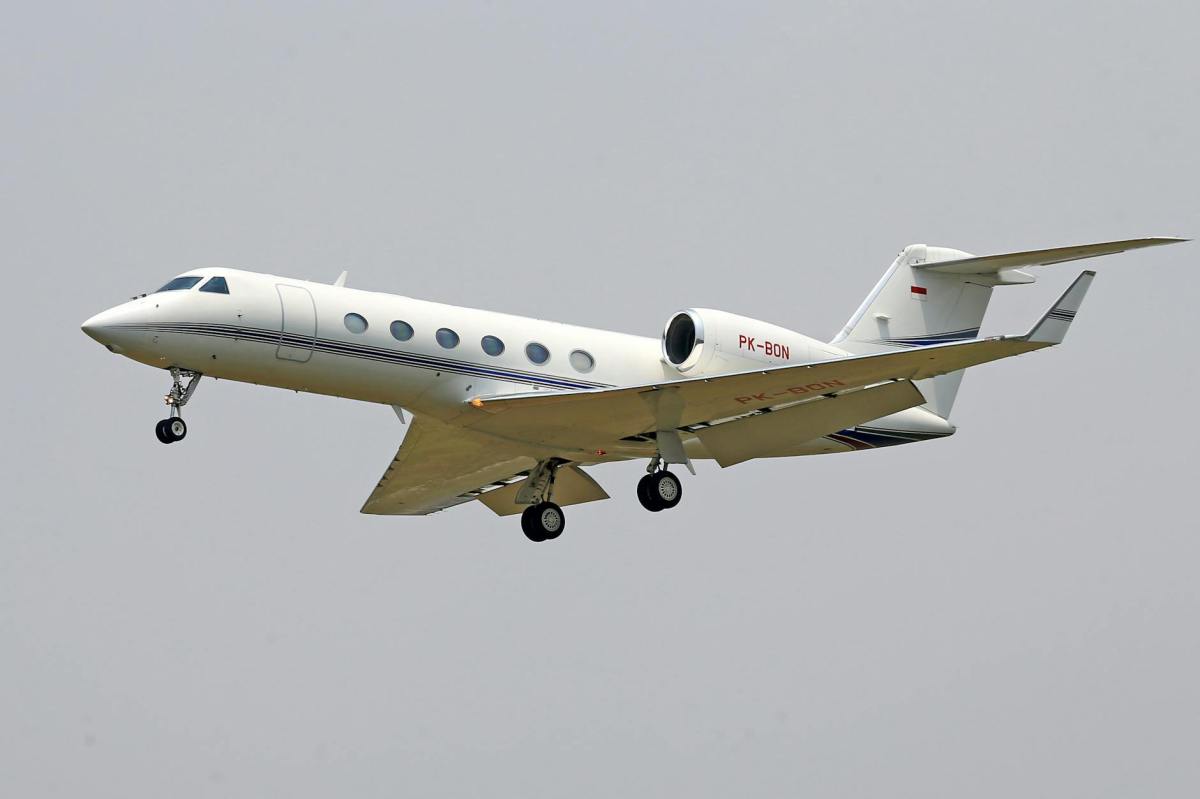
Are the safety standards for all large aeroplanes the same? No, they are not. I’m never sure if the public naively expect this to be the case. I’m sure it’s not something that goes through the mind of every air traveller. Looking up at an aeroplane, flying overhead, this is not a thought that instantly comes to mind. Even watching them take-off and land at a busy airport.

A large aeroplane is a large aeroplane – surely. Well, not exactly. Several issue come into play when addressing the safety standards for large civil transport aeroplanes. For example, when did the type of aeroplane first go into service? What is it being used for? Where is it flying to? How many people are on-board?

One place to start with any discussion on this subject is with the basics. For a start an aeroplane is heavier than air and its power driven. Immediately, two important factors pop out of that definition. One: weight counts. Two: operating engine(s) are needed.

Almost lost in the mists of time are the reasons for dividing the world of transport aeroplanes into two categories. Simply called – large and small.

Underlying this basic categorisation is an historic assumption. This is an assumption upon which civil aviation safety regulation has been built. Namely, that efforts need to be made to ensure large aeroplanes are safer than small aeroplanes. One way of looking at this is to consider a spectrum of risk, and several parameters of concern.

Let’s start with the question above – what is it being used for? A transport aeroplane can be used to carry cargo or passengers, often both. The number of crew and passengers carried can range from 1 to 850[1]. In fact, for large aeroplanes, there’s no upper limit written into international standards. However, the term “very large aeroplane” is coined for the upper end of weight or passenger numbers carried. Sadly, the very largest of these very large aeroplanes (cargo), the Antonov An-225 Mriya, was destroyed by war.

Although, a matter of primary concern is the number of passengers carried, and therefore at risk in the event of an incident or accident, the main dividing line in the regulatory landscape between large and small aeroplanes is weight.

To some extent this has a foundation. It could be viewed that in the event of an incident or accident any resulting impact will be more severe the greater the weight of the aeroplane. This is where a parameter called the MTOW, or Maximum Take-off Weight, comes in. This number includes the total weight of an aeroplane, crew, fuel, passengers, and cargo.

Today, we divide the world of large and small aeroplanes based on MTOW. Yes, the maximum number of passengers that can be carried comes into the equation too. The question I have is, should that be the number one consideration?


[1] https://www.airwaysmag.com/legacy-posts/top-10-largest-passenger-aircraft

Exploring Airworthiness Knowledge

How many good books are there on aircraft airworthiness? I don’t suppose a lot of people are going to ask that question. General introductions to airworthiness are not necessarily bedtime reading. This thought came to my mind, this week, because I had some time to kill in a library. A particularly technical library in London[1]. It’s at the Institute of Engineering and Technology (IET).

Sited in a grand building on the banks of the River Thames. Savoy Place, as the name suggests, is next door to the famous hotel of the same name. What marks it out is a large statue, not of some long-forgotten stage actor or army general, but that of Michael Faraday[2]. His contribution to the modern world is enduring and undeniable.

I’ve been a member of this august engineering institute since my student days in the early 1980s. Then it was known as the IEE. One “E” being for Electrical. Our lectures encouraged us students to join and once done so they have us for life. Members worldwide have access to their books, databases and standards.

I could draw a thread between Faraday’s work and 21st century aviation. It’s a mighty wide thread and one that’s growing all the time. There are so many aspects of electromagnetism embedded in aviation. For example, without electric motors and servos, we’d still be controlling aircraft with strings and wires. Fine, hydraulics play their part too.

Technology has moved on. It continues to move. Electrification is displacing hydromechanical systems. The age of electric propulsion is getting closer as developers experiment with a myriad of different configurations of motors for different new aircraft types. More and more electrical power is needed to make modern aircraft tick.

In the IET’s library there are a few books with the word “airworthiness” on the cover. It’s a distinct niche. More often technical references contain huge amounts of material that concern or impact airworthiness, but the word itself is reserved for the more discerning.

One I picked off the shelf was “Airworthiness: An Introduction to Aircraft Certification and Operations” by Filippo De Florio[3]”. For me it’s full of familiar material. I was surprised at the level of detail and range of coverage. In its latest version, it’s reasonably up-to-date too.

One book that was not on the IET’s shelf is “Initial Airworthiness: Determining the Acceptability of New Airborne Systems” by Professor Guy Gratton. I believe he’s updating this book now.

There was a copy of “Aircraft System Safety: Assessments for Initial Airworthiness Certification” by Duane Kritzinger. Again, for me it’s full of familiar material.

Another book that was not on the IET’s shelf is “Aircraft Continuing Airworthiness Management: A Practical Guide for Continuing Airworthiness Engineers” by Daniel Olufisan.

What I’m wondering now is how many other contemporary books are there on this subject. That is up-to-date references. Yes, I know I could do a quick search to turn up an easy answer but that tells me nothing of the quality of the publications. All four above are worth a read.

Help me out with some suggestions – please.


[1] https://www.theiet.org/membership/library-and-archives

[2] https://www.faraday.cam.ac.uk/about/michael-faraday/

[3] https://www.amazon.co.uk/Airworthiness-Introduction-Aircraft-Certification-Operations/dp/0081008880

Embracing Uncertainty

Imagine siting under a great wide spreading old oak tree. Acorns falling all around. The ground littered with whole ones, crashed ones and half eaten ones. It’s more the half-eaten hazelnuts that the squirrels leave behind that I’m thinking of. On one of those cool days, like this morning, when the rain has abated and the sun beams are streaming across the glistening fields. It was lower than 2 degrees, early this morning, so a heavy drew rests on the grass and leaves.

Think of title for a book or film that sums up the state of current affairs. I’m tempted to say “All the President’s Men” but that’s been well done in the 1970s. Not only that but the word “scandal” may have lost its meaning. Political fiction and reality are melding into one. Anyway, I don’t want to follow the crowd and obsess about America.

Was there ever an age when prosperity seemed assured and the population was happy. When men and women of honourable intentions and wisdom, judicially ruled the land? Maybe not. Or when it happened, to some limited extent it didn’t last beyond a generation.

Any title for a book or film would have to encompass the persistence of change. Nothing upon nothing ever stands still. In fact, that’s one of the few things I can write that is an absolute. A real natural absolute phenomenon. Everything we know of moves relative to something else and movements mean change. We never breath the same air.

In a storage box of my books there’s a title: “Thriving on chaos[1]“. That’s more to do with an attitude to change. It doesn’t sum up the moment although it does imply that chaos is normal. I’m not going there fully since not all change is chaotic. Life is punctuated with regularity. It’s the traditional saying about death and taxes. Those two are regular occurrences.

A financial crisis or stock market crash or bursting bubble seem to hit us as an unexpected instant of violent change. Unexpected that is until hindsight kicks in and we all wish we’d listed to siren voices. Analysis streams from the outcome of a crisis[2].

A title for a book or film would need to include the recurrent nature of both good and bad consequences. It would need to emphasis our inability to accurately predict what’s going to happen next. That is even if one or two of us may get it right.

All this leads me down the road of a manner of thinking that’s all too common to me. That’s the world of probabilities. Addressing that slippery ell called uncertainty. So, what could be better as a title than: “The Age of Uncertainty.” Oh look, that’s been taken back in the 1970s. What could be better than the title chosen by John Kenneth Galbraith[3]?

He looked at the chaotic but repetitious nature of our common history. Going way back. Unsurprisingly a little cynical and monosyllabic at times. I’ve been rewatching his BBC television series. It’s impressive.

Acorns are falling all around. An unusually large number, this year. Next year – who knows? If I could find some reliable data, I could do some probability calculations based on past seasons. But with certainty, I can say that we are in an age of uncertainty. Acorns will fall. How many – well that’s the question isn’t it.


[1] https://tompeters.com/thriving-on-chaos/

[2] “The Storm” by Vince Cable, the Liberal Democrat politician, looking at the 2008 global economic crisis.

[3] https://www.bbc.co.uk/iplayer/episodes/m002l6sc/the-age-of-uncertainty

Why Timely Aviation Safety Reporting Matters

Waiting for accident reports can be frustrating. I’ve found this to be the case in past experiences. When a major fatal aviation accident happens the demand for information is exceptionally high. That means that every credible source of information will be drawn upon.

I don’t think anyone expects professional aviation accident investigators to come up with instant answers. Extensive and meticulous work is required to arrive at detailed findings. When it’s possible accident investigators publish interim reports to ensure that relevant information becomes generally available.

Countering this reality is the need to ensure that the aviation system is not operating at elevated risk during the period that investigation is being conducted. Information needs to flow to those who are empowered to take corrective action.

Given the nature of international civil aviation, accidents can occur anywhere at any time. There’s no rule, statistical or otherwise, that can stop these extremely rare events occurring. Much as it’s fine to promote an ambition for zero accidents, it’s not going to happen.

The frustration I’ve pointed to is shared by industry and authorities. As time goes by the level of speculation and misinformation always increases where there is an absence of verifiable facts. There’s always a need for industry, authorities and investigators to cooperate. As often each one will have a part of the jigsaw that when put together describes what happened.

For all sorts of reasons, this necessary cooperation does not always exist or exist as a smooth pathway to resolving a situation and initiating corrective action. Where barriers exist and delays accumulate the collective aim of assuring aviation safety is harmed.

The International Air Transport Association (IATA), at their recent conference, highlighted this as being a significant issue[1]. There are international standards, but these standards are not always applied in the manner with which they were intended. It seems obvious to say. It’s essential to learn safety lessons and take corrective action as soon as it’s humanly possible.

Where sufficient resources are an issue then there must be cooperative arrangement to allow others to help. It’s by sharing expertise and equipment that the time between occurrence of an event and the implementation of risk reduction measures can be reduced.

Risk reduction measures do not always need to be the final measure. There are the conventional strategies for addressing aviation safety risk – reduce, eliminate or mitigate. Even if publication of a final accident report is a year or more away, there’s often much that can be done in the interim.

Bureaucratic protocols, political sensitivities and commercial interests are real. However, most governments have signed up to obligations within the ICAO convention and its standards. It’s recognised that timeliness is vital.


[1] https://www.iata.org/en/pressroom/2025-releases/2025-10-14-02/

Recent Aviation Accidents: Lessons Learned, or not

I start from a position of apprehension. Making aviation accidents, documentary style, the subject of a television series does give me some concern. Obviously, there’s the importance of being respectful to those involved. To reveal something that is of genuine public interest.

Accident investigation and journalism seek to answer the six questions – Who, what, where, when, why and how. When it comes to addressing aviation accidents that have occurred in the last 18-months some of the process of investigation may still be ongoing.

My apprehension starts with – what is the purpose of the series? Does it go some way to answering the question – why? That’s especially the case given that word is in the title[1]. Practically the “why” is turned into a probable cause because the “why” can include multiple factors. It’s rare for there to be a lone factor that results in a tragic outcome.

Broadcast last night by the BBC, this series took a selection of the accidents that recently commanded international headlines. The fatal events have been much discussed within informed professional communities and across social media. I’ve written on them too.

[Fatal Boeing 737 Crash in South Korea, Investigating the Black Hawk and American Eagle Collision, Aircraft Safety and Fuel Starvation, Understanding Boeing 787 Avionics.]

We do this to seek to understand. If there are always lessons to be learned, it’s imperative that those lessons be learned without delay. Lack of an informed and timely response exposes the flying public to further risks.

Sadly, a few of the lessons learned in the past have not been translated into change. The fatal accident at Muan International Airport in South Korea is a case in point. Brid strikes are not new. The dangers of flocking birds have been highlighted time and time again. Whilst airports are built near large bodies of water this will continue be a risk. However, it wouldn’t be right to say this is the only cause of the accident outcome at Muan.

Truly tragic are what may be called: avoidable accidents. This is where the event is purely made up of human actions that need not have take the course they took. Processes and procedures were inadequate, and known to be inadequate, for the situation. To me, this is the case of the military helicopter that collided at low altitude with a passenger flight in Washington DC. It’s mystifying as to why past occurrences of near misses didn’t prompt a change to operations.

I’ll say this because it’s not often given credit. A testament to the good design of an aircraft, and the extensive certification work done and the rigorous training of crews, an accident in the Canadian snow did not become fatal. Upon a spectacular heavy landing in Toronto everyone escaped.

On take-off, a London bound, fully loaded Air India Boeing 787 failed to climb. The results were catastrophic in every sense. Not only were all on-board killed but there were multiple fatalities on the ground.  This tragic fatal accident remains mysterious. The published preliminary report is a source of more questions than answers. Facts so far published do not explain the sequence of events.

What connects this spate of aviation disasters? Nothing, that I can determine. Although, there is the importance of lessons learned. They are not that compilation of dusty past accident reports that sit on a shelf. They are a source of everyday learning. That is learning that needs to be put into action. Timely action. Not waiting for a final publication.


[1] https://www.bbc.co.uk/iplayer/episode/m002kw1n/why-why-planes-crash

Trust in Voluntary Reporting

Hard data is immensely useful. Now there’s a surprise. That’s facts and figures. That’s accurate descriptions of occurrences. That’s measurements and readings of important factors. From this kind of data, a picture can be painted of events good and bad. However, this picture is not complete. It’s certainly not complete for any system that involves the interactions of humans and machines.

What’s often less visible is the need for what I might call – soft data. As such it’s not “soft”. I’m just using that loose term to distinguish it. Fine, you could say that social media is littered with the stuff. Vast qualities of instant judgements and colourful opinions. An array of off-the-shelf solutions to life’s ills. That’s all well and good for entertainment. It’s not so useful as a means of getting to the truth.

In civil aviation voluntary reporting systems have been around for several decades. They are not always successful, mainly because there’s a fair amount of trust required to use them when something major happens. When volunteering information there needs to be a level of assurance that the information will not be misused.

The human inclination to seek to blame is intrinsic. We wake-up in the morning, look out the window, and if it’s rainy and windy then someone is to blame. Probably a weather reporter for not warning us of a coming storm. Blame is a way of making sense of negative events without having to do lot of tedious investigation and analysis.

Don’t get me wrong. Accountability is vital. If someone does something unspeakably bad, they must be held accountable. That is a form of blame. Tracing the bad event back to the root cause. If that cause is found to be negligence or malicious intent, then blame can be assigned.

Where a good safety culture exists, as it often the case in civil aviation, then it is wrong to assume that undesirable outcomes can always be linked to a bad actor of some kind.

Human error is forever with us. Even with the absolute best of intent no one is immune from this pervasive creature. It can be illusive. There are environments where owning up to making mistakes is fine. Sadly, I’m sure it’s not uncommon to have worked in environments where such openness is punished. The difference between a good culture and a bad one.

One of my past jobs involved negotiation with a contactor. Every change that we made to a complex contact had a cost attracted to it. So, there was an understandable sensitivity to making changes. At the same time our customer for the product kept asking for changes. There’s nothing worse than being in a tense meeting with a contactor and having my boss pull the rug from under my feet. Seeking to blame a change on my error rather than a customer request. Introducing a voluntary reporting system in such an environment is pointless.

My message here is clear. Voluntary reporting in aviation is a powerful tool. Reports submitted by employees can offer insights that are not available by just looking at hard data. These reporting systems maybe required by regulation or company policy. However, without a good sound safety culture they can be all but useless. A safety culture that is defended and supported by employees and the senior management of an organisation.

Global Ambitions to National Introspection

When did it start? At least in recent times. When did we start looking inward rather than outward? That introverted xenophobia that’s infected about a third of the country. If the polls are to be believed (and that’s a leap).

It’s strange, isn’t it? Britain, a country that spanned the globe with its trading accomplishments went from imagining a transformed world to sitting in front of an iPad complaining about either putting up Union flags on lampposts to taking them down. Painting roundabouts with red crosses or decrying the idiocy of it. Dressing up as crusader knights and thundering on about some lost imaginary England.

Pictures tell a story. Being in the aviation business, a global business, one picture that sticks in my mind involves a handkerchief and a British Prime Minister (PM). It seems a long time ago, now. Nearly 30-years ago. Back in 1997 British Airways (BA) took to celebrating their global coverage by getting international artists to produce new artworks for their aircraft fleet[1]. This was not to the liking of a former PM at the time.

For me this slippery slope was particularly evident. Living in the Surrey town of Reigate. An affluent former Conservative Party supporter, James Goldsmith set-up a new political party dedicated to one issue. The name gives it away. The Referendum Party took to the stage in 1994. Initially, seen as a joke and merely a plaything of a wealthy man, it captured the Member of Parliament for my town. For all the good it did (not), for a couple of weeks in 1997, George Gardiner, the MP for Reigate, joined the new party.

So, the British political mood in 1997 was evident, or so it may have been thought. Nothing of the sort. Of course that was the year of Tony Blair’s Labour landslide victory.

It’s possible to trace a lot of strangeness back to Margaret Thatcher. Although initially internationalist in outlook, she broke a domestic consensus and crushed a lot of hopes. Yes, the country needed radical change. It was the brutality of that change that people reacted against.

In 2001, BA succumbed and returned the Union flag to its tailplanes. Lots of poor excuses were made as to the reason for reverting. A Boeing 747 model and the handkerchief bit back.

Can I construct a thread of events from that moment to the European referendum in 2016? Certainly, there are connections as the country shook off the Blair and Brown years and plunged into a messy 14-years of incoherence. The financial crisis of 2008 didn’t help in the slide to introspection. A government that bailed out the bankers whilst making the population pay did nothing to earn a moral reputation. It further encouraged a growth of a blame culture.

So, if you supported the Referendum Party, the UKIP Party and the Brexit Party that followed, and now the Reform Party surely, it’s possible to see that you are barking up the wrong tree. It’s an empty cul-de-sac. It’s a fruitless orchard. It’s a road to decline.

These are not the heirs to Margaret Thatcher. They are bandwagon hopping con men. Money men who like their pockets lined. They will not help those who have missed out on their share of the country’s prosperity – past, present or future.


[1] https://www.flickr.com/photos/linda_chen/albums/72157625997434719/

Future of Engineering

I do find it astonishing that back in the early 1990s I was still producing handwritten material that then got typed up by a typist. Then, were edits and errors needed correcting, “cut and paste” really meant cutting and pasting paper. Applying Tipp-Ex correction fluid was normal. Wonder who uses that now? It’s still available.

Engineering practice adopted word processing rapidly from that time on-ward. It’s now almost inconceivable that anyone would get someone else to type up their work. Early lap-top computers that weighted heavily on the shoulders, were carried to meetings as necessity but not love. The joys of trying to find a printer that would work was a daily mission.

In about 30-years we’ve gone from that primitive introduction to the digital realm to machines that want to write papers and reports for us. From brick like “portable” computers that required cables and batteries that drained in minutes to the complete world being available on-line anywhere on the globe.

The mechanisms by which engineering design and development were done have advanced in such a way as to make the past seem rather curious. I’m not saying that we’ve become ever cleverer and more inventive with the passage of time, just that the speed of trail and error has increased dramatically.

Past mechanisms did make the ability to change a path, once set on that path, difficult. I remember the reluctance to introduce changes unless an overwhelming case could be made. In this new situation, making changes still has a cost associated with it, but the resistance to change isn’t so much driven by the processes used.

What’s happing, like it or not, is that artificial intelligence’s transformative impact is touching, or will be touching, everything we do. That includes engineering design and development.

I’d say it’s a good time to be an innovator. In theory, it should be possible to explore many more possibilities that could be explored in the past. That is for the same level of cost in time and money. There’s not a single part of engineering practice that will not be impacted. Classrooms, meeting rooms and workplaces where the business of communicating technical ideas and testing them goes on, will be fertile ground for the application of AI.

I don’t think we understand just how transformative the impact will be on engineering. It’s not all upside either. Technology’s promises are great. There are perils too.

AI can only know what it’s been trained on. That maybe extremely extensive. However, innovation comes from creativity and inventiveness where the past may only be a partial guide. Also, there’s the danger of overreliance on these almost magical tools too. New skills must develop to be critical and knowledge of the deficiencies of complex algorithms.

All of this is a bit different from paper, correction fluid, scissors and tape. What an exciting time to be a young engineer.

Regulatory Insights

I can’t remember if my teacher was talking about maths or physics. His scholarly advice has stuck with me. When things get complex, they can seem overwhelming. Problems seem insolvable. So, it’s good to take a deep breath, step back and see if it’s possible to reduce the problem to its most basic elements. Do what could be called helicopter behaviour. Try to look at the problem top-down, in its simplest form. Break it into parts to see if each part is more easily comprehended.

Today’s international aviation regulatory structure, for design and production, follows the arrow of time. From birth to death. Every commercial aircraft that there ever was started as a set of ideas, progressed to a prototype and, if successful, entered service to have a life in the air.

This elementary aircraft life cycle is embedded in standards as well as aviation rules. Documents like, ARP4754(), Aerospace Recommended Practice (ARP) Guidelines for Development of Civil Aircraft and Systems are constructed in this manner. There are as many graphs and curves that represent the aircraft life cycle as there are views on the subject, but they all have common themes.

That said, the end-of-life scenarios for aircraft of all kinds is often haphazard. Those like the Douglas DC-3 go on almost without end. Fascinatingly, this week, I read of an Airbus A321neo being scrapped after only 6-years of operations. Parts being more valuable than the aircraft.

Generally, flight-time lives in operational service are getting shorter. The pace of technology is such that advances offer commercial and environmental advantages that cannot be resisted. Operating conditions change, business models change and innovation speeds forward.

My earlier proposition was that our traditional aviation regulatory structure is out of date. Well, the detail is ever evolving – it’s true. Some of the fundamentals remain. The arrow of time, however fast the wheels spin, mixing my metaphors, remains an immobile reality.

In airworthiness terms an aircraft life cycle is divided into two halves. Initial airworthiness and continuing airworthiness. This provides for a gate keeper. A design does not advance into operational service, along the aircraft life cycle, until specified standards have been demonstrated as met. An authority has deemed that acceptable standards are met.

I’m arguing, this part of the aviation regulatory structure is far from out of date. However much there’s talk of so called “self-regulation” by industry it has not come into being for commercial aviation. I think there’s good reason for retaining the role that a capable independent authority plays in the system. A gate keeper is there to ensure that the public interest is served. That means safety, security and environmental considerations are given appropriate priority.

To fulfil these basic objectives there’s a need for oversight. That is the transparency needed to ensure confidence is maintained not just for a day but for the whole aircraft life cycle. And so, the case for both design and production approvals remain solid. The devil being in the detail.

Aviation Regulations Outdated?

Machines, like aircraft started life in craft workshops. Fabric and wood put together by skilful artisans. Experimentation being a key part of early aviation. It’s easy to see that development by touring a museum that I’d recommend a visit. At Patchway in Bristol there’s a corner of what was once a huge factory. In fact, somewhere where I worked in the early 1980s. Aerospace Bristol[1] is a story of heritage. A testament to the thousands who have worked there over decades.

Fabric and wood played part in the early days. The factory at Filton in Bristol started life making trams. An integral part of turn of the century city life. Carriage work brought together skilled workers in wood, metal and fabrics. It was soon recognised that these were just the skills needed for the new and emerging aircraft industry. The Bristol Aeroplane Company (BAC) was born.

It’s war that industrialised aviation. Demonstration of the value of air power led to ever more technical developments. Lots of the lessons of Henry Ford were applied to aircraft production. Factories grew in importance, employing a large workforce.

My time at the Filton site was in a building next to a hanger where the Bristol Bulldog[2] was originally produced. This was a single engine fighter, designed in the 1920s, in-service with the Royal Air Force (RAF).

Right from the start orderly processes and regulatory oversight formed part of aircraft design and production. The management of production quality started as a highly prescriptive process. As aviation grew into a global industry, the risks associated with poor design or faulty production became all too apparent.

In the civil industry, regulatory systems developed to address the control of design and production as two different worlds. Airworthiness, or fitness to fly, depended on having a good design that was produced in a consistent and reliable manner. So, now we have a regulatory framework with two pivotal concepts: DOA (Design Organisation Approval) and POA (Production Organisation Approval). It took about a century to get here. Now, these concepts are codified within EASA Part 21, FAA regulations, and other national aviation authorities’ frameworks.

Here’s my more controversial point. Is this internationally accepted regulatory model, that has evolved, conditioned by circumstances, the right one for the future? Are the airworthiness concepts of DOA and POA out of date?

This is a question that nobody wants to hear. Evolution has proved to be a successful strategy. At least, to date. What I’m wondering is, now the world of traditional factories and large administrative workforces is passing, how will regulation adjust to meet future needs?

Maybe I’ll explore that subject next.


[1] https://aerospacebristol.org/

[2] https://en.wikipedia.org/wiki/Bristol_Bulldog