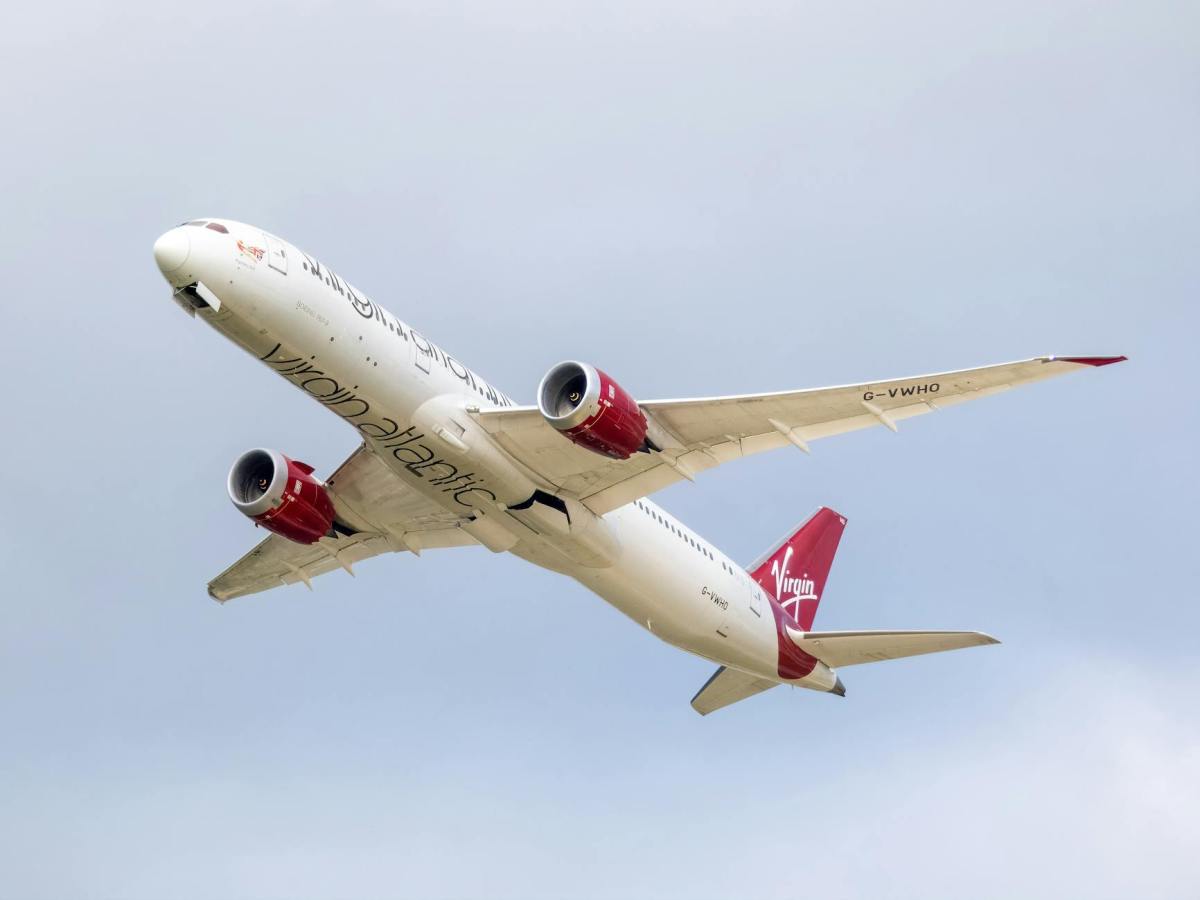
Why Timely Aviation Safety Reporting Matters

Waiting for accident reports can be frustrating. I’ve found this to be the case in past experiences. When a major fatal aviation accident happens the demand for information is exceptionally high. That means that every credible source of information will be drawn upon.

I don’t think anyone expects professional aviation accident investigators to come up with instant answers. Extensive and meticulous work is required to arrive at detailed findings. When it’s possible accident investigators publish interim reports to ensure that relevant information becomes generally available.

Countering this reality is the need to ensure that the aviation system is not operating at elevated risk during the period that investigation is being conducted. Information needs to flow to those who are empowered to take corrective action.

Given the nature of international civil aviation, accidents can occur anywhere at any time. There’s no rule, statistical or otherwise, that can stop these extremely rare events occurring. Much as it’s fine to promote an ambition for zero accidents, it’s not going to happen.

The frustration I’ve pointed to is shared by industry and authorities. As time goes by the level of speculation and misinformation always increases where there is an absence of verifiable facts. There’s always a need for industry, authorities and investigators to cooperate. As often each one will have a part of the jigsaw that when put together describes what happened.

For all sorts of reasons, this necessary cooperation does not always exist or exist as a smooth pathway to resolving a situation and initiating corrective action. Where barriers exist and delays accumulate the collective aim of assuring aviation safety is harmed.

The International Air Transport Association (IATA), at their recent conference, highlighted this as being a significant issue[1]. There are international standards, but these standards are not always applied in the manner with which they were intended. It seems obvious to say. It’s essential to learn safety lessons and take corrective action as soon as it’s humanly possible.

Where sufficient resources are an issue then there must be cooperative arrangement to allow others to help. It’s by sharing expertise and equipment that the time between occurrence of an event and the implementation of risk reduction measures can be reduced.

Risk reduction measures do not always need to be the final measure. There are the conventional strategies for addressing aviation safety risk – reduce, eliminate or mitigate. Even if publication of a final accident report is a year or more away, there’s often much that can be done in the interim.

Bureaucratic protocols, political sensitivities and commercial interests are real. However, most governments have signed up to obligations within the ICAO convention and its standards. It’s recognised that timeliness is vital.


[1] https://www.iata.org/en/pressroom/2025-releases/2025-10-14-02/

Recent Aviation Accidents: Lessons Learned, or not

I start from a position of apprehension. Making aviation accidents, documentary style, the subject of a television series does give me some concern. Obviously, there’s the importance of being respectful to those involved. To reveal something that is of genuine public interest.

Accident investigation and journalism seek to answer the six questions – Who, what, where, when, why and how. When it comes to addressing aviation accidents that have occurred in the last 18-months some of the process of investigation may still be ongoing.

My apprehension starts with – what is the purpose of the series? Does it go some way to answering the question – why? That’s especially the case given that word is in the title[1]. Practically the “why” is turned into a probable cause because the “why” can include multiple factors. It’s rare for there to be a lone factor that results in a tragic outcome.

Broadcast last night by the BBC, this series took a selection of the accidents that recently commanded international headlines. The fatal events have been much discussed within informed professional communities and across social media. I’ve written on them too.

[Fatal Boeing 737 Crash in South Korea, Investigating the Black Hawk and American Eagle Collision, Aircraft Safety and Fuel Starvation, Understanding Boeing 787 Avionics.]

We do this to seek to understand. If there are always lessons to be learned, it’s imperative that those lessons be learned without delay. Lack of an informed and timely response exposes the flying public to further risks.

Sadly, a few of the lessons learned in the past have not been translated into change. The fatal accident at Muan International Airport in South Korea is a case in point. Brid strikes are not new. The dangers of flocking birds have been highlighted time and time again. Whilst airports are built near large bodies of water this will continue be a risk. However, it wouldn’t be right to say this is the only cause of the accident outcome at Muan.

Truly tragic are what may be called: avoidable accidents. This is where the event is purely made up of human actions that need not have take the course they took. Processes and procedures were inadequate, and known to be inadequate, for the situation. To me, this is the case of the military helicopter that collided at low altitude with a passenger flight in Washington DC. It’s mystifying as to why past occurrences of near misses didn’t prompt a change to operations.

I’ll say this because it’s not often given credit. A testament to the good design of an aircraft, and the extensive certification work done and the rigorous training of crews, an accident in the Canadian snow did not become fatal. Upon a spectacular heavy landing in Toronto everyone escaped.

On take-off, a London bound, fully loaded Air India Boeing 787 failed to climb. The results were catastrophic in every sense. Not only were all on-board killed but there were multiple fatalities on the ground.  This tragic fatal accident remains mysterious. The published preliminary report is a source of more questions than answers. Facts so far published do not explain the sequence of events.

What connects this spate of aviation disasters? Nothing, that I can determine. Although, there is the importance of lessons learned. They are not that compilation of dusty past accident reports that sit on a shelf. They are a source of everyday learning. That is learning that needs to be put into action. Timely action. Not waiting for a final publication.


[1] https://www.bbc.co.uk/iplayer/episode/m002kw1n/why-why-planes-crash

The Legacy of Beeching

Two hundred years is a long time. No, it isn’t. William the Conqueror, that’s the sort of name politicians crave, called for the building of Windsor Castle in England. That means, almost but not quite, a thousand years of continuous use. I guess in 2070 there’ll be a big celebration of the achievements of the Normans. Certainly, seemed to impress US President Trump.

If I had a time machine one of the destinations that I’d consider is 1963 and maybe 1965. I’d take a mass of press clippings and audio recordings about inadequate rural bus services and the high-speed railway saga (HS2).

History has a way of condensing a whole succession of events into a few simple words. William was a conqueror, but 1960’s civil servant Beeching was an axeman. That can be said to be unfair, since he was mandated to produce a report and, in the context of the times, British railways seemed like they had overexpanded and wouldn’t be brought back into profitability.

This happened when I was a child. I can just remember on my way to primary school stopping at a railway crossing and waiting a steam train to pass. It could have been the milk train. At that time milk was transported from west country dairy farms, in churns, to the local milk factory. Then loaded onto a London bound train. All this activity disappeared as I grew up. It was displaced by road tankers forcing their way along country roads.

I was born in a small Somerset railway town. Got my first pay packet in that small railway town. Had a couple of weeks of my engineering apprenticeship in the former railway shed. Spent time in the small motorcycle shop next to the railway embankment.

Beeching’s reports resulted in thousands of stations and thousands of miles of railway line being closed. The Somerset and Dorset (S&D) railway line was one of those that vanished. It was on 6 September 1965, the consent for closure was issued for most of the railway line.

Strangely, it was a newly elected Labour government that promised to reverse railway closures that closed the railway. A campaign to save the line was lost. Now, I think, what if, what if the new government of 1964 had not been so beguiled by modern road building and the white heat of technology. The internal combustion engine and purveyors of tarmac had won the day.

My message is to commission reports with a wider remit than merely improving economic efficiency. It’s a concern that is as ap today as ever it was. State of the art technology is alluring. Sloganising it’s easier to say that we are moving forward to a new dawn than it is to say we will update and improve the machinery we already use. There are good cases for scrapping past ways and means. Surely, it’s as well to try to look beyond immediate pressures.

Had Beeching’s axe not been so readily swung then we’d have an alternative to ever more road building and the billions ploughed into it. Remember those feeble promises to invest in local busses to replace the lost trains. How such recommendations are so quickly forgotten.

What will we say about robotics and artificial intelligence in 60-years’ time. Or even 200-years’ time. If we are still here.

Exploring the Greatness of Great Britain

What’s great about Great Britain? GQ has asked this question[1]. Produced a nice article that looks at this subject with a cultural eye.

It’s a bit retro. When we (Brits) start talking about how great pubs are there’s a tendency to forget how many we have lost in the last decade. If we loved them so much, then more would have survived crushing economic pressures.

Brit pop was a wonderful surge in creativity that swept across the country in the 1990s. It was good – mostly. Riding that wave, because we are romantic souls about the past, are the band Oasis with their multimillion £ world tour. Accounts of which are tremendously positive.

I think I can take a position about what’s great about Great Britain. Having lived in Germany and travelled a bit, my perspective isn’t too insular or defensive.

Because we are no longer the world’s premier power and imperialism is a fading memory, we’ve shed the stiff upper lip and bowler hatted civil service bureaucrat image. It’s there in film and television to remind us of former times. It’s few who want to return to all that deep seriousness.

That seriousness is the burden that the US carries. If they send a gun boat somewhere it means business. For Brits it’s more a symbol of still being on the stage. Don’t get me wrong, as a country we box way beyond our size.

For all the right-wing jerks who parade around with false patriotism, our great strength is diversity. Having that legacy of the world map once having been painted in a great deal of red, we can now engage with multiple cultures and benefit from them all.

Number one of the lists of inherited advantages is being able to speak to the world. Not in their language but in ours. English doesn’t belong to the English any more, it belongs to the world. They amount to a lot; the times I’ve had fun reading Brussels English and being amazed at how it’s being used.

Pick a discipline. Science, technology, humanities, art, entertainment, there’s always a Brit that can be named as shaping the world. Influencing others and providing a spark that sets off a flame.

Now, being more parochial, I’ll look around me, in this town, and see a diversity of styles from punks who never stopped being punks to suited tie wearing customer service executives. Welly booted farmers in the town for a day to young gamers stuck to their small screens.

Sport is another anchor. If we (Brits) didn’t invent it, then it’s a derivative of something we did invent. Top that with the eccentricities from international tiddlywinks[2] to stone skimming. Despite the school of hard knocks we still value fair play.

Comedy is taking a downturn, but the British legacy is monumental. Irreverent, rebellious or intricate, often all three, even if we (Brits) do invite in the bland factory-made stuff from the US. In a unregarded small corner there’s a someone writing hysterical lines waiting to be discovered.

So far, as a nation, 2025 won’t go down in history as our best year. I’ve every faith that the best is still yet to come. Unlocking that dynamic zest, that quirky imagination, that complex amalgam happens several times every decade. Let’s hope the spark is just about to be set off.


[1] https://www.gq-magazine.co.uk/

[2] https://iftwa.org/history-of-iftwa/

Political Intervention by Billionaires

I’ve heard several people downplay the political intervention of the world’s richest man. This last weekend, he chose to address a large gathering of right-wing activists in London. Not there on the streets, but remotely by video. From another part of the globe.

It’s almost as if some media commentators are treating him as a naughty boy – nothing to see here, boys will be boys. What do you expect? Never mind, this is just what he does.

What comes to my mind is part of my student life in the late 70s / early 80s. Coventry is a great English city. Its football team has had more than a few ups and downs. What I remember is a Saturday afternoon with a large cordon of police lining the way between the railway station and Highfield Road. A palace of galvanised steel sheeting in a red brick terraced area of the city. Highfield Road’s football stadium no longer exists.

In those days, English football hooliganism was a set piece event that was as predicable as the seasons. It was a time to avoid parts of the city centre on a weekend. These events were regularly played out throughout the country. That era has passed – thank God. It’s not that football hooliganism is entirely dead. It’s that there are far fewer people who fit that description and they are generally socially ostracised.

In my mind, this weekend, Elon Musk acted like a hooligan-in-chief. Addressing a London crowd that was already steamed up and out to make their protest heard. Parts of that protest turned to violence.

Now, I’ve nothing against protest. I’ve been on a several. It’s that the ones I’ve been on have been peaceful and good natured. That was certainly the case during the many London protests marches against Brexit. Hundreds of thousands marched without incident.

Speakers address protest marches to amplify the message of the protestors. The reason for the gathering. Most often those notable speakers are people with what might be called – skin in the game. Campaigners who dedicate their time to a cause.

Outside agitators, without any discernible affiliation, can be a nuisance. At worst they are agent provocateurs out to ferment trouble. I think, Elon Musk’s acts were shameful and unwelcome.

London has a place called Speakers’ Corner. North-east corner of Hyde Park. I’d invite this gentleman to go there, take a stand, speak for a while and see if his way of thinking stands up to public scrutiny. He can be as irritating, contentious, or eccentric as he likes.

Regulatory Insights

I can’t remember if my teacher was talking about maths or physics. His scholarly advice has stuck with me. When things get complex, they can seem overwhelming. Problems seem insolvable. So, it’s good to take a deep breath, step back and see if it’s possible to reduce the problem to its most basic elements. Do what could be called helicopter behaviour. Try to look at the problem top-down, in its simplest form. Break it into parts to see if each part is more easily comprehended.

Today’s international aviation regulatory structure, for design and production, follows the arrow of time. From birth to death. Every commercial aircraft that there ever was started as a set of ideas, progressed to a prototype and, if successful, entered service to have a life in the air.

This elementary aircraft life cycle is embedded in standards as well as aviation rules. Documents like, ARP4754(), Aerospace Recommended Practice (ARP) Guidelines for Development of Civil Aircraft and Systems are constructed in this manner. There are as many graphs and curves that represent the aircraft life cycle as there are views on the subject, but they all have common themes.

That said, the end-of-life scenarios for aircraft of all kinds is often haphazard. Those like the Douglas DC-3 go on almost without end. Fascinatingly, this week, I read of an Airbus A321neo being scrapped after only 6-years of operations. Parts being more valuable than the aircraft.

Generally, flight-time lives in operational service are getting shorter. The pace of technology is such that advances offer commercial and environmental advantages that cannot be resisted. Operating conditions change, business models change and innovation speeds forward.

My earlier proposition was that our traditional aviation regulatory structure is out of date. Well, the detail is ever evolving – it’s true. Some of the fundamentals remain. The arrow of time, however fast the wheels spin, mixing my metaphors, remains an immobile reality.

In airworthiness terms an aircraft life cycle is divided into two halves. Initial airworthiness and continuing airworthiness. This provides for a gate keeper. A design does not advance into operational service, along the aircraft life cycle, until specified standards have been demonstrated as met. An authority has deemed that acceptable standards are met.

I’m arguing, this part of the aviation regulatory structure is far from out of date. However much there’s talk of so called “self-regulation” by industry it has not come into being for commercial aviation. I think there’s good reason for retaining the role that a capable independent authority plays in the system. A gate keeper is there to ensure that the public interest is served. That means safety, security and environmental considerations are given appropriate priority.

To fulfil these basic objectives there’s a need for oversight. That is the transparency needed to ensure confidence is maintained not just for a day but for the whole aircraft life cycle. And so, the case for both design and production approvals remain solid. The devil being in the detail.

Flag Displays

Traveling here, travelling there, it’s not usual to see a national flag displayed. Whether it be on public buildings, airports terminals or stadiums it’s up there to celebrate belonging. National flags come out most often when major sporting events are underway. They appear and then disappear like a tsunami. It’s a field day for retailers. From the finest natural materials to the cheapest plastics, every size and shape is available.

I’ve kept a flags few, rolled up waiting for a special occasion. One Union Jack, a cross of St George, the European stars, a German one and a flag of the city of Cologne. I did have a Somerset County flag but now can’t find it.

Twice I’ve been to the last night at the Proms[1]. One of the fun parts of that evening is spotting the more unusual flags and trying to work out where they represent. Don’t tell me you know what the Northumberland flag looks like. I certainly didn’t until it was explained to me. By the way it looks like alternating red and yellow Lego bricks stuck together.

For me, as it is for most people, waving a flag is for a special occasion. Carnaval, a parade or Royal occasion. The Eurovision song contest, World Cup or Olympics. These are events where we come together as a community.

Frankly, going around and painting roundabouts red and white with the cross of St George, with cars whizzing around, is plain foolish. It detracts from the importance of the national symbol. What a grown man, in the recent News reports, thinks he’s doing with his tin of paint, I can’t fathom.

Flying Union Jacks, often upside down, from Motorway bridges is juvenile. Today, I saw one or two and it made me think that there’s likely three reactions.

One: ambivalence. That is, either not to notice or to ignore the display as much as ignoring the writing on the side of a large truck. Conveying no message other than what a waste of time.

Two: annoyance: That is, to go back to my point about degrading the symbol. Seeing the fixer as a pompous twat or intimidating bully with time on their hands. Stirring up political divisions for the sake of it.

Three: acclamation. That is, being distracted enough to put a big thumbs up to whoever bought the flag and tied it into position. On-board with plastering every road bridge with flags as an imagined rebellious act.

Doesn’t take much to figure out which one of those I might be. On this subject it’s as well to be as generous as possible. These acts of putting up flags for no reason obviously makes some people happy. Given that they are ranked number one in the world, I’d like to think that the flag waving is in support of England women and rugby union. Somehow, that’s a stretch given the utterances of the flag painters and the bandwagon jumping political stirrers.

Where public property is concerned it’s the duty of public authorities to take them down. Not to tolerate the defacing of public property. However, I can imagine this is just the provocation that some people are inviting.

POST 1 : Talk about utterly desperate bandwagon jumpers. Kemi Badenoch: It is shameful of councils to remove St George’s Cross flags | The Independent

Post 2: Now, I do approve of that. On the main A34 road someone has put up a County flag Berkshire Flag | Free official image and info | UK Flag Registry


[1] https://www.royalalberthall.com/tickets/proms/bbc-proms-24/prom-73

Why 12,500 Pounds?

Regulation is a strange business. It often means drawing lines between A and B. Bit like map making. Those lines on a map that mark out where you are and the features of the landscape. You could say that’s when all our troubles start but it’s been proven unavoidable. As soon as our vocabulary extends to words like “big” and “small” someone somewhere is going to ask for a definition. What do you mean? Explain.

For a while you may be able to get away with saying; well, it’s obvious. That works when it is obvious for all to see. An alpine mountain is bigger than a molehill. When you get to the region where it’s not clear if a large hill is a small mountain, or not then discussion gets interesting. Some say 1000 ft (about 300 m) others say much more. There’s no one universal definition.

[This week, I drove through the Brecon Beacons. Not big mountains but treeless mountains, nevertheless. Fine on a clear day but when it rains that’s a different story. This week Wales looked at its best].

Aviation progressed by both evolution and revolution. Undeniably because of the risks involved it’s a highly regulated sector of activity. Not only that but people are rightly sensitive about objects flying over their heads.

For reasons that I will not go into, I’ve been looking at one of these lines on a regulatory map. One that’s been around for a long time.

I cannot tell you how many discussions about what’s “minor” and what’s “major” that have taken place. That’s in terms of an aircraft modification. However, these terms are well documented. Digging out and crewing over the background material and rationale is not too difficult, if you are deeply interested in the subject.

The subject I’m thinking about is that difference between what is considered in the rules to be a “large” aeroplane and a “small” aeroplane. Or for any American readers – airplane. So, I set off to do some quick research about where the figure of weight limit: maximum take-off weight of 12,500 pounds or less originated for small airplanes (aeroplanes).

I expected someone to comment; that’s obvious. The figure came from this or that historic document and has stuck ever since. It seems to work, most of the time. A confirmation or dismissal that I wanted addressed the question, is the longstanding folklore story is true. That the airplane weight limit was chosen in the early 1950s because it’s half the weight of one of the most popular commercial transport aircraft of that time.

There is no doubt that the Douglas DC-3[1] is an astonishing airplane. It started flying in 1935 and there are versions of it still flying. Rugged and reliable, this elegant metal monoplane is the star of Hollywood movies as well as having been the mainstay of the early air transport system is the US. Celebrations are in order. This year is the 90th anniversary of the Douglas DC-3[2].

What I’ve discovered, so far, is that the simple story may be true. Interestingly the rational for the weight figure has more to do with economic regulation than it has with airplane airworthiness. The early commercial air transport system was highly regulated by the State in matters both economic and safety. Managing competition was a bureaucratic process.  Routes needed approval. Thus, a distinction established between what was commercial air transport and what was not.

POST 1: There is no mention of 12,500 pounds in the excellent reference on the early days of civil aviation in the US. Commercial Air Transportation. John H. Frederick PhD. 1947 Revised Edition. Published by Richard D. Irwin Inc. Chicago.

POST 2: The small aircraft definition of 12,500 pounds max certificated take-off weight first appears in US CAB SPECIAL CIVIL AIR REGULATION. Effective February 20, 1952. AUTHORIZATION FOR AIR TAXI OPERATORS TO CONDUCT OPERATIONS UNDER THE PROVISIONS OF PART 42 OF THE CIVIL AIR REGULATIONS. This was a subject of economic regulation in the creation of the air taxi class of operations.


[1] https://airandspace.si.edu/collection-objects/douglas-dc-3/nasm_A19530075000

[2] https://www.eaa.org/airventure/eaa-airventure-news-and-multimedia/eaa-airventure-news/2025-07-17_dc3_society_celebrate_90_years_douglas_dc3_airventure25

Aircraft Safety and Fuel Starvation

Unsafe. In common language it’s the opposite to being safe. So, take a definition of “safe” and reverse it. Let’s say to be safe is to be free from harm (not a good definition). That would lead to “unsafe” being subject to harm or potentially being subject to harm. The probabilistic element always creeps in since it’s the future that is of concern. Absolute safety is as mercurial or unreal as absolute certainty.

Let’s apply this to an aircraft. The ultimate harm is that of a catastrophic event from which there is no escape. Surprisingly, taking a high-level view, there are few of these situations that can occur.

Flying, and continuing to fly, involves four forces. Lift, Weight, Thrust and Drag. It’s that simple. An aircraft moves through the air with these in balance. Flying straight and level, lift opposes weight and thrust opposes drag.

Yes, there are other safety considerations. If there are people on-board. For example, it’s important to maintain a habitable environment. At higher altitudes that requirement can be demanding. Structural integrity is important too. Otherwise flying is a short-lived experience.

In the recent Air India fatal accident, the four forces of flight were not maintained so as to make a continued safe flight possible. The wings provided lift but the force that was deficient was thrust.

Two large powerful engines, either of which could have provided enough thrust, were unable to do so. The trouble being fuel starvation. Fuel starvation occurs when the fuel supply to the engine(s) is interrupted. This can happen even when there is useable fuel on board an aircraft[1].

Sadly, in the records there are numerous aircraft incidents and accidents where this has happened. Quite a few fuel starvation incidents and accidents occur because of fuel mismanagement. This can result from a pilot selecting an incorrect, or empty, fuel tank during a flight.

Now and then, it is the aircraft systems that are at fault. The pilot(s) can be misled by a faulty fuel indication system[2]. In one notable case, a major fuel leak drained the aircraft’s fuel supply[3].

When there is useable fuel on-board an aircraft, the imperative is to restart and recover. It is not uncommon or unreasonable for there to be a delay in restarting engine(s), especially when a fuel starvation event is entirely unexpected. Diagnosis takes time given the numerous potential causes of a starvation event.

In cruise flight there is time available to perform a diagnosis and take appropriate corrective action. Both take-off and landing have their hazards. Both are busy times in the cockpit. When looking at the worldwide safety numbers, less fatal accidents occur on take-off than landing. The numbers Boeing provide put take-off at 6% and landing at 24% of fatal accidents. Each one only occupies about 1% of the total flight time.

Although these are the numbers, my view is that, even though take-offs are optional and landings are mandatory, the requirements for adequate thrust are most critical during take-off. This is arguable and it reminds me that safety assessment is never simple.


[1] https://www.faa.gov/lessons_learned/transport_airplane/accidents/G-YMMM

[2] https://asn.flightsafety.org/asndb/322358

[3] https://asn.flightsafety.org/asndb/323244

Fuel Control Switches

I’ll not go any further than the investigation report that’s in the public domain. The Air India AI171 Boeing 787-800 Preliminary Report is published for all to read. The aircraft’s Enhanced Airborne Flight Recorder (EAFR) has been replayed. Sadly, this report raised questions as much as it closes down erroneous theories.

It warrants saying again, and again. My thoughts are with the friends and families of those affected. They deserve to know exactly what happened and as far as is possible, why. Not only that but the global travelling public need to be confident that any necessary corrective action is being taken to prevent a recurrence of such a rare fatal accident.

What requires a one or two words is one of the commonest ways we interact with electrical and electronic systems. The humble switch. In fact, they are far from humble and come in lots of shapes and sizes. The general idea is that a mechanical device, that can be manipulated with a purpose in mind, is used to control the flow of electrical current. There are non-mechanical switches, but I’ll not go there for the moment.

I remember conversations with my aircraft electrical engineering colleagues. It goes like this – you deal with the small currents (avionic systems), and we will deal with the big ones (power systems). Also, a mantra was that all electrical systems are, in part, mechanical systems. Switches, cables, generators, control valves, relays, bonding, you name it, they are in part, mechanical systems. In the past traditional electrical engineers got a but jittery when faced with “solid state” controls (semiconductors).

Switches. I’ve seen the words “cognitive engagement” used. In simpler terms, by design, pilots interact with switches with a purpose in mind. Equally, as in the world of human factors, unprotected switches can be operated in error, unintentionally or by physical force.

So, what are the chances of two protected Fuel Control Switches moving, within seconds of each other, at the most critical phase of an aircraft’s flight?

[There is a discussion to be had in respect of timing. Remember the record from the flight recorders is a sampling of events. The sampling rate maybe as low as one per second. Note: EASA AMC2 CAT.IDE.A.190.]

These cockpit switches are designed and certificated to perform as intended under specified operating and environmental conditions. That’s a wide range of vibration and temperature (shake and bake).

Switch operation is indicated by their physical position[1]. In addition, operation of these switches will be evident by cockpit indications. The concept being that a flight crew can confirm that the Fuel Control Switches have moved by their effect on the engines. If a crew need to take corrective action it is in relation to the information presented to them by the engine instrument system.

The report makes it clear that both mechanical switches transitioned from ‘RUN’ to ‘CUT-OFF’ almost immediately as the aircraft became airborne. That is a worst-case scenario. The time available to recognise and understand the situation, for training to kick-in, and then to take appropriate corrective action was insufficient.

This leads me to think that there may be a case for disabling the Fuel Control Switch function up until at least an altitude where aircraft recovery is possible. Now, these switches need to be available up until the V1 speed is achieved (Example: aborting a take-off with an engine fire). After that an aircraft is committed to becoming airborne.

I suspect the reason there is no inhibit function is the possibility of adding another potential failure condition. Inadvertent and unrecoverable disabling of ‘CUT-OFF’ are scenarios that would need to be considered. No doubt a reasonableness argument was used. No crew would shut-down both engines down immediately an aircraft became airborne, would they?

POST: I hope I haven’t given the impression that this is a case of simple switches and wires. The Boeing 787 is a digital aircraft.  Mechanical fuel technology plays its part but control functions are digital.


[1] Designs that offer switch illumination are not used in this case.