Navigating Aviation

Each profession has a way of speaking. This is not usual. Just try reading a long-winded contact on any subject. There are lots of references to a “third party” and more than one. Copious uses of the word “herein”. A good sprinkling of “hereby” and “foregoing”.

I don’t speak those words. If I used them in everyday conversation, I’d get locked-up. Nevertheless, these English words are universally applied to common legal documentation. The hundreds of End User License Agreement (EULA) that we all sign up to, whether we know it or not, apply legalese language liberally [love the alliteration].

Aeronautical people are no different. I could have said aviation people or professional flying people. There’s the rub. Even to say the same thing, there are a myriad ways of saying it.

One major problem that we all encounter, now and then, is having to work with a community that uses language in a different way from ourselves. I’m not talking about language as per dictionary definitions of words and standard English grammar. For good or ill, English opens the door to a numerous of ways of saying basically the same thing.

Professional English users, as I have alluded to above, choose their own pathway through the possibilities. English is not alone in facilitating this variability of expression.

I once worked in Bristol. A Filton. A large aircraft factory with an immense heritage. That included the Concorde project. Here both British and French engineers had to work closely together on a huge joint venture. It succeeded. Supersonic flight was commercialised.

One of the delightful little books I picked up from that time was a handy English/French dictionary of aeronautical terms. Those in common usage at an aircraft factory of the 1970s. To communicate effectively it was recognised that technical words needed to be explained.

What I’m noting now is this reality hasn’t gone away. For all the imaginative language Apps that might grace my mobile phone, there’s still a need to explain. This gets even more important when it’s a specific aviation community that is being discussed.

How do people from other communities get what regulatory people are saying when it’s perfectly obvious to them what they are saying? Take a banker or financier that wants to invest in electric aviation because they believe the future points that way. They come across bundles of jargon and precise terms that are not found in everyday conversations. Not to say that the world of money doesn’t have its own langauage.

In aviation there’s not only particular words with detailed meanings but a raft of acronyms. Combinations of words that are easily expressed as a package of letters. Then the short, sweet acronym surpasses the original text.

SMS, POA, DOA, ODA, OEM, TSO, TC, ICA, CofA, SUP, FDM, FAR, CS, NPRM, NPA, AC, AMJ, ACJ, GM and I can go on and on.

Maybe we need a Sub Part – better understanding.

Reinventing Debate

Once upon a time. A wise sage of great age, a not so bright mean-minded troll, a flighty light-headed dreamer and a jobsworth cog in a lumbering bureaucratic machine all met round a table. Bright lights shone on them so they could not see the masses assembled in ranks who had come to gawk at them in their deliberations.

What a strange tale can be told of their troublesome quarrels. To keep the peace, rarely with success, a queen of spades presided over their preordained disorder. Weekly viewers were invited to take a winding decent down the rabbit hole. Rarely was that rabbit hole decked with anything other than predicable hewn earth.

That’s how I think of the BBC’s Question Time in 2025.

Once upon a time. A programme of thoughtful debate, conducted by articulate men and women who wrestled over current affairs, each with a slice of insight however different their perspectives. Painting contrasting visions of the rights and wrongs of the day. Getting to the heart of the matter as their chairperson questioned and tested their opinions. Or so I thought.

Whereas I’d only hide behind the sofa when the Cybermen stomped around on Dr Who, now I desperately search for the TV remote control whenever Question Time is announced.

It’s not that I don’t enjoy debate. Far from it. It’s a wonderful thing to witness, if it’s done well. Honest debate is much needed given the complexities of our world’s trouble. The idea that everyday people question those who make a career of espousing their opinions is undoubtably a sound one. A little slice of accountability is a powerful medicine.

Sadly, a programme format, that was created for black and white TV, lingers on like the ghost of a smartly dressed long-gone presenter. The audience is treated as if they were merely brought in the shout and howl like citizens of Rome, as the lions’ devoir some poor sap. Playing the crowd both at home and in the theatre, the chosen names of the day become as predictable as cabbage butterflies seeking cabbages.

My fantasy would be to have a real-time on-line forum. A virtual and physical place where answers to questions and rational opinions could be sought. No lack of drama but where the focus was on discovery and inquiry. Another dimension that takes account of the new media landscape. That is, providing a civilised and respectful space where, by the end of the show advancing new ideas or changing minds becomes possible.

If regular topical debate just means reinforcing polarisation the rabbit hole will get deeper. Much deeper. All sense of common sense will be lost. A routine of gainsaying each other will thunder on as a pointless parade. Like an ever-darker version of The Prisoner. I’ll switch off.

#BBC

Embracing Uncertainty

Imagine siting under a great wide spreading old oak tree. Acorns falling all around. The ground littered with whole ones, crashed ones and half eaten ones. It’s more the half-eaten hazelnuts that the squirrels leave behind that I’m thinking of. On one of those cool days, like this morning, when the rain has abated and the sun beams are streaming across the glistening fields. It was lower than 2 degrees, early this morning, so a heavy drew rests on the grass and leaves.

Think of title for a book or film that sums up the state of current affairs. I’m tempted to say “All the President’s Men” but that’s been well done in the 1970s. Not only that but the word “scandal” may have lost its meaning. Political fiction and reality are melding into one. Anyway, I don’t want to follow the crowd and obsess about America.

Was there ever an age when prosperity seemed assured and the population was happy. When men and women of honourable intentions and wisdom, judicially ruled the land? Maybe not. Or when it happened, to some limited extent it didn’t last beyond a generation.

Any title for a book or film would have to encompass the persistence of change. Nothing upon nothing ever stands still. In fact, that’s one of the few things I can write that is an absolute. A real natural absolute phenomenon. Everything we know of moves relative to something else and movements mean change. We never breath the same air.

In a storage box of my books there’s a title: “Thriving on chaos[1]“. That’s more to do with an attitude to change. It doesn’t sum up the moment although it does imply that chaos is normal. I’m not going there fully since not all change is chaotic. Life is punctuated with regularity. It’s the traditional saying about death and taxes. Those two are regular occurrences.

A financial crisis or stock market crash or bursting bubble seem to hit us as an unexpected instant of violent change. Unexpected that is until hindsight kicks in and we all wish we’d listed to siren voices. Analysis streams from the outcome of a crisis[2].

A title for a book or film would need to include the recurrent nature of both good and bad consequences. It would need to emphasis our inability to accurately predict what’s going to happen next. That is even if one or two of us may get it right.

All this leads me down the road of a manner of thinking that’s all too common to me. That’s the world of probabilities. Addressing that slippery ell called uncertainty. So, what could be better as a title than: “The Age of Uncertainty.” Oh look, that’s been taken back in the 1970s. What could be better than the title chosen by John Kenneth Galbraith[3]?

He looked at the chaotic but repetitious nature of our common history. Going way back. Unsurprisingly a little cynical and monosyllabic at times. I’ve been rewatching his BBC television series. It’s impressive.

Acorns are falling all around. An unusually large number, this year. Next year – who knows? If I could find some reliable data, I could do some probability calculations based on past seasons. But with certainty, I can say that we are in an age of uncertainty. Acorns will fall. How many – well that’s the question isn’t it.


[1] https://tompeters.com/thriving-on-chaos/

[2] “The Storm” by Vince Cable, the Liberal Democrat politician, looking at the 2008 global economic crisis.

[3] https://www.bbc.co.uk/iplayer/episodes/m002l6sc/the-age-of-uncertainty

The Future of Our Shared Values

That’s done. Reflecting on the last nine years. Time to look to the future. There’s no shortage of articles about the past and the present. Huge numbers of column inches crunch every detail of the current twists and turns of public life. Social media vibrates with repeated daily stories.

I watch a rebroadcast of HIGNFY[1] to quickly get the message that a headline is no basis for figuring out where we are going. Moments pass. Yes, there are reoccurring themes. What’s fascinating is that prominent personalities have their moments in the sun, and that they last a fraction of a second (metaphorically). The world moves on.

Yesterday’s scribblings concerned a degree of nostalgia. If only we could go back to some mythical age where current affairs seemed to make sense. Where people cooperated towards a common good. Where conflict was the exception not the rule.

Don’t look back. Don’t look back, too much. It’s a habit of the British to romanticise the past. Having such a colourful past to draw upon there’s always a story to tell. This inclination is at the root of our difficulties. It would be better to set a shared history as a foundation stone rather than always trying to build the same house.

Here in 2025, the world is being reshaped. There’s only so much that can be extrapolated from experience. Like a tsunami there’re changes happening that are unlike anything that has gone before. Early predictions of the benefits of digital technology imagined a borderless world. Information and learning spreading freely to enlighten and educate. So much for that.

It becomes clear that there are steps needed to protect and preserve our values. Enduring values underpinning our culture. They are not immutable. Forces acting at a global scale can, and do, shape how we think about our nation and what binds us together.

Whether we like it or not, many of the forces that shaped the colours on the world map are being played out in the digital sphere. Boundaries, barriers, conflicts, possessions, passions and powerplay are all there. Maybe they are not so visible to the man and woman on the Clapham omnibus, but they are there in abundance. As if we needed any indication, the experience of Jaguar Land Rover[2] and the cyber-attack they are dealing with, is there as a siren light.

I my mind these are not forces to confront in isolation. They do not respect lines on a map. Back to where I started. It’s by working with others, on an international level, that the harmful elements can be addressed.

The European Union (EU) envisions a Digital Single Market. That’s a project to be on-board. It’s essential to have standards that safeguard privacy and data security. Government Ministers who promote a hands-free laissez-faire approach are naive in the extreme. This is a practical field where Britian urgently needs to rebuild relations with its neighbours.


[1] https://www.bbc.co.uk/programmes/b006mkw3

[2] https://www.ft.com/content/6f2923b3-2a4b-4c9b-9cde-eb5f0d5b9ce3

Music to Dance Under the Moon

Flicking through the vinyl albums that no one wants there’s one I should have rescued this week. In a corner, charity shops usually have a pile of gifted vinyl records. I like to look for a hidden gem. Unfortunately, what’s left is the tatty and practically valueless disks. Versions of musicals that have fallen out of fashion, scratched classical concerts and embarrassing compilations.

It’s harvest time. Autumn is undeniable. A colourful carpet of leaves litters the pavements. Remarkably warm. Monday’s blue skies set of the spectacle of the trees display. When the October weather is like this there’s not much to complain about. Crisp walks through the dappled light as the low sun’s rays shine through the branches. Good to be alive.

Looking out of the window in the early morning it was as if it was a spooky daytime. In a monochrome light the outline of the tree line was like a cutout silhouette. Nothing could move without being seen. Grass glittered. Hedges stood like army ranks. All because of the intensity of the moonlight. Constant in the cool air.

The pop tune that entered my head was there for the taking but I’d left it to one side. This is a song that resonated from my boyhood. Some might cringe a bit. Let’s suspend judgement and let the 1970s be the 1970s. “Under the moon of love” is about as catchy as it gets. Showaddywaddy[1] dressed up in their brightly coloured exaggerated 1950s garb. They were not the only ones to do that for Top of the Pops. What’s memorable is the danceability of their pop classics. It makes me want to move. Don’t tell anybody. Sadly, my long hair has long gone.

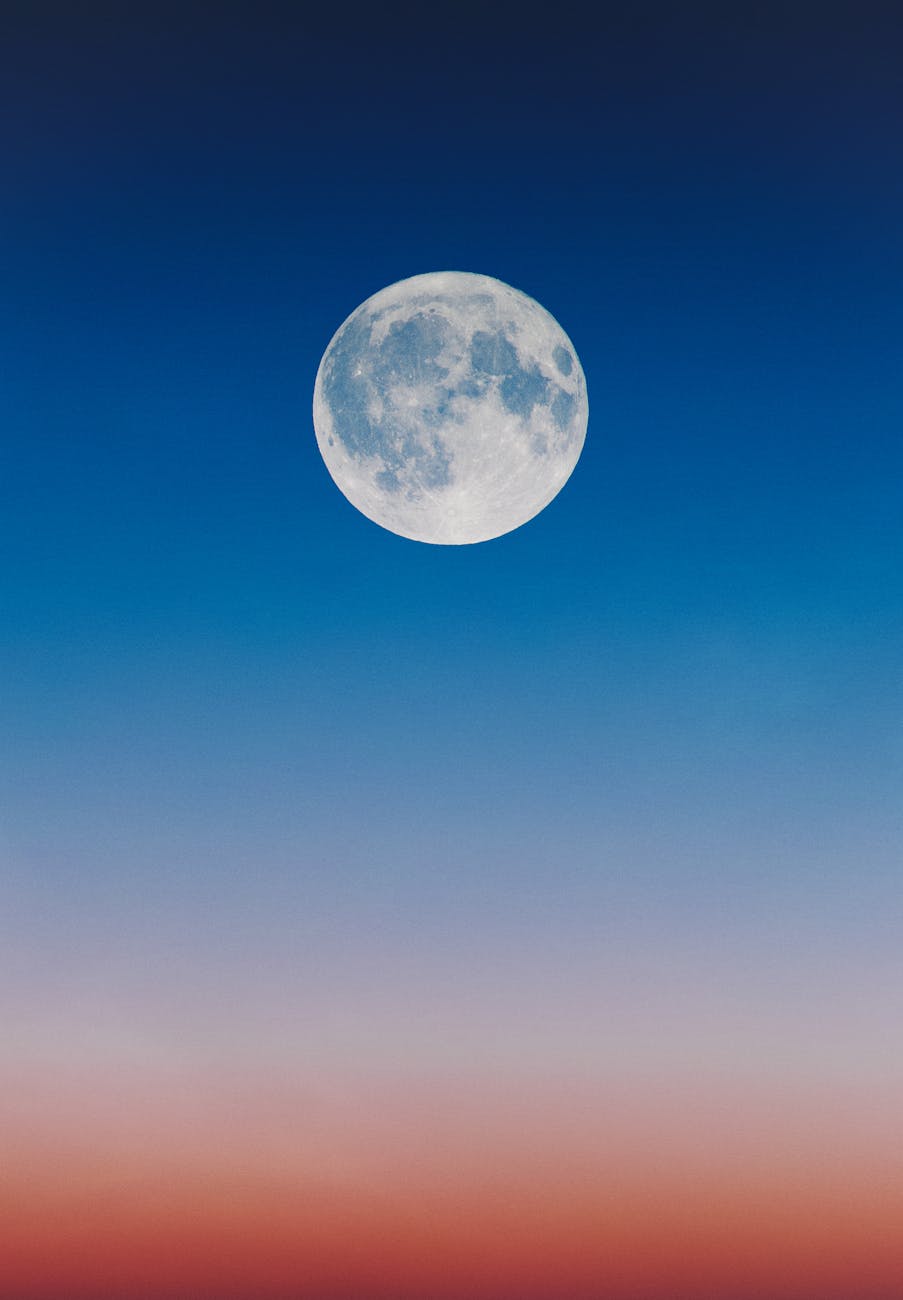
It’s the time of the harvest moon. So, it’s a time for moon tunes. Not just any moon but the first supermoon of the year will grace the sky tonight, Tuesday 7th October. This bright full moon of 2025 will light up the nighttime. It will not have a musical accompaniment in my garden even if there’s a lot to choose from. The neighbours wouldn’t like it.

The best of the pile is Neil Young and his Harvest Moon[2]. 180 degrees from the Showaddywaddy pop effort. Neil scores top rating. It’s melodic, melancholy and memorable. Fantastic. Just right for a quite evening gazing at the moon overhead.

On a melodic theme the next one I’d recommend is from Nick Drake[3]. Again, it’s the 1970s that provides the music. It was a decade of variety, to say the least. Song writers were pushing the boat out and coming up with magical results.

And here’s another. Another to dance to in the moonlight. Moondance in fact. Van Morrison[4] this time. Perfect for an October night.

And if anyone has ever doubted the genius of Beethoven there’s the Moonlight Sonata.

The coming night will mark the start of a run of 3 supermoons. November and December will be graced with magical moons. I hope that’s an omen for good. Love and happiness.

POST: For more information BBC Radio 4: In Our Time: The Moon

https://www.bbc.co.uk/sounds/play/p0m77cfm


[1] https://youtu.be/qigUdmLyMBs

[2] https://youtu.be/n2MtEsrcTTs

[3] https://youtu.be/xqe6TF2y8i4

[4] https://youtu.be/7kfYOGndVfU

Autumn’s Arrival

It’s the season of mellow fruitfulness. Hey, I didn’t even know I was quoting Keats with that apt short line. It’s so embedded in my thoughts.

Season of mists and mellow fruitfulness,

Close bosom-friend of the maturing Sun;

Conspiring with him how to load and bless

With fruit the vines that round the thatch-eves run;[1]

It’s so appropriate to the day. To the week. We are in that spot of the year that marks a transition. Summer is behind us. The ground is covered with acorns and conkers. Leaves are contemplating the end of the duties. A mist hangs over the grass in the early hours.

Just to be clear, I don’t live in a picture box thatched cottage in some hidden English valley. That said, from one long-standing vine, this year, I’ve collected a mass of grapes. This vine, being so deep rooted, it hasn’t suffered the desert like conditions that prevailed for weeks.

Autumn can be a wonderful season. For a few weeks the siren sound of the winter’s coming is held in suspension. There’s time to think about whether to turn on the heating or not as the temperature dips at night.

Transitions are political too. In Britain, it’s the season of conferences. A time for the faithful to gather and spend a few days running around like headless chickens. A harvest of policy papers and last-minute speeches. Condemnation of opponents. Accolades for friends and good company. Tee-shirts, hats and posters plying slogans old and new.

It’s difficult to explain. Might seem tiresome to those who have never spent 4-5 days at the seaside in September but mostly indoors or waving banners in the sea breeze. This week the Sun has blessed all concerned. Those of us who went to the south coast to share time with family and those who went to change the world.

For the party of government, they may be asking:

Where are the songs of spring? Ay, Where are they?

The optimism of last year has dramatically subsided. Now, they seem like the Mars company marketing gurus who rebranded the Marathon chocolate bar to Snickers[2]. A lesson in how to cause confusion for no material gain. Labour’s problem is clear. The chocolate bar is a good national trend indicator. Off the shelf, the bars are smaller, but you pay the same price or more for the pleasure. Arresting decline is proving to be difficult.

And gathering swallows twitter in the skies.

For those who may wonder at this line, Keats didn’t have social media.

[An Aside: AI, and its unsolicited interventions, can be right plonkers. It suggested that I change the grammar of Keats poem. It offered to rewrite the lines above. So, billionaires are spending billions trying to prompt us to rewrite romantic poetry. What a mad mad world.]


[1] https://www.poetryfoundation.org/poems/44484/to-autumn

[2] https://www.dailymail.co.uk/femail/article-13873067/real-reason-Snickers-changed-Marathon-chocolate.html

Exploring the Greatness of Great Britain

What’s great about Great Britain? GQ has asked this question[1]. Produced a nice article that looks at this subject with a cultural eye.

It’s a bit retro. When we (Brits) start talking about how great pubs are there’s a tendency to forget how many we have lost in the last decade. If we loved them so much, then more would have survived crushing economic pressures.

Brit pop was a wonderful surge in creativity that swept across the country in the 1990s. It was good – mostly. Riding that wave, because we are romantic souls about the past, are the band Oasis with their multimillion £ world tour. Accounts of which are tremendously positive.

I think I can take a position about what’s great about Great Britain. Having lived in Germany and travelled a bit, my perspective isn’t too insular or defensive.

Because we are no longer the world’s premier power and imperialism is a fading memory, we’ve shed the stiff upper lip and bowler hatted civil service bureaucrat image. It’s there in film and television to remind us of former times. It’s few who want to return to all that deep seriousness.

That seriousness is the burden that the US carries. If they send a gun boat somewhere it means business. For Brits it’s more a symbol of still being on the stage. Don’t get me wrong, as a country we box way beyond our size.

For all the right-wing jerks who parade around with false patriotism, our great strength is diversity. Having that legacy of the world map once having been painted in a great deal of red, we can now engage with multiple cultures and benefit from them all.

Number one of the lists of inherited advantages is being able to speak to the world. Not in their language but in ours. English doesn’t belong to the English any more, it belongs to the world. They amount to a lot; the times I’ve had fun reading Brussels English and being amazed at how it’s being used.

Pick a discipline. Science, technology, humanities, art, entertainment, there’s always a Brit that can be named as shaping the world. Influencing others and providing a spark that sets off a flame.

Now, being more parochial, I’ll look around me, in this town, and see a diversity of styles from punks who never stopped being punks to suited tie wearing customer service executives. Welly booted farmers in the town for a day to young gamers stuck to their small screens.

Sport is another anchor. If we (Brits) didn’t invent it, then it’s a derivative of something we did invent. Top that with the eccentricities from international tiddlywinks[2] to stone skimming. Despite the school of hard knocks we still value fair play.

Comedy is taking a downturn, but the British legacy is monumental. Irreverent, rebellious or intricate, often all three, even if we (Brits) do invite in the bland factory-made stuff from the US. In a unregarded small corner there’s a someone writing hysterical lines waiting to be discovered.

So far, as a nation, 2025 won’t go down in history as our best year. I’ve every faith that the best is still yet to come. Unlocking that dynamic zest, that quirky imagination, that complex amalgam happens several times every decade. Let’s hope the spark is just about to be set off.


[1] https://www.gq-magazine.co.uk/

[2] https://iftwa.org/history-of-iftwa/

Political Intervention by Billionaires

I’ve heard several people downplay the political intervention of the world’s richest man. This last weekend, he chose to address a large gathering of right-wing activists in London. Not there on the streets, but remotely by video. From another part of the globe.

It’s almost as if some media commentators are treating him as a naughty boy – nothing to see here, boys will be boys. What do you expect? Never mind, this is just what he does.

What comes to my mind is part of my student life in the late 70s / early 80s. Coventry is a great English city. Its football team has had more than a few ups and downs. What I remember is a Saturday afternoon with a large cordon of police lining the way between the railway station and Highfield Road. A palace of galvanised steel sheeting in a red brick terraced area of the city. Highfield Road’s football stadium no longer exists.

In those days, English football hooliganism was a set piece event that was as predicable as the seasons. It was a time to avoid parts of the city centre on a weekend. These events were regularly played out throughout the country. That era has passed – thank God. It’s not that football hooliganism is entirely dead. It’s that there are far fewer people who fit that description and they are generally socially ostracised.

In my mind, this weekend, Elon Musk acted like a hooligan-in-chief. Addressing a London crowd that was already steamed up and out to make their protest heard. Parts of that protest turned to violence.

Now, I’ve nothing against protest. I’ve been on a several. It’s that the ones I’ve been on have been peaceful and good natured. That was certainly the case during the many London protests marches against Brexit. Hundreds of thousands marched without incident.

Speakers address protest marches to amplify the message of the protestors. The reason for the gathering. Most often those notable speakers are people with what might be called – skin in the game. Campaigners who dedicate their time to a cause.

Outside agitators, without any discernible affiliation, can be a nuisance. At worst they are agent provocateurs out to ferment trouble. I think, Elon Musk’s acts were shameful and unwelcome.

London has a place called Speakers’ Corner. North-east corner of Hyde Park. I’d invite this gentleman to go there, take a stand, speak for a while and see if his way of thinking stands up to public scrutiny. He can be as irritating, contentious, or eccentric as he likes.

Cooling Heated Debates

How do we cool the temperature of debate? Recent events show that there are people who would rather heat it up. Without historic analogies or dire polemics, it’s clear that heating up conflicts inevitable harms people and prolongs, and often intensifies, those conflicts.

I’d like to think that enjoying vigorous debate can be achieved but with the general ethical idea of “do no harm” in mind. Sure, there are a lot of disagreements and disagreeable ideas. None of that is new to the human condition.

Most of us, bar a few professors, have forgotten what people in medieval England were arguing about in the crowded public houses of that period. I’ll bet those arguments were just as intense as anything we can muster. My guess is that the subject would be how the people in the next town were not to be trusted. They will ripe you off given half a chance.

Religion gets drawn into the debates of our times. That’s even if, like me, most people are agnostic and don’t follow a particular creed. Even from that personal point of view we live in a society that has been touched by the broader ethics of a religious heritage.

With my Sunday school hat on here’s ways that our leaders might try to cool the ferment.

One move is to resist the temptation to be dogmatic. It’s absolutism that is aimed at shutting down debate that causes so much rancour. It’s a bad way of winning over others. Doesn’t matter who is being dictatorial, right or left, crushing debate is boring and counterproductive in the long term. Have an ideology but don’t force it down the throat of others.

Have in mind, throw the first stone but only if you have never screwed up or never done something stupid. Most of us can’t live by this dictum. It’s there in my Sunday school wisdom as a prompt. Have in the back of your mind the thought that hypocrisy is not a good look.

Resist relativism. It’s childish. What I means is to say that slagging off Mr X is fine, it’s OK, because they slagged off my people. This ding-dong is a school playground habit that lasts a lifetime. It’s a route to escalation and one that leads to injury or suffering.

This one probably was in the medieval world. When in a hole, try to stop digging. Yes, it takes a certain amount of self-awareness to see the metaphorical hole. Not everyone can master that awareness. If an argument is going nowhere, to the extent that the heat in the room is rising, leave, or try a different approach.

There are ways to stay our bad spirits. To slay those demons. Not so easy to use them in the social media environment were all the above is encouraged. Is social media unethical? Innately evil? No, not really, in my opinion. Behind each ill-considered post is a person. Well, not in every case but even bots are created by someone.

Just as we needed to learn to live with the printing press, so we need to learn to live with digital technology. What we haven’t leaned yet is how to use it promote well-being and stop it being a place for fear mongering and endless expletives.

A Critical Look at Clowns

There’s a section of British politics which will aways be clownish. I mean this in both a childish sense and a terrifying sense. There are plenty examples of mighty frightening clowns. The Joker was transformed from a comic book TV series of Batman into a menacing movie villain[1]. These are people who embrace a life of deception and chaos. It’s a streak of putting two fingers up to the “establishment”. At the same time making a healthy living from the populous. Milking every moment to advantage.

Having a beguiling nature sustains their success. I’m tempted to think of Peter Cook as the Devil[2] in the 1960s film Bedazzled. Dated as it is, the core theme remains ever relevant. Please protect me from what I want.

Often, clowns are figures of the establishment who have flipped. Driven by a sense of injustice, that somehow society doesn’t appreciate their great talents. Sadly, for them, the seeds of their own destruction are often sitting there waiting to germinate.

It could be said that former Prime Minister (PM) Boris Johnson was a master example. Although I’d not go quite as far as to equate him with Beelzebub. There’s a man who should have stuck to his first profession – journalism.

[Why is it that journalists, lawyers and management consultants aspire to be in Parliament so much? Is it the number one aspiration for societal archetypes – to reach for this pinnacle?].

This week, the media has reveled over a predicable political circus. Now, after having seen the Brexit Party, and alike, fade into nothingness, the UK has a new set of party clowns called Reform. It’s a troupe of escapees from the awkward right-wing of the political spectrum. They are complemented by a small group who claim commercial expertise to bolster their image.

As the tired and elderly Tory Party (Conservative Party) slowly decays and melts away, so this new bunch springs up to try to replace them in full. They have been called populist. In my mind a silly word to use as a general description. Since just about every politician, to a degree, is populist. Whatever the principals involved, few politicians stand at complete odds with the public. If they do, then their time in office can be cut short.

Watching and listening to the new parade of clowns at conference, it makes me wish for a minor revival of the traditional Conservative Party. There was a time when old fashioned social liberals and concerned environmentalists could be found in that British political party. Not anymore.

If I had seven wishes, one of the would be that competence and substance got more attention than loud mouths and false promises. I don’t suppose that’s on offer. Even if it was, I’d need to be careful what I truly wished for because I might just get it. Good advice for anyone. Imperfection is OK.

POST 1: When a Party leader admits his infant Party has no idea how to function in Government. Saying that defecting and discredited former ministers will fill the gap, trouble is ahead whatever happens. Satire is dead because real life has jumped the shark.

POST 2: UK Reform activists sing “God Save the Queen” at the Reform conference. The UK hasn’t had a Queen for almost 3-years. These people are happy to show-off as phony patriots.

POST 3: UK media fascination with sensationalism has given Reform an undeserving boost. The BBC has been ticked off for sacrificing impartiality in chasing this circus. Especially pertinent considering that Parliament contains 72 Liberal Democrat MPs and only 4 Reform MPs.


[1] https://www.imdb.com/title/tt7286456/

[2] https://www.imdb.com/title/tt0061391/