The Future of Our Shared Values

That’s done. Reflecting on the last nine years. Time to look to the future. There’s no shortage of articles about the past and the present. Huge numbers of column inches crunch every detail of the current twists and turns of public life. Social media vibrates with repeated daily stories.

I watch a rebroadcast of HIGNFY[1] to quickly get the message that a headline is no basis for figuring out where we are going. Moments pass. Yes, there are reoccurring themes. What’s fascinating is that prominent personalities have their moments in the sun, and that they last a fraction of a second (metaphorically). The world moves on.

Yesterday’s scribblings concerned a degree of nostalgia. If only we could go back to some mythical age where current affairs seemed to make sense. Where people cooperated towards a common good. Where conflict was the exception not the rule.

Don’t look back. Don’t look back, too much. It’s a habit of the British to romanticise the past. Having such a colourful past to draw upon there’s always a story to tell. This inclination is at the root of our difficulties. It would be better to set a shared history as a foundation stone rather than always trying to build the same house.

Here in 2025, the world is being reshaped. There’s only so much that can be extrapolated from experience. Like a tsunami there’re changes happening that are unlike anything that has gone before. Early predictions of the benefits of digital technology imagined a borderless world. Information and learning spreading freely to enlighten and educate. So much for that.

It becomes clear that there are steps needed to protect and preserve our values. Enduring values underpinning our culture. They are not immutable. Forces acting at a global scale can, and do, shape how we think about our nation and what binds us together.

Whether we like it or not, many of the forces that shaped the colours on the world map are being played out in the digital sphere. Boundaries, barriers, conflicts, possessions, passions and powerplay are all there. Maybe they are not so visible to the man and woman on the Clapham omnibus, but they are there in abundance. As if we needed any indication, the experience of Jaguar Land Rover[2] and the cyber-attack they are dealing with, is there as a siren light.

I my mind these are not forces to confront in isolation. They do not respect lines on a map. Back to where I started. It’s by working with others, on an international level, that the harmful elements can be addressed.

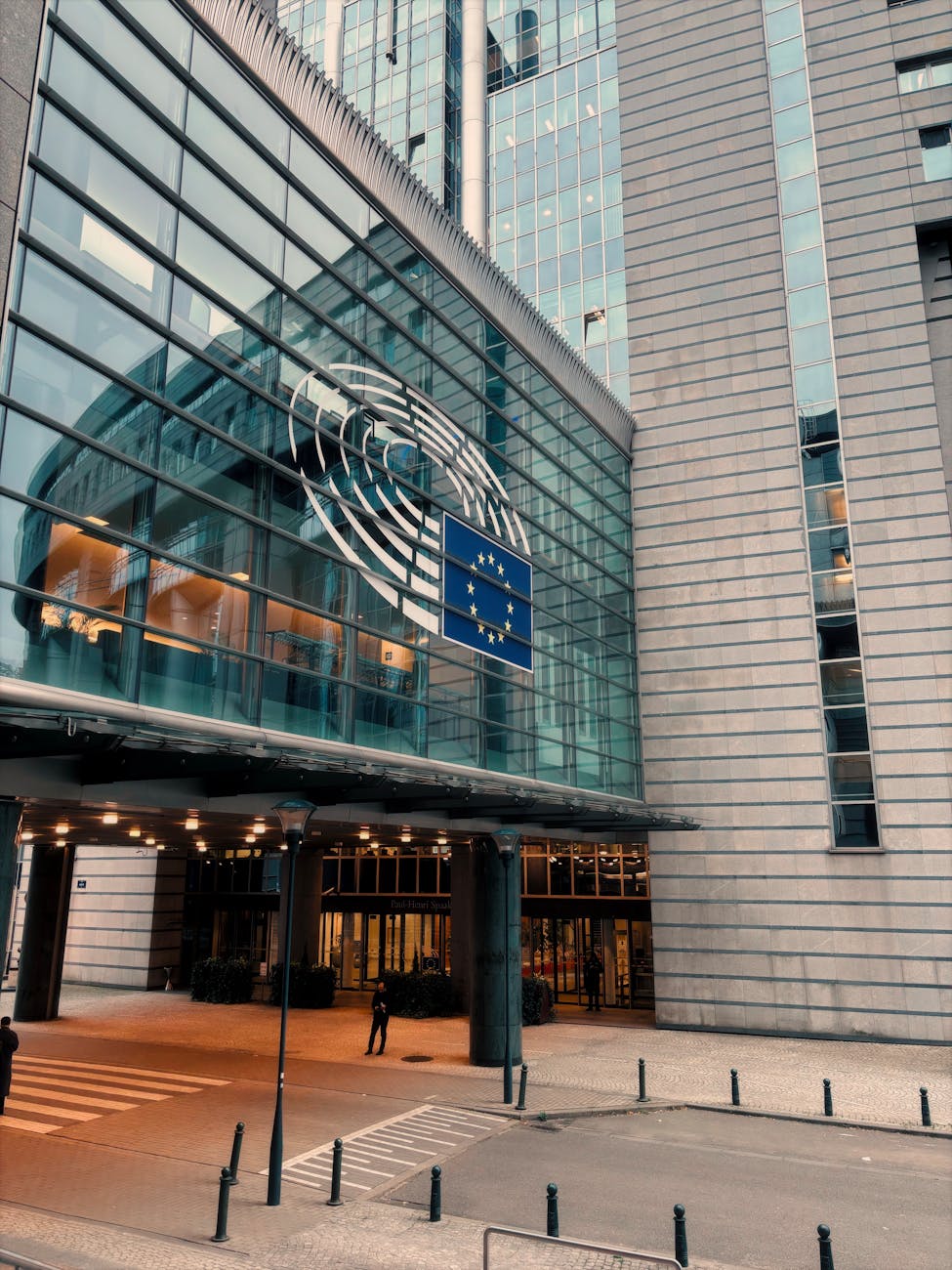
The European Union (EU) envisions a Digital Single Market. That’s a project to be on-board. It’s essential to have standards that safeguard privacy and data security. Government Ministers who promote a hands-free laissez-faire approach are naive in the extreme. This is a practical field where Britian urgently needs to rebuild relations with its neighbours.


[1] https://www.bbc.co.uk/programmes/b006mkw3

[2] https://www.ft.com/content/6f2923b3-2a4b-4c9b-9cde-eb5f0d5b9ce3

Rebuilding Relations

Here I’ve posted a thousand posts. So, it might be a good time to reflect. It was back in April 2016 that this blog started. The provocation being the then pending UK referendum vote. What was to become Brexit and a long litany of mistakes and missteps.

I’d not long returned to the UK from my time in Germany. I had a what I thought was a reasonable sense of the UK political landscape, only to find I was wrong. Here’s what I wrote:

“It’s the biggest event since the Berlin Wall fell. Yes, not to mince my words the UK referendum on EU membership could change the political landscape for a generation or more. It could be a terrible gamble that erects dark walls all over Europe or it could start a new period of enlightenment within the European project.”

I wasn’t far wrong with that statement. The landscape suffered a landslide. Even though the results of the votes were practically even- evens, for reasons that now seem bizarre the electorate swung in favour of leaving the European Union (EU). If the polls are to be believed, then the overwhelming majority now regret that choice[1].

“I’m firmly convinced that our place is in Europe. We are strong enough, we are clever enough and we are determined enough to make that project work. What a bonus that would be: Expanding a market that covers half a billion people on our doorstep. Guaranteeing that the world sits-up and listens to Europe. Unlocking a diverse creative powerhouse where the UK would thrive.”

My then time arguments were coherent, logical and straightforward. I didn’t know we were entering a phase when such attributes were to decline in importance. Should I have been wiser? With hindsight it’s easy to say that the campaign to remain in the EU was appallingly poor. Even if, at the time, I did wonder if the pomposity of the then UK Prime Minister would play a negative part in the outcome.

“The frightening alternative is to gamble with millions of jobs and invite a plunge into recension. If this happens it’s the younger generation who will pay the price. We should not condemn them to isolation and struggle for reasons of narrow nationalism.”

Oh brother. With something like 4% knocked off the country’s prosperity and a government struggling to finance public services, sadly I was spot on the money.

“I’m not saying the EU is perfect. In fact, I wouldn’t say Westminster or my local council are perfect – far from it. But the EU is a work-in-progress and not a finished project. It’s better for British pragmatism. It’s a two-way street as free movement brings people to these shores who then go home with a positive view of what we have to offer. In the next generation that means more trade and better international relations.”

Having seen at first hand the workings of both the British civil service and the European Commission, British parliamentarians and European ones, I could see a common thread. The foolish notion that escaping into glorious isolation would produce prosperity was nuts.

Here we are in 2025. It would be nice to say that – I wouldn’t start from here – but that’s useless. The thing to do is to reconcile, reaffirm and rebuild relations with Europe.  


[1] https://yougov.co.uk/politics/articles/52410-nine-years-after-the-eu-referendum-where-does-public-opinion-stand-on-brexit

Global Ambitions to National Introspection

When did it start? At least in recent times. When did we start looking inward rather than outward? That introverted xenophobia that’s infected about a third of the country. If the polls are to be believed (and that’s a leap).

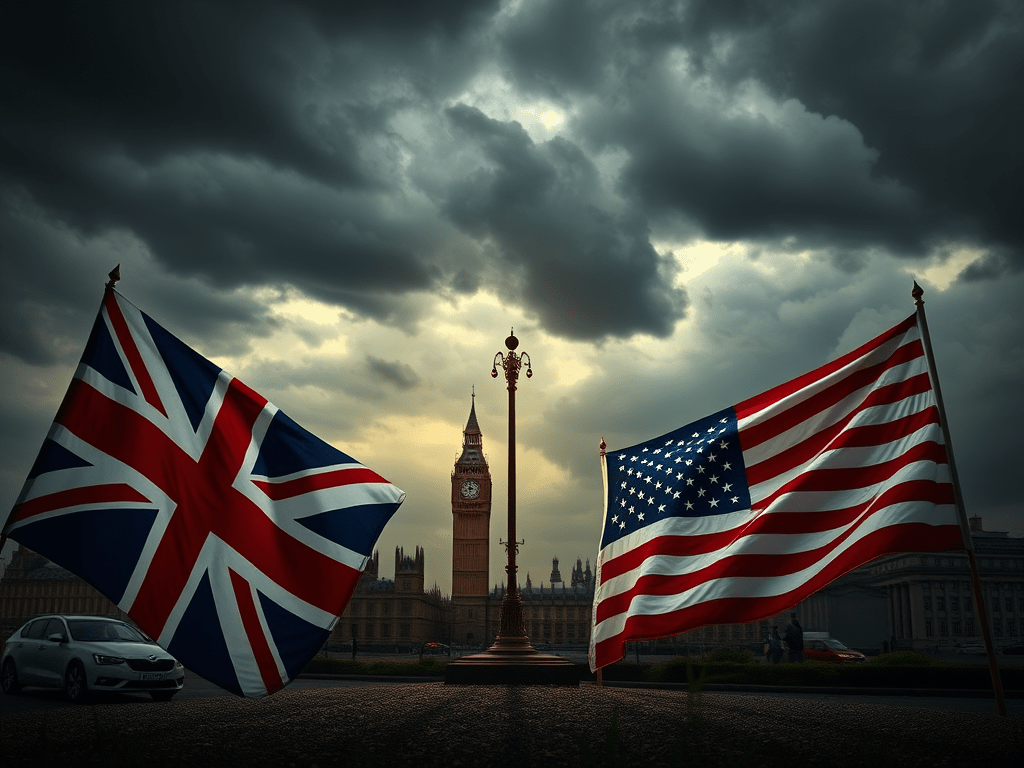
It’s strange, isn’t it? Britain, a country that spanned the globe with its trading accomplishments went from imagining a transformed world to sitting in front of an iPad complaining about either putting up Union flags on lampposts to taking them down. Painting roundabouts with red crosses or decrying the idiocy of it. Dressing up as crusader knights and thundering on about some lost imaginary England.

Pictures tell a story. Being in the aviation business, a global business, one picture that sticks in my mind involves a handkerchief and a British Prime Minister (PM). It seems a long time ago, now. Nearly 30-years ago. Back in 1997 British Airways (BA) took to celebrating their global coverage by getting international artists to produce new artworks for their aircraft fleet[1]. This was not to the liking of a former PM at the time.

For me this slippery slope was particularly evident. Living in the Surrey town of Reigate. An affluent former Conservative Party supporter, James Goldsmith set-up a new political party dedicated to one issue. The name gives it away. The Referendum Party took to the stage in 1994. Initially, seen as a joke and merely a plaything of a wealthy man, it captured the Member of Parliament for my town. For all the good it did (not), for a couple of weeks in 1997, George Gardiner, the MP for Reigate, joined the new party.

So, the British political mood in 1997 was evident, or so it may have been thought. Nothing of the sort. Of course that was the year of Tony Blair’s Labour landslide victory.

It’s possible to trace a lot of strangeness back to Margaret Thatcher. Although initially internationalist in outlook, she broke a domestic consensus and crushed a lot of hopes. Yes, the country needed radical change. It was the brutality of that change that people reacted against.

In 2001, BA succumbed and returned the Union flag to its tailplanes. Lots of poor excuses were made as to the reason for reverting. A Boeing 747 model and the handkerchief bit back.

Can I construct a thread of events from that moment to the European referendum in 2016? Certainly, there are connections as the country shook off the Blair and Brown years and plunged into a messy 14-years of incoherence. The financial crisis of 2008 didn’t help in the slide to introspection. A government that bailed out the bankers whilst making the population pay did nothing to earn a moral reputation. It further encouraged a growth of a blame culture.

So, if you supported the Referendum Party, the UKIP Party and the Brexit Party that followed, and now the Reform Party surely, it’s possible to see that you are barking up the wrong tree. It’s an empty cul-de-sac. It’s a fruitless orchard. It’s a road to decline.

These are not the heirs to Margaret Thatcher. They are bandwagon hopping con men. Money men who like their pockets lined. They will not help those who have missed out on their share of the country’s prosperity – past, present or future.


[1] https://www.flickr.com/photos/linda_chen/albums/72157625997434719/

Engaging the 70%

A little analysis goes a long way. When that analysis chimes with what I observe, then all the better. Not that just because I agree with something that it therefore makes it beyond question. No, what’s satisfying here is to see that overlap on the Venn diagram of thoughts.

In an entirely off the cuff remark I said that if the major, and not so major, UK political parties all go off hunting for the votes of about 30% of the population, then there’s a huge opportunity for someone to address the 70%.

The UK political conference season is in full swing. Four political parties have completed their annual get together. Spent time agonising over their next moves. Damming and praising in equal measure both of rising and falling stars. Trying to avoid the media instinct to go for the live on-air gotcha moment. Being seen when the spotlight is turned on.

Back to my 70 / 30 relationship. This one strikes a bell for me having been a fan of the Pareto principle. That’s often called the 80 /20 rule.

For example, a lot of work may need to be done but it’s often only about 20% of that work that makes a difference, in certain situations. I could campaign over a wide area, without focus, and find that most of my effort had been wasted. Identifying the most fruitful areas to campaign, namely the 20%, might just as likely result in a win but with a greatly reduced effort.

National opinion polls can be deceptive. However, in the absence of real elections they are what people turn to get an indication of what’s going on – now. Today’s opinion polls have politicians spooked[1]. What the meaning of the Reform Party hovering at 30% is an open question.

Is it just like the days of the Social Democratic Party (SDP) in 1980s? A strong move for change that resulted in a flash in the pan. Well, it did open the door for Tony Blair and Co, years later.

Back to my 70 / 30 relationship. Labour, Conservatives and Reform all see this 30% voting intention. It hardly matters if it’s real. They are attracted to it like a moth to a lamp. There’re both data and a perception of who the 30% might be. Suddenly their importance is magnified out of all proportion. Phrase like “hard working people” are banded around. Classifications are sought to move away from past stereotypes like “white van man.”

I read Ben Ansell’s article[2]. I think he’s right. An enormous number of political campaigners fit into what can be called the Professional Managerial Class (PMC). Lots of people aspire to be of the PMC or think they are when they are not. Why do the two biggest political parties, Labour and Conservatives appear to dislike their activists and members so much?

Back to my 70 / 30 relationship. There is an enormous opportunity here for the Liberal Democrats. Not so much the Greens or nationalists. Just by speaking to the 70%. Just by addressing the issue that concern the 70%. Just signing up the 70%.

Not so much the vital few, more the vital many. Parliament could be a very different place in four years’ time.


[1] https://www.politico.eu/europe-poll-of-polls/united-kingdom/

[2] https://substack.com/@benansell

National Digital ID: Balancing Security and Liberty

We are in an age where identity is as important as it has ever been. Those line of demarcation that put us in one camp or another. It’s not a simple subject give the myriads of different combinations and permutations of distinct categories that can describe a person.

Without a doubt, I’m English, British, and European. A West Countryman, a husband, a graduate, a homeowner, a taxpayer, a liberal, an engineer and a gardener to name a few.

So, what of the current debate about the merit of identity cards or their digital equivalent. I remember, more than 15 years ago, the debate that surrounded this subject. Saying, as a Liberal Democrat I was against the introduction of ID cards as a matter of principle. A matter of principle seems like it should be an immovable statement. However, that which was a matter of principle in the context of the times does warrant revisiting.

It’s a transformation that was allowed to sweep much before it. From a paper-based analogue world full of mechanical processes to a ubiquitous high-speed digital one that has made life unrecognisable from the 1980s/90s. Digitisation is as much a social change as it is a bureaucratic change.

Past agreements range from the assertion that it will be impossible to control illegal migration without ID cards to the fear of big brother tracking every stage of our lives from cradle to grave. What’s moved on is the context within which arguments for and against are conducted.

A starting position is that each of us has multiple identities. It’s undeniable that these exist and they impact our daily lives. Some of these identities entitle us to specific privileges. This means permitting our access and restricting or stopping others. This can be as simple as a workplace security badge that allows access to a building.

A State-run identity recording system is not a universal cure all. Also, a State-run ID card and national database system has the potential to fundamentally change the relationship between a Citizen and the State. I could say that there’s nowhere to hide. This is not a subject to go into with one’s eyes closed. The operational and associated implementation costs would be significant. Not to mention ongoing maintenance. These must be weighed against the benefits that might be accrued. I hope this becomes a rational discussion where costs and benefits are studied, published, and debated.

Can a national digital ID system prevent terrorist attacks, illegal immigration, identity fraud, and human trafficking? I don’t know. I do know that it will not be perfect.

On the political side, will people feel more secure and that State benefits or services are more fairly distributed as a result? That’s a big question.

To work effectively such a system will need to be required to by law. How much will that nibble away at the intrinsic perception of British liberty that we continue to hold? Will there be a backlash against a State that seeks to acquire more leavers of control?

My view is that the mandating of a national digital ID system needs to be balanced with a better clarification of the rights of citizenship in Britan. Without a written constitution there remains the vulnerability that a government of an extreme political type could misuse this innovation.

The Legacy of Beeching

Two hundred years is a long time. No, it isn’t. William the Conqueror, that’s the sort of name politicians crave, called for the building of Windsor Castle in England. That means, almost but not quite, a thousand years of continuous use. I guess in 2070 there’ll be a big celebration of the achievements of the Normans. Certainly, seemed to impress US President Trump.

If I had a time machine one of the destinations that I’d consider is 1963 and maybe 1965. I’d take a mass of press clippings and audio recordings about inadequate rural bus services and the high-speed railway saga (HS2).

History has a way of condensing a whole succession of events into a few simple words. William was a conqueror, but 1960’s civil servant Beeching was an axeman. That can be said to be unfair, since he was mandated to produce a report and, in the context of the times, British railways seemed like they had overexpanded and wouldn’t be brought back into profitability.

This happened when I was a child. I can just remember on my way to primary school stopping at a railway crossing and waiting a steam train to pass. It could have been the milk train. At that time milk was transported from west country dairy farms, in churns, to the local milk factory. Then loaded onto a London bound train. All this activity disappeared as I grew up. It was displaced by road tankers forcing their way along country roads.

I was born in a small Somerset railway town. Got my first pay packet in that small railway town. Had a couple of weeks of my engineering apprenticeship in the former railway shed. Spent time in the small motorcycle shop next to the railway embankment.

Beeching’s reports resulted in thousands of stations and thousands of miles of railway line being closed. The Somerset and Dorset (S&D) railway line was one of those that vanished. It was on 6 September 1965, the consent for closure was issued for most of the railway line.

Strangely, it was a newly elected Labour government that promised to reverse railway closures that closed the railway. A campaign to save the line was lost. Now, I think, what if, what if the new government of 1964 had not been so beguiled by modern road building and the white heat of technology. The internal combustion engine and purveyors of tarmac had won the day.

My message is to commission reports with a wider remit than merely improving economic efficiency. It’s a concern that is as ap today as ever it was. State of the art technology is alluring. Sloganising it’s easier to say that we are moving forward to a new dawn than it is to say we will update and improve the machinery we already use. There are good cases for scrapping past ways and means. Surely, it’s as well to try to look beyond immediate pressures.

Had Beeching’s axe not been so readily swung then we’d have an alternative to ever more road building and the billions ploughed into it. Remember those feeble promises to invest in local busses to replace the lost trains. How such recommendations are so quickly forgotten.

What will we say about robotics and artificial intelligence in 60-years’ time. Or even 200-years’ time. If we are still here.

Autumn’s Arrival

It’s the season of mellow fruitfulness. Hey, I didn’t even know I was quoting Keats with that apt short line. It’s so embedded in my thoughts.

Season of mists and mellow fruitfulness,

Close bosom-friend of the maturing Sun;

Conspiring with him how to load and bless

With fruit the vines that round the thatch-eves run;[1]

It’s so appropriate to the day. To the week. We are in that spot of the year that marks a transition. Summer is behind us. The ground is covered with acorns and conkers. Leaves are contemplating the end of the duties. A mist hangs over the grass in the early hours.

Just to be clear, I don’t live in a picture box thatched cottage in some hidden English valley. That said, from one long-standing vine, this year, I’ve collected a mass of grapes. This vine, being so deep rooted, it hasn’t suffered the desert like conditions that prevailed for weeks.

Autumn can be a wonderful season. For a few weeks the siren sound of the winter’s coming is held in suspension. There’s time to think about whether to turn on the heating or not as the temperature dips at night.

Transitions are political too. In Britain, it’s the season of conferences. A time for the faithful to gather and spend a few days running around like headless chickens. A harvest of policy papers and last-minute speeches. Condemnation of opponents. Accolades for friends and good company. Tee-shirts, hats and posters plying slogans old and new.

It’s difficult to explain. Might seem tiresome to those who have never spent 4-5 days at the seaside in September but mostly indoors or waving banners in the sea breeze. This week the Sun has blessed all concerned. Those of us who went to the south coast to share time with family and those who went to change the world.

For the party of government, they may be asking:

Where are the songs of spring? Ay, Where are they?

The optimism of last year has dramatically subsided. Now, they seem like the Mars company marketing gurus who rebranded the Marathon chocolate bar to Snickers[2]. A lesson in how to cause confusion for no material gain. Labour’s problem is clear. The chocolate bar is a good national trend indicator. Off the shelf, the bars are smaller, but you pay the same price or more for the pleasure. Arresting decline is proving to be difficult.

And gathering swallows twitter in the skies.

For those who may wonder at this line, Keats didn’t have social media.

[An Aside: AI, and its unsolicited interventions, can be right plonkers. It suggested that I change the grammar of Keats poem. It offered to rewrite the lines above. So, billionaires are spending billions trying to prompt us to rewrite romantic poetry. What a mad mad world.]


[1] https://www.poetryfoundation.org/poems/44484/to-autumn

[2] https://www.dailymail.co.uk/femail/article-13873067/real-reason-Snickers-changed-Marathon-chocolate.html

Unintended Consequences

There’s a list that must exist somewhere in the bowels of Government which describes the dumbest things that have ever been done. The law of unintended consequences. Where an aim may have been honest, but the reality was a deep dive in embarrassment and failure.

If this list doesn’t exist it dam well should. It’s a sort of lessons learned for civil servants, politicians and think tanks. Don’t propose anything X because the last time someone did that they crashed and burned. Or more subtly it was years later that people cursed the day that such a dumb idea was advanced.

I’m not going to argue against market forces. How could I. From an early age markets were part of my life. That’s local agricultural markets. My father bought and sold livestock. The bread and butter of livestock farming is to buy at one price, add value and then, hopefully, sell at a better price. Markets rise and fall in ways that are often mystical.

The UK imports approximately 46% of the food it consumes. Even that figure is 5 years old. I suspect that food imports have increased in the meantime. That’s in a country that is richly blessed with quality agricultural land. Fine, we (UK) are none too good at growing olives or avocados but the range of produce that it is possible to grow is huge.

Grassland is our greatest asset. Every time I flew back from an overseas trip, just looking down from the aeroplane remined me just how the UK is a carpet of green. Field systems that have ancient origins still dominate the landscape.

Livestock farming has changed radically since my father’s time. Fortunately, we have avoided, in most cases, the levels of intensification and factory methods that others have adopted. Hormone injected beef comes from cattle that live sad lives. People know this and have hands down rejected industrial farming to that level of intensity.

Domestic food production has changed because of Brexit and not for the better. One threat to domestic food production has been some of the ridiculous trade deals that have been struck by this Government and its predecessors. Making it harder for exporters and easier for importers.

Political policy towards the countryside has rightfully taken up the need to restore biodiversity and preserve some of our most precious landscapes. Trouble is that at the same time, little or no thought has been given to the need to support domestic food production. It’s like a policy desert. It’s one thing to talk about food security. It’s another to do anything about it.

With the Labour Government threatening to take large amounts of capital out of UK farming with their inheritance tax plans, they will be making family farming a thing of the past. It’s one of the dumbest things that have ever been done.

There’s general agreement that we shouldn’t encourage wealthy people to use land as a repository for their wealth. However, tax advisors have been telling them to do that for decades. Buy land and pay less tax. Reversing that long standing trend needs an intelligent policy not a crude sledgehammer to crack a nut. Even if it’s impossible to ween Labour politicians off their ideas on inheritance tax, there ought to be a way of doing it without penalising the innocent. Letting off those non-farming interests that politicians were aiming at originally. Dogma makes bad policy. It’s time to reemphasise the place family farming has in food production.

Exploring the Greatness of Great Britain

What’s great about Great Britain? GQ has asked this question[1]. Produced a nice article that looks at this subject with a cultural eye.

It’s a bit retro. When we (Brits) start talking about how great pubs are there’s a tendency to forget how many we have lost in the last decade. If we loved them so much, then more would have survived crushing economic pressures.

Brit pop was a wonderful surge in creativity that swept across the country in the 1990s. It was good – mostly. Riding that wave, because we are romantic souls about the past, are the band Oasis with their multimillion £ world tour. Accounts of which are tremendously positive.

I think I can take a position about what’s great about Great Britain. Having lived in Germany and travelled a bit, my perspective isn’t too insular or defensive.

Because we are no longer the world’s premier power and imperialism is a fading memory, we’ve shed the stiff upper lip and bowler hatted civil service bureaucrat image. It’s there in film and television to remind us of former times. It’s few who want to return to all that deep seriousness.

That seriousness is the burden that the US carries. If they send a gun boat somewhere it means business. For Brits it’s more a symbol of still being on the stage. Don’t get me wrong, as a country we box way beyond our size.

For all the right-wing jerks who parade around with false patriotism, our great strength is diversity. Having that legacy of the world map once having been painted in a great deal of red, we can now engage with multiple cultures and benefit from them all.

Number one of the lists of inherited advantages is being able to speak to the world. Not in their language but in ours. English doesn’t belong to the English any more, it belongs to the world. They amount to a lot; the times I’ve had fun reading Brussels English and being amazed at how it’s being used.

Pick a discipline. Science, technology, humanities, art, entertainment, there’s always a Brit that can be named as shaping the world. Influencing others and providing a spark that sets off a flame.

Now, being more parochial, I’ll look around me, in this town, and see a diversity of styles from punks who never stopped being punks to suited tie wearing customer service executives. Welly booted farmers in the town for a day to young gamers stuck to their small screens.

Sport is another anchor. If we (Brits) didn’t invent it, then it’s a derivative of something we did invent. Top that with the eccentricities from international tiddlywinks[2] to stone skimming. Despite the school of hard knocks we still value fair play.

Comedy is taking a downturn, but the British legacy is monumental. Irreverent, rebellious or intricate, often all three, even if we (Brits) do invite in the bland factory-made stuff from the US. In a unregarded small corner there’s a someone writing hysterical lines waiting to be discovered.

So far, as a nation, 2025 won’t go down in history as our best year. I’ve every faith that the best is still yet to come. Unlocking that dynamic zest, that quirky imagination, that complex amalgam happens several times every decade. Let’s hope the spark is just about to be set off.


[1] https://www.gq-magazine.co.uk/

[2] https://iftwa.org/history-of-iftwa/

Future of Engineering

I do find it astonishing that back in the early 1990s I was still producing handwritten material that then got typed up by a typist. Then, were edits and errors needed correcting, “cut and paste” really meant cutting and pasting paper. Applying Tipp-Ex correction fluid was normal. Wonder who uses that now? It’s still available.

Engineering practice adopted word processing rapidly from that time on-ward. It’s now almost inconceivable that anyone would get someone else to type up their work. Early lap-top computers that weighted heavily on the shoulders, were carried to meetings as necessity but not love. The joys of trying to find a printer that would work was a daily mission.

In about 30-years we’ve gone from that primitive introduction to the digital realm to machines that want to write papers and reports for us. From brick like “portable” computers that required cables and batteries that drained in minutes to the complete world being available on-line anywhere on the globe.

The mechanisms by which engineering design and development were done have advanced in such a way as to make the past seem rather curious. I’m not saying that we’ve become ever cleverer and more inventive with the passage of time, just that the speed of trail and error has increased dramatically.

Past mechanisms did make the ability to change a path, once set on that path, difficult. I remember the reluctance to introduce changes unless an overwhelming case could be made. In this new situation, making changes still has a cost associated with it, but the resistance to change isn’t so much driven by the processes used.

What’s happing, like it or not, is that artificial intelligence’s transformative impact is touching, or will be touching, everything we do. That includes engineering design and development.

I’d say it’s a good time to be an innovator. In theory, it should be possible to explore many more possibilities that could be explored in the past. That is for the same level of cost in time and money. There’s not a single part of engineering practice that will not be impacted. Classrooms, meeting rooms and workplaces where the business of communicating technical ideas and testing them goes on, will be fertile ground for the application of AI.

I don’t think we understand just how transformative the impact will be on engineering. It’s not all upside either. Technology’s promises are great. There are perils too.

AI can only know what it’s been trained on. That maybe extremely extensive. However, innovation comes from creativity and inventiveness where the past may only be a partial guide. Also, there’s the danger of overreliance on these almost magical tools too. New skills must develop to be critical and knowledge of the deficiencies of complex algorithms.

All of this is a bit different from paper, correction fluid, scissors and tape. What an exciting time to be a young engineer.