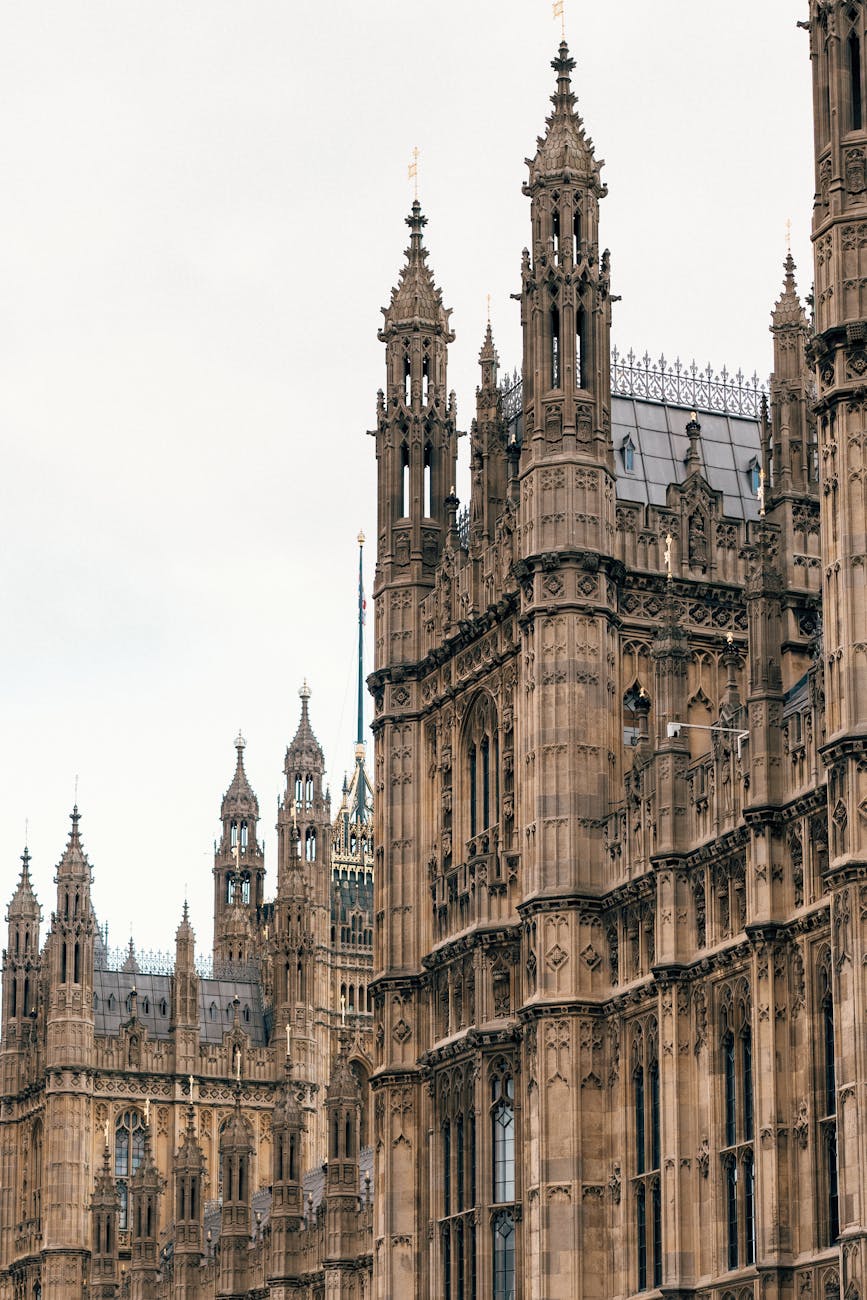
Risks of Pruning Government

Everybody likes a good analogy. I don’t know if this one qualifies. We communicate by saying this thing is like this other thing. The first one being easier to understand than the one second. It’s a basic part of storytelling.

Who understands how government and its institutions grow? I’ve no doubt there are huge textbooks full of detailed analysis and complicated theories. Sitting on dusty library shelves. Written by knowledgeable and venerable academics.

I’m coming from a background that’s more practical. One of having mixed with and worked in bureaucratic structures built to serve a public good. Bureaucracies that have both traditional administrative and technical elements.

Here goes. Government, or rather the administrations, institutions and services are like a large oak tree. It’s kind of human pyramid in the sense that there’s a top and bottom. An upside-down tree minus the roots.

Oak trees are long lived. They have branches that are substantial so that they can carry a heavy load and suffer the battering of the wind and rain. Out on the furthest limbs they are young, spindly and vulnerable.

Today’s media is full of stories of what might come. There’s a new year in prospect. Across the Atlantic a new President is about to take-up office. Speculation is rife. One part of that speculation concerns the future of the large administration that is the federal state.

The Presidents favourite billionaire has ideas to take a chainsaw to the tree of administration. Generally speaking, a chainsaw isn’t the best tool for the job, but it certainly is scary. Maybe that’s the point. Keeping a huge, embedded administration on its toes.

My point, and I have one, which is more than I can say for Rory Stewart, a former minister, talking on the BBC this morning. My point is that pruning a tree requires the pruner to be competent. That’s having the attitude, skill and experience needed to make a good job of it.

Lopping off limbs of a working administration with the sole aim of saving money isn’t such a sound idea. Each branch has a purpose. It’s as well to have a comprehensive understanding of what that purpose is before the pruning starts. From that understanding can come a sound reason to prune.

Ideally, pruning should be good for the tree and good for everyone who depends upon it. Weak branches that suck-up energy even though their days are numbered should become firewood. Fledgling young branches that are heading out to explore new territory may need encouragement and support.

So, it is with government. There’s a lot of truth in Parkinson’s Law[1]. He knew a thing or two about bureaucracies. The clever bit is finding out where this phenomenon has taken off. Where the tree has grown way out of balance.

Will Musk be competent in pruning? Who knows. One thing is for sure. The potential for loping off a branch that is vital to health, wealth and happiness is all too real. Let’s watch and see.


[1] the law – “Work expands to fill the available time”

UK Farmers’ Unrest: Budget Shock and Political Implications

Yesterday, central London was full of British farmers. Far more than was anticipated. It’s a countryside revolt. Or at least the seed corn of unrest. It needs to be addressed quickly.

The UK Government Budget sprung an unexpected shock on farmers. Newly elected, everyone expected them to try to correct the spending mess left by their predecessors. However, few expected them to make-up last minute figures to do something they said they wouldn’t do.

Lots of family farmers could be singing the classic Beatles song “Yesterday”. Troubles seemed so far away before the general election. Now, they seem here to stay.

Like androids, and the Tories before them, Labour Members of Parliament (MPs) are trotting out lines prepared for them by their masters. The political excuse trotted out robotically is that the theoretical threshold for taxation is £3 million and not £1 million as everyone is saying. Therefore, they say, fewer farm businesses will be impacted by their new death tax.

When something goes wrong in Government one of the best strategies is to address the facts immediately, apologies for any error, take the temporary hit and move on quickly. Stonewalling and wibbling is an extremely poor approach.

For a start, many farmers will not be able to take-up the tax reliefs Labour MPs are talking about. Farming is a hazardous profession. Sadly, unexpected deaths are not unusual. If such an event occurs this could then result in compounded tragedy, that is the death of a family business too.

Farmers are pointing out that significantly wealthy people will still use land purchase to avoid tax. They will have complex and detailed tax planning services at their fingertips.

Agricultural land values have increased dramatically in recent decades. Yes, there is an issue to be addressed with respect to land value. Housing development land is an astronomical price. It’s one of the drivers that is making house prices unaffordable for many people.

Labour needs to recognise that it’s not food producers who are driving these negative phenomena. It’s not small and medium sized family farms who are the problem makers.

Not only is this new inheritance tax very poor politics by Labour, but it’s also not going to crack the problem that they might wisely wish to crack. I’d say, think again. At least consult.

New Form of Monarchy in 2024?

An observation. There’s something strange going on across the Atlantic. You see, I have found inspiration in the story of America’s revolutionary struggle. The writings of Thomas Paine stirring up a radical movement. The strong desire to be independent of the rule of Kings and Queens. There’s a lot to be said for freeing a nation from imperial tyranny.

The Declaration of Independence in 1776 is a bold statement. Rejecting the royal authority of George III to set a new nation on an independent path. It proved to be a dynamic and prosperous democratic path. One that people across the world looked on with admiration.

It’s true that the United States has had its own dynasties. Powerful families and influential individuals that have shaped its history. However, since its independence, none of them have ruled as a monarch. None have wheeled massive power without checks and balances.

Yet here we are in 2024, and a form of pseudo monarch stands ready to take the reigns of power. Sure, democracy has played its part in putting one man in control. That, in of itself, is not unknown in the history books. The question to ask is when does a Republic tip over and become something quite different from what it has been?

I hope my observations are an exaggeration. It’s all to easy to see the News that commentators want us to see. I’ve often found that it’s most difficult to see things as they actual are as opposed to how they are shaped by personal beliefs and fleeting desires. Objectivity isn’t so easy.

This much can be said, the next four years are going to be turbulent ones. There’s a certainty in that conclusion. Even with the Atlantic in the way, just as the Jetstream brings us changeable weather, so unsettling waves of transformation will hit our shores.

The latest commentary coming from supporters of the new Trump regium in the US is one of polarisation. It’s the traditional stick-up. Choose between us and them. Our populous island off the shore of continental Europe must be squeezed into a choice between the US and the EU.

This monosyllabic way of framing a debate gets swallowed by the media. Overall, it’s nonsense. There’s no way that both will not be important for as far over the horizon as anyone can see. Both are going through periods of disruption. For once, domestically, the UK seems relatively stable. That’s putting aside the past damage done by Brexit and a Conservative government that fell into total disrepair. Yes, the UK can plot its path knowing that some internal consistency can be expected.

Everything I’ve written here is overshadowed by issues of global concern. Overshadowed being the sad reality. Climate change will not wait for the dust to settle from ardent disruptors. The planet’s atmosphere knows nothing of the exploits of prominent personalities. We desperately need to rediscover common interests and act on common concerns.

Haunting Classics

Five more for Halloween. Yesterday’s blog listed a selection of scary tunes to get everyone in the right mood for the weekend. Digging into the classics one song stands tall. Meat Loaf’s “Bat out of Hell” is so iconic[1]. I can close my eyes. A cassette player in a past motor belts out the bat and suddenly the car is transformed into a likeness of the scene in “Waynes World”.

AC/DC and “Highway to Hell” continues the hellish theme[2]. That song has as much energy as a nuclear power station. Several power stations all connected.

“Zombie” by the Cranberries[3] has a soulful lament that seems hopelessly lost. It’s ring of despair goes beyond its time. Quite a song for this sad time too. A powerful video kicks at the fact that horror is not just imagined – it’s us.

Lost in the gloom of a dire recession and the Midlands in the 1980s, “Ghost Town” by The Specials[4] is seasonal. It’s dark nights, clocks go back, dangerous streets and closed shops. Weary nightclubs sloshing with supressed violence.

Finally, the TV series Twin Peaks intro theme[5]. Why, because it’s so spooky, mystical and endless. Once heard its impossible to unhear. It vainly tries to lift in the middle. That’s nothing as the haunting strums of the bass guitar endlessly plot a path into infinity. I was going to choose the main title music to The Shining. That’s great but not as memorable as eery atmospherics created by the Twin Peaks instrumental.

Although, “Ghostbusters,” by Ray Parker Jr. is so popular I’d put it at the bottom of my list. It’s far to upbeat and has that air of niceness like bubble-gum. Like “Little Shop of Horrors”. It’s good fun but not the stuff of nightmares.


[1] https://youtu.be/3QGMCSCFoKA

[2] https://youtu.be/gEPmA3USJdI

[3] https://youtu.be/6Ejga4kJUts

[4] https://youtu.be/RZ2oXzrnti4

[5] https://youtu.be/nCn3LYqCnrk

I’m Mandy

It’s something to ague about. My view is that pop songs don’t have to have “official” meanings. If you listen to a song and it means something to you then there’s no point in arguing with someone else about what it means. Well, not much point other than the pure fun of it.

That doesn’t stop an argument. It’s like answers to quiz questions. There’s that strong desire to be the one with the right answer. With a song it’s not so easy to be literally right or wrong. There may be clues left by the song writers or a generally excepted interpretation. It’s not a subject to place major bets on. There’s likely to be no definitive answer.

This week, I popped into a small shop that is full of retro bric-a-brac. In one corner there’s a display of second-hand vinyl records. 45s and LPs nicely arranged in alphabetic order. I find it fascinating what’s fashionable, and thus pricy, and what’s not. This trendy little shop aims at a student market. What caught my eye is an album from the band 10cc[1] from 1976. It has a colourful fold-out album cover which is a story in of itself. It’s a real photographic artwork. And strangely profound in the age of the mobile phone. Lots of people holding telephone handsets.

“How Dare You![2]” is an immensely creative but almost incoherent jumble of wandering songs. It’s a kind of progressive rock music exposé but much more popular, in the sense of pop. And in its time, it did well for the band, giving them two charting singles from the album. It’s a 70s vinyl masterpiece that will not be entirely lost and forgotten.

10cc is part of my student history. From what I could see from the price, it’s not so fashionable with today’s students. In good condition, for £5, I was more than happy to spend my hard-earned cash. At the till, the young lad who was minding the shop took one look at the album cover and asked: do you mind if I take a photo of that? We both agreed that streaming music is fine but there’s something more satisfying about handing physical artwork like this album cover. It’s tangible. It’s real. It’s an artifact.

The most notable song on the album is “I’m Mandy, fly me”. What is known about 10cc and their song “I’m Mandy, fly me” is that it was kicked off by a National Airlines poster. Like so many American airlines, National got swallowed-up and those who swallowed them up suffered the same fate. But in the 70s they were going strong. What they will be remembered for is that one of their publicity stunts caused controversy. It’s the sort of situation that kicked-off protests and rightly so.

In the early 70s, to sell their long-haul seats National’s posters ran a slogan saying: “I’m (flight attendant’s name). Fly me.”. The sexist nature of the advertising slogan got heavily criticised. These airline posters must have been up in Manchester, UK. Enough for seeing them to inspire 10cc to write the song “I’m Mandy, fly me”[3].

What’s it about? I think it’s pure imagination. Wandering a street, seeing the poster and going off on a fanciful muse. In my view it’s not literal. There is no plane crash. The fantasy is that the flight attendant in the poster rescues the singer from the dullness of everyday Manchester. After a few moments he snaps out of it, realises that he’s been daydreaming, and life carries on.


[1] https://www.10cc.world/

[2] https://en.wikipedia.org/wiki/How_Dare_You!_(album)

[3] https://genius.com/10cc-im-mandy-fly-me-lyrics

Ethics of Medication

I don’t know about you but the whole idea of medicating people to increase the prosperity of society has a terrible echo of the worst kind of politics. Now, if we change the “p” word to protection of society, a policy of medication might make some reasonable sense. The COVID pandemic taught use that individual freedoms are not absolute. We know that allowing people to spread infection, whenever their personal beliefs, can kill other people. Reckless actions did exposed people to danger. Big name politicians did some dam stupid stuff just because they wanted to side with those who believed irrational, unscientific nonsense.

A UK Labour Health Minister saying that obese people would benefit from a jab so that they can get back to work makes me feel uneasy. It’s one thing to recognise that society has a problem with obesity but it’s entity another for the States to impose medication on specific groups of citizens. Expensive new medication that that.

I know it can be argued that the cost of obesity to the National Health Service (NHS) is high so there’s no zero cost answer. Having hammered down smoking deaths over decades of work it’s now obesity that’s the great societal challenge. The line between personal freedoms and social demands can be a fuzzy one.

The jab in question may have become fashionable as a weight loss aid[1]. That doesn’t justify a UK Minister, with all the power of the State, suggesting that overweight people be put on a regime of injections. And if they say “no” to the regime then be penalised in some vague manner.

It’s known that these new weight loss drugs have side effects. No everyone can take them without consequences. These drugs should only be used under medical supervision. That said, many people do take them without recourse to advice from a doctor.

To the Minister I say, don’t ague about the cost to the economy of obese people. Please ague for helping people to make weight management work for them as individuals. Obese people are not one amorphous mass of idle slobs who sit on the sofa all day. The Daily Mail characterisation of bludgeoning swarms of people burdening society with their indolent ways may chime with populists and the emerging Conservative Party. It’s no way for a Labour Minister to address a live challenge. 

National proposals to give unemployed obese people a jab to get them back to work has a ghastly ring to it. Yes, it’s not saying we (society) should send them down the salt mines but when the economic argument is the top one it does dehumanise the target audience.

Weight loss jabs may continue to have potential befits for many people. Let’s say that we are talking about health benefits, so that individuals can play their role in our society, whatever that role might be. State officials who attempt bring shame on people living with obesity, that’s just plain nasty.


[1] https://www.bbc.co.uk/news/articles/c981044pgvyo

Changing Political Landscapes

You can tell the type of person I am. I occasionally stop for a morning coffee in Gail’s[1]. Overall, I favour cafe Nero. Better coffee. An Italian vibe. That said, the expanding up-market bakery has a pleasant ambience. They are taking over and restoring the more regal old bank buildings of the High Street. Britain’s national banks have long since moved out.

In the last 9-months, I’ve moved from a town that had both, to a town that until recently had only one. It wasn’t my influence, but a Gail’s has opened a new shop in recent weeks. Post election, I might add. I’ve moved from a Conservative town to one that is no longer a Conservative town.

Anyway, there I was doing a bit of lunchtime shopping in Waitrose. It has a small cafe in one corner of the supermarket. Stopped for a ham, egg and chips and a flat white coffee. On a rack on the wall is a display of daily newspapers. I’m pleased to say that there’s a weekly local newspaper there too.

The Times and The Daily Mail are there for the delight of their customers. Two national newspapers that I am not going to spend my hard-earned cash on unless I’m desperate for something to read. Both tabloids aimed at a broadly conservative readership. 

The Mail is serialising the writings of former Prime Minister Boris Johnson. No doubt he’s getting an astonishing amount of money for his latest scribblings. Journalism was his calling.

To sell a book about political life the book certainly mustn’t be boring. Charity shops are littered with shelves of books from long forgotten personalities. My observation is that Johnson has taken aim at an audience that still thinks of him as a worthy premier.

I couldn’t resist. Had to speed read the parts that spilled the beans. The parts that dug the dirt. The revelations. Except that’s not what I read in speech bubble paragraphs. First off, I was remined of The Beano[2]. The world’s longest-running comic for children. Johnson’s language assumed my reading age to be about 12-years old. A jolly wizard wheeze ticking-off those fancy pants or misery guts who haunted his days in power. Apart from saving the known universe his anecdotes were mostly to the detriment of the people mentioned. One exception being his dad.

In a moment of reflection, it’s astonishing that Johnson once led this great country. He led London too. What on earth were we thinking? How did it happen? One or two more serious books have gone down that road. I was recommended to read “Johnson at 10 by Anthony Seldon[3].” By the way, you can tell the type of person I am. Earlier in the year, that book suggestion came from the person standing next to me, wating to go into the BBC Proms at the Royal Albert Hall.


[1] https://gails.com/

[2] https://shop.beano.com/

[3] https://www.theguardian.com/books/2023/may/24/johnson-at-10-by-anthony-seldon-and-raymond-newell-review-the-great-pretender

Reinventing Breakfast

Public service broadcasting is fine with me. It ought to be funded. We are all better for it being funded. In the UK, the BBC does a tremendous number of good works in a wide spectrum of spaces. I’m a supporter of public funded TV but now and then it drops the ball.

Switching the TV on in the morning is not something I do at home. There’s something bedsit kitchenette about having a TV blazing while the toaster is popping up. It’s what’s better placed in a gritty drama of the mid-1970’s. Gawdy wallpaper and service hatches.

I get to view breakfast morning TV when I’m in a hotel room. It’s so much easier to switch on a wall mounted TV than mess with an iPad App or flick around the long list of channels trying to find a radio station. Press the button number 1 on the remote and up comes BBC1.

So, what’s with the morning News? Is it a magazine show with snippets of life outside the studio or is it hard hitting political journalism? To me, it’s a mishmash that’s trying to be everything to everyone. A male presenter who looks half asleep and would be totally lost without an autocue. A female presenter who’s doom laden petulant style reminds me of Chicken Licken[1].

An artificial backdrop, that has become commonplace on such shows, doesn’t help. Look the morning sun is shining. One look outside the window and it’s not. I’d been tempted to suggest going back to a few of those shelving units that once adorned the set of Blue Peter.

The BBC props department must have ordered a job lot of curvy sofas about ten years ago. They turn-up on the BBC’s One Show too. Now that evening programme is a mystery to me. Although, that said, it isn’t trying to be anything other than a magazine.

Thank the heavens that I don’t have to watch breakfast TV every day. I would be ready for the men in white coats if I did. Banality mixed with artificial seriousness would do my brain in. Surely, there’s a format that can be engaging and inform in a way that wasn’t so mighty odd.

If the BBC needs a transition to something new. A format that works for the second decade in the 21st C, then I suggest they bring back a certain popular rat. Roland[2] was a professional. Now, I’m sure he could both talk about endangered water voles or interview tricky politicians with great style and panache. 


[1] https://usborne.com/media/usborne/files/quicklinks-library/englishlearnerseditions/chicken-licken-teachers-notes.pdf

[2] https://fb.watch/uHOGZqLQ_J/

Fuel for Online Conflict

Professional defensiveness is just as damaging as arrogant assertion. I wonder if I can justify saying that sentence. I’m saying this as an observation of comments made on social media. Maybe that’s an unwise place to start. However, we might try to pretend that social media is full of outliers. In reality, it often puts up a wobbly mirror to society. Not every time. Just often enough. Our good and bad behaviours are magnified through the lens of a small mobile touch screen or the keyboard of a desktop.

Who would have thought that at the time of early INTERNET optimism in the 1990s. The information superhighway was going to be an awesome educator. A great liberator. Egalitarian and a universal force for good. Technology was going to free us from ignorance.

What’s going on? Often, I see a spasmodic reaction to an article or a comment that comes from the school of knee jerk reactions. Highly respected commentators are not immune.

If you see a man in an orange tee shirt, and you don’t like orange the last thing most people would do is scream across the road a sharp rebuke. On-line, it can be the case, when a perfectly rational and reasonable but challenging and unfamiliar view is put forward, instant defensiveness takes the stage.

Those invested in the status-quo go into overdrive. And I’m not talking about Status Quo the British rock band. I must admit, I have been guilty of this myself. In a moderate way. I’ve even seen them live on-stage. Oh no, I mean the first thing I am talking about.

Professional defensiveness has a fair root. If someone is highly invested in a point of view or has had experiences that embedded an opinion, it’s not so easy to stand aside and be objective.

Sir Humphrey Appleby[1] would, week after week, defend the indefensible. He’s a fictional character that pinches our consciousness and reminds us how smart people can get stuck on tramlines. I’ve still got a small cartoon from the 1970s. It is of a draftsman, pen in hand, with blinkers on. The caption says: “but we’ve always done it this way”.

All I can do here is to take note. It’s a note for me. Anytime an uncommon or intriguing view comes forward, do a double take. Count to ten. Don’t go by the first instinctive reaction that come into my head. It’s a question of not seeing a view that overthrows past thinking as instinctually wrong.

I posed a dichotomy at the start. Let me say that professional defensiveness combined with arrogant assertion, now that is dangerous.

POST: What about the AI generated picture? Spot the problem? Is the number six ringing any bells? This is a nice example why AI will not be taking over the world anytime soon. It’s great to have as a helper and that’s all.


[1] https://www.imdb.com/title/tt0080306/characters/nm0001329

New Government. New Political Landscape

Just imagine rating water companies or rail companies with four just simple categories. I think the term “Requires improvement” would star very often.

Imagine rating politicians with single epithets, or maybe we do. Good (oh dear, I’ve used one word) to see the indefensible is being deleted by the new UK Government. Measuring performance requires a subtly that was entirely lacking. Schools and teachers deserved better.

It doesn’t take much to find an Ofsted rating[1] of “Good” for a school. Then, reading on, it becomes evident that the school in question was last inspected four years ago. So, one word becomes either a loud advertising slogan or the sword of Damocles hanging over a school. The inspection measurement system was as subtle as some rants on social media. It’s wise that the Government has taken swift action to remove these simplistic flags.

What this tells me is that opposition Conservatives have learned nothing from their defeat in this year’s UK General Election. The fact that they’re standing-up to defend their earlier position on this subject is dumb.

Here we are in September. Time has moved quickly, or it has given that appearance. It’s a reminder that earlier in the year there was a high expectation that the General Election would be called about now. Just goes to show that predicting the future is a mighty difficult business.

Today, Parliament gets back to work. The summer recess comes to an end. The House of Commons will settle down in its new composition. Half of its members are new to the job. Lots of new names will pop-up in the media as spokespersons for this and that. New stories will be written.

We can have hope that a more rational and deliberative politics emerges. Ever the optimist, I think that we may, at least, have six months of positive hustle and bustle as new agendas develop. The new Government will be keen to get as much done as possible before any opposition forms into something effective.

It’s that season of seaside speeches and conference halls packed with activist either celebrating or commiserating. It’s likely to be an exceptional year for the traditional British party conference. Not that the occasions will change the political landscape. More that these gatherings of the faithful will reinforce the echoes and ripples coming from July’s election.

I don’t pity the Conservative Party. Their situation is entirely of their own making. To see a national political party lose 251 seats in one go is unusual, even with a FPTP electoral system. Stepping from holding the leavers of power in Government to relative oblivion is tough.

I wish the newly assembled 650 Members of Parliament well. I’m sure we all do. Let’s hope that the foolishness and turmoil of the past decade can be rapidly consigned to the history books.


[1] https://www.gov.uk/education/inspections-and-performance-of-education-providers