A Day at the Bath and West Agricultural Show

It’s a part of my childhood. It’s fascinating to see how it has changed over the decades. There’s hardly a year go by when I don’t go to at least one agricultural show in the UK.

Last year, I visited the Lincoln show and the Newbury show for the first time. Most of the summer rural shows in the UK have a long history that is kept going by an Agricultural Society. The bigger ones have dedicated show sites and some permanent buildings. The smaller ones can be a large field that’s set aside for a couple of days a year. Each show reflects the nature of the farming, the crops, the animals, in its region.

This Friday, my day out was a trip to the Bath and West show[1] in Somerset. The show site is large. Spread over a south facing gently sloping hillside. To the south of the town of Shepton Mallet, at the base of Prestleigh Hill.

That’s my family connection. My mother grew-up on a small farm in Prestleigh. It’s not named on the map anymore as a couple of the buildings are now dwellings. Yew Tree Farm was situated on a dangerous bend on the main A371 road where traffic must veer right as it comes down the hill. The alternative being to hit a wall and end up in the farmyard. If I remember correctly, my grandad got free tickets to the Bath and West as they used one of his fields for a car park. As children we would hop over the fence to go straight to the show.

This year, the ground was as hard as rock underfoot. Spring has been unusually dry. There’s more dust than mud. That’s good for the show. There have been years when the wind and rain have swept the exposed show site and blown down tents and made mini rivers. Making welly boots mandatory.

What has changed? Although this annual event is predominantly a showcase for West Country food and farming it’s gone beyond that formula to become an atypical half-term family day trip. It’s no longer a place where local farmers strike deals with machinery salesman or learn about the latest breeds or cropping methods. That post-war image of mucky tractors and trailers turning up in droves is for vintage postcards.

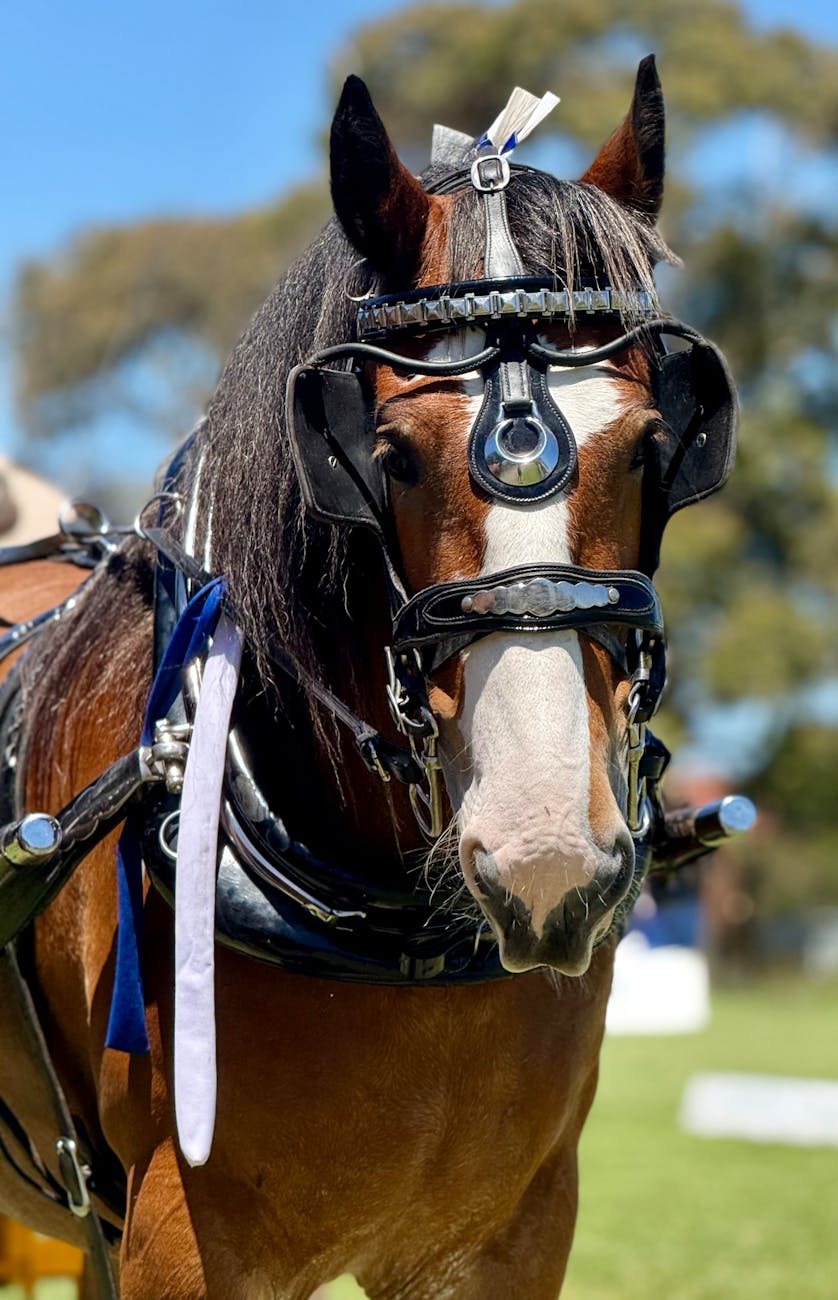
What’s nice is that there’s something for everyone with an interest in the English countryside. Beekeepers, cider markers (and drinkers), cheese makers, traction engine enthusiasts, rare breeds, heavy horses along with tea and cake in the WI tent.

Sheep started big this year. Cattle and pigs less so. Again, the word is enthusiasts. Breeds rare and commercial ones all cleaned up for display and judging. Handlers, young and old, parading their animals for picky judges to prod and score. Then colourful rosettes displayed with pride.

It’s not a cheap day out for townsfolk and county people anymore. Car parking might be free but the price of entry and just about anything on-site can quickly rack up. Everywhere, even in a field, we have become a cashless society. A tap here, a tap there, no longer do we dig into our pockets for loose change.

For the good weather and crowds, I expect this year’s 3-day event will be evaluated as a great success. Keeping the tradition going.


[1] https://www.bathandwest.com/royal-bath-and-west-show

Peaceful Border

It’s superfluous to say so. Canada is not the US, and the US is not Canada.

It quickly becomes clear. I’ve been fortunate to visit places east-west and north south. Although not the far snowbound North. The two countries do share geography. Rocky Mountains stretch across the North America. From British Columbia to New Mexico. The Great Plains span North America. A stark contrast to the mountains, as a huge expanse. In the East, the rolling landscape of the Appalachian Mountains runs from Newfoundland to Alabama.

It’s not the same with social and economic geography or history. A profound difference has been forged by Canada’s citizens over a couple of hundred years.

If we look back to the late 17th and early 18th centuries the new world was a hugely different place than it is now. Britain, France, Spain, and their allies were fighting over vast territories. European conflicts translated into competition and trade wars. Eventually, America colonialist brought about a revolution, so there would be no need for royalty, aristocracy, or an imposed church. Rejecting their British masters, even if they did keep their system of laws.

At the start of the 19th century, the US did invade Canada with a couple of conflicts. So, the idea that the US may wish to annex a part, or all of Canada is not entirely new. I’m going to have to read up on the Battle of Stoney Creek of 1813. It seems a namesake of mine played a pivotal role in preventing the US from taking Canada[1]. No relation – I’m (almost) sure. Irish heritage.

My assumption is that US President Trump is doing what he has done times before. Mark out an extreme position from which then to shape future negotiations. That’s not so mad as it might appear. It’s not nice when considering the cordial relationships that have characterised so much of the recent past. Kicking at the sides of an ally.

Stretching over thousands of kilometres (or miles if you prefer), the boarder between the US and Canada is one of the most peaceful in the world. To reignite conflicts of a couple of hundred years ago is not a wise option. I’m sure Canada could call upon a great deal of support if the worst-case scenario were to prevail.

Mutuality may not be fashionable. It needs to be made fashionable, again. The notion of a win-win scenario where both parties benefit, it’s real, it’s not mythical. Both US and Canada are sovereign. It’s best for the world that it stays that way.


[1] https://www.biographi.ca/en/bio/vincent_john_7E.html

Relationship with the EU

Monday, Monday[1]. It’s a wonderful 60s song. Harmonies and mood are perfect. I wonder if the harmonies and mood will be perfect for the Prime Minister (PM) on Monday. Already the Sunday Press are setting the stage for Monday’s performance.

Reset, recalibration, reheat, rekindle, re-whatever. It’s a moment when relations between the UK and the European Union (EU) can make realistic progress[2]. In world full of uncertainty (could be a song in that one), for once the direction of travel is a constructive and positive.

I think the word “deal” is getting overplayed. Indications are that there’s no fundamental shift from Brexit meaning Brexit, as one former PM liked to say. In fact, the current PM is being highly cautious in the light of his Party’s reading of the latest opinion polls. For no sane reason I can think of, the swivel-eyed loons of the far-right are making hay.

It’s astonishing me how dim-witted the Conservative Party is in objecting to something when they don’t even know, for sure, what it is. Mind-blowing. And the rum cult of Reform Party doing the same with extra bile. What a load of prehistoric fruit loops.

Brexit supporters are spreading misinformation, again. Saying that UK has no influence. It’s true, the UK doesn’t have votes in the European Council or Parliament, but significant influence can be exercised on standards, and regulatory guidance, nevertheless. A better “deal” can bring much greater influence. Absolutely vital in the digital world, and for the UK, a country with a services-based economy.

Brexit has cost the UK dearly. The UK Treasury would have billions more in its coffers if the 2016 referendum had never taken place. The standard of living of every person in the UK is lower because of Brexit bungling. Ideally, that great mistake is an event to be written up for the history books and then forgotten.

On top of the above, uncharacteristic moves in the US, with Trump tariffs there’s nasty hit at the UK’s future prosperity. There couldn’t be a better time to repair relationships with the UK’s nearest neighbours. The countries with which we share most of our long history.

Even for those on the political right, practically, the EU is never going away, so until the day the UK rejoins the block, it’s wise to have the best possible relationship in all matters. Goods, services and people need to connect as a case of mutual benefit.

It’s time for hope. An optimistic tone should be set. A smile. Let’s hope we are singing Monday, Monday so good to me, Monday morning was all I hoped it would be. Naturally, that there be no crying, come Monday evening.


[1] https://genius.com/The-mamas-and-the-papas-monday-monday-lyrics

[2] https://www.independent.co.uk/news/uk/politics/brexit-uk-eu-reset-trade-deal-starmer-b2752285.html

Sustainable Aviation: Innovations and Challenges

Gas guzzling continues to be one of aviation’s problems. Combustion remains that the heart of most aircraft power plants. Taking large amounts of fossil fuel. Squeezing energy out of every drop of gasoline. Gobbling up more day after day. Pushing out emissions.

As I look out across the garden, I see gliding effortlessly as the warm air rises, a Red Kite[1] gracefully circling. Wings outstretched they hardly move them as they climb. They’re a distinctive small bird of prey, easily spotted because of their forked tail. Now, that’s what I call efficient flying. Using all that nature provides and wasting little energy.

Human attempts at flying are a million miles behind these magnificent birds. There’s still so much to learn about aerial navigation. It’s a matter of control. The sensing of ambient conditions and the precision movements needed to ascend and dive at will.

The search is on for effective change. There’s no pretence that the way commercial aviation operates is unsustainable. It’s true that the gas guzzlers of the air guzzle less gas now than they ever have but the physical facts remain.

None of this is new. I’m about to send a book called “Towards Sustainable Aviation” to a charity shop. It’s not that there’s anything wrong with it. The book is full of pertinent analysis and observations. Trouble is that it’s dated 2003.

I’m led to ask – what’s changed in over 20-years? In answering my own question – quite a lot but not enough. Discourse has moved on from academic quarters to the political sphere. Aircraft have become more fuel efficient. Driven by economic imperatives as much as any concern for the climate. Research initiatives are generously funded to come up with answers. Solutions like hydrogen, electric propulsion, and SAF (sustainable aviation fuel) are slowly moving from theory to practice. A few prototypes are flying. Limited supplies of SAF are flowing.

Unmistakable that’s where the problem lies. For all the hype, policy and government funding the pathway to genuinely sustainable aviation disappears way off into the horizon. There are setbacks too. Gas guzzling is back in fashion. Certainly, in Trump’s America.

We could make a much more of the technology that’s currently available. Yes, there are costs involved. Change is not a free ride. That said, sticking with the status-quo isn’t free either. Legacy costs mount up. One reason why older jets disappeared from fleets so quickly.

The next generation of commercial aircraft must make major steps forward. Since the life of a typical aircraft type can easily extend to 30-years, then change must happen in design now.

Typically, commercial aviation moves with graduated change. There’s an inherent conservatism in the system, as might be expected when safety and security are paramount. Facing this global challenge, there’s a need for a degree more radicalism.

Since high impact disruption is also in fashion, it’s time for airlines and manufacturers to adopt a pioneering spirt. It’s been done before. In the 1960s, that pioneering spirt gave us the Boeing 747, the Jumbo jet. That opened flying to a whole generation.


[1] https://www.rspb.org.uk/birds-and-wildlife/red-kite

Europe Day Highlights the Need for Unity

Keeping the peace is never easy. There’s an irrational propensity to conflict in human nature. Keeping the peace is not a passive task. First, it requires communication and engagement. When those two go, trouble is not far behind. It’s by expressing concerns that each side knows where the other stands. Escalation can come when ignorance and propaganda take over.

After the second world war, institutions were established to ensure that communication and engagement became a non-stop affair. With only a small number of exceptions, the countries of the regions of the world engaged in these institutions. Those measure have contributed to making a more prosperous world.

“Never again” are two words that refer to the atrocities of war. The moto is to remind everyone that the worst can and does happen, and that perpetual effort is needed to ensure that history does not repeat itself. The concept of “lessons learned” is essential for safety and security. This is as much true for micro day to day activities as it is for the macro events that shape the path global ahead. Taking teaching not from narcissistic demigods and snake oil salesman but from the pages of history. Appeasing tyranny is not an option.

This week has been a reminder of the lessons learned from the world wars. For most people it’s been a continuing commitment to ensure such events never happen again in Europe. Sadly, let’s not be coy. Despite an overwhelming desire for peace, conflict in still Europe is a reality. But the lesson is there in black and white, appeasing tyranny never works.

Today, Friday 9th May is Europe Day. That’s because a speech by Robert Schuman[1] changed the course of European history on this day. Five years after the war in Europe had come to an end, he put forward a proposal that would make a future similar conflict impossible. The idea was to create an interdependence that would secure peace, unity and solidarity.

It worked. His proposal led to the creation of a European Coal and Steel Community. That measure lay solid foundation for what would later become the European Union (EU). Behind this is move is the echo of “Never again”. Europe has seen centuries of war. This was a moment in time to bring that to an end.

For now, 75-years on, this has been a success. It’s not a regional project with a defined end, even if it has a defined beginning. Where the EU chooses to go next is in the hands of its Member States and its citizens. Changing the course of European history doesn’t stop because the EU exists. Without the cooperation and dialogue, it provides there’s always a chance that ancient rivalries will be reignited. In fact, unscrupulous right-wing politicians[2] are trying to do that just now.

Sadly, in the UK, we stand on the sidelines, looking across the water at continental Europe. Brexit has done a great deal of damage. But as I have said, nothing is static, the world is entering an ever-uncertain phase. The opportunity for the UK to restore EU relations is open. I see the wisdom in the words of the Governor of the Bank of England. He has said the UK now needs to “rebuild” Britain’s relationship with the EU. Amen to that.


[1] www.europa.eu/!9JbCd9

[2] https://www.politico.eu/article/germany-spy-agency-walk-back-extremist-label-afd/

Finding Balance

Regulation can be a contentious issue. That’s an understatement. A spectrum of views extends from the complete libertarian to the past soviet model. Citizens shouldn’t be encumbered by any restrictions to the State has the right to dictate every aspect of life. Clearly, there are immense downsides to either of these extremes. Luckily, although not everyone will agree, the set of political choices available in the UK covers the wide range from the far-right to the far-left. These labels are deficient when it comes to the detail. Often these two camps are similar in their authoritarian ways and means.

Rejecting the extremes, being a liberal, means finding a balance. That means a minimal number of rules and regulations to achieve the prosperity, safety and security goals that most people happily support.

A pendulum swings in the British political cycle. Never quite sure what the cycle time is on this one. What’s for sure is that our society’s tendency is to go from urges to tighten-up rules and regulations to impulses to eliminate or relax them with gusto. Often, the aim is to tweak or protect economic stability or tweak or promote economic growth. After the banking crisis of 2008 it was the first of these, now it’s the second.

Brexit is a strange oddity. Although, great claims were made for the loosening of the ties that bind us, the reality has been much onshoring of past rules and regulation. The forces of continuity have some good arguments.

It’s reported that Prime Minister Starmer is considering dynamically aligning UK regulations with EU regulations, as if that’s not happening pragmatically and piecemeal already. OK, this is not consistent across every sector of the economy. It’s a mixed bag. Politicians banging the drum but not doing much.

Let’s say the financial services market goes a different way from the technology sector. One has a history as long as your arm the other is being made-up as we speak. Clearly, there are risks in both deregulation and overregulation. Thus, I get back to that notion of finding a balance.

To hardened Brexiters EU and UK rules constrain. To their supporters they enable, facilitate and transform.

Now, what’s difficult to discern is where do Starmer and Reeves stand?

A direction of travel, to encourage investment in the UK, has been touted. That implies alignment rules. Investors rightly seek the largest market on offer. Like it or not, the UK is not the US, or even the EU when it comes to the size of its economy. Maybe, it’s taken Brexit to realise that we align as a matter of common interest. Mutual benefit.

Most of our safety and security goals are not subjects of intense competition. If you fly internationally, why would it make sense to compete on safety or security? The general expectation is that common high levels of safety and security are desirable.

As the weather improves so we are heading towards a year of the Labour Party in power. There’s disappointment and concern about the timidity of their actions. The word “reset” is banded about. A ridiculous word. Press the reset button to restore a past condition. No, choices need to be made. Closer alignment and partnership with the EU are the rational choices.

Transform of Future Careers

My education was an industrial one. I guess I was fortunate. No “A” levels for me.

Part of my apprentice programme was to move around the different departments of a major electronics company. That included a range from demanding technical areas, testing new designs, to the everyday pressure of a print room run by an ex-Army man who ran it as if he’d never left the Army. Yes, print rooms were once a staple part of an engineering company. Huge dyeline machines that constantly ponged of ammonia twinned with the noisiest dot-matrix printers ever made. I even got to learn some COBAL[1] with the business unit that put together our payslips. Amazingly enough I was introduced to mathematical concepts, like Fast Fourier Transforms (FFT), at a time when the digital logic needed to implement such algorithms consisted of large cabinet loads of discrete electronics. Now, my simple mobile phone can crunch numbers in this way.

Several weeks here, and several weeks there. One excursion meant spending hot summer days in the Mendip Hills at a quarry testing equipment in deep water. Another meant time working in a former brick-built railway shed that served as a small machine shop.

Of all the different experiences that I had in those formative years (16-18 years) the one that I’ll never forget was a secondment to a London based factory. The company’s training officer recognised that this small village country boy needed to go to the big city. Uppark Drive, Ilford no longer exists as a manufacturing plant. That’s no surprise. In the late 1970s that factory handled the company’s long-lived products. Technology that has gone forever.

Anyway, this is not so much about me. What I’m led to speculate about is what sort of modern-day engineering apprenticeship offers. Does it offer the variety of experiences that I had? Is industrial sponsorship as generous and altruistic as it once was? Do industry and government work hand in hand to ensure a future workforce has the skills that are needed?

Simply the answer is probably “no”. In fact, the structure and organisation of design and manufacturing organisations has changed dramatically. In aerospace there are some companies that have a major factory with every facility at their heart but most subcontract extensively. Colleges have been turned into educational shops, paid by student numbers.

Here’s a thought. It’s not so much what’s taught that’s key as much as the exposure to a variety of ways of thinking and working. A variety of exposure give a student a toolbox from which they can then draw. Finding interesting work will depend on adaptation and repurposing past skills. That’ll be the only way to assure the world doesn’t pass by at an ever-increasing pace.

I’m sure that advances in artificial intelligence (AI) will affect everyone[2]. The idea that all AI will do is displace people is wrong. It just means that, like my recollections above, the types of activities that needs to be done will be entirely different in 2065. Unless I’m highly unusual, I will be long gone. But if you are 25 years old this is worth a thought.


[1] https://archive.org/details/historyofprogram0000hist/page/n7/mode/2up

[2] https://nap.nationalacademies.org/download/27644#

Unlocking Prosperity

“So, whatever you wish that others would do to you, do also to them, ………”

This is the code of reciprocity. In other words, I’d like you to be generous to me, so I’ll be generous to you. Now, of course this works the other way around in a perverse way. Perfectly human, although it’s tainted with suspicion. I’d like you to be generous to me, but I think you are unkind, so I’ll be unkind to you.

I don’t think that’s what Apostles had in mind. Their teaching is first to urge us to be generous as a way of encouraging others to act similarly. A lot there depends on how you view human nature.

For a long time, the United States (US) has had relatively low import tariffs based on adopting a leadership position. It’s to say, you should be like us. If you do that, there’s a chance that we will both become more prosperous.

Generally, argue how you will, as a result the US has become the most prosperous nation in the world. I know it’s only one measure but looking at the numbers of billionaires by country 2025[1] the US stands out. Over a quarter of the world’s billionaires live in the US.

I started with a Christian quotation and so it may be appropriate to ask how generous those fortunate billionaires are towards the people of their own country? I won’t go there. A nations prosperity should not depend on the philanthropic endeavours.

This year a lot has changed. Established ways of working are getting all shook-up. Ambition, suspicion and rivalry are all taking centre stage. An ambition to be unquestionably greater than all others. A suspicion that most others are taking advantage. A fight over valuable and often limited resources.

Again, human history is littered with times when such forces took over. Interestingly, Christianity gained a footing at a time when the Roman empire was plundering anything it could get its hands on. However, I’m not advocating a moral code to moderate the instinct to be imperial.

All to often those moral codes are just moulded and shaped to fit the prevailing circumstances.

No, my appeal is to mutual advantage. The simple idea that 2+2=4 is not the be all and end all of reality. In human affairs we can with effort make 2+2 equal more. It’s that saying that the whole is greater than the sum of the parts. It’s why people work together for common advantage.

Yesterday, I don’t suppose for a moment that ancient monument that I drove past would be there if it were not for the above benefits of having common goals and a willingness to cooperate. Stonehenge.

Trade barriers are foolish. Walls prevent the spreading of prosperity.


[1] https://worldpopulationreview.com/country-rankings/billionaires-by-country

The Curious Case of Lists

How on earth does a humble soul like me make any comment at a time like this? Adding to the realms of things already said seems a bit pointless. We now have echo chambers sounding in echo chambers. Instead, I’ll take a sideways look. Mention one or two of the items that struck me during the week.

Penguins are getting a lot of Press. Ever since Trump decided to slap a tariff on an island inhabited by penguins there’s been a lot of speculations as to his ultimate motives. If I take Feathers McGraw as an example, I can well understand the need to make a pre-emptive strike against such a potentially villainous bird.

Of other notable penguins, I can only surmise that Trump has never heard of Pingu[1]. Now, there’s a subversive penguin if ever I saw one. He originated in Switzerland, which is strange to say the least.

I almost forgot another memorable fictional penguin of the past. A threatening comic character that combines menace with a gentlemanly swager[1]. One of Batman’s greatest foes. A well dressed master criminal unlike other criminals one might mention.


[1] https://youtu.be/yxqz9JqXdJU

I forgot it this year. Next year, I will pay attention to Penguin Awareness Day. 20 January might be winter to us but its summer to them. Birds that have the decency to dress up in black and white dinner jackets deserve some respect. I for one, will express my concern that the exports of our feathered friends may be taxed. Could it be that Trump is confused. Afterall the real penguins love the ice in the southern hemisphere. In fact, nowhere near Greenland.

“I’ve Got a Little List”. There’s a phrase that comes to mind. Lists, one in particular, does seem to have hit the News this week. I ask, why is there no modern-day equivalent of Gilbert and Sullivan? Accepted, companies do play with their songs and make words to fit the situation of the day[2]. There’s a great deal of scope for new lyrics.

The fabric of social media would rupture if there were no lists. I’m often entertained by an animation that shows a compilation of data as it ripples through the years. Something with colourful bar graphs that go up and down as the rank and order changes. A musical accompaniment that has no relation to what’s being presented. Lists are captivating. They spur a natural curiosity to look for the item of most personal interest. So, over time the economy of X or Y country goes up and then down and then up again. For sure, nothing stays the same for long. That maybe the moral of the week.


[1] https://youtu.be/7Uoug3d3AJE

[2] https://youtu.be/1NLV24qTnlg

Tariffs Fail

Do you need to be a monster brain in economics to get the hang of tariffs? If you deep-dive into all the complexities surrounding every possibility, maybe you do. Nevertheless, the basics are the basics. Much like erecting a wall. Putting up a barrier makes it harder to do business. Harder to communicate. Harder to understand common concerns.

It’s a perfectly human thing to do. We erect barriers all over the place. That garden hedge, wooden fence or brick-built wall are a statement that says, this bit is mine and that bit is yours. Rarely is this absolute. Both sides of these unnatural barriers have mutual interests. Not admitting that reality is a problem. In fact, disputes between neighbours are one of the most common forms of dispute.

A barrier isn’t an invitation for you to disregard the concerns of your neighbours, and vice versa. That all night party, with the music turned up to eleven, maybe fine once a year but don’t do it every week. Well, don’t do it unless you are quarrelsome.

Economic barriers, like tariffs, are going to happen. When perception is all, the idea that one party can protect itself from those who would wish to do harm or take advantage, is very powerful. I say “perception” because a threat doesn’t need to be real. Politics is much about perception.

Trouble is that erecting barriers has a painfully poor history of failure. If we go back to walls, there’s not one that has stood the test of time. Maginot Line[1] is a case in point. The lesson there is that a barrier concentrates the opponents mind on how to overcome it. The elaborate nature of a barrier is no defence to the inventive mind. Barriers are time limited.

Tariffs, and non-tariff barriers are much the same. They may work to advantage for a while only to crumble when their weaknesses have been discovered. Although, I would say that non-tariff barriers are more powerful than straightforward economic barriers. The point being that the former is far more difficult to understand, counter and control.

2025 is a year of volatility, at least so far. Talk of tariffs is on, then it’s off, then it’s on again. It’s the real cat on the hot tin roof. A hop, a jump, and a skip. Everyone is left wondering what comes next. Even if there’s to be any return to a form of reasonable stability anytime soon. That’s the point.

Disruption offers opportunities. At least, for those quick inventive minds with resources to hand. If you don’t fit into that category, then chances are there’s a big downside and a lot of hurt.

To give the monopoly of the home market in the produce of domestic industry…………………must, in almost all cases, be either a useless or hurtful regulation. Adam Smith. The Wealth of Nations (1776).


[1] https://www.britannica.com/topic/Maginot-Line