The UK’s Path Back to the EU

It’s great to see a debate in the UK Parliament[1]. Monday, 24 March saw a debate on the UK joining the European Union (EU). A public electronic petition[2] called for this debate. UK MPs get the opportunity to speak openly of their experiences of the outcomes of Brexit. There’s little that is positive and an ocean of negative.

Lucky for them, at the end of the debate, MPs are not called to vote on the issues raised in this petition. Nevertheless, there’s enormous merit in putting the facts in the public domain.

The 2016 Brexit vote was an unpatriotic act of self-harm, but it is history. Gradually, bit by bit, every part of British society is coming to the realisation that we need to do differently in the future. One day, I have no doubt that the UK will join the EU. The “will of the people” is not static. It is incredibly arrogant of Brexit supporters to say that it is static.

Besides, the inevitability of change means that new ways of cooperating will be found because it is in the best interest of all the parties. The UK is a liberal free-trading country that believes in the rule of law.

In the debate, Government Ministers can take what is being said and rethink. It is no threat to democracy to consider a rethink. In fact, for democracy to be stuck in a deep rut – now, that would be dangerous.

Today, Brexit has been a wonderful generator of piles of meaningless paperwork. It’s destroyed businesses and ruined lives. The enormous damage that has been caused is clear. Sadly, the people who cause that damage are not inclined to take any accountability for the mess.

In the debate, a shadow minister digs-up the grumpy past. It is shameful that the Conservative Party has nothing useful to say on this important issue. It is like listening to a bad recording of an old set of lies and proven nonsense. In speaking, this politician displayed no interest what-so-ever in improving the position of the country.

With all the talk of “growth” being so important to our future, it is difficult to understand a reluctance to address the festering wound that has been caused by Brexit. We can only be more secure and prosperous if we work more closely with our nearest neighbours.

The Labour Party leans on its election manifesto of last July. It’s an awkward act of sitting on the fence and sticking their head in the sand. Now, that paints a picture.

So called, “ruthless pragmatism” is a peculiar Government policy position. It can mean 101 things to 101 different people in 101 different places. Citing “global headwinds” to excuse obvious failings is no excuse for sustaining a burnt-out Brexit winding on like a runaway train. It would be wiser to question everything as the wholly new circumstances dictate.

2025 is dramatically different from 2015. When I first returned to the UK from Germany. The tectonic plates of global affairs have shifted. The Atlantic is wider. The Channel is narrower.

Oceanus Britannicus should be no barrier to trade and cooperation.


[1] https://youtu.be/yJdFBSAvAhU

[2]  https://petition.parliament.uk/

Dealing with Difficult Individuals

Dealing with an objectionable person. There’s a title for a book. Could be 101 things you didn’t know about objectionable people or maybe objectionable people for dummies. I can see it now. Airport bookshelves full of such books. You know those colourful sections on management and self-improvement books that you don’t often see in “normal” book shops.

It’s something I suffer from when travelling. I see an enticing book title in the moments of boredom waiting for my flight to come up on the large electronic display board. The ridiculous thought goes through my head after reading a random page. Now, this erudite tone, obviously read by millions, will help me be a better person. Naturally, the book’s future is to sit in a cardboard box and be moved around, never to be read again.

Back to my theme. How to deal with an objectionable person. Of course, the context matters a lot. If I said the person is your boss, then one approach might be in order. If the person in question is a world leader, you and I are a little removed from impacting the prevailing situation. Quite different. Never-the-less, why not have an opinion?

There’s strength in numbers. Through the whole of human history. Let’s face it, we are puny creatures when faced with natures most threatening circumstances. What we do is gather together and hey-presto[1] suddenly solutions start to bubble to the surface. I’m not talking about escaping a woolly Mammoth. More of a woolly Man-mouth.

Unity is powerful. Trouble is that unity is difficult to assemble. It becomes somewhat easier to assemble when a real threat is looming. An example that is of the moment is Canada. Over the last few weeks Canadians, if the media is to be believed, seemed to be becoming unified. I expect the same is true of Greenlanders.

Europeans are, as we often are, struggling to find unity. It’s there at the core but it’s beset with voices of doubt and voices of unfriendly adversaries. Over intellectualising is a common trait of mature democracies. We like to study the woolly Mammoth before we run away or make a lot of noise and throw spears at it.

Here’s a potential solution for dealing with an objectionable person, or more than one. It’s a borne of primitive schoolboy politics. Smart folk will wince. Push that to one side. Lets’ face it, smart folk have led us down the path we are currently on.

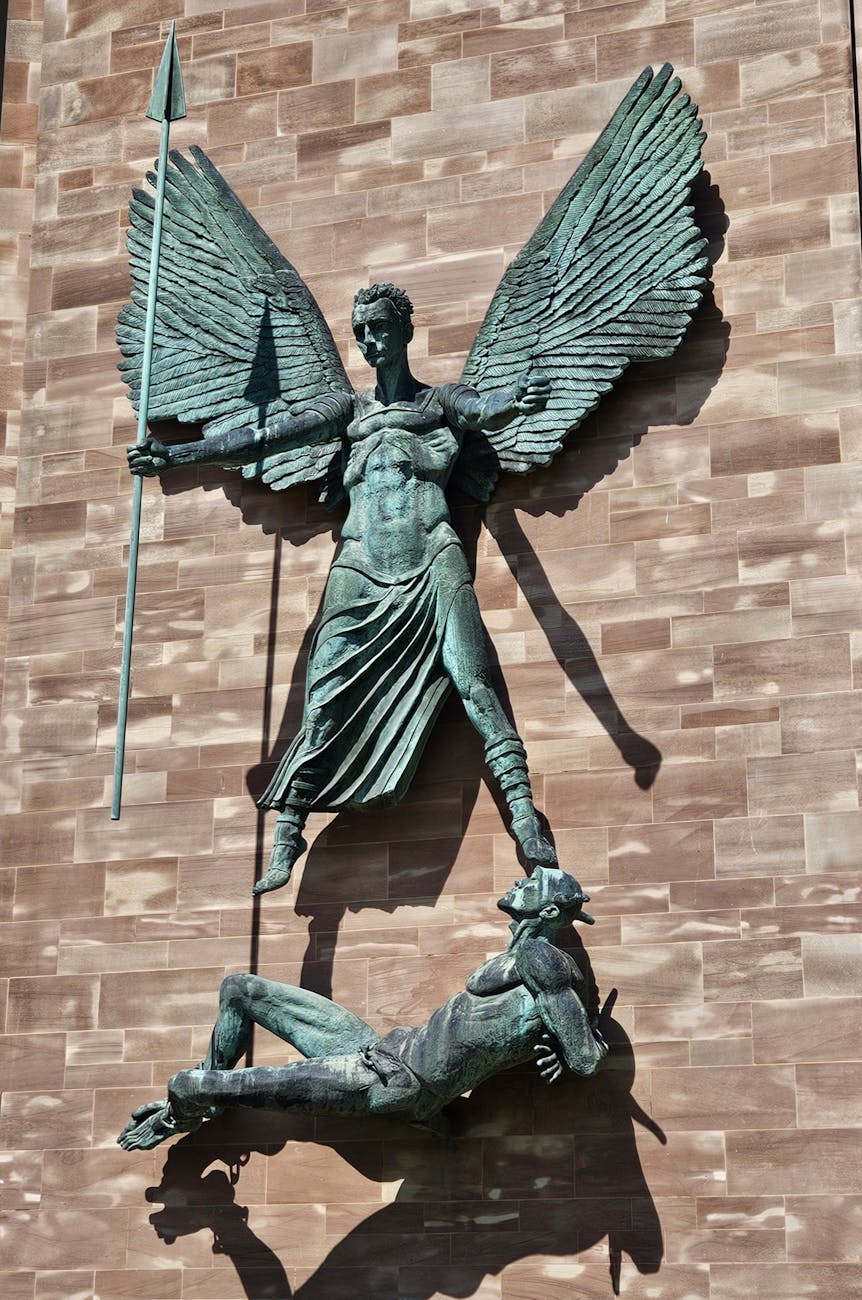
Send them to Coventry[2]. I don’t mean literally send them to the ancient English cathedral city in the West Midlands. If you are fed-up with hanging on every word of someone who is a menace, one approach is to stop listening and walk away. That English idiom about sending someone “to Coventry” is to deliberately ostracise. Avoid their company and act as if they aren’t really that important. You’ve bigger fish to fry.

Just like that. A good way to deal with Colin Robinson[3] is to walk away before it’s too late.


[1] https://www.phrases.org.uk/meanings/hey-presto.html

[2] https://www.coventrytelegraph.net/news/coventry-news/phrase-sent-coventry-originate-from-12137441

[3] https://www.imdb.com/title/tt11582982/

Navigating Change

Theres’s wisdom in having flexibility when making decisions. Being too high bound by ridged beliefs or a dogmatic creed isn’t a way of sustaining success. The saying, “When the facts change, I change my mind. What do you do, sir?” is attributed to John Maynard Keynes. It’s nice to have a quote like that to validate the wisdom of flexibility. Is it always true? Well, this is not a physical law like Force equals Mass times Acceleration. So, using the word “always” is not the least bit appropriate.

In the first months of 2025 the US seems to be going through a cycle of extreme plasticity. It goes like this; propose policy that’s drastic and disruptive and that shocks or puts everyone on edge. Let it ride for a day. Watch what happens. Then either double-down or reverse the whole move and start something else equally shocking. Meantime saying how great the achievement has been even if there’s no positive achievement.

Conventional wisdom isn’t wrong because it’s conventional. Reacting to conventional or traditional ways of working by deeming them automatically bad doesn’t add up. I know it’s conservative philosophy, but wisdom is acquired over time.

You could say, I’m burdened with being rational (or reading too much). That’s not wrong. What’s difficult is that a rational person must stretch the imagination a long way to see any good coming from a rapid cycle of change, often for the sake of change.

Setting the cat amongst the pigeons (or bull in a China shop) makes economies and financial systems quiver. Without a certain amount of understanding, or the perception of understanding, assessing risk becomes almost impossible. That’s the first months of 2025.

Where’s the vision? Maybe underlying the impulsiveness is a desire to get from here to there as quickly as possible.

75 years ago, after WWII, America entered a “golden age”. Baby boomers, technology and a sense of optimism drove the good times. The 1950’s ushered in a commercial exposition. Modern marketing and a proliferation of brands changed society, both in America and across the globe. Over the past decade, there’s not been that shiny newness or unbounded naivety that captured the imagination of the time.

If the overall vision is to get back to those times, then reality is going to bite. A sea change in circumstances could happen but it’s unlikely to be the one painted above.

Navigating Political Extremes

There’re arguments that can be made for stability. There’re arguments that can be made for disruption. I don’t think it matters if you are a socialist, centrist, conservative, liberal, oligarch or demigod. The virtue of one over the other is a temporary state of affairs. If this were not the case it would be unlikely that civilization, such as it is, would have ever got this far in its development.

Now, I have discounted the untenable. That is that stability becomes stasis. A moribund inability to do anything, totally regardless. It’s also the case for disruption so catastrophic that that we truly are in an end-of-the-world scenario.

“This too shall pass” has a long history. The temporary nature of everything is encapsulated in those four words. Or as Judas Priest put it “You’ve Got Another Thing Comin”. A thumping beat and screaming chords make great driving music. Put this on a Sony Walkman in the 1980s and the batteries would be flat in minutes.

Am I saying that Biden was stasis and Trump is catastrophic? Maybe. What is it in our minds that mean we flip from one extreme to another? These are question that erudite columnists are wrestling with as they chew over what’s happened with no idea of what’s to come.

In the British system of governance moderation wells up from centuries of tradition and custom and practice. As we are seeing it hardly matters who is in power, history runs so deep that it shapes every move. I never thought I’d have a good word to say for being a country that does NOT having a written constitution. Today, I’m rethinking how it can be advantageous to make things up as we go along.

Writing down sets of rules can be helpful in guiding decision making. Underlying this is the assumption that there’s some continuity and that those rules have a kind of universality. That’s mighty difficult to do given the passage of time.

The problem with writing down sets of rules is that they create something to be circumvented. Let’s use a river plunging over rapids as an analogy. If there is a forceful enough flow of water, it will go around or over any rocks in its way. Strident political forces, ranging from the crude to the cunning, have little difficulty in circumventing established custom and practice. What’s often called the “liberal media” may be horrified even as the river tumbles downhill with increasing speed. Predicting the future with a past perspective doesn’t work.

“This too shall pass” is a motif to hang onto. Just as the river eventually leaves the rapids so we might experience a steadier period ahead.

Look out for extremes. Milking my analogy as far as I can, changing everything, all at once, and relentlessly, is a proven route to disaster. Institutions, accepted norms and the fabric of society getting smashed up on the rapids, forever and a day is the definition of disaster.

Legacy, A Cautionary Tale

English is full of pithy phrases that echo through the pages of history. One of the greatest contributors to this phenomenon was Shakespeare. Lots of quips and quotes and snippets of wisdom come from his numerous plays (and other literary imitations).

The phrase or maximum that I have in mind is: “Beware of an old man in a hurry.” It’s not the only one on the same basic theme. My dad used to say that there’s “No fool like an old fool”. Honestly, as a child I had no idea what he was getting at. I guess it was to sum-up an observation of someone’s behaviour. It’s not a complementary saying.

There’re several ways of interpreting the “old man in a hurry” saying.

For one, and I’m just about to clock 65 years, the way the world seems is conditioned by the fact that one’s final moments are a lot closer than they were as an ambitious young man.

Another interpretation is that we might expect an older person, with more experience, will be guided to make better life decisions. However, in reality, the reverse is so often true.

I could go as far as to say that the “beware” part is to beware of imbedded prejudices and reduced peripheral vison that can come with age.

Doing a quick bit of research the source of this short English saying is not ancient wisdom from a Greek scholar or scribbling Roman sage. Not even a contemplative Medieval monk.

No, it’s a young British Conservative politician talking about an old Liberal. In fact, probably the most successful old Liberal that has ever graced Parliament. The one who left this county with the world’s biggest Empire. When he passed at 88 years, Britain was the most developed, most prosperous nation and biggest manufacturer the world had ever known. If we were ever to call to Make Britain Great Again, we’d call for an old Liberal. MBGA doesn’t exactly flow of the tongue. Anyway, GB (Great Britain) endures as a name.

The young British Conservative politician was Churchill’s father, Randolph, and the old Liberal was an energetic, fired-up Gladstone.

Can I now use “Beware of an old man in a hurry” as I reflect on the week’s News? Does President Trump see the world as a racing clock? Knowing that mortality looms. Knowing that any marks that are to be made need to be made – now. The “long-game” is for others to play.

When time is almost up the tendency to rashness can be understood. A lot depends on whether the subject of legacy looms large in the thinking of a leader. Through the millennia legacy has mattered a great deal to leaders.

Gladstone’s success was marred by the eventual destruction of the Party he led. He did transform government from a boys-club of privilege, at least in part, but the future of Ireland became his achillea heel. As a Liberal, he found building a powerful country didn’t mean granting privilege for politician’s and friends’ private businesses but ensuring that the working class were represented.

Trump’s haste, and lack of longer-sighted goals, appears real. Constitutions, democracy and the public good will endure. Mean-time hang on to your hats.

Challenges Facing Supersonic Flight

Congratulations go to “Boom” for their supersonic jet flight[1]. Civil aerospace hasn’t ventured into this space for some time. Breaking the sound barrier is not an everyday occurrence in the civil world. There may be an international market for such new aircraft as much as there’s a market for fast cars and expensive boats.

However, I do not think a supersonic flight is the future of civil aerospace. It’s not mainstream. The environmental objectives for the future of aviation are ambitious. Generally, that means getting people from A to B in as clean and efficient a manner as is feasible. That does not include going ever faster and faster.

This new aircraft type is likely to be solely made in America. So, it does fit with the current political direction of the administration in the US. A triumph of technology. President Trump’s instinct to get rid of rules and regulations may work in the favour of Boom. However, in the end, the deciding factor will be – will the international marketplace want such a new aircraft type?

I certainly recall amazing ambition of the people who brought us the Eclipse aircraft[2]. Small light jets were going to be everywhere. Like a Silicon Valley revolution for the aerospace industries. That didn’t happen as predicted because the economics didn’t stack up. I don’t recall rules and regulations being the problem.

Even so, BOOM technology will have a hard job meeting international safety and environmental standards. I seem to remember that’s not new for supersonic flight. Even if the advancements made improve noise performance, there’s emissions and contrails to ponder.

There is another consideration too. It’s the problem Advanced Air Mobility (AAM) is facing now. To capitalise on their capabilities, these aircraft technologies require the reorganisation (modernisation) of national airspace. Plus, agreement at international level[3].

Supersonic flight over the world’s oceans may get agreement. Supersonic flight over national territory is a much harder sell. Some fliers may pay to slashing their travel times on-route. Going round and round in a stack, waiting to land, with conventional aircraft all around, will soon dispel any excitement.

Good luck to Boom. If civil use is minimal, no doubt defence applications will be numerous.


[1] https://boomsupersonic.com/

[2] https://www.eclipse.aero/about/

[3] https://www.icao.int/environmental-protection/Pages/default.aspx

Navigating AI

In my travels, I’ve seen derelict towns. The reason they were built has passed into history. A frantic fever swept through an area like an unstoppable storm. It might have been precious metals that excited the original residents. Gold rushes feed the desire to get rich quick. It doesn’t take the greatest minds in the world to figure out why gold fever will always have an appeal. The onrush of people joining the throng keeps going until opportunities have collapsed.

Breakthrough technologies, or their potential, can be just like a gold rush. There’s no doubt that 2025 will be a year of such phenomena. Top of the list is Artificial Intelligence AI[1]. If you want to be a dedicated follower of fashion[2], then AI is the way to go. Thank you, The Kinks. Your lyrics are as apt now as they were in the 1960s.

Predications range from the best thing since sliced bread to the end of humanity. Somewhere along that line is realism. Trouble is that no one really likes realism. It can be somewhat dull.

I’ve always viewed advancing technologies as a two-edged sword. On the one hand there are incredible benefits to be reaped. On the other, costs can be relatively unpredictable and devastating. I say “relatively unpredictable” as there’s always the advantage of knowledge with hindsight. Lots of commentators love to practice that one.

In desperation to gain the economic benefits of AI the current utterances of the UK Government may seem a little unwise[3]. Certainly, there’s nothing wrong with wishing to build a significant domestic capacity in this area of technology. What’s concerning is to always talk of legislation and regulation as a burden. Particularly when such language comes from lawmakers.

The compulsion to free-up opportunity for a western style gold rush like scenario has a downside. That is all too evident in the historic records. Ministers in this new Labour Government remind me of Mr. Gove’s past mantra – we’ve had enough of experts. Rational dialogue gets sidelined.

Even now we have seen generative search engines produce summaries of complex information sources that are riddled with holes. This experience reminds me of past work cleaning up aviation accident databases. Removing all those 2-engined Boeing 747s and airport IDs with one letter transposed. Data by its nature isn’t always correct. The old saying, to err is human, is always applicable.

The concerning aspect of AI output is its believability. If error rates are very low, then we stop questioning results. It gets taken for granted that an answer to a question will be good and true. There we have a potential problem. What next. AI to check AI? Machines to check machines? There lies a deep rabbit hole.


[1] https://www.technologyreview.com/2025/01/08/1109188/whats-next-for-ai-in-2025/

[2] https://youtu.be/stMf0S3xth0

[3] https://www.theguardian.com/technology/2025/jan/11/uk-can-be-ai-sweet-spot-starmers-tech-minister-on-regulation-musk-and-free-speech

Political Challenges: A 2025 Outlook

British Prime Minister Keir Starmer’s dive to an incredibly low level of popularity is notable. In fact, it’s a bit more than that. It’s record breaking.

A commonly held view seems to be that we elected the Labour Party government in July as the least bad choice. The Tory years had got so utterly terrible that even their devoted supporters bulked at giving them yet another term in office. Combine that with an inexplicable inability to frame a simple story about what Labour stands for and the problem is less surprising.

Keir Starmer is no fool. He’s an intelligent and experienced politician. He’s taken the hard knocks. He’s climbed the slippery pole. But, and there’s a but, something doesn’t jell.

I my humble opinion, the ingredients missing or in excess are categorised like so.

Charisma. It’s so much easier if leader has that indefinable quality. I remember this of Paddy Ashdown. One: you know when they are in the room. No question. People look. Two: they never lack inspiring ideas. Even if they could be off-the-wall. Three: what they say makes an impact.

Eloquence: That ability to coin words and phrases that resonate with lots of everyday people (not just supporters). To speak persuasively, in a way that says we are going on a great journey together. Scripted or not, fluency that appears natural and unforced. Lightness of touch.

Managerialism: Everyone expects confident, capable, competent governance (although we rarely get it). However, we don’t want to see it live on the mainstage, all the time. That phrase about political policy and making sausages is a good one. Lots of people like sausages but few like to know how they are made.

Now, the question I have is: are the “local difficulties” of present fixable?

2025 is going to be a roller coaster of a year. We have washed away any residual millennial mysticism that hit the world in 2000. A whole generation has slipped by. Babies born as London’s Millennium dome was both viewed both with amazement and distain, have jobs that didn’t exist as the fireworks went off.

The so called “smart” phone, and tablets have carved a way into our lives that’s deep and unmovable. Even if the next leap in technology will surely leave them as obsolete.

So, what’s the narrative for 2025 – 2050? Will we sink into the quicksand of nostalgia or herald a new era full of promise? I don’t know. I’ll just keep topping up my glass to ensure it’s half full.

Risks of Pruning Government

Everybody likes a good analogy. I don’t know if this one qualifies. We communicate by saying this thing is like this other thing. The first one being easier to understand than the one second. It’s a basic part of storytelling.

Who understands how government and its institutions grow? I’ve no doubt there are huge textbooks full of detailed analysis and complicated theories. Sitting on dusty library shelves. Written by knowledgeable and venerable academics.

I’m coming from a background that’s more practical. One of having mixed with and worked in bureaucratic structures built to serve a public good. Bureaucracies that have both traditional administrative and technical elements.

Here goes. Government, or rather the administrations, institutions and services are like a large oak tree. It’s kind of human pyramid in the sense that there’s a top and bottom. An upside-down tree minus the roots.

Oak trees are long lived. They have branches that are substantial so that they can carry a heavy load and suffer the battering of the wind and rain. Out on the furthest limbs they are young, spindly and vulnerable.

Today’s media is full of stories of what might come. There’s a new year in prospect. Across the Atlantic a new President is about to take-up office. Speculation is rife. One part of that speculation concerns the future of the large administration that is the federal state.

The Presidents favourite billionaire has ideas to take a chainsaw to the tree of administration. Generally speaking, a chainsaw isn’t the best tool for the job, but it certainly is scary. Maybe that’s the point. Keeping a huge, embedded administration on its toes.

My point, and I have one, which is more than I can say for Rory Stewart, a former minister, talking on the BBC this morning. My point is that pruning a tree requires the pruner to be competent. That’s having the attitude, skill and experience needed to make a good job of it.

Lopping off limbs of a working administration with the sole aim of saving money isn’t such a sound idea. Each branch has a purpose. It’s as well to have a comprehensive understanding of what that purpose is before the pruning starts. From that understanding can come a sound reason to prune.

Ideally, pruning should be good for the tree and good for everyone who depends upon it. Weak branches that suck-up energy even though their days are numbered should become firewood. Fledgling young branches that are heading out to explore new territory may need encouragement and support.

So, it is with government. There’s a lot of truth in Parkinson’s Law[1]. He knew a thing or two about bureaucracies. The clever bit is finding out where this phenomenon has taken off. Where the tree has grown way out of balance.

Will Musk be competent in pruning? Who knows. One thing is for sure. The potential for loping off a branch that is vital to health, wealth and happiness is all too real. Let’s watch and see.


[1] the law – “Work expands to fill the available time”

Revitalising Manufacturing

Yes, it’s good to have good trading relations with other countries. With a degree of pragmatism – as many as possible. Naturally, there are lines drawn in cases where countries share little of the UK’s values or are dictator run aggressors. Counting the hundreds of sovereign countries there are around the globe, a majority are friendly and mostly interested in mutual wellbeing.

However, post-2016[1] we are still living in strange times in the UK. In the same breath as some people talk of sovereignty and surrender, they say an extremely wealthy man in the US can solve all the UK’s problems. This nonsense defies any kind of logic.

There’s a peculiar celebration of the UK joining the Asia-Pacific Comprehensive and Progressive Agreement for Trans-Pacific Partnership (CPTPP) bloc. As if we didn’t have a huge trading block on our immediate doorstep. Joining one that offers a tiny gain overtime whilst leaving the other has cost a massive economic hit. The one thousands of miles away is significantly culturally different but the one next door is one where we share a common history.

I learn that there’s no point even thinking that logic has any influence on a Brexit supporter. Non whatsoever. Their view of the world comes from some lost imperial age.

Sadly, Brexit talk is only mumbled in darkened corners. That whopping great elephant in the room continues to get ignored. Even the UK’s new Labour Government is carrying on as if there were the former Conservative bunglers. There’s some woolly talk of reconciliation. There’s a lot of right-wing scaremongering. Practically, not a lot is changing.

In real terms, both UK exports and imports of goods are lower than in 2016, having shrunk by 1% and 2%, respectively[2]. Which is crazy given the new economic horizons. Especially in the switch to the need for more environmentally responsible goods. We should be modernising and strengthening UK design and manufacturing. Not just a bit but putting a rocket under both. Half hearted nice words by minor Ministers don’t cut it.

International trade fantasies will not build a stronger domestic economy and that illusive positive growth that’s often talked about in political speeches. With the coming of highly advanced computing, like artificial intelligence, countries with predominantly service based economies are gong to struggle. Basic service orientated jobs are going to get more automated. Like the traditional factories Henry Ford would have recognised, office complexes are hollowing out.

At least the new Labour Government isn’t pushing wholesale reopening coal mines or returning to a dependency on North Sea oil rigs. That said, I’m unsure what their attitude and policy is to rock fracking and imported gas supplies.

To make real economic progress we (UK) must make Brexit history. With our colleagues in Europe, we can be an innovation powerhouse. Making home grown products for the world markets of the future. Not languishing in a tepid imperial past or tugging at the shirt tails of some mega weird pugilist.


[1] UK referendum result: Of those who voted, 51.89% voted to leave the EU (Leave), and 48.11% voted to remain a member of the EU (Remain).

[2] https://personal.lse.ac.uk/sampsont/BrexitUKTrade.pdf