Age Restrictions

Inevitably whenever there’s a decision as to what is age-appropriate one’s own experience comes to the fore. The experiment that is going on in Australia is one to watch. That country has taken a step towards the regulation of social media that provides defined limits. From zero to age 16 there’s to be a ban, or a restriction as the more diplomatic commentators say. One discussion could be about the whole necessity, and possible effectiveness of a ban on social media and another about the age limit that has been set.

This is one of those debates where there are good cases to be made on both sides. I could start by citing examples of harm caused, in particular cases, of social media use by children. That would reinforce a compelling argument for restrictions by law.

Alternatively, looking at the subject in the round, I could wonder at the position of young people first encountering an avalanche of social media on the day of their 16th birthday. Or the creativeness of young people in finding ways to evade a punitive law.

For me, my 16th birthday was a day of great liberation. Growing up in the countryside has lots of advantages. The downside is the effort needed to get anywhere beyond walking distance. No buses. No trains. Just a pushbike. Miles of country lanes, green fields and distant villages.

No demanding, distracting all-encompassing digital paraphernalia. Maybe a radio, cassette recorder and a pile of vinyl records. For me a couple of beaten-up cars and motorcycles too. As per the famous four Yorkshiremen sketch: try telling that to the kids of today.

Yes, my 16th birthday was a day of great liberation. That because of the law. I wasn’t alone. It was there for every schoolboy who could afford one. Shiny in the showrooms. Names like: Fantic, Gilera, Garelli, Yamaha, Suzuki and Puch, were all on our list of wants.

In December 1971, the British Government create legislation that restricted 16-year-olds to 50cc mopeds (motorcycles with pedal assistance). This was a worthy effort to improve road safety and reduce the carnage of motorcycle accidents. What was unexpected was the frenzy of innovation that this well-meaning law triggered. Motorcycle manufacturers set to their drawing boards and radically transformed the moped. I do mean radically.

I came in at the end of this era. By early 1976 manufactures had squeezed every drop of performance that was possible out of a mere 50cc engine. Designs had gone from uncomfortable, sluggish commuter bikes that would feel embarrassed to own, to sporty fast racing machines that were extremely desirable.

Ah, the unintended consequences of worthy legislation. For me this was wonderful. It opened a whole new vista and introduced me to one or two roadside hedges. Waiting for me on my 16th birthday was one of the best. A Puch Grand Prix Special. In black and gold, this really was a fast and refined two-stroke machine. Even with cast alloy wheels and a front disk brake, which was whizzy for the time. Racing along the main A30 the bikes gearing was such that I went fastest downhill, while my mates Garelli overtook me going up the hills.

What can I say? When it comes to age-appropriate the results may not be what is intended.

Note: Reference: Funky Mopeds! The 1970s sports moped phenomenon. Richard Skelton. Veloce Publishing. ISBN 13 978-1-84584-078-5  www.veloce.co.uk

Arborist Adventures

Funny how we attribute a problem to a nation. I’m sure it’s not the fault of the Dutch. It’s more the fault of the Canadians. To be fair, it’s nature rather than anyone’s fault.

One of the enduring memories of my childhood is looking out of a bedroom window to see the most enormous line of tall Elm trees. Running east to west, these magnificent trees were a dominant feature of the skyline. Looking south, towards the wider Blackmore Vale, they created a screen of green in the summer. Tall stately trucks in the winter. Maybe the central ones measured four or five feet in diameter.

Today, the view, on a clear day, extends all the way across Dorset to Bulbarrow Hill. Close by, no tall trees to obscure the view. Far off, on the top of the hill the telecommunication masts tower above the trees. Across the valley there’s nothing but treetops to be seen but few if any Elms.

The fate of the Elm trees is a sad one. Dutch elm disease wiped them out. From the 1960s, more than 25 million trees died across the UK. Other species have taken the opportunity to occupy the spaces left by the Elms. However, hedgerows have been lost as framing practices have changed. Trees a plenty but not so many as past times.

This week is national tree week[1]. I didn’t even know that until a visit to the RHS[2] at Wisley. I’ve had an RHS membership for about three years. Any time I’m in the vicinity of Wisley, I make a visit. That’s not been so easy of recent. The monstrous road works, planting a motorway junction of vast proportions in the area has been awkward to navigate. Nature is trying to coexist with traffic, tarmac and concrete.

I learnt that there are a couple of thousand trees at Wisley. Lots of variety. Being RHS, a staff to maintain them in good condition. Experts with chainsaws and ropes to prune the dead limbs and make the most of any wood that comes their way. What I’m referring to is a highly entertaining lecture given by one of the young arborists who manages trees on their site.

There’s a lot more to managing trees than first meets the eye. Safety is one of the major considerations. Especially with an extensive garden that receives thousands of visitors. Rotten branches falling from great hight are not something to wish to encounter unexpectedly.

I get the distinct impression that, like a Cirque du Soleil show, arborists love nothing more than hanging upside down from flimsy looking branches. Constructing elaborate schemes of ropes to navigate the treetops. With pride, the lecturer had videos of scampering amongst the high tree limbs. Not a place I’d go. They’re a cross between tree hairdressers and surgeons. Rearranging, chopping, crafting, diagnosing and amputating at the same time. Not a job for a heavy-set person who has a phobia of hights.

The message here, for the week, is not to take the wonderful diversity of trees in the UK for granted. They do need nurturing and replacing. For the most part they do nothing but good.


[1] https://treecouncil.org.uk/seasonal-campaigns/national-tree-week/

[2] https://www.rhs.org.uk/

Safety Differences

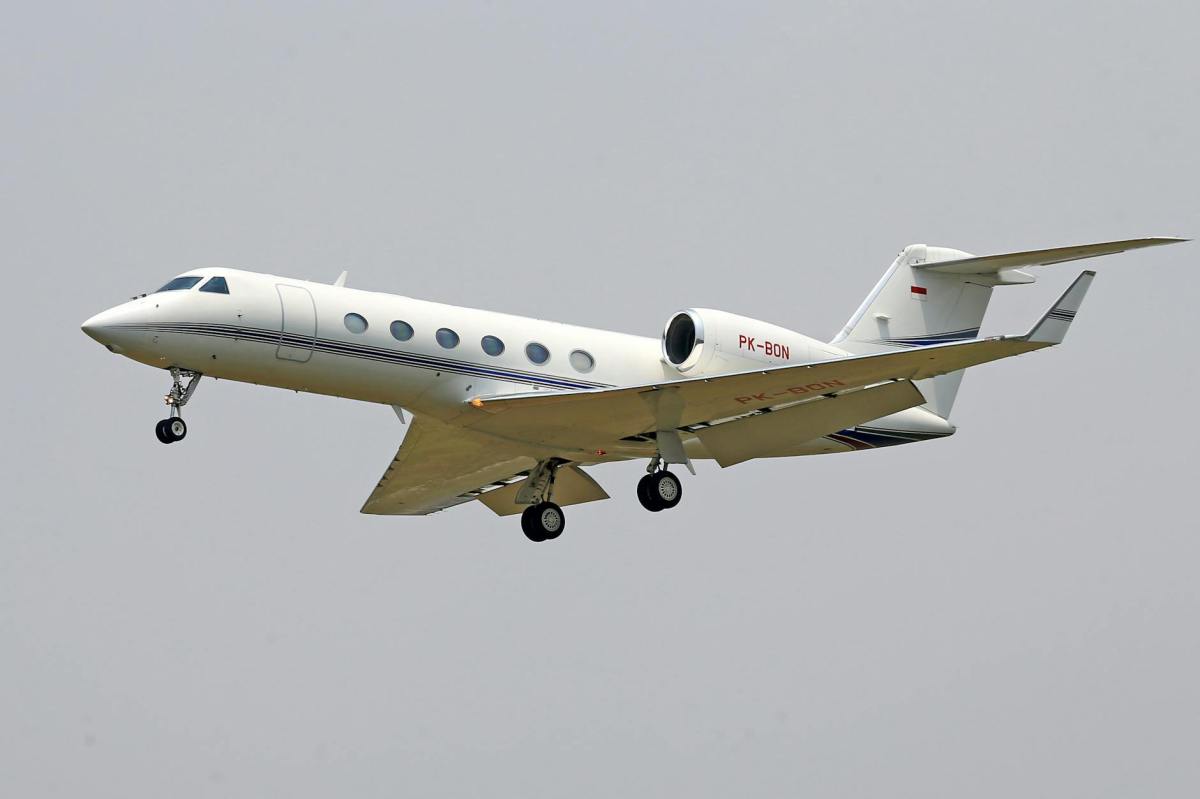
Are the safety standards for all large aeroplanes the same? No, they are not. I’m never sure if the public naively expect this to be the case. I’m sure it’s not something that goes through the mind of every air traveller. Looking up at an aeroplane, flying overhead, this is not a thought that instantly comes to mind. Even watching them take-off and land at a busy airport.

A large aeroplane is a large aeroplane – surely. Well, not exactly. Several issue come into play when addressing the safety standards for large civil transport aeroplanes. For example, when did the type of aeroplane first go into service? What is it being used for? Where is it flying to? How many people are on-board?

One place to start with any discussion on this subject is with the basics. For a start an aeroplane is heavier than air and its power driven. Immediately, two important factors pop out of that definition. One: weight counts. Two: operating engine(s) are needed.

Almost lost in the mists of time are the reasons for dividing the world of transport aeroplanes into two categories. Simply called – large and small.

Underlying this basic categorisation is an historic assumption. This is an assumption upon which civil aviation safety regulation has been built. Namely, that efforts need to be made to ensure large aeroplanes are safer than small aeroplanes. One way of looking at this is to consider a spectrum of risk, and several parameters of concern.

Let’s start with the question above – what is it being used for? A transport aeroplane can be used to carry cargo or passengers, often both. The number of crew and passengers carried can range from 1 to 850[1]. In fact, for large aeroplanes, there’s no upper limit written into international standards. However, the term “very large aeroplane” is coined for the upper end of weight or passenger numbers carried. Sadly, the very largest of these very large aeroplanes (cargo), the Antonov An-225 Mriya, was destroyed by war.

Although, a matter of primary concern is the number of passengers carried, and therefore at risk in the event of an incident or accident, the main dividing line in the regulatory landscape between large and small aeroplanes is weight.

To some extent this has a foundation. It could be viewed that in the event of an incident or accident any resulting impact will be more severe the greater the weight of the aeroplane. This is where a parameter called the MTOW, or Maximum Take-off Weight, comes in. This number includes the total weight of an aeroplane, crew, fuel, passengers, and cargo.

Today, we divide the world of large and small aeroplanes based on MTOW. Yes, the maximum number of passengers that can be carried comes into the equation too. The question I have is, should that be the number one consideration?


[1] https://www.airwaysmag.com/legacy-posts/top-10-largest-passenger-aircraft

Exploring Airworthiness Knowledge

How many good books are there on aircraft airworthiness? I don’t suppose a lot of people are going to ask that question. General introductions to airworthiness are not necessarily bedtime reading. This thought came to my mind, this week, because I had some time to kill in a library. A particularly technical library in London[1]. It’s at the Institute of Engineering and Technology (IET).

Sited in a grand building on the banks of the River Thames. Savoy Place, as the name suggests, is next door to the famous hotel of the same name. What marks it out is a large statue, not of some long-forgotten stage actor or army general, but that of Michael Faraday[2]. His contribution to the modern world is enduring and undeniable.

I’ve been a member of this august engineering institute since my student days in the early 1980s. Then it was known as the IEE. One “E” being for Electrical. Our lectures encouraged us students to join and once done so they have us for life. Members worldwide have access to their books, databases and standards.

I could draw a thread between Faraday’s work and 21st century aviation. It’s a mighty wide thread and one that’s growing all the time. There are so many aspects of electromagnetism embedded in aviation. For example, without electric motors and servos, we’d still be controlling aircraft with strings and wires. Fine, hydraulics play their part too.

Technology has moved on. It continues to move. Electrification is displacing hydromechanical systems. The age of electric propulsion is getting closer as developers experiment with a myriad of different configurations of motors for different new aircraft types. More and more electrical power is needed to make modern aircraft tick.

In the IET’s library there are a few books with the word “airworthiness” on the cover. It’s a distinct niche. More often technical references contain huge amounts of material that concern or impact airworthiness, but the word itself is reserved for the more discerning.

One I picked off the shelf was “Airworthiness: An Introduction to Aircraft Certification and Operations” by Filippo De Florio[3]”. For me it’s full of familiar material. I was surprised at the level of detail and range of coverage. In its latest version, it’s reasonably up-to-date too.

One book that was not on the IET’s shelf is “Initial Airworthiness: Determining the Acceptability of New Airborne Systems” by Professor Guy Gratton. I believe he’s updating this book now.

There was a copy of “Aircraft System Safety: Assessments for Initial Airworthiness Certification” by Duane Kritzinger. Again, for me it’s full of familiar material.

Another book that was not on the IET’s shelf is “Aircraft Continuing Airworthiness Management: A Practical Guide for Continuing Airworthiness Engineers” by Daniel Olufisan.

What I’m wondering now is how many other contemporary books are there on this subject. That is up-to-date references. Yes, I know I could do a quick search to turn up an easy answer but that tells me nothing of the quality of the publications. All four above are worth a read.

Help me out with some suggestions – please.


[1] https://www.theiet.org/membership/library-and-archives

[2] https://www.faraday.cam.ac.uk/about/michael-faraday/

[3] https://www.amazon.co.uk/Airworthiness-Introduction-Aircraft-Certification-Operations/dp/0081008880

Rebuilding Relations

Here I’ve posted a thousand posts. So, it might be a good time to reflect. It was back in April 2016 that this blog started. The provocation being the then pending UK referendum vote. What was to become Brexit and a long litany of mistakes and missteps.

I’d not long returned to the UK from my time in Germany. I had a what I thought was a reasonable sense of the UK political landscape, only to find I was wrong. Here’s what I wrote:

“It’s the biggest event since the Berlin Wall fell. Yes, not to mince my words the UK referendum on EU membership could change the political landscape for a generation or more. It could be a terrible gamble that erects dark walls all over Europe or it could start a new period of enlightenment within the European project.”

I wasn’t far wrong with that statement. The landscape suffered a landslide. Even though the results of the votes were practically even- evens, for reasons that now seem bizarre the electorate swung in favour of leaving the European Union (EU). If the polls are to be believed, then the overwhelming majority now regret that choice[1].

“I’m firmly convinced that our place is in Europe. We are strong enough, we are clever enough and we are determined enough to make that project work. What a bonus that would be: Expanding a market that covers half a billion people on our doorstep. Guaranteeing that the world sits-up and listens to Europe. Unlocking a diverse creative powerhouse where the UK would thrive.”

My then time arguments were coherent, logical and straightforward. I didn’t know we were entering a phase when such attributes were to decline in importance. Should I have been wiser? With hindsight it’s easy to say that the campaign to remain in the EU was appallingly poor. Even if, at the time, I did wonder if the pomposity of the then UK Prime Minister would play a negative part in the outcome.

“The frightening alternative is to gamble with millions of jobs and invite a plunge into recension. If this happens it’s the younger generation who will pay the price. We should not condemn them to isolation and struggle for reasons of narrow nationalism.”

Oh brother. With something like 4% knocked off the country’s prosperity and a government struggling to finance public services, sadly I was spot on the money.

“I’m not saying the EU is perfect. In fact, I wouldn’t say Westminster or my local council are perfect – far from it. But the EU is a work-in-progress and not a finished project. It’s better for British pragmatism. It’s a two-way street as free movement brings people to these shores who then go home with a positive view of what we have to offer. In the next generation that means more trade and better international relations.”

Having seen at first hand the workings of both the British civil service and the European Commission, British parliamentarians and European ones, I could see a common thread. The foolish notion that escaping into glorious isolation would produce prosperity was nuts.

Here we are in 2025. It would be nice to say that – I wouldn’t start from here – but that’s useless. The thing to do is to reconcile, reaffirm and rebuild relations with Europe.  


[1] https://yougov.co.uk/politics/articles/52410-nine-years-after-the-eu-referendum-where-does-public-opinion-stand-on-brexit

Why Timely Aviation Safety Reporting Matters

Waiting for accident reports can be frustrating. I’ve found this to be the case in past experiences. When a major fatal aviation accident happens the demand for information is exceptionally high. That means that every credible source of information will be drawn upon.

I don’t think anyone expects professional aviation accident investigators to come up with instant answers. Extensive and meticulous work is required to arrive at detailed findings. When it’s possible accident investigators publish interim reports to ensure that relevant information becomes generally available.

Countering this reality is the need to ensure that the aviation system is not operating at elevated risk during the period that investigation is being conducted. Information needs to flow to those who are empowered to take corrective action.

Given the nature of international civil aviation, accidents can occur anywhere at any time. There’s no rule, statistical or otherwise, that can stop these extremely rare events occurring. Much as it’s fine to promote an ambition for zero accidents, it’s not going to happen.

The frustration I’ve pointed to is shared by industry and authorities. As time goes by the level of speculation and misinformation always increases where there is an absence of verifiable facts. There’s always a need for industry, authorities and investigators to cooperate. As often each one will have a part of the jigsaw that when put together describes what happened.

For all sorts of reasons, this necessary cooperation does not always exist or exist as a smooth pathway to resolving a situation and initiating corrective action. Where barriers exist and delays accumulate the collective aim of assuring aviation safety is harmed.

The International Air Transport Association (IATA), at their recent conference, highlighted this as being a significant issue[1]. There are international standards, but these standards are not always applied in the manner with which they were intended. It seems obvious to say. It’s essential to learn safety lessons and take corrective action as soon as it’s humanly possible.

Where sufficient resources are an issue then there must be cooperative arrangement to allow others to help. It’s by sharing expertise and equipment that the time between occurrence of an event and the implementation of risk reduction measures can be reduced.

Risk reduction measures do not always need to be the final measure. There are the conventional strategies for addressing aviation safety risk – reduce, eliminate or mitigate. Even if publication of a final accident report is a year or more away, there’s often much that can be done in the interim.

Bureaucratic protocols, political sensitivities and commercial interests are real. However, most governments have signed up to obligations within the ICAO convention and its standards. It’s recognised that timeliness is vital.


[1] https://www.iata.org/en/pressroom/2025-releases/2025-10-14-02/

Recent Aviation Accidents: Lessons Learned, or not

I start from a position of apprehension. Making aviation accidents, documentary style, the subject of a television series does give me some concern. Obviously, there’s the importance of being respectful to those involved. To reveal something that is of genuine public interest.

Accident investigation and journalism seek to answer the six questions – Who, what, where, when, why and how. When it comes to addressing aviation accidents that have occurred in the last 18-months some of the process of investigation may still be ongoing.

My apprehension starts with – what is the purpose of the series? Does it go some way to answering the question – why? That’s especially the case given that word is in the title[1]. Practically the “why” is turned into a probable cause because the “why” can include multiple factors. It’s rare for there to be a lone factor that results in a tragic outcome.

Broadcast last night by the BBC, this series took a selection of the accidents that recently commanded international headlines. The fatal events have been much discussed within informed professional communities and across social media. I’ve written on them too.

[Fatal Boeing 737 Crash in South Korea, Investigating the Black Hawk and American Eagle Collision, Aircraft Safety and Fuel Starvation, Understanding Boeing 787 Avionics.]

We do this to seek to understand. If there are always lessons to be learned, it’s imperative that those lessons be learned without delay. Lack of an informed and timely response exposes the flying public to further risks.

Sadly, a few of the lessons learned in the past have not been translated into change. The fatal accident at Muan International Airport in South Korea is a case in point. Brid strikes are not new. The dangers of flocking birds have been highlighted time and time again. Whilst airports are built near large bodies of water this will continue be a risk. However, it wouldn’t be right to say this is the only cause of the accident outcome at Muan.

Truly tragic are what may be called: avoidable accidents. This is where the event is purely made up of human actions that need not have take the course they took. Processes and procedures were inadequate, and known to be inadequate, for the situation. To me, this is the case of the military helicopter that collided at low altitude with a passenger flight in Washington DC. It’s mystifying as to why past occurrences of near misses didn’t prompt a change to operations.

I’ll say this because it’s not often given credit. A testament to the good design of an aircraft, and the extensive certification work done and the rigorous training of crews, an accident in the Canadian snow did not become fatal. Upon a spectacular heavy landing in Toronto everyone escaped.

On take-off, a London bound, fully loaded Air India Boeing 787 failed to climb. The results were catastrophic in every sense. Not only were all on-board killed but there were multiple fatalities on the ground.  This tragic fatal accident remains mysterious. The published preliminary report is a source of more questions than answers. Facts so far published do not explain the sequence of events.

What connects this spate of aviation disasters? Nothing, that I can determine. Although, there is the importance of lessons learned. They are not that compilation of dusty past accident reports that sit on a shelf. They are a source of everyday learning. That is learning that needs to be put into action. Timely action. Not waiting for a final publication.


[1] https://www.bbc.co.uk/iplayer/episode/m002kw1n/why-why-planes-crash

The Legacy of Beeching

Two hundred years is a long time. No, it isn’t. William the Conqueror, that’s the sort of name politicians crave, called for the building of Windsor Castle in England. That means, almost but not quite, a thousand years of continuous use. I guess in 2070 there’ll be a big celebration of the achievements of the Normans. Certainly, seemed to impress US President Trump.

If I had a time machine one of the destinations that I’d consider is 1963 and maybe 1965. I’d take a mass of press clippings and audio recordings about inadequate rural bus services and the high-speed railway saga (HS2).

History has a way of condensing a whole succession of events into a few simple words. William was a conqueror, but 1960’s civil servant Beeching was an axeman. That can be said to be unfair, since he was mandated to produce a report and, in the context of the times, British railways seemed like they had overexpanded and wouldn’t be brought back into profitability.

This happened when I was a child. I can just remember on my way to primary school stopping at a railway crossing and waiting a steam train to pass. It could have been the milk train. At that time milk was transported from west country dairy farms, in churns, to the local milk factory. Then loaded onto a London bound train. All this activity disappeared as I grew up. It was displaced by road tankers forcing their way along country roads.

I was born in a small Somerset railway town. Got my first pay packet in that small railway town. Had a couple of weeks of my engineering apprenticeship in the former railway shed. Spent time in the small motorcycle shop next to the railway embankment.

Beeching’s reports resulted in thousands of stations and thousands of miles of railway line being closed. The Somerset and Dorset (S&D) railway line was one of those that vanished. It was on 6 September 1965, the consent for closure was issued for most of the railway line.

Strangely, it was a newly elected Labour government that promised to reverse railway closures that closed the railway. A campaign to save the line was lost. Now, I think, what if, what if the new government of 1964 had not been so beguiled by modern road building and the white heat of technology. The internal combustion engine and purveyors of tarmac had won the day.

My message is to commission reports with a wider remit than merely improving economic efficiency. It’s a concern that is as ap today as ever it was. State of the art technology is alluring. Sloganising it’s easier to say that we are moving forward to a new dawn than it is to say we will update and improve the machinery we already use. There are good cases for scrapping past ways and means. Surely, it’s as well to try to look beyond immediate pressures.

Had Beeching’s axe not been so readily swung then we’d have an alternative to ever more road building and the billions ploughed into it. Remember those feeble promises to invest in local busses to replace the lost trains. How such recommendations are so quickly forgotten.

What will we say about robotics and artificial intelligence in 60-years’ time. Or even 200-years’ time. If we are still here.

Exploring the Greatness of Great Britain

What’s great about Great Britain? GQ has asked this question[1]. Produced a nice article that looks at this subject with a cultural eye.

It’s a bit retro. When we (Brits) start talking about how great pubs are there’s a tendency to forget how many we have lost in the last decade. If we loved them so much, then more would have survived crushing economic pressures.

Brit pop was a wonderful surge in creativity that swept across the country in the 1990s. It was good – mostly. Riding that wave, because we are romantic souls about the past, are the band Oasis with their multimillion £ world tour. Accounts of which are tremendously positive.

I think I can take a position about what’s great about Great Britain. Having lived in Germany and travelled a bit, my perspective isn’t too insular or defensive.

Because we are no longer the world’s premier power and imperialism is a fading memory, we’ve shed the stiff upper lip and bowler hatted civil service bureaucrat image. It’s there in film and television to remind us of former times. It’s few who want to return to all that deep seriousness.

That seriousness is the burden that the US carries. If they send a gun boat somewhere it means business. For Brits it’s more a symbol of still being on the stage. Don’t get me wrong, as a country we box way beyond our size.

For all the right-wing jerks who parade around with false patriotism, our great strength is diversity. Having that legacy of the world map once having been painted in a great deal of red, we can now engage with multiple cultures and benefit from them all.

Number one of the lists of inherited advantages is being able to speak to the world. Not in their language but in ours. English doesn’t belong to the English any more, it belongs to the world. They amount to a lot; the times I’ve had fun reading Brussels English and being amazed at how it’s being used.

Pick a discipline. Science, technology, humanities, art, entertainment, there’s always a Brit that can be named as shaping the world. Influencing others and providing a spark that sets off a flame.

Now, being more parochial, I’ll look around me, in this town, and see a diversity of styles from punks who never stopped being punks to suited tie wearing customer service executives. Welly booted farmers in the town for a day to young gamers stuck to their small screens.

Sport is another anchor. If we (Brits) didn’t invent it, then it’s a derivative of something we did invent. Top that with the eccentricities from international tiddlywinks[2] to stone skimming. Despite the school of hard knocks we still value fair play.

Comedy is taking a downturn, but the British legacy is monumental. Irreverent, rebellious or intricate, often all three, even if we (Brits) do invite in the bland factory-made stuff from the US. In a unregarded small corner there’s a someone writing hysterical lines waiting to be discovered.

So far, as a nation, 2025 won’t go down in history as our best year. I’ve every faith that the best is still yet to come. Unlocking that dynamic zest, that quirky imagination, that complex amalgam happens several times every decade. Let’s hope the spark is just about to be set off.


[1] https://www.gq-magazine.co.uk/

[2] https://iftwa.org/history-of-iftwa/

Political Intervention by Billionaires

I’ve heard several people downplay the political intervention of the world’s richest man. This last weekend, he chose to address a large gathering of right-wing activists in London. Not there on the streets, but remotely by video. From another part of the globe.

It’s almost as if some media commentators are treating him as a naughty boy – nothing to see here, boys will be boys. What do you expect? Never mind, this is just what he does.

What comes to my mind is part of my student life in the late 70s / early 80s. Coventry is a great English city. Its football team has had more than a few ups and downs. What I remember is a Saturday afternoon with a large cordon of police lining the way between the railway station and Highfield Road. A palace of galvanised steel sheeting in a red brick terraced area of the city. Highfield Road’s football stadium no longer exists.

In those days, English football hooliganism was a set piece event that was as predicable as the seasons. It was a time to avoid parts of the city centre on a weekend. These events were regularly played out throughout the country. That era has passed – thank God. It’s not that football hooliganism is entirely dead. It’s that there are far fewer people who fit that description and they are generally socially ostracised.

In my mind, this weekend, Elon Musk acted like a hooligan-in-chief. Addressing a London crowd that was already steamed up and out to make their protest heard. Parts of that protest turned to violence.

Now, I’ve nothing against protest. I’ve been on a several. It’s that the ones I’ve been on have been peaceful and good natured. That was certainly the case during the many London protests marches against Brexit. Hundreds of thousands marched without incident.

Speakers address protest marches to amplify the message of the protestors. The reason for the gathering. Most often those notable speakers are people with what might be called – skin in the game. Campaigners who dedicate their time to a cause.

Outside agitators, without any discernible affiliation, can be a nuisance. At worst they are agent provocateurs out to ferment trouble. I think, Elon Musk’s acts were shameful and unwelcome.

London has a place called Speakers’ Corner. North-east corner of Hyde Park. I’d invite this gentleman to go there, take a stand, speak for a while and see if his way of thinking stands up to public scrutiny. He can be as irritating, contentious, or eccentric as he likes.