Relationship with the EU

Monday, Monday[1]. It’s a wonderful 60s song. Harmonies and mood are perfect. I wonder if the harmonies and mood will be perfect for the Prime Minister (PM) on Monday. Already the Sunday Press are setting the stage for Monday’s performance.

Reset, recalibration, reheat, rekindle, re-whatever. It’s a moment when relations between the UK and the European Union (EU) can make realistic progress[2]. In world full of uncertainty (could be a song in that one), for once the direction of travel is a constructive and positive.

I think the word “deal” is getting overplayed. Indications are that there’s no fundamental shift from Brexit meaning Brexit, as one former PM liked to say. In fact, the current PM is being highly cautious in the light of his Party’s reading of the latest opinion polls. For no sane reason I can think of, the swivel-eyed loons of the far-right are making hay.

It’s astonishing me how dim-witted the Conservative Party is in objecting to something when they don’t even know, for sure, what it is. Mind-blowing. And the rum cult of Reform Party doing the same with extra bile. What a load of prehistoric fruit loops.

Brexit supporters are spreading misinformation, again. Saying that UK has no influence. It’s true, the UK doesn’t have votes in the European Council or Parliament, but significant influence can be exercised on standards, and regulatory guidance, nevertheless. A better “deal” can bring much greater influence. Absolutely vital in the digital world, and for the UK, a country with a services-based economy.

Brexit has cost the UK dearly. The UK Treasury would have billions more in its coffers if the 2016 referendum had never taken place. The standard of living of every person in the UK is lower because of Brexit bungling. Ideally, that great mistake is an event to be written up for the history books and then forgotten.

On top of the above, uncharacteristic moves in the US, with Trump tariffs there’s nasty hit at the UK’s future prosperity. There couldn’t be a better time to repair relationships with the UK’s nearest neighbours. The countries with which we share most of our long history.

Even for those on the political right, practically, the EU is never going away, so until the day the UK rejoins the block, it’s wise to have the best possible relationship in all matters. Goods, services and people need to connect as a case of mutual benefit.

It’s time for hope. An optimistic tone should be set. A smile. Let’s hope we are singing Monday, Monday so good to me, Monday morning was all I hoped it would be. Naturally, that there be no crying, come Monday evening.


[1] https://genius.com/The-mamas-and-the-papas-monday-monday-lyrics

[2] https://www.independent.co.uk/news/uk/politics/brexit-uk-eu-reset-trade-deal-starmer-b2752285.html

Action Shapes Outcomes

There’s a foolishness that comes with great power. It gets played out every day over the News media. It’s when notable person x or y says words to the effect; nothing will happen unless I do it. This common notion gets projected to us through mass reporting and commentary.

Every second is a pivotal moment. A last chance to move, or a last chance to act. As if time stops when we know it branches into countless possibilities. Fine, pivotal life or death moments do exist. It’s only that they are less numerous than we might be led to think. Drama takes its place in the theatre of the everyday[1].

There’s an ancient lesson to learn. It goes like this, in a simple demonstration. Place any finger into a glass of clear water. Now, remove the finger and observer the hole.

It’s a lesson Archimedes would appreciate. Although he’s famous for displacement being an indicator of what’s doing the displacement. Between the two it’s the water that’s the constant. The ebbing and flowing of time. At least as we humans perceive it.

It’s not that an individual can’t make a difference. Far from it. Individual action can make a dramatic difference. Doing the right thing at the right time, if the opportunity arises, can be the difference between catastrophe and nothing much in particular, as an outcome. In the world of major accidents, designers and operators desperately try to avoid the possibility that a single act or failure that leads to catastrophe, but it does, on rare occasions happen.

The point in discussion is the matter of what is indispensable. How often do we get to choose what is indispensable? After an event, it’s easier to answer the question. Looking back, it can be said that the factor that made the most difference was this one or that one. Before an event, we are in the land of probabilities and shiny crystal balls. Mathematics and mysticism.

The Cuban Missile Crisis[2] offers a lesson. It was only in retrospect that people learned of the action of a Soviet Naval officer who prevented a submarine from launching a nuclear torpedo.

History tells how the pivotal moment arrived. That said, there was no way the man concerned knew before time that his role would be indispensable. History would be written dramatically differently if a nuclear engagement had happened.

In the end it comes down to doing the right thing at the right time when the opportunity arose. Sometime swimming against the tide of events. Not magic exuded by a powerful individual strolling the stage.

POST: A better one. All The World’s A Stage By William Shakespeare · Jim Broadbent https://youtu.be/gUJBEy-tbo0?si=NMkIRpIr8H0wdTgv


[1] https://youtu.be/caaPlIX6AkM

[2] https://www.jfklibrary.org/learn/about-jfk/jfk-in-history/cuban-missile-crisis

Humanity and Tolerance

Who doesn’t know this short sentence? “A rose by any other name would smell as sweet”. It has a particular meaning in play Romeo and Juliet. It’s Juliet saying she doesn’t care about her loves’ family name. The source of their great troubles. Being elegant and fragrant it’s no surprise that Shakespeare chose to speak of a rose.

More broadly this phrase makes the point that calling something different doesn’t change its core characteristic. Roses might not be the best example since naming these flowers plays a big part in distinguishing between one and another. So many modern hybrids. Instead, let’s go for trees. “An Oak by any other name would be a noble tree”. Which remains appropriate despite the number of different types of Oak trees.

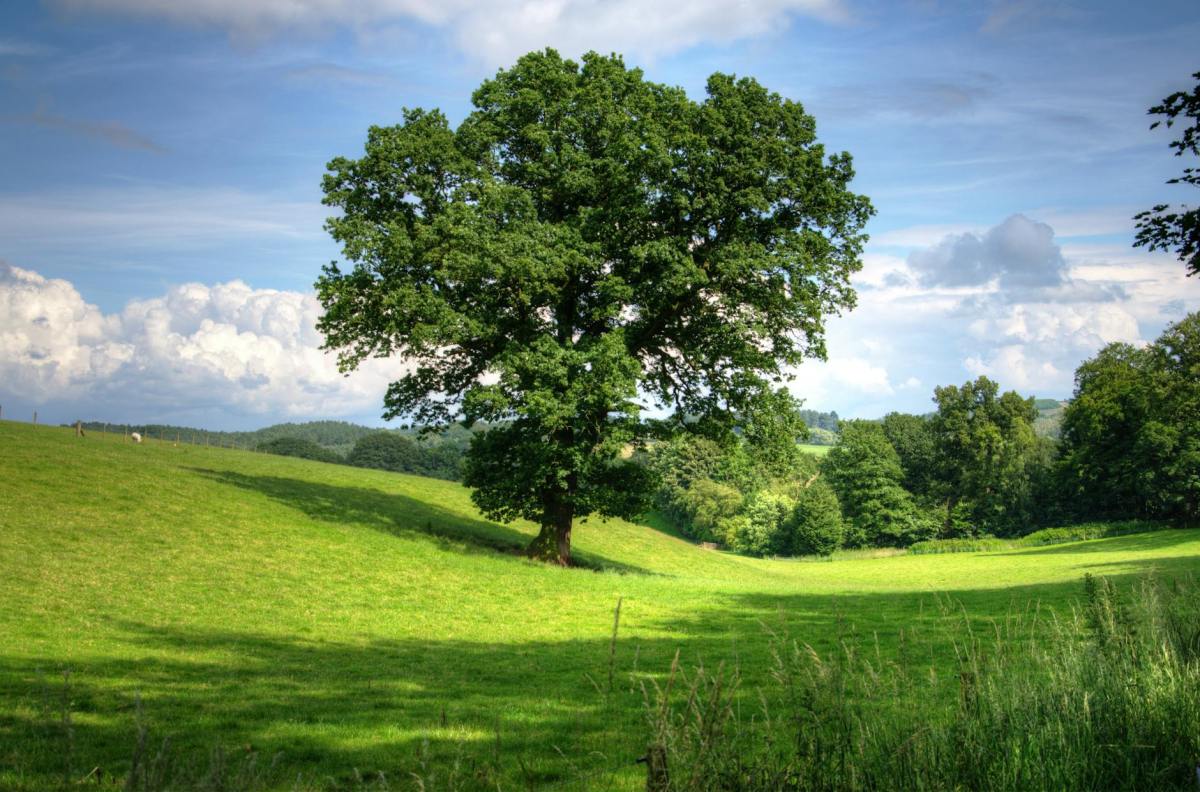
Over the weekend, I was standing under a large ancient Holm Oak[1]. It had to be pointed out to me that that this type of Oak tree is evergreen. Most Oaks are not. An aged, stately and weathered one is definitely a noble tree.

I’m finding the News reporting of the moment mixed-up and confused. The word “diversity” gets thrown around like a political football. Let’s be clear. Diversity is everywhere. It is not unusual. Names are labels that we use like a scatter gun. Often to try to pick-out, to differentiate one group of humans from another. Not always with good intentions in mind.

Let’s remember our essence and intrinsic quality is that we are human. We live on planet called Earth and we need to find ways to get on with each other.

Today, there’s rather a lot of us. Globally, over 8 billion. However, that’s not the key factor. Let’s face it, in Shakespeare’s time there was a fraction of that number[2]. All the great strife and troubles he wrote into his plays are here now, as much as they were in his time. Proportionally, the diverse range of people and their ways of living haven’t changed that much.

It would be wise to heed the lessons of history. As we segment, categorise and slot groups of people into specific camps. The digital age, social media has added a dimension to this process. Now, likes and dislikes pigeonhole people into “similar” groups.

Here, I’m trying to keep the topic generic. Recent judgements from eminent judges, although necessary, hasn’t added a much to social harmony. To say “the law is an ass” is no understatement. I certainly wouldn’t want to fly on an aeroplane designed by lawyers. Although, it would be safe since it would never get off the ground.

I believe, we should treat each other in a way that respects that we are human, and thus diverse. That means tolerance and mutual understanding are essential. Not optional. Creating the need for bathroom police is the dumbest thing venerable British judges have done in a while.


[1] https://www.woodlandtrust.org.uk/trees-woods-and-wildlife/british-trees/a-z-of-british-trees/holm-oak/

[2] In 1600, around William Shakespeare’s time, the estimated world population was around half a billion. London’s population was about 245,000.

Cartoons capturing us

To me, it’s fascinating how a few lines of pen and ink can sum up so much. One of the great underestimated influences is the power of the cartoon. They speak of their times, they speak of social niceties, they speak of the ever-moving conveyer belt of humour.

Every day the cartoons of MATT[1] sum up, in a witty way, what the News has to say. A little composed abbreviation of an event, a thought, or an idea. Not the least bit easy to do unless that’s your talent. Believe me, I’ve had a go, and the results were not good.

A picture can tell a thousand stories. Substitute for page of words. Often this is said about photography and not so much drawing. Pictures have a language all their own. Their properties escape the communication difficulties that language can throw up.

Back to the few lines. A minimalist drawing in black and white with a sentence is the basic format. I wonder which comes first. The witty line or the image? I’ll bet that varies from person to person. An idea must spring from the mind first.

Let me say right away that not every cartoon hits the mark. I’ve got a daily tear-off New Yorker cartoon[2] calendar. It has a cartoon for the day. In the morning, I’ve torn off the last day and pondered at the worst of them, thinking what on earth were they on when they selected this one.

The reason I started writing these words is a reaction to the cartoons of H.M. Bateman[3]. He’s from another era. A world of English etiquette that has faded with time. Although, I expect if you go to the races at Royal Ascot[4] Bateman’s world lives on in its modern form.

What came to my mind is the link between social media and Bateman’s view of the world. A lot of his cartons depend on the notion that just below the surface the English are about to explode at any moment. Like the 1970’s sitcom character Basil Fawlty.

Under the social equilibrium that enables society to function there’s a seething mass of rage. A bubbling anger that can spill over at the least provocation. Then reason turns into unreason.

A sense that a minor faux pas reveals a sense of injustice that has simmered for years. One small social blunder and an avalanche descends on the poor victim. So, is social media behaviour merely an extension of a human characteristic that has aways been there? That we can easily take a violation of etiquette or social norms wholly out of proportion.

And my further thought. Have certain unscrupulous politicians learnt how to exploit this suppressed emotion. Have encouraged the volcano to explode on que. Prodded and poked it. Even having lifted the vail on the weaknesses of you and I, meant that they could get away with innumerable gaffes, and blunders. There’s an essay for a bored writer to take-up.


[1] https://www.chrisbeetles.com/

[2] https://www.newyorker.com/cartoons/daily-cartoon

[3] https://www.hmbateman.com/

[4] https://www.ascot.com/royal-ascot

Light in Dr Who

I’ve started so I will finish. There’s a good line. Don’t worry I’m not going to write about quiz shows but it’s time for another short review. I have seen the light. Well, switched on the TV.

Flashy clothes, 50s vibe and excruciating way of getting there. The second in this new series of Dr Who twisted and turned around an attempt to get home. There’s a theme. Adventures on the way home. Wonder where that idea came from? An odyssey of a flight in time, one might say.

In a digital age a flip back to an age of film was a nice touch. It’s kind of funny how animation is now so much easier done. Film is becoming a museum artefact. I don’t think it will get the popular revival that vinyl is getting.

Explaining a job like “projectionist” to newer viewers isn’t necessary. Wasn’t done. Takes me back to the small flee pit of my youth and the story of a living Volkswagen Beetle[1]. That’s quite freaky. Jumps in the film, munching crisps in the theatre and sitting in the dark when it was daylight outside.

The sinister and creepy monster turned out to be a being of light. Like a Twilight Zone moment, a menacing cartoon character came to life. Given the various realms through which the doctor travels, this is not unexpected. Good job there was only one of them to defeat.

Beings of light[2] are a popular science fiction theme. They crop up now and then on both good and bad sides. I like the ambiguity. That one entity can flip between good and bad. It wasn’t so much a tale of an evil moonbeam as one of light finding a path to becoming substantial and physical. The dark of night or, in this case, the cinema world turned the mischievous moonlight to the bad side. Only a release back into the bright light of day let it rejoin the sunlight and starlight of the universe.

Plonk in the middle of the show was a breaking of the fourth wall. That boundary between the fictional characters, the Doctor and companion, and the imagined audience at home. Suddenly one was real, and the other was fiction (even though they were both fiction).

After a good haunting the colourful cartoon menace was expelled. Given how easily it got into the cinema in the first place it’s a wonder this story isn’t repeated a million times.

Confusing at times, the suspenseful moments were jarringly technicolour. Sometimes less is more. This was a case of packing too much content into a rapid-fire story.

Having wrapped up a 1950s mystery, the Doctor is back to his time travelling.


[1] https://en.wikipedia.org/wiki/Herbie

[2] https://babylon5.fandom.com/wiki/Vorlon

Revolution: Hype vs Reality

Talk is of a revolution[1]. That sounds sensational. It sounds like marketing talk aimed at creating an insatiable desire for something new. So, that kind of talk immediately switches on the cynical side of my brain. Is this hype or is it real?

We’ve had plenty of both in my lifetime. Colourful boys adventure books with novelties like nuclear powered aircraft and moonbase vacations. It’s not that “flying a kite” is entirely bad. Those imaginings of the future had pictures of prototype flying cars. Now, we maybe on the verge of that prediction becoming real.

AI is not new. It’s been a research subject for decades. What we have most recently is the coming together of concepts and the practical machines on which to run those concepts. Amazing has been the speed of progress. That’s a modest word considering the sudden adoption of new tools that go way beyond simple INTERNET search engines.

Bill Hunter’s line: “You can’t stop progress”. At least that’s the line I remember of the 1994 film Muriel’s Wedding[2]. It was said on a rocky path to “progress” induced disaster.

My curiosity centres around avoiding the hype and finding out what’s real. That’s in the vain hope that I might not be left behind in this rapid surge of “progress”. So, to keep up with the latest technical developments I clicked on a TED App. The boss of TED, Chris Anderson has recently interviewed Sam Altman, the CEO of OpenAI[3]. He’s the guy behind ChatGPT. AI has elevated new people into the spotlight. It’s given established technology companies a headache. Their desire to be in the pack, or leading the pack is mighty strong.

My takeaways form this interview are that AI will outpace human intelligence, in time. No one knows how much time, but the path is set. The direction of travel isn’t in the control of traditional institutions or government departments. Society must get its head around a time when we live with machines that out pace us.

Second, it would be nice to have an enlightened global regulator to ensure that the massive amount of development going on produces outcomes that are for the public good. Chances of that happening are about zero, although not zero. There’s even a possibility that the industry at work on this technology realises the need for a set of enforceable rules.

Questions of safety are paramount. Even though society debated the impact that the INTERNET would have on us, steps to provide protections and boundaries only came about after the event. Lost in a storage box, I once had a book called “The Sleeping Sentinels”. Basically, the thought was that political parties and the legal profession are always more than ten steps behind the technologists. We are highly reactive.

One interesting aspect of the interview was the pauses. What was evident is that it’s hard to find the right language to describe what’s happening. Walking a tight rope between sounding like Chicken Little[4] and a wise respected elderly professor. Revolution is the right word.

POST: It’s not just IT Why AI Demands a New Breed of Leaders


[1] https://youtu.be/Xv8FBjo1Y8I

[2] https://www.youtube.com/watch?v=PLDcevp5w5o

[3] https://www.ted.com/talks/sam_altman_openai_s_sam_altman_talks_chatgpt_ai_agents_and_superintelligence_live_at_ted2025

[4] https://www.rottentomatoes.com/m/chicken_little

Who 15

As per tradition there was a moment of running down corridors pursued by robots. Add to that the shock horror realisation that it’s bigger on the inside than the outside and the staple diet of BBC Science Fiction is playing again.

Dr Who is rolling[1]. As expected, Russell T Davies works magic with a super-fast story line. In fact, so fast that I’m going to have to watch it again to figure out exactly what the featured rift in space and time did to the plot. Thematically up to date as the main baddy in control of the evil robots was both misogynistic and AI. I’ll give something away if I reveal that the two letters AI were not what they seemed. Not only that but the robots were redeemed.

Although there was a smidgen of absurdity and an expectation that the audience would draw of decades of Dr Who mythology, the show hit the mark. Afterall it’s entertainment not a profound reflection on the state of the world. It’s colourful Saturday night drama that the whole family can watch. Although in this case there was no need to hide behind the sofa. Also, a lot of the 21stC social commentary would be lost on younger viewers.

Because the series has been running for such a long time there’s a bit of repetition that creeps in. This is not bad per-se. It’s a reminder that coming up with truly original scripts is incredibly hard. Imagination has no limits but when pen hits paper past references helps move stories along quickly.

Adventures in space and time could go on forever. All time, in fact. The subject has no limits. Each version of the Dr Who saga will be set in the context of the audience’s everyday reality. So, the Daleks were a product of nuclear war, and now humanities greatest threat comes from billions and billions of electrical ones and noughts.

Playing with humankinds’ curiosity about space and time is fruitful territory. Imagery can be fantastical and push the boundaries of video production. If anything, Dr Who is modest in pushing at those boundaries. Mustn’t forget that it’s prime time entertainment. Real space and time are far more than a headful.


[1] https://www.radiotimes.com/tv/sci-fi/doctor-who-times-release-schedule/

Unlocking Prosperity

“So, whatever you wish that others would do to you, do also to them, ………”

This is the code of reciprocity. In other words, I’d like you to be generous to me, so I’ll be generous to you. Now, of course this works the other way around in a perverse way. Perfectly human, although it’s tainted with suspicion. I’d like you to be generous to me, but I think you are unkind, so I’ll be unkind to you.

I don’t think that’s what Apostles had in mind. Their teaching is first to urge us to be generous as a way of encouraging others to act similarly. A lot there depends on how you view human nature.

For a long time, the United States (US) has had relatively low import tariffs based on adopting a leadership position. It’s to say, you should be like us. If you do that, there’s a chance that we will both become more prosperous.

Generally, argue how you will, as a result the US has become the most prosperous nation in the world. I know it’s only one measure but looking at the numbers of billionaires by country 2025[1] the US stands out. Over a quarter of the world’s billionaires live in the US.

I started with a Christian quotation and so it may be appropriate to ask how generous those fortunate billionaires are towards the people of their own country? I won’t go there. A nations prosperity should not depend on the philanthropic endeavours.

This year a lot has changed. Established ways of working are getting all shook-up. Ambition, suspicion and rivalry are all taking centre stage. An ambition to be unquestionably greater than all others. A suspicion that most others are taking advantage. A fight over valuable and often limited resources.

Again, human history is littered with times when such forces took over. Interestingly, Christianity gained a footing at a time when the Roman empire was plundering anything it could get its hands on. However, I’m not advocating a moral code to moderate the instinct to be imperial.

All to often those moral codes are just moulded and shaped to fit the prevailing circumstances.

No, my appeal is to mutual advantage. The simple idea that 2+2=4 is not the be all and end all of reality. In human affairs we can with effort make 2+2 equal more. It’s that saying that the whole is greater than the sum of the parts. It’s why people work together for common advantage.

Yesterday, I don’t suppose for a moment that ancient monument that I drove past would be there if it were not for the above benefits of having common goals and a willingness to cooperate. Stonehenge.

Trade barriers are foolish. Walls prevent the spreading of prosperity.


[1] https://worldpopulationreview.com/country-rankings/billionaires-by-country

The Curious Case of Lists

How on earth does a humble soul like me make any comment at a time like this? Adding to the realms of things already said seems a bit pointless. We now have echo chambers sounding in echo chambers. Instead, I’ll take a sideways look. Mention one or two of the items that struck me during the week.

Penguins are getting a lot of Press. Ever since Trump decided to slap a tariff on an island inhabited by penguins there’s been a lot of speculations as to his ultimate motives. If I take Feathers McGraw as an example, I can well understand the need to make a pre-emptive strike against such a potentially villainous bird.

Of other notable penguins, I can only surmise that Trump has never heard of Pingu[1]. Now, there’s a subversive penguin if ever I saw one. He originated in Switzerland, which is strange to say the least.

I almost forgot another memorable fictional penguin of the past. A threatening comic character that combines menace with a gentlemanly swager[1]. One of Batman’s greatest foes. A well dressed master criminal unlike other criminals one might mention.


[1] https://youtu.be/yxqz9JqXdJU

I forgot it this year. Next year, I will pay attention to Penguin Awareness Day. 20 January might be winter to us but its summer to them. Birds that have the decency to dress up in black and white dinner jackets deserve some respect. I for one, will express my concern that the exports of our feathered friends may be taxed. Could it be that Trump is confused. Afterall the real penguins love the ice in the southern hemisphere. In fact, nowhere near Greenland.

“I’ve Got a Little List”. There’s a phrase that comes to mind. Lists, one in particular, does seem to have hit the News this week. I ask, why is there no modern-day equivalent of Gilbert and Sullivan? Accepted, companies do play with their songs and make words to fit the situation of the day[2]. There’s a great deal of scope for new lyrics.

The fabric of social media would rupture if there were no lists. I’m often entertained by an animation that shows a compilation of data as it ripples through the years. Something with colourful bar graphs that go up and down as the rank and order changes. A musical accompaniment that has no relation to what’s being presented. Lists are captivating. They spur a natural curiosity to look for the item of most personal interest. So, over time the economy of X or Y country goes up and then down and then up again. For sure, nothing stays the same for long. That maybe the moral of the week.


[1] https://youtu.be/7Uoug3d3AJE

[2] https://youtu.be/1NLV24qTnlg

Tariffs Fail

Do you need to be a monster brain in economics to get the hang of tariffs? If you deep-dive into all the complexities surrounding every possibility, maybe you do. Nevertheless, the basics are the basics. Much like erecting a wall. Putting up a barrier makes it harder to do business. Harder to communicate. Harder to understand common concerns.

It’s a perfectly human thing to do. We erect barriers all over the place. That garden hedge, wooden fence or brick-built wall are a statement that says, this bit is mine and that bit is yours. Rarely is this absolute. Both sides of these unnatural barriers have mutual interests. Not admitting that reality is a problem. In fact, disputes between neighbours are one of the most common forms of dispute.

A barrier isn’t an invitation for you to disregard the concerns of your neighbours, and vice versa. That all night party, with the music turned up to eleven, maybe fine once a year but don’t do it every week. Well, don’t do it unless you are quarrelsome.

Economic barriers, like tariffs, are going to happen. When perception is all, the idea that one party can protect itself from those who would wish to do harm or take advantage, is very powerful. I say “perception” because a threat doesn’t need to be real. Politics is much about perception.

Trouble is that erecting barriers has a painfully poor history of failure. If we go back to walls, there’s not one that has stood the test of time. Maginot Line[1] is a case in point. The lesson there is that a barrier concentrates the opponents mind on how to overcome it. The elaborate nature of a barrier is no defence to the inventive mind. Barriers are time limited.

Tariffs, and non-tariff barriers are much the same. They may work to advantage for a while only to crumble when their weaknesses have been discovered. Although, I would say that non-tariff barriers are more powerful than straightforward economic barriers. The point being that the former is far more difficult to understand, counter and control.

2025 is a year of volatility, at least so far. Talk of tariffs is on, then it’s off, then it’s on again. It’s the real cat on the hot tin roof. A hop, a jump, and a skip. Everyone is left wondering what comes next. Even if there’s to be any return to a form of reasonable stability anytime soon. That’s the point.

Disruption offers opportunities. At least, for those quick inventive minds with resources to hand. If you don’t fit into that category, then chances are there’s a big downside and a lot of hurt.

To give the monopoly of the home market in the produce of domestic industry…………………must, in almost all cases, be either a useless or hurtful regulation. Adam Smith. The Wealth of Nations (1776).


[1] https://www.britannica.com/topic/Maginot-Line