Navigating Aviation

Each profession has a way of speaking. This is not usual. Just try reading a long-winded contact on any subject. There are lots of references to a “third party” and more than one. Copious uses of the word “herein”. A good sprinkling of “hereby” and “foregoing”.

I don’t speak those words. If I used them in everyday conversation, I’d get locked-up. Nevertheless, these English words are universally applied to common legal documentation. The hundreds of End User License Agreement (EULA) that we all sign up to, whether we know it or not, apply legalese language liberally [love the alliteration].

Aeronautical people are no different. I could have said aviation people or professional flying people. There’s the rub. Even to say the same thing, there are a myriad ways of saying it.

One major problem that we all encounter, now and then, is having to work with a community that uses language in a different way from ourselves. I’m not talking about language as per dictionary definitions of words and standard English grammar. For good or ill, English opens the door to a numerous of ways of saying basically the same thing.

Professional English users, as I have alluded to above, choose their own pathway through the possibilities. English is not alone in facilitating this variability of expression.

I once worked in Bristol. A Filton. A large aircraft factory with an immense heritage. That included the Concorde project. Here both British and French engineers had to work closely together on a huge joint venture. It succeeded. Supersonic flight was commercialised.

One of the delightful little books I picked up from that time was a handy English/French dictionary of aeronautical terms. Those in common usage at an aircraft factory of the 1970s. To communicate effectively it was recognised that technical words needed to be explained.

What I’m noting now is this reality hasn’t gone away. For all the imaginative language Apps that might grace my mobile phone, there’s still a need to explain. This gets even more important when it’s a specific aviation community that is being discussed.

How do people from other communities get what regulatory people are saying when it’s perfectly obvious to them what they are saying? Take a banker or financier that wants to invest in electric aviation because they believe the future points that way. They come across bundles of jargon and precise terms that are not found in everyday conversations. Not to say that the world of money doesn’t have its own langauage.

In aviation there’s not only particular words with detailed meanings but a raft of acronyms. Combinations of words that are easily expressed as a package of letters. Then the short, sweet acronym surpasses the original text.

SMS, POA, DOA, ODA, OEM, TSO, TC, ICA, CofA, SUP, FDM, FAR, CS, NPRM, NPA, AC, AMJ, ACJ, GM and I can go on and on.

Maybe we need a Sub Part – better understanding.

Wealth and Power

No history buff, need you be. That’s Yoda speak for saying that there are one or two matters that bubble to the surface through human history. Let’s shelve the fact that the sun rises in the morning and sets in the evening. It’s a subject that a whole religion could be based upon.

I could encapsulate the phenomenon in the words: “Let them eat cake”. An example of a stratified society where those people that the top have completely lost sight of the lives lived by the majority. There’s a recognition that others exist but no great empathy or care.

That detachment can be exhibited in signs like gold plated panelling, crystal chandlers bedecking breathtaking halls and spare no expense expressions of power and wealth.

That’s one of my memories of my one visit to Russia. A port of call during a Baltic cruise itinerary. A trip that highlighted fascinating contrasts but shared histories. A good reminder of dramatic events. The Winter Palace in Saint Petersburg[1] is truly stunning. Lavish in every sense. A sign of the last century intense competition between major European powers.

To top a list, the Palace of Versailles[2] is the premier example of draw dropping magnificence. Naturally, these are global statements of power and wealth that are celebrated as part of our common heritage. They are, however, a lesson that history has posted for us to read.

What do both have in common?

Today, Kings and Queens are familiar with that lesson. Possibly apart from a small number who haven’t yet embraced modernity. If I must write it in the minimum number of words, it’s that distance that can grow between those who have great privilege and those who don’t. Then what happens when that becomes truly unstainable.

Revolution is bookmarked in any history book. These are moments, and their consequences are when a break point is reached. Although signs are there in hindsight predicting such events is a fraught with uncertainty. It’s usually thought that the price of destruction and devastation are a dam that keeps thoughts of revolution at bay. Change that happens, as if a dam breaks, are notoriously difficult to predict and cost. Not only that but such thoughts are rarely in the minds of any revolutionaries and their opponents.

Let me be clear. We are no where near a breakpoint in this moment. If I must write something, it’s more about the subtle signs that the direction of travel is not a positive one. Fine to dismiss my point of view as being that of a dyed-in-the-wool liberal. I get that.

It’s the consequences of the concentration of power and wealth that’s concerning. The rise of the global billionaires and their reach beyond national boundaries is of the age. Nation states are no longer the biggest players in the writing of the story of the future. This is not always entirely bad, some are altruistic, but growing economic inequality[3] is bad. Outcomes from situations where inequality exceeds certain limits, that’s not where anyone sane should go.


[1] https://www.historyhit.com/locations/the-winter-palace/

[2] https://whc.unesco.org/en/list/83/

[3] https://sites.manchester.ac.uk/global-social-challenges/2022/07/12/widening-of-the-wealth-gap-the-rise-of-billionaires/

Embracing Uncertainty

Imagine siting under a great wide spreading old oak tree. Acorns falling all around. The ground littered with whole ones, crashed ones and half eaten ones. It’s more the half-eaten hazelnuts that the squirrels leave behind that I’m thinking of. On one of those cool days, like this morning, when the rain has abated and the sun beams are streaming across the glistening fields. It was lower than 2 degrees, early this morning, so a heavy drew rests on the grass and leaves.

Think of title for a book or film that sums up the state of current affairs. I’m tempted to say “All the President’s Men” but that’s been well done in the 1970s. Not only that but the word “scandal” may have lost its meaning. Political fiction and reality are melding into one. Anyway, I don’t want to follow the crowd and obsess about America.

Was there ever an age when prosperity seemed assured and the population was happy. When men and women of honourable intentions and wisdom, judicially ruled the land? Maybe not. Or when it happened, to some limited extent it didn’t last beyond a generation.

Any title for a book or film would have to encompass the persistence of change. Nothing upon nothing ever stands still. In fact, that’s one of the few things I can write that is an absolute. A real natural absolute phenomenon. Everything we know of moves relative to something else and movements mean change. We never breath the same air.

In a storage box of my books there’s a title: “Thriving on chaos[1]“. That’s more to do with an attitude to change. It doesn’t sum up the moment although it does imply that chaos is normal. I’m not going there fully since not all change is chaotic. Life is punctuated with regularity. It’s the traditional saying about death and taxes. Those two are regular occurrences.

A financial crisis or stock market crash or bursting bubble seem to hit us as an unexpected instant of violent change. Unexpected that is until hindsight kicks in and we all wish we’d listed to siren voices. Analysis streams from the outcome of a crisis[2].

A title for a book or film would need to include the recurrent nature of both good and bad consequences. It would need to emphasis our inability to accurately predict what’s going to happen next. That is even if one or two of us may get it right.

All this leads me down the road of a manner of thinking that’s all too common to me. That’s the world of probabilities. Addressing that slippery ell called uncertainty. So, what could be better as a title than: “The Age of Uncertainty.” Oh look, that’s been taken back in the 1970s. What could be better than the title chosen by John Kenneth Galbraith[3]?

He looked at the chaotic but repetitious nature of our common history. Going way back. Unsurprisingly a little cynical and monosyllabic at times. I’ve been rewatching his BBC television series. It’s impressive.

Acorns are falling all around. An unusually large number, this year. Next year – who knows? If I could find some reliable data, I could do some probability calculations based on past seasons. But with certainty, I can say that we are in an age of uncertainty. Acorns will fall. How many – well that’s the question isn’t it.


[1] https://tompeters.com/thriving-on-chaos/

[2] “The Storm” by Vince Cable, the Liberal Democrat politician, looking at the 2008 global economic crisis.

[3] https://www.bbc.co.uk/iplayer/episodes/m002l6sc/the-age-of-uncertainty

The Future of Our Shared Values

That’s done. Reflecting on the last nine years. Time to look to the future. There’s no shortage of articles about the past and the present. Huge numbers of column inches crunch every detail of the current twists and turns of public life. Social media vibrates with repeated daily stories.

I watch a rebroadcast of HIGNFY[1] to quickly get the message that a headline is no basis for figuring out where we are going. Moments pass. Yes, there are reoccurring themes. What’s fascinating is that prominent personalities have their moments in the sun, and that they last a fraction of a second (metaphorically). The world moves on.

Yesterday’s scribblings concerned a degree of nostalgia. If only we could go back to some mythical age where current affairs seemed to make sense. Where people cooperated towards a common good. Where conflict was the exception not the rule.

Don’t look back. Don’t look back, too much. It’s a habit of the British to romanticise the past. Having such a colourful past to draw upon there’s always a story to tell. This inclination is at the root of our difficulties. It would be better to set a shared history as a foundation stone rather than always trying to build the same house.

Here in 2025, the world is being reshaped. There’s only so much that can be extrapolated from experience. Like a tsunami there’re changes happening that are unlike anything that has gone before. Early predictions of the benefits of digital technology imagined a borderless world. Information and learning spreading freely to enlighten and educate. So much for that.

It becomes clear that there are steps needed to protect and preserve our values. Enduring values underpinning our culture. They are not immutable. Forces acting at a global scale can, and do, shape how we think about our nation and what binds us together.

Whether we like it or not, many of the forces that shaped the colours on the world map are being played out in the digital sphere. Boundaries, barriers, conflicts, possessions, passions and powerplay are all there. Maybe they are not so visible to the man and woman on the Clapham omnibus, but they are there in abundance. As if we needed any indication, the experience of Jaguar Land Rover[2] and the cyber-attack they are dealing with, is there as a siren light.

I my mind these are not forces to confront in isolation. They do not respect lines on a map. Back to where I started. It’s by working with others, on an international level, that the harmful elements can be addressed.

The European Union (EU) envisions a Digital Single Market. That’s a project to be on-board. It’s essential to have standards that safeguard privacy and data security. Government Ministers who promote a hands-free laissez-faire approach are naive in the extreme. This is a practical field where Britian urgently needs to rebuild relations with its neighbours.


[1] https://www.bbc.co.uk/programmes/b006mkw3

[2] https://www.ft.com/content/6f2923b3-2a4b-4c9b-9cde-eb5f0d5b9ce3

Rebuilding Relations

Here I’ve posted a thousand posts. So, it might be a good time to reflect. It was back in April 2016 that this blog started. The provocation being the then pending UK referendum vote. What was to become Brexit and a long litany of mistakes and missteps.

I’d not long returned to the UK from my time in Germany. I had a what I thought was a reasonable sense of the UK political landscape, only to find I was wrong. Here’s what I wrote:

“It’s the biggest event since the Berlin Wall fell. Yes, not to mince my words the UK referendum on EU membership could change the political landscape for a generation or more. It could be a terrible gamble that erects dark walls all over Europe or it could start a new period of enlightenment within the European project.”

I wasn’t far wrong with that statement. The landscape suffered a landslide. Even though the results of the votes were practically even- evens, for reasons that now seem bizarre the electorate swung in favour of leaving the European Union (EU). If the polls are to be believed, then the overwhelming majority now regret that choice[1].

“I’m firmly convinced that our place is in Europe. We are strong enough, we are clever enough and we are determined enough to make that project work. What a bonus that would be: Expanding a market that covers half a billion people on our doorstep. Guaranteeing that the world sits-up and listens to Europe. Unlocking a diverse creative powerhouse where the UK would thrive.”

My then time arguments were coherent, logical and straightforward. I didn’t know we were entering a phase when such attributes were to decline in importance. Should I have been wiser? With hindsight it’s easy to say that the campaign to remain in the EU was appallingly poor. Even if, at the time, I did wonder if the pomposity of the then UK Prime Minister would play a negative part in the outcome.

“The frightening alternative is to gamble with millions of jobs and invite a plunge into recension. If this happens it’s the younger generation who will pay the price. We should not condemn them to isolation and struggle for reasons of narrow nationalism.”

Oh brother. With something like 4% knocked off the country’s prosperity and a government struggling to finance public services, sadly I was spot on the money.

“I’m not saying the EU is perfect. In fact, I wouldn’t say Westminster or my local council are perfect – far from it. But the EU is a work-in-progress and not a finished project. It’s better for British pragmatism. It’s a two-way street as free movement brings people to these shores who then go home with a positive view of what we have to offer. In the next generation that means more trade and better international relations.”

Having seen at first hand the workings of both the British civil service and the European Commission, British parliamentarians and European ones, I could see a common thread. The foolish notion that escaping into glorious isolation would produce prosperity was nuts.

Here we are in 2025. It would be nice to say that – I wouldn’t start from here – but that’s useless. The thing to do is to reconcile, reaffirm and rebuild relations with Europe.  


[1] https://yougov.co.uk/politics/articles/52410-nine-years-after-the-eu-referendum-where-does-public-opinion-stand-on-brexit

Global Ambitions to National Introspection

When did it start? At least in recent times. When did we start looking inward rather than outward? That introverted xenophobia that’s infected about a third of the country. If the polls are to be believed (and that’s a leap).

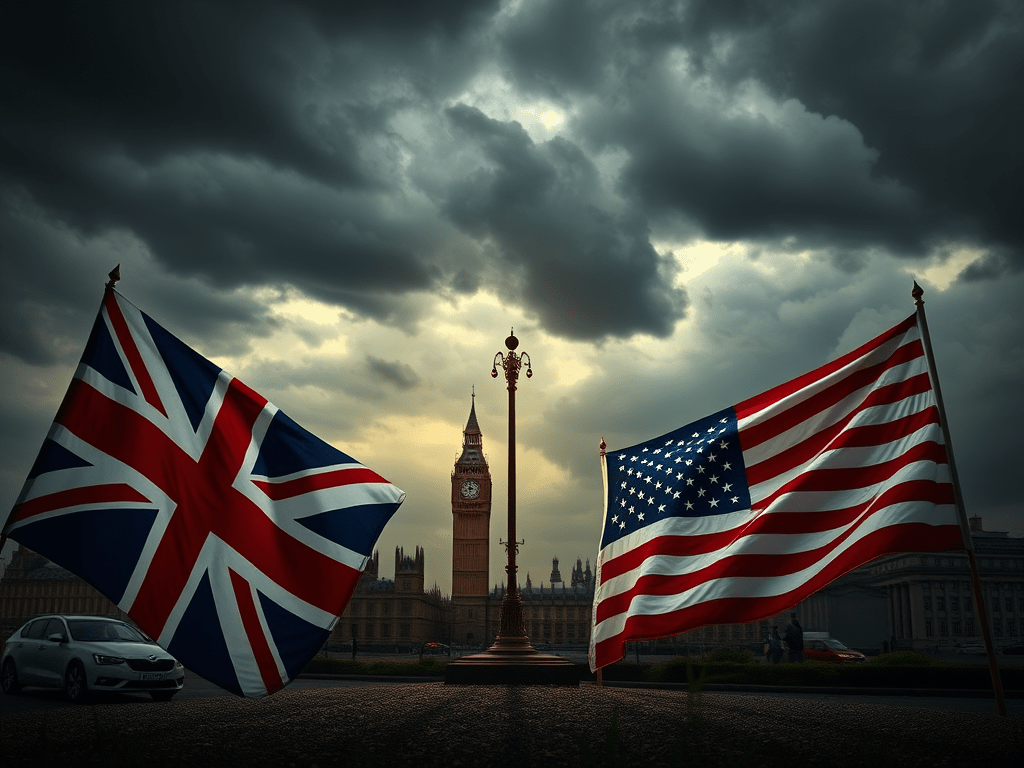
It’s strange, isn’t it? Britain, a country that spanned the globe with its trading accomplishments went from imagining a transformed world to sitting in front of an iPad complaining about either putting up Union flags on lampposts to taking them down. Painting roundabouts with red crosses or decrying the idiocy of it. Dressing up as crusader knights and thundering on about some lost imaginary England.

Pictures tell a story. Being in the aviation business, a global business, one picture that sticks in my mind involves a handkerchief and a British Prime Minister (PM). It seems a long time ago, now. Nearly 30-years ago. Back in 1997 British Airways (BA) took to celebrating their global coverage by getting international artists to produce new artworks for their aircraft fleet[1]. This was not to the liking of a former PM at the time.

For me this slippery slope was particularly evident. Living in the Surrey town of Reigate. An affluent former Conservative Party supporter, James Goldsmith set-up a new political party dedicated to one issue. The name gives it away. The Referendum Party took to the stage in 1994. Initially, seen as a joke and merely a plaything of a wealthy man, it captured the Member of Parliament for my town. For all the good it did (not), for a couple of weeks in 1997, George Gardiner, the MP for Reigate, joined the new party.

So, the British political mood in 1997 was evident, or so it may have been thought. Nothing of the sort. Of course that was the year of Tony Blair’s Labour landslide victory.

It’s possible to trace a lot of strangeness back to Margaret Thatcher. Although initially internationalist in outlook, she broke a domestic consensus and crushed a lot of hopes. Yes, the country needed radical change. It was the brutality of that change that people reacted against.

In 2001, BA succumbed and returned the Union flag to its tailplanes. Lots of poor excuses were made as to the reason for reverting. A Boeing 747 model and the handkerchief bit back.

Can I construct a thread of events from that moment to the European referendum in 2016? Certainly, there are connections as the country shook off the Blair and Brown years and plunged into a messy 14-years of incoherence. The financial crisis of 2008 didn’t help in the slide to introspection. A government that bailed out the bankers whilst making the population pay did nothing to earn a moral reputation. It further encouraged a growth of a blame culture.

So, if you supported the Referendum Party, the UKIP Party and the Brexit Party that followed, and now the Reform Party surely, it’s possible to see that you are barking up the wrong tree. It’s an empty cul-de-sac. It’s a fruitless orchard. It’s a road to decline.

These are not the heirs to Margaret Thatcher. They are bandwagon hopping con men. Money men who like their pockets lined. They will not help those who have missed out on their share of the country’s prosperity – past, present or future.


[1] https://www.flickr.com/photos/linda_chen/albums/72157625997434719/

Shifting Perspectives

Daily writing prompt
What’s a topic or issue about which you’ve changed your mind?

If you write the perfect rule, you will get the desired outcome. Authoring a specification that is robust and watertight will assure success. Having the best possible plan will deliver the best possible results. All sounds reasonable – doesn’t it? It’s not surprising that someone like me, having been schooled in project management, and working in engineering, would have a rational and systematic approach to problem solving. A proven highly successful way of implementing complex technical projects and delivering successful outcomes.

As an analogy I’ll start with mathematics. Nature is a curious beast. What we lean about complex systems is that what happens is highly dependent upon a start point. The initial conditions. Graduate level mathematics about control systems with feedback show that their behaviour changes a lot with a change of initial conditions. So, it’s reasonable to extend that to a systematic approach to just about anything. It’s often true.

Fail to plan – plan to fail. That idiom is a simple few words to sum up this cause and effect. Used by famous names and often quoted. Management training books are littered with this notion.

20-years ago, my team introduced the first European Aviation Safety Plan[1]. This initiative was built around the idea that to achieve a common objective a plan is the best and quickest way to get there. A roadmap, a pathway, a strategy, call it what you will.

Start by identifying problems and then propose a fix for each one. Not all problems but the ones that fit that awkward Americanism – the low hanging fruit. Namely, the biggest problems (fruit) that can be solved with the least effort (easily picked).

Here’s where I’ve changed your mind. Maybe not changed in a dramatic sense but shifted perspective. It’s essential to have a plan, even if it’s just in my head, but it can be overstated as the most important part of a process of change.

The Plan, Do, Check, and Act (PDCA) cycle, starts with a plan. It must start that way. However, each of the four steps is equally important. Seems obvious to say. Even so, it’s often the case that a press release, or alike, will state – we have a plan, roadmap, pathway, strategy, as if that’s the job done.

Management teams will smile with a sense of achievement and show off their plans. A decade down the line that celebration might seem less momentous as the “do” part of the process turns out to be harder than anticipated.

This basic model for systematic change is a good one. Where I’ve changed my emphasis is in the distribution of effort. Don’t put all available energies into constructing the perfect plan. Yes, the initial conditions are important but they are not everything. The key part of the process is the cycle. Going around it with regularity is a way of delivering continuous improvement. Afterall, when it comes to a subject like aviation safety, that’s what’s needed.


[1] 2005 – DECISION OF THE MANAGEMENT BOARD ADOPTING THE 2006 WORK PROGRAMME OF THE EUROPEAN AVIATION SAFETY AGENCY

Sweet Truth

If I could guarantee one thing it would be that there would be a bag of sugar in the kitchen cupboard of my childhood home. The kitchen was the hub of the house. It was a square room with a solid square table right in the middle. Wheelback chairs permanently pushed in to make room to move round. There was one outside wall with a steel framed window that looked out on the farmyard. Looking due west. The evening sun would stream in to light up the side wall where the kitchen sink sat. With the thick walls of the farmhouse the window ledge was a place to sit. There was a full view of the farm gate so no one coming or going would ever be missed.

One wall had the remains of an ancient bread oven and a large alcove. In that alcove was a chucky great Aga. Custard coloured this massive cast iron cooker was the beating heart of the room. Before this cooker was converted to oil it was powered by anthracite. That involved a ritual of stoking and clearing out the ash every day.

The kitchen was the warmest room in the house. It’s where everyone congregated at mealtimes. Farming’s daily rhythm was managed from that room. Cups of tea flowed like a river as a bubbling kettle always seemed to be ready. Now, when I think about the amount of cane sugar that got piled into every cup of tea, I’m surprise that I have any teeth left at all. In fact, more than 50-year on, my last visit to the dentist for a check-up went well. Somehow my teeth have survived this onslaught.

Large bags of cash and carry bought sugar were a staple on the shelves of the larder. Rated today, my family’s rate of sugar consumption would be considered shocking. Not only that but the delight of toast made on the Aga top and then spread thickly with Golden Syrup[1] was normal winter comfort. Breakfast cereals were never eaten without tablespoons of sugar.

Time has passed and we have weaned ourselves off much of this overconsumption of highly refined sugar. There’s still a lot in our regular foods. Now, we have much more awareness of the problems that high sugar use can bring. That doesn’t stop us liking it.

Today, in politics, just it was in the 1960 and 70s, the metaphorical sugar of the day is the saying that there are easy solutions to complicated worries. There’s an appetite for a spoon full of sugar sprinkled on every latter-day problem. I don’t doubt that a spoon full of sugar helps the medicine go down[2]. Again metaphorically. However, Mary Poppins wasn’t saying that all you need is a spoon full of sugar. Far from it.

As the populist bandwagon continues to roll in most western countries, I think we need to remind ourselves of the enlightenment gained over the years. There are a lot of chores that must be done. Roads don’t get repaired by themselves. Hospitals don’t get built in a day. Schools and colleges need well motivated teachers to well motivate the next generation. Necessities like, tax and spend are a tedious inconvenience.

It’s so much easier to sprinkle a little verbal sugar and blame everyone else. Spouting simple solutions to ride the sugar rush. Covering dishonesties with a nice shiny coating. What we know from experience is that any lustre fades fast and decay sets in. The people who call themselves “Reform” are nothing more than peddlers of sugar-coated boloney. Reflect and beware.


[1] https://en.wikipedia.org/wiki/Golden_syrup

[2] https://youtu.be/SVDgTbGZEw4

The Legacy of Beeching

Two hundred years is a long time. No, it isn’t. William the Conqueror, that’s the sort of name politicians crave, called for the building of Windsor Castle in England. That means, almost but not quite, a thousand years of continuous use. I guess in 2070 there’ll be a big celebration of the achievements of the Normans. Certainly, seemed to impress US President Trump.

If I had a time machine one of the destinations that I’d consider is 1963 and maybe 1965. I’d take a mass of press clippings and audio recordings about inadequate rural bus services and the high-speed railway saga (HS2).

History has a way of condensing a whole succession of events into a few simple words. William was a conqueror, but 1960’s civil servant Beeching was an axeman. That can be said to be unfair, since he was mandated to produce a report and, in the context of the times, British railways seemed like they had overexpanded and wouldn’t be brought back into profitability.

This happened when I was a child. I can just remember on my way to primary school stopping at a railway crossing and waiting a steam train to pass. It could have been the milk train. At that time milk was transported from west country dairy farms, in churns, to the local milk factory. Then loaded onto a London bound train. All this activity disappeared as I grew up. It was displaced by road tankers forcing their way along country roads.

I was born in a small Somerset railway town. Got my first pay packet in that small railway town. Had a couple of weeks of my engineering apprenticeship in the former railway shed. Spent time in the small motorcycle shop next to the railway embankment.

Beeching’s reports resulted in thousands of stations and thousands of miles of railway line being closed. The Somerset and Dorset (S&D) railway line was one of those that vanished. It was on 6 September 1965, the consent for closure was issued for most of the railway line.

Strangely, it was a newly elected Labour government that promised to reverse railway closures that closed the railway. A campaign to save the line was lost. Now, I think, what if, what if the new government of 1964 had not been so beguiled by modern road building and the white heat of technology. The internal combustion engine and purveyors of tarmac had won the day.

My message is to commission reports with a wider remit than merely improving economic efficiency. It’s a concern that is as ap today as ever it was. State of the art technology is alluring. Sloganising it’s easier to say that we are moving forward to a new dawn than it is to say we will update and improve the machinery we already use. There are good cases for scrapping past ways and means. Surely, it’s as well to try to look beyond immediate pressures.

Had Beeching’s axe not been so readily swung then we’d have an alternative to ever more road building and the billions ploughed into it. Remember those feeble promises to invest in local busses to replace the lost trains. How such recommendations are so quickly forgotten.

What will we say about robotics and artificial intelligence in 60-years’ time. Or even 200-years’ time. If we are still here.

Unintended Consequences

There’s a list that must exist somewhere in the bowels of Government which describes the dumbest things that have ever been done. The law of unintended consequences. Where an aim may have been honest, but the reality was a deep dive in embarrassment and failure.

If this list doesn’t exist it dam well should. It’s a sort of lessons learned for civil servants, politicians and think tanks. Don’t propose anything X because the last time someone did that they crashed and burned. Or more subtly it was years later that people cursed the day that such a dumb idea was advanced.

I’m not going to argue against market forces. How could I. From an early age markets were part of my life. That’s local agricultural markets. My father bought and sold livestock. The bread and butter of livestock farming is to buy at one price, add value and then, hopefully, sell at a better price. Markets rise and fall in ways that are often mystical.

The UK imports approximately 46% of the food it consumes. Even that figure is 5 years old. I suspect that food imports have increased in the meantime. That’s in a country that is richly blessed with quality agricultural land. Fine, we (UK) are none too good at growing olives or avocados but the range of produce that it is possible to grow is huge.

Grassland is our greatest asset. Every time I flew back from an overseas trip, just looking down from the aeroplane remined me just how the UK is a carpet of green. Field systems that have ancient origins still dominate the landscape.

Livestock farming has changed radically since my father’s time. Fortunately, we have avoided, in most cases, the levels of intensification and factory methods that others have adopted. Hormone injected beef comes from cattle that live sad lives. People know this and have hands down rejected industrial farming to that level of intensity.

Domestic food production has changed because of Brexit and not for the better. One threat to domestic food production has been some of the ridiculous trade deals that have been struck by this Government and its predecessors. Making it harder for exporters and easier for importers.

Political policy towards the countryside has rightfully taken up the need to restore biodiversity and preserve some of our most precious landscapes. Trouble is that at the same time, little or no thought has been given to the need to support domestic food production. It’s like a policy desert. It’s one thing to talk about food security. It’s another to do anything about it.

With the Labour Government threatening to take large amounts of capital out of UK farming with their inheritance tax plans, they will be making family farming a thing of the past. It’s one of the dumbest things that have ever been done.

There’s general agreement that we shouldn’t encourage wealthy people to use land as a repository for their wealth. However, tax advisors have been telling them to do that for decades. Buy land and pay less tax. Reversing that long standing trend needs an intelligent policy not a crude sledgehammer to crack a nut. Even if it’s impossible to ween Labour politicians off their ideas on inheritance tax, there ought to be a way of doing it without penalising the innocent. Letting off those non-farming interests that politicians were aiming at originally. Dogma makes bad policy. It’s time to reemphasise the place family farming has in food production.