Turn the clock back

Daily writing prompt
If you could un-invent something, what would it be?

Innovation is much of a byword. Climate crisis, feeding the world, ending wars, curing disease, creating endless energy, conquering space – they can all be done if someone, somewhere, just invents something smart right now. We are greater believers in the power of “invention” than we have ever been. Doesn’t matter if sitting on the right or left of politics.

Invention and discovery are not the same. Discovery is to uncover something we had not known or understood before. However, that something was always there waiting to be discovered.

Invention is for makers and dreamers. A contraption, a connection, a way of doing business, a machine or a crazy idea. Invention has a huge spectrum. I’ve never been to the Heath Robinson Museum[1]. Now, I mean to go.

To un-invent presupposes that it can be done. It has been done in the past. The classical world benefited from inventions that were lost in the dark ages. Later to be rediscovered.

Genuinely to uninvent is hard. Human imagination, with so many people on the planet, mitigates against it. Uninventing may be a short-lived move.

My view is that it would be best to try to un-invent a damaging idea or process. For example, let’s uninvent slavery or subjugation.


[1] https://www.heathrobinsonmuseum.org/

John Gray’s Critique

If a dose of despondency is your Sunday morning tipple, I recommend BBC Radio 4’s “A Point of View[1]”. I often catch it as an alternative to listening to the driving rain bashing against the window as I wake-up on a Sunday morning.

What I dislike the most about John Gray’s analysis is that it dismisses all the hard-working people who daily strive to make the world a better place. I know, you are asking who John Gray is and what does he know? Well, he’s a British philosopher and author of a pile of serious books. He dabbles in political thinking and doom mongering.

On Sundays in the past, I relied heavily on Will Self creating an air of depressed inevitability that all the bad things about humans will eventually overcome us. A dower British journalist and political commentator who always seems to see the dark cloud instead of the silver lining.

Despite the grim tales of these speakers, they often have, lost in their rhetoric, a smidgen of wisdom. This morning John Gray argues that we need a new response to the growth of the right-wing charlatans who are rapidly climbing the greasy pole of national political life.

Naturally, a lot of us thought that’s what the UK General Election last July was all about. A reoccupation of the centre ground of British politics by the Labour Party. A renewed liberal democratic political consensus would emerge and save us all. Strangely, it doesn’t seem to be working out that way. Although, it might be a bit harsh to judge after only a few months.

Last night, I watched the second episode of the BBC’s period drama Wolf Hall[2]. My God, it’s good entertainment. A little heavy in places. Sharp and brilliantly executed. That last word being the key one. Tudor history is a reminder of how vicious political manoeuvring can be. Having a master, a King, who is determined to make the world turn around him and no one else.

So, should I agree with the likes of John Gray? That a darkness slithers around in human hearts. That we’d better be prepared, shake-off the status-quo and look for new ways to head-off the marketing men’s populist politics. Voiced by bombastic demigods and radical twerps.

He’s right in the sense that today’s politics is behind the curve. British political parties were forged in a different age. Largely, baring the virtues they espouse, they are outdated. Sure, fairness, liberty, and equality have not fallen out of fashion. But maybe the language surrounding them belongs in the 19th and 20th centuries.

One thing is for sure, Willo the Wisps, like Kemi Badenoch offer nothing new. Reform is just a cover for the populist worst of human nature. Yes, we do need someone to break new ground in British politics.

Oh, for a more cheerful Sunday morning.


[1] https://www.bbc.co.uk/sounds/play/m00254hz

[2] https://www.bbc.co.uk/iplayer/episodes/m002473m/wolf-hall

Choice

Desperate British Prime Minister (PM) comes out with the line that the future will be troubled and fast paced change will outstrip past progress. Ok, so what’s new? Hasn’t that been the path of the world since the invention of the computer? Acceleration of change is now locked into humanities destiny.

The audacity of the man is astonishing. Having been intimately associated with calamitous failures of the past decade he espouses his unique abilities to keep us safe and secure.

Hell, I thought former PM Boris Johnson had a big ego. Monday’s speech goes beyond ridiculous[1]. When he says: “People are abusing our liberal democratic values” what comes to my mind is the right-wing government he leads.

We all know, it’s reported continuously, how dangerous the world has become. Noone in any major political party would dismiss that reality. That is bar the eccentric, downright crazy and maybe the fringes of the Greens party.

Interestingly, as far as I know, PM Rishi Sunak isn’t a climate change denier, but he doesn’t have much to say on this monumental global issue. When he says: “And in this world of greater conflict and danger, 100 million people are now displaced globally.” It should occur to him that competition for resources in a world where the climate is changing is at the root of this movement. By the way, there are 8 billion people in the world[2]. So, let’s get our reality in proportion. True, the 0.1 billion people now displaced globally is a figure likely to grow in the next decade. But they are not the enemy.

I had to laugh when I came to the mention in the speech of “robust plans”. The thing that has been characteristic of this Conservative period of government is the distinct lack of planning.

The country’s whole relationship with its neighbours was changed without any plan (Brexit). The ups and downs of the COVID epidemic were endured without a plan, other than that which was made up day-to-day. Year-on-year cuts in defence spending have only been reversed in the wake of global events not a plan of any kind. Surely the Conservatives can only offer a – make it up as we go along – way of governing? It’s what they’ve always done. Hence, the slow decline that has afflicted the country.

The PM lapses into a lazy “needs must” argument that sprinkled with Brexit bull****. Shakespeare would have approved. One example, in All’s Well That Ends Well:

Countess: Tell me thy reason why thou wilt marry.

Clown: My poor body, madam, requires it: I am driven on by the flesh; and he must needs go that the devil drives.

Nothing wrong with being positive about the future. As a country we can do great things. What the PM claims is to have a plan. What he hasn’t got is a plan. And if he did have a plan the likelihood of his own side following that plan is absolutely minimal. He only goes where the devil drives. 


[1] https://www.gov.uk/government/speeches/pm-speech-on-security-13-may-2024

[2] https://www.census.gov/popclock/world

Yesterday’s man

Let’s say extreme things. Don’t think of the consequences. That’s on the playlist of this generation of right-wing activists. They are so afraid of being ignored that they push the limits on every opportunity. Say something outrageous and nine times out of ten the media will run the story. Stand devoutly against anything that can be considered normal, progressive, or socially responsible and whoopee it’s headline news.

I don’t feel inclined to name the chiefs of this art because that merely plays into their agenda. There’s a well-known but failed Brexit campaigner, there’s a well-known but failed former Prime Minister, and there’s a well-known but failed chair of a major pollical party. The common factor here becomes all too obvious. These folk are an epidemy of what my secondary school teachers used to call – empty barrels.

So, addressing the recent hokum, the current mayor of London is no angel. Have we ever had one that was? Pictures of one of his predecessors swinging from an overhead cable wrapped in a Union Jack flag have become a legendary funny story. Plans for the floral bridge across the river, he wanted to spend millions of public monies on ended in the dustbin[1]. Rightly so.

Today, the man in that office seems to reveal in meeting his opponents head-on. However, on Brexit and the environment he has been a voice of reason. Should he take a harder line on anti-war protests in the city? That’s easier to talk about than it is to do. His opponents know that fact.

Whipping up anger and division isn’t a zero-cost sum. The defence that will be used is that loud mouthed pundits are just saying what others think. That’s a shallow defence. It’s no defence at all to say, let’s all leap off a cliff together following the most foolish amongst us.

If everyone said every thought that ever came into their head’s civilisation would fall part quite quickly. We have the luxury of large brains to filter our most of our alien and downright stupid thoughts. That filter is clearly not working in the case of some Members of Parliament.

What’s over the horizon is a good opportunity for the Reform Party (ex-Brexit Party) to sweep-up. There are clearly a lot of conservatives who badge themselves Conservatives who are not conservatives at all. Better they find a place what suites them rather than harbouring any false idea that they might become mainstream in the 21st Century.

Going back to the worst of the 1970s is not an appealing idea. A modern empowered version of sitcom character Alf Garnett[2] is a scary thought.


[1] https://www.theguardian.com/commentisfree/2019/feb/17/absurd-vanity-project-for-our-age-boris-johnson-garden-bridge

[2] https://www.bbc.com/historyofthebbc/anniversaries/june/till-death-us-do-part/

The River

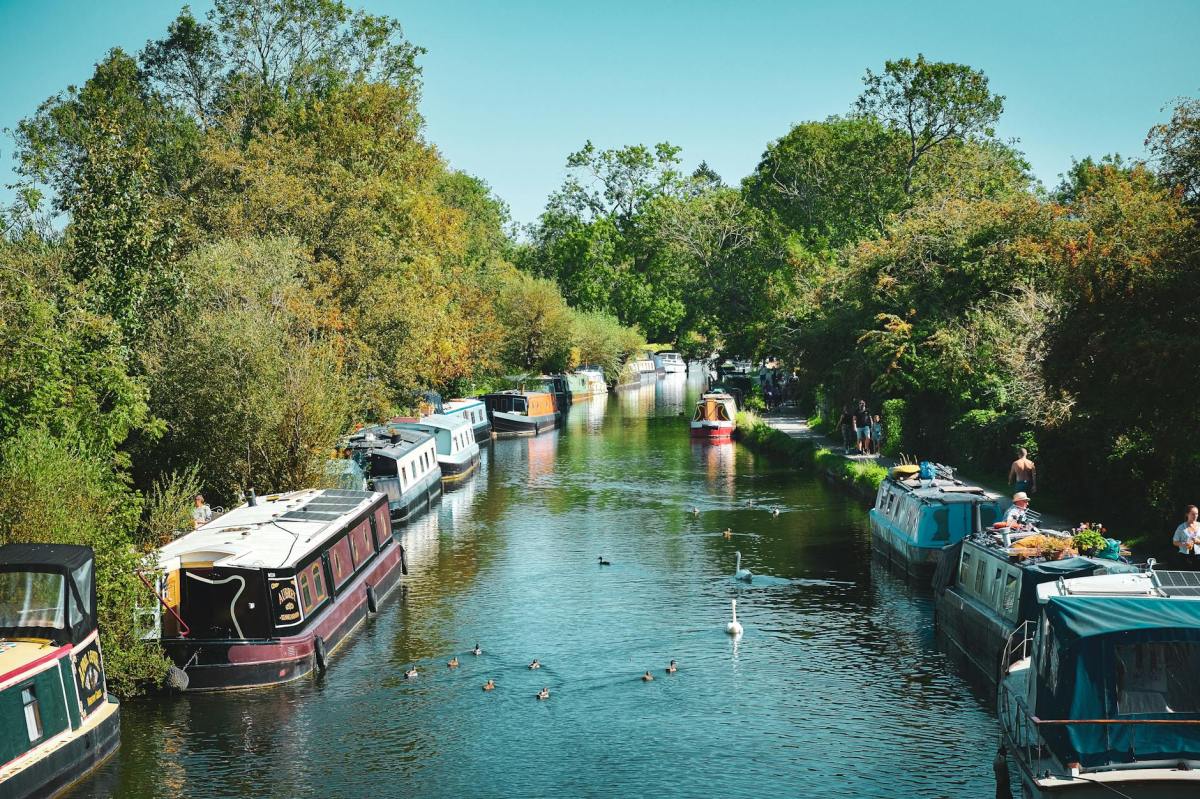
What a contrast. From plus 12 earlier in the week to minus 2. There’s a sheet of white frost covering the fields this morning. The flood water shimmers in the morning sun. Not cold enough to ice over as the water tries to escape back to the river.

I get woken-up to the sound of the 18 or so Canadian Geese who make the boggy grassland next to the River Lambourn[1] their feeding ground. I can understand how they get so big as they graze from dawn to dusk. Their take-off from the water is a long one as they flap furiously to get their great mass airborne. It’s quite a sight as they fly in formation.

These formidable geese are not alone. A few Mallards stray into their territory. For the most part they all seem to get along fine. Plenty of food for everyone. Little grass islands form where the water swirls around. I named one of them duck island.

The geology here is Valley Gravel according to the council’s local plan. I’m not sure what that means but I guess the riverbank will drain fast when the flood water abates. Standing on the ancient bridge on the Oxford Road, I can see that the river Lambourn is shallow and fast running.

I say ancient bridge given the Priory on the other side of the river. The north side. That bridge site certainly dates to the 16th Century. The road must have a long history as it leaves Newbury town and enters the village and environs of the castle of Donnington[2].

I’m imagining the role the area played in the 17th Century. The site of the English Civil War battle, the Second Battle of Newbury. The castle was held by Royalists. It was under siege from the Roundheads camped on this side of the river. The south side.

From what I’ve read so far, the siege was a long one. When it was broken, the defending forces were allowed to escape in honour of the brave fight that they had put up. For whatever reason, in 1646, Parliament voted to demolish the canon damaged castle. Today, only the grounds and gatehouse of the castle remains standing.

It’s nice to be able to look out of my kitchen window and see on the hill such a significant part of English history. The ruin sits on the horizon looking north. Often both the rising and setting sun light it up.


[1] https://www.kennetcatchment.org/catchment/lambourn/

[2] https://www.english-heritage.org.uk/visit/places/donnington-castle/

One moment

I feel uneasy to quote Stalin but will do. In fact, there’s some disagreement as to whether he can be attributed. This short sentence may tell us something about the human condition. It’s not something that’s pleasant to acknowledge[1].

A single death is a tragedy; a million deaths is a statistic.

This is a ghastly historic saying. It’s enduring because there’s resonance in the words. One quick look at a national newspaper, tabloid or not, and the contrast between the detail afforded to stories of individuals and the aggregate impact of terrible events is significant. A journalist might say that’s because stories about people are relatable. Stories about complex and catastrophic situations involving masses of people are harder to witness, interpret and tell.

Alexei Navalny’s death is a tragedy. If he had lived, would he have been the Nelson Mandela of Russia? I wonder. Maybe not but he could have been the catalyst for change. Even if that change was to be slowing in coming.

A tyrannical regime that eliminates an opposition leader. History is littered with such dreadful events. Power corrupts. However, it’s notable that such events do not always end well for a tyrant. The name and the event become a strong echo that lasts for a very long time.

Images show police in Russia dragging mourners off. In the snow and ice. These images are not ones of a confident nation. In gathering to mark the death of an opposition leader Russian people are taking great risks.

Will there be consequences because of Alexei Navalny’s death in prison? There ought to be. Time will tell. Let’s look forward with hope. Let’s hope that Russia takes a different path in future. It’s a great country with enormous potential. Sadly, it’s going in a direction that will just deliver more catastrophes and tragedy.


[1] https://quoteinvestigator.com/2010/05/21/death-statistic/

QT

Over the years the BBCs Question Time (QT) debate programme[1] has played an important part in political discussions. It was a must watch for political activists and students at all levels. In fact, anyone interested in understanding the political views that permeate the country.

Unfortunately, the programme has declined to become a dull backwater for viewing if there’s nothing else on. The format is locked in to an awkward seeking of balance at the expense of an inquiry into the reasons and justifications for widely different views. There’s little in the way of vigorous cross-examination or investigation into the core values of the speakers.

I don’t want to blame the person who chairs the debate or the BBC for hanging on to the QT heritage. The programme has played an important part in the life of the country, in the past.

I don’t want to be one of those social media complainers for whom any deviation from the age of Robin Day is a blasphemy. Those black and white days are a wonderful snapshot of a long-lost era. The relationship between the public and their politicians has changes beyond recognition.

There’s no doubt that we have all become somewhat more superficial than may have been the case in the past. Politics has become something that is marketed to us as a commodity. It shouldn’t be that paper thin.

At its best such a debate programme gets to the fundamentals. If it merely tracks yesterday’s headlines the results are predicably shallow. Audience and panel members simply echo what we already know. What we’ve already heard elsewhere throughout the day.

What I want to know is more of the why and less of the what.

Say, a social liberal politician objects strongly to a dilution of human rights and a hard right leaning conservative welcomes such a dilution. We may already know that’s the positions they have adopted and campaigned on but are those positions of convenience or core beliefs?

Exploring what panel members really think and what they might really do is surly more interesting than allowing them to play to the audience, at home or in the room. I want an objective chair to put the panel members under pressure to uncover any deceptions. Deference born of an obsession with balance is as bad that born of class or impoverishment.

One of the parts of the format that seems unquestionable is the requirement to answer questions posed by members of the public. The audience is supposed to represent the members of the public not in the room. They rarely do. I’d much rather see a town square type format. That’s where the members of the public engaged are not so pre-selected or self-selecting. Walk out into a typical high street and randomly ask what question do you want answered? Do it live.

QT needs a major shakeup. It’s not quite dead. Its revitalisation is possible, but it needs to get off its current path.


[1] https://www.bbc.co.uk/programmes/b006t1q9

D minus PM

In the second decade of the 21st century we should be surprised that a British Prime Minister should behave as if he lived in the 19th century. Common problems, future collaboration and an alliance of decades are too important to jeopardise. Relations between Britain and Greece are of great importance. Today’s spat is foolish.

There’s a joke going around the social media. It asks the question: Why are the pyramids in Egypt? The answer being: Because they were too heavy for the British to carry-off. In other words, if they were smaller, they would be in the British Museum. That light-hearted quip highlights an inherited problem. Although, the same line could have been written about many imperial European countries. It was the fashion. Here British country houses were not properly dressed unless they had a sprinkling of ancient Greek artefacts. Those artefacts were often taken by the powerful. That’s our history.

The Parthenon is not any old relic. Its image is as heavily identified with modern Greece as it was with ancient Greece. As a symbol of western civilisation, it’s unmatched. Its sculptures are high points of classical Greek art.

Once upon a time, the argument was made that the Parthenon Sculptures were better protected by British Museum than they would be elsewhere. During the turbulent periods before the birth of modern Greece that argument was probably a fair one. Greek indepenence, helped by a famous British poet, became the start of the modern European State.

Lord Byron’s early death, at 36, was grieved both in Britain and Greece. His remains were returned to Britain where he was laid to rest. It was respectful to return to the great man to the land of his origins.

In 2023, Britain and Greece are friendly nations. We benefit immensely from the excellent relationship between the peoples of both countries. Thus, I can fully understand the Greek Prime Minister “annoyance” at being snubbed while in the country. The British Prime Minister being to busy to see his counterpart.

Athena is an ancient Greek goddess connected with wisdom. The Parthenon is a temple on the Athenian Acropolis. Well, there doesn’t seem to be much wisdom in Number 10 Downing Street. If there was, then such disagreements as there are over the future of the Parthenon Sculptures, would never have created the situation, we have this morning. It’s sad.

Politicians have a duty to address problems and not to run away from them for minor reasons. It’s only through dialogue that a solution will be found to the conflicting claims made about the Parthenon Sculptures. The day they return to the city where they belong will be one of great joy.

Way back

It’s easy to sound like a takeout from the four Yorkshire[1]. That emulated sketch where a group of drinking men on holiday try to upstage each other with tales of hardship. It’s beautifully comic because it ventures off into the absurd. Each man is determined to out do the other.

Back in my day. Any sentence that starts like that conjures up a man leaning on a bar in a rustic pub where time has stopped. There are people who make a speciality of reminiscence. A rambling epistle about hardship and struggle. Peppered with a contrast with the ease of contemporary living. Point being how weak and wishy-washy we are now. How enduring and mighty we were in the way back. Most of this is pure nostalgic babble. The Monty Python sketch is funny because it crosses a line. Please reprimand me severely if I cross that wobbly line. Beside it takes comic genius to write a good sketch and I’ve never claimed that ability.

However, telling stories that paint pictures of former times is a good way of setting this time in context. Change is a constant. The decades are ones of accelerating change. That can be unsettling.

This week, for inexplicable reasons my mind wandered off to my parent’s farmhouse kitchen in the mid-1960s. That’s boyhood memories. The back of house room was not quite square. At one end, two substantial painted wood doors faced each other. A draft blow under one when the outside door was open.

A standing stainless-steel sink sat between the two doors. Opposite, a thin steel framed window looked out on the farmyard. Stone walls were a couple of feet thick. That left space for a seat under the window. It was a farmer’s window. Being able to see the road and all business comings and goings from the kitchen table. Looking direct West, the evening sun would play across the yard.

On a weekday. Not a high day or a holiday. That would be a reason to light a fire in the front room. The kitchen was the warmest place in the house. A thumping great cast iron Aga[2] filled an alcove and filled the kitchen with a warmth all day and night. In winter, other parts of the house could be an ice box. Bedroom windows had as much ice on the inside as on the outside of the glass. There’s a good explanation of why the image of that kitchen is so rooted in my mind.

A large sturdy wooden kitchen table sat right in the centre of the room. It had a Formica top in a deep maroon colour. Four chunky turned legs at each corner. An eclectic mix of wheelback chairs permanently tucked in when not in use. If they weren’t, there was no squeezing around the table.

The habit of sitting in the same spot was deep-rooted in practicality. It’s as if we had assigned seating. Naturally the best place to sit was with the Aga at your back. Opposite the Aga, up against the wall was a fridge that must have come from Noah’s days. Next to that was a peculiar free-standing kitchen cabinet unit. They are sold on eBay as mid-century vintage now. Ghastly thing that today’s sellers describe as gorgeous.

One corner of the room had a beaten and battered two-seat sofa. That was a comfortable warm spot. Above it, in the wall was the remains of a bread oven. A hinged iron door was a curiosity covering nothing but cobwebs. It was an age when Linoleum remained a popular floor covering. It was a lot nicer underfoot than the flagstone floor. The flooring took such a bashing that it got replaced with more of the same when holes started to appear.

That room was the heartbeat of the farmhouse. The kitchen table played so many different parts in farm life. It could go from being a butchers block heavy with a side of pork to a desk for tidying up the paperwork. Even the kitchen cabinet unit had a draw full of Sturminster Newton market reports. Auctioneers Senior & Goodwin sent out blue printed reports listing cattle prices every week.

In the simplest way, that’s how I was first introduce to data analytics!


[1] https://en.wikipedia.org/wiki/Four_Yorkshiremen_sketch

[2] https://www.agaliving.com/

Batteries

We can talk about chemistry. It’s not a strong subject for me. The simple basics, I remember. As far as handling batteries, or at least knowing what they do, I was quite young on first encounter.  

At the back of the farmhouse where I grew up there were several working rooms that that were part of the building. A room we called “egg house” was indeed used to store eggs. That wasn’t its first purpose. In one corner was a copper vat with a small furnace underneath it. I was told this was for sterilising milking machine parts before chemicals took over that role.

On the opposite side of the wide back door corridor was “boot house.” The name was a giveaway as to one of its uses. Boots propped up against the wall. It had a stone mullioned window that looked out on another working room that was part of a later add on. That’s where a shiny stainless-steel milk bulk tank sat filling up most of the space.

Like a lot of obsolete stuff stashed in a corner and then forgotten, eventually they were thrown out. As far as I know. What I speak of is several large round glass jars. They made of thick greenish glass and were about a couple of feet in diameter. Their original purpose was to store sulfuric acid. The acid was an electrolyte used in heavy batteries that were once the backbone of the electrical system of the farm.

My father moved to Goulds Farm in 1938. As I understand it mains electricity didn’t come to the farm until the 1950s. In one of the stone built buildings around the farmyard, there was a single cylinder stationary engine, generator, and DC electric distribution board on the wall. It was like something out of an early Frankenstein movie. Bare metal switches and a couple of round dials for volts and amps. All covered in dust and cobwebs. I never did see the “submarine” lead-acid batteries[1]. I guess they were parts of this early farm electrical system that had a reasonable scrap value and so got sold on.

There were lead-acid batteries in and out of the house in the winter. Heavy tractor batteries often sat in “egg house” charging overnight. Given their cost every little bit of life was squeezed out of them before they were replaced. Some batteries had a second life powering an electric fence.

Now, here we are in 2023. An electrical revolution is underway. It’s fascinating to note some of the objections to electrification. So, wedded to gas and oil that all sorts of spurious arguments get thrown up. Not that there aren’t hazards with each different technology.

Battery technology has advanced at great pace. Chemistry has provided batteries that have huge potential when compared with they predecessor. The race is on to go much further. I’m confident that we’ve a long way to go before every combination and permutation of materials has been exploited for electrical storage. Manufacturing techniques race ahead too.

Lead and acid presented hazards. Ironically, one of them was hydrogen gas emission. In such systems ventilation is a must so that there’s no danger of explosion. Now, hydrogen is heralded as a fuel of the future. Hazards remain but we do get better at managing each and every one.

My message is that electrical technology has both an upside and a downside. Ultimately the upside is much the bigger.


[1] https://uboat.net/articles/id/54