Engaging the 70%

A little analysis goes a long way. When that analysis chimes with what I observe, then all the better. Not that just because I agree with something that it therefore makes it beyond question. No, what’s satisfying here is to see that overlap on the Venn diagram of thoughts.

In an entirely off the cuff remark I said that if the major, and not so major, UK political parties all go off hunting for the votes of about 30% of the population, then there’s a huge opportunity for someone to address the 70%.

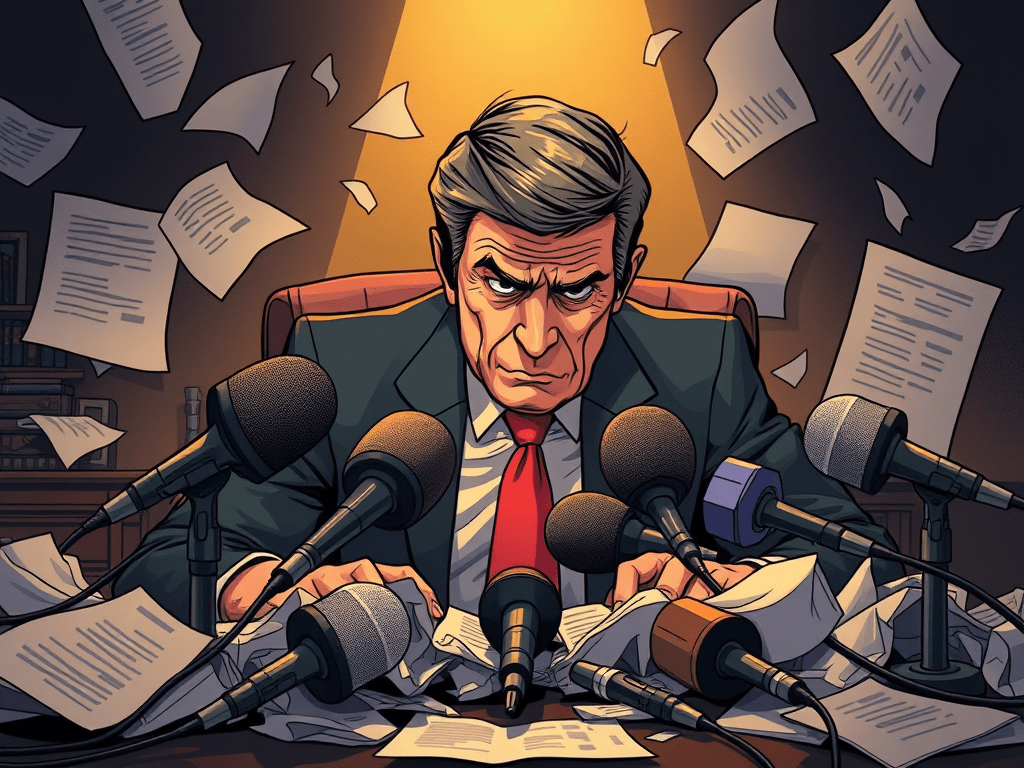
The UK political conference season is in full swing. Four political parties have completed their annual get together. Spent time agonising over their next moves. Damming and praising in equal measure both of rising and falling stars. Trying to avoid the media instinct to go for the live on-air gotcha moment. Being seen when the spotlight is turned on.

Back to my 70 / 30 relationship. This one strikes a bell for me having been a fan of the Pareto principle. That’s often called the 80 /20 rule.

For example, a lot of work may need to be done but it’s often only about 20% of that work that makes a difference, in certain situations. I could campaign over a wide area, without focus, and find that most of my effort had been wasted. Identifying the most fruitful areas to campaign, namely the 20%, might just as likely result in a win but with a greatly reduced effort.

National opinion polls can be deceptive. However, in the absence of real elections they are what people turn to get an indication of what’s going on – now. Today’s opinion polls have politicians spooked[1]. What the meaning of the Reform Party hovering at 30% is an open question.

Is it just like the days of the Social Democratic Party (SDP) in 1980s? A strong move for change that resulted in a flash in the pan. Well, it did open the door for Tony Blair and Co, years later.

Back to my 70 / 30 relationship. Labour, Conservatives and Reform all see this 30% voting intention. It hardly matters if it’s real. They are attracted to it like a moth to a lamp. There’re both data and a perception of who the 30% might be. Suddenly their importance is magnified out of all proportion. Phrase like “hard working people” are banded around. Classifications are sought to move away from past stereotypes like “white van man.”

I read Ben Ansell’s article[2]. I think he’s right. An enormous number of political campaigners fit into what can be called the Professional Managerial Class (PMC). Lots of people aspire to be of the PMC or think they are when they are not. Why do the two biggest political parties, Labour and Conservatives appear to dislike their activists and members so much?

Back to my 70 / 30 relationship. There is an enormous opportunity here for the Liberal Democrats. Not so much the Greens or nationalists. Just by speaking to the 70%. Just by addressing the issue that concern the 70%. Just signing up the 70%.

Not so much the vital few, more the vital many. Parliament could be a very different place in four years’ time.


[1] https://www.politico.eu/europe-poll-of-polls/united-kingdom/

[2] https://substack.com/@benansell

Unpacking Trust and Suspicion

Tickling the natural suspicion that a politician may say one thing but mean another, is not new. There’s a languid propensity to think the worst of people in power by those who don’t have that power. I wouldn’t argue with that tendency, if that tendency doesn’t become an absolute cover all. There are good people in power, trying to do their best, often against climate set by rogues, troublemakers and opinionated clowns. [A quick summary of the Tory years from 2010].

Natural suspicion is as much a part of the liberal creed as any part. Questions deserve answers because we don’t give politicians a blank cheque after an election. Putting a robust question about past promises and declarations is fair game. Running away is not an option.

However, it’s difficult to defend the blatant distortions that get played out in the daily media. I’m no fan of the UK’s Labour Prime Minister (PM). I don’t think he’s a rogue or troublemaker or dishonest. He’s portrayed as such by his enemies. That’s no surprise. What’s highly disagreeable are blatant distortions of what a person says in all good faith. Populist media outlets that act as propaganda pamphlets do this frequently.

I may say that the declared policies of a right-wing political party are stupid or dangerous or ignorant. What that says is the words used by a spokesperson of that party fit that bill. It does NOT say that that the people who support, even fleeting support, that party are all stupid or dangerous or ignorant.

Reasons for supporting for X or Y or even Z are multifarious and less stable than for past generations. The assumption that most people of a particular “class” will fit into traditional voting patterns is history. That era has passed.

The word “fleeting” is ever more relevant. Often a spokesperson will indeed say something that is merely flying a kite or designed to stir-up controversy. Whereas if they found themselves in power their whole tune would likely change. Reality would bite. Haven’t we seen and heard that before? I may say; do we never learn?

A study rhetoric is as ancient a study as any. Feelings and impressions are as likely to influence us as facts and figures. Performative gestures and colourful language obscure dry reasoning almost always. This basic lesson had to be relearned because of Brexit. There the established facts were clearly against the UK leaving the EU, but it happened anyway. Lots of people regret what happened in 2016. Sadly, such damaging acts are difficult to reverse.

Earthquakes happen because pressure builds up and then there’s a dramatic release. That happens regardless. Events can be quite anarchic and destructive. I guess the trick is to sense that pressure and ensure it doesn’t build up or is redirected. That’s an area where the current PM hasn’t shown a great deal of competence. I wonder if he will learn and adapt.

National Digital ID: Balancing Security and Liberty

We are in an age where identity is as important as it has ever been. Those line of demarcation that put us in one camp or another. It’s not a simple subject give the myriads of different combinations and permutations of distinct categories that can describe a person.

Without a doubt, I’m English, British, and European. A West Countryman, a husband, a graduate, a homeowner, a taxpayer, a liberal, an engineer and a gardener to name a few.

So, what of the current debate about the merit of identity cards or their digital equivalent. I remember, more than 15 years ago, the debate that surrounded this subject. Saying, as a Liberal Democrat I was against the introduction of ID cards as a matter of principle. A matter of principle seems like it should be an immovable statement. However, that which was a matter of principle in the context of the times does warrant revisiting.

It’s a transformation that was allowed to sweep much before it. From a paper-based analogue world full of mechanical processes to a ubiquitous high-speed digital one that has made life unrecognisable from the 1980s/90s. Digitisation is as much a social change as it is a bureaucratic change.

Past agreements range from the assertion that it will be impossible to control illegal migration without ID cards to the fear of big brother tracking every stage of our lives from cradle to grave. What’s moved on is the context within which arguments for and against are conducted.

A starting position is that each of us has multiple identities. It’s undeniable that these exist and they impact our daily lives. Some of these identities entitle us to specific privileges. This means permitting our access and restricting or stopping others. This can be as simple as a workplace security badge that allows access to a building.

A State-run identity recording system is not a universal cure all. Also, a State-run ID card and national database system has the potential to fundamentally change the relationship between a Citizen and the State. I could say that there’s nowhere to hide. This is not a subject to go into with one’s eyes closed. The operational and associated implementation costs would be significant. Not to mention ongoing maintenance. These must be weighed against the benefits that might be accrued. I hope this becomes a rational discussion where costs and benefits are studied, published, and debated.

Can a national digital ID system prevent terrorist attacks, illegal immigration, identity fraud, and human trafficking? I don’t know. I do know that it will not be perfect.

On the political side, will people feel more secure and that State benefits or services are more fairly distributed as a result? That’s a big question.

To work effectively such a system will need to be required to by law. How much will that nibble away at the intrinsic perception of British liberty that we continue to hold? Will there be a backlash against a State that seeks to acquire more leavers of control?

My view is that the mandating of a national digital ID system needs to be balanced with a better clarification of the rights of citizenship in Britan. Without a written constitution there remains the vulnerability that a government of an extreme political type could misuse this innovation.

Autumn’s Arrival

It’s the season of mellow fruitfulness. Hey, I didn’t even know I was quoting Keats with that apt short line. It’s so embedded in my thoughts.

Season of mists and mellow fruitfulness,

Close bosom-friend of the maturing Sun;

Conspiring with him how to load and bless

With fruit the vines that round the thatch-eves run;[1]

It’s so appropriate to the day. To the week. We are in that spot of the year that marks a transition. Summer is behind us. The ground is covered with acorns and conkers. Leaves are contemplating the end of the duties. A mist hangs over the grass in the early hours.

Just to be clear, I don’t live in a picture box thatched cottage in some hidden English valley. That said, from one long-standing vine, this year, I’ve collected a mass of grapes. This vine, being so deep rooted, it hasn’t suffered the desert like conditions that prevailed for weeks.

Autumn can be a wonderful season. For a few weeks the siren sound of the winter’s coming is held in suspension. There’s time to think about whether to turn on the heating or not as the temperature dips at night.

Transitions are political too. In Britain, it’s the season of conferences. A time for the faithful to gather and spend a few days running around like headless chickens. A harvest of policy papers and last-minute speeches. Condemnation of opponents. Accolades for friends and good company. Tee-shirts, hats and posters plying slogans old and new.

It’s difficult to explain. Might seem tiresome to those who have never spent 4-5 days at the seaside in September but mostly indoors or waving banners in the sea breeze. This week the Sun has blessed all concerned. Those of us who went to the south coast to share time with family and those who went to change the world.

For the party of government, they may be asking:

Where are the songs of spring? Ay, Where are they?

The optimism of last year has dramatically subsided. Now, they seem like the Mars company marketing gurus who rebranded the Marathon chocolate bar to Snickers[2]. A lesson in how to cause confusion for no material gain. Labour’s problem is clear. The chocolate bar is a good national trend indicator. Off the shelf, the bars are smaller, but you pay the same price or more for the pleasure. Arresting decline is proving to be difficult.

And gathering swallows twitter in the skies.

For those who may wonder at this line, Keats didn’t have social media.

[An Aside: AI, and its unsolicited interventions, can be right plonkers. It suggested that I change the grammar of Keats poem. It offered to rewrite the lines above. So, billionaires are spending billions trying to prompt us to rewrite romantic poetry. What a mad mad world.]


[1] https://www.poetryfoundation.org/poems/44484/to-autumn

[2] https://www.dailymail.co.uk/femail/article-13873067/real-reason-Snickers-changed-Marathon-chocolate.html

Political Intervention by Billionaires

I’ve heard several people downplay the political intervention of the world’s richest man. This last weekend, he chose to address a large gathering of right-wing activists in London. Not there on the streets, but remotely by video. From another part of the globe.

It’s almost as if some media commentators are treating him as a naughty boy – nothing to see here, boys will be boys. What do you expect? Never mind, this is just what he does.

What comes to my mind is part of my student life in the late 70s / early 80s. Coventry is a great English city. Its football team has had more than a few ups and downs. What I remember is a Saturday afternoon with a large cordon of police lining the way between the railway station and Highfield Road. A palace of galvanised steel sheeting in a red brick terraced area of the city. Highfield Road’s football stadium no longer exists.

In those days, English football hooliganism was a set piece event that was as predicable as the seasons. It was a time to avoid parts of the city centre on a weekend. These events were regularly played out throughout the country. That era has passed – thank God. It’s not that football hooliganism is entirely dead. It’s that there are far fewer people who fit that description and they are generally socially ostracised.

In my mind, this weekend, Elon Musk acted like a hooligan-in-chief. Addressing a London crowd that was already steamed up and out to make their protest heard. Parts of that protest turned to violence.

Now, I’ve nothing against protest. I’ve been on a several. It’s that the ones I’ve been on have been peaceful and good natured. That was certainly the case during the many London protests marches against Brexit. Hundreds of thousands marched without incident.

Speakers address protest marches to amplify the message of the protestors. The reason for the gathering. Most often those notable speakers are people with what might be called – skin in the game. Campaigners who dedicate their time to a cause.

Outside agitators, without any discernible affiliation, can be a nuisance. At worst they are agent provocateurs out to ferment trouble. I think, Elon Musk’s acts were shameful and unwelcome.

London has a place called Speakers’ Corner. North-east corner of Hyde Park. I’d invite this gentleman to go there, take a stand, speak for a while and see if his way of thinking stands up to public scrutiny. He can be as irritating, contentious, or eccentric as he likes.

Cooling Heated Debates

How do we cool the temperature of debate? Recent events show that there are people who would rather heat it up. Without historic analogies or dire polemics, it’s clear that heating up conflicts inevitable harms people and prolongs, and often intensifies, those conflicts.

I’d like to think that enjoying vigorous debate can be achieved but with the general ethical idea of “do no harm” in mind. Sure, there are a lot of disagreements and disagreeable ideas. None of that is new to the human condition.

Most of us, bar a few professors, have forgotten what people in medieval England were arguing about in the crowded public houses of that period. I’ll bet those arguments were just as intense as anything we can muster. My guess is that the subject would be how the people in the next town were not to be trusted. They will ripe you off given half a chance.

Religion gets drawn into the debates of our times. That’s even if, like me, most people are agnostic and don’t follow a particular creed. Even from that personal point of view we live in a society that has been touched by the broader ethics of a religious heritage.

With my Sunday school hat on here’s ways that our leaders might try to cool the ferment.

One move is to resist the temptation to be dogmatic. It’s absolutism that is aimed at shutting down debate that causes so much rancour. It’s a bad way of winning over others. Doesn’t matter who is being dictatorial, right or left, crushing debate is boring and counterproductive in the long term. Have an ideology but don’t force it down the throat of others.

Have in mind, throw the first stone but only if you have never screwed up or never done something stupid. Most of us can’t live by this dictum. It’s there in my Sunday school wisdom as a prompt. Have in the back of your mind the thought that hypocrisy is not a good look.

Resist relativism. It’s childish. What I means is to say that slagging off Mr X is fine, it’s OK, because they slagged off my people. This ding-dong is a school playground habit that lasts a lifetime. It’s a route to escalation and one that leads to injury or suffering.

This one probably was in the medieval world. When in a hole, try to stop digging. Yes, it takes a certain amount of self-awareness to see the metaphorical hole. Not everyone can master that awareness. If an argument is going nowhere, to the extent that the heat in the room is rising, leave, or try a different approach.

There are ways to stay our bad spirits. To slay those demons. Not so easy to use them in the social media environment were all the above is encouraged. Is social media unethical? Innately evil? No, not really, in my opinion. Behind each ill-considered post is a person. Well, not in every case but even bots are created by someone.

Just as we needed to learn to live with the printing press, so we need to learn to live with digital technology. What we haven’t leaned yet is how to use it promote well-being and stop it being a place for fear mongering and endless expletives.

A Critical Look at Clowns

There’s a section of British politics which will aways be clownish. I mean this in both a childish sense and a terrifying sense. There are plenty examples of mighty frightening clowns. The Joker was transformed from a comic book TV series of Batman into a menacing movie villain[1]. These are people who embrace a life of deception and chaos. It’s a streak of putting two fingers up to the “establishment”. At the same time making a healthy living from the populous. Milking every moment to advantage.

Having a beguiling nature sustains their success. I’m tempted to think of Peter Cook as the Devil[2] in the 1960s film Bedazzled. Dated as it is, the core theme remains ever relevant. Please protect me from what I want.

Often, clowns are figures of the establishment who have flipped. Driven by a sense of injustice, that somehow society doesn’t appreciate their great talents. Sadly, for them, the seeds of their own destruction are often sitting there waiting to germinate.

It could be said that former Prime Minister (PM) Boris Johnson was a master example. Although I’d not go quite as far as to equate him with Beelzebub. There’s a man who should have stuck to his first profession – journalism.

[Why is it that journalists, lawyers and management consultants aspire to be in Parliament so much? Is it the number one aspiration for societal archetypes – to reach for this pinnacle?].

This week, the media has reveled over a predicable political circus. Now, after having seen the Brexit Party, and alike, fade into nothingness, the UK has a new set of party clowns called Reform. It’s a troupe of escapees from the awkward right-wing of the political spectrum. They are complemented by a small group who claim commercial expertise to bolster their image.

As the tired and elderly Tory Party (Conservative Party) slowly decays and melts away, so this new bunch springs up to try to replace them in full. They have been called populist. In my mind a silly word to use as a general description. Since just about every politician, to a degree, is populist. Whatever the principals involved, few politicians stand at complete odds with the public. If they do, then their time in office can be cut short.

Watching and listening to the new parade of clowns at conference, it makes me wish for a minor revival of the traditional Conservative Party. There was a time when old fashioned social liberals and concerned environmentalists could be found in that British political party. Not anymore.

If I had seven wishes, one of the would be that competence and substance got more attention than loud mouths and false promises. I don’t suppose that’s on offer. Even if it was, I’d need to be careful what I truly wished for because I might just get it. Good advice for anyone. Imperfection is OK.

POST 1: When a Party leader admits his infant Party has no idea how to function in Government. Saying that defecting and discredited former ministers will fill the gap, trouble is ahead whatever happens. Satire is dead because real life has jumped the shark.

POST 2: UK Reform activists sing “God Save the Queen” at the Reform conference. The UK hasn’t had a Queen for almost 3-years. These people are happy to show-off as phony patriots.

POST 3: UK media fascination with sensationalism has given Reform an undeserving boost. The BBC has been ticked off for sacrificing impartiality in chasing this circus. Especially pertinent considering that Parliament contains 72 Liberal Democrat MPs and only 4 Reform MPs.


[1] https://www.imdb.com/title/tt7286456/

[2] https://www.imdb.com/title/tt0061391/

Evolving Communication

What happens when only a small percentage of the population can read and write? A historical perspective on that question gives the answer: feudalism. If texts are all in Latin and only the priesthood can read Latin, then it’s obvious what the results will be. That the priesthood acquires a superior power to that of the ordinary citizen.

Our interactions are what gives us our freedom. It’s difficult to challenge authority if that authority is holding all the cards. The means to communicate, and the willingness to do so, are integral to a free society. A democratic society.

Speculation about a future where humans spend most of their time interacting with machines is reasonable. In the last couple of decades, the increase in the number of machines that occupy more of our time is notable. Every trip to the supermarket[1] there’s the opportunity to enter a shop and leave without a single word to anyone. Not even a simple greeting or snippet of small talk. This is often sold as a benefit, faster, easier, less hassle.

If life can be conducted without the need for human communication, there are those who will take that path. Some will be by default and others willingly walk that path. If a majority do this then the balance of power shifts to advantage those who control the machines.

Before I go off on some dystopian movie plot, it may be as well to say that lot of new forms of communication have sprung up too. Those who play computer games and interact with other players all over the world. Such capabilities never existed until relatively recently.

What’s most concerning is the gradual distancing that is happening in politics. This might account for some of the disillusion that’s now evident. Gone are the days of major names addressing crowds directly. The idea that a political candidate would stand on a soapbox[2] in a public place and drum out their views and beliefs is getting remote. Such old-fashioned grass-roots campaigning methods are seen as dangerous and riddled with pitfalls.

Better a short video on a social media site is seen to be the substitute. Certainly, safer than standing up to a protest group or alternatively standing with them. Although, to be accurate, security has always been a matter of concern for public speakers. Taking onboard changes, verbal human to human communication is far from dead. It’s taking different forms. Mediated by the digital world we now act and speak differently. Post-COVID a degree of social etiquette has been lost.

Maybe this is why the UK Liberal Democrats are making so little impact on the national stage. With so many more elected members than one of their right-wing adversaries they still command less newspaper column inches (another old-fashioned term).

Like King Cnut[3], it’s foolish to think that the digital tide can be stopped. People must roll with it. If that means having a virtual pet or an artificial friend that will all become part of life’s colourful pageant. Small talk at a bus stop will never go away. However new ways of talking about the things that matter are happening – better adapt.


[1] https://www.theguardian.com/global/commentisfree/2025/aug/24/are-we-heading-for-a-world-where-no-one-ever-needs-to-talk-to-another-human-being

[2] http://news.bbc.co.uk/onthisday/hi/dates/stories/march/30/newsid_3739000/3739176.stm

[3] https://www.historic-uk.com/HistoryUK/HistoryofEngland/King-Cnut-The-Great/

Flag Displays

Traveling here, travelling there, it’s not usual to see a national flag displayed. Whether it be on public buildings, airports terminals or stadiums it’s up there to celebrate belonging. National flags come out most often when major sporting events are underway. They appear and then disappear like a tsunami. It’s a field day for retailers. From the finest natural materials to the cheapest plastics, every size and shape is available.

I’ve kept a flags few, rolled up waiting for a special occasion. One Union Jack, a cross of St George, the European stars, a German one and a flag of the city of Cologne. I did have a Somerset County flag but now can’t find it.

Twice I’ve been to the last night at the Proms[1]. One of the fun parts of that evening is spotting the more unusual flags and trying to work out where they represent. Don’t tell me you know what the Northumberland flag looks like. I certainly didn’t until it was explained to me. By the way it looks like alternating red and yellow Lego bricks stuck together.

For me, as it is for most people, waving a flag is for a special occasion. Carnaval, a parade or Royal occasion. The Eurovision song contest, World Cup or Olympics. These are events where we come together as a community.

Frankly, going around and painting roundabouts red and white with the cross of St George, with cars whizzing around, is plain foolish. It detracts from the importance of the national symbol. What a grown man, in the recent News reports, thinks he’s doing with his tin of paint, I can’t fathom.

Flying Union Jacks, often upside down, from Motorway bridges is juvenile. Today, I saw one or two and it made me think that there’s likely three reactions.

One: ambivalence. That is, either not to notice or to ignore the display as much as ignoring the writing on the side of a large truck. Conveying no message other than what a waste of time.

Two: annoyance: That is, to go back to my point about degrading the symbol. Seeing the fixer as a pompous twat or intimidating bully with time on their hands. Stirring up political divisions for the sake of it.

Three: acclamation. That is, being distracted enough to put a big thumbs up to whoever bought the flag and tied it into position. On-board with plastering every road bridge with flags as an imagined rebellious act.

Doesn’t take much to figure out which one of those I might be. On this subject it’s as well to be as generous as possible. These acts of putting up flags for no reason obviously makes some people happy. Given that they are ranked number one in the world, I’d like to think that the flag waving is in support of England women and rugby union. Somehow, that’s a stretch given the utterances of the flag painters and the bandwagon jumping political stirrers.

Where public property is concerned it’s the duty of public authorities to take them down. Not to tolerate the defacing of public property. However, I can imagine this is just the provocation that some people are inviting.

POST 1 : Talk about utterly desperate bandwagon jumpers. Kemi Badenoch: It is shameful of councils to remove St George’s Cross flags | The Independent

Post 2: Now, I do approve of that. On the main A34 road someone has put up a County flag Berkshire Flag | Free official image and info | UK Flag Registry


[1] https://www.royalalberthall.com/tickets/proms/bbc-proms-24/prom-73

Why ‘Artificial’ in AI May Be Misleading: A Deeper Look

On reflection it seems strange to me that the biggest commercial push in technology should be called Artificial Intelligence (AI). Universally, this term has seeped into the daily media as being the only form of shorthand for the coming transformation in our lives.

Generally, the word “artificial” isn’t associated with desirable qualities. If I say that it’s opposite is “natural” then there is a wide gulf between the two. It couldn’t be clearer. Place a plastic garden chair next to an antique wooden chair – case proven.

Imagine a marketing campaign for artificial cosmetics as opposed to natural cosmetics. Which one do you think would be the more successful? It’s honest to say that a product is artificial given that it’s manufactured but it’s much more appealing to talk about its natural roots.

A desire to elevate natural content has a historical context. It’s the industrial revolution that provided society with a rich wealth of choice. Trouble is that a legacy image of dark satanic mills[1] and grim-faces of exploited workers is written deep into our culture. The natural world was assaulted and abused by the unstoppable steam roller of the industrial revolution.

It’s reasonable to refer to a complex digital system as an artifact. Not in the way of an archaeological discovery. More like a popular game, chess, checkers or go, in that it’s extant and associated with a set of practices and rules.

Today, AI doesn’t exist in nature. It may be inspired by nature, in terms of analogies with the workings of our brains. Neural networks and memory. Interconnections of circuits and wires and their arrangements are a human creation.

Having written the above, it does make me think; what will happen in 1000 years? A long time for our social structures and organisation but no time at all for any inhabitants of the Earth. Will someone be writing academic tones on the natural history of computers? Humans will be looking at them, and their evolution wondering how and why they got to do what they do. Much as we might now study ravens, rats and rabbits.

Surely AI will evolve. A natural process. Current systems will inevitably have deficiencies and flaws that get corrected in future generations. Experimentation is a human domain. Give it several decades and machines will be doing it for themselves.

The word “artificial” has a big downside. Although I’m having a lot of difficulty in thinking of a better general word. In my long-term scenario, what’s coming is a new branch of evolution. We know, the complexity of human behaviour is largely conditioned by our environment. We adapt. What AI may become, continuity dependent, will likely follow a similar path.

Whenever I visit the Natural History Museum[2] in London I like to look in on our ancestors. Today, our species, Homo sapiens, is the only human living. We once lived amongst our other human ancestors. Homo is the Latin word for “human” and sapiens is derived from a Latin word meaning “wise”.

There’s a story for you. Will AI eventually become Machina sapiens?


[1] “Dark Satanic Mills” is a phrase from William Blake’s poem.

[2] https://www.nhm.ac.uk/discover/the-origin-of-our-species.html