Navigating the Digital Landscape

Maybe there’s no simple right or wrong answer. Polarising a debate doesn’t bring better results.

The landscape, the environment, the society that children grow-up in is ever changing. Moving to ban smart phones and tablets for children is gaining some momentum. Taking these components of modern living out of schools and limiting exposure to their influence is in the minds of campaigners. Organised movements and some politicians are going that way.

My childhood wasn’t dominated by digital technology. It was an analogue world. That single fact doesn’t make it “better”. Here, even my language suggests one good and the other bad. Perhaps I should be positive about the advantages of an analogue world. Afterall, it did stretch across the whole of human history right up to the time that personal computers found a place in our homes. However, that societal transition didn’t bring about Armageddon.  

There was a moral panic in my late teens. As analogue video technology became widely available then so did pre-recorded video cassettes. Now, they look prehistoric when they crop-up on the shelves in charity shops. Chunky, magnetic tape-based machinery became a rival to regulated broadcast TV. At the time, media legislation was way behind the curve.

In the early 1980s, social commentators got highly agitated about the harm that easily available video content could do. True, with some justification, although this reaction went overboard. The media would keenly focus on any crime that could be tagged to “video nasties[1]”.

What’s my point? It’s that media technology will continue to evolve at pace. Even now with our small screens, being carried everywhere people go, are systems that remain relatively crude. Imagine what will happen if technology that directly connects to the human brain becomes widely available.

Teaching children to be able to cope in this rapidly changing world matters. In my opinion, sheltering them from this technology landscape isn’t a good idea. Yes, censor the bad stuff but taking away smart phones and tablets has a downside.

Abstinence is favoured by strong believers in that way of living. Tightly controlling exposure to everyday society on the basis that the dangers of corruption are everywhere. Over the long-term, what is observed is that an approach based on prohibition isn’t sustainable.

Like it or not, there’s a schizophrenic reaction going on. As I was last week. sitting in a busy airport lounge, I noted the number of parents and children glued to their small screens. For the flight home of almost four hours, the proliferation of smart devices was notable.

Promoting legislation that prohibits the use and carrying of smart devices during the school day[2] is foolish. It ticks the populist box of the concerned parent but it’s stoking a new moral panic.

Learning to live healthily in the landscape, the environment, the society that children grow-up in, that’s part of the school day.


[1] https://www.bfi.org.uk/features/where-begin-with-video-nasties

[2] https://bills.parliament.uk/bills/3909/stages/19437/amendments/10018472

Evolving Communication

What happens when only a small percentage of the population can read and write? A historical perspective on that question gives the answer: feudalism. If texts are all in Latin and only the priesthood can read Latin, then it’s obvious what the results will be. That the priesthood acquires a superior power to that of the ordinary citizen.

Our interactions are what gives us our freedom. It’s difficult to challenge authority if that authority is holding all the cards. The means to communicate, and the willingness to do so, are integral to a free society. A democratic society.

Speculation about a future where humans spend most of their time interacting with machines is reasonable. In the last couple of decades, the increase in the number of machines that occupy more of our time is notable. Every trip to the supermarket[1] there’s the opportunity to enter a shop and leave without a single word to anyone. Not even a simple greeting or snippet of small talk. This is often sold as a benefit, faster, easier, less hassle.

If life can be conducted without the need for human communication, there are those who will take that path. Some will be by default and others willingly walk that path. If a majority do this then the balance of power shifts to advantage those who control the machines.

Before I go off on some dystopian movie plot, it may be as well to say that lot of new forms of communication have sprung up too. Those who play computer games and interact with other players all over the world. Such capabilities never existed until relatively recently.

What’s most concerning is the gradual distancing that is happening in politics. This might account for some of the disillusion that’s now evident. Gone are the days of major names addressing crowds directly. The idea that a political candidate would stand on a soapbox[2] in a public place and drum out their views and beliefs is getting remote. Such old-fashioned grass-roots campaigning methods are seen as dangerous and riddled with pitfalls.

Better a short video on a social media site is seen to be the substitute. Certainly, safer than standing up to a protest group or alternatively standing with them. Although, to be accurate, security has always been a matter of concern for public speakers. Taking onboard changes, verbal human to human communication is far from dead. It’s taking different forms. Mediated by the digital world we now act and speak differently. Post-COVID a degree of social etiquette has been lost.

Maybe this is why the UK Liberal Democrats are making so little impact on the national stage. With so many more elected members than one of their right-wing adversaries they still command less newspaper column inches (another old-fashioned term).

Like King Cnut[3], it’s foolish to think that the digital tide can be stopped. People must roll with it. If that means having a virtual pet or an artificial friend that will all become part of life’s colourful pageant. Small talk at a bus stop will never go away. However new ways of talking about the things that matter are happening – better adapt.


[1] https://www.theguardian.com/global/commentisfree/2025/aug/24/are-we-heading-for-a-world-where-no-one-ever-needs-to-talk-to-another-human-being

[2] http://news.bbc.co.uk/onthisday/hi/dates/stories/march/30/newsid_3739000/3739176.stm

[3] https://www.historic-uk.com/HistoryUK/HistoryofEngland/King-Cnut-The-Great/

Why ‘Artificial’ in AI May Be Misleading: A Deeper Look

On reflection it seems strange to me that the biggest commercial push in technology should be called Artificial Intelligence (AI). Universally, this term has seeped into the daily media as being the only form of shorthand for the coming transformation in our lives.

Generally, the word “artificial” isn’t associated with desirable qualities. If I say that it’s opposite is “natural” then there is a wide gulf between the two. It couldn’t be clearer. Place a plastic garden chair next to an antique wooden chair – case proven.

Imagine a marketing campaign for artificial cosmetics as opposed to natural cosmetics. Which one do you think would be the more successful? It’s honest to say that a product is artificial given that it’s manufactured but it’s much more appealing to talk about its natural roots.

A desire to elevate natural content has a historical context. It’s the industrial revolution that provided society with a rich wealth of choice. Trouble is that a legacy image of dark satanic mills[1] and grim-faces of exploited workers is written deep into our culture. The natural world was assaulted and abused by the unstoppable steam roller of the industrial revolution.

It’s reasonable to refer to a complex digital system as an artifact. Not in the way of an archaeological discovery. More like a popular game, chess, checkers or go, in that it’s extant and associated with a set of practices and rules.

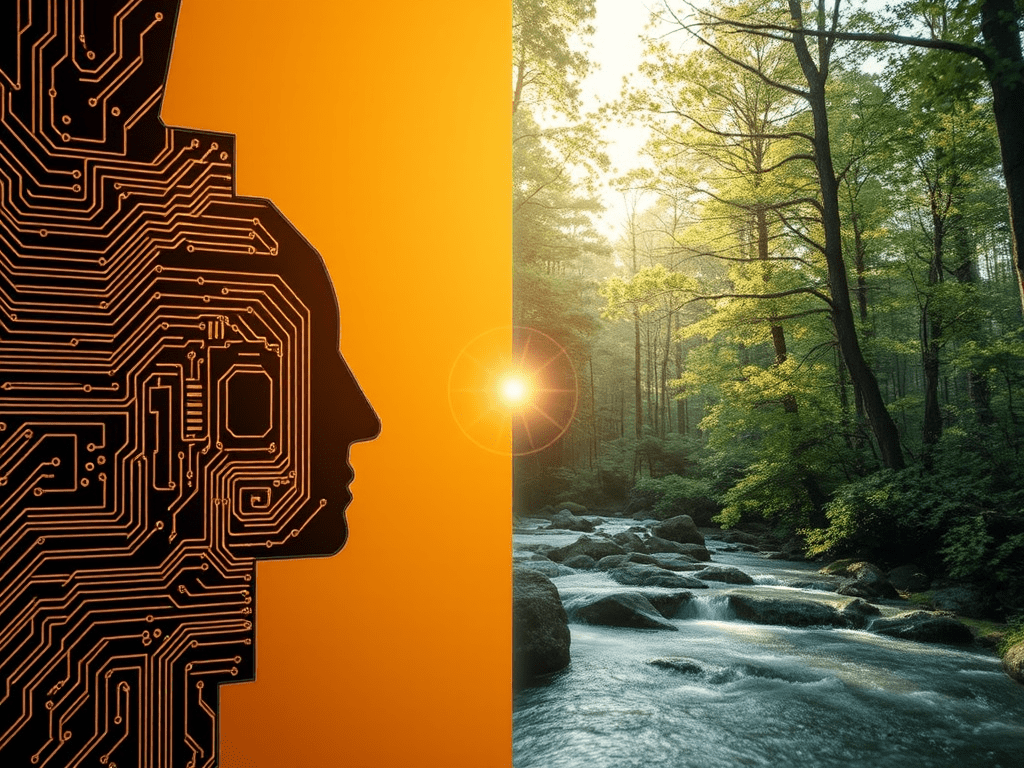
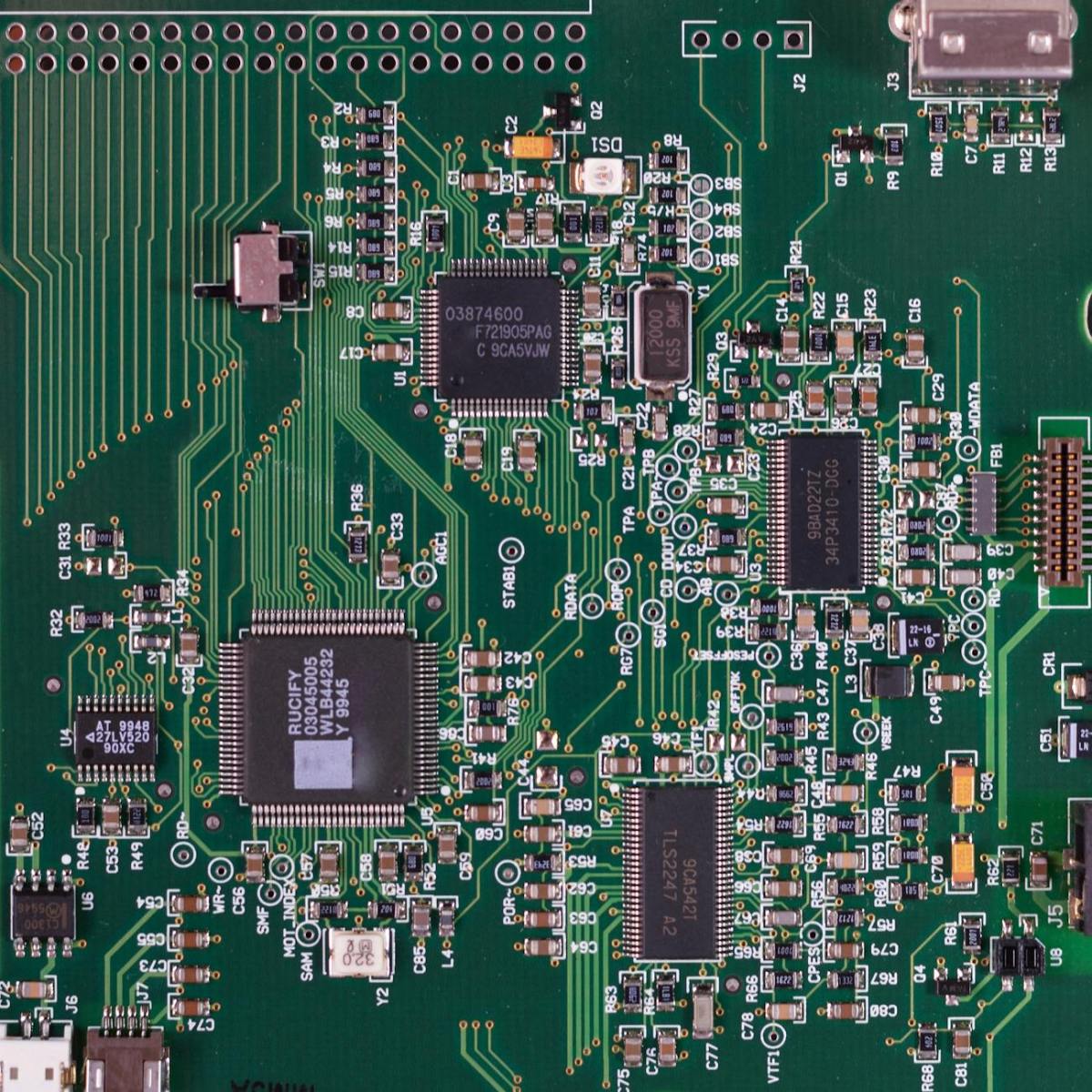
Today, AI doesn’t exist in nature. It may be inspired by nature, in terms of analogies with the workings of our brains. Neural networks and memory. Interconnections of circuits and wires and their arrangements are a human creation.

Having written the above, it does make me think; what will happen in 1000 years? A long time for our social structures and organisation but no time at all for any inhabitants of the Earth. Will someone be writing academic tones on the natural history of computers? Humans will be looking at them, and their evolution wondering how and why they got to do what they do. Much as we might now study ravens, rats and rabbits.

Surely AI will evolve. A natural process. Current systems will inevitably have deficiencies and flaws that get corrected in future generations. Experimentation is a human domain. Give it several decades and machines will be doing it for themselves.

The word “artificial” has a big downside. Although I’m having a lot of difficulty in thinking of a better general word. In my long-term scenario, what’s coming is a new branch of evolution. We know, the complexity of human behaviour is largely conditioned by our environment. We adapt. What AI may become, continuity dependent, will likely follow a similar path.

Whenever I visit the Natural History Museum[2] in London I like to look in on our ancestors. Today, our species, Homo sapiens, is the only human living. We once lived amongst our other human ancestors. Homo is the Latin word for “human” and sapiens is derived from a Latin word meaning “wise”.

There’s a story for you. Will AI eventually become Machina sapiens?


[1] “Dark Satanic Mills” is a phrase from William Blake’s poem.

[2] https://www.nhm.ac.uk/discover/the-origin-of-our-species.html

Paper in a Digital Age

It’s oblong and made of paper. My phone is oblong and made of a long list of exotic elements. Paper on the other hand is relatively simple. I’m sure a paperologist will correct me and describe its subtleties and complexities. Regardless, paper has been around for a long time.

Both have an ephemeral quality. Paper decays. It burns and bugs eat it. Digital media gets lost, overwritten or deleted. Without wires and suitable equipment, it doesn’t exist.

I think that God forbid, that if Armageddon did come to place, we’d find more paper remaining useful than surviving digital help. Henry Bemis[1] loved to read. Strangely, that’s what saved him from ultimate destruction. Try writing an equivalent story with an iPhone in hand and we would be disappointed with the results. That would really see a sad Bemis doom scrolling empty nothingness.

Contuining the banking theme. What I’m refereeing to here is an envelope containing my latest bank statement. Yes, I haven’t ticked the go paperless box on-line. To me there’s something reassuring about having a tangible paper copy of what exists in the digital ether. Even though it’s only a printout, it somehow feels more real.

Holding a statement in my hand, whatever its errors or miscalculations it cannot be altered. Unlike an on-line digital reading that a capable cybercriminal can flip in a second. Both have an ephemeral quality. One exudes a greater feeling of permanence.

Above “ephemeral” is the right word to use. My banking App on my phone is a good service. However, it encourages a certain neurosis. Whereas a paper bank statement turns up, periodically as a personal balance sheet summing up the ins and outs of a month, my App is changeable hour by hour, a less meaningful snapshot.

The News is full of this phenomenon. Snap shots of the county’s GDP going up and down every month are newsworthy but don’t tell us much about where we are going. That doesn’t stop politicians treating them as if they were a sign from some mythical deity. A small number that changes within a range of error doesn’t mark a beginning or end of an era.

I like tangible things. A paper report or statement is a tangible thing. I can hold it in my hand. It doesn’t change from moment to moment. It’s a record of a direction set, not an hourly windvane. However unfashionable, as a crusty gentleman of a certain age, I will continue to ask for a printed record of where I am and where I’ve been.


[1] https://www.imdb.com/title/tt0734683/

Enhancing Transport Safety

There’re claims that Artificial Intelligence (AI) will make transport safer. It’s to put a positive spin on the introduction of AI. Implying that existing safety deficiencies can be addressed with the power of AI.

It’s difficult to disagree with this simple assertion. There’s a list of risks that continue to be troubling. With directed design effort there are functions that AI can perform that mean it can have an advantage over conventional systems. With good design, no doubt high performing systems can be constructed.

In aviation, for example, if I consider the top five fatality risks, there’s a persistence of specific categories. We never seem to get away from loss of control in-flight (LOC-I) being high on that grim list. Runway related issues persist, and the hardy perennial of mid-air collision remains. Over the years progress has been made addressing controlled flight into terrain (CFIT), but that category of destructive events never disappears.

It’s fascinating to see that the industry thinks that AI itself is a risk[1]. High probability but low impact. This is considering a broad description of risk rather than a safety focus. Here the concern is related to the difficulties of practical implementation of this new technology.

Marketing people will big up the possibilities brought about by AI. This is what’s going on in relation to the most recent mid-air collision fatal accident. With sound justification given how crude elements of air traffic management are in specific locations.

We will never entirely displace “see and avoid” as a means of collision avoidance. Scanning the horizon looking for other air users. In my opinion, relying on this technique in relatively busy traffic areas is unwise, to say the least. This is where airborne AI assistants have much operational safety potential. Sucking up multiple information sources and processing masses of information to give accurate and instant advice. Such systems can be designed to give real-time updates not only to improve situation awareness but give avoiding action guidance, or even automated responses.

Let’s get back to the general assertion that AI will make aviation safer. On this one I’d be more cautious. For example, looking at LOC-I incidents and accidents there’s a complex mix of causal factors, and circumstantial factors. In addition, there’s the complexity of potential recovery actions too. Solving problems in 4-dimentions whatever the weather, whatever any damage incurred and however pilots react. This is where the probability numbers start to stack up.

That catch all disciplines “human factors” makes outcomes particularly difficult to calculate. Accidents are known where pilots and automation fight each other to produce bad outcomes.

AI is a machine. It will speedily crunch numbers in a mechanical manner. An extremely advanced manner but without emotion or, yet, not matching the imaginative capabilities of the human brain. Or for that matter the sophistication of human senses.

Would exceptional capable AI have saved Swissair Flight 111[2], for example? Sadly, I think not. On the day, likely an automated airborne system would have made the same decisions as the pilots. Decision making without the sense of precisely how the aircraft fire was developing would still have been hamstrung. I could raise other cases too.

Will AI make transport safer. In part. Not as a universal cure all.


[1] https://www.iata.org/en/publications/economics/reports/risks-2025-brief/

[2] https://www.bst-tsb.gc.ca/eng/rapports-reports/aviation/1998/a98h0003/a98h0003.html

Technology and Probability

Everyday numbers don’t scare me. The day, the date, the time are important and simply communicated. I can throw a couple of round numbers at anyone, and they should know what’s happening. Yes, convention does matter. Standards matter. I don’t know how, but I know some people struggle with the 24-hour clock notation.

When we get to small scales and tiny numbers, less familiarity means that it’s not so easy to communicate. To make those numbers meaningful media people like to use analogies. A common one is saying that a thing is: less than the width of a human hair. If you still have it, and I do, hair is an everyday item.

Let’s say a human hair is typically 100,000 nanometres wide. Sounds big in nanometres. That’s a tenth of a millimetre. Now, I can get a plastic ruler and visualise that size. My perception of scale depends on where I put the decimal point. Remember in SI Units a “nano” is 1 x 10⁻⁹[1]. Something to think about when seeing newspaper headlines about nanotechnology.

Visual depictions do help. Even if they can be slightly misleading when comparing dissimilar objects. Our planet, Earth is about 12,756 kilometres in diameter. So, for a bit of fun I could say the Earth is about 128 x 109 times wider than a hair on my head. Nice but not so useful. Tiny probability numbers like the range from 1 x 10⁻⁶ to 1 x 10⁻⁹ require some imagination.

It’s not such a big leap. Let’s say that I make mistakes. That said, I’m well trained at a specific simple task. Flicking a switch at the right time. My measured error rate is about 1 in 100. However hard I try, I make mistakes, not necessarily the same one, but with a reasonably quantifiable average frequency when nothing changes.

A well-designed machine, doing the same mechanical task, can do better than me. It’s measured error (or failure) rate is about 1 in 10,000. That might be considered good if it’s merely to switch on a toaster at precisely 6 am. It might not be so good if the result of a single mistake is instant death. In other words, I’ve become highly dependent on this mythical machine.

To do better, I could devise a means of checking the results of this machine. If I did this checking perfectly, entirely independently and without distraction, then experiencing a negative result might get up to a rate of one in a million. With this arrangement, I’m still not happy enough to place my life, or the lives of my colleagues in the hands of such a system.

Instead, I’ll construct two entirely independent well-designed machines, each doing the same simple task and each constantly checking the other one. Now, I’m cooking on gas, as the expression goes. Will this result in a negative outcome rate of around 1 in 1 x 10⁸? One in a ten million. At least it’s an analysis worth doing. However, calculations may not give the result as one in a ten million. That result can hinge on the notion of what is entirely “independent”.

To make my general point here I have grossly oversimplified a problem. What I hope I have conveyed is that tiny probability numbers can be grasped without entertaining rocket science or nuclear physics. In the world of computational systems, we can make machines that are exceptionally good at performing consistently, persistently and error free. Not perfect. Not at all. Not prefect in so much as making life and death decisions.


[1] https://www.nano.gov/about-nanotechnology/just-how-small-is-nano

Two Centuries

The News can be overwhelming. It’s a constant barrage of terrible calamities, inadequacies, and past failures. I guess, that’s the manner of the daily News cycle. Put out a positive press release and watch it get ignored. Report of catastrophes and every media outlet copies the stories.

It’s as well to remember that within a week a new round of headlines displaces what was there before. It’s as well to step back. Perspective is an interesting phenomenon. It condenses the past, so that we see the major events more clearly. The nitty gritty of the everyday often fades and only the significant happenings remain.

Let’s dabble in the macro and not the micro. What’s the big picture? It’s time to do a simple comparison. Take the first 25-years of the 20th Century and compare with the first 25-years of the 21st Century. Certainly, at the end of this year a complete summing-up could be done.

For now, I’ll do a random sweep across those two generations separated by a century.

Let’s think. There were no powered aeroplanes in 1900[1]. Few had an inkling that a world war was on the way. We were just figuring out what an Atom might be. Even the motor car was mostly for wealthy folk. The railways were king.

In 2000, I remember the optimistic fireworks and the controversy over the millennium dome. The forgotten panic of Y2K now seems strange. The World Wide Web[2] was getting traction amongst geeks. Mobile phones were gaining ground. Few saw the attack of 9/11 coming.

Being a child of the last century it’s easier to appreciate the changes. Let’s face it, today’s 25-year-olds had history lessons about subject that many people lived through. Although, there are a growing number of centenarians, most of them were in inkling in the parents’ eyes or babies pre-1925. Thus, we need to relay on the writers of history.

Here’s a proposition that warrants testing. Compared with the first 25-years of the 20th Century nothing much has happened in the first 25-years of the 21st Century. I know any division in time is an arbitrary matter. The Earth spinning on its axis cares little for human affairs. 24 hours in a day come and go whatever we do. That said, my proposition above does run contrary to the way people may feel about time passing. If indeed it does pass.

In both periods we might measure significance by the impact events have on people. There’s a propensity to say that world wars top the list in any account. That may well be fair. However, if we look at the growth in global population and the general improvements in human health despite that fact, then this is the greatest point to note.

When I say, nothing much has happened between 2000 and 2025, by comparison, it’s more to do with the pivotal moments that led to the creation of the technologies that we all now take for granted. Mastering the elements of science has made the biggest difference.

I’d say, in the public and social field, of politics, philosophy and economics[3] and we are as perhaps foolish as we have ever been. Convince me otherwise.


[1] https://www1.grc.nasa.gov/beginners-guide-to-aeronautics/powered-aircraft/

[2] https://www.w3.org/People/Berners-Lee/Weaving/Overview.html

[3] https://www.theguardian.com/education/2017/feb/23/ppe-oxford-university-degree-that-rules-britain

Communication Prevents Disasters

It’s often forgotten that there’s a need to repeat messages. We are not creatures that retain everything we see and hear. There are exceptional people, it’s true, those who cram away facts and have an amazing level of recall. Often that’s my reaction to watching students leading teams on University Challenge[1]. How on earth do they know those obscure facts?

Most of us do not respond well to those who say, “Well, I told them once. I’m not going to tell them again.” That line is probably one of the most misguided utterances a teacher can make. Like it or not, this approach is part of our heritage. Past ages, when deference was expected, listening was mandatory, and misremembering was entirely the listener’s fault.

We’ve had a cultural shift. Our complex technological society doesn’t work in a command-and-control way. Too many disasters can be traced to miscommunications and misunderstanding. Now, the obligation exists on those delivering a message to go some way to ensure that it’s received with a degree of comprehension. That’s when repetition has a role to play.

One of the pillars of Safety Management Systems (SMS) is Safety Promotion. It’s the Cinderella of the aviation safety world.

Why do I say that? Experience for one. It’s much easier to get policy made and funding for the “hard” sciences like data acquisition, analysis and decision-making systems. These are often perceived as providing tangible results. Actionable recommendations that satisfy the need to be recognised as doing something. Even if that something is questionable.

Communication is key to averting disasters. It’s no good having pertinent information and failing to do anything with it, other than file it. The need to know is not a narrow one. Confined to a specialist few.

Let’s go back to 2003 and the Space Shuttle Columbia accident[2]. This craft was destroyed in a disaster that claimed the lives of its crew. The resulting investigation report is extremely compressive, if slightly overwhelming, but it has some key points to make.

To quote, “That silence was not merely a failure of safety, but a failure of the entire organization.” [Page 192]. In other words, the hidden concerns and internal machinations of an organisation can smother safety messages and led to failure. Since 2003, it’s sad to say that there are multiple occasions when what has been learned has been ignored. The impact has been devastating.

So, to shape the future let’s remember the Cinderella of the aviation safety. Discovering problems is not enough. It’s vital that practical solutions and good practice gets promoted. That needs to be done forcefully and repetitiously.

NOTE: This is, in part, a reaction to watching this video presentation. https://acsf.aero/an-unforgettable-closing-to-the-2025-acsf-safety-symposium-with-tim-and-sheri-lilley/


[1] https://www.bbc.co.uk/programmes/b006t6l0

[2] https://ntrs.nasa.gov/api/citations/20030066167/downloads/20030066167.pdf

Plug and sigh

Daily writing prompt
Jot down the first thing that comes to your mind.

Weird, I know. My first thought as I looked across my tatty desk. Cables are irritating. Even the alternative is irritating. Tapping away at this keyboard I’m tied by a slim black wire that runs off into a darkened place. If I had a wireless keyboard, I’d be doubly irritated. Sure, as eggs are eggs the battery would not be charged when I needed it to be charged. And I would have put the battery charger away in a box and forgotten where I’d put it.

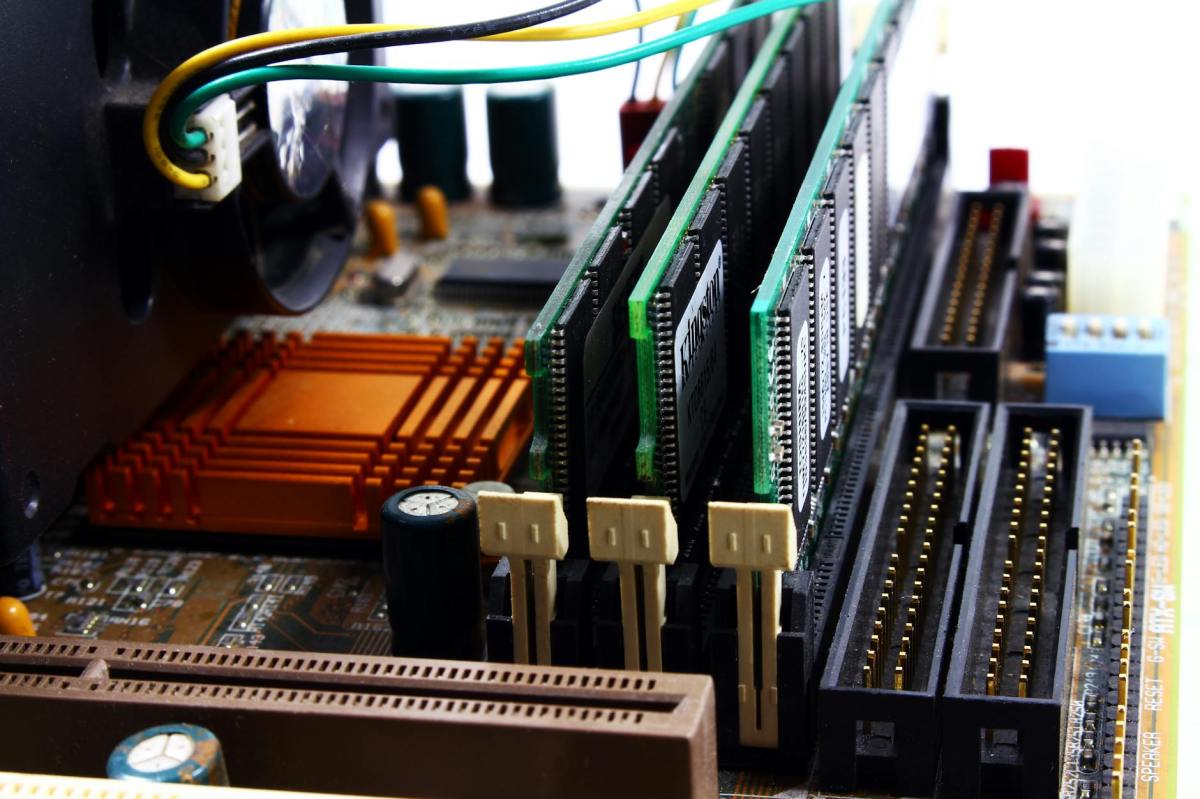
They’re everywhere. Cables and connectors. This could be the century of the cable, much a the last one. Dam things are cash cows too. Companies like to extract the maximum consideration out of us. Our fantastically capable new tech is useless unless we dip into our pockets and buy cables with just the right connector[1].

Fine, there have been attempts to overcome this bond we have with wires. Wireless charging and wireless connections don’t always deliver what they say on the box. They can be as much faff as plugging in cables. Physics dictates those energetic electrons like conductors. When power is needed, travelling faster and further through wires. Whizzing along with the potential to do work wherever they end up.

If I take the bigger picture, the situation is not so simple. Wires dedicated to communication are going out of fashion. Once upon a time copper wires brough the telephone into the house. Now, that communication is optical. Light flashes to the tune of the ones and noughts we seek.

Getting power from A to B, storing it and using it as needed, there lies unending challenges. From the mega to the micro level. Controversies about huge electricity pylons straddling the countryside. To powering the lean electronics hidden in the plastic case of my keyboard.

Oh! I have slipped the surly bonds of wires. And danced the earth on laughter-powered things.

To borrow a poetic line on flying[2]. If only we could loose this bond forever. Unlikely as it seems. In my profession we contend with the fact that civil aircraft, where lightness equals profit, there’s between 100 and 200 miles of wires.

Let’s think. Will this be perpetual? Put aside all the steps that machines may advance, at some level they come down to wires and multiple connections. In a way, lucky for us. That means there will always be an off switch.


[1] https://newsthump.com/2018/05/21/man-decides-to-keep-box-of-cables-hes-has-since-2002-for-another-year/

[2] https://www.poetryfoundation.org/poems/157986/high-flight-627d3cfb1e9b7

Revolution: Hype vs Reality

Talk is of a revolution[1]. That sounds sensational. It sounds like marketing talk aimed at creating an insatiable desire for something new. So, that kind of talk immediately switches on the cynical side of my brain. Is this hype or is it real?

We’ve had plenty of both in my lifetime. Colourful boys adventure books with novelties like nuclear powered aircraft and moonbase vacations. It’s not that “flying a kite” is entirely bad. Those imaginings of the future had pictures of prototype flying cars. Now, we maybe on the verge of that prediction becoming real.

AI is not new. It’s been a research subject for decades. What we have most recently is the coming together of concepts and the practical machines on which to run those concepts. Amazing has been the speed of progress. That’s a modest word considering the sudden adoption of new tools that go way beyond simple INTERNET search engines.

Bill Hunter’s line: “You can’t stop progress”. At least that’s the line I remember of the 1994 film Muriel’s Wedding[2]. It was said on a rocky path to “progress” induced disaster.

My curiosity centres around avoiding the hype and finding out what’s real. That’s in the vain hope that I might not be left behind in this rapid surge of “progress”. So, to keep up with the latest technical developments I clicked on a TED App. The boss of TED, Chris Anderson has recently interviewed Sam Altman, the CEO of OpenAI[3]. He’s the guy behind ChatGPT. AI has elevated new people into the spotlight. It’s given established technology companies a headache. Their desire to be in the pack, or leading the pack is mighty strong.

My takeaways form this interview are that AI will outpace human intelligence, in time. No one knows how much time, but the path is set. The direction of travel isn’t in the control of traditional institutions or government departments. Society must get its head around a time when we live with machines that out pace us.

Second, it would be nice to have an enlightened global regulator to ensure that the massive amount of development going on produces outcomes that are for the public good. Chances of that happening are about zero, although not zero. There’s even a possibility that the industry at work on this technology realises the need for a set of enforceable rules.

Questions of safety are paramount. Even though society debated the impact that the INTERNET would have on us, steps to provide protections and boundaries only came about after the event. Lost in a storage box, I once had a book called “The Sleeping Sentinels”. Basically, the thought was that political parties and the legal profession are always more than ten steps behind the technologists. We are highly reactive.

One interesting aspect of the interview was the pauses. What was evident is that it’s hard to find the right language to describe what’s happening. Walking a tight rope between sounding like Chicken Little[4] and a wise respected elderly professor. Revolution is the right word.

POST: It’s not just IT Why AI Demands a New Breed of Leaders


[1] https://youtu.be/Xv8FBjo1Y8I

[2] https://www.youtube.com/watch?v=PLDcevp5w5o

[3] https://www.ted.com/talks/sam_altman_openai_s_sam_altman_talks_chatgpt_ai_agents_and_superintelligence_live_at_ted2025

[4] https://www.rottentomatoes.com/m/chicken_little