Dynamics of Change

This theory of mine may have been voiced before. It’s a way of looking at the momentum behind progressiveness but with a reminder of the realities of the difficulties of change. Any progressive movement implies change. That change may not always be comfortable.

Ever looked at the teeth of a wood saw. There are a variety of geometries[1]. The overall purpose is the same regardless of the shape and size. Different materials too. A typical saw is unidirectional. Push in one direction to make a cut and withdraw to prepare for the next one.

Then look at our world of ever-increasing data. Piles of accumulated numbers. For the most part, as simple creatures, we plot “x” against “y” to get an image of how one parameter is related to another. In the real world, there’s a lot more axis and dimensions. More than a head full.

On one axis I could put that nebulous parameter “progress”. The horizontal axis, as it often is, that unidirectional human experience of time. So, “x” equals time, as the years clock by, and “y” equals a measure of human “progress”.

What do I plot on blank graph paper? Take the shadow of the saw tooth at an incline and arrange it so that it rises with time. Remember to get it the way round that suggest that the saw is being used. Depending upon the rate of the incline and the rake of the saw tooth, we go forward with time and then stop or reverse a small amount. However, the overall direction is always to climb. This is better drawn than written. 

How does this illustrate the mythical quality of human progress? Being a fan of both disproportionate relationships and pareto[2], I accept that things move at different rates subject to different stimulus. Sometimes fast with only a tiny push. Sometimes slow even with a massive amount of force applied.

Take, for example, the technical progress that was made, driven by the necessities of war, in the 1940s. Aeroplanes went from relatively crude flying machines and esoteric racers to incredibly capable craft that came to dominate the skies.

Now, take social progress at improving housing conditions in our country, over the last couple of decades, and the speed of improvement has been remarkably disappointing, to say the least. Pathetic would be a better description.

Progress, or lack of it, has a vast number of different characteristics. However, the main one that either delights us or troubles us is speed. The speed by which things change for the better. Swiftness of advance, or setback after setback and even moments of reversal. Just like a saw tooth. Great strides are made. Then difficult periods and reversals occur. It’s predicable what I’m going to write next. The western world is in one of those moments of ambition but backsliding and sluggish progress. Negativity abounds.

Is perspicacity the right word to use for my theory.? It’s crude. On the upside there’s an underlying positivity described in my simple model. Don’t look to the setbacks and stupidities of the day, look to the longer run “progress” that is in prospect. And help make it happen.


[1] https://www.blackburntools.com/articles/saw-tooth-geometry/index.html

[2] https://betterexplained.com/articles/understanding-the-pareto-principle-the-8020-rule/

Age Restrictions

Inevitably whenever there’s a decision as to what is age-appropriate one’s own experience comes to the fore. The experiment that is going on in Australia is one to watch. That country has taken a step towards the regulation of social media that provides defined limits. From zero to age 16 there’s to be a ban, or a restriction as the more diplomatic commentators say. One discussion could be about the whole necessity, and possible effectiveness of a ban on social media and another about the age limit that has been set.

This is one of those debates where there are good cases to be made on both sides. I could start by citing examples of harm caused, in particular cases, of social media use by children. That would reinforce a compelling argument for restrictions by law.

Alternatively, looking at the subject in the round, I could wonder at the position of young people first encountering an avalanche of social media on the day of their 16th birthday. Or the creativeness of young people in finding ways to evade a punitive law.

For me, my 16th birthday was a day of great liberation. Growing up in the countryside has lots of advantages. The downside is the effort needed to get anywhere beyond walking distance. No buses. No trains. Just a pushbike. Miles of country lanes, green fields and distant villages.

No demanding, distracting all-encompassing digital paraphernalia. Maybe a radio, cassette recorder and a pile of vinyl records. For me a couple of beaten-up cars and motorcycles too. As per the famous four Yorkshiremen sketch: try telling that to the kids of today.

Yes, my 16th birthday was a day of great liberation. That because of the law. I wasn’t alone. It was there for every schoolboy who could afford one. Shiny in the showrooms. Names like: Fantic, Gilera, Garelli, Yamaha, Suzuki and Puch, were all on our list of wants.

In December 1971, the British Government create legislation that restricted 16-year-olds to 50cc mopeds (motorcycles with pedal assistance). This was a worthy effort to improve road safety and reduce the carnage of motorcycle accidents. What was unexpected was the frenzy of innovation that this well-meaning law triggered. Motorcycle manufacturers set to their drawing boards and radically transformed the moped. I do mean radically.

I came in at the end of this era. By early 1976 manufactures had squeezed every drop of performance that was possible out of a mere 50cc engine. Designs had gone from uncomfortable, sluggish commuter bikes that would feel embarrassed to own, to sporty fast racing machines that were extremely desirable.

Ah, the unintended consequences of worthy legislation. For me this was wonderful. It opened a whole new vista and introduced me to one or two roadside hedges. Waiting for me on my 16th birthday was one of the best. A Puch Grand Prix Special. In black and gold, this really was a fast and refined two-stroke machine. Even with cast alloy wheels and a front disk brake, which was whizzy for the time. Racing along the main A30 the bikes gearing was such that I went fastest downhill, while my mates Garelli overtook me going up the hills.

What can I say? When it comes to age-appropriate the results may not be what is intended.

Note: Reference: Funky Mopeds! The 1970s sports moped phenomenon. Richard Skelton. Veloce Publishing. ISBN 13 978-1-84584-078-5  www.veloce.co.uk

Civilization’s Edge

Civilizations rise and fall. That’s not new in the human experience of the last couple of thousand years. One of the causes of failure is an encounter with an entirely unexpected threat. When I say “unexpected” I mean unprepared for threat. Then finding that the defences that have been constructed fall simply and quickly because they didn’t anticipate that threat.

Another reason for failure is a perpetual human characteristic. Arrogance. Everyday imagining that the pinnacle of achievement is – now. Look how smart we are in the 21st Century. Capable, Superman like, of leaping so far ahead of our forefathers.

I’m a child of the analogue age. I was born into the space age. What that brought us, by necessity, was the digital computer in all its myriads of forms. Yet, from day one, it’s no better that a mass of fast switches. Ones and noughts. Nothing more. Nothing less.

With miniaturisation and an understanding of how materials work a massive, global, interconnected digital system, called the INTERNET, has been constructed. It’s flexibility and utility are undeniable. Its extended human capabilities way beyond that of past generations.

Now, I can start a sentence with “however” or “but” or despite this fact. The whole enterprise is still an unfathomable, dynamic number of ones and noughts.

There’s a kind of vulnerability that is elemental. Whatever might be written about powerful Artificial Intelligence (AI) systems it’s fair to say that the “A” is entirely accurate but the “I” is a bit of a myth. Mimicking intelligence is more the order of the day. That does make people shudder because that mimicking is so fast and draws on a massive amount of information. Seemingly that surpasses human capabilities. It doesn’t.

I write not of the machines that we have today but of those to come. I’ll resist the mention of the number 42. What’s happening is an acceleration of developments. These highly versatile tools that are permeating every aspect of life are not frozen in time. They overhaul themselves on a regular basis. What comes next is indeed machines that make machines. Algorithms that write algorithms.

Humanity is unprepared for the emergence of an intelligence that genuinely fits that bill. The whole idea of sovereignty and human autonomy might go out of the window. The ability to exercise control over where we are going is lost.

There are a lot of wealthy folks who are of a libertarian frame of mind who don’t seem too concerned about this race to the point of loss of control. This could be an expression of arrogance or ignorance or both. It could be the ultimate expression of short-termism.

It’s going to require real effort to hang on to democratic systems where we all have a stake in the direction of travel of our society. Money buys influence. Now, that influence is adverse to the idea of trying to regulate or moderate the advance of technology.

Civilizations rise and fall. Are we racing towards a cliff edge? Put aside climate change for a moment. Stop me from any tendance to doom-monger. My thought is that a comfortable, stable, prosperous society needs regulator instruments that work to mitigate threats. Let’s not be persuaded to ignore that reality.

Arborist Adventures

Funny how we attribute a problem to a nation. I’m sure it’s not the fault of the Dutch. It’s more the fault of the Canadians. To be fair, it’s nature rather than anyone’s fault.

One of the enduring memories of my childhood is looking out of a bedroom window to see the most enormous line of tall Elm trees. Running east to west, these magnificent trees were a dominant feature of the skyline. Looking south, towards the wider Blackmore Vale, they created a screen of green in the summer. Tall stately trucks in the winter. Maybe the central ones measured four or five feet in diameter.

Today, the view, on a clear day, extends all the way across Dorset to Bulbarrow Hill. Close by, no tall trees to obscure the view. Far off, on the top of the hill the telecommunication masts tower above the trees. Across the valley there’s nothing but treetops to be seen but few if any Elms.

The fate of the Elm trees is a sad one. Dutch elm disease wiped them out. From the 1960s, more than 25 million trees died across the UK. Other species have taken the opportunity to occupy the spaces left by the Elms. However, hedgerows have been lost as framing practices have changed. Trees a plenty but not so many as past times.

This week is national tree week[1]. I didn’t even know that until a visit to the RHS[2] at Wisley. I’ve had an RHS membership for about three years. Any time I’m in the vicinity of Wisley, I make a visit. That’s not been so easy of recent. The monstrous road works, planting a motorway junction of vast proportions in the area has been awkward to navigate. Nature is trying to coexist with traffic, tarmac and concrete.

I learnt that there are a couple of thousand trees at Wisley. Lots of variety. Being RHS, a staff to maintain them in good condition. Experts with chainsaws and ropes to prune the dead limbs and make the most of any wood that comes their way. What I’m referring to is a highly entertaining lecture given by one of the young arborists who manages trees on their site.

There’s a lot more to managing trees than first meets the eye. Safety is one of the major considerations. Especially with an extensive garden that receives thousands of visitors. Rotten branches falling from great hight are not something to wish to encounter unexpectedly.

I get the distinct impression that, like a Cirque du Soleil show, arborists love nothing more than hanging upside down from flimsy looking branches. Constructing elaborate schemes of ropes to navigate the treetops. With pride, the lecturer had videos of scampering amongst the high tree limbs. Not a place I’d go. They’re a cross between tree hairdressers and surgeons. Rearranging, chopping, crafting, diagnosing and amputating at the same time. Not a job for a heavy-set person who has a phobia of hights.

The message here, for the week, is not to take the wonderful diversity of trees in the UK for granted. They do need nurturing and replacing. For the most part they do nothing but good.


[1] https://treecouncil.org.uk/seasonal-campaigns/national-tree-week/

[2] https://www.rhs.org.uk/

A New Customs Union

Let’s not put up taxes. Let’s trade more. Seem obvious. Well not in late 2025 in Britain. This possibility must be forcefully put on the agenda for debate in parliament. Raise revenue, rather than raising new taxes, has got to be the better way to go. The bigger the pot the more chance that a government has got to balance the books. Taxes have their place but not to be the default opinion, in all cases.

The Labour Party has been talking the talk on growth in the economy but frequently marching in the opposite direction. It’s as if they embrace the comfort blanket of domestic tax increases too readily without thinking of the long-term impact. Habits are hard to change.

Before, what a majority agree was a mistake, Brexit, trade with our next-door neighbours was in a much healthier position than it is now. We’ve (UK) created barriers and obstacles that have diminished our trading position to no advantage whatsoever. Coming up for a decade of backward thinking.

In parliament, the Liberal Democrats are tabling a bill that calls for creating new Customs Union (CU) with the European Union (EU).

What is a CU? Simply put, it’s a trade agreement between countries to abolish tariffs on the goods they trade with each other. So, instead of barriers and obstacles to trade, the whole process becomes easier and cheaper.

Yes, such an agreement with the EU would have implications for relations with non-EU countries. What I’d say in that respect is that such negotiations with non-EU countries on tariffs haven’t been going so well in the last year. The UK has been buffeted by the policy of other nations, where their policy often spins on a dime. On / off fragile agreements don’t add enduring value.

Such a new CU with our next-door neighbours would boost the UK’s GDP by a significant amount. A boost of £25bn a year for the public finances is predicted. Thus, the growing demands that drive for domestic tax increases would be abated or at least be affordable.

Do you remember? So, many advocates of Brexit said we’d never leave the CU. It’s easily forgotten but some of the most ardent Brexit supports were saying this to the electorate. In essence being untruthful.

Back in January 2017, the Conservative Prime Minister (PM) of the time confirmed that the UK would not remain in the EU CU. What a massive mistake PM May made. The repercussions have been devastating for businesses and the public up and down the UK. It was an act of disfigurement that damaged our economy for nothing more than political dogma.

Sadly, we are where we are. I wouldn’t start from here. Wouldn’t it be great if negotiations started to take the UK into a new CU with our nearest, biggest trading neighbours and partners.

Sadly, the way the parliamentary vote will go is rather predicable. The Labour Party, in its current form, is not the internationalist Labour Party of its history and traditions. Currently, government support is not forthcoming. They prefer to talk the talk without walking the walk.

Post: Fix Britain’s Trade – Liberal Democrats

UK’s Digital Dependency

Under the title of “Culture” The Guardian newspaper offered an article that caught my eye this weekend. The author, Tim Wu was offering a point of view about the economic landscape that we inhabit in Britain. The theme was the drift that has taken place whereby we find that a huge dependency has grown-up over the last couple of decades. That is the unassailable dominance of a small number of US companies throughout the whole of our country.

What am I using to write this remark? It’s a computer program called “Word” sold to me by a multinational company called “Microsoft.” What’s strange is that this way of expressing my relationship with Microsoft isn’t commonplace. There’s a tendance to treat software, like Word as if it has always been with us and always will be. Like the public roads I drive my car on. Completely taken for granted. That is until a problem arises.

This Saturday article wasn’t about computer software per-se. Although the world of computing is riddled with intellectual property rights there remains a kind of openness to new ways of doing business. Digital ones and noughts are like the text on this page. They can be rearranged in all manner of diverse ways. The combinations and permutations are almost infinite.

Tim Wu argues that we should look to the way transport systems developed as an analogy to the electronic communications infrastructure we use.

Roads developed in the era of the horse. More than 200-years ago, before the time of the railroad. In fact, they go back a lot longer than a few hundred years ago. The Romans were particularly good road builders. However, that was a state enterprise aimed at getting armies around a sprawling empire.

The condition of roads in Britain took a leap forward when commercial enterprise found a way of getting an income from the primary land transport system of the day. Road tolls were a way of building and maintaining a network of highways. This network was physical. Fixed in place.

Digital infrastructure is more than cables, wireless systems, and databanks. Without the human interface all that extensive structure is unusable. That’s were a small number of US companies dominate the marketplace. This complete extra territorial dominance is, like my comment about Word above, taken for granted.

Tim Wu’s analogy doesn’t cut the mustard. It does illuminate an inconvenient truth. The reason the big US companies are driving the future of communication and technology is because they have captured a massive global income stream. However, much of that position depends on the laws that prevail in each nation. That prevail at a time when globalisation was seen as almost unquestionable. Now, the question arises has national sovereignty been sacrificed on the alter of progress? If so, what next?

There’s often been a hard kick-back against anticompetitive behaviour. Monopolies are not considered the best way to serve the public interest. Nevertheless, throughout history they have been pivotal in our story. Like it or not, that’s how the elegant country houses and castles of Britain were paid for and furnished. The same experience can be witnessed at the Newport Mansions[1] in the US.

How do we democratise rapidly advancing technology? There’s a mighty big question.


[1] https://www.newportmansions.org/

Why Embrace False Utopias?

Why do clever people often become dayglo prats? Not stupid by any means. More foolish and not embarrassed by their recklessness. It’s one thing to be incompetent or ineffectual but that’s not what I’m getting at here. It’s smart people who get carried away with delusional dreams.

How many vocal futurologists have said – “work is dead”? That one day we will be living in an age of leisure and ease because sophisticated machines will have taken all the drudgery out of existence. Intelligent machines doing all the things we once considered to be work.

In essence it’s a utopian vision that stands-up to be knocked down. In fact, the subject matter has been chewed over in science fiction ever since science has played a big part in our lives. Such popular fiction takes us from a dream world to a hideous dystopia that the original dreamers hadn’t envisioned.

The year is 2274. Almost 250-years ahead of where we are. Humanity is living in a bubble. That bit doesn’t change. Most people are unaware of how their society functions. Again, that bit doesn’t change. Rituals and customs dictate the path individuals take in life. Like today.

Strangely, even in the year 1775[1] those three aspects of life were evident. Maybe they are perpetual. However, there’s an exceptional point to make. That’s our rebellious nature.

The year is 2274. The movie is Logan’s Run[2], made at a time when society had ripple of anxiety about the so called “silicon revolution.[3]” That’s 1976. Before the elevated level of interconnection and communication that the INTERNET has afforded us.

It’s a sobering science fiction movie with a somewhat optimistic ending. Looking dated. I can get past the images and props that epitomised the seventies vibe. That’s become vintage.

To me, aspects of the theme of the story come from H. G. Wells. Nothing wrong with taking great ideas and reshaping them for the time. In the end the flawed utopia is defeated by our rebellious nature. Or at least of some people. The seeking of truth, at all costs, and to look behind the mask that everyday life paints.

You may ask – what the hell am I getting at? It’s a reaction to the recent headline[4]:

Musk says that in 20 years, work will be optional, and money will be irrelevant thanks to AI.

I like growing vegetables. Gardening is a superb way of doing something practical, staying grounded and in touch with nature. It’s good for one’s mental health too. However, the notion that work will be optional is far-fetched. The idea that money will disappear in a couple of decades is nuts. That’s not going to happen.

I know that the motivation to say such things maybe merely to provoke. That has its function. Nothing like stimulating a debate about the future. Surely, we are in for some dramatic changes in my later years on the planet. Surely, we need to equip the next generation to deal with these changes. Surely, we need to protect the public interest in turbulent times.

“Prat” is an often-applied British term. There are a lot worse terms than that one.


[1] https://www.clarkstown.gov/weekly-column/the-revolutionary-year-of-1775/

[2] https://www.imdb.com/title/tt0074812/

[3] Intel’s 4004, released in 1971, packed the core of a central processing unit (CPU) onto a single chip for the first time.

[4] https://fortune.com/2025/11/20/elon-musk-tesla-ai-work-optional-money-irrelevant/

Navigating Aviation

Each profession has a way of speaking. This is not usual. Just try reading a long-winded contact on any subject. There are lots of references to a “third party” and more than one. Copious uses of the word “herein”. A good sprinkling of “hereby” and “foregoing”.

I don’t speak those words. If I used them in everyday conversation, I’d get locked-up. Nevertheless, these English words are universally applied to common legal documentation. The hundreds of End User License Agreement (EULA) that we all sign up to, whether we know it or not, apply legalese language liberally [love the alliteration].

Aeronautical people are no different. I could have said aviation people or professional flying people. There’s the rub. Even to say the same thing, there are a myriad ways of saying it.

One major problem that we all encounter, now and then, is having to work with a community that uses language in a different way from ourselves. I’m not talking about language as per dictionary definitions of words and standard English grammar. For good or ill, English opens the door to a numerous of ways of saying basically the same thing.

Professional English users, as I have alluded to above, choose their own pathway through the possibilities. English is not alone in facilitating this variability of expression.

I once worked in Bristol. A Filton. A large aircraft factory with an immense heritage. That included the Concorde project. Here both British and French engineers had to work closely together on a huge joint venture. It succeeded. Supersonic flight was commercialised.

One of the delightful little books I picked up from that time was a handy English/French dictionary of aeronautical terms. Those in common usage at an aircraft factory of the 1970s. To communicate effectively it was recognised that technical words needed to be explained.

What I’m noting now is this reality hasn’t gone away. For all the imaginative language Apps that might grace my mobile phone, there’s still a need to explain. This gets even more important when it’s a specific aviation community that is being discussed.

How do people from other communities get what regulatory people are saying when it’s perfectly obvious to them what they are saying? Take a banker or financier that wants to invest in electric aviation because they believe the future points that way. They come across bundles of jargon and precise terms that are not found in everyday conversations. Not to say that the world of money doesn’t have its own langauage.

In aviation there’s not only particular words with detailed meanings but a raft of acronyms. Combinations of words that are easily expressed as a package of letters. Then the short, sweet acronym surpasses the original text.

SMS, POA, DOA, ODA, OEM, TSO, TC, ICA, CofA, SUP, FDM, FAR, CS, NPRM, NPA, AC, AMJ, ACJ, GM and I can go on and on.

Maybe we need a Sub Part – better understanding.

Safety Differences

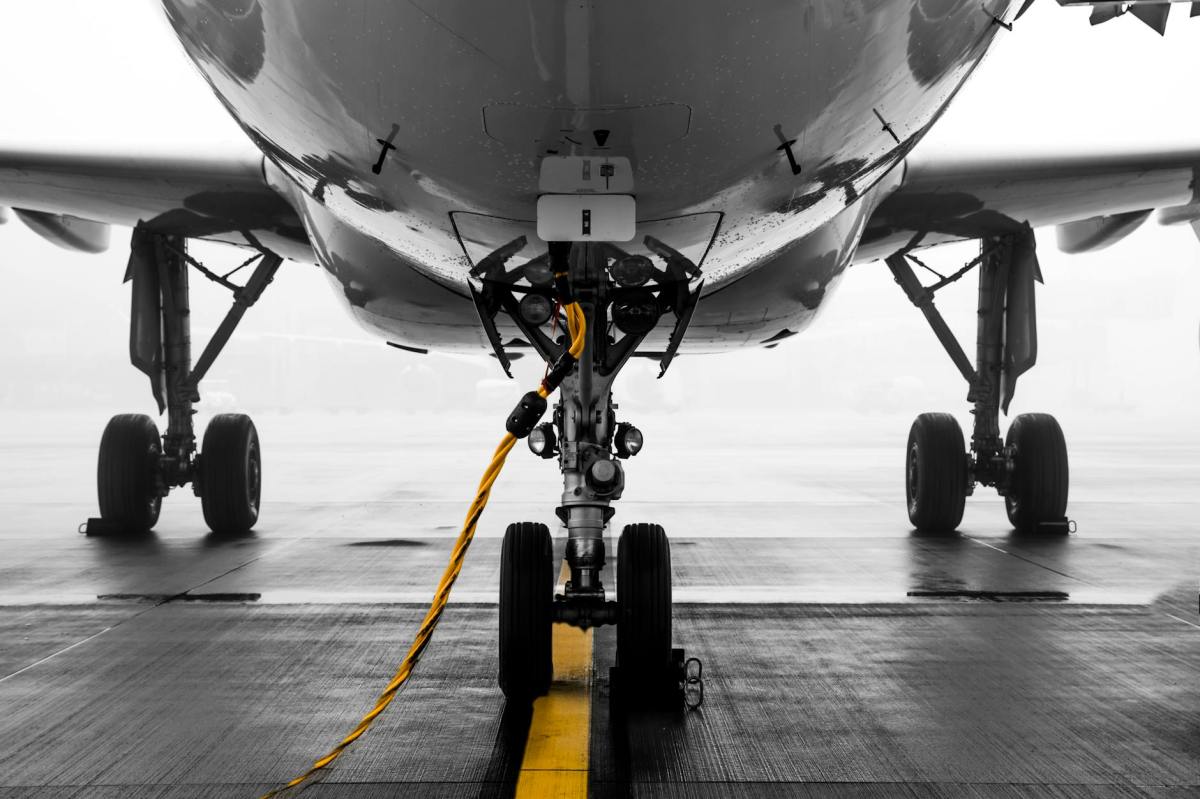
Are the safety standards for all large aeroplanes the same? No, they are not. I’m never sure if the public naively expect this to be the case. I’m sure it’s not something that goes through the mind of every air traveller. Looking up at an aeroplane, flying overhead, this is not a thought that instantly comes to mind. Even watching them take-off and land at a busy airport.

A large aeroplane is a large aeroplane – surely. Well, not exactly. Several issue come into play when addressing the safety standards for large civil transport aeroplanes. For example, when did the type of aeroplane first go into service? What is it being used for? Where is it flying to? How many people are on-board?

One place to start with any discussion on this subject is with the basics. For a start an aeroplane is heavier than air and its power driven. Immediately, two important factors pop out of that definition. One: weight counts. Two: operating engine(s) are needed.

Almost lost in the mists of time are the reasons for dividing the world of transport aeroplanes into two categories. Simply called – large and small.

Underlying this basic categorisation is an historic assumption. This is an assumption upon which civil aviation safety regulation has been built. Namely, that efforts need to be made to ensure large aeroplanes are safer than small aeroplanes. One way of looking at this is to consider a spectrum of risk, and several parameters of concern.

Let’s start with the question above – what is it being used for? A transport aeroplane can be used to carry cargo or passengers, often both. The number of crew and passengers carried can range from 1 to 850[1]. In fact, for large aeroplanes, there’s no upper limit written into international standards. However, the term “very large aeroplane” is coined for the upper end of weight or passenger numbers carried. Sadly, the very largest of these very large aeroplanes (cargo), the Antonov An-225 Mriya, was destroyed by war.

Although, a matter of primary concern is the number of passengers carried, and therefore at risk in the event of an incident or accident, the main dividing line in the regulatory landscape between large and small aeroplanes is weight.

To some extent this has a foundation. It could be viewed that in the event of an incident or accident any resulting impact will be more severe the greater the weight of the aeroplane. This is where a parameter called the MTOW, or Maximum Take-off Weight, comes in. This number includes the total weight of an aeroplane, crew, fuel, passengers, and cargo.

Today, we divide the world of large and small aeroplanes based on MTOW. Yes, the maximum number of passengers that can be carried comes into the equation too. The question I have is, should that be the number one consideration?


[1] https://www.airwaysmag.com/legacy-posts/top-10-largest-passenger-aircraft

Adapting to Climate Change

Owned experience is more real than the theory, or the machinations of commentators. Yes, I know climate change and the weather are two different phenomena. My local weather is a part of the equation, even if it has its own life. Living in a shallow river valley in southern England there’s bound to be an element of a microclimate. A little warmer than the sounding chalk hills.

Last night, the rain fell. At about 3am it was ponding the roof tiles. Coming down like stair rods. Dislodged moss on the decking. Making the dark seem darker. Soaking the garden. Water butts that spent most of the year empty, full again. Whereas the water table sank to a depth in the mid-summer. My garden’s soil was hard. Compacted dust and flint in places. Now, it’s as if the ground water has risen to the surface. No place untouched. Grass as green as it has been. Squelching underfoot.

What’s chiming with me is the marked difference from past times. It’s November. The year is coming to an end. For decades past it would be perfectly normal for there to have been at least one hard frost. One of those occasions when the water in the bird bath becomes a solid frozen block. A glistening white cover of the grass. An end to the growing season, for sure.

Looking out of my kitchen window I still have plants in flower. Piles of sodden leaves. With one or two trees still reluctant to give up theirs. The seasons reluctant to move on. More chance of flooding than frozen ground.

Climate change predictions are that rain is likely to become heavier in this part of the UK. Floods to become a more regular occurrence of warming winters. The ground absorbing much more rainwater. River levels staying higher for longer.

What impact this seasonal flip-flop will have is open to question. Dry summer ground as hard as concrete. Wet winter ground constantly saturated. A more rapid change from one to the other.

For a gardener, certainly, this needs to be considered when planting. Seeing what plants will flourish in these changing circumstances. At least, I did invest well in one new willow tree this autumn. It’s about eight foot high and leafless. I’m expecting it to bust into life in next spring.

POST: As if I’d called it, the temperature has started to drop. 2C this morning. So, maybe the point is not that the seasons are changing, which they are, but more the moment of transition from one to the other is changing.