Rethinking Taxation Strategies

The whole subject of land value tax is not one to get into if you are looking for something to read while waiting for a bus or looking for a light-hearted story. Yes, that could be said about any discussion about taxation. Probably one of the reasons why so few people engage in conversations about the nitty gritty of this subject.

LVT (Land Value Tax) is not new. This idea has been on the block for decades. One of the underlying reasons for its popularity is that instead of taxing things society likes, like business, commerce and employment, this tax scheme aims at an asset value. In a country where land is a valuable commodity, at least in populated areas, here’s a tax base that this solid.

The part LVT could play in UK tax reform is a major one. That’s where this subject gets twisty. How to get from where we are now to a new scheme that is understandable, straightforward, and acknowledged as fair. That is, at least in comparison with the existing taxation schemes.

One provision needed is to distinguish between public land to private land. There’s no point in raising revenue to fund local government and then getting that entity to use those funds pay the same tax. If private organisations lease public land, then there would need to be a provision too.

Then there’s the difficult issue of revaluations of private land such that the result is fair and genuinely reflects “value”. A city car park and a golf course are very different in that respect. Fine there is a national land registry, although there are still packets of land unregistered.

Quite a bureaucratic set-up establishing a Valuation Agency. Even if most of the necessary information is already held by lots of existing organisations. Every set of accounts is going to have value for assets held or owned. The range of accuracy of these values can be wide.

I’m not making a case against LVT. What I am saying is that tax reform is not easy. Those proposing it must have a long-term perspective. Must be committed to getting away from making ever more complicated fragmentary changes to legacy schemes. Adding ever more complexity to an unreadable tax code.  

Tax reform is not easy. Facing up to those who gain an advantage from the status-quo is often one of the greatest pressures that a government faces. Making life simpler and less burdensome for small businesses, shops, pubs and restaurants is a great ambition. Facing up to the owners of golf courses and sprawling country estates, now that’s not so easy.

Now, when I wonder what the New Year will bring it doesn’t seem that the current government is not brave enough to make radical changes. Their approach, over the last year, has been one of cautious incremental tinkering. If they have core principle, no one is quite sure what they are.

Lessons from Nature

I once said to Kwasi Kwarteng[1] that peak Boris Johnson passed during the early part of his terms as London mayor. Naturally, predicably he didn’t agree with me. This was in the Parliamentary constituency of Runnymede and Weybridge in 2017. I was the Liberal Democrat candidate standing against former Conservative Minister Philip Hammond. The public event we were attending was in Egham in Surrey.

Wow. A hell lot of water has passed under the bridge since that time. It’s like looking back at medieval history and trying to find a thread that links with the here and now. Governments have been and gone, careers have flourished and collapsed, Trump has been and gone and then returned and as was predicted Brexit has turned out to be a disaster.

Here’s a thought. It has always astonished me that we have a common fallacy. If a shelf regarding person who makes a lot of noise was once, even for a fleeting time, good at one job, they will be good at a loosely similar job. What a load of nonsense. So, it has turned out to be.

I’ve been watching the BBC’s series Kingdom[2]. About the animal kingdom. I know that the filming of such a spectacular series takes an enormous amount of dedication and effort. We get the pleasure of watching a well edited set of stories about leopards, hyena, wild dogs, and lions.

It’s tough out there to survive the seasons in the imposing Zambian landscape. We get to see the shifting of power between animal families and from generation to generation. It’s raw nature doing what it does and what it has been doing since the dawn of time. In what appears a paradise, nature is cruel. Rivals quickly exploit weakness. It’s going a bit far to draw a direct link between the rivals in the wild and the rivals in our parliamentary democracy. That said, there are lessons nature can teach us.

One is that top dogs don’t stay top dogs forever. They get their moment in the sun and then it passes. The fight to make a claim on a territory is perpetual. Yes, the cycles of the season have their impact and luck, good or bad, plays its part.

Two, is that a bad move remains a bad move. Ignoring crocodiles is never a good move. Wandering about without the protection of the pack is a high-risk strategy. Backing off, and fighting another day, is the best way to deal with a bigger, meaner, and hungrier opponent.

Where am I going with talk of these two different worlds? Human nature and animal nature.

It’s my reaction to seeing the scribblings of a former Prime Minister wibbling on about how dangerous it would be to reverse Brexit. Boris Johnson, that man whose star faded a long time ago, is writing for tabloid newspapers. He’s writing exactly what anyone would expect to see from those who will not learn from experience.

A bad move remains a bad move. Now, nearly ten years on, a bad decision remains a bad decision. Write what you like, it’s impossible to transform a failed project into a kind of utopia. What’s worse is to try and scare people by writing that we must tolerate failure because we once adopted a failed project is ludicrous. It’s irresponsible. It’s mad.


[1] UK Chancellor of the Exchequer from September to October 2022 under PM Liz Truss.

[2] https://www.bbc.co.uk/programmes/m002hdgh

Dynamics of Change

This theory of mine may have been voiced before. It’s a way of looking at the momentum behind progressiveness but with a reminder of the realities of the difficulties of change. Any progressive movement implies change. That change may not always be comfortable.

Ever looked at the teeth of a wood saw. There are a variety of geometries[1]. The overall purpose is the same regardless of the shape and size. Different materials too. A typical saw is unidirectional. Push in one direction to make a cut and withdraw to prepare for the next one.

Then look at our world of ever-increasing data. Piles of accumulated numbers. For the most part, as simple creatures, we plot “x” against “y” to get an image of how one parameter is related to another. In the real world, there’s a lot more axis and dimensions. More than a head full.

On one axis I could put that nebulous parameter “progress”. The horizontal axis, as it often is, that unidirectional human experience of time. So, “x” equals time, as the years clock by, and “y” equals a measure of human “progress”.

What do I plot on blank graph paper? Take the shadow of the saw tooth at an incline and arrange it so that it rises with time. Remember to get it the way round that suggest that the saw is being used. Depending upon the rate of the incline and the rake of the saw tooth, we go forward with time and then stop or reverse a small amount. However, the overall direction is always to climb. This is better drawn than written. 

How does this illustrate the mythical quality of human progress? Being a fan of both disproportionate relationships and pareto[2], I accept that things move at different rates subject to different stimulus. Sometimes fast with only a tiny push. Sometimes slow even with a massive amount of force applied.

Take, for example, the technical progress that was made, driven by the necessities of war, in the 1940s. Aeroplanes went from relatively crude flying machines and esoteric racers to incredibly capable craft that came to dominate the skies.

Now, take social progress at improving housing conditions in our country, over the last couple of decades, and the speed of improvement has been remarkably disappointing, to say the least. Pathetic would be a better description.

Progress, or lack of it, has a vast number of different characteristics. However, the main one that either delights us or troubles us is speed. The speed by which things change for the better. Swiftness of advance, or setback after setback and even moments of reversal. Just like a saw tooth. Great strides are made. Then difficult periods and reversals occur. It’s predicable what I’m going to write next. The western world is in one of those moments of ambition but backsliding and sluggish progress. Negativity abounds.

Is perspicacity the right word to use for my theory.? It’s crude. On the upside there’s an underlying positivity described in my simple model. Don’t look to the setbacks and stupidities of the day, look to the longer run “progress” that is in prospect. And help make it happen.


[1] https://www.blackburntools.com/articles/saw-tooth-geometry/index.html

[2] https://betterexplained.com/articles/understanding-the-pareto-principle-the-8020-rule/

Civilization’s Edge

Civilizations rise and fall. That’s not new in the human experience of the last couple of thousand years. One of the causes of failure is an encounter with an entirely unexpected threat. When I say “unexpected” I mean unprepared for threat. Then finding that the defences that have been constructed fall simply and quickly because they didn’t anticipate that threat.

Another reason for failure is a perpetual human characteristic. Arrogance. Everyday imagining that the pinnacle of achievement is – now. Look how smart we are in the 21st Century. Capable, Superman like, of leaping so far ahead of our forefathers.

I’m a child of the analogue age. I was born into the space age. What that brought us, by necessity, was the digital computer in all its myriads of forms. Yet, from day one, it’s no better that a mass of fast switches. Ones and noughts. Nothing more. Nothing less.

With miniaturisation and an understanding of how materials work a massive, global, interconnected digital system, called the INTERNET, has been constructed. It’s flexibility and utility are undeniable. Its extended human capabilities way beyond that of past generations.

Now, I can start a sentence with “however” or “but” or despite this fact. The whole enterprise is still an unfathomable, dynamic number of ones and noughts.

There’s a kind of vulnerability that is elemental. Whatever might be written about powerful Artificial Intelligence (AI) systems it’s fair to say that the “A” is entirely accurate but the “I” is a bit of a myth. Mimicking intelligence is more the order of the day. That does make people shudder because that mimicking is so fast and draws on a massive amount of information. Seemingly that surpasses human capabilities. It doesn’t.

I write not of the machines that we have today but of those to come. I’ll resist the mention of the number 42. What’s happening is an acceleration of developments. These highly versatile tools that are permeating every aspect of life are not frozen in time. They overhaul themselves on a regular basis. What comes next is indeed machines that make machines. Algorithms that write algorithms.

Humanity is unprepared for the emergence of an intelligence that genuinely fits that bill. The whole idea of sovereignty and human autonomy might go out of the window. The ability to exercise control over where we are going is lost.

There are a lot of wealthy folks who are of a libertarian frame of mind who don’t seem too concerned about this race to the point of loss of control. This could be an expression of arrogance or ignorance or both. It could be the ultimate expression of short-termism.

It’s going to require real effort to hang on to democratic systems where we all have a stake in the direction of travel of our society. Money buys influence. Now, that influence is adverse to the idea of trying to regulate or moderate the advance of technology.

Civilizations rise and fall. Are we racing towards a cliff edge? Put aside climate change for a moment. Stop me from any tendance to doom-monger. My thought is that a comfortable, stable, prosperous society needs regulator instruments that work to mitigate threats. Let’s not be persuaded to ignore that reality.

A New Customs Union

Let’s not put up taxes. Let’s trade more. Seem obvious. Well not in late 2025 in Britain. This possibility must be forcefully put on the agenda for debate in parliament. Raise revenue, rather than raising new taxes, has got to be the better way to go. The bigger the pot the more chance that a government has got to balance the books. Taxes have their place but not to be the default opinion, in all cases.

The Labour Party has been talking the talk on growth in the economy but frequently marching in the opposite direction. It’s as if they embrace the comfort blanket of domestic tax increases too readily without thinking of the long-term impact. Habits are hard to change.

Before, what a majority agree was a mistake, Brexit, trade with our next-door neighbours was in a much healthier position than it is now. We’ve (UK) created barriers and obstacles that have diminished our trading position to no advantage whatsoever. Coming up for a decade of backward thinking.

In parliament, the Liberal Democrats are tabling a bill that calls for creating new Customs Union (CU) with the European Union (EU).

What is a CU? Simply put, it’s a trade agreement between countries to abolish tariffs on the goods they trade with each other. So, instead of barriers and obstacles to trade, the whole process becomes easier and cheaper.

Yes, such an agreement with the EU would have implications for relations with non-EU countries. What I’d say in that respect is that such negotiations with non-EU countries on tariffs haven’t been going so well in the last year. The UK has been buffeted by the policy of other nations, where their policy often spins on a dime. On / off fragile agreements don’t add enduring value.

Such a new CU with our next-door neighbours would boost the UK’s GDP by a significant amount. A boost of £25bn a year for the public finances is predicted. Thus, the growing demands that drive for domestic tax increases would be abated or at least be affordable.

Do you remember? So, many advocates of Brexit said we’d never leave the CU. It’s easily forgotten but some of the most ardent Brexit supports were saying this to the electorate. In essence being untruthful.

Back in January 2017, the Conservative Prime Minister (PM) of the time confirmed that the UK would not remain in the EU CU. What a massive mistake PM May made. The repercussions have been devastating for businesses and the public up and down the UK. It was an act of disfigurement that damaged our economy for nothing more than political dogma.

Sadly, we are where we are. I wouldn’t start from here. Wouldn’t it be great if negotiations started to take the UK into a new CU with our nearest, biggest trading neighbours and partners.

Sadly, the way the parliamentary vote will go is rather predicable. The Labour Party, in its current form, is not the internationalist Labour Party of its history and traditions. Currently, government support is not forthcoming. They prefer to talk the talk without walking the walk.

Post: Fix Britain’s Trade – Liberal Democrats

UK’s Digital Dependency

Under the title of “Culture” The Guardian newspaper offered an article that caught my eye this weekend. The author, Tim Wu was offering a point of view about the economic landscape that we inhabit in Britain. The theme was the drift that has taken place whereby we find that a huge dependency has grown-up over the last couple of decades. That is the unassailable dominance of a small number of US companies throughout the whole of our country.

What am I using to write this remark? It’s a computer program called “Word” sold to me by a multinational company called “Microsoft.” What’s strange is that this way of expressing my relationship with Microsoft isn’t commonplace. There’s a tendance to treat software, like Word as if it has always been with us and always will be. Like the public roads I drive my car on. Completely taken for granted. That is until a problem arises.

This Saturday article wasn’t about computer software per-se. Although the world of computing is riddled with intellectual property rights there remains a kind of openness to new ways of doing business. Digital ones and noughts are like the text on this page. They can be rearranged in all manner of diverse ways. The combinations and permutations are almost infinite.

Tim Wu argues that we should look to the way transport systems developed as an analogy to the electronic communications infrastructure we use.

Roads developed in the era of the horse. More than 200-years ago, before the time of the railroad. In fact, they go back a lot longer than a few hundred years ago. The Romans were particularly good road builders. However, that was a state enterprise aimed at getting armies around a sprawling empire.

The condition of roads in Britain took a leap forward when commercial enterprise found a way of getting an income from the primary land transport system of the day. Road tolls were a way of building and maintaining a network of highways. This network was physical. Fixed in place.

Digital infrastructure is more than cables, wireless systems, and databanks. Without the human interface all that extensive structure is unusable. That’s were a small number of US companies dominate the marketplace. This complete extra territorial dominance is, like my comment about Word above, taken for granted.

Tim Wu’s analogy doesn’t cut the mustard. It does illuminate an inconvenient truth. The reason the big US companies are driving the future of communication and technology is because they have captured a massive global income stream. However, much of that position depends on the laws that prevail in each nation. That prevail at a time when globalisation was seen as almost unquestionable. Now, the question arises has national sovereignty been sacrificed on the alter of progress? If so, what next?

There’s often been a hard kick-back against anticompetitive behaviour. Monopolies are not considered the best way to serve the public interest. Nevertheless, throughout history they have been pivotal in our story. Like it or not, that’s how the elegant country houses and castles of Britain were paid for and furnished. The same experience can be witnessed at the Newport Mansions[1] in the US.

How do we democratise rapidly advancing technology? There’s a mighty big question.


[1] https://www.newportmansions.org/

Why Embrace False Utopias?

Why do clever people often become dayglo prats? Not stupid by any means. More foolish and not embarrassed by their recklessness. It’s one thing to be incompetent or ineffectual but that’s not what I’m getting at here. It’s smart people who get carried away with delusional dreams.

How many vocal futurologists have said – “work is dead”? That one day we will be living in an age of leisure and ease because sophisticated machines will have taken all the drudgery out of existence. Intelligent machines doing all the things we once considered to be work.

In essence it’s a utopian vision that stands-up to be knocked down. In fact, the subject matter has been chewed over in science fiction ever since science has played a big part in our lives. Such popular fiction takes us from a dream world to a hideous dystopia that the original dreamers hadn’t envisioned.

The year is 2274. Almost 250-years ahead of where we are. Humanity is living in a bubble. That bit doesn’t change. Most people are unaware of how their society functions. Again, that bit doesn’t change. Rituals and customs dictate the path individuals take in life. Like today.

Strangely, even in the year 1775[1] those three aspects of life were evident. Maybe they are perpetual. However, there’s an exceptional point to make. That’s our rebellious nature.

The year is 2274. The movie is Logan’s Run[2], made at a time when society had ripple of anxiety about the so called “silicon revolution.[3]” That’s 1976. Before the elevated level of interconnection and communication that the INTERNET has afforded us.

It’s a sobering science fiction movie with a somewhat optimistic ending. Looking dated. I can get past the images and props that epitomised the seventies vibe. That’s become vintage.

To me, aspects of the theme of the story come from H. G. Wells. Nothing wrong with taking great ideas and reshaping them for the time. In the end the flawed utopia is defeated by our rebellious nature. Or at least of some people. The seeking of truth, at all costs, and to look behind the mask that everyday life paints.

You may ask – what the hell am I getting at? It’s a reaction to the recent headline[4]:

Musk says that in 20 years, work will be optional, and money will be irrelevant thanks to AI.

I like growing vegetables. Gardening is a superb way of doing something practical, staying grounded and in touch with nature. It’s good for one’s mental health too. However, the notion that work will be optional is far-fetched. The idea that money will disappear in a couple of decades is nuts. That’s not going to happen.

I know that the motivation to say such things maybe merely to provoke. That has its function. Nothing like stimulating a debate about the future. Surely, we are in for some dramatic changes in my later years on the planet. Surely, we need to equip the next generation to deal with these changes. Surely, we need to protect the public interest in turbulent times.

“Prat” is an often-applied British term. There are a lot worse terms than that one.


[1] https://www.clarkstown.gov/weekly-column/the-revolutionary-year-of-1775/

[2] https://www.imdb.com/title/tt0074812/

[3] Intel’s 4004, released in 1971, packed the core of a central processing unit (CPU) onto a single chip for the first time.

[4] https://fortune.com/2025/11/20/elon-musk-tesla-ai-work-optional-money-irrelevant/

Navigating Aviation

Each profession has a way of speaking. This is not usual. Just try reading a long-winded contact on any subject. There are lots of references to a “third party” and more than one. Copious uses of the word “herein”. A good sprinkling of “hereby” and “foregoing”.

I don’t speak those words. If I used them in everyday conversation, I’d get locked-up. Nevertheless, these English words are universally applied to common legal documentation. The hundreds of End User License Agreement (EULA) that we all sign up to, whether we know it or not, apply legalese language liberally [love the alliteration].

Aeronautical people are no different. I could have said aviation people or professional flying people. There’s the rub. Even to say the same thing, there are a myriad ways of saying it.

One major problem that we all encounter, now and then, is having to work with a community that uses language in a different way from ourselves. I’m not talking about language as per dictionary definitions of words and standard English grammar. For good or ill, English opens the door to a numerous of ways of saying basically the same thing.

Professional English users, as I have alluded to above, choose their own pathway through the possibilities. English is not alone in facilitating this variability of expression.

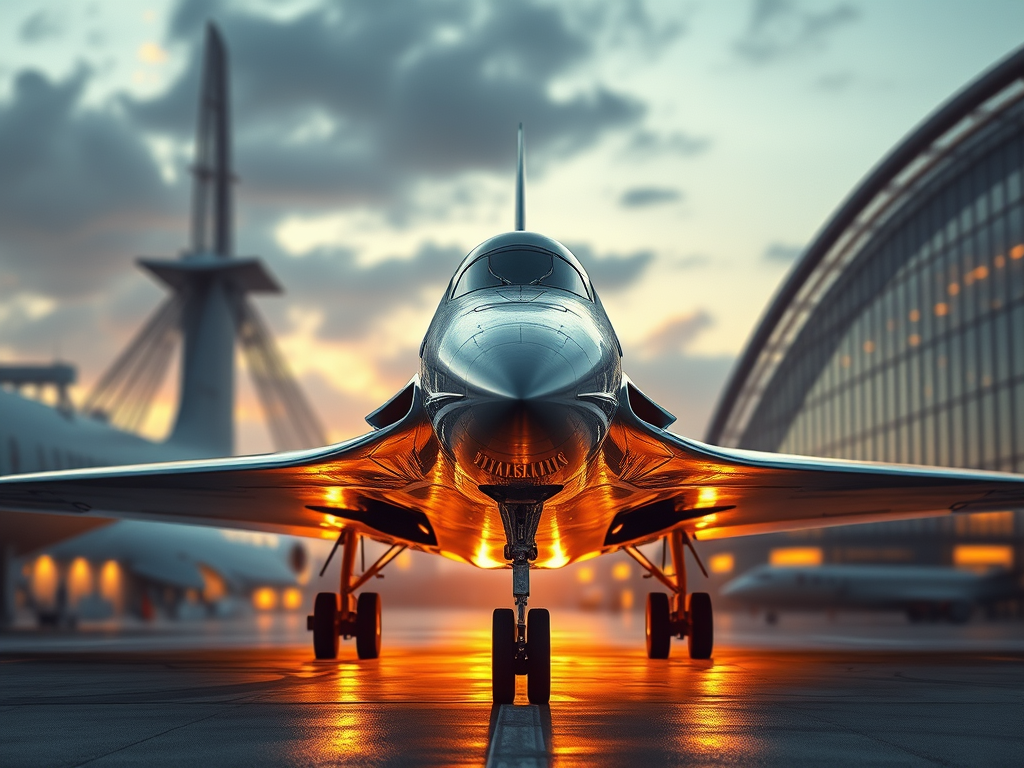
I once worked in Bristol. A Filton. A large aircraft factory with an immense heritage. That included the Concorde project. Here both British and French engineers had to work closely together on a huge joint venture. It succeeded. Supersonic flight was commercialised.

One of the delightful little books I picked up from that time was a handy English/French dictionary of aeronautical terms. Those in common usage at an aircraft factory of the 1970s. To communicate effectively it was recognised that technical words needed to be explained.

What I’m noting now is this reality hasn’t gone away. For all the imaginative language Apps that might grace my mobile phone, there’s still a need to explain. This gets even more important when it’s a specific aviation community that is being discussed.

How do people from other communities get what regulatory people are saying when it’s perfectly obvious to them what they are saying? Take a banker or financier that wants to invest in electric aviation because they believe the future points that way. They come across bundles of jargon and precise terms that are not found in everyday conversations. Not to say that the world of money doesn’t have its own langauage.

In aviation there’s not only particular words with detailed meanings but a raft of acronyms. Combinations of words that are easily expressed as a package of letters. Then the short, sweet acronym surpasses the original text.

SMS, POA, DOA, ODA, OEM, TSO, TC, ICA, CofA, SUP, FDM, FAR, CS, NPRM, NPA, AC, AMJ, ACJ, GM and I can go on and on.

Maybe we need a Sub Part – better understanding.

Wealth and Power

No history buff, need you be. That’s Yoda speak for saying that there are one or two matters that bubble to the surface through human history. Let’s shelve the fact that the sun rises in the morning and sets in the evening. It’s a subject that a whole religion could be based upon.

I could encapsulate the phenomenon in the words: “Let them eat cake”. An example of a stratified society where those people that the top have completely lost sight of the lives lived by the majority. There’s a recognition that others exist but no great empathy or care.

That detachment can be exhibited in signs like gold plated panelling, crystal chandlers bedecking breathtaking halls and spare no expense expressions of power and wealth.

That’s one of my memories of my one visit to Russia. A port of call during a Baltic cruise itinerary. A trip that highlighted fascinating contrasts but shared histories. A good reminder of dramatic events. The Winter Palace in Saint Petersburg[1] is truly stunning. Lavish in every sense. A sign of the last century intense competition between major European powers.

To top a list, the Palace of Versailles[2] is the premier example of draw dropping magnificence. Naturally, these are global statements of power and wealth that are celebrated as part of our common heritage. They are, however, a lesson that history has posted for us to read.

What do both have in common?

Today, Kings and Queens are familiar with that lesson. Possibly apart from a small number who haven’t yet embraced modernity. If I must write it in the minimum number of words, it’s that distance that can grow between those who have great privilege and those who don’t. Then what happens when that becomes truly unstainable.

Revolution is bookmarked in any history book. These are moments, and their consequences are when a break point is reached. Although signs are there in hindsight predicting such events is a fraught with uncertainty. It’s usually thought that the price of destruction and devastation are a dam that keeps thoughts of revolution at bay. Change that happens, as if a dam breaks, are notoriously difficult to predict and cost. Not only that but such thoughts are rarely in the minds of any revolutionaries and their opponents.

Let me be clear. We are no where near a breakpoint in this moment. If I must write something, it’s more about the subtle signs that the direction of travel is not a positive one. Fine to dismiss my point of view as being that of a dyed-in-the-wool liberal. I get that.

It’s the consequences of the concentration of power and wealth that’s concerning. The rise of the global billionaires and their reach beyond national boundaries is of the age. Nation states are no longer the biggest players in the writing of the story of the future. This is not always entirely bad, some are altruistic, but growing economic inequality[3] is bad. Outcomes from situations where inequality exceeds certain limits, that’s not where anyone sane should go.


[1] https://www.historyhit.com/locations/the-winter-palace/

[2] https://whc.unesco.org/en/list/83/

[3] https://sites.manchester.ac.uk/global-social-challenges/2022/07/12/widening-of-the-wealth-gap-the-rise-of-billionaires/

Embracing Uncertainty

Imagine siting under a great wide spreading old oak tree. Acorns falling all around. The ground littered with whole ones, crashed ones and half eaten ones. It’s more the half-eaten hazelnuts that the squirrels leave behind that I’m thinking of. On one of those cool days, like this morning, when the rain has abated and the sun beams are streaming across the glistening fields. It was lower than 2 degrees, early this morning, so a heavy drew rests on the grass and leaves.

Think of title for a book or film that sums up the state of current affairs. I’m tempted to say “All the President’s Men” but that’s been well done in the 1970s. Not only that but the word “scandal” may have lost its meaning. Political fiction and reality are melding into one. Anyway, I don’t want to follow the crowd and obsess about America.

Was there ever an age when prosperity seemed assured and the population was happy. When men and women of honourable intentions and wisdom, judicially ruled the land? Maybe not. Or when it happened, to some limited extent it didn’t last beyond a generation.

Any title for a book or film would have to encompass the persistence of change. Nothing upon nothing ever stands still. In fact, that’s one of the few things I can write that is an absolute. A real natural absolute phenomenon. Everything we know of moves relative to something else and movements mean change. We never breath the same air.

In a storage box of my books there’s a title: “Thriving on chaos[1]“. That’s more to do with an attitude to change. It doesn’t sum up the moment although it does imply that chaos is normal. I’m not going there fully since not all change is chaotic. Life is punctuated with regularity. It’s the traditional saying about death and taxes. Those two are regular occurrences.

A financial crisis or stock market crash or bursting bubble seem to hit us as an unexpected instant of violent change. Unexpected that is until hindsight kicks in and we all wish we’d listed to siren voices. Analysis streams from the outcome of a crisis[2].

A title for a book or film would need to include the recurrent nature of both good and bad consequences. It would need to emphasis our inability to accurately predict what’s going to happen next. That is even if one or two of us may get it right.

All this leads me down the road of a manner of thinking that’s all too common to me. That’s the world of probabilities. Addressing that slippery ell called uncertainty. So, what could be better as a title than: “The Age of Uncertainty.” Oh look, that’s been taken back in the 1970s. What could be better than the title chosen by John Kenneth Galbraith[3]?

He looked at the chaotic but repetitious nature of our common history. Going way back. Unsurprisingly a little cynical and monosyllabic at times. I’ve been rewatching his BBC television series. It’s impressive.

Acorns are falling all around. An unusually large number, this year. Next year – who knows? If I could find some reliable data, I could do some probability calculations based on past seasons. But with certainty, I can say that we are in an age of uncertainty. Acorns will fall. How many – well that’s the question isn’t it.


[1] https://tompeters.com/thriving-on-chaos/

[2] “The Storm” by Vince Cable, the Liberal Democrat politician, looking at the 2008 global economic crisis.

[3] https://www.bbc.co.uk/iplayer/episodes/m002l6sc/the-age-of-uncertainty