The Mystery of Flight MH370

It’s ridiculous and shocking. In the modern era of civil aviation, that a large passenger aircraft can go missing and never be found. This tragic disappearance that has had experts baffled.

Mysteries, in the early days of flying, were not commonplace. They were, however, sufficiently commonplace for pulp fiction writers and amateur investigators to fill their boots. Mysteries at sea, and in the air have been a fascination for as long as there has been maritime and air transport. As our scientific and technical capabilities have increased so has our expectation that these mysteries are of the past, not the present.

Without any cause for concern, Malaysia Airlines flight MH370[1] took off 12-years ago. The aircraft disappeared from radar and has never been seen since. Parts of the aircraft have been recovered. Unfortunately, those parts provided insufficient evidence as to where the whole aircraft crashed. With what is known, this Boeing 777-200ER[2] aircraft is somewhere in the depths of the ocean. How it got there, wherever there is, and why remain unknown.

The most recent sea search for the wreckage of the aircraft has yielded no findings. Systematically searching the Indian Ocean, an organisation known as Ocean Infinity, has not advanced our understanding of what happened to flight MH370. That might be unfair, since we now know that the aircraft wreckage is not likely to be at the locations they searched.

The vast area of the Indian Ocean has an average depth of over 12,000 feet. Locating an object on the seabed is a hard task even when there’s some idea where it’s resting. To make the task even more difficult, ocean seabeds have a wide variety of geological formations. Mountains, crevasse and flat expanses.

We spend most of our time living on dry land. The reality of planet Earth is that a larger part of its surface is covered with water. That we can be thankful for given what we see of other planets.

Thus, the importance of having the mechanism for location that works anywhere and everywhere. Airborne Communications, Navigation and Surveillance (CNS) is vital in all aspects of international flight. Flight MH370 was equipped with Boeing’s FANS-1 (Future Air Navigation System). This does have a surveillance function in that it provides aircraft position reports via satellite communication (SATCOM).

[In the late-1990s, I was involved in the standards setting and regulatory approval of the airborne components of both the Boeing FANS-1 and AIRBUS FANS-A systems].

Reports of the loss of MH-370 say this aircraft system was working at the point of take-off. Official reports also say that this aircraft system was “deliberately” disabled during the flight. A mystery remains as we may never get to understand the motivation for this action.

There’s no good reason for disabling such systems unless they are presenting a hazard to the aircraft in flight. Clearly the crew need to have the ability to isolate aircraft systems in the event of an avionics bay fire or other significant failure events. Circuit breakers are provided for that purpose. Procedures and training are too.

So many questions. Will the Indian Ocean search be revived again? Not for a while, I think.


[1] https://john-w-vincent.com/2024/12/20/mh370-and-mh17-a-decade-on/

[2] The ER stands for Extended Range.

Integrating for Success

It’s almost as if there’s two types of humans. Who often find it difficult to understand the other. In the field of pros and cons here’s a sketch.

One who takes a general overview that can be called the “big picture”. They shy away from dense information. Much in favour of short précis and a well-crafted pitch. Not so much interested in how an answer was derived as what it is an how it impacts their interests.

Another who specialises and focuses on precise detail. Deeply engrained in the working of a particular issue. Open to a continuous round of investigation and discovery. Not so much interested in an outcome as the interaction of the components that produced an outcome.

With the first, they are comfortable with ambiguity. A degree of vagueness. They can short-cut to decisions to provide a sense of certainty. On the downside this can lead to turning a blind eye to difficulties and failing.

With the second, they are obsessed with the pursuit of excellence almost to the exclusion of practicality. On the upside they may anticipate problems. Providing workable solutions before they become forced.

What am I talking about? Most people don’t fit in either camp. Or we have subjects where we dig deeply and others where we skim the surface. I’ve used the analogy of a basic comb on this one. The spine of the comb is the overview. The prongs of the comb are the deeper scrutiny.

My message is simple – both are needed. That is, both are needed to understand what’s going on. Where the subject is a complex aircraft systems design both are essential.

There’s another way of saying this too. Slightly different because this way assumes a hierarchic organisational structure. For the most part, despite fads and fashions to do differently, most large organisation still have a form of hierarchical arrangement. Directorates, departments, sections, teams and alike.

One view of a complex system can be taken “top-down”. Another view is taken “bottom-up”. Phrased like this (top and bottom) it’s not easy to appreciate that both are equally important.

As an illustration, I certainly remember working with highly professional engineers with incredibly detailed knowledge of their part of an aircraft. However, they had little idea of the implications of some functions in relation to the abnormal operations of an aircraft in service.

Equally, to be fair, those meetings with capable and highly experienced managers who were inclined to bypass or belittle difficulties to ensure that a promised date was met. Or an inability to appreciate the necessity to consider the long-term consequences of a finding.

My message is simple – the two perspectives must be drawn together for success. Bringing together the points of connection between the nitty gritty detail and a wider appreciation is a hard job. Fraught with misunderstanding the people who can do this are rare and precious.

The above is a reason to be concerned when the approach to efficiency is biased towards automation. To speed up design processes to get all the ducks in a row. To more quickly pile up the paperwork, or its digital equivalent, without time to think. Without the space to use our most valuable skills – experience, creativity, imagination, discussion and mutual respect.

From Daedalus to Artemis

Being in good company is always nice. That spirit of experimentation doesn’t suite everyone. Now, I find myself in company of a NASA astronaut and an 12th Century English Monk. All in one week.

I stumbled across the NASA App[1] last evening. I hadn’t reckoned at that being available on my smart Sony TV. There it was. So, it only seemed right to download it and check up on what’s going on with the current Artemis mission. Other News told of delays and troubles with the launch vehicle that’s to send astronauts to circle the Moon. Setbacks are common in space flight so that’s not an issue to be alarmed about.

[Whatever would we do without the Ancient Greeks. Artemis, Apollo, Mercury, Gemini[2]].

This is a fundamentally important space mission given that it’s the first-time humans will have ventured so far since the days of the Apollo missions. Sending four astronauts around Earth’s satellite is a hard task to undertake. It’s aimed at establishing a means to get to the Moon on a regular basis.

Apollo spacecraft did this journey when computers were relatively primitive machines. Artemis has the advantage of a technical capability that is many fold greater. The problem is that sheer complexity and society’s tolerance for safety risk has moved on since the 1960s.

Anyway, the tale told, in interview of one of the Artemis astronauts is one of jumping off a barn roof as a young lad. Constructing a homemade parachute and trying it out. Having that freedom of a life growing-up on a farm and that appetite for experimentation. I was thinking, been there, done that and lived to tell the tale. In my previous scribblings I’ve mentioned the large red Dutch hay barn that was part of my youth.

Back to the Greeks. It’s myth but there may have been an element of truth in it. A map of modern Greece makes it clear that the islands of Ikaria and Crete are separated by a great distance. So, suggesting that a father and son in ancient time flew from one to the other can’t be true. However, that doesn’t dismiss the possibility that the Greeks experimented with the possibility of human flight.

So, the myth goes, Daedalus was the design authority for a method of flying which does not come recommended. Strapping on wings made of wax and feathers is a 100% risky venture. Daedalus was, if a real person, an imaginative ancient inventor. An inspiration to others. In this century it’s best to interpret the famous myth of flight as one of experimentation in a way that is fully respectful of the risks involved.

Coincidentally, this week, more by accident than intention. It’s a long story. I visited the town of Malmsbury. Inspired by the story of Daedalus, Monk Eilmer of Malmesbury[3] has solid claim to be the first European to fly. It wasn’t an entirely successful flight, but it was a flight. In the 12th Century he leapt from a church tower with wings of his own invention and survived.

Monk Eilmer of Malmesbury did end up with broken legs and a place in history. It would be unwise to repeat his early experiment as an example of human flight. That is unless a crude glider was replaced by four rotors, electric motors, some electronics and a powerful battery.

I share the hazards of a technical ability. Luckily my youthful attempts at flying with a parachute made of black polythene sheeting from a red barn roof didn’t result in any broken bones. Good luck to all who fly. Especially those who travel the furthest.


[1] https://www.nasa.gov/nasa-app/

[2] https://www.greeknewsagenda.gr/from-olympus-to-the-universe-where-greek-mythology-meets-nasa-missions/

[3] https://en.wikipedia.org/wiki/Eilmer_of_Malmesbury

Transport of Flight Delights

Air Taxies are becoming a reality. It’s not Science Fiction anymore.

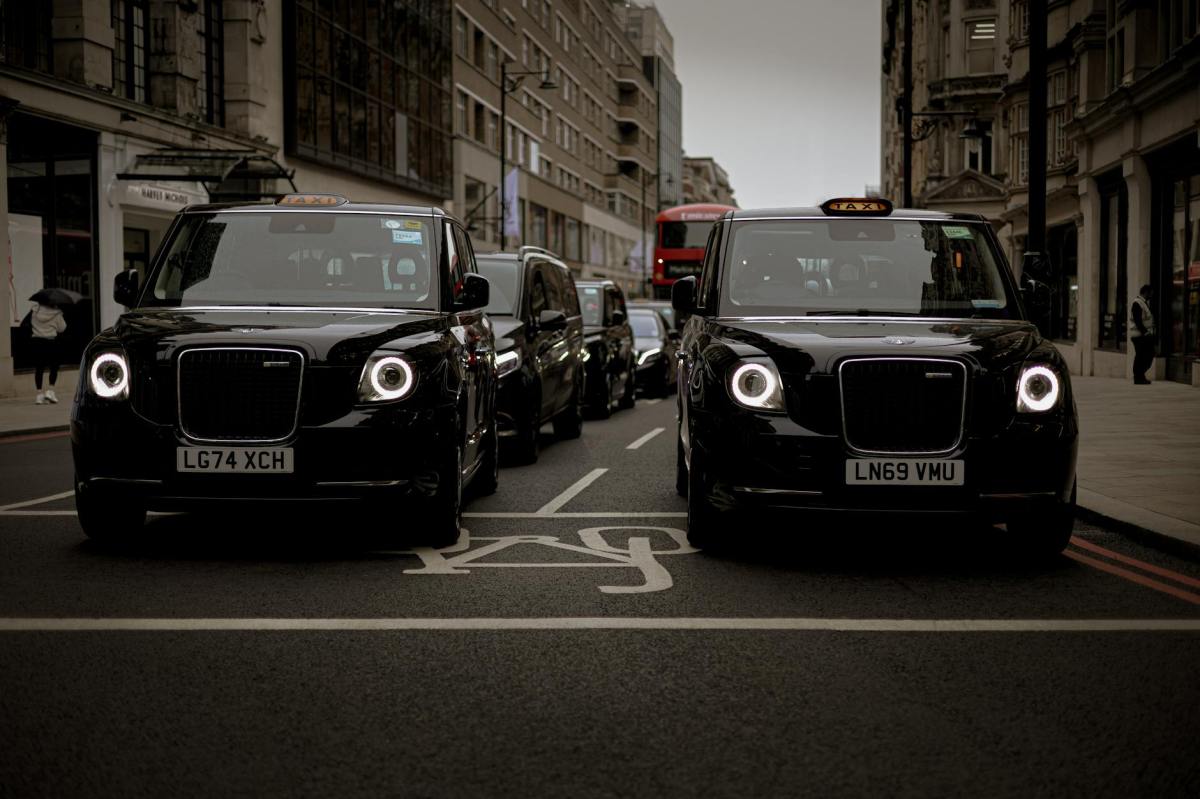
The history of the “hackney carriage” is along and illustrious one. They remain firmly attached to the road. They do move with the times. From horses to combustion engines to electrified cabs[1], I wonder if London back cabs will adopt Hydrogen fuel next?

Providing safe and reliable public transport for about 8-passengers, in reasonable comfort, with a limited amount of luggage, they are a vital part of the city landscape. Ferrying people from place to place and even going south of the river (a popular saying from the people who live north of the River Thames).

In New York, “Yellow schools of taxi fishes” in a song by Joni Mitchell. Schools or sholes of taxies swimming in a sea of traffic. Frantic and colourful as they are shown in a lot of 1970s movies. A chaotic scene where the protagonist runs out into the middle of dense, barely moving traffic.

What happens when these modern convinces take to the air? If they were still with us, I’m sure Flanders and Swann[2] would have written a song about this new marvel. The distain of London buses towards black cabs is there in the lyrics. So, as air taxies take-off, as it were, will the cab drivers of the city protest or join the ranks of new flyers?

Please don’t answer that question. I’ve in mind more serious issues. The whole history of aviation safety data analysis shows us an immutable fact. Take-offs and landings are riskier than flying in at altitude. It really matters not if flying horizontally or vertically.

How does this come to be? A simple answer would be to say that the results of aviation accidents eventually end-up on the ground. Gravity does its work. Put that aside for a moment. Take-offs are optional but landings are mandatory. That’s a traditional saying that amuses non-flyers but is all too real to pilots and alike.

The act of taking a flying machine from the freedom of movement in 4-dimensions to a preselected stationary point on the ground. Those policies and plans that are published refer to Vertiports being established much as Heliports have been in the past. Some may double up. The theory is good. A pre-defined clear space that can accommodate a typical eVTOL aircraft used as an Air Taxi, with all the necessary operational and safety provisions. Surrounding areas protected from the down wash of the Air Taxi. Care to remove any foreign objects from the vertiport surface. A mini terminal to add to the cityscape.

One of the biggest variables in this brave new world of public transport is as old as the hills. It’s the local weather. Dubai can roast an aircraft with clear skies and 50C while Aberdeen can soak them in rain and impenetrable mist. Dust and wind can blow through Marseilles while deep snow and ice covers Montreal. Whilst in Lahore the air itself can be hazardous.

Terrestrial vehicles do cope. Often this means that there are different rules and regulation that take account of the local conditions and priorities. The impatience that some advocates have for a rapidly formulated globally set of harmonised rules and regulations might be misplaced. In fact, it may even impede the introduction to service of Air Taxi services.

Since I’m discussing the busy urban environment, I can presume that any accidents and incidents will be the focus of a great deal of public attention. Ultimate safety is a nice aspiration, but then reality takes hold. There will be occurrences. When they happen, city councillors are going to have their say.

Post 1: Air taxis are an exciting development in air mobility, but to get off the ground. SESAR Joint Undertaking | EUREKA- European Key solutions for vertiports and UAM

Post 2: Infrastructure Developer Highlights Timeline Convergence as eVTOL Certification and Vertiport Development Both Require Nine Months, Creating Binary Decision Point for Property Owners | citybiz

POST 3: The Air Taxi topic has become newsworthy this last week. US lawmakers push FAA certification reforms for eVTOLs:

https://aviationweek.com/aerospace/advanced-air-mobility/lawmakers-push-faa-certification-reforms-evtols

https://www.flyingmag.com/congress-faa-electric-air-taxi-certification/


[1] https://www.levc.com/

[2] https://youtu.be/7yHrpPRYgYM

FLANDERS & SWANN – ‘A Transport of Delight’ – 1957.

Determinism in Aviation Safety

The arrow of time. We fly from past, to live in the present and anticipate the future. Sir Isaac Newton would be proud of us. By unravelling laws, that where always there, the means to anticipate the future was illuminated.

In civil aviation, we have devised and grown a whole regulatory system that depends on learning from the past, doing calculations today and flying with a belief that we know what’s going to happen next. Flying is predicated on a reasonable degree of predictability. There’s clear logic in this way of thinking. Just imagine powering up a couple of massive jet engines and starting a take-off roll without being extremely confident that at a certain speed the laws of physics will do their part and the ground is left behind.

We don’t establish a reasonable degree of predictability by looking at a crystal ball or taking up alchemy. Yes, we do still depend on reasoned expert opinion in addition to doing calculations. The minute those expert opinions start to shift away from grounded reasoning and careful deliberation then danger is afoot. This is one of the arguments for treading carefully when political opinions start to come to the fore. The laws of physics are not established by a public opinion poll. Nevertheless, it’s equally polarising to say that there’s no political dimension in the aviation regulatory system.

Anyway, that’s not the subject that was on my mind. Conversations about Artificial Intelligence (AI) are more prolific than those about self-help books. Even the shelves of popular high street bookstores are starting to fill up. The non-fiction titles with AI, either as the main subject or as an adjunct are numerous. It’s the fashion to write something literate or purely speculative.

I’ve mentioned the word “determinism” before. It can be interpreted philosophically or in a more scientific and technical manner. Determinism is a belief in the inevitability of causation. That chain of cause and effect that is so familiar to anyone reading an aviation accident report.

Understanding what causes something to happen in a moment in time goes back to my initial subject of a reasonable degree of predictability. In aircraft certification, no matter how complex the system, when presented with a system safety assessment we expect a comprehensive and reasoned set of statement. Predictions about the “what ifs”. What if an aircraft part fails and what happens next? What happens in combination with other failures?

This is where AI is potentially problematic. All the reasoned arguments in the world go out of the window if a system, subject to the same conditions, behaves one way on a Monday and differently on a Friday. Not to mention the weekend. I could say, AI is remarkably human in that respect.

The subject that was on my mind is not the inner working of complex aircraft systems. Certification experts are on that one. It’s possible to put boundaries around the behaviour of some aircraft systems. What’s more fascinating is the evolution of AI interactions with us mere mortals.

Let’s say I have the responsibility for return to service of a transport aircraft that has been subject to maintenance. A pile of documentation will provide the evidence that the work conducted has been correctly completed. It conforms. Amongst that paperwork might be an output from an AI driven diagnostic system that flashes a green light to say everything is fine.

Now, playing with the “what ifs”. What if it’s not fine given that the conditions experienced were way outside the AI systems training and it does a creative hallucination. The person signing the release to service documentation would have no idea or facility to question the green light. But it’s their signature that matters in the process of return to service.

There is a point of concern.

POST: There’s a lot going on out there Enhancing aviation safety with artificial intelligence: A systematic literature review on recent advances, challenges and future perspectives – ScienceDirect

Aviation Insights

One shilling and seven pence, that’s what a copy of Flight magazine cost in 1960. Today, roughly that’s equivalent to £6. Which is not so far off the weekly cost of a typical printed magazine taken off-the-shelf in a newsagent. Now, Flight is a digital subscription[1] at £22 a month. We consume our News in a different way, but the overall price is not so different.

Spending money in charity shops always contributes to some good cause or another. Certainly, our British High Streets in 2026 are markedly transformed from that of 66 years ago. Fine, if I get hung up on that elegant number. It’s not a bingo call. It’s the number of times I’ve circled the Sun. Circled, that is, while safely attached to this rocky planet.

The young woman behind the counter was chatting to what must have been a regular when she looked up. I pointed an unregarded dusty box on the floor in the corner of the shop. “How much to you want for that box of old aviation magazines”. She looked slightly fazed. Nobody had even thought about pricing them let alone selling them. They had probably been donated as someone emptied the attic of their grandparents. Probably on the verge of going to the recycling bin.

Eventually, we settled on a modest price. She looked me up and down. I’m sure she thought that I was completely mad. That said, charity shop workers, volunteers, must face that colourful situation more than a couple of times a week. Even a day.

What struck me was the first inside page. The weekly editorial could have been written yesterday. It’s titled “Facing it” and reads thus:

“More than one great newspaper has given warning that our nation is living beyond its means – that our export prospects are poor, and that we are taking a commercial thrashing”.

“Bleak prospects for a people who have never had it so good, and one that promotes us to consider how the aircraft industry is facing up to cold reality.”

It went on to highlight that there had been few new aircraft at the Farnborough airshow of that year. It was an October publication[2]. There was a lot of talk about industry and Government cooperation but that this was not delivering.

“And now that the industry is needed, as it has never been needed before, it will not be found unready or unwilling.”

But the lament was about the failings of the Government of the time, and there being no room for complacency. This was 4-years after the Suez Crisis.

Today, we have an increased security threat, much as arose in the Cold War days. Industry and Government cooperation needs to be a lot more than fervent aspirations. We seem to be in the same phase of formulating strategies rather than implementing actions.

Don’t let me paint a picture of gloom and doom. What this Flight magazine had is great stories of British technical innovation. Electronics and control systems were advancing rapidly. Automatic landing systems were being pioneered. Technology applied improved aircraft performance and aviation safety significantly. In fact, in numerous areas Britain was not only leading, but guiding the world.


[1] https://www.flightglobal.com/subscribe

[2] Flight Number 2691 Volume 78.

The Future of Driving

What next? There’s a growing number of Electric Vehicles (EV) on the market. In fact, the diversity of choice doesn’t make choice easy. Such a variety of different sizes and configurations. Cars big and small. Hybrids too. Every new generation offering more range and more bells and whistles (technology).

My car is getting near to its 11th birthday. It runs exceptionally well. Trouble is age, ware and tear, can’t be escaped. Bills start to ramp up as millage takes its toll even if it hasn’t done – yet. German engineering isn’t always what its cracked up to be except my car does fit the stereotype. Temptation is to buy another one.

My first trip to the US was back in the early 1980s. Four of us drove up and down the west coast. Seeing spectacular sights and meeting amazingly friendly people. American cars of that time were of the Cagney & Lacey generation. Meaty metal boxes that handled like a crate of jelly. Gas guzzling but, who cares, gas was cheep in comparison with European prices.

Wide empty roads, outside the cities, where the landscape filled every vista with new wonders. City driving wasn’t so pleasant. Freeways where the occasional Blues Brothers like police car buzzed past at speed. Air quality dropped a million percent (exaggeration). Jams in more lanes than we’d ever imagined possible.

So, are Electric Vehicles (EV) the spawn of the devil? I take the point that not everything is as rosy as the marketing departments of the manufacturers would have us believe. Some prestige models are bulky and heavy. These are not well suited to the narrow pothole heaven of England’s poorly maintained roads.

That said, the change is upon us, and it would seem foolish to go backwards. Once over the initial purchase price, which does seem to be coming down, EVs don’t cost much to run. There’s a simplicity of electric motors which a high-performance reciprocating engine can’t match. Not only that but high-performance reciprocating engines have probably reached the limits of what can be squeezed out of them. Decades of development in reducing tail pipe emissions.

It’s clear Electric Vehicles (EV) have a long way to run. Battery technology will continue to improve. That’s one to bet the house on. It’s because there are so many applications for high power density batteries. If you are aiming at a Nobel Prize in Chemistry, that’s the way to go.

Driving a car with no tail pipe emissions does have a holier than thou feel about it. If we want cities to be healthy places to live, then something must be done. I wouldn’t want to live near the world-famous Hanger Lane Gyratory[1]. Or anything like it. In England we built massive road systems on top of streets designed for the horse and carriage.

Looking at new cars, like the Mercedes-Benz CLA[2], I must admit I’m tempted. Putting that up against the lumbering thundering rust buckets of the 1980s and there’s no comparison whatsoever. Whether it’s sheer performance or climate change that motivate a purchase decision, the days of conventional petrol and diesel cars are numbered.


[1] https://uk-air.defra.gov.uk/networks/site-info?uka_id=EA6&provider=london

[2] https://www.mercedes-benz.co.uk/passengercars/models/saloon/cla-electric/overview.html

A Dark Legacy

Controversy is bubbling away like a broken pressure cooker suck on a high gas flame. I’m just writing about the words spoken in Parliament, yesterday. The case of the British “prince of darkness” is one for the textbooks. This man, who acquired the title “prince of darkness[1]” long ago, is Peter Mandelson. Now, formerly a Labour Party member, he’s slithered through political life, in the UK and Europe, dragging controversy everywhere he’s been.

Honestly, I don’t want to write about this politician. A casebook study of a follower of Niccolò Machiavelli’s brutal manual for would-be leaders. Being a “prince” in this century, and the last, seems to bring out the very worst in those who are given the title. It’s fine for fiction to be dotted with so called “evil genius” characters but in real life these are people best avoided.

At the heart of the recent News is not just a betrayal. It’s the habits and lives of powerful people acting in a way that assumes an immunity from any accountability. Evidence that greedy people collude behind closed doors to line their own pockets. That morals go out of the window.

I continue to believe that most politicians in the UK Parliament are motivated to make the world a better place. They go to Westminster to try to make a difference. To fulfil that adage to: “Try and leave this world a little better than you found it.”

I make this assertion not in a naive way. Afterall, I’ve stood for election more than a few times. Quite a lot, in fact. Over several decades. Sadly, never with any great amount of success. Often meeting people on the same journey. Most of those people I met are putting themselves forward to right some wrong or use their expertise for the public good and make a difference.

At the heart of the recent News is a moral vacuum too. This vulgar belief that ingratiating oneself with unethical wealthy individuals has no consequence. Instead of protecting the public interest and exposing corruption, a considerable number of influential men have chosen to either turn a blind eye or adopt disgraceful practices.

On first meeting, I admit that it’s not always possible to know of the evils that another person may have committed. What’s shocking now is the distinct lack of curiosity that seems to have been exhibited by many prominent people. That’s the generous (Christian) interpretation.

The exhibition of misogyny revealed in the information that has been released in the US is disgusting. It’s way beyond that simple expression. If we are to move forward as a society these behaviours must be eradicated. To leave this world a little better than we found it, change must not just be a word that’s sprinkled into public speeches. Behavioural change must materialise.

Yes, we all have a responsibility in this respect. No looking the other way or pretending that unacceptable behaviours are not happening. Call them out. Especially those with a public voice.


[1] https://www.politico.eu/article/prince-of-darkness/

Mutuality in Aviation Safety

Back to the benefits of mutuality. That idea of working together for a common goal. It may seem bazar but instead I will start with the downsides of mutuality.

Parties who are in conflict often like to deny interdependency. It’s that instinctive feeling that we can go it alone. Highlighting that working with others turns out to be complicated, calculating and compromising. Surely much better to be that lone High Plains Drifter who lives day to day.

In the aircraft airworthiness discipline, I saw this happening during the lengthy process of the international harmonisation of technical requirements that took shape in the 1990s.

It’s not easy to say but a substantial number of aviation rules and regulations that are applied are written in blood. Ever since the first aircraft took to the skies there has been incidents and accidents. Each one presents an opportunity to gain experience. Tragic though they maybe, if there’s a positive outcome, it’s that measures are put in place to try to prevent similar occurrences happening again. This doesn’t aways work but it works often enough to make it the intelligent way forward. When that learning doesn’t take place, the result is condemnation and outcry[1].

So, imagine a situation where Party A has a rule that comes from a tragic aviation event and Party B does not have that rule, or see the need for that rule. Equally, where Party A is eliminating a rule that Party B views as a judicious measure for managing aviation safety risk.

Clearly, where safety is the goal, the harmonisation of technical requirements is not a trivial matter. Disagreements can put stress on relationship. It can from time-to-time cause people to walk off the playing field. To use an expression that became real at the 2025 Africa Cup of Nations football final. When the application of international rules doesn’t go the way people would like the results can be testing.

What I’m alluding to here is the early days of the technical harmonisation work that was done within what was then called the Joint Aviation Authorities (JAA) in Europe. And how that work interleaved with the work that was done to harmonise rules across the North Atlantic.

People did indeed walk off the playing field. One or two of them became ardent anti-Europeans. Maybe it was easier for younger technical staff to accommodate change. Nevertheless, each step that was taken to change or eliminate additional national technical requirements created tension. Maintaining sight of the greater goal of mutual benefit was demanding work. In fact, technical harmonisation is demanding work and always will be as such.

Across boundaries circumstances differ. My analogy is that of saying that it is no surprise that the Netherlands maybe concerned about bird strikes and overwater helicopter operations. At the same time Switzerland maybe more concerned about mountain waves and high-altitude helicopter operations. Each concern needs to be met. Priorities may vary.

Recent headlines saying: “Trump Says He Is ‘Decertifying’ Bombardier Aircraft In US[2]” has a sour ring about it. Political pressure should not be the driver of aviation safety technical rules. It’s perfectly reasonable for aviation entities to compete aggressively in the commercial world. It’s idiocy to compete on aviation safety grounds. This is not new learning. This has been the case for at least the last half a century.

POST: A view Gulfstream Confirms Delay over Canadian Type Certification of Business Jets | Aviation International News


[1] https://www.ntsb.gov/news/press-releases/Pages/NR20260127.aspx

[2] https://aviationweek.com/business-aviation/aircraft-propulsion/trump-says-he-decertifying-bombardier-aircraft-us

North Atlantic Airspace and Trade

Back to Greenland. A cold, cold land of mountains, snow, and ice. Next door to Iceland. I agree, the naming of places doesn’t make a lot of sense. Perhaps Greenland should be Iceland. And Iceland should be Fireland. Just under the Earth’s crust molten rock sits. It waits for the opportunity to come to the surface.

Iceland is highly volcanic. A land that’s growing and ripping itself apart at the same time. It sits on the Mid Atlantic Ridge[1]. The North American and Eurasian plates are moving away along the line of the Mid Atlantic Ridge. This is global geography. Not economic or social geography but the physical stuff. Ironically, considering the News, the North American plate is moving westward, and the Eurasian plate is moving eastward. Don’t worry this movement is slow.

When flying it’s usually faster to travel East than it is to travel West. A fast-moving band of air known as the jet stream[2] whizzes across the Atlantic. It represents that boundary between the cold polar air and the warmer southern air. The airspace of the North Atlantic (NAT)[3], which links two great continents is busy. There are seven Oceanic Control Areas (OCAs). US, Canada, Norway, Greenland (Denmark), Iceland, Ireland, and The Azores (Portugal) all have a role to play.

Back in the mid-1990s, I worked on Reduced Vertical Separation Minimum (RVSM). Looking at aircraft altimetry to determine what accuracy requirements would permit a change in separation standards. These standards, and the manual that goes with them are the responsibility of the ICAO European and North Atlantic Office in Paris. Yes, that’s Paris, France.

Given the arguments put forward by US President Trump, and his supporters, it does seem surprising that only Greenland is of interest. In aviation what happens across the North Atlantic, all the way up to the North Pole, depends on seven sovereign countries working together.

I’d say if there’s reason to be suspicious or concerned about one of them in terms of their capability, security measures, or vulnerability, what about the rest?

Whether goods or travellers go by air or by sea, across the Northern Atlantic, the success of their journey depends on communication, collaboration, and cooperation between sovereign countries. Without conflict of a major kind, it would be difficult for one country to take over that space.

I also did work on guidance material for Polar Navigation[4]. In the polar region, magnetic heading is unreliable or useless for aircraft navigation. Thus, it’s important to have other suitable accurate sources of navigation to be able to plan a flight over the top of the Earth. Aircraft communication is an issue too.

Russian airspace may be closed but this does not stop airlines flying over the pole. Finnair goes to Japan over the North pole[5]. Meticulous planning is needed to make theses flights safe.

Anyway, my point is that much of the commotion over Greenland’s fate tends to ignore the complexities of international trade and travel. At all stages international standards, communication, collaboration, and cooperation are essential regardless of who you are.


[1] https://www.geolsoc.org.uk/Plate-Tectonics/Chap3-Plate-Margins/Divergent/Mid-Atlantic-Ridge.html

[2] https://weather.metoffice.gov.uk/learn-about/weather/types-of-weather/wind/what-is-the-jet-stream

[3] https://skybrary.aero/articles/north-atlantic-operations-airspace

[4] https://www.faa.gov/sites/faa.gov/files/2022-11/Polar_Route_Operations.pdf

[5] https://www.finnair.com/gb-en/bluewings/world-of-finnair/flying-over-the-north-pole–well-planned-is-half-done–2557656