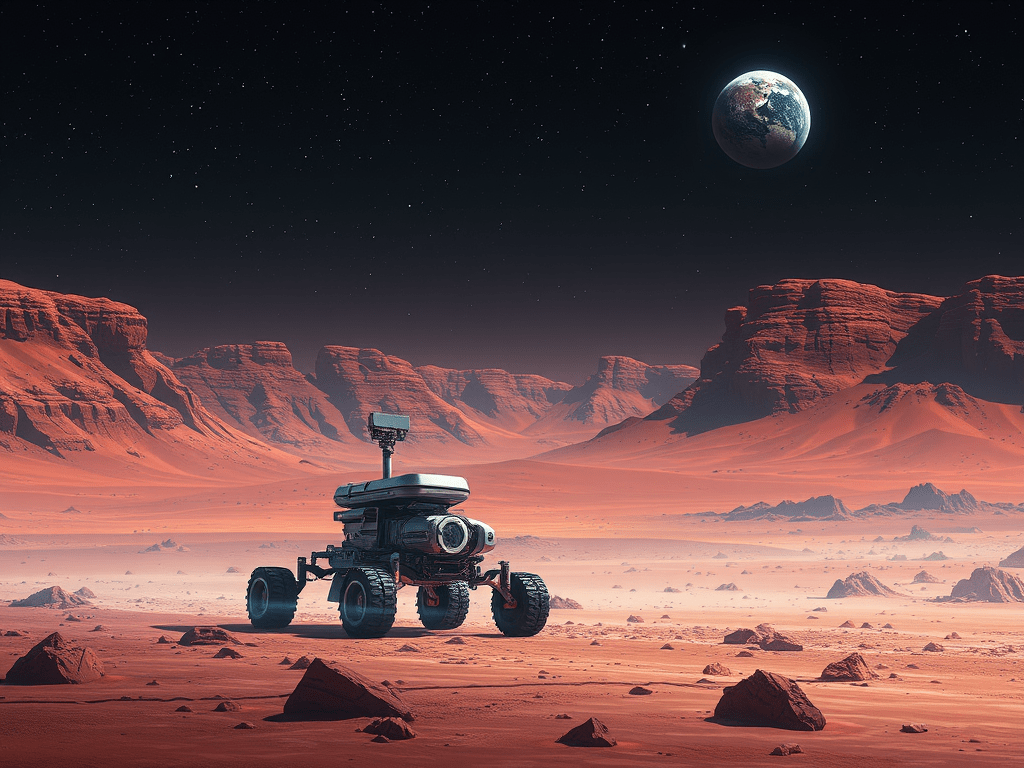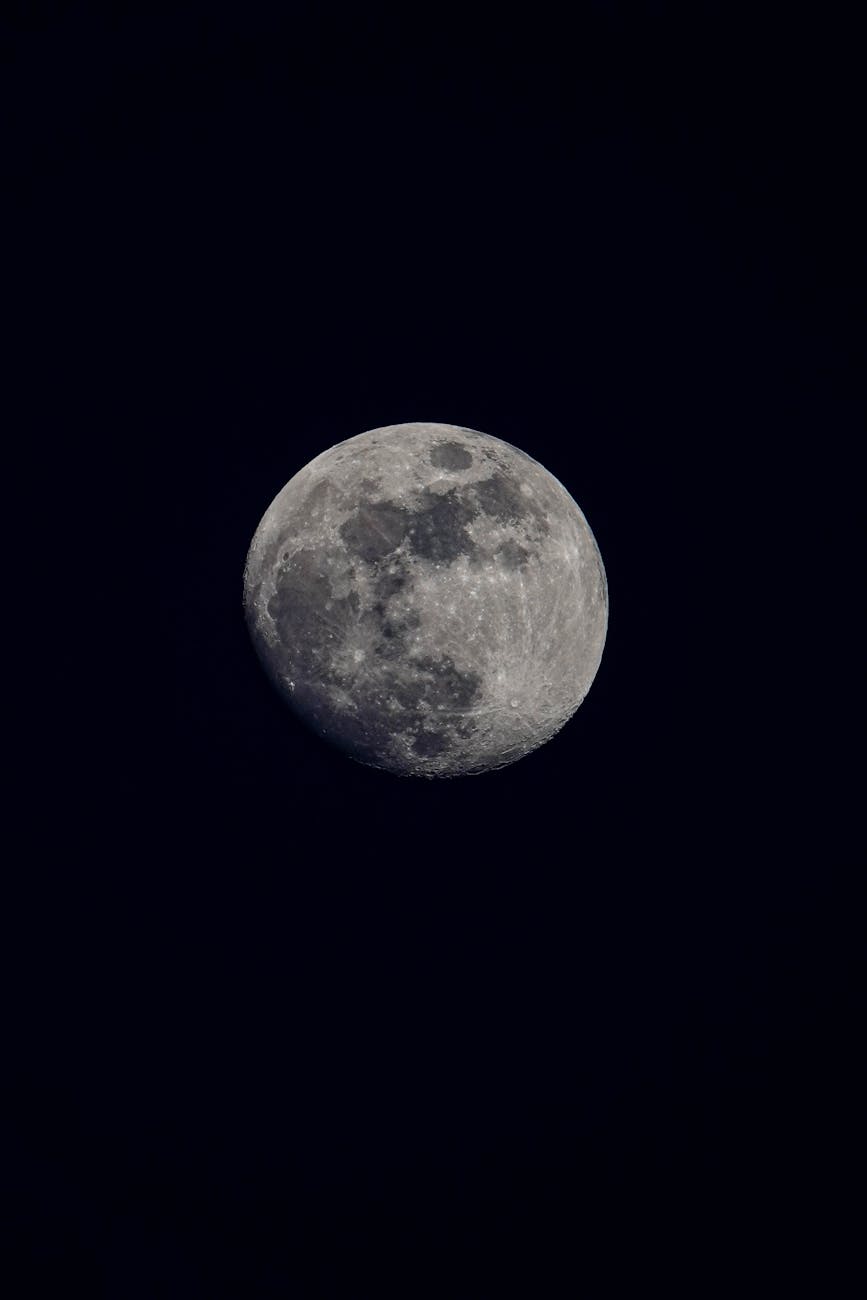
To the Moon

Daily writing prompt
How much would you pay to go to the moon?

About £10. If it was good enough for the Apollo astronauts, it’s good enough for me.

“Fly me to the moon. Let me play among the stars”. Just imagine what that song, ringing out in the empty space between Earth and its satellite, would feel like.

Recorded in 1964 it was timed so well. The “We Choose to Go to the Moon” speech happened in 1962. The song is older than that, but I wonder if that was a reason for Frank Sinatra[1] taking it up? If this song doesn’t put a smile on your face – what will on Earth.


[1] https://youtu.be/Y2rDb4Ur2dw

Exploring Space: A Journey

I haven’t got many of my childhood Ladybird books. One I have kept in good condition is “Exploring Space.” It’s got the characteristic illustrations and simple stories that are made to captivate. This book is the revised edition that must date from sometime after 1971[1]. The front cover has an illustration of a moon lander floating above the moon. It’s a picture that says – look what we can do, this is the tip of the iceberg. Such an optimistic outlook.

Most of my career has been in the aerospace business. More specifically civil aviation. For short while, I did get involved in building ground test equipment for satellite systems. Some of the people I worked with built the Giotto spacecraft in the UK. The mission was to study Halley’s Comet. This spacecraft, launched in 1985, took close-up images of the comet. It discovered organic material within the comet and proved that a spacecraft could cope with the harsh conditions of such a flyby. 

My interest in space, and the complexities of getting there has been with me for a long time. It’s the ultimate adventure. It also shows what can be done by international cooperation. Giotto was the European Space Agency (ESA) first deep-space mission.

Mention the word interplanetary and what comes to mind? For people of my age. The Carpenters’ version of the song “Calling Occupants of Interplanetary Craft”. It’s an eccentric, but successful 1970s pop song about talking to aliens. It’s a cry for help that is as relevant now as it was then. “Please come in peace and help us in our earthly problems.” If ever we humans could do with help from a more advanced civilization, it’s right now.

A sense of wonder about the heavens is as old as our human story. What’s up there? Could we live there? Are there others living there already?

I like the idea of an English bishop[2] in the 1630s. An early science fiction writer he imagined a flight into space in a craft pulled by a flock of wild swans. Ten to be precise. Since there are plenty of swans here in the English town of Newbury, I thought about investigating that idea. Maybe not.

Last evening, for the first time, I visited the British Interplanetary Society (BIS)[3] at Arthur C. Clarke House in London. Their HQ is in Lambeth. Can’t say I like that part of London at all. It’s a peculiar mix of sterile skyscrapers and spaces waiting to be re-developed. Old London has been pushed aside.

The BIS has a long history. It’s no fly by night organisation. Not as far back as the English bishop mentioned above, but more than 90-years extant. They have promoted thoughts and ideas that go way beyond past achievements. Trying to imagine what a future may look like if our capabilities and drive for exploration continue to advance here on earth. I think there’s always a need for that creative imagination to push the boundaries of what’s possible.

This week has been Space Week[4]. A week to highlight all things space. Back in 1999, the United Nations (UN) declared that World Space Week would be every year from 4 to 11 October. For this celebration, this year, the BIS had put on an evening event called: Living in Space: A World Space Week Special Panel.

I won’t say too much only that it was a fascinating evening. We were a small gathering full of questions. BIS had assembled a prestigious panel of experienced individuals. There wasn’t much in terms of the practicalities of living and working in space that didn’t get discussed.

I’m reminded that despite the hostility of the space environment for our biology, what we know is that all the materials of which the earth is made are there waiting for us. Constructing habitats, with the robotics we now have, isn’t just science fiction anymore.


[1] https://www.royalmint.com/discover/decimalisation/

[2] Francis Godwin (1562–1633)

[3] https://www.bis-space.com/

[4] https://www.worldspaceweek.org/

Music to Dance Under the Moon

Flicking through the vinyl albums that no one wants there’s one I should have rescued this week. In a corner, charity shops usually have a pile of gifted vinyl records. I like to look for a hidden gem. Unfortunately, what’s left is the tatty and practically valueless disks. Versions of musicals that have fallen out of fashion, scratched classical concerts and embarrassing compilations.

It’s harvest time. Autumn is undeniable. A colourful carpet of leaves litters the pavements. Remarkably warm. Monday’s blue skies set of the spectacle of the trees display. When the October weather is like this there’s not much to complain about. Crisp walks through the dappled light as the low sun’s rays shine through the branches. Good to be alive.

Looking out of the window in the early morning it was as if it was a spooky daytime. In a monochrome light the outline of the tree line was like a cutout silhouette. Nothing could move without being seen. Grass glittered. Hedges stood like army ranks. All because of the intensity of the moonlight. Constant in the cool air.

The pop tune that entered my head was there for the taking but I’d left it to one side. This is a song that resonated from my boyhood. Some might cringe a bit. Let’s suspend judgement and let the 1970s be the 1970s. “Under the moon of love” is about as catchy as it gets. Showaddywaddy[1] dressed up in their brightly coloured exaggerated 1950s garb. They were not the only ones to do that for Top of the Pops. What’s memorable is the danceability of their pop classics. It makes me want to move. Don’t tell anybody. Sadly, my long hair has long gone.

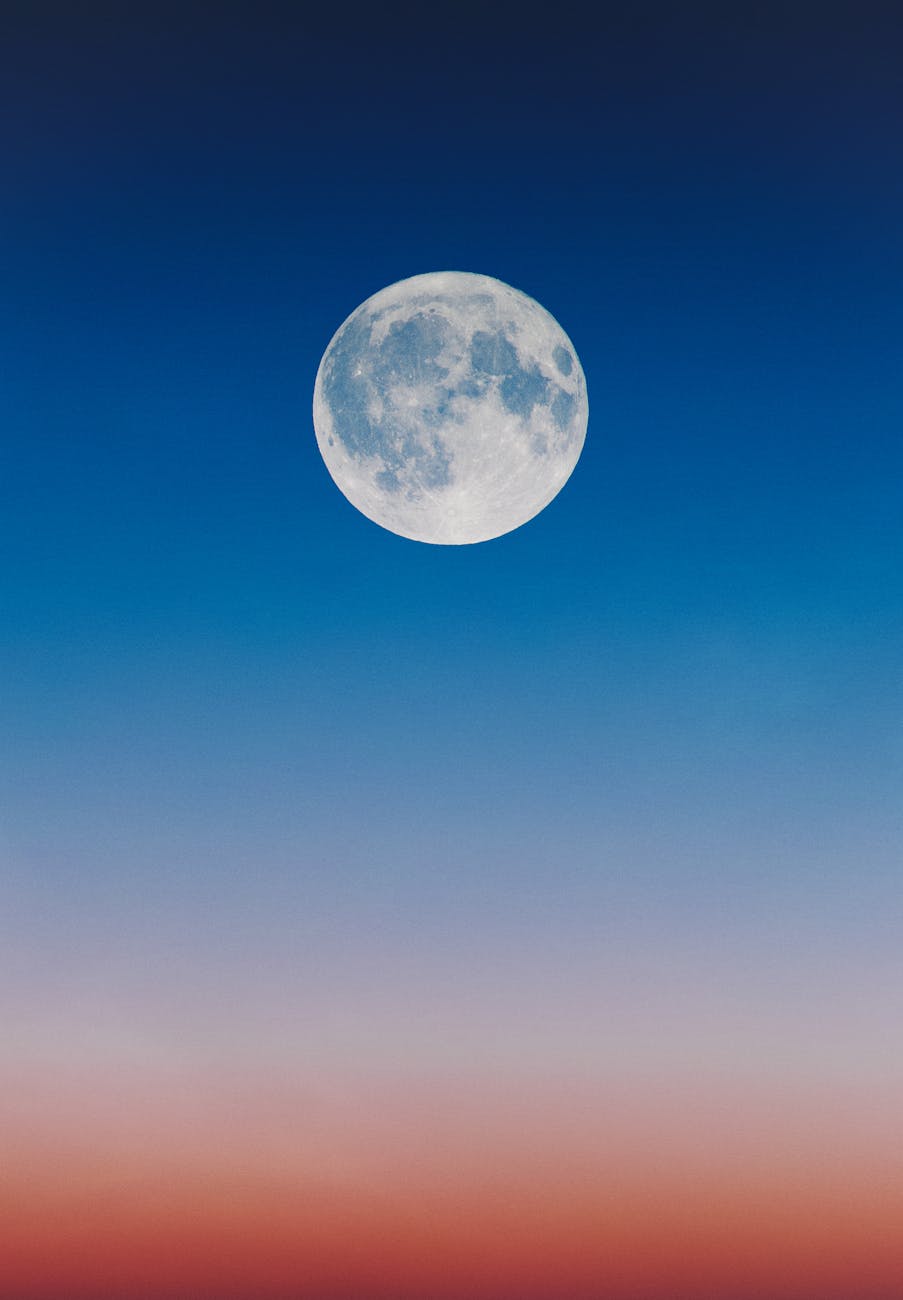
It’s the time of the harvest moon. So, it’s a time for moon tunes. Not just any moon but the first supermoon of the year will grace the sky tonight, Tuesday 7th October. This bright full moon of 2025 will light up the nighttime. It will not have a musical accompaniment in my garden even if there’s a lot to choose from. The neighbours wouldn’t like it.

The best of the pile is Neil Young and his Harvest Moon[2]. 180 degrees from the Showaddywaddy pop effort. Neil scores top rating. It’s melodic, melancholy and memorable. Fantastic. Just right for a quite evening gazing at the moon overhead.

On a melodic theme the next one I’d recommend is from Nick Drake[3]. Again, it’s the 1970s that provides the music. It was a decade of variety, to say the least. Song writers were pushing the boat out and coming up with magical results.

And here’s another. Another to dance to in the moonlight. Moondance in fact. Van Morrison[4] this time. Perfect for an October night.

And if anyone has ever doubted the genius of Beethoven there’s the Moonlight Sonata.

The coming night will mark the start of a run of 3 supermoons. November and December will be graced with magical moons. I hope that’s an omen for good. Love and happiness.

POST: For more information BBC Radio 4: In Our Time: The Moon

https://www.bbc.co.uk/sounds/play/p0m77cfm


[1] https://youtu.be/qigUdmLyMBs

[2] https://youtu.be/n2MtEsrcTTs

[3] https://youtu.be/xqe6TF2y8i4

[4] https://youtu.be/7kfYOGndVfU

International Collaboration in Space

It’s only taken 20,000 years for Homo sapiens to migrate to the American continent and then decided to industrialise the Moon. Just imagine what the next 20,000 years has in store.

Putting nuclear power on the Moon is a possible enabler for a future Moonbase. Considering the length of time it has taken since the last footsteps on the Moon, a Moonbase is long overdue. That said, going to a faraway place where there’s an abundance of solar energy potential it’s an interesting development that nuclear power is given a priority.

My view is that exploration beyond Earth is a matter for the whole of humanity. Going to the Moon should be an international endeavour. There’s good reason to cooperate when it comes to exploration. For a start space exploration is incredibly hard to do. Rockets explode with an unsettling degree of frequency.

Modern humans have gone from tens of thousands on one continent to what may top ten billion on Earth. It’s no wonder space, the final frontier, beckons. Trouble is we have evolved as specialist on this planet. Not well adapted to the space environment. If our wandering species is to venture into the void, we need to be mighty determined. This will be hard. The hardest effort ever made.

It would be absurd for individual nations to establish separate camps on the Moon. The space race is a concocted nonsense. More flag waving PR than serious sense. Why do I say this?

One: Demand on resources, to build, develop and maintain, a space presence is high. Sharing costs has benefits when planning for the long-term. Continuing costs can be volatile.

Two: In the event of the almost inevitable failures and setbacks, better to have partners to create different ways and means to recover or mount rescues in the worst-case scenarios.

Three: Partners can specialise. Not everyone has to do everything all the time. Afterall, that’s how our modern society came about in the first place.

Four: Cooperative planning means more gets done at the same time. Duplication and fragmentation of efforts don’t serve the great goal of exploration.

Five: Earth’s people are interconnected and interdependent. Even small Moon based colonies will inevitably be the same. Reliant on connections, locally as much as to a distant home.  

As a spin off, making exportation an international endeavour can bring us together on this divided planet too. 

Exploration and Innovation

Is there a human on the planet who has never seen the Moon? I guess, there must be a small number. The Earth’s satellite comes and goes from the night sky. Its constancy can’t be denied. Lighting the way when it’s full.

Accurate measurements say that the Moon is drifting away from us. The pace is nothing to be concerned about. It’s not going to become a free flying object careering across the universe. Space 1999[1] is pure fiction. Let’s face it we haven’t even got a working Moon Base here in 2025.

What motivated humans to go to the Moon in the 1960s? The simplest answer is the explorer’s quote: because it’s there. A quote that can be applied to any difficult journey that’s being taken for the first time. It implies a human longing to explore. An insatiable desire to go where no one has gone before. That’s nice, only it’s a partial story.

Technology accelerated in the post-war era as science and engineering built upon the discoveries and inventions that conflict drove. Then the promise of peace dissolved into the Cold War. Sides arranged in immoveable ideological opposition. The technological race was on. Intense competition drove the need to be display global superiority.

Potentially destructive forces were, for once, channeled into a civil project of enormous size. The Apollo missions. The aims and objectives of which were “civil” in nature, however the resulting innovations had universal applications. Companies that made fighter jets and missiles turned their hands to space vehicles. Early rockets were adaptations of intercontinental missiles.

1969’s moon landing put down a marker in history that will be talked of in a thousand years. Putting humans on the Moon for the first time is one of the ultimate firsts. That first “small step for man” may be as important as the first Homo sapiens stepping out of Africa. A signpost pointed to what was possible.

More than five decades have gone by. Instead of looking up to the heavens we now look down to our mobile phones. Rather than applying our intelligence to exploration we strive to make machines that can surpass us. Of course this is not a true characterisation. Exploration has merely taken a different a direction.

Will humans step into the final frontier again? Yes, but not as the number one priority. Plans to return to the Moon exist. It’s the intense competition that drove the Apollo missions that is missing. The advantage of being first to establish a working Moon Base is not so overwhelming. Even this base as a stepping stone to the planet Mars is viewed as a longer term ambition.

One advantage of this century over the last is the advances in automation and robotics that have become commonplace. Modern humans don’t need to do everything with our hands. Complex machines can do much of the work that needs to be done. Footsteps on another planet can wait a while.

Enough of us continue to be amazed and inspired by space exploration. The challenge is not to achieve one goal. It’s to achieve many.

POST: I watched Capricorn One, the 1970s movie about a fake Mars mission. It could do with a remake. In many ways it is easier to fake now than it was with film and colour televisions the size of washing machines.


[1] https://www.imdb.com/title/tt0072564/

Communication Prevents Disasters

It’s often forgotten that there’s a need to repeat messages. We are not creatures that retain everything we see and hear. There are exceptional people, it’s true, those who cram away facts and have an amazing level of recall. Often that’s my reaction to watching students leading teams on University Challenge[1]. How on earth do they know those obscure facts?

Most of us do not respond well to those who say, “Well, I told them once. I’m not going to tell them again.” That line is probably one of the most misguided utterances a teacher can make. Like it or not, this approach is part of our heritage. Past ages, when deference was expected, listening was mandatory, and misremembering was entirely the listener’s fault.

We’ve had a cultural shift. Our complex technological society doesn’t work in a command-and-control way. Too many disasters can be traced to miscommunications and misunderstanding. Now, the obligation exists on those delivering a message to go some way to ensure that it’s received with a degree of comprehension. That’s when repetition has a role to play.

One of the pillars of Safety Management Systems (SMS) is Safety Promotion. It’s the Cinderella of the aviation safety world.

Why do I say that? Experience for one. It’s much easier to get policy made and funding for the “hard” sciences like data acquisition, analysis and decision-making systems. These are often perceived as providing tangible results. Actionable recommendations that satisfy the need to be recognised as doing something. Even if that something is questionable.

Communication is key to averting disasters. It’s no good having pertinent information and failing to do anything with it, other than file it. The need to know is not a narrow one. Confined to a specialist few.

Let’s go back to 2003 and the Space Shuttle Columbia accident[2]. This craft was destroyed in a disaster that claimed the lives of its crew. The resulting investigation report is extremely compressive, if slightly overwhelming, but it has some key points to make.

To quote, “That silence was not merely a failure of safety, but a failure of the entire organization.” [Page 192]. In other words, the hidden concerns and internal machinations of an organisation can smother safety messages and led to failure. Since 2003, it’s sad to say that there are multiple occasions when what has been learned has been ignored. The impact has been devastating.

So, to shape the future let’s remember the Cinderella of the aviation safety. Discovering problems is not enough. It’s vital that practical solutions and good practice gets promoted. That needs to be done forcefully and repetitiously.

NOTE: This is, in part, a reaction to watching this video presentation. https://acsf.aero/an-unforgettable-closing-to-the-2025-acsf-safety-symposium-with-tim-and-sheri-lilley/


[1] https://www.bbc.co.uk/programmes/b006t6l0

[2] https://ntrs.nasa.gov/api/citations/20030066167/downloads/20030066167.pdf

Life on Mars Remains a Dream

Exploration is part of our DNA. There are parts of the planet that we don’t know well. That said, there are not so many spots where a human foot has not trod. The mysteries of the deep ocean remain to be better known. Only we more often look heavenward than we study deep waters.

Looking up at the night sky the fascination with a twinkling red dot runs through history. It’s surprisingly recent that the notion that Mars might be inhabited prevailed. A 100 years ago a scientist might be frowned upon but wouldn’t get locked up for such a conjecture.

The possibility of Martian life still gets discussed. If existing, it would be extremely rare and unlike the life we take for granted on Earth. Discoveries are more likely to tell us about the history of Mars than the present.

A search for other civilisations goes on. Today, Mars is a planet for robots. Rovers and other contrivances are best equipped to deal with the harshness of the natural environment. If the radiation doesn’t get you the wide-ranging temperature fluctuations will. Humans are not well suited to live in extremely harsh environments.

On a trip to Phoenix in the United States about 30-years ago, I drove out into the desert. This was to have a look at the Biosphere[1]. A curious experiment in human behaviour. The experiment attempted to reproduce what it would be like to live as extraterrestrials. We’d be the alien civilisation on Mars. Living in a huge greenhouse on Earth. As much as to say this brave but shaky experiment proved that extraterrestrial living is very hard. In fact, impossible in the way it was conceived. The lesson from such empirical experiments is to value our unique circumstances even more. Polluting and trashing Earth is about the stupidest act “intelligent” but fragile beings could do.

There are plenty of extremely harsh environments on Earth. Wisely we (humans) choose not to live in them on a permanent basis although we like to make documentaries about them. For example, there must be an exceptional motivator to get people to live in a box in Antarctica.

It’s reported that Musk says that Space X will go to Mars next year. Adding more robots to the Martian population. In the field of exploration this makes sense to me. What doesn’t make any sense at all is the determination to put humans on the surface of Mars.

The only civilisation that is likely to inhabit Mars successfully, in the next century, is an android one. Every sign is that the capability of robotic life will advance ever more rapidly. They can be designed to thrive where we would fall by the wayside. What better use can we put our future robotic friends to than advancing exploration?

Putting a date on the first human footsteps on Mars is about as ridiculous as last century’s imaginative speculation about a Martian invasion. Although, such popular stories make great science fiction.

POST: This remote station has had reported problems. A case in point. Antarctic scientists plead for help after colleague ‘threatens to kill’ team members | The Independent


[1] https://www.euronews.com/green/2022/01/29/living-in-a-bubble-did-this-failed-90s-experiment-predict-the-future

Mars steps

It’s strange what thoughts circulate in my head. If I was to say what kicked this off it was probably the story of the Preet Chandi[1]. It’s inspiring how some people see a challenge and just get up and throw themselves into overcoming it. Her commitment and determination are impressive. She was recounting the how and why of her striking endeavours on the radio. What’s much less inspiring are a some of the moronic comments that the web throws-up about her achievements. I hope she continues to take on great challenges and sweeps them aside.

Exploring and going that extra mile is built into the fabric of being human. Fine, it’s not for everyone but that’s no surprise given that there are 8 billion of us on this planet. A magazine popped through my letterbox this week speculating on what Earth will be like when that number gets to 10 billion people. Don’t worry it’s not all doom and gloom. It’s just that the world will be a very different place by the time we get to 2050. Wow, if I stay healthy, I might still be around.

A lot of public policy of the moment seems to be resisting this reality. Honestly building barriers and walls will do nothing whatsoever to build a better world. Cultivating political anxiety and fears about the future is the maddest short-termism that can be imagined. But sadly, there’s a lot of it about. It’s fashionable in the mature democracies around the globe.

Humanity has an endless list of “challenges” and opportunities ahead. Now, I don’t what to sound too much like the Musk man but we’ve a great deal to do off the planet. What we’ve achieved so far is chicken feed in respect of what we have the potential to achieve.

The big one, that taxes the imagination of writers and futurologists is what do we do about our sister planet: Mars. It’s impossible to ignore. It’s not that far away when compared with other distances in space. It’s intriguing in that it was once a water world. Like Earth.

Today, it’s a planet inhabited by robots. The only one we know that is so populated. Rovers drive around sending pictures back of a desolate barren landscape that has an eery beauty. So much of what we know about the place has only been discovered in the last decade.

Human exploration is natural and normal. Do we leave it to robots? Afterall they are becoming ever more sophisticated. Or do we plant boots on the ground and go there to explore in the way we have throughout the Earth. Well, except for parts of the deep ocean.

Here’s what crossed my mind. Just as Polar Preet, broke two Guinness World Records on her journey, so the incentive to be the first person on Mars is something that will land in the history books. The name of the person who makes those steps will echo through the centuries ahead. So, the trip to Mars will not need an incentive. The drive to do it, at almost any cost is already hanging in the air. What’s more complicated is the journey back to Earth. Going on an expedition has a clear goal. Getting back from an expedition has a different goal.

Being someone who recognises the benefits in the reliability of redundant systems it occurs to me that a mission to Mars needs two ships and not one. Both traveling together to the planet. One can be simple and utilitarian. That’s the one crewed as the outward-bound ship. The other, the homeward ship needs to be autonomous, secure and even luxurious. That way the hardest part of the journey, coming back, can be made easier and more likely to succeed.


[1] https://www.independent.co.uk/news/uk/home-news/preet-chandi-sikh-south-pole-b1987047.html

DUNE Part Two

It’s long. It’s engrossing and it’s a saga well told. That was my Monday afternoon. Sat in a comfortable seat curtsey of the Everyman in Reigate. The movie of DUNE is spread over 2-parts[1]. The second part is just out. It’s release was much delayed by the strikes in Hollywood. I’d say from my viewing this movie was well worth waiting for.

The whole world of DUNE centres around the most valuable commodity in the galaxy. A flash of an explanation can easily be missed. The desert planet Arrakis is the one source of that commodity. Science Fiction has a wonderful way of taking us to fantastical worlds filled with issues that are not so far from current day dilemmas. The commodity of Spice reminds me of several sought-after substances. The exploiting of valuable commodities at the expense of indigenous life has been a hallmark industrial progress.

In the imagination of Frank Herbert civilisations exist and compete within one almighty empire. The story in part 1 and 2 movies hinges on the dreams of a young man named Paul Atreides. I don’t want to give away key plot points but he’s special in so many ways.

Themes extend over the role of brutality and war in either imprisoning people or liberating them. I guess Frank Herbert didn’t see the passage of 800 centuries as a pathway to saving us from the 4-horsemen of the apocalypse. With that in mind, he’s stollen from religious texts as much as a Shakespearean landscape of ideas and the hero’s journey from Greek myths.

The enduring nature of grand sagas that show “good” overcoming “evil” have an immense appeal. All the twist and turns along the way and the troublesome megalomania that accompanies the coming of a liberator are as fresh ever.

DUNE long precedes Star Wars. The latter is cruder in pulling the emotional hearts strings and much more simplistic. The leadership of the Fremen people and mastering of “desert power” to defeat a devious Emperor doesn’t bring universal peace. In the span of the film, the planet Arrakis is freed form the cruel Harkonnen family. That is by no means the end of the story.

The intriguing role played by the Bene Gesserit women is a play over generations where influence is maintained regardless of who’s Emperor. This poses the question of the source of religion. Does it guide the Bene Gesserit (high priests), or do they guide it?

Back to the movie. I like the way it veers from the intimate relationships between individuals to the incredible sweep of vistas and strange technological imaginations. It deals with the environment and the nitty gritty drives and motivations of tyrants and powerful leaders. Is it inevitable that concentrated power produces a dark future. If the answer is “yes” we are in deep trouble with the digital world of now. We will not need to wait for thousands of years.

My recommendation is – see it. Choose the most comfortable seat in the cinema. Go on a rainy overcast day. Don’t go if your mind is cluttered up with trivia. By the way, the list of movies coming soon is dreadful. We are going into a nostalgic remake agony fest.


[1] https://www.dunemovie.net/

Space

Eutelsat OneWeb is a growing global connected community. That’s what the publicity says. Once upon a time I wrote about OneWeb. I wrote about it in the context of Brexit.

One of the touted benefits of Brexit was autonomy, in other words, British innovation leading the way to benefit Britain above all others. It’s that aggressive assertion of sovereignty that was at the core of Brexit. Remember, it wasn’t so long ago that this was part of Brexiters fantasies? 

In the Brexit turbulence the UK Government walked away from the EU’s Galileo programme. The UK no longer participates in the European Galileo or EGNOS programmes[1].

Then in 2020 the UK changed its original post-Brexit position and scraped building a national alternative to the Galileo satellite system[2]. At that time, Business Secretary Alok Sharma offered around $500 million of UK public money to acquire part of an organisation in trouble, called OneWeb.

OneWeb is a commercial Low Earth Orbit (LEO) satellite constellation now with an element of Government ownership. It’s network of satellites doesn’t have a global positioning capability, like Galileo.

To get its satellite network up and running, an expensive business, OneWeb merged with French company Eutelstat. Today, if we look at the 2020 investment made with public money the financial situation doesn’t look good. That doesn’t mean to say that things will not turn around in future years[3].

The Times newspaper has taken a nationalist view of the circumstance[4]. It’s a point that the intellectual property is not in the hands of the UK Government, but the investment could still turn out to be a useful long-term commercial bet. It’s gambling with public money.

As an aside, I’ve been looking at buying a new dishwasher for the kitchen. It’s made me aware of a capability that I had no idea had been developed. Namely, the connection of dishwashers via the web. I think this is what is called the Internet of Things (IoT). So, imagine that, British dishwashers connected by space as a Brexit potential benefit.

However, if there’s a change in the UK Government’s political direction after the next General Election there’s a strong possibility that the UK will return to the EU’s Galileo programme with some manner of partnership. When we get to 2026, we may look back on the decade behind as a vacuum, much like the vacuum of space. A time when an uncertain direction cost a great deal.


[1] https://www.gov.uk/guidance/uk-involvement-in-the-eu-space-programme

[2] https://www.politico.eu/article/uk-scraps-plan-to-build-global-satellite-navigation-system-to-replace-galileo/

[3] https://www.politicshome.com/thehouse/article/oneweb-uks-gamble-satellite-startup-pay-off

[4] https://www.thetimes.co.uk/article/656bd77c-c106-47c3-840b-674e9efc4f0e