Influences on Well-Being

How life has changed. In the time of black and white TV I remember watching Jack Hargreaves[1] wibbling on about a lost countryside. A romantic world of idyllic landscapes. Rolling English hills and green hedges. His series “Out of Town” played for a generation. To his credit he did focus on people and the way they lived their lives as much as the scenic backdrops.

He’s cheerily derogatory about the urban environment. Although he does take on the sentimentality that people have towards the countryside. In ways he’s a latter-day green campaigner. With a past century traditional style. 

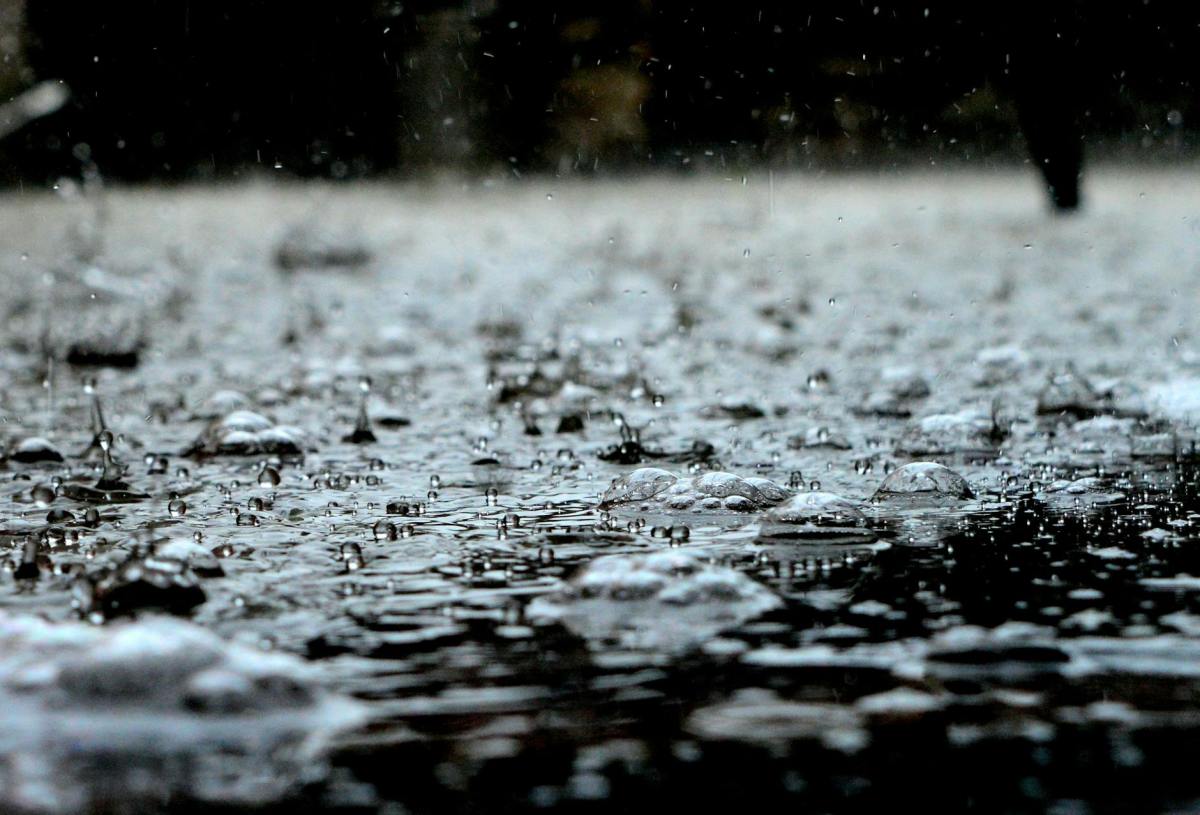
This memory is sparked by me thinking about colds and flu. Winters accompaniments. Changeable January weather torments us in one way and in another gives us a tempting glimmer of the spring to come. It really is wet wet wet.

Ground water has risen to form shallow pools in the swamy field out back. This is much to the liking of the geese and a lone heron. The river Lambourn hasn’t yet bust its banks but that can’t be far off. Cloudy today with more rain on the way.

I’m fortunate in being in relatively good health. I’ve had my bout of winter blues. Now, I’m noticing the slightly shorter shadows when the sun shines. Everything is sodden. Hints of the season changing are out there. It’s the blubs that are trusting upwards from the soggy soil.

What do I attribute my good health to? I wouldn’t put it down to heathy living although the maximum of all things in moderation does appeal. In part, maybe it’s because I grew up in the world that Jack Hargraves documented. On a west country farm were muck and mud were plentiful at this time of year. Deep soggy and unavoidable.

I don’t know if youthful the exposure to muck and mud has a lifetime benefit. It certainly seems to be one theory that is put around. The idea that a person’s immune system learns about all the nasties that are encountered. It then adapts and knows how to fight off the worst of them.

My, and my brothers, inoculation consisted of a wheelbarrow, a pitchfork and a mountain of manure. Shifting this delightful stuff from farm sheds was mostly a manual task in the 1960s. Now, it’s a case of jumping on a Bobcat[2] or JCB and driving up and down until the job is done.

Solid stone-built farm buildings, like our cart shed were never intended for the use that my parents put them to. Keeping cattle indoors during the winter months. Layers of straw and muck accumulated their bedding grew in hight. By the time it was dry enough to let the cattle out into the surrounding fields their bedding was almost as deep as I was tall.

That’s how we earned our pocket money. A wheelbarrow, pitchforks and hundreds of trips backwards and forwards shifting muck. Creating a big pile in the farmyard. Then that got loaded into a muck spreader. The most organic fertiliser that can be spread on the land.

This memory is sparked. Looking at a cliff like face of compressed muck that went back for what seemed like miles. Digging away at it endlessly. Wheelbarrow load after load. A Sisyphean task, where only dogged persistence would pay off. No wonder I was a healthy young man.


[1] https://youtu.be/4e_jfU9eTSI

[2] https://www.bobcat.com/na/en

Dreams

Dreams are weird. For a start I often wake-up knowing that I’ve had a dream only to ponder on what it was about. It’s as if an erase function was pressed the moment the sunlight starts to beam through the curtains. As if my mobile’s alarm triggers a mental dustbin to empty.

Now, if I do wake-up from a dream in the night, I try to remember to scribble a note. Naturally, that’s merely a case of putting down a couple of words, not a full-page story. Interestingly that note can be surprisingly useful in restoring a glimpse of what I was dreaming.

I’m not going to get into the interpretation of dreams[1]. I don’t think they are a kind of prophecy. Literature is full of that notion. To me it must be that complex jumble of stimulus that has accumulated slowly being sorted, either filed or discarded. That’s not an analogy with a conventional computer. I think we have a powerful desire to take masses of information and make sense of it. That means wrapping a story around a lot of disparate stuff.

Dreams are weird. That’s because they have parts that make everyday sense and parts that live purely in the imagination. Boundaries and simple cause and effect don’t have to conform to waking reality. Imaginary worlds can be way of the charts.

Here’s goes. Fragments of what I remember go like so. It’s a clean room, like in a large semiconductor manufacture. White coats and white walls. Workbenches and sophisticated equipment laboratory style. Serious looking people.

Groups in different rooms. Could be in entirely different places. All working on making some kind of super chip [Have I been reading too many articles on quantum computing and alike?]. Could be a scene from a classic 007 movie where the villain invited their competitors to their secret hidden laboratory.

The last image was curious. A group of scientific people standing around staring intensely at a device (chip) sitting on a bench knowing that its performance has beaten all the opposition. Left the competition in the dust. Lots of questions being asked. This was not a hostile or nightmarish dream. This solid grey device looked like the base of a ceramic butter dish.

Even stranger the heatsink that rose up from the structure was shaped as a miniature model of the Roman forum[2] in Rome. It was as if the designers were so cocky they wanted to play a joke on their competitors. Me being one of them.

I don’t think there’s much mileage in sensemaking of this morning recollection. A dream about an imaginary future happening isn’t a kind of prediction. Perhaps it’s a chunking together fiction, facts and fantasy. However, it’s possible that some kind of breakthrough technology is sitting on a cleanroom bench somewhere. Where are the modern-day oracles when we need them.


[1] https://www.freud.org.uk/schools/resources/the-interpretation-of-dreams/

[2] https://www.rome.net/roman-forum

Exploring ‘The War Between the Land and the Sea’

OK so there’s the predicable amount of sentimentality. Yes, it makes the story human. Great and cataclysmic events don’t grab attention unless they are associated with the human experience. That’s not entirely true. There will always be nerds, like me, who are drawn in by the facts and the creativity of structure and form.

“The War Between the Land and the Sea[1]” is a well-crafted combination human stories and an imaginative fictional expanse. It’s a spin-off of the world of Dr Who. However, what Russell T Davies has created is a more grounded drama about the here and now. Whoops – shouldn’t have used the word “grounded.” This made for broadcast science fiction story is about our Earthly reality. Two thirds of our beautiful planet is water. Earth is as much about water as it is about dry land.

He’s not the first screen writer to imagine a world dominated by water. If I remember rightly, there’s that terrible American movie Waterworld[2]. I say terrible even though it was atypical of 1990s cinema watching. A better point of reference, and a motivation to wall-up a stock of baked beans on high ground somewhere in the English countryside, is “The Kraken Wakes.” Now, there’s an exceptionally fine story from one of my favourite authors, namely John Wyndham.

Russell T Davies taps into ancient sailor’s stories of scary monsters in the deep. The lure of the unknow. Even with our expansive knowledge of the cosmos, humanity is still largely ignorant of the world of the deep ocean. Discoveries are arising year by year.

I can imagine some hard-nosed right-wing commentators will be sniffy about the focus on climate change and the dangers of the melting of the polar icecaps. To some extent, this is incidental to the story. I don’t think the “The War Between the Land and the Sea” is too preachy.

Strangely enough I was initially put off by the BBC’s repetitive advertising of the series. As if they were nervous of the risks of making it in the first place and that few would watch this drama. Let’s put that aside. This is an excellent British television drama. It’s more adult than Dr Who. By storyboarding the global angsts of the day and combining it with a fantasy that’s full of twists and turns, this is well worth a watch.

I hope the BBC drama will be brave enough to continue in this direction. New, imaginative, science fiction that’s not afraid of posing the “what if” questions. As we endure the manipulation of the daily News that spins fears and gives airtime to conspiracy theories, so fiction and reality can get blurred.

I know an unidentified race of intelligent life is not going to rise out of the Seas and challenge our dominance of Earth. I like the idea of stories that prick our arrogance and offer a reminder of our vulnerabilities. Apocalyptic visions abound but not all touches on our contemporary industrial recklessness and potential political idiocy.

Today, the oceans are riddled with hydrophones listening for underwater activity. Yet no one has picked-up and decoded a group of fleeing dolphins saying – so long, and thanks for all the fish. Maybe tomorrow. Who needs to Dr?


[1] https://www.bbc.co.uk/programmes/m002p0xm

[2] https://www.imdb.com/title/tt0114898/

Swearing in English Culture

I do suppose that it’s my country upbringing, but that’s not entirely so. There was a set of opposing tensions that spread through society in the 1960s as much as they did in the 1660s.

On the one side there’s the authenticity of the country born and bread son or daughter of the soil in honest toil. That image of the rural artisan, painted by a famous artist, struggling with the elements to put bread on the table wasn’t as clean and tidy as the artist depicted.

On the other hand, was a spirit of bettering oneself. Elevation from the base worker day reality, up to one’s knees in muck, and practicalities of country life. Middle class, educated entrepreneurial, energies directed at improvement and modernisation.

An indicator of the side of the line that was most natural for a person was the use of langauage. Another might be the seriousness with which a Sunday church sermon was listened to. Another could be the frequency of evenings spent propping up the bar in the village pub.

Here my focus is on language. I’m of a generation who was told off for swearing. Whether at home, school or most social situations. This idea of self-improvement and good manners was handed down. It didn’t just spring from our parents’ ambitions. There was pressure to behave.

To suggest that colourful swearing didn’t happen was far from the truth. Even the highest minded tended to shift their disposition depended on the situation. Afterall, if I have had a calf stood on my toe or lost a wellington boot in deep cold mud it’s unlikely that my exclamation would have been – oh dear! that was jolly inconvenient.

Swear words are a constant. What continues to change is the meaning and level of offense that each one has attached. Casual obscenities that were thrown about like confetti may now be totally out of bounds. Calling someone a “bastard” in past times might almost have been considered a term of endearment.

Campaigners rail against suppressing free speech. Regulating what can be said. Rightly so, in most cases. That said, it’s rare that common place langauage is what such campaigners wish to protect. Even the traditional mundane ones are converted into softer tones to avoid offence.

If I think back to my childhood and market days in towns like Sturminster Newton in Dorset, then a great deal of English culture has been lost. Some may say thank God for progress. For me, the rural landscape isn’t as colourful or characterful as it once was, but what do I know?

Don’t read me wrong. I’m not calling for expletives and offensive words to spill out of every page or be heard up and down the high street. Social media is full of grossly offensive nastiness.

That’s part of my point. Authentic swearing doesn’t have to be used as a weapon. Yes, swearing in the 17th century was often used that way. Today, it’s better used as emphasis, exaggeration or an expression of despair. Like a valve on the lid of a pressure cooker, the occasional use of a rude word is a manner of relief. I’m sure Shakespeare would approve. Even he was censored.

As an expression of despair, we do need everyday tools to hand. If that’s the lively use of traditional langauage then so be it. For those who are offended please look at the bigger picture.

Lessons from Nature

I once said to Kwasi Kwarteng[1] that peak Boris Johnson passed during the early part of his terms as London mayor. Naturally, predicably he didn’t agree with me. This was in the Parliamentary constituency of Runnymede and Weybridge in 2017. I was the Liberal Democrat candidate standing against former Conservative Minister Philip Hammond. The public event we were attending was in Egham in Surrey.

Wow. A hell lot of water has passed under the bridge since that time. It’s like looking back at medieval history and trying to find a thread that links with the here and now. Governments have been and gone, careers have flourished and collapsed, Trump has been and gone and then returned and as was predicted Brexit has turned out to be a disaster.

Here’s a thought. It has always astonished me that we have a common fallacy. If a shelf regarding person who makes a lot of noise was once, even for a fleeting time, good at one job, they will be good at a loosely similar job. What a load of nonsense. So, it has turned out to be.

I’ve been watching the BBC’s series Kingdom[2]. About the animal kingdom. I know that the filming of such a spectacular series takes an enormous amount of dedication and effort. We get the pleasure of watching a well edited set of stories about leopards, hyena, wild dogs, and lions.

It’s tough out there to survive the seasons in the imposing Zambian landscape. We get to see the shifting of power between animal families and from generation to generation. It’s raw nature doing what it does and what it has been doing since the dawn of time. In what appears a paradise, nature is cruel. Rivals quickly exploit weakness. It’s going a bit far to draw a direct link between the rivals in the wild and the rivals in our parliamentary democracy. That said, there are lessons nature can teach us.

One is that top dogs don’t stay top dogs forever. They get their moment in the sun and then it passes. The fight to make a claim on a territory is perpetual. Yes, the cycles of the season have their impact and luck, good or bad, plays its part.

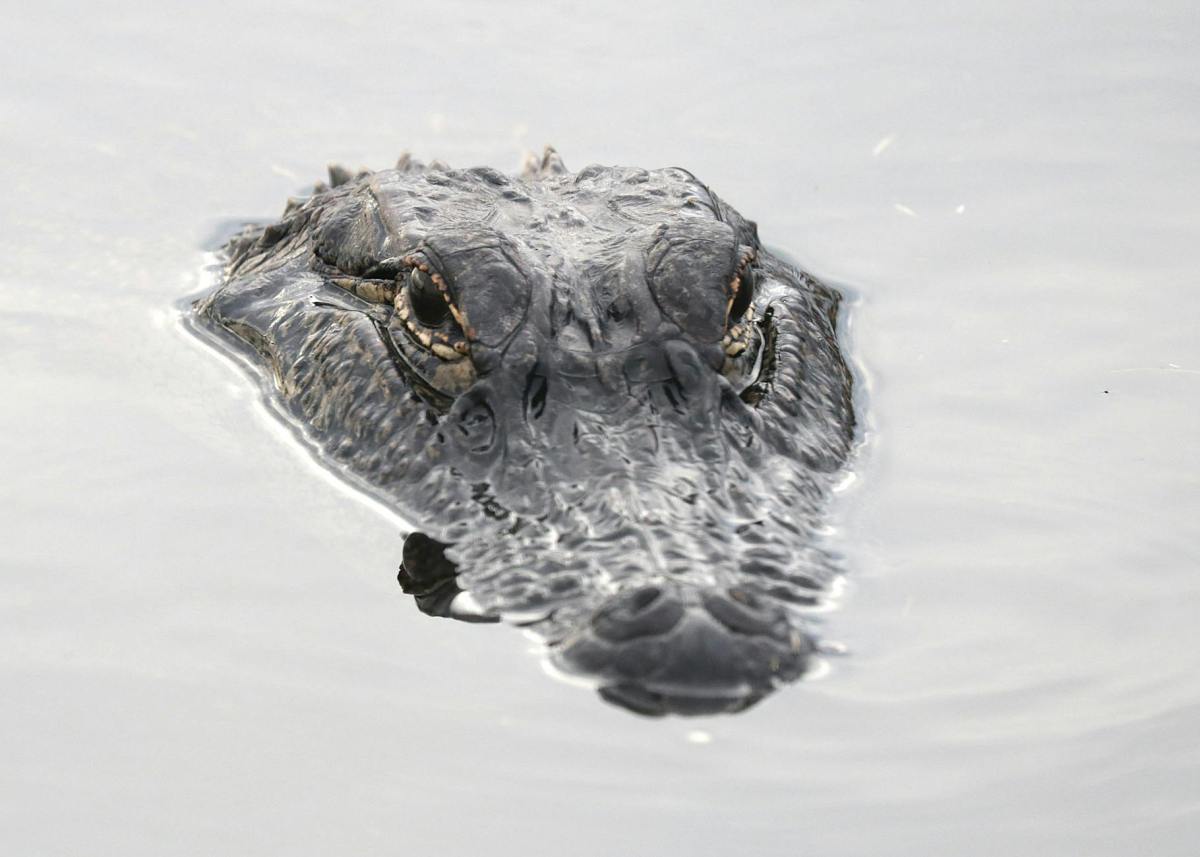
Two, is that a bad move remains a bad move. Ignoring crocodiles is never a good move. Wandering about without the protection of the pack is a high-risk strategy. Backing off, and fighting another day, is the best way to deal with a bigger, meaner, and hungrier opponent.

Where am I going with talk of these two different worlds? Human nature and animal nature.

It’s my reaction to seeing the scribblings of a former Prime Minister wibbling on about how dangerous it would be to reverse Brexit. Boris Johnson, that man whose star faded a long time ago, is writing for tabloid newspapers. He’s writing exactly what anyone would expect to see from those who will not learn from experience.

A bad move remains a bad move. Now, nearly ten years on, a bad decision remains a bad decision. Write what you like, it’s impossible to transform a failed project into a kind of utopia. What’s worse is to try and scare people by writing that we must tolerate failure because we once adopted a failed project is ludicrous. It’s irresponsible. It’s mad.


[1] UK Chancellor of the Exchequer from September to October 2022 under PM Liz Truss.

[2] https://www.bbc.co.uk/programmes/m002hdgh

Age Restrictions

Inevitably whenever there’s a decision as to what is age-appropriate one’s own experience comes to the fore. The experiment that is going on in Australia is one to watch. That country has taken a step towards the regulation of social media that provides defined limits. From zero to age 16 there’s to be a ban, or a restriction as the more diplomatic commentators say. One discussion could be about the whole necessity, and possible effectiveness of a ban on social media and another about the age limit that has been set.

This is one of those debates where there are good cases to be made on both sides. I could start by citing examples of harm caused, in particular cases, of social media use by children. That would reinforce a compelling argument for restrictions by law.

Alternatively, looking at the subject in the round, I could wonder at the position of young people first encountering an avalanche of social media on the day of their 16th birthday. Or the creativeness of young people in finding ways to evade a punitive law.

For me, my 16th birthday was a day of great liberation. Growing up in the countryside has lots of advantages. The downside is the effort needed to get anywhere beyond walking distance. No buses. No trains. Just a pushbike. Miles of country lanes, green fields and distant villages.

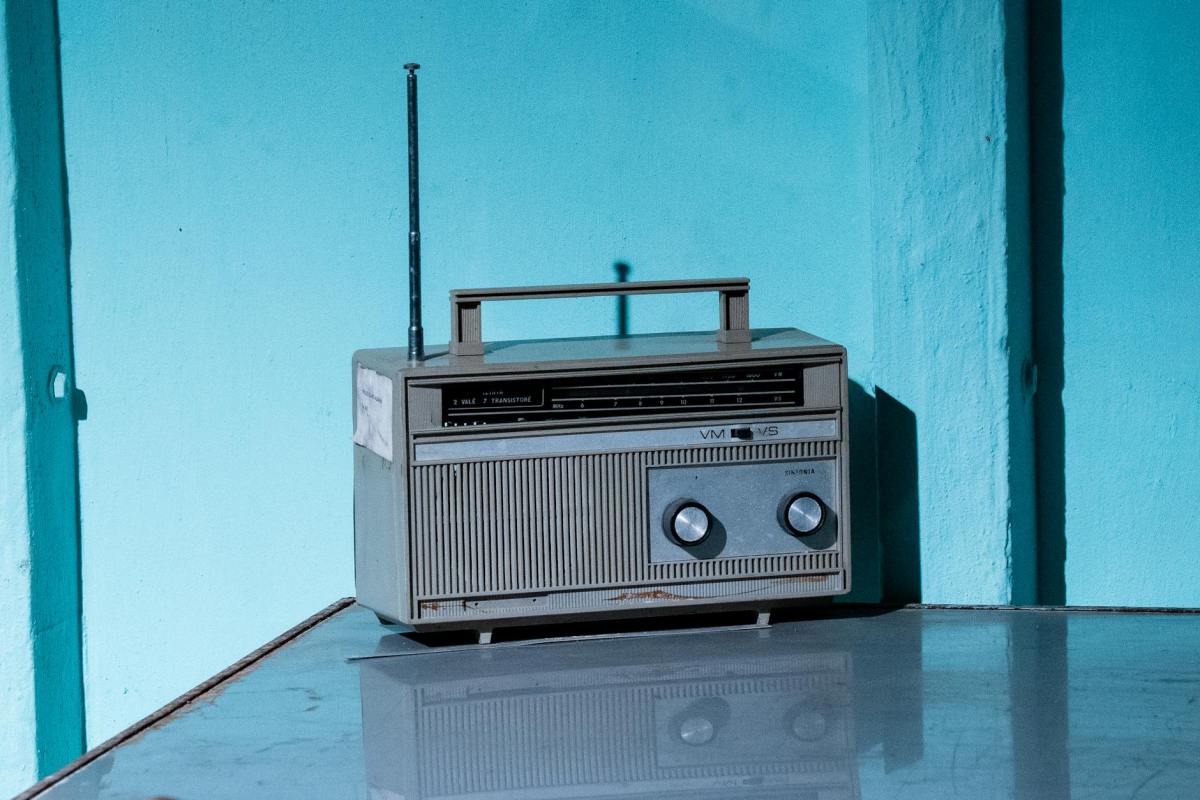
No demanding, distracting all-encompassing digital paraphernalia. Maybe a radio, cassette recorder and a pile of vinyl records. For me a couple of beaten-up cars and motorcycles too. As per the famous four Yorkshiremen sketch: try telling that to the kids of today.

Yes, my 16th birthday was a day of great liberation. That because of the law. I wasn’t alone. It was there for every schoolboy who could afford one. Shiny in the showrooms. Names like: Fantic, Gilera, Garelli, Yamaha, Suzuki and Puch, were all on our list of wants.

In December 1971, the British Government create legislation that restricted 16-year-olds to 50cc mopeds (motorcycles with pedal assistance). This was a worthy effort to improve road safety and reduce the carnage of motorcycle accidents. What was unexpected was the frenzy of innovation that this well-meaning law triggered. Motorcycle manufacturers set to their drawing boards and radically transformed the moped. I do mean radically.

I came in at the end of this era. By early 1976 manufactures had squeezed every drop of performance that was possible out of a mere 50cc engine. Designs had gone from uncomfortable, sluggish commuter bikes that would feel embarrassed to own, to sporty fast racing machines that were extremely desirable.

Ah, the unintended consequences of worthy legislation. For me this was wonderful. It opened a whole new vista and introduced me to one or two roadside hedges. Waiting for me on my 16th birthday was one of the best. A Puch Grand Prix Special. In black and gold, this really was a fast and refined two-stroke machine. Even with cast alloy wheels and a front disk brake, which was whizzy for the time. Racing along the main A30 the bikes gearing was such that I went fastest downhill, while my mates Garelli overtook me going up the hills.

What can I say? When it comes to age-appropriate the results may not be what is intended.

Note: Reference: Funky Mopeds! The 1970s sports moped phenomenon. Richard Skelton. Veloce Publishing. ISBN 13 978-1-84584-078-5  www.veloce.co.uk

Why Embrace False Utopias?

Why do clever people often become dayglo prats? Not stupid by any means. More foolish and not embarrassed by their recklessness. It’s one thing to be incompetent or ineffectual but that’s not what I’m getting at here. It’s smart people who get carried away with delusional dreams.

How many vocal futurologists have said – “work is dead”? That one day we will be living in an age of leisure and ease because sophisticated machines will have taken all the drudgery out of existence. Intelligent machines doing all the things we once considered to be work.

In essence it’s a utopian vision that stands-up to be knocked down. In fact, the subject matter has been chewed over in science fiction ever since science has played a big part in our lives. Such popular fiction takes us from a dream world to a hideous dystopia that the original dreamers hadn’t envisioned.

The year is 2274. Almost 250-years ahead of where we are. Humanity is living in a bubble. That bit doesn’t change. Most people are unaware of how their society functions. Again, that bit doesn’t change. Rituals and customs dictate the path individuals take in life. Like today.

Strangely, even in the year 1775[1] those three aspects of life were evident. Maybe they are perpetual. However, there’s an exceptional point to make. That’s our rebellious nature.

The year is 2274. The movie is Logan’s Run[2], made at a time when society had ripple of anxiety about the so called “silicon revolution.[3]” That’s 1976. Before the elevated level of interconnection and communication that the INTERNET has afforded us.

It’s a sobering science fiction movie with a somewhat optimistic ending. Looking dated. I can get past the images and props that epitomised the seventies vibe. That’s become vintage.

To me, aspects of the theme of the story come from H. G. Wells. Nothing wrong with taking great ideas and reshaping them for the time. In the end the flawed utopia is defeated by our rebellious nature. Or at least of some people. The seeking of truth, at all costs, and to look behind the mask that everyday life paints.

You may ask – what the hell am I getting at? It’s a reaction to the recent headline[4]:

Musk says that in 20 years, work will be optional, and money will be irrelevant thanks to AI.

I like growing vegetables. Gardening is a superb way of doing something practical, staying grounded and in touch with nature. It’s good for one’s mental health too. However, the notion that work will be optional is far-fetched. The idea that money will disappear in a couple of decades is nuts. That’s not going to happen.

I know that the motivation to say such things maybe merely to provoke. That has its function. Nothing like stimulating a debate about the future. Surely, we are in for some dramatic changes in my later years on the planet. Surely, we need to equip the next generation to deal with these changes. Surely, we need to protect the public interest in turbulent times.

“Prat” is an often-applied British term. There are a lot worse terms than that one.


[1] https://www.clarkstown.gov/weekly-column/the-revolutionary-year-of-1775/

[2] https://www.imdb.com/title/tt0074812/

[3] Intel’s 4004, released in 1971, packed the core of a central processing unit (CPU) onto a single chip for the first time.

[4] https://fortune.com/2025/11/20/elon-musk-tesla-ai-work-optional-money-irrelevant/

Navigating Aviation

Each profession has a way of speaking. This is not usual. Just try reading a long-winded contact on any subject. There are lots of references to a “third party” and more than one. Copious uses of the word “herein”. A good sprinkling of “hereby” and “foregoing”.

I don’t speak those words. If I used them in everyday conversation, I’d get locked-up. Nevertheless, these English words are universally applied to common legal documentation. The hundreds of End User License Agreement (EULA) that we all sign up to, whether we know it or not, apply legalese language liberally [love the alliteration].

Aeronautical people are no different. I could have said aviation people or professional flying people. There’s the rub. Even to say the same thing, there are a myriad ways of saying it.

One major problem that we all encounter, now and then, is having to work with a community that uses language in a different way from ourselves. I’m not talking about language as per dictionary definitions of words and standard English grammar. For good or ill, English opens the door to a numerous of ways of saying basically the same thing.

Professional English users, as I have alluded to above, choose their own pathway through the possibilities. English is not alone in facilitating this variability of expression.

I once worked in Bristol. A Filton. A large aircraft factory with an immense heritage. That included the Concorde project. Here both British and French engineers had to work closely together on a huge joint venture. It succeeded. Supersonic flight was commercialised.

One of the delightful little books I picked up from that time was a handy English/French dictionary of aeronautical terms. Those in common usage at an aircraft factory of the 1970s. To communicate effectively it was recognised that technical words needed to be explained.

What I’m noting now is this reality hasn’t gone away. For all the imaginative language Apps that might grace my mobile phone, there’s still a need to explain. This gets even more important when it’s a specific aviation community that is being discussed.

How do people from other communities get what regulatory people are saying when it’s perfectly obvious to them what they are saying? Take a banker or financier that wants to invest in electric aviation because they believe the future points that way. They come across bundles of jargon and precise terms that are not found in everyday conversations. Not to say that the world of money doesn’t have its own langauage.

In aviation there’s not only particular words with detailed meanings but a raft of acronyms. Combinations of words that are easily expressed as a package of letters. Then the short, sweet acronym surpasses the original text.

SMS, POA, DOA, ODA, OEM, TSO, TC, ICA, CofA, SUP, FDM, FAR, CS, NPRM, NPA, AC, AMJ, ACJ, GM and I can go on and on.

Maybe we need a Sub Part – better understanding.

Reinventing Debate

Once upon a time. A wise sage of great age, a not so bright mean-minded troll, a flighty light-headed dreamer and a jobsworth cog in a lumbering bureaucratic machine all met round a table. Bright lights shone on them so they could not see the masses assembled in ranks who had come to gawk at them in their deliberations.

What a strange tale can be told of their troublesome quarrels. To keep the peace, rarely with success, a queen of spades presided over their preordained disorder. Weekly viewers were invited to take a winding decent down the rabbit hole. Rarely was that rabbit hole decked with anything other than predicable hewn earth.

That’s how I think of the BBC’s Question Time in 2025.

Once upon a time. A programme of thoughtful debate, conducted by articulate men and women who wrestled over current affairs, each with a slice of insight however different their perspectives. Painting contrasting visions of the rights and wrongs of the day. Getting to the heart of the matter as their chairperson questioned and tested their opinions. Or so I thought.

Whereas I’d only hide behind the sofa when the Cybermen stomped around on Dr Who, now I desperately search for the TV remote control whenever Question Time is announced.

It’s not that I don’t enjoy debate. Far from it. It’s a wonderful thing to witness, if it’s done well. Honest debate is much needed given the complexities of our world’s trouble. The idea that everyday people question those who make a career of espousing their opinions is undoubtably a sound one. A little slice of accountability is a powerful medicine.

Sadly, a programme format, that was created for black and white TV, lingers on like the ghost of a smartly dressed long-gone presenter. The audience is treated as if they were merely brought in the shout and howl like citizens of Rome, as the lions’ devoir some poor sap. Playing the crowd both at home and in the theatre, the chosen names of the day become as predictable as cabbage butterflies seeking cabbages.

My fantasy would be to have a real-time on-line forum. A virtual and physical place where answers to questions and rational opinions could be sought. No lack of drama but where the focus was on discovery and inquiry. Another dimension that takes account of the new media landscape. That is, providing a civilised and respectful space where, by the end of the show advancing new ideas or changing minds becomes possible.

If regular topical debate just means reinforcing polarisation the rabbit hole will get deeper. Much deeper. All sense of common sense will be lost. A routine of gainsaying each other will thunder on as a pointless parade. Like an ever-darker version of The Prisoner. I’ll switch off.

#BBC

Embracing Uncertainty

Imagine siting under a great wide spreading old oak tree. Acorns falling all around. The ground littered with whole ones, crashed ones and half eaten ones. It’s more the half-eaten hazelnuts that the squirrels leave behind that I’m thinking of. On one of those cool days, like this morning, when the rain has abated and the sun beams are streaming across the glistening fields. It was lower than 2 degrees, early this morning, so a heavy drew rests on the grass and leaves.

Think of title for a book or film that sums up the state of current affairs. I’m tempted to say “All the President’s Men” but that’s been well done in the 1970s. Not only that but the word “scandal” may have lost its meaning. Political fiction and reality are melding into one. Anyway, I don’t want to follow the crowd and obsess about America.

Was there ever an age when prosperity seemed assured and the population was happy. When men and women of honourable intentions and wisdom, judicially ruled the land? Maybe not. Or when it happened, to some limited extent it didn’t last beyond a generation.

Any title for a book or film would have to encompass the persistence of change. Nothing upon nothing ever stands still. In fact, that’s one of the few things I can write that is an absolute. A real natural absolute phenomenon. Everything we know of moves relative to something else and movements mean change. We never breath the same air.

In a storage box of my books there’s a title: “Thriving on chaos[1]“. That’s more to do with an attitude to change. It doesn’t sum up the moment although it does imply that chaos is normal. I’m not going there fully since not all change is chaotic. Life is punctuated with regularity. It’s the traditional saying about death and taxes. Those two are regular occurrences.

A financial crisis or stock market crash or bursting bubble seem to hit us as an unexpected instant of violent change. Unexpected that is until hindsight kicks in and we all wish we’d listed to siren voices. Analysis streams from the outcome of a crisis[2].

A title for a book or film would need to include the recurrent nature of both good and bad consequences. It would need to emphasis our inability to accurately predict what’s going to happen next. That is even if one or two of us may get it right.

All this leads me down the road of a manner of thinking that’s all too common to me. That’s the world of probabilities. Addressing that slippery ell called uncertainty. So, what could be better as a title than: “The Age of Uncertainty.” Oh look, that’s been taken back in the 1970s. What could be better than the title chosen by John Kenneth Galbraith[3]?

He looked at the chaotic but repetitious nature of our common history. Going way back. Unsurprisingly a little cynical and monosyllabic at times. I’ve been rewatching his BBC television series. It’s impressive.

Acorns are falling all around. An unusually large number, this year. Next year – who knows? If I could find some reliable data, I could do some probability calculations based on past seasons. But with certainty, I can say that we are in an age of uncertainty. Acorns will fall. How many – well that’s the question isn’t it.


[1] https://tompeters.com/thriving-on-chaos/

[2] “The Storm” by Vince Cable, the Liberal Democrat politician, looking at the 2008 global economic crisis.

[3] https://www.bbc.co.uk/iplayer/episodes/m002l6sc/the-age-of-uncertainty