Call for Action and Change

When I hear promising ideas, I instinctively say to myself – don’t be negative. Try and see the plus side of these proposals. Afterall the proposer is doing their best to solve a problem. I hope. Same with the recognition of a problem, even if solutions are nowhere to be seen. Just saying it or writing it out is an acceptance that something needs doing. Action needs to be taken. As is often said, every journey begins with the first step.

It ‘s easy to be cynical when so many first steps have been taken before. Well-meaning, and not so well-meaning, individuals have stood at lecterns saying what needs to be done. So, tackling the troubling situation of social care in the UK is a great ambition for a Prime Minister to have. A good task to set before a new Cabinet. Where they will go with it, no one knows, at the moment. Making a commitment, in public, is a good place to start.

That’s not what I’m going to write about this morning. There’s a ghastly term that has entered discussions of recent. I say ghastly because it’s a faceless product of statistical analysis. Carved out of a pile of numbers it proports to describe a whole group of young people as if there were a homogonous lump.

The term is NEET. It makes me cringe every time I hear it. Meaning – the number of 16 to 24-year-olds not in Employment, Education, or Training. A moral panic sets in when people say this is “a lost generation”. It’s as if a million young people had wandered off into oblivion. Makes me think of the 1960s/70s and the moral panic that set in as young people – turned-on, tuned-in and dropped-out. The counterculture slogan of those decades. Like so many situations the truth is a lot more complex. It usually is. Here’s a number of factors that undoubtably come into play.

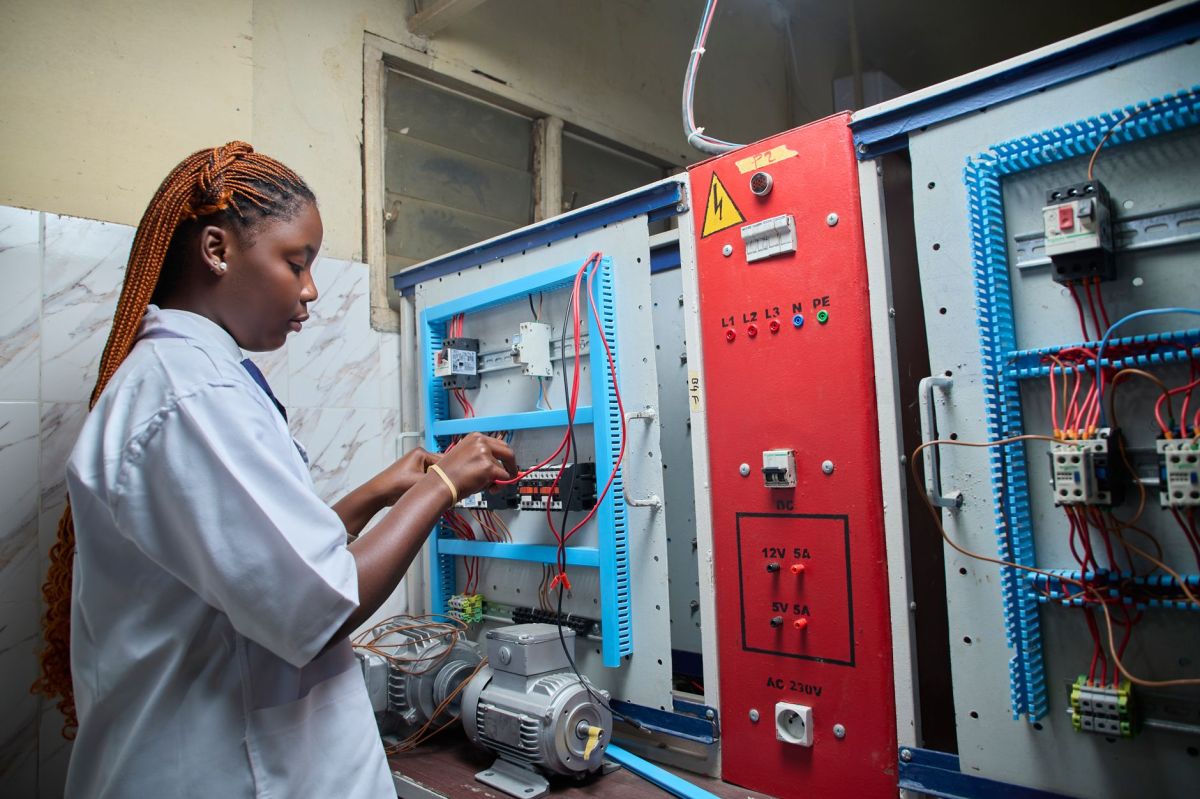
Yes, that hardy perennial, the decline of “real” apprenticeships. The low value society still puts on training craft and manual skills of a practical nature. Despite the nice words of successive politicians. I’ve yet to see a Minister’s daughter start aircraft maintenance training.

Penny pinching that’s turned local colleges into factories. Pile them high and get them through the door fast. An attitude to young people that’s driven by key performance indicators.

The pernicious side of social media. Past generations may have had their excesses but didn’t have this inescapable attention draining impact on mental health. It’s unrelenting.

Role models are hard to come by unless they are family members. Many potential opportunities appear unobtainable. The media often portrays a future wrapped in glamour and littered with overnight success. Perhaps, Andy Warhol was right.

Lack of orientating to dramatic changes in the future working environment. Pushed by Conservative Minister Gove and alike, education has taken a retro path in emphasising academia and rote learning. Exams as the pinnacle. The wrong path.

The “new” Labour Government must address all of these and more if they want to shift the dial. On this score, I’ll say a word about a past opponent of mine. We were both local Councillors at the same time. In 2017, as Minister of State for Skills and Apprenticeships, Conservative Anne Milton at least tried to shift the dial on this subject. Then that menace Boris Johnson came along, and Brexit took the whole country backwards at a very rapid pace.

I look with optimism. However, the “new” Labour Government is a bit like the “old” Labour Government. Ministers carved out of an Oxbridge tradition. Happy to talk about their illustrious working-class origins but a million miles from real word experience of leaving school at 16 years old and getting a paying job. Supporting themselves through training.

Transforming lives will require focus on multiple issues, as I’ve illustrated, and it would be nice to see actions take precedent over nice speeches. Wittering on about the value of apprenticeships isn’t enough.

POST: Technical pathways for 14-year-olds could build on UTC model

A Modern Odyssey

Join the que. It’s getting to the point that if you don’t have aa view on Christopher Nolan’s version of the Odyssey you must be a hermit. Epic coverage for an epic movie. Add a mountain of click-bait on trivia too.

Before watching this movie, at the local cinema, I sat with a pint in hand overhearing a couple of people sitting behind me. They were having that discussion. Lots of compare and contrast. Some comments were not atypical of a film about Greek mythology. Even the subjects of Star Wars and Spiderman came up. I asked: did you enjoy it. A universal “yes” came back.

It’s a risky business making a film like this one. It immediately invites thousands of professional critics to look deeply. To subdivide every minute into an academic review. From school desk to university lecture theatre, I can imagine a lot of huffing going on. Diving into the detail or picking fault with the well -known parts or lamenting the ones left out.

I’m not going to get into the discussion about authenticity. For me that’s a complete dead-end. Afterall such ancient tales were made for retelling. The whole tale comes from an era when the written word wasn’t as it is now. More likely be like a gigantic drinking ballad told to enthral diners, where a host is aiming to impress. Each teller would bring their own spin.

Is this grand film entertaining? Yes, it certainly is. Big, bold and engaging. It’s long. But on first watching, the time goes quickly. I wouldn’t say the pace was always fast. It’s more the dramatic moments that captivate. I feel like I’ve been shipwrecked numerous times. Fought several battles.

Casting was spot on for the most part. One or two quirks. I know Calypso is a nymph in Greek mythology, but she looked as if she had walked out of a scene from Sex in the City.

Being me, I did wonder how the Cyclops made cheese when his hands where so large and his sheep were so small. Bigger sheep would have solved that one.

Poseidon was responsible for a great deal of torment. He however was left out of the casting. The rage of the sea lashed out without a face.

The dead, in their black volcanic sand, did take us into zombie movie territory. A lie echoed from the grave to burden the hero. It left us with a dilemma – was it all worth it? The death and destruction for the victory won.

Locations didn’t fill the screen in the way of Lord of the Rings. Far more focus was on the characters. There were places and scenes that didn’t fit my idea of a long-lost Greek landscape. That didn’t detract from the storytelling.

Modern sensibilities crept in to draw that line between an ancient time and what’s now happening in the world. It wasn’t just a homecoming story. War, and its consequences peppered the plot. Who to trust, and not is a major theme.

Echoes of the virtue of the “rule of law” where evident. The Greek Gods sat in the background. Ever present and ready to mess up the hero’s plans at any moment. Easily offended and not troubled by their impact on the human world.

Classical messages, as they ripple down the eons, do remind us of how fickle fate can be. Doing the right thing is not always obvious. What’s heralded as greatness often contains much tragedy. The story of life is the journey and not an end.

From the point of view of multimillion dollar filmmaking, it’s going to be fascinating to see what Nolan does next. How about an epic modern Macbeth. Or taking a past space odyssey to the next dimension. Even the story of Boudica.

Combatting Climate Change

What do you do with climate change deniers? There’re like the folk who persisted with the flat Earth society. Everyone knows they exist but I’m sure most of us would not give them much time. Being door stepped by the folk from the wacky fringes can be entertaining. No more. What’s cranky is that previously reputable, and I use that term advisedly, UK political parties like the Conservative Party are adopting and promoting the believe framework of the wacky fringes. Now, I’m all for “free speech” as far as it doesn’t harm others, but this is getting strange to say the least. Following the coat tails of those who espouse extreme opinion is a road to political oblivion in the UK. At least that’s been our history.

[Oblivion also being a Science Fiction film that’s enjoyable to watch even if it does focus too much on one character. Reminds us how important water is to life on Earth].

If I put myself in the shoes of the climate change deniers, hard to do I know, then I might say that the extreme heat experienced this week is just the normal long-term variation of our weather or the Sun getting agitated or God’s will. Nothing to see hear. I’d hope to be shot down quickly with those flimsy arguments.

It’s a wise move to stay up to date with the weather forecast at the moment. A summer heat wave doesn’t last forever, we hope, even if it does last long enough to cause immense problems.

Recollections of 1976’s summer get an airing on social media. For those of us who enjoyed that year there’s a tendency to normalise around that fact that we survived the heat 50 years ago. For me that was great fun as a fit and heathy 16-year-old. Having my own roadworthy transport for the first time and being easily able to get to the Dorset coast[1]. The year was one of leaving my schooling, working the summer at home on the farm and the starting an engineering apprenticeship. Going from sweltering hot classrooms and exams, to stacking and packing more haybales than it’s possible to count, to sweating in a machine shop with plate glass windows down one side.

If we’d heeded the warmings, with more drive, five decades ago maybe climate change wouldn’t be such a dangerous condition as it’s developing into. Predictions are not good. The legacy mine and past generations are leaving is an extremely poor one.

This is what shocks me about the “head in the sand” attitude to fossil fuels. The Conservative Party and alike, is insane with its idiotic “drill baby drill” policy. I accept that the transition away from fossil fuels will take time and can be a challenging road to take. Trying to reverse the process is beyond stupid.

Policy needs to focus on making substantial changes to our daily routines. There’s nothing sacred about past working practices. Pity those who work in jacket and tie in unairconditioned offices a rigid 9-to-5 routine. As did I, once in a portacabin on the edge of an airfield.

Climate change is real. The data is in. Being daunted by the calamitous possibilities is also a dead end. Yes, the scientist’s scenarios can be overwhelming. Too much detailed information can be as bad as too little.

We have agency. We can act. Every act makes a difference. Even the small ones matter.


[1] https://www.visit-dorset.com/explore/coast-and-beaches/

Will Andy Burnham Lead a New Era?

It’s not so unbelievable. With the volatility of politics in the 2020s, that a leadership role flips from one person to the next in the blink of an eye. The man tipped to run the country has won one constituency in his hometown. Now, lots of people envisage him in the biggest of jobs, sweeping aside the wows of recent years.

One view of this change is that the decades of past allegiances, that we almost took for granted, have now dissolved. The way we view others in our society has become far more complex.

British comedy is littered with these stereotypes. Comic strip characters. Property owning, upper middle class, broadsheet newspaper reader equates to a Conservative. Open toed saddle, tweed jacket owning teacher who goes on improving camping holidays, a Liberal. Football supporting, factory worker, from a generation of factory workers almost certainly a Labour supporter with Socialist friends. At the margines, long retired colonel who inherited a large countryside mansion and estate may even be a Fascist. These animated cartoon images persist. What’s different is that there are dwindling numbers of them in society at large.

Initialled AB, Andy Burnham, comes to us as a smiling face. Down with the people in a way Sir Keir Starmer found incredibly hard. AB has charm and a warm accent that suggest a relaxed demeaner. He talks with enough wriggle room for a wide swath of people to think that he’s on their side. A good skill to have to be successful in politics. As it is, what he stands for when push comes to shove isn’t so easy to discern.

In know the spelling is different but it’s out there in social media land. The fictional Birnam Wood, a forest near Dunsinane Hill in William Shakespeare’s Macbeth. A place of prediction.

[That was one of the texts our teachers chose for us in my school days. Maybe they imagined troubled times ahead. Or wanted to warn us of power’s potential corrupting effect].

Three witches appeared to assure Macbeth that he was a winner. Only seemingly impossible events would defeat him. The message was critic. Bit like the Oracle of Delphi in the ancient Greek world. Nothing like recycling a good idea.

The British media’s prophecy is that Burnham will quickly step into the job of UK Prime Minister and restart the Labour Government with fresh vigour and new imagination. Not to mention better public communication. The constituency who thinks he’s a potential saviour is much bigger than the consistency who thinks he’s a devil in the making.

Will ambition and power’s potential corrupting effect take a hand. Or will the man with the name: “King of the North” have accumulated the knowledge and experience needed to shape history to the country’s benefit. A good sprinkle of luck will no doubt be needed too.

Despite what has passed in our post-Brexit land. UK PM’s coming and going, will Burnham be a force for good? I wouldn’t say past performance is any predictor at all. Making the buses run on time in Greater Manchester is a far cry from being a political party leader and UK PM.

I, as do so many, wish him a fair wind. Let’s hope he and his team can get to grips with the need to adapt, change and even be disruptive where it’s warranted. I hope he will not shy away from big decisions or be cowed by either his own side or the perfidious British right-wing media.

Reflecting on a Decade Post-Brexit: Lessons Learned

The clock has clicked. The pages of the calendar have flipped. Crises have been and gone. And in the UK’s political turmoil continues to exasperate one and all. A decade has passed since UK voters backed a proposal to leave the European Union (EU). The surprise result of the 23 June 2016 vote and the tiny majority for change still haunt the whole country.

Voters were told this and that would not happen, prosperity and a lowering of the cost-of-living were just around the corner. We now know that lie after lie piled-up. The mouths of the advocates of the vote to leave spouted pure undiluted nonsense. Yet, the noisy ones show no remorse or shame.

The pace of change can be overwhelming. Over the last decade the world has moved on with increasing speed. It’s self-evident that the 21st Century is becoming an era of accelerating change. Sadly, in adopting the worst kind of Brexit transition the UK has become a lesser influence. A spectator in the world that has changed dramatically.

The first 10-year anniversary of the Brexit referendum is a time to take stock. To be mystified in reflection of the maddening goings on of the years past. I will not repeat pages and pages of analysis that others have provided. A simple conclusion is evident. The nation is poorer by a substantial amount.

I’m not in favour of endless navel gazing. We are where we are and it’s not a good place to be. What must be plotted in a way forward that increase prosperity, builds resilience and unseats defeatism. Political polarisation and the slide to appease the far-right is proving to be disastrous. The warnings of history should be heeded.

The future of the UK-EU relationship has the potential to be better one than ever before. At least we now know that there was good sound reasoning behind our past membership of the EU. Facing global challenges together is a far better way to face the future. Rapidly advancing technology, social upheaval and geopolitical shocks are not going away. The means by which we collectively respond to these challenges will be critical.

This is not a time to relitigate the Brexit referendum. Let the past be the past. We have learned from that past. It’s far better to ask what a better future looks like. Europe has common challenges. It’s an interconnected, interactive and interdependent region. We share a common cultural heritage.

Discussions over the future will never abate. But there’s a need of it to be put on solid and sound reasoning. Not by equating independence with isolation. Weve found that doesn’t work.

The UK and EU must forge a new closer relationship. It’s a win-win scenario.

Brexit Documentary Review

Firstly, a reaction to the BBC documentary that’s telling the story of Brexit. They called it “Brexit: A Very British Civil War[1].” A corny title that plays on titles “A Very British Scandal,” the drama about Liberal MP Jeremy Thorpe and “A Very Royal Scandal.”

The “Civil War” analogy is out of place. Ten seconds of reading about any real civil war would have sunk that illusion. The events of 2016 were more a battle for the future. Battles continue to rage as the advocates of Brexit have merely changed their colours and rebranded.

Yes, I agree. The stage was set by the choice that voters took in 2015. In fact, if blame must be allocated then its as much the fault of liberal minds as it it’s the reactionary forces that pounded away at their ambition. The political idiocy of promising a national referendum in a country that rarely, if ever, has referendums was a critical folly. The UK is not Switzerland. UK voters have no idea what it’s like to be that sort of federal democracy.

David Cameron won a majority and his hand were tied. He did have choices, but he plodded along with all the imagination of a dull public-school boy in fear of rejection by his peers. Cameron didn’t see the bus that was about to hit him. Having been pounding away for decades the rag tag but monied pushers of a referendum wasted no time in campaigning. Cameron wasted every opportunity.

Aside from the story that the BBC chose to document is the image of a modern European country run by a strange herd of mostly Tory men, living a privileged life. It’s a searing display of a political crisis made by a few for the interests of a few.

I know it is said by both left and right in UK politics, but what more does anyone need to convince themselves that there’s a chasm between the people in Westminster and the people of the nation. Demographic trends were likely to shape the outcome of a national referendum. It proved to be so in the numbers. An older age group favouring Leave and a younger one favouring Remian. Populism had taken root in the Leave campaign.

The dim-witted organisers of the Remain campaign ran a campaign as if they were changing the name of a chocolate bar with diminishing sales. As if they were stereotypical comic depressed bowler hatted businessmen from the 1950s, Cameron’s crew ignored the analysis and lumbered on. He took a politically suicidal path.

The likes of Boris Johnson and Michael Gove dithered with only their own political ambitions tugging at them to eventually decide as to which way to go. Again, my reflection amounted to – what a bizarre way to run a country. Especially one with the history and traditions of the UK.

I understand the notion that Cameron may have seen this political path as a way of resolving a self-evident Tory split once and for all. Ironically, the outcome is a Tory split the like of which couldn’t have been imagined ten years ago.

Deciding whether to back Leave or Remain wasn’t the real question. Capturing the future political agenda was the aim. 2016’s national referendum was not a war; it was a battle. The battle continues.


[1] https://www.bbc.co.uk/programmes/m002xhvj

Lessons from Operational Events

For an aviation industry that takes pride in learning lessons from experience and taking timely corrective action, a series of operational events is surprising to say the least.

Today’s large aircraft do look much the same. The tricycle undercarriage has become universal. A set of steerable wheels at the front and a heavy set of landing gear, each side, to the rear. When parked, a nose gear collapse or inadvertent retraction on a large aircraft is not catastrophic. The aircraft can be recovered, inspected, and repaired. This undesirable event can be dangerous for anyone in the vicinity. It has the potential to be fatal. Fortunately, so far, there has been no fatalities.

For an aircraft operator such an event at an airport gate is a massive expense. Putting an in-service aircraft out of action for a considerable time.

To date, several damaging nose gear collapse (and alike) events have occurred to large aircraft[1]. Detailed analysis of these events exists and corrective actions are proposed.

One conclusion is to say that this is about people not following procedures. That is the instruction is to put a pin in one place but instead it gets put in the wrong place. So, this dramatic unintended event is written up as a maintenance error. It’s an outcome that no one intended. That’s fine. There’s no doubt that an error was made. Accepting that an error occurred is not a reason to blame. That is if there are no signs of negligence.

The trouble is the simple question – how easy was it to make that error?

Then we get into that grey area of the gap between aircraft design and operations. In a design office it may be reasonably assumed that a procedure will be followed in an almost robotic manner. No need for the people in operations to think beyond taking the same action day-after-day. This would surely become widespread practice.

As we know the actual environment of aircraft operations can be more demanding than the original equipment manufactures might imagine. Pressure to turn around an aircraft can be high, working conditions can be poor and fatigue can play a part.

There are lines of communication between the aircraft design and operations organisations, and such difficulties are regularly discussed.

Faced with an event categorised as maintenance error then what next? Redesign the aircraft? Change a procedure or require more training? Those are three of the options, there are more.

This is where the possible discussion gets reactive. Now, it would be extremely costly to redesign an aircraft for the sake of an event that is rare or for which the consequences are minor. It is possible to put numbers on each of these. The rarity, the cost, and the impact.

Modifying or rewriting a procedure, on the other hand, can be less costly and it may be quite sufficient as a corrective action. That said, any procedure that can be written can be subject to error. In fact, the original procedure may have been straightforward and well thought out.

Then there is the fall-back position. Give the people in aircraft operations more training. The assumption being that more training means less errors. It is a crude assumption because this is not a linear relationship. So many other factors come into play.

Discussions surround the above possibilities can become protracted. There’s a call for more analysis and more data. There’s the proposal for a study to be conducted. Once in that loop a year can go by as if it was a month.

There’s always the argument that highlights dozens of aircraft operators haven’t had this event occur and therefore the finger is pointed at those who have. This argument gets an outing, but it is foolish. It’s like saying – I haven’t had an accident yet, and therefore I’m safe. Foolish.

There are a lot of detailed discussions and a million and one opinions. Taking the big picture, this is a problem that is solvable[2]. What is surprising is the reoccurrence of the problem.


[1] https://www.gov.uk/government/news/aaib-special-bulletin-g-zbjb-inadvertent-nose-landing-gear-retraction-during-pre-flight-maintenance

[2] https://www.federalregister.gov/documents/2019/12/12/2019-26734/airworthiness-directives-the-boeing-company-airplanes

Remembering Anthony Head in Buffy the Vampire Slayer

Is it as far back as early 1997? It’s hard to get my head around that fact. Buffy the Vampire Slayer goes back that far. I must admit that, when it first came out, I wasn’t aware of this enduring off-beat American TV series. I came to watch it later when its reputation started to rise. People started to say: have you seen?

We were in the age when video tape was thought to be advanced technology in the home. Dial up internet consumed time and energy even to do the basics. Phones had wires. On reflection that period, just before the millennium, was a significant one both culturally and in terms of emerging technology.

Vampire stories are nothing new. Ideas have been cycled and recycled ever since the printed word was placed in the hands of avid fiction readers. What’s refreshing about the Buffy saga is that it did venture onto new ground. The idea of a “Hellmouth” opening under an ordinary California school mixed-up lots of crazy notions about what the forces of darkness might do in a sunny community. As a plot device for a series of stories, having a dangerous and mysterious “portal ” is a clever idea.

What’s incredibly smart about the stories is the role of the “Watcher” whose job it was to train and educate Buffy as she faces relentless evil challenges. The character Giles steers her through volumes of supernatural history and helps investigates new perils.

Perfect as the Watcher was actor Anthony Head. He added an authority and stability to what could have become a stream of silliness. He fitted the juxtaposition of a normal, even slightly boring, schoolteacher with a wizard like seriousness of a mature elder. His Englishness added to the contrast between the 1990s and a world of timeless monsters.

With his passing, I’d like to remember Anthony Head as the actor who gave the Buffy series a wide appeal and stopped it becoming no more than a wacky teenage romp. It’s a series that is eminently watchable. The passing of nearly 30-years hasn’t diminished its sense of youthful drama and pure entertainment value.

There’s a list of categories that can describe this TV series. Horror, supernatural, comedy, rites of passage, and even romance. It’s that peculiar mix that makes it so iconic. There’s a 100% focus on the key characters without the inevitable virtual reality stuff that would make it now.

I don’t think it would be possible to remake Buffy the Vampire Slayer. It was of its era. Thanks to those who played their parts so well. It’s watchable anytime. Thank you Anthony Head. 

Note: ITV X have the series to stream:

https://www.itv.com/watch/buffy-the-vampire-slayer/10a5896

Political Downfall

I’m not sure. Transparency is a good thing. Well, generally that’s the cases. Shedding a light on the dark places leads to better understanding. So, they say. That’s conventional thinking. The assumption being that the public prefer raw trust to a fabricated sort of truth.

The utterings of Peter Benjamin Mandelson are now going to fill more newspaper column inches than the great fire of London. It doesn’t take much looking around to realise that Mandelson has become public enemy number one. And for the British right-wing media cohort, is the Achilles heal of the current UK Labour Prime Minister. Retrospectively seen as the stupidest decision the man in power has made to date.

In bold letters the words “nightmare” and “bombshell” are already out there. Next, we can expect “Armageddon” and talk of nails in coffins. This is where the cynic in me clicks. What a lovely political opportunity to relentlessly attack, knowing that there’s always another twist or turn to add at any convenient moment.

In mathematics, the Mandelbrot set acts like News of Mandelson[1] and does not diverge. It’s complex but repetitive. I expect the thousands of pages of correspondence dumped on the public will take that path. Complex but repetitive. Sadly too, the juicy bits, like criticism of the administration in Washington DC may be redacted.

There’re immortal themes in the story of political downfall. As if the plot of Star Wars were brought to life. A dark lord strides confidently across a stage set for his demise.

In what I’ve written above, make no mistake. This is not an argument for sweeping stuff under the carpet. None whatsoever. In this modern media age, we must get used to the drop of more than 1,000 pages. If nothing else, it gives good investigative journalists a lot of work to do.

The thing is, I wonder what we will learn that may turn out to be really useful in future. I mean, surly the point of these exercises in public transparency are to ensure that corrective action is taken to avoid the same mistakes being made again. That maybe where the problem is centred. We’ve gone from the ludicrous times of Boris Johnson and Liz Truss and yet I wonder if learning from mistakes is in our DNA. If learning from real mistakes was intrinsic, then no one would be contemplating voting UK Reform.

Yet, if they are to be believed, that extreme UK political party has a high opinion poll rating. Our love of words like “catastrophe” and “apocalypse” are so great they seem to trump common sense. It’s as if a major hole has appeared in the heads of a potential electorate. The simplistic, flat, two-dimensional, world of UK Reform gets its appeal from people not wanting to engage with stubborn complexity. Those who utter simple solutions, even if they are obviously wrong, get the press attention. From here to infinity by way of nonsense.

Back to Mandelson. He got jobs that others strive for without hope of getting. His confident personality, guile and cunning got him places. There’s the lesson. All that glitters is not gold. Much as people might want to believe in political magic it’s extremely rare. Ten to the minus nine at least.


[1] https://www.theguardian.com/politics/2026/may/27/peter-mandelson-questions-vetting-clearance-mitigations

Forgiveness: A Double-Edged Sword

The basic Sunday school Christian idea of forgiveness is fine and dandy. It’s a cornerstone of the social soup that is modern Britian. Although we like a good dose of retribution when it suites us, the core belief that we maybe forgiven as much as others might forgive us still pervades.

The above is a cultural aspect of life as our more primitive side has a tendency not to forgive. Especially when talking about people we don’t know or, for that matter, people we do know who do something deeply offensive, like betrayal.

Christianity is transactional about this subject. You must forgive if you want to be forgiven. That is practical in sustaining a cohesive society. If we wander around carrying grudges and consumed with anger all day long, then this will not end well. Here I find a crux of a problem. Although it may be admirable to forgive, if that charitable act melts away anger, then it can melt away the motivation to do something, like fix a problem.

So, how to respond to someone in public life who says unacceptable and harmful things five years ago but is now said to be a different person. Reformed. Incidentally, this said by a third party that the person concerned is a different person. Whatever that means.

Let me quote thinker Thomas Aquinas in that “evil may be found in anger, when, to wit, one is angry, more or less than right reason demands. But if one is angry in accordance with right reason, one’s anger is deserving of praise[1]

He really does throw the whole conundrum back at us. Since my “right reason” and your “right reason” may be completely different. My anger is my problem. That said, my anger may be shared by many people. So, who is the arbiter of society’s righteous anger?

In Britain, this is a matter where the four estates play their part. People who make laws, people that carry them out, and those who judge. With the “fourth estate” being the fickle and flighty news media. I could say those who report to the public, or pile on their opinions. This formula doesn’t add clarity. Each of the estates can, and do, take different views. The question is then, which is the most powerful arbiter? The most influential.

Here the equation has changed. Whereas a sizeable section of the news media of my childhood undertook their work with a sense of social responsibility, this section is now under attack.

The term “social media” has been coined for the newcomers but in a way there’s no such thing. The digital world we call social media is not the least bit interested in sustaining a cohesive society. In fact, quite the reverse. Conflict, anger, controversy, and division are sources of income potential. Not a small income either. And on a global scale.

Normally, forgiveness does not come easy. It does require a period of reflection. What’s happening in the social media world is not so much forgiveness as forgetfulness. Delete an account, stir-up a new sense of outrage, move on at the speed of lightning. No need for forgiveness because people have forgotten the last reason for anger and moved on to a new source of anger. Thomas Aquinas never had to ponder over that one.


[1] Summa Theologiae II-II:158:1.