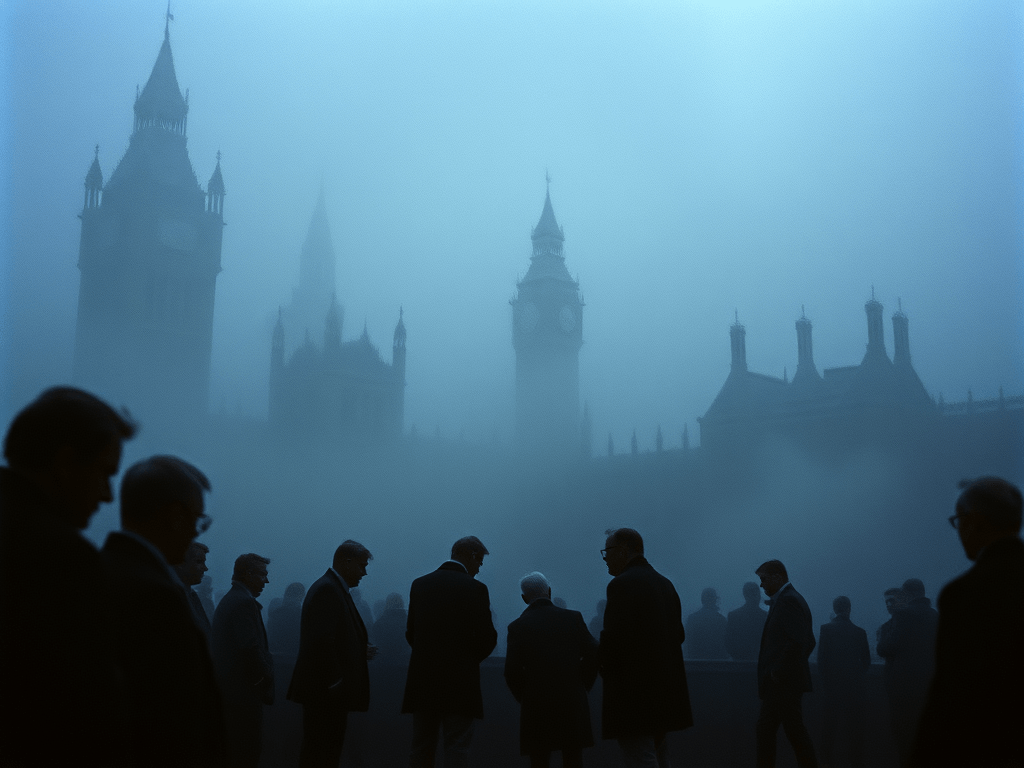
North Atlantic Airspace and Trade

Back to Greenland. A cold, cold land of mountains, snow, and ice. Next door to Iceland. I agree, the naming of places doesn’t make a lot of sense. Perhaps Greenland should be Iceland. And Iceland should be Fireland. Just under the Earth’s crust molten rock sits. It waits for the opportunity to come to the surface.

Iceland is highly volcanic. A land that’s growing and ripping itself apart at the same time. It sits on the Mid Atlantic Ridge[1]. The North American and Eurasian plates are moving away along the line of the Mid Atlantic Ridge. This is global geography. Not economic or social geography but the physical stuff. Ironically, considering the News, the North American plate is moving westward, and the Eurasian plate is moving eastward. Don’t worry this movement is slow.

When flying it’s usually faster to travel East than it is to travel West. A fast-moving band of air known as the jet stream[2] whizzes across the Atlantic. It represents that boundary between the cold polar air and the warmer southern air. The airspace of the North Atlantic (NAT)[3], which links two great continents is busy. There are seven Oceanic Control Areas (OCAs). US, Canada, Norway, Greenland (Denmark), Iceland, Ireland, and The Azores (Portugal) all have a role to play.

Back in the mid-1990s, I worked on Reduced Vertical Separation Minimum (RVSM). Looking at aircraft altimetry to determine what accuracy requirements would permit a change in separation standards. These standards, and the manual that goes with them are the responsibility of the ICAO European and North Atlantic Office in Paris. Yes, that’s Paris, France.

Given the arguments put forward by US President Trump, and his supporters, it does seem surprising that only Greenland is of interest. In aviation what happens across the North Atlantic, all the way up to the North Pole, depends on seven sovereign countries working together.

I’d say if there’s reason to be suspicious or concerned about one of them in terms of their capability, security measures, or vulnerability, what about the rest?

Whether goods or travellers go by air or by sea, across the Northern Atlantic, the success of their journey depends on communication, collaboration, and cooperation between sovereign countries. Without conflict of a major kind, it would be difficult for one country to take over that space.

I also did work on guidance material for Polar Navigation[4]. In the polar region, magnetic heading is unreliable or useless for aircraft navigation. Thus, it’s important to have other suitable accurate sources of navigation to be able to plan a flight over the top of the Earth. Aircraft communication is an issue too.

Russian airspace may be closed but this does not stop airlines flying over the pole. Finnair goes to Japan over the North pole[5]. Meticulous planning is needed to make theses flights safe.

Anyway, my point is that much of the commotion over Greenland’s fate tends to ignore the complexities of international trade and travel. At all stages international standards, communication, collaboration, and cooperation are essential regardless of who you are.


[1] https://www.geolsoc.org.uk/Plate-Tectonics/Chap3-Plate-Margins/Divergent/Mid-Atlantic-Ridge.html

[2] https://weather.metoffice.gov.uk/learn-about/weather/types-of-weather/wind/what-is-the-jet-stream

[3] https://skybrary.aero/articles/north-atlantic-operations-airspace

[4] https://www.faa.gov/sites/faa.gov/files/2022-11/Polar_Route_Operations.pdf

[5] https://www.finnair.com/gb-en/bluewings/world-of-finnair/flying-over-the-north-pole–well-planned-is-half-done–2557656

The Digital Dilemma: On Youth

Every modern technology challenges us all. Technologies’ relentless path is unstoppable. Technology inevitable is a two-edged sword (good and bad). Not everyone will accept these statements. This is my observation of the last 50-years in the UK.

1976 was an incredible year. It’s being celebrated as the year of Punk Rock. That’s just one snip out of the scrapbook. In fact, the music scene was over briming with diversity in that year. Low-cost microprocessors were coming on to the market. Forward thinking innovators, like Sir Clive Sinclair[1] were thinking about how to put these into the hands of everyday people. Trade Unions were signalling concern that this technological revolution would mean the loss of millions of white-collar jobs. Politicians ran around in fear of a severe threat to the established social order.

Let’s just say, there was no less a public clamour about how to react to the transformations that were coming down the road as there is here in 2026. What is a 16-year-old to make of all this at any time? I was 16 in 1976. Now, what’s it like to be 16 faced with current relentless and often troublesome pressure of social media?

That’s one phenomenon that I didn’t have to deal with as an energetic engineering apprentice with the thrust for speed and motorcycles. That said, all the stuff we hate about social media, bulling, harassment, intimidation, hurt, and suffering were still ever present in society.

My starting point is that banning things is to be avoided if there’s a better way. It’s profoundly illiberal to reach for the law to ban as the only approach to problem solving. My caveat. If there’s evidence of systematic harms being caused to a vulnerable population then a ban may be inevitable. In this I can cite the restrictions that are placed on young drivers and motorcyclists. Without legislation restricting activities our society cannot accept the resulting death toll.

Age limits are part of a civilised society. So, a dilemma exists. What level of harm triggers a ban? That is assuming that an enforceable ban is the most effective way of achieving reduced harm. In reality, a ban by law does not aways work. Either people find a way around it or it turns out to be unenforceable. It can also become smothered in processes and procedures to be rendered useless. Exceptions and qualifications.

How about banning mobile phones or social media for young people? That’s two quite different moves.

Mobile phones are part of the digital landscape. No one should go through future education without a necessary exposure and grounding in the digital world. It’s their world. It’s not going away. Social media is different, but it’s a nebulous product. It’s not so easy to sit down and write a useful and workable definition of what’s included in social media. Even if a law is written about social media, within a brief time it will turn into something different. It’s a combination of communications technologies.

What we do need is regulation to minimise harm done. That needs to be agile but comprehensive. A most perplexing task. Up until now, regulation is the digital realm has been ad-hoc and focused separately on application areas. Much more work is needed.


[1] https://www.theguardian.com/technology/2021/sep/16/home-computing-pioneer-sir-clive-sinclair-dies-aged-81

Dreams

Dreams are weird. For a start I often wake-up knowing that I’ve had a dream only to ponder on what it was about. It’s as if an erase function was pressed the moment the sunlight starts to beam through the curtains. As if my mobile’s alarm triggers a mental dustbin to empty.

Now, if I do wake-up from a dream in the night, I try to remember to scribble a note. Naturally, that’s merely a case of putting down a couple of words, not a full-page story. Interestingly that note can be surprisingly useful in restoring a glimpse of what I was dreaming.

I’m not going to get into the interpretation of dreams[1]. I don’t think they are a kind of prophecy. Literature is full of that notion. To me it must be that complex jumble of stimulus that has accumulated slowly being sorted, either filed or discarded. That’s not an analogy with a conventional computer. I think we have a powerful desire to take masses of information and make sense of it. That means wrapping a story around a lot of disparate stuff.

Dreams are weird. That’s because they have parts that make everyday sense and parts that live purely in the imagination. Boundaries and simple cause and effect don’t have to conform to waking reality. Imaginary worlds can be way of the charts.

Here’s goes. Fragments of what I remember go like so. It’s a clean room, like in a large semiconductor manufacture. White coats and white walls. Workbenches and sophisticated equipment laboratory style. Serious looking people.

Groups in different rooms. Could be in entirely different places. All working on making some kind of super chip [Have I been reading too many articles on quantum computing and alike?]. Could be a scene from a classic 007 movie where the villain invited their competitors to their secret hidden laboratory.

The last image was curious. A group of scientific people standing around staring intensely at a device (chip) sitting on a bench knowing that its performance has beaten all the opposition. Left the competition in the dust. Lots of questions being asked. This was not a hostile or nightmarish dream. This solid grey device looked like the base of a ceramic butter dish.

Even stranger the heatsink that rose up from the structure was shaped as a miniature model of the Roman forum[2] in Rome. It was as if the designers were so cocky they wanted to play a joke on their competitors. Me being one of them.

I don’t think there’s much mileage in sensemaking of this morning recollection. A dream about an imaginary future happening isn’t a kind of prediction. Perhaps it’s a chunking together fiction, facts and fantasy. However, it’s possible that some kind of breakthrough technology is sitting on a cleanroom bench somewhere. Where are the modern-day oracles when we need them.


[1] https://www.freud.org.uk/schools/resources/the-interpretation-of-dreams/

[2] https://www.rome.net/roman-forum

Think

To un-invent would be to un-think. Although, there are numerous mechanism and ways of doing business that it would be fantastic to get rid of it’s not so easy to tell us to stop thinking. If it can be conceived of, for good or ill, it will be conceived of. Since we didn’t write the laws of nature then what come out of their application was intended by a greater power, if there is such a power in the universe. Putting this aside, if I had the undiluted power to un-invent something it would processes, means and mechanisms that enable and encourage stupidity.

Reflections: Decade Since Brexit

Ten years ago, the world was a different place. “The past is a foreign country”. That bit is true. I still had an apartment is Cologne. Although, that phase of my life was coming to an end. The first two months of 2016 were about wrapping up the loose ends. Deregistering, as is the way when leaving German. Coming to a settlement with my landlord. Packing up and moving back to the UK. Saying goodbye to my regular haunts. Saying goodbye to a wonderful city.

Being an astute watcher of the UK political landscape, I could see that a vail of discontent was hovering over my homeland. There was a frustration amongst those in government. Can this endless debate about the UK’s place in Europe be resolved? Can it be knocked on the head once and for all?

The UK Prime Minister (PM), David Cameron was sitting on a small majority after the General Election of 2015. Conservatives were nervous but wanting to retake the agenda by trying to put to bed the Europe question. As it turns out Cameron made a grave mistake. He entertained the notion of a national referendum to advise the government on what to do next. An act that was uncommon to the UK’s normal way of doing business.

Probably one of the most foolish political acts a UK PM has taken in a very long time. Naturally, in 2016 few had an idea of the chaos that would be unleashed by this attempt at quelling internal Conservative Party wranglings. It’s true that these wranglings were not new. Just perpetual or should I say perennial.

My return to the UK wasn’t a celebration of the achievements we had made in Europe. That collectively we were in a much better place than before. That we had build something to be proud of. No, it was more of a submersion into an angry and emotional row. A heated row littered with misinformation and just simple run of the mill nonsense.

As I write this it’s plainly evident that the experiment, that was Brexit, damaged the country. Not only that but it resolved nothing. Instead of settling an issue it stirred up animosities and tribal conflicts. Today’s soap opera on the right-wing of UK politics is evidence enough of unresolved rivalries and ideological divides. An insular mindset and unresolvable differences.

In January 2016, there was no practical plan to leave the European Union (EU). It was almost unthinkable. Surely sensibility would prevail. That’s the political trap that Cameron fell into. Dare I say an almighty display of his cultured public-school arrogance. Convinced that if arguments were put to the public authoritatively, logically and rationally a remain result would be a simple foregone conclusion. That the political risks were manageable. That’s how wrong a man in power can be.

Moving on a decade. Yes, it is that long. Lots of water under the bridge. To the idiots on stage now, I say: the UK is not broken. It surely isn’t in as good a place as it could be. Had Brexit not taken place then we’d all be much more prosperous. We would be contenting with continuity. That includes squabbling right-wingers, but the fact is that they will never ever desist.

What’s sad is that the opinion polls say that a significant number of people want more of the same. More nonsense from the people who brought us Brexit in the first place. More from those doomsters and has-beens who complain without any realistic ideas of how to solve problems. A karnival of conmen.

Now, in the UK we have two right leaning political parties that are almost the same. One being the Conservatives and the other Reform. Each trying to outdo each other to attract the same voters. Stirring up discontent wherever they can find it. Projecting a negative image of the country whenever they speak. Feuding in a way that should convince people that neither is fit to govern.

POST: These folk explain it all in clay. Claysplained (@claysplained) • Instagram photos and videos

Strengthening Partnerships

Is it time for a new European alliance? The sands seem to be shifting as geopolitics suffers the rumbles of a communal earthquake. It’s a time for those who share similar values to come together. An alliance of people’s who believe in liberty, rule of law and self-determination. However our world might be viewed it’s a place where it’s surely better to be part of a bigger community than it is to stand alone. Power can be dangerous in the hands of a few.

Now, I know that nationalist and separatist voices can be loud and often superficially appealing. Absolute autonomy, if there is such a thing, does mean fragmenting partnerships and breaking-up communities that work well together. Long term stability is accrued by working with others.

I live in a complex place called the United Kingdom (UK). It’s not one kingdom but several. Yesterday morning, I stood at the bases of a statue that remembers ancient times and a pivotal moment in a gathering of unity. Having grown up in Wessex, I’m acquainted with this monarch given the number of places where his name is elevated.

King Alfred the Great was born in 849, in the town of Wantage. No, that’s not the mythical King Aurthur. Alfred was an able leader whose legacy warrants the word “Great”. He drove off troublesome Viking invaders and unified part of Anglo Saxon England. You bet there were probably dissenters who predicted that a novel kingdom could never work.

Viking invaders made their mark everywhere they went. They had mastery of the seas and a stubborn determination to explore and exploit without bounds. I guess, in England even now there’s a little bit of them in all of us. The brutish aspects of Viking society were their downfall. Smarter, more educated and learned leaders, like Alfred outwitted them in the end.

Culturally, Greenland is European. I’d go as far to say so is a major proportion of western Canada. The people who inhabit that large icy island are the ancestors of the Vikings.  

The US has rightly recognised the need to strengthening Greenland’s security. Without doubt the best way to do that is via a reliable long-term partnership.

When the Vikings conquered a land, they forced its inhabitants to pay the Danegeld. To fight them King Alfred demanded service and taxes from landowners. You might say throughout history there’s no escaping death and taxes.

If Greenland is a mineral-rich territory, as is reputed, then it seems logical that some of that wealth be spent on security and defence. This matter doesn’t require the US to control Greenland. It does require the US and Europe to agree ways and means and work together.

It’s a massive counterproductive proposal to punish countries who disagree with a US take-over. Whacking tariffs on close partners is a way of making new conflicts and not boosting common interests. If the threat to this island territory is posed by Russia and China, then they must be quietly smiling.

Now, I know that nationalist and isolationist voices don’t see common security interests the way multilateralists do. Agreements need to be made in the frame of – what’s in it for me. It’s not just Greenland that needs a North Atlantic alliance to work, it’s all of us. The capacity to defend US and European interests in the Arctic is best served working in partnership.

Aside: I’ve never stepped on Greenland’s soil but have flown over it many times. The North Atlantic tracks that divide up the airspace run over both ocean and the tip of Greenland. Views from an aircraft window are of a vast wilderness.

Legacy of Dilbert’s Humour

Cartoonists capture reality. Or at least, a snapshot of an ephemeral or enduring moment. It’s not photography. A cartoon’s realism isn’t about fidelity in the capture of a scene. It’s more focused on our perception of reality. No need for representative images full of depth and detail.

Absurdities and peculiarities captured by ink and pen can be sharp and masteries of observation. The flash of “who said what to whom” is a moment that displays the strange assortment and madness of everyday life.

To me the creator of Dilbert nailed a decade. That’s the 1990s. A time when management styles favoured open plan offices littered with cubicles. A time when of the evolution of computer networks connected office workers in a new and unfamiliar way. “You’ve got mail” was a positive thing.

Scott Adams[1] has passed at a relatively young age. His reputation not entirely intact. Now, I must decide what to do with the books I have of his. Charity shop or not? Element of his humour don’t fit the world of the 2020s. In some ways an even more absurd world than past decades.

Where he hit the mark, in my mind, centres around 1995, or so, a time when I was travelling to America. Visting giant aerospace manufacturing companies. I can close my eyes and see a hangar like building of enormous proportions where every square inch was covered by naturally coloured cubicles. Neutral coloured partitions coming up to shoulder hight. Water coolers. Glass windowed offices. Notice boards with the latest dictate.

Of course, Dilbert was an engineer. An engineer shoehorned into a modern management world that challenged his sensibilities. A hierarchical place where systematic pseudo-science clashes with logic and rationality. Where human frailties and social pressures are turned into office management speak to justify unjustifiable actions. Pushing a rock uphill to meet unrealistic project plans.

It’s a tiny thing. Dilbert’s upturned tie smacks my experience of standing at a drawing board in the late 1970s. He’s a cartoon character that is inevitably dragging his heals as he’s being forced to come to terms with a maddening corporate culture. That’s an encounter that a lot of people can relate too. It compelled office workers to play games that seemed to work in the opposite direction to any that was intended. Later, TV comedy picked up on this with series like: The Office[2].

This work day phenomenon hasn’t passed. Modern managements’ more barmy methods and theories are so ingrained that it seems wrong to highlight. Somehow our reaction to this has changed.

For a while Dilbert’s humour put up a mirror to those of us in senior management roles. Here’s a model that, if you start behaving like the “classic” boss, it’s time to do a double take. When encountering that slippery slope, look far and wide for a cynical talking dog.


[1] https://www.bbc.co.uk/news/articles/c5y320k72vyo

[2] https://www.bbc.co.uk/programmes/b00jd68z

Exploring ‘The War Between the Land and the Sea’

OK so there’s the predicable amount of sentimentality. Yes, it makes the story human. Great and cataclysmic events don’t grab attention unless they are associated with the human experience. That’s not entirely true. There will always be nerds, like me, who are drawn in by the facts and the creativity of structure and form.

“The War Between the Land and the Sea[1]” is a well-crafted combination human stories and an imaginative fictional expanse. It’s a spin-off of the world of Dr Who. However, what Russell T Davies has created is a more grounded drama about the here and now. Whoops – shouldn’t have used the word “grounded.” This made for broadcast science fiction story is about our Earthly reality. Two thirds of our beautiful planet is water. Earth is as much about water as it is about dry land.

He’s not the first screen writer to imagine a world dominated by water. If I remember rightly, there’s that terrible American movie Waterworld[2]. I say terrible even though it was atypical of 1990s cinema watching. A better point of reference, and a motivation to wall-up a stock of baked beans on high ground somewhere in the English countryside, is “The Kraken Wakes.” Now, there’s an exceptionally fine story from one of my favourite authors, namely John Wyndham.

Russell T Davies taps into ancient sailor’s stories of scary monsters in the deep. The lure of the unknow. Even with our expansive knowledge of the cosmos, humanity is still largely ignorant of the world of the deep ocean. Discoveries are arising year by year.

I can imagine some hard-nosed right-wing commentators will be sniffy about the focus on climate change and the dangers of the melting of the polar icecaps. To some extent, this is incidental to the story. I don’t think the “The War Between the Land and the Sea” is too preachy.

Strangely enough I was initially put off by the BBC’s repetitive advertising of the series. As if they were nervous of the risks of making it in the first place and that few would watch this drama. Let’s put that aside. This is an excellent British television drama. It’s more adult than Dr Who. By storyboarding the global angsts of the day and combining it with a fantasy that’s full of twists and turns, this is well worth a watch.

I hope the BBC drama will be brave enough to continue in this direction. New, imaginative, science fiction that’s not afraid of posing the “what if” questions. As we endure the manipulation of the daily News that spins fears and gives airtime to conspiracy theories, so fiction and reality can get blurred.

I know an unidentified race of intelligent life is not going to rise out of the Seas and challenge our dominance of Earth. I like the idea of stories that prick our arrogance and offer a reminder of our vulnerabilities. Apocalyptic visions abound but not all touches on our contemporary industrial recklessness and potential political idiocy.

Today, the oceans are riddled with hydrophones listening for underwater activity. Yet no one has picked-up and decoded a group of fleeing dolphins saying – so long, and thanks for all the fish. Maybe tomorrow. Who needs to Dr?


[1] https://www.bbc.co.uk/programmes/m002p0xm

[2] https://www.imdb.com/title/tt0114898/

What to Expect

What’s going to happen in 2026? Predictions are always more a matter for the ancient Greek Gods than mere mortals but here goes. For the world of civil aviation:

Global air traffic will continue to grow,

Large hub airports will continue to expand,

Commercial air travel safety improvement will stagnate,

Electric air taxis will become a reality,

Pontification about the next generation of single aisle aircraft will continue,

Impacts of climate change will increase,

Blows to climate action will be slowly reversed,

AI breakthroughs will continue but adoption will slow,

Drone technology will advance at pace,

More airspace will be subject to conflict warnings,

Volatility and instability will plague the commercial manufacturing sector,

Regulatory harmonisation will struggle to advance,

And for certain, the United States will formally mark its 250th birthday.

Some pluses and some minuses. It will not be a dull year.

Globally the future of civil aviation is a healthy one. Propensity to travel is deeply ingrained in our ideas of development and growth. The complexities of adopting innovations are not new to the aviation industry. What may be new is finding a workforce that is as captivated by aviation as past generations. To train, induct them and offer them the attractive careers paths that compete with other fields. Anticipation of potential technology transformations often lacks a vision for the people who will make them possible.

Visual Cues and Decision Making

Back to visual perception. Initially, it may not seem right to focus on one human sense and not discuss the others. We are multifaceted humans. The brain takes advantage of all its senses, when they are available. We’ve evolved with amazing capabilities.

The interesting notion that certain wines taste better when accompanies by certain music is a wonderful example of how interactive our systems can be. That’s without us having any conscious control over their immediate intimate workings. Parts maybe hardwired and others soft wired and adaptable.

Vision plays a dominant part in enabling us to move around. We haven’t yet evolved echo sounding, like bats and dolphins. This is not to say that those who loose vision can’t compensate to some extent, but they don’t fly aircraft or drive fast cars or become astronauts.

My thoughts arise from exposure to several aspects of our dependency on seeing the world around us. To begin, at the early part of my career, it was indeed the process of taking sound imaging and making it usable for recognising objects. Converting the information that come back from sending sound pluses through water into an image must deal with a dynamic environment. Interpretation of such electronic images can be the difference between hitting an object at sea and avoiding it.

Later, my design work concentrated on information presented to a pilot and what happens next. That whole arena of the aircraft cockpit is one big interface. The link between the senses and the decision maker. I’m not straying into the interminable debates about human factors.

Let’s stay with the trend that’s in front of us in every walk of life. That’s the dependence on recognising and acting on information that is presented to us on a nearby screen. In so far as I know, humans didn’t evolve with this need to relate acutely to closely presented information as much as reacting to distant stimulus. Afterall if a hostile animal or dangerously armed person was heading towards me at speed, I wouldn’t sit around debating the subject.

Aeronautics has experience in this shift of attention. At the start of my career aircraft cockpits where mostly knobs and dials. Mechanical indicators and filament bulbs. Sometime unreliable. Still the idea of flying by the “seat of the paints” prevailed. That centred around situation awareness, predominantly guided by looking out of the window. At the outside world. Distant vison equally, if not more, important as looking two feet ahead at a panel. Over the last five decades the above has changed radically. Instruments are large flat screens dotted with an array of colourful symbols offering every aspect of “situation awareness”.

Now, this is happening to cars. Most new cars have electronic screens. The expectation is that we humble humans have transitioned from simple mechanical dials to a fascinating world of colourful animated markers and whizzy logos. Despite the glorious technology the basic function remains the same. That is the link between the senses and the decision maker.

Adequate levels of visual perception being the number one attribute a pilot or driver is expected to maintain. This continues to be true as automation does more and more. What maybe a long-term trend in human evolution is that shift between the importance of what’s a couple of feet away and what’s in our surroundings. Will we become less sensitive to a personal experience of what’s more that two feet away? I wonder.