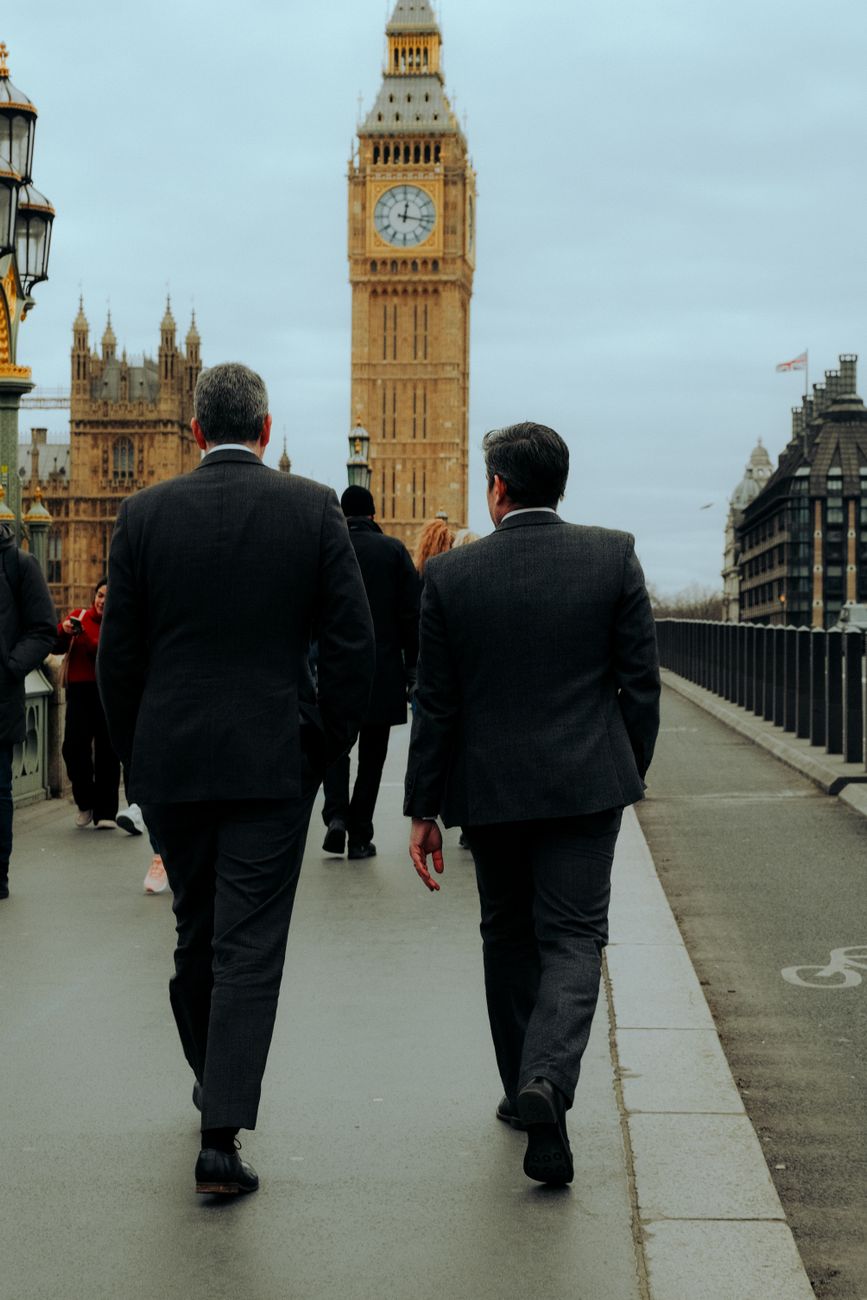
Dysfunctional Culture of UK Politics

It’s as true today as it’s aways been. Well, that sound like a famous bread avert. The phrase “as good today as it’s always been,” was used for years by one notable bread maker in the UK. A memorable slogan that painted a picture of tradition and continuity.

What I’d like to do is to take the word “good” out of the equation. I’m not talking about our daily bread. Or the need to meld tradition with a modern industrial reality. However, there is an enduring appeal when it comes to selling ideas. A linking with some mythical golden age.

Paddy Ashdown, the former Liberal Democrat leader whose memory is not entirely lost in the mists of time, was not a fan of the Westminster culture[1]. That’s the political culture that pervades the British Parliament and its environs.

He shared the view of many British people that Westminster is grossly “out-of-touch” with life as it’s lived across the nation. Our democratic institutions often alienated people. Not by intention but just by being what they are and acting the way they do. The core of British politician’s concerns come across as detached and insular. More tied up in big egos, infighting, and inflated pompousness. Protecting their own interests.

Now, I know the insipid excuse is to say – surely, politicians are like that throughout the world. Aren’t we lucky to have such ancient and noble traditions. A heritage that others admire.

Paddy knew what he was talking about having been a Member of Parliament (MP) a long time. I first met him in the 1980s, when he was a young idealistic newly elected MP. He was the guest speaker at an evening event in Cheltenham. Full of ambition and vitality.

This week, neither of the two largest political parties in the UK covered themselves with glory. Quite the opposite in fact. It was not pleasant to see or hear.

Labour became a stuck record. Vacillating and dithering. Increasingly then sound like their predecessors. It’s a kind of Westminster conditioning. A bland mediocrity that seeps out of the gothic towers of Parliament. Supporters of Labour twist and turn with despair.

The Conservatives are in more trouble for a whole host of reasons. Not least their past performance. What we are witnessing is a peculiar dance by their leader. It involved constantly looking over her shoulder and spinning around at the same time.

Whether we like it or not the problem is our problem. With our institutions becoming ever more dysfunctional over a period of decades the door is open to extremist forces. The more we pretend that Westminster is working the more voters look elsewhere.

The British media are no help in this respect. Instead of shining a light on a dysfunctional culture they race to be part of it. Getting excited at every crash and upset. Every scandal and broken promise. Building careers in the same way as the politicians they report on.

There’s no easy answer. First, it’s important to recognise the problem.


[1] https://www.independent.co.uk/news/uk/politics/ashdown-says-outoftouch-westminster-alienates-voters-disillusionment-could-lead-to-extremism-liberal-democrat-leader-warns-1493502.html

Manchester

Crunching numbers after a British by-election is rather like taking one racehorse win and saying that all races will be won by that horse in future. There’s one or two who get hysterical. A test of public opinion, in one spot on the globe, is a good indicator. It’s not an absolute pointer to every future event.

How can I possibly disagree with Sir John Curtice[1] this morning on the BBC. He’s that human hardy perennial of domestic election analysis. Number one guru that the media runs to. A track record for an on the money sum-up.

In essence, the British electorate wishes to support candidates who can articulate their concerns. No prevarication, all manner of obfuscation or jam tomorrow speeches. Preferably tailored to the location where they stand.

Sir John is thinking like this John. In moments, as per yesterday in Manchester[2], clarity matters. True, that in a by-election it’s easier to do for a candidate who carries little political baggage. A fresh set of well-presented phrases and a new broom. A relatable individual.

Not for one moment do I believe that the Green Party will surge forward so powerfully as to become a national leader. What may happen is that, with the fragmentation of the British political landscape, the Greens will play a bigger part than they have in the past.

And you know what? As a liberal, I’m fine with that shift. Balance is so important if positive change is to happen. Representation means just that – representation. If the Greens say the exact opposite to the Reform Party, which mostly they do, then they will occupy the two ends of the classical normal distribution – the bell curve.

Perhaps, I need to be careful with this basic analysis. My presumption is that most people are not highly involved in everything party political. That on the typical doorstep often the key task is not to engage in detailed debate but to remind people that there is an election taking place. That the tie to traditional voting patterns continues to weaken.

The last one on my list is perhaps the biggest. Gone are the huge factories and industrial heartland that provided the Labour Party with their core support. Gone are the dependents of the shire country manor houses that provided the Conservative Party with their core support.

In 2028 or 2029[3] the make-up of the British electorate will have changed markedly. Seems obvious to say – doesn’t it, but politicians love to fight the last war not the next one. The political landscape will have shifted. Traditional voting patterns will have further disolved. There will be no let-up in the dynamic nature of public discourse. A small number of big issues will dominate the campaigns of the parties able to make an impact.

Clarity will matter. Distinctiveness will matter. Relatability will matter.

In the background, a bucket load of past performance and costed polices will be chewed over by professional commentators. That will not be the deciding factor. At the end of this decade there’s a break away coming. Busting out of past patterns. Setting new horizons.


[1] https://www.bbc.co.uk/news/articles/cwygpdjq9jjo

[2] https://www.manchestereveningnews.co.uk/

[3] https://www.instituteforgovernment.org.uk/our-work/topics/parliament-and-constitution/general-elections

Transport of Flight Delights

Air Taxies are becoming a reality. It’s not Science Fiction anymore.

The history of the “hackney carriage” is along and illustrious one. They remain firmly attached to the road. They do move with the times. From horses to combustion engines to electrified cabs[1], I wonder if London back cabs will adopt Hydrogen fuel next?

Providing safe and reliable public transport for about 8-passengers, in reasonable comfort, with a limited amount of luggage, they are a vital part of the city landscape. Ferrying people from place to place and even going south of the river (a popular saying from the people who live north of the River Thames).

In New York, “Yellow schools of taxi fishes” in a song by Joni Mitchell. Schools or sholes of taxies swimming in a sea of traffic. Frantic and colourful as they are shown in a lot of 1970s movies. A chaotic scene where the protagonist runs out into the middle of dense, barely moving traffic.

What happens when these modern convinces take to the air? If they were still with us, I’m sure Flanders and Swann[2] would have written a song about this new marvel. The distain of London buses towards black cabs is there in the lyrics. So, as air taxies take-off, as it were, will the cab drivers of the city protest or join the ranks of new flyers?

Please don’t answer that question. I’ve in mind more serious issues. The whole history of aviation safety data analysis shows us an immutable fact. Take-offs and landings are riskier than flying in at altitude. It really matters not if flying horizontally or vertically.

How does this come to be? A simple answer would be to say that the results of aviation accidents eventually end-up on the ground. Gravity does its work. Put that aside for a moment. Take-offs are optional but landings are mandatory. That’s a traditional saying that amuses non-flyers but is all too real to pilots and alike.

The act of taking a flying machine from the freedom of movement in 4-dimensions to a preselected stationary point on the ground. Those policies and plans that are published refer to Vertiports being established much as Heliports have been in the past. Some may double up. The theory is good. A pre-defined clear space that can accommodate a typical eVTOL aircraft used as an Air Taxi, with all the necessary operational and safety provisions. Surrounding areas protected from the down wash of the Air Taxi. Care to remove any foreign objects from the vertiport surface. A mini terminal to add to the cityscape.

One of the biggest variables in this brave new world of public transport is as old as the hills. It’s the local weather. Dubai can roast an aircraft with clear skies and 50C while Aberdeen can soak them in rain and impenetrable mist. Dust and wind can blow through Marseilles while deep snow and ice covers Montreal. Whilst in Lahore the air itself can be hazardous.

Terrestrial vehicles do cope. Often this means that there are different rules and regulation that take account of the local conditions and priorities. The impatience that some advocates have for a rapidly formulated globally set of harmonised rules and regulations might be misplaced. In fact, it may even impede the introduction to service of Air Taxi services.

Since I’m discussing the busy urban environment, I can presume that any accidents and incidents will be the focus of a great deal of public attention. Ultimate safety is a nice aspiration, but then reality takes hold. There will be occurrences. When they happen, city councillors are going to have their say.

Post 1: Air taxis are an exciting development in air mobility, but to get off the ground. SESAR Joint Undertaking | EUREKA- European Key solutions for vertiports and UAM

Post 2: Infrastructure Developer Highlights Timeline Convergence as eVTOL Certification and Vertiport Development Both Require Nine Months, Creating Binary Decision Point for Property Owners | citybiz

POST 3: The Air Taxi topic has become newsworthy this last week. US lawmakers push FAA certification reforms for eVTOLs:

https://aviationweek.com/aerospace/advanced-air-mobility/lawmakers-push-faa-certification-reforms-evtols

https://www.flyingmag.com/congress-faa-electric-air-taxi-certification/


[1] https://www.levc.com/

[2] https://youtu.be/7yHrpPRYgYM

FLANDERS & SWANN – ‘A Transport of Delight’ – 1957.

Empowering Youth: Voting Rights at 16 Years Old

There’s good reason to be cautious. Explanations about what should or should not happen to young people are so often made by people who have long forgotten what it was like to be young. It’s a while ago, I’m talking about 30-years ago. Sitting as a Country Councillor listening to other Councillors pontificating about education policy in a way that bore no relation to the reality of the time. That’s way before mobile phones and social media took hold of our lives.

It was something to behold, when listening to erudite people who were then at the age I am now, recollecting their youth as a way of justifying a point of view about education policy. It was worse than that, in that those privileged Councillors were often the products of a private education. Talking about growing up with a nanny, prep-school and a notable public school as a background didn’t inform discussion about how much public money to spend school repairs.

Debate moves with time, only that the tone of debate doesn’t always move on. In one case it’s whether the voting age should be lowered to 16 years old or the that a ban on social media should be enforced until 16 years old.

Here’s my two-pennyworth. The range of maturity of those of the age of about 16 years or so is large. Naturally, there’s a mighty steep learning curve where individuals find their feet. Some are more rebellious than others and that attribute maybe a passing phase or a deep part of their character.

It’s the age where it’s possible to start in the world of work. To start an apprenticeship. To get a National Insurance number. To pay taxes. Going with – no taxation without representation – to me that justifies a young person having a say in what happens in their society. In other words, getting to vote.

Even if their opinions and political views are developing and there’s much experience to gain, it’s likely that those who are savvy enough to make the next steps in education or work should have that right. If they start with the habit of voting, there’s a better chance that they will continue.

It’s possible for a 16-year-old to vote in some local Scottish and Welsh elections. Today, they cannot vote in UK Parliamentary elections. That needs to change.

Numerous right-wing commentators state their objection citing the word – maturity. That fact of the matter is that they clearly haven’t ever done any doorstep campaigning. That’s canvasing for a candidate during an election. Frequently, the job is merely to remind people that there is an election taking place. It’s not to enter debate about the pros and cons of a candidate, their party or their policies. Let’s just say, without being too disrespectful, that a great many 16-year-olds are far more aware, energetic and informed than the average citizen.

Also, I don’t understand what right-wing commentators fear. There’s likely to be a significant number of younger people who will take their point of view. Much as I might find that case disagreeable there’s a huge panoply of reasons for voting. It’s not a static factor.

At 16 years old in the UK, a person can legally leave school. Then they should have a say.

Political Landscape

One of the motivators in politics is that prospect of the shining city on the hill. The ability of an able politician to articulate a vision of a future where aspirations are met, harmony pervades the land and the world becomes a better place for all. Naturally, this expression has religious originals. That interweaving of religion and politics is hardly new. It’s us. It’s us humans who give form to our desire to see our communities thrive and adversity overcome.

However, this ability to project hope isn’t the only tool in the politician’s toolbox. The other side of the coin is fear. Sadly, this gets used just as much as in rhetorical flurries and backroom decisions making. As the week has passed so there’s been a fair amount of both.

I like to think that, of the two, hope transcends. It is not an even coin. Our in-built propensity to strive regardless of the barriers and failures along the way, that’s powerful.

What am I saying? It’s that loosing sight of the shining city on the hill and getting stuck in the weeds of everyday gloom and despondency, that’s the monster problem.

Scandals will come and go. It’s a national preoccupation. That’s not to say that such each and every one deserves significant attention. In the most recent one, involving the UK Prime Minister (PM) and a prominent former Labour politician, there’s clearly much work to do.

It seems to me that the whole process of making appointments to significant national posts needs a thorough review. The discretionary powers that a PM has are a key part of the job, but that exercise of power without sufficient scrutiny has led to dangerous errors being made.

Thus, we have a serious man who espoused a brilliant future, at the last UK General Election, only to deliver more of the same. True, the current PM hasn’t yet plummeted the depths of the Johnson or Truss era. A wave of relief sounded across the nation when those two Conservative politicians were effectively banished.

Righteousness is not something that sits well with a cynic. And our daily News loves to adopt a cynical tone. Every journalist must have a streak of it running through them like a stick of rock. On the positive side, in many ways when political scrutiny fails it’s the News media that we depend up. Maybe to shine a light on the less than shiny city on the hill.

At this moment in early 2026 there’s good reason to be concerned. Now, at the dispatch box in the House of Commons we have two gladiators who want to make mincemeat of the opponent but are each covered in a disagreeable mess. Both as a legacy of incidents that their Party has had a hand in. It’s easy to say – twas ever so. Only that’s not good enough in 2026.

It’s as if both Party leaders have wadded through a muddy smelly swamp to meet face to face. To meet covered in mud, slime and weeds that they have dragged with them. Not an attractive sight. Neither in a position to project the prospect of a shining city on the hill. Credibility is low with both parties. These are strange times.

[What might happen if more than 45 Conservative MPs jump to the Reform Party? Crossing the house could become an avalanche breakdown. Will we see the Liberal Democrats as His Majesty’s official Opposition? That would surely put the cat amongst the pigeons.].

Mutuality in Aviation Safety

Back to the benefits of mutuality. That idea of working together for a common goal. It may seem bazar but instead I will start with the downsides of mutuality.

Parties who are in conflict often like to deny interdependency. It’s that instinctive feeling that we can go it alone. Highlighting that working with others turns out to be complicated, calculating and compromising. Surely much better to be that lone High Plains Drifter who lives day to day.

In the aircraft airworthiness discipline, I saw this happening during the lengthy process of the international harmonisation of technical requirements that took shape in the 1990s.

It’s not easy to say but a substantial number of aviation rules and regulations that are applied are written in blood. Ever since the first aircraft took to the skies there has been incidents and accidents. Each one presents an opportunity to gain experience. Tragic though they maybe, if there’s a positive outcome, it’s that measures are put in place to try to prevent similar occurrences happening again. This doesn’t aways work but it works often enough to make it the intelligent way forward. When that learning doesn’t take place, the result is condemnation and outcry[1].

So, imagine a situation where Party A has a rule that comes from a tragic aviation event and Party B does not have that rule, or see the need for that rule. Equally, where Party A is eliminating a rule that Party B views as a judicious measure for managing aviation safety risk.

Clearly, where safety is the goal, the harmonisation of technical requirements is not a trivial matter. Disagreements can put stress on relationship. It can from time-to-time cause people to walk off the playing field. To use an expression that became real at the 2025 Africa Cup of Nations football final. When the application of international rules doesn’t go the way people would like the results can be testing.

What I’m alluding to here is the early days of the technical harmonisation work that was done within what was then called the Joint Aviation Authorities (JAA) in Europe. And how that work interleaved with the work that was done to harmonise rules across the North Atlantic.

People did indeed walk off the playing field. One or two of them became ardent anti-Europeans. Maybe it was easier for younger technical staff to accommodate change. Nevertheless, each step that was taken to change or eliminate additional national technical requirements created tension. Maintaining sight of the greater goal of mutual benefit was demanding work. In fact, technical harmonisation is demanding work and always will be as such.

Across boundaries circumstances differ. My analogy is that of saying that it is no surprise that the Netherlands maybe concerned about bird strikes and overwater helicopter operations. At the same time Switzerland maybe more concerned about mountain waves and high-altitude helicopter operations. Each concern needs to be met. Priorities may vary.

Recent headlines saying: “Trump Says He Is ‘Decertifying’ Bombardier Aircraft In US[2]” has a sour ring about it. Political pressure should not be the driver of aviation safety technical rules. It’s perfectly reasonable for aviation entities to compete aggressively in the commercial world. It’s idiocy to compete on aviation safety grounds. This is not new learning. This has been the case for at least the last half a century.

POST: A view Gulfstream Confirms Delay over Canadian Type Certification of Business Jets | Aviation International News


[1] https://www.ntsb.gov/news/press-releases/Pages/NR20260127.aspx

[2] https://aviationweek.com/business-aviation/aircraft-propulsion/trump-says-he-decertifying-bombardier-aircraft-us

The Digital Dilemma: On Youth

Every modern technology challenges us all. Technologies’ relentless path is unstoppable. Technology inevitable is a two-edged sword (good and bad). Not everyone will accept these statements. This is my observation of the last 50-years in the UK.

1976 was an incredible year. It’s being celebrated as the year of Punk Rock. That’s just one snip out of the scrapbook. In fact, the music scene was over briming with diversity in that year. Low-cost microprocessors were coming on to the market. Forward thinking innovators, like Sir Clive Sinclair[1] were thinking about how to put these into the hands of everyday people. Trade Unions were signalling concern that this technological revolution would mean the loss of millions of white-collar jobs. Politicians ran around in fear of a severe threat to the established social order.

Let’s just say, there was no less a public clamour about how to react to the transformations that were coming down the road as there is here in 2026. What is a 16-year-old to make of all this at any time? I was 16 in 1976. Now, what’s it like to be 16 faced with current relentless and often troublesome pressure of social media?

That’s one phenomenon that I didn’t have to deal with as an energetic engineering apprentice with the thrust for speed and motorcycles. That said, all the stuff we hate about social media, bulling, harassment, intimidation, hurt, and suffering were still ever present in society.

My starting point is that banning things is to be avoided if there’s a better way. It’s profoundly illiberal to reach for the law to ban as the only approach to problem solving. My caveat. If there’s evidence of systematic harms being caused to a vulnerable population then a ban may be inevitable. In this I can cite the restrictions that are placed on young drivers and motorcyclists. Without legislation restricting activities our society cannot accept the resulting death toll.

Age limits are part of a civilised society. So, a dilemma exists. What level of harm triggers a ban? That is assuming that an enforceable ban is the most effective way of achieving reduced harm. In reality, a ban by law does not aways work. Either people find a way around it or it turns out to be unenforceable. It can also become smothered in processes and procedures to be rendered useless. Exceptions and qualifications.

How about banning mobile phones or social media for young people? That’s two quite different moves.

Mobile phones are part of the digital landscape. No one should go through future education without a necessary exposure and grounding in the digital world. It’s their world. It’s not going away. Social media is different, but it’s a nebulous product. It’s not so easy to sit down and write a useful and workable definition of what’s included in social media. Even if a law is written about social media, within a brief time it will turn into something different. It’s a combination of communications technologies.

What we do need is regulation to minimise harm done. That needs to be agile but comprehensive. A most perplexing task. Up until now, regulation is the digital realm has been ad-hoc and focused separately on application areas. Much more work is needed.


[1] https://www.theguardian.com/technology/2021/sep/16/home-computing-pioneer-sir-clive-sinclair-dies-aged-81

Reflections: Decade Since Brexit

Ten years ago, the world was a different place. “The past is a foreign country”. That bit is true. I still had an apartment is Cologne. Although, that phase of my life was coming to an end. The first two months of 2016 were about wrapping up the loose ends. Deregistering, as is the way when leaving German. Coming to a settlement with my landlord. Packing up and moving back to the UK. Saying goodbye to my regular haunts. Saying goodbye to a wonderful city.

Being an astute watcher of the UK political landscape, I could see that a vail of discontent was hovering over my homeland. There was a frustration amongst those in government. Can this endless debate about the UK’s place in Europe be resolved? Can it be knocked on the head once and for all?

The UK Prime Minister (PM), David Cameron was sitting on a small majority after the General Election of 2015. Conservatives were nervous but wanting to retake the agenda by trying to put to bed the Europe question. As it turns out Cameron made a grave mistake. He entertained the notion of a national referendum to advise the government on what to do next. An act that was uncommon to the UK’s normal way of doing business.

Probably one of the most foolish political acts a UK PM has taken in a very long time. Naturally, in 2016 few had an idea of the chaos that would be unleashed by this attempt at quelling internal Conservative Party wranglings. It’s true that these wranglings were not new. Just perpetual or should I say perennial.

My return to the UK wasn’t a celebration of the achievements we had made in Europe. That collectively we were in a much better place than before. That we had build something to be proud of. No, it was more of a submersion into an angry and emotional row. A heated row littered with misinformation and just simple run of the mill nonsense.

As I write this it’s plainly evident that the experiment, that was Brexit, damaged the country. Not only that but it resolved nothing. Instead of settling an issue it stirred up animosities and tribal conflicts. Today’s soap opera on the right-wing of UK politics is evidence enough of unresolved rivalries and ideological divides. An insular mindset and unresolvable differences.

In January 2016, there was no practical plan to leave the European Union (EU). It was almost unthinkable. Surely sensibility would prevail. That’s the political trap that Cameron fell into. Dare I say an almighty display of his cultured public-school arrogance. Convinced that if arguments were put to the public authoritatively, logically and rationally a remain result would be a simple foregone conclusion. That the political risks were manageable. That’s how wrong a man in power can be.

Moving on a decade. Yes, it is that long. Lots of water under the bridge. To the idiots on stage now, I say: the UK is not broken. It surely isn’t in as good a place as it could be. Had Brexit not taken place then we’d all be much more prosperous. We would be contenting with continuity. That includes squabbling right-wingers, but the fact is that they will never ever desist.

What’s sad is that the opinion polls say that a significant number of people want more of the same. More nonsense from the people who brought us Brexit in the first place. More from those doomsters and has-beens who complain without any realistic ideas of how to solve problems. A karnival of conmen.

Now, in the UK we have two right leaning political parties that are almost the same. One being the Conservatives and the other Reform. Each trying to outdo each other to attract the same voters. Stirring up discontent wherever they can find it. Projecting a negative image of the country whenever they speak. Feuding in a way that should convince people that neither is fit to govern.

POST: These folk explain it all in clay. Claysplained (@claysplained) • Instagram photos and videos

Rethinking Taxation Strategies

The whole subject of land value tax is not one to get into if you are looking for something to read while waiting for a bus or looking for a light-hearted story. Yes, that could be said about any discussion about taxation. Probably one of the reasons why so few people engage in conversations about the nitty gritty of this subject.

LVT (Land Value Tax) is not new. This idea has been on the block for decades. One of the underlying reasons for its popularity is that instead of taxing things society likes, like business, commerce and employment, this tax scheme aims at an asset value. In a country where land is a valuable commodity, at least in populated areas, here’s a tax base that this solid.

The part LVT could play in UK tax reform is a major one. That’s where this subject gets twisty. How to get from where we are now to a new scheme that is understandable, straightforward, and acknowledged as fair. That is, at least in comparison with the existing taxation schemes.

One provision needed is to distinguish between public land to private land. There’s no point in raising revenue to fund local government and then getting that entity to use those funds pay the same tax. If private organisations lease public land, then there would need to be a provision too.

Then there’s the difficult issue of revaluations of private land such that the result is fair and genuinely reflects “value”. A city car park and a golf course are very different in that respect. Fine there is a national land registry, although there are still packets of land unregistered.

Quite a bureaucratic set-up establishing a Valuation Agency. Even if most of the necessary information is already held by lots of existing organisations. Every set of accounts is going to have value for assets held or owned. The range of accuracy of these values can be wide.

I’m not making a case against LVT. What I am saying is that tax reform is not easy. Those proposing it must have a long-term perspective. Must be committed to getting away from making ever more complicated fragmentary changes to legacy schemes. Adding ever more complexity to an unreadable tax code.  

Tax reform is not easy. Facing up to those who gain an advantage from the status-quo is often one of the greatest pressures that a government faces. Making life simpler and less burdensome for small businesses, shops, pubs and restaurants is a great ambition. Facing up to the owners of golf courses and sprawling country estates, now that’s not so easy.

Now, when I wonder what the New Year will bring it doesn’t seem that the current government is not brave enough to make radical changes. Their approach, over the last year, has been one of cautious incremental tinkering. If they have core principle, no one is quite sure what they are.

Pitfalls of Messaging

Listening to a Government minister bleat on the radio this morning, I do wonder how they ever became a person of influence. It’s as if the elevation to Westminster has wiped all their political sensibilities and replaced brain cells with wet putty.

The general theme is that this UK Labour Government has got to get its act together. It seems obvious to say. However, as they plod on talking of aims and ambitions the trend of public opinion is shifting against them with potentially dire consequences. The sad reality is that this Labour team has only been in power for a little over a year. Although they are really struggling, in our heart of hearts, most of us know that they are nowhere near as pathetically appalling as the past Conservative rabble of May, Johnson and Truss.

Here’s something that I don’t thinks works. It’s trying to scare supporters, and the public by saying repeatedly that if we don’t win you over the evil ones will grab power. In this case it’s the spectre of the Reform party extremists. It’s not a return of the Conservatives. They are going down their own freshly dug rabbit hole never to be seen again.

It’s almost to admit that – we (Labour) are pathetic but those who could come next are even more pathetic and dreadful with it. That approach doesn’t win an argument. Maybe it does scare a cohort of political activities to deliver one or two more leaflets. It doesn’t make, as was once said, the man or woman on the Clapham omnibus feel any better.

To me this morning’s Labour minister sounds like they are saying: sod it, this is harder than I thought it would be, but don’t you dare blame me. If you do blame me then monsters will devour the land and there will never be another chance to make the world a better place.

Let’s just say, for good measure there are no Elysian fields where every day the British tabloid newspapers sing the praise of a Labour government. Where cuddly commentators heap praise on Government’s achievements. Where opposition politicians have nothing to say because they are stunned into silence. Contentment sweeps across the land.

For me one of Labour’s most stupid lines is that there are certain subjects that can’t be mentioned or at least mentioned as if something was going to be done. That these subjects merely fuel the opposition and although we (Labour) may have strong feelings about these subjects we must be silent and non-committal.

Talking about Brexit for more than a minute, and the harm that it has done the country, is too dangerous. It’s like giving the Reform party dog a bone. As if right-wing extremists wouldn’t do what they do regardless of any bones, thrown or otherwise. They will do what they do.

The Labour party comes across as with the same caution that they had in the run-up to the last UK General Election. It has been described as carrying a valuable Ming vase. So scared of dropping this metaphoric vase that extreme caution dictates every move. Constantly looking over their shoulder anticipating an avalanche that might consume any possible success. A kind of neurotic sterility that’s as attractive as grey paint on a grey wall on a grey day.

There was a time when I joked about former UK Prime Minister (PM) John Major’s attempts at regain public support. His wooden soap box in the streets. His slogan – back to basics. He was living under a shadow. Maybe his timing was poor. Maybe for each political idea there’s a time and place.

That standing and talking honestly on a tatty soap box, that human touch is perhaps what the current PM needs. Can he do it?