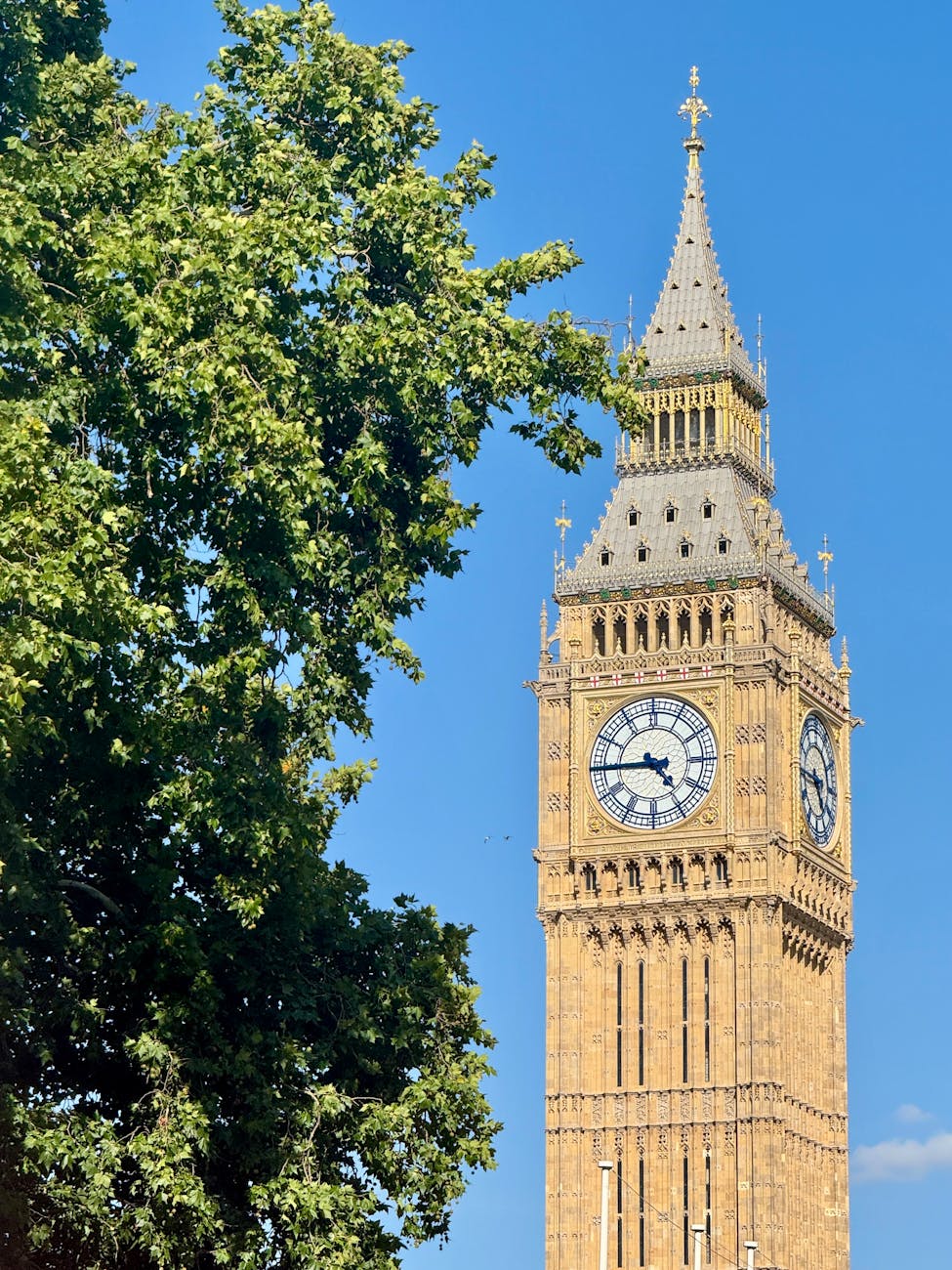
Long view

What are you most worried about for the future?

Our inclination to think of time without perspective. Short term mentality is an enemy. The thought that big problems are fixed by a wave of the hand is a human weakness. Attractive propositions are easily accepted even if their result is merely to delay or avoid the action that’s needed. Nature runs on longer timescales than our news cycles. If we are to have a future we need to take the tough road now and then.

Managing Risk After Aircraft Accidents

Let me clarify. I can no more predict the future than is illustrated in the humour of this news report. “Psychic’s Gloucester show cancelled due to ‘unforeseen circumstances[1]‘”

Predicting the outcome of an aircraft accident investigation is just as fraught with unforeseen circumstances. For a start, the evidence base is shallow in the first weeks of an investigation. As the clock ticks so increasingly, new information either confuses or clarifies the situation.

Despite the uncertainty, aviation professionals do need to try to anticipate the findings of a formal investigation before they are published or communicated in confidence. It’s not acceptable to sit back and wait to be told what has been found.

In aviation, post-accident there is an elevation of operational risk. The trouble is that assessing that elevation is hindered by the paucity of reliable information. Equally, a proliferation of speculation can escalate risk assessments beyond what is needed. The reverse is true too.

Let’s look at the difference between commentary and speculation. One is based on evidence and the other may not be. One takes the best professional assessment and the other may be more to do with beliefs, prejudices or the latest fashionable thinking.

In reality, it’s not quite as binary. Since speculation in the financial sense may be based on a lot of calculation and risk assessment. Generally, though there is an element of a leap of faith. Opinions based upon past experiences commonly shape thinking.

Commentary on the other hand, like sports commentary is describing what’s happening based upon what’s known. Sometimes that includes one or two – what ifs. In football, that match deciding penalty that was only missed but for a small error.

Commentary includes analysis and study of past accidents and incidents. Trying to pick-up on any apparent trends or patterns is of paramount importance.

Those responsible for aircraft operations, whether they be airlines or safety regulators, need to have an immediate response. That maybe done in private. Their decision-makers need to have a theory or conjecture based on as much analysis and evidence as is available. Like it or not, the proliferation of commentary and speculation does have an impact.

In a past life, one of the actions that my team and I took was to compile a “red book” as quickly as possible post-accident. That document would contain as much reliable information as was available. Facts like aircraft registration details, a type description, people, places and organisation details that were verifiable. This was not a full explanation. It was an analysis, compilation and commentary on what had happened. The idea being that decision-makers had the best possible chance of acting in a consistent manner to reduce risk in the here and now.


[1] https://www.gloucestershirelive.co.uk/whats-on/whats-on-news/psychics-gloucester-show-cancelled-due-7250094

It’s green

Daily writing prompt
What’s the most delicious thing you’ve ever eaten?

Taste is not a fixed sense. It mingles and matches other senses. Taste and smell always seem to go together. What’s delicious is more than nice. It must have a distinct context. Appearance comes into the equation too. What was delicious is a shorthand description of an embedded memory. A memory of a sensation.

My offering is a sweltering hot day. Really hot and dry. A Sicilian piazza and a desperate need for ice cream. If there is better pistachio flavoured ice-cream on the global, I’d like to taste it. Sitting in the shade in Catania[1] my spoon scooped up something special.


[1]https://www.visitsicily.info/en/localita/catania/

Shiny silver

Daily writing prompt
If you were forced to wear one outfit over and over again, what would it be?

If I remember righty, it’s a Seinfeld routine: in the future everyone will be wearing the same outfit. That shiny silver clothing so beloved of pulp fiction comics and SiFi series. Alien races will only ever see humans as being wrapped in tight body suites.

Except for the static burns occurring when brushing swiftly across a nylon carpet, I’d go for the crew of Alpha. That’s Space 1999[1] for those who missed the plywood sets of 1980’s TV. They seemed to have a dress code that made best use of their limited resources on the Moon.

A light grey Commander John Koenig outfit would be future proof.


[1] https://www.imdb.com/title/tt0072564/

Impact of Speculation

The sadness of the loss of live and the suffering of air crash victims’ families, must be respected. On 12th June, Air India’s London Gatwick bound flight AI171 crashed after take-off from Ahmedabad airport. Only one passenger walked away from this catastrophe. Additionally, there were fatalities on the ground as the Boeing 787 aircraft came down in a built-up area.

My heartfelt condolences to those connected with this tragic fatal accident.

The technical accident investigation is well underway. In time, a probable cause for this accident will be determined. This will be published and available to all. As per the international arrangements of ICAO Annex 13 a report will be published. Organisations, with appropriate expertise, will carefully sift through the evidence to establish a sequence of events. This is not a matter of establishing blame. It’s a process of determining what happened with the aim of preventing it from happening again.

Meanwhile, the widespread reporting of the accident can only offer speculation as to the details of who, what, where, when and how and why. There are facts. The time, place and the people involved. Media interviews, with whatever pictures and video recording there are dominate the public domain. However, this is far from the volume of information the accident investigators will handle. They will have access to every nut and bolt, every document, every recording.

After another aircraft accident, back in August last year I wrote: Speculation is a natural human response. When faced with a paucity of information we often put together what we know and then make a best guess as to what happened or what might happen. However, wise or unwise it’s not possible to stop speculation.

In the case of flight AI171 the global media speculation has been, and is, of a new order of magnitude. Normally, the authorities caution against giving too much weight to early conjecture. This is prudent in that the obvious is often not as obvious as it might first seem. Accident investigation can be like putting the pieces of a complex jigsaw together. Deliberately and with great care.

What has been surprising in this case is the intensity of the speculation related to this accident both through traditional and social media. The proliferation of experts offering opinions has reached a new high. Until conflict and war grabbed the headlines everyday a novel theory, or a variation of a theory has been offered. Each one chasing credibility and expanding on limited sources.

Let’s not be pious. I’m not immune from this need to fill a void. My own reasonably well-informed theories float around in my head, but I question my senses in sharing them with others. It’s not a fear of being wrong, as I might be, no, more a fear of cluttering up a confusing mass of information to an even greater extent. Piling theories on top of theories.

Can we have too much of “experts” offering their opinions? Some will be trustworthy and considered, and others will not. How far is it reasonable to stretch what little is known into detailed stories of possible cause and effect?

How is the average person going to tell the difference between sound reasoning and imaginative nonsense? This problem was brought home to me in a recent conversation. When a newspaper revelation is told to me as a “fact” when I know it isn’t, then I see the dangers in excessive speculation.

This may not matter so much to me. In so far as it affects me. However, to an air crash victims’ family this not considerate. To be led to thinking that the cause of an accident is generally known, when it isn’t, that’s disrespectful. It’s the downside of speculation. Not something that is ever going to stop, it’s true. What some keyboard warriors need to think about is the impact of their wild guesses or prejudices.

POST 1: Even reputable publishers latch on to theories that are at best well intentioned and at worse just flying a kite. Air India crash: Early speculation points to possible dual-engine failure | Engineering and Technology Magazine

POST 2: To be fair this YouTube commentator does a good job at making it clear what is fact and what is not https://youtu.be/dIgnR0zw3FU

F2F with a machine

Daily writing prompt
Describe one of your favorite moments.

Coming face to face with a Cyberman. It’s walking towards me. The crowd is clearing. I’m directly in its path. It’s got an evil stare. A dramatic sound fills the air. I don’t want to be converted into a mindless machine. Help!

Hang on. I’m standing on the floor of the Royal Albert Hall in London. It’s full to the brim with excited people. It’s hot. It’s August. How did this happen to me?

To make sense of this I can see an orchestra on stage pounding out a science fiction theme. Yes, I’m at the Doctor Who BBC Prom[1] a year ago. That was fun moment. Quite a few in fact.


[1] https://www.bbc.co.uk/events/e5drn3

Strolling

Daily writing prompt
What notable things happened today?

Mr fox strolled intently across the green field. Apologies, if in fact it’s a Mrs fox that I saw in the early morning light. His was a deliberate, nonchalant stroll. Knowing that tuffs of high grass and reeds provided cover. A stop, quick look around, and then onward. No reason to hurry.

From my window, this was not the first time I’ve seen a fox on his first light stroll. In the bright morning sunlight, there was a sheen coming off his coat. This was clearly a healthy fox. Agile, slender and strong. Unlike shy, less fit town foxes that I’ve seen wandering gardens. No scavenging from waste bins for this smart fellow.

It crossed my mind that prey must be plentiful at this time of year. Later in the day a pack of geese graze this unkempt wet land. Mixing with the Dexters. I’ve seen goslings waddling along behind their parents. Now, I suspect there are fewer of them to waddle.  

Enhancing Transport Safety

There’re claims that Artificial Intelligence (AI) will make transport safer. It’s to put a positive spin on the introduction of AI. Implying that existing safety deficiencies can be addressed with the power of AI.

It’s difficult to disagree with this simple assertion. There’s a list of risks that continue to be troubling. With directed design effort there are functions that AI can perform that mean it can have an advantage over conventional systems. With good design, no doubt high performing systems can be constructed.

In aviation, for example, if I consider the top five fatality risks, there’s a persistence of specific categories. We never seem to get away from loss of control in-flight (LOC-I) being high on that grim list. Runway related issues persist, and the hardy perennial of mid-air collision remains. Over the years progress has been made addressing controlled flight into terrain (CFIT), but that category of destructive events never disappears.

It’s fascinating to see that the industry thinks that AI itself is a risk[1]. High probability but low impact. This is considering a broad description of risk rather than a safety focus. Here the concern is related to the difficulties of practical implementation of this new technology.

Marketing people will big up the possibilities brought about by AI. This is what’s going on in relation to the most recent mid-air collision fatal accident. With sound justification given how crude elements of air traffic management are in specific locations.

We will never entirely displace “see and avoid” as a means of collision avoidance. Scanning the horizon looking for other air users. In my opinion, relying on this technique in relatively busy traffic areas is unwise, to say the least. This is where airborne AI assistants have much operational safety potential. Sucking up multiple information sources and processing masses of information to give accurate and instant advice. Such systems can be designed to give real-time updates not only to improve situation awareness but give avoiding action guidance, or even automated responses.

Let’s get back to the general assertion that AI will make aviation safer. On this one I’d be more cautious. For example, looking at LOC-I incidents and accidents there’s a complex mix of causal factors, and circumstantial factors. In addition, there’s the complexity of potential recovery actions too. Solving problems in 4-dimentions whatever the weather, whatever any damage incurred and however pilots react. This is where the probability numbers start to stack up.

That catch all disciplines “human factors” makes outcomes particularly difficult to calculate. Accidents are known where pilots and automation fight each other to produce bad outcomes.

AI is a machine. It will speedily crunch numbers in a mechanical manner. An extremely advanced manner but without emotion or, yet, not matching the imaginative capabilities of the human brain. Or for that matter the sophistication of human senses.

Would exceptional capable AI have saved Swissair Flight 111[2], for example? Sadly, I think not. On the day, likely an automated airborne system would have made the same decisions as the pilots. Decision making without the sense of precisely how the aircraft fire was developing would still have been hamstrung. I could raise other cases too.

Will AI make transport safer. In part. Not as a universal cure all.


[1] https://www.iata.org/en/publications/economics/reports/risks-2025-brief/

[2] https://www.bst-tsb.gc.ca/eng/rapports-reports/aviation/1998/a98h0003/a98h0003.html

Challenges to Liberty

We live in interesting times. Conflict and turbulence, shifting political loyalties, and rapid technology advances. What a mix.

I don’t want to say – twas ever so. That’s a resignation. To say that challenges and tragedies are of exceptional magnitude in any one era. Since forecasting is such a fragile art, better or worse maybe just around the corner.

What’s unique is our societal expectations. Whereas a serf in a feudal country had little hope of a better life. Today, our higher expectations come from generations of struggle having improved the circumstance of the individual and our communities. Improvements in standards of living, economic, social, environmental, are maintained by an adherence to the “rule of law”. However, imperfect that might be.

The basic stuff still matters. English liberties, in great part, stem from the Magna Carta of 1215[1]. It may have not been immediately successful, as Monarchs and Popes quickly tried to kill it. What’s amazing is that its core content has echoed down the centuries.

Democratic societies have taken on rights, human rights, in their simplest essence. Each of us expects a day in court. A means to defend ourselves from the exercise of arbitrary power.

Yes, for hundreds of years English Monarchs continued to assert what they claimed to be God given powers. Until that came to a head. Literally so. The English Civil War set the rights of the citizen against the arbitrary power of a King.

Where I am now there are signs of that past conflict. In fact, I can see one of from my kitchen window. Surrounded by trees, on the brow of a hill, overlooking a fast-flowing river, is the remains of a castle. Most of Donnington Castle[2] was destroyed but the gate house tower remains. The winning side, Parliament ordered its destruction.

You can understand why I get nervous when politicians assert that they are on a mission from God. Centuries of conflict have bought a citizen’s protections from arbitrary power. To see it return under the guise of personal ambition and careless action is sad.

Yes, there are lots of undemocratic places in the world where this does not apply. Even so, with all its imperfections, English liberty did spread far and wide. It made its way across the Atlantic Ocean. Constitutional practices maybe different but common law prevails.

I hope democratic societies will emerge stronger from this turbulent period. Shifting sand is everywhere. Values are being assailed. Nevertheless, there’s every good reason to believe that a strengthening of our society is possible. A progressive vision offers so much more than a backside into a dark past.


[1] https://www.magnacartatrust.org/

[2] https://www.battlefieldstrust.com/resource-centre/battleview.asp?BattleFieldId=89

Evolution Politics

Wake up John. The herald of today was there in the late 1990s. There was me fascinated by the possibilities of the INTERNET. Buzzing modem squeaking down a phone line. With such peculiarities as Y2K behind us the new century provided broadband access to everyone. Almost everyone. Eventually, being off grid became a sales tag for remote rural settings.

Meanwhile, good old-fashioned popular entertainment media was desperately trying to make itself relevant to the new era. Proliferation of reruns were not enough. Stale formats dwindled. In that maelstrom, reality television was born. Technology shaped what became possible. It was a horror to me but then again, I was just out of touch.

Big Brother is a strange beast. Watching joe average or minor celebrities make complete fools of themselves for big bucks – how could that work? It did, bigtime. Undeniably scoring with the public. It spawned lots of similar shows bombarding us with unscripted chat seen through the tight lens of an edited television show.

Not quite like throwing Christians to the lions, familiar to Romans, but a social experiment open to participants combative as much as caring behaviour. Watching relatable and unrelatable volunteers try their best to seem nice or nasty as they thought appealing.

25-years on, now British politics begins to resemble reality television. That creation provided a pathway through our screens to capture our attention. To make names out of relatively unknowns. Or to revive careers waning.

I said “begins to resemble” without realising that I’m being a dinosaur. It’s here. A politician can’t anymore stand on a soap box and pontificate about the world. The grand ark of a well written speech is destined for the dustbin. Every presentation needs to be framed as if they are in the jungle (I’m a Celebrity…Get Me Out of Here![1]).

Reality shows are becoming a training ground for political personalities. Forget the serious need to do an apprenticeship. That one has been hijacked too. The basic grind of administration and casework can be bypassed if the candidate is a good enough showman or woman.

Going back to the 1990s, I think a lot of us were naive about the coming technologies. There was an imagining of the information superhighway[2] as a great educator. A positive liberator. A forum for better communication. Making it easier for people to have a real dialogue with the elected officials. Thus, solving problems, cutting down bureaucracy and engaging communities.  

Of course it is those things. The naivety came with the blindness to the huge entertainment possibilities. How reality and make-believe can get intermingled. How dominant personalities would capture the cameras like Hollywood stars.

With that fuzziness between reality and make-believe storytelling takes on a new importance. That’s what political managers have discovered in abundance. Medium and message have always been closely linked. Now, a would-be star or demigod must take that ever more seriously to win.


[1] https://www.itv.com/imacelebrity

[2] https://www.bbc.co.uk/videos/czv20818q2no