Rethinking Taxation Strategies

The whole subject of land value tax is not one to get into if you are looking for something to read while waiting for a bus or looking for a light-hearted story. Yes, that could be said about any discussion about taxation. Probably one of the reasons why so few people engage in conversations about the nitty gritty of this subject.

LVT (Land Value Tax) is not new. This idea has been on the block for decades. One of the underlying reasons for its popularity is that instead of taxing things society likes, like business, commerce and employment, this tax scheme aims at an asset value. In a country where land is a valuable commodity, at least in populated areas, here’s a tax base that this solid.

The part LVT could play in UK tax reform is a major one. That’s where this subject gets twisty. How to get from where we are now to a new scheme that is understandable, straightforward, and acknowledged as fair. That is, at least in comparison with the existing taxation schemes.

One provision needed is to distinguish between public land to private land. There’s no point in raising revenue to fund local government and then getting that entity to use those funds pay the same tax. If private organisations lease public land, then there would need to be a provision too.

Then there’s the difficult issue of revaluations of private land such that the result is fair and genuinely reflects “value”. A city car park and a golf course are very different in that respect. Fine there is a national land registry, although there are still packets of land unregistered.

Quite a bureaucratic set-up establishing a Valuation Agency. Even if most of the necessary information is already held by lots of existing organisations. Every set of accounts is going to have value for assets held or owned. The range of accuracy of these values can be wide.

I’m not making a case against LVT. What I am saying is that tax reform is not easy. Those proposing it must have a long-term perspective. Must be committed to getting away from making ever more complicated fragmentary changes to legacy schemes. Adding ever more complexity to an unreadable tax code.  

Tax reform is not easy. Facing up to those who gain an advantage from the status-quo is often one of the greatest pressures that a government faces. Making life simpler and less burdensome for small businesses, shops, pubs and restaurants is a great ambition. Facing up to the owners of golf courses and sprawling country estates, now that’s not so easy.

Now, when I wonder what the New Year will bring it doesn’t seem that the current government is not brave enough to make radical changes. Their approach, over the last year, has been one of cautious incremental tinkering. If they have core principle, no one is quite sure what they are.

Swearing in English Culture

I do suppose that it’s my country upbringing, but that’s not entirely so. There was a set of opposing tensions that spread through society in the 1960s as much as they did in the 1660s.

On the one side there’s the authenticity of the country born and bread son or daughter of the soil in honest toil. That image of the rural artisan, painted by a famous artist, struggling with the elements to put bread on the table wasn’t as clean and tidy as the artist depicted.

On the other hand, was a spirit of bettering oneself. Elevation from the base worker day reality, up to one’s knees in muck, and practicalities of country life. Middle class, educated entrepreneurial, energies directed at improvement and modernisation.

An indicator of the side of the line that was most natural for a person was the use of langauage. Another might be the seriousness with which a Sunday church sermon was listened to. Another could be the frequency of evenings spent propping up the bar in the village pub.

Here my focus is on language. I’m of a generation who was told off for swearing. Whether at home, school or most social situations. This idea of self-improvement and good manners was handed down. It didn’t just spring from our parents’ ambitions. There was pressure to behave.

To suggest that colourful swearing didn’t happen was far from the truth. Even the highest minded tended to shift their disposition depended on the situation. Afterall, if I have had a calf stood on my toe or lost a wellington boot in deep cold mud it’s unlikely that my exclamation would have been – oh dear! that was jolly inconvenient.

Swear words are a constant. What continues to change is the meaning and level of offense that each one has attached. Casual obscenities that were thrown about like confetti may now be totally out of bounds. Calling someone a “bastard” in past times might almost have been considered a term of endearment.

Campaigners rail against suppressing free speech. Regulating what can be said. Rightly so, in most cases. That said, it’s rare that common place langauage is what such campaigners wish to protect. Even the traditional mundane ones are converted into softer tones to avoid offence.

If I think back to my childhood and market days in towns like Sturminster Newton in Dorset, then a great deal of English culture has been lost. Some may say thank God for progress. For me, the rural landscape isn’t as colourful or characterful as it once was, but what do I know?

Don’t read me wrong. I’m not calling for expletives and offensive words to spill out of every page or be heard up and down the high street. Social media is full of grossly offensive nastiness.

That’s part of my point. Authentic swearing doesn’t have to be used as a weapon. Yes, swearing in the 17th century was often used that way. Today, it’s better used as emphasis, exaggeration or an expression of despair. Like a valve on the lid of a pressure cooker, the occasional use of a rude word is a manner of relief. I’m sure Shakespeare would approve. Even he was censored.

As an expression of despair, we do need everyday tools to hand. If that’s the lively use of traditional langauage then so be it. For those who are offended please look at the bigger picture.

Lessons from Nature

I once said to Kwasi Kwarteng[1] that peak Boris Johnson passed during the early part of his terms as London mayor. Naturally, predicably he didn’t agree with me. This was in the Parliamentary constituency of Runnymede and Weybridge in 2017. I was the Liberal Democrat candidate standing against former Conservative Minister Philip Hammond. The public event we were attending was in Egham in Surrey.

Wow. A hell lot of water has passed under the bridge since that time. It’s like looking back at medieval history and trying to find a thread that links with the here and now. Governments have been and gone, careers have flourished and collapsed, Trump has been and gone and then returned and as was predicted Brexit has turned out to be a disaster.

Here’s a thought. It has always astonished me that we have a common fallacy. If a shelf regarding person who makes a lot of noise was once, even for a fleeting time, good at one job, they will be good at a loosely similar job. What a load of nonsense. So, it has turned out to be.

I’ve been watching the BBC’s series Kingdom[2]. About the animal kingdom. I know that the filming of such a spectacular series takes an enormous amount of dedication and effort. We get the pleasure of watching a well edited set of stories about leopards, hyena, wild dogs, and lions.

It’s tough out there to survive the seasons in the imposing Zambian landscape. We get to see the shifting of power between animal families and from generation to generation. It’s raw nature doing what it does and what it has been doing since the dawn of time. In what appears a paradise, nature is cruel. Rivals quickly exploit weakness. It’s going a bit far to draw a direct link between the rivals in the wild and the rivals in our parliamentary democracy. That said, there are lessons nature can teach us.

One is that top dogs don’t stay top dogs forever. They get their moment in the sun and then it passes. The fight to make a claim on a territory is perpetual. Yes, the cycles of the season have their impact and luck, good or bad, plays its part.

Two, is that a bad move remains a bad move. Ignoring crocodiles is never a good move. Wandering about without the protection of the pack is a high-risk strategy. Backing off, and fighting another day, is the best way to deal with a bigger, meaner, and hungrier opponent.

Where am I going with talk of these two different worlds? Human nature and animal nature.

It’s my reaction to seeing the scribblings of a former Prime Minister wibbling on about how dangerous it would be to reverse Brexit. Boris Johnson, that man whose star faded a long time ago, is writing for tabloid newspapers. He’s writing exactly what anyone would expect to see from those who will not learn from experience.

A bad move remains a bad move. Now, nearly ten years on, a bad decision remains a bad decision. Write what you like, it’s impossible to transform a failed project into a kind of utopia. What’s worse is to try and scare people by writing that we must tolerate failure because we once adopted a failed project is ludicrous. It’s irresponsible. It’s mad.


[1] UK Chancellor of the Exchequer from September to October 2022 under PM Liz Truss.

[2] https://www.bbc.co.uk/programmes/m002hdgh

Age Restrictions

Inevitably whenever there’s a decision as to what is age-appropriate one’s own experience comes to the fore. The experiment that is going on in Australia is one to watch. That country has taken a step towards the regulation of social media that provides defined limits. From zero to age 16 there’s to be a ban, or a restriction as the more diplomatic commentators say. One discussion could be about the whole necessity, and possible effectiveness of a ban on social media and another about the age limit that has been set.

This is one of those debates where there are good cases to be made on both sides. I could start by citing examples of harm caused, in particular cases, of social media use by children. That would reinforce a compelling argument for restrictions by law.

Alternatively, looking at the subject in the round, I could wonder at the position of young people first encountering an avalanche of social media on the day of their 16th birthday. Or the creativeness of young people in finding ways to evade a punitive law.

For me, my 16th birthday was a day of great liberation. Growing up in the countryside has lots of advantages. The downside is the effort needed to get anywhere beyond walking distance. No buses. No trains. Just a pushbike. Miles of country lanes, green fields and distant villages.

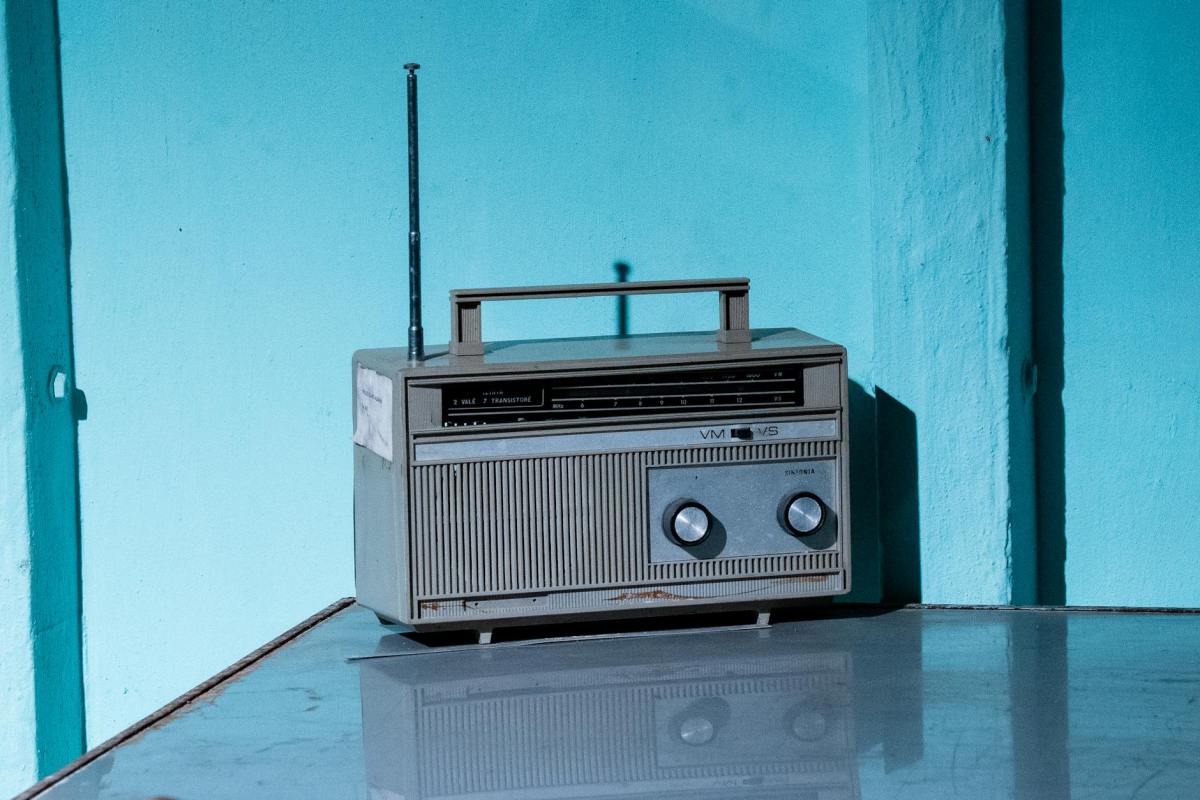
No demanding, distracting all-encompassing digital paraphernalia. Maybe a radio, cassette recorder and a pile of vinyl records. For me a couple of beaten-up cars and motorcycles too. As per the famous four Yorkshiremen sketch: try telling that to the kids of today.

Yes, my 16th birthday was a day of great liberation. That because of the law. I wasn’t alone. It was there for every schoolboy who could afford one. Shiny in the showrooms. Names like: Fantic, Gilera, Garelli, Yamaha, Suzuki and Puch, were all on our list of wants.

In December 1971, the British Government create legislation that restricted 16-year-olds to 50cc mopeds (motorcycles with pedal assistance). This was a worthy effort to improve road safety and reduce the carnage of motorcycle accidents. What was unexpected was the frenzy of innovation that this well-meaning law triggered. Motorcycle manufacturers set to their drawing boards and radically transformed the moped. I do mean radically.

I came in at the end of this era. By early 1976 manufactures had squeezed every drop of performance that was possible out of a mere 50cc engine. Designs had gone from uncomfortable, sluggish commuter bikes that would feel embarrassed to own, to sporty fast racing machines that were extremely desirable.

Ah, the unintended consequences of worthy legislation. For me this was wonderful. It opened a whole new vista and introduced me to one or two roadside hedges. Waiting for me on my 16th birthday was one of the best. A Puch Grand Prix Special. In black and gold, this really was a fast and refined two-stroke machine. Even with cast alloy wheels and a front disk brake, which was whizzy for the time. Racing along the main A30 the bikes gearing was such that I went fastest downhill, while my mates Garelli overtook me going up the hills.

What can I say? When it comes to age-appropriate the results may not be what is intended.

Note: Reference: Funky Mopeds! The 1970s sports moped phenomenon. Richard Skelton. Veloce Publishing. ISBN 13 978-1-84584-078-5  www.veloce.co.uk

Arborist Adventures

Funny how we attribute a problem to a nation. I’m sure it’s not the fault of the Dutch. It’s more the fault of the Canadians. To be fair, it’s nature rather than anyone’s fault.

One of the enduring memories of my childhood is looking out of a bedroom window to see the most enormous line of tall Elm trees. Running east to west, these magnificent trees were a dominant feature of the skyline. Looking south, towards the wider Blackmore Vale, they created a screen of green in the summer. Tall stately trucks in the winter. Maybe the central ones measured four or five feet in diameter.

Today, the view, on a clear day, extends all the way across Dorset to Bulbarrow Hill. Close by, no tall trees to obscure the view. Far off, on the top of the hill the telecommunication masts tower above the trees. Across the valley there’s nothing but treetops to be seen but few if any Elms.

The fate of the Elm trees is a sad one. Dutch elm disease wiped them out. From the 1960s, more than 25 million trees died across the UK. Other species have taken the opportunity to occupy the spaces left by the Elms. However, hedgerows have been lost as framing practices have changed. Trees a plenty but not so many as past times.

This week is national tree week[1]. I didn’t even know that until a visit to the RHS[2] at Wisley. I’ve had an RHS membership for about three years. Any time I’m in the vicinity of Wisley, I make a visit. That’s not been so easy of recent. The monstrous road works, planting a motorway junction of vast proportions in the area has been awkward to navigate. Nature is trying to coexist with traffic, tarmac and concrete.

I learnt that there are a couple of thousand trees at Wisley. Lots of variety. Being RHS, a staff to maintain them in good condition. Experts with chainsaws and ropes to prune the dead limbs and make the most of any wood that comes their way. What I’m referring to is a highly entertaining lecture given by one of the young arborists who manages trees on their site.

There’s a lot more to managing trees than first meets the eye. Safety is one of the major considerations. Especially with an extensive garden that receives thousands of visitors. Rotten branches falling from great hight are not something to wish to encounter unexpectedly.

I get the distinct impression that, like a Cirque du Soleil show, arborists love nothing more than hanging upside down from flimsy looking branches. Constructing elaborate schemes of ropes to navigate the treetops. With pride, the lecturer had videos of scampering amongst the high tree limbs. Not a place I’d go. They’re a cross between tree hairdressers and surgeons. Rearranging, chopping, crafting, diagnosing and amputating at the same time. Not a job for a heavy-set person who has a phobia of hights.

The message here, for the week, is not to take the wonderful diversity of trees in the UK for granted. They do need nurturing and replacing. For the most part they do nothing but good.


[1] https://treecouncil.org.uk/seasonal-campaigns/national-tree-week/

[2] https://www.rhs.org.uk/

A New Customs Union

Let’s not put up taxes. Let’s trade more. Seem obvious. Well not in late 2025 in Britain. This possibility must be forcefully put on the agenda for debate in parliament. Raise revenue, rather than raising new taxes, has got to be the better way to go. The bigger the pot the more chance that a government has got to balance the books. Taxes have their place but not to be the default opinion, in all cases.

The Labour Party has been talking the talk on growth in the economy but frequently marching in the opposite direction. It’s as if they embrace the comfort blanket of domestic tax increases too readily without thinking of the long-term impact. Habits are hard to change.

Before, what a majority agree was a mistake, Brexit, trade with our next-door neighbours was in a much healthier position than it is now. We’ve (UK) created barriers and obstacles that have diminished our trading position to no advantage whatsoever. Coming up for a decade of backward thinking.

In parliament, the Liberal Democrats are tabling a bill that calls for creating new Customs Union (CU) with the European Union (EU).

What is a CU? Simply put, it’s a trade agreement between countries to abolish tariffs on the goods they trade with each other. So, instead of barriers and obstacles to trade, the whole process becomes easier and cheaper.

Yes, such an agreement with the EU would have implications for relations with non-EU countries. What I’d say in that respect is that such negotiations with non-EU countries on tariffs haven’t been going so well in the last year. The UK has been buffeted by the policy of other nations, where their policy often spins on a dime. On / off fragile agreements don’t add enduring value.

Such a new CU with our next-door neighbours would boost the UK’s GDP by a significant amount. A boost of £25bn a year for the public finances is predicted. Thus, the growing demands that drive for domestic tax increases would be abated or at least be affordable.

Do you remember? So, many advocates of Brexit said we’d never leave the CU. It’s easily forgotten but some of the most ardent Brexit supports were saying this to the electorate. In essence being untruthful.

Back in January 2017, the Conservative Prime Minister (PM) of the time confirmed that the UK would not remain in the EU CU. What a massive mistake PM May made. The repercussions have been devastating for businesses and the public up and down the UK. It was an act of disfigurement that damaged our economy for nothing more than political dogma.

Sadly, we are where we are. I wouldn’t start from here. Wouldn’t it be great if negotiations started to take the UK into a new CU with our nearest, biggest trading neighbours and partners.

Sadly, the way the parliamentary vote will go is rather predicable. The Labour Party, in its current form, is not the internationalist Labour Party of its history and traditions. Currently, government support is not forthcoming. They prefer to talk the talk without walking the walk.

Post: Fix Britain’s Trade – Liberal Democrats

UK’s Digital Dependency

Under the title of “Culture” The Guardian newspaper offered an article that caught my eye this weekend. The author, Tim Wu was offering a point of view about the economic landscape that we inhabit in Britain. The theme was the drift that has taken place whereby we find that a huge dependency has grown-up over the last couple of decades. That is the unassailable dominance of a small number of US companies throughout the whole of our country.

What am I using to write this remark? It’s a computer program called “Word” sold to me by a multinational company called “Microsoft.” What’s strange is that this way of expressing my relationship with Microsoft isn’t commonplace. There’s a tendance to treat software, like Word as if it has always been with us and always will be. Like the public roads I drive my car on. Completely taken for granted. That is until a problem arises.

This Saturday article wasn’t about computer software per-se. Although the world of computing is riddled with intellectual property rights there remains a kind of openness to new ways of doing business. Digital ones and noughts are like the text on this page. They can be rearranged in all manner of diverse ways. The combinations and permutations are almost infinite.

Tim Wu argues that we should look to the way transport systems developed as an analogy to the electronic communications infrastructure we use.

Roads developed in the era of the horse. More than 200-years ago, before the time of the railroad. In fact, they go back a lot longer than a few hundred years ago. The Romans were particularly good road builders. However, that was a state enterprise aimed at getting armies around a sprawling empire.

The condition of roads in Britain took a leap forward when commercial enterprise found a way of getting an income from the primary land transport system of the day. Road tolls were a way of building and maintaining a network of highways. This network was physical. Fixed in place.

Digital infrastructure is more than cables, wireless systems, and databanks. Without the human interface all that extensive structure is unusable. That’s were a small number of US companies dominate the marketplace. This complete extra territorial dominance is, like my comment about Word above, taken for granted.

Tim Wu’s analogy doesn’t cut the mustard. It does illuminate an inconvenient truth. The reason the big US companies are driving the future of communication and technology is because they have captured a massive global income stream. However, much of that position depends on the laws that prevail in each nation. That prevail at a time when globalisation was seen as almost unquestionable. Now, the question arises has national sovereignty been sacrificed on the alter of progress? If so, what next?

There’s often been a hard kick-back against anticompetitive behaviour. Monopolies are not considered the best way to serve the public interest. Nevertheless, throughout history they have been pivotal in our story. Like it or not, that’s how the elegant country houses and castles of Britain were paid for and furnished. The same experience can be witnessed at the Newport Mansions[1] in the US.

How do we democratise rapidly advancing technology? There’s a mighty big question.


[1] https://www.newportmansions.org/

Adapting to Climate Change

Owned experience is more real than the theory, or the machinations of commentators. Yes, I know climate change and the weather are two different phenomena. My local weather is a part of the equation, even if it has its own life. Living in a shallow river valley in southern England there’s bound to be an element of a microclimate. A little warmer than the sounding chalk hills.

Last night, the rain fell. At about 3am it was ponding the roof tiles. Coming down like stair rods. Dislodged moss on the decking. Making the dark seem darker. Soaking the garden. Water butts that spent most of the year empty, full again. Whereas the water table sank to a depth in the mid-summer. My garden’s soil was hard. Compacted dust and flint in places. Now, it’s as if the ground water has risen to the surface. No place untouched. Grass as green as it has been. Squelching underfoot.

What’s chiming with me is the marked difference from past times. It’s November. The year is coming to an end. For decades past it would be perfectly normal for there to have been at least one hard frost. One of those occasions when the water in the bird bath becomes a solid frozen block. A glistening white cover of the grass. An end to the growing season, for sure.

Looking out of my kitchen window I still have plants in flower. Piles of sodden leaves. With one or two trees still reluctant to give up theirs. The seasons reluctant to move on. More chance of flooding than frozen ground.

Climate change predictions are that rain is likely to become heavier in this part of the UK. Floods to become a more regular occurrence of warming winters. The ground absorbing much more rainwater. River levels staying higher for longer.

What impact this seasonal flip-flop will have is open to question. Dry summer ground as hard as concrete. Wet winter ground constantly saturated. A more rapid change from one to the other.

For a gardener, certainly, this needs to be considered when planting. Seeing what plants will flourish in these changing circumstances. At least, I did invest well in one new willow tree this autumn. It’s about eight foot high and leafless. I’m expecting it to bust into life in next spring.

POST: As if I’d called it, the temperature has started to drop. 2C this morning. So, maybe the point is not that the seasons are changing, which they are, but more the moment of transition from one to the other is changing.

Public Broadcasting Value

It seems to be the season to have a downer on the BBC. As the gloomy light of winter gathers all around. The trees are shedding their leaves and that hunkering down mentality is invading my thoughts. Lawns no longer need mowing. Soden with moss and leaf fall.

I understand the dislike that partisan commercial broadcasters have for publicly funded broadcasters. The question of a “level playing field” and “bias” is always likely to come up.

Making a living from commercial advertising is highly competitive. Demands never stop. Seeking income from a marketplace that rises and falls with fashion and fad. That’s hard. Admittedly, there’s the compensating factor of wealthy benefactors or owners, prepared to make a loss, pumping funds into like minded companies. Shifting sands of political influence.

So, looking across the aisle at a major broadcaster that gets funds from the public, as a matter of law, must seem rather disconcerting. Certainly, it’s the sort of issue the wealthy benefactors or owners of media are going to kick at. Some to the extent of wanting to destroy chartered institutions with an ethos unlike their own.

What is a “level playing field” in the British media landscape? Can there ever be such a thing? That’s not an easy question to address. Shifting sands of public likes and dislikes shape the playing field (sorry about the metaphor overload). What might have been considered as independent, objective and neutral in the 1990s is way different from that now, 30-years on.

The British media landscape is not static, nor should it be so. In the period of three decades digital communication has advances at lightning speed. The sheer diversity of channels of communication has multiplied (even if they do repeat the same messages).

One sign of a healthy debate is the self-flagellation that the BBC often undergoes. As an institution, doesn’t it like to agonise about itself. With good reason considering some of the grave errors it’s made in the past. Supporting presenters whose behaviours have been found to be appallingly bad, and even criminal.

Let’s not tar everyone with the same brush. To be able to make mistakes and then correct them, with a good degree of learning in-between, is a strength. Some partisan commercial broadcasters seem unable to do this with any conviction. They just move on.

A publicly accountable broadcaster has no choice but to stand in the dock and take a reprimand, when appropriate. That’s no reason to shut it down. It’s a reason to make sure lessons are learned and not forgotten.

Doing a simple intuitive cost-benefit analysis. Taking the BBC as an example. What it offers, when it works well, far outweighs the costs. Listing three points, these have significant value: unifying impact of having a trusted national broadcaster, quality, broad base and originality of its output and editorial independence (not selling products or ideology).

Overseas critics may get upset, now and then, but that’s for them to get over. There’s no way such critics should shape the future of the broadcast media in Britain. That would be untenable.

Reinventing Debate

Once upon a time. A wise sage of great age, a not so bright mean-minded troll, a flighty light-headed dreamer and a jobsworth cog in a lumbering bureaucratic machine all met round a table. Bright lights shone on them so they could not see the masses assembled in ranks who had come to gawk at them in their deliberations.

What a strange tale can be told of their troublesome quarrels. To keep the peace, rarely with success, a queen of spades presided over their preordained disorder. Weekly viewers were invited to take a winding decent down the rabbit hole. Rarely was that rabbit hole decked with anything other than predicable hewn earth.

That’s how I think of the BBC’s Question Time in 2025.

Once upon a time. A programme of thoughtful debate, conducted by articulate men and women who wrestled over current affairs, each with a slice of insight however different their perspectives. Painting contrasting visions of the rights and wrongs of the day. Getting to the heart of the matter as their chairperson questioned and tested their opinions. Or so I thought.

Whereas I’d only hide behind the sofa when the Cybermen stomped around on Dr Who, now I desperately search for the TV remote control whenever Question Time is announced.

It’s not that I don’t enjoy debate. Far from it. It’s a wonderful thing to witness, if it’s done well. Honest debate is much needed given the complexities of our world’s trouble. The idea that everyday people question those who make a career of espousing their opinions is undoubtably a sound one. A little slice of accountability is a powerful medicine.

Sadly, a programme format, that was created for black and white TV, lingers on like the ghost of a smartly dressed long-gone presenter. The audience is treated as if they were merely brought in the shout and howl like citizens of Rome, as the lions’ devoir some poor sap. Playing the crowd both at home and in the theatre, the chosen names of the day become as predictable as cabbage butterflies seeking cabbages.

My fantasy would be to have a real-time on-line forum. A virtual and physical place where answers to questions and rational opinions could be sought. No lack of drama but where the focus was on discovery and inquiry. Another dimension that takes account of the new media landscape. That is, providing a civilised and respectful space where, by the end of the show advancing new ideas or changing minds becomes possible.

If regular topical debate just means reinforcing polarisation the rabbit hole will get deeper. Much deeper. All sense of common sense will be lost. A routine of gainsaying each other will thunder on as a pointless parade. Like an ever-darker version of The Prisoner. I’ll switch off.

#BBC