Understanding Conspicuity

It’s a weird word. That’s if you have not come across it before. How it’s used depends a lot on the context. Conspicuity isn’t everyday langauage.

One way to picture this word is to imagine a cyclist on a busy but poorly lit road. This is a case every driver has observed, I’m sure. Let’s consider two distinct cases. One where the cyclist is wearing dark cloths and riding without lights. The other case is where the cyclist is wearing a luminous jacket and is riding with lights. No prizes for guessing which one is the most conspicuous. Not only that, but the one who is less likely to be involved in an accident.

This is a simple two-dimensional space where two vehicles, or more, share a road. Both have a right to be there. However, one road user is much more vulnerable than the other. Being noticed, being seen, is key to a rider’s safety. Not a guarantee of safety. A necessary consideration, if not a mandatory one. Both driver and rider need to see each other for there to be safe operation.

In aviation the situation gets a whole lot more complex. For a start flying objects move in three-dimensional space and at speeds that can differ dramatically. From a static ballon to a fast military jet. Yet, just like driving on the roads the most basic way of avoiding collisions is to see and avoid. Naturally, there are a whole collection of rules of the air that wrap around that requirement. These rules set-up expectations that pilots will behave in predicable ways.

As technology has developed so the reliance on see and avoid has changed. Recently, I have found this is happening on the roads too. Sensors on my new car provide an autobraking function that kicks in when approaching a slower moving vehicle ahead. There’s a tracking function that nudges the steering wheel when drifting across a white line. Both forms of safety automation can be deselected. Do they result in fewer collisions? I don’t know.

There’s another aspect of flying that is an obvious difference from life on the roads. When collisions happen those involved are not going to stay put. Gravity will do its job. If an impact is sufficiently severe then it’s highly likely that one or more aircraft will not be flyable. An incident turns quickly into a catastrophe.

Thus, in aviation it’s vital that not only does each pilot need to know where they are but they need to know about everything around them. The condition of being conspicuous is not optional. It’s best if aircraft are easy to see. Surprisingly, this is far from always being the case. Unlike the lines on the roads, paths in the air crisscross and aircraft can be above and below one another. The geometry involved can get extremely complicated.

In the 1920s, innovations in Croydon[1] led to the world’s first air traffic control system. A growing amount of air traffic meant that a means had to be found to regulate their use of the air space. This was possible because an electronic means of aircraft communication had become viable.

The subject of Electronic Conspicuity[2] has come on in leaps and bound ever since. Finding ways of sharing awareness of everyone’s situation has made aviation safer. Radar and aircraft transponders are an integral part of commercial flying. This story doesn’t stop. I could go as far as to say that this whole subject is still in its infancy. With ever more airspace users demanding access then innovations continue to be absolutely vital.


[1] https://www.flightglobal.com/ops-safety/2020/02/colourised-images-mark-centenary-of-worlds-first-control-tower/

[2] https://www.caa.co.uk/General-aviation/Aircraft-ownership-and-maintenance/Electronic-Conspicuity-devices/

The Power of Words

Two hundred and fifty years.  It’s good to see and hear that we still have decent speech writers and a monarch able to deliver an address with immense style and a fair degree of humour. This week, King Charles III delivered an important address to a joint session of the United States Congress. It’s a wonderful reminder that the spoken word can be powerful.

Now, I’m not saying that these good efforts will change much in respect of world affairs. In fact, my view was that the King may have chosen a better time to make the trip across the Atlantic. Nevertheless, what is, is. If nothing else the perspective the King offered is one that looks over the whole of the experience of relations between the UK and US. Not focusing on the aggressively tribal and divided polices of the moment. Perspective is so important.

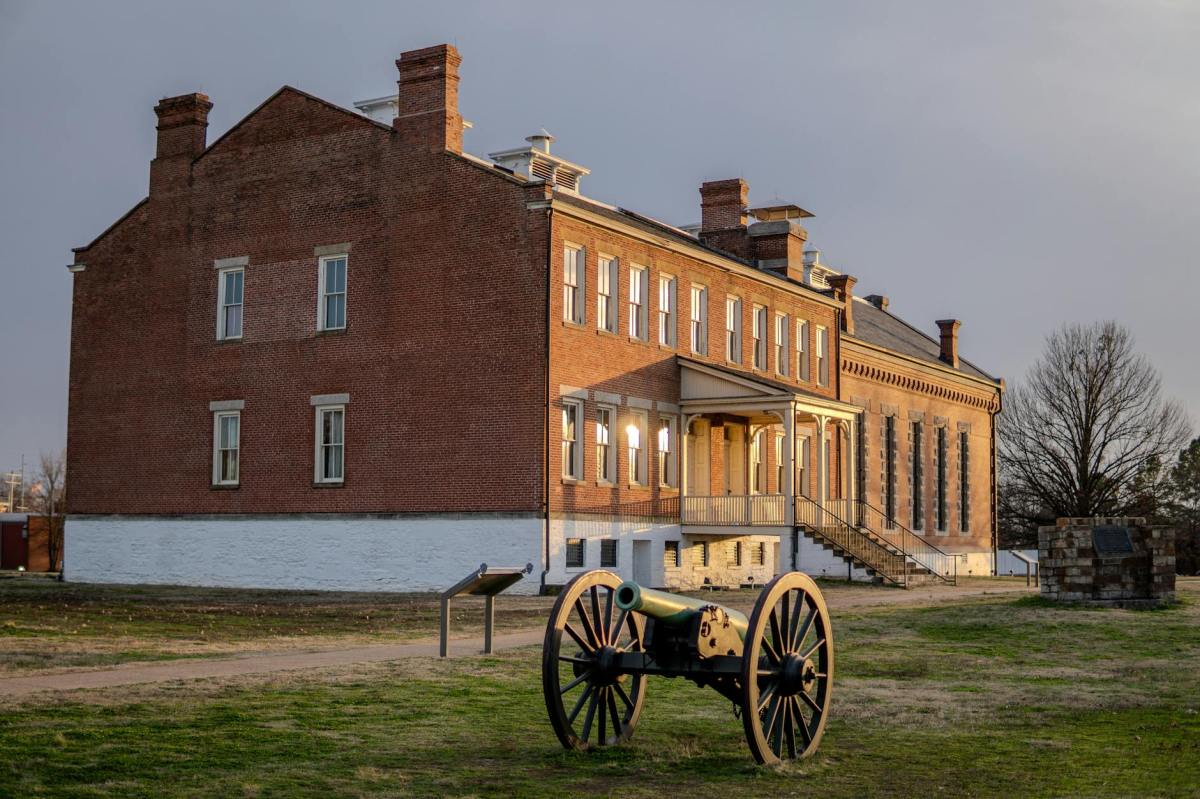
The reference to the history about the British burning down the White House, in a raid on Washington, was one I knew. It was part of a story I learned when visiting Baltimore years ago. Walking around Fort McHenry[1] and thinking what it must have been like when the battle raged. 1814 was a turbulent year.

The forging of independence was ferocious. It wasn’t actions that passed quickly or in one simple sweep. If I remember rightly, events were such that they could have gone either way. There were plenty of Americans who questioned the fight as much as there were those dedicated to it.

Here’s where I’m going. One of the factors that shifted the ground was not the cannon and the riffle. Although war did much to determine the outcome. In the end, it was too costly for the British to continue and the Americans were unrelenting and well organised. To fight and win, motivation is at the heart of the matter. There’s got to be compelling reason to commit all the energies needed. To take on all the inevitable risks and suffer the losses.

This is where the name Thomas Paine comes up. Described as an English-born American. He certainly was English, and thus British. He was a writer. Not a warrior or a politician or even a wealthy man. A simple object. A pamphlet stirred the emotions in a way that fired revolution.

He’s best described as a radical. What that means is a person with the ability to light a fire. To take people on a journey from one place to another. That’s frequently met with discomfort, prevarication and grudging reluctance. There’s every reason in the world not to upset the apple cart or to be content with the status-quo. A true radical will not accept this condition. They are not the easiest of people to live with and often come to a sticky end.

There are two things at play in this story of “modern” history. One is the power of the writer and the other is the medium itself, the pamphlet. Both are required for a storm to brew. Both need to be in tune with their times. This is not merely a story of history. Before and after, Paine there were writers and pamphlets but none that resonated so effectively at a critical moment. Thus, words gave momentum to change that stuck.

Today, there seems to be a surfeit of thinkers and writers. The problem is that none of them seem to be sufficiently in tune with the core of our society. The other problem is the medium for dissemination. New pamphlets exist in digital form. Social media is the river that carries the day’s espials, chronicles and visionary tracts.

In 2026, can someone capture what we want, write it down and draw a crowd around it? I think they can. Where are they?

[And it doesn’t have to be more than 90 pages long.]


[1] https://www.nps.gov/fomc/index.htm

Unity and Diversity

Ironic isn’t it. From the point of view of the pound in my pocket international trade, globalisation, is as important as it ever was and at a time when politics is getting more nationalistic and polarised. A ships captain stresses in Arabia and my car becomes ever more expensive to run.

It’s election time. Good luck to the Welsh nationalist in their bid for power. However, if anyone voting for them thinks it will make them richer they are probably going to think that even if an asteroid hits Cardiff. Much the same has been the Scottish experience.

In turbulent times, and all other times, we are stronger together. Sorry to use that slogan again. It’s a good one, but it proved to be bl**dy useless during the Brexit campaign ten years ago. Today, there’s certainly a need for European solidarity despite the separation that took place. Whether it’s in people’s hearts as well as their minds is another thing.

Solidarity is a wonderful instinct unfortunately it plays on many levels. For me, the United Kingdom is a construct that has served us well even if it is difficult to manage. What I mean is that unity has not brough a fair distribution of life chances and prosperity across the whole nation. To counter that it may be as well to say that solving problems in declining industrial communities can be so much different from solving the same problems in vibrant and dense city neighbourhoods.

Another slogan that gets banded around is the notion of no one left behind. It’s to point the figure at places that have suffered gradual decline, coastal communities and former sites of heavy manufacturing, and to say they should be special targets for help. So, they should be given support. However, it’s not just money that needs to flow from thriving prosperous areas to hard hit ones.

One policy that doesn’t often work is the purely restorative one. A case of trying to recreate the past. Bring back the fishing boats or reconstruct the fossil fuel industries. Equally, making their rusty remains into tourist attractions and museums has a limited shelf life.

I think the first effort must be to get at the soul of a place. Not just amongst nostalgic older folk. That strange meld of culture, community, history, geography, that has a uniqueness about it. What makes young people want to stay or leave?

The Welsh experience is one to note. Let’s take a place that has seen massive changes. The Llanwern steelworks site dominated the Newport[1] skyline for a century. Heavy industry. Coal and steel were key to the modernisation of Britain after the war. In recent decades, decline and uncertainty have been constant bedfellows.

What’s positive in this story is the resilience of the region. The reinviting back of nature. Continuing pride in heritage. Exploring opportunities for the future. Potential, sometime dormant, needs ambition and optimism. This is not a time to look inward and build more protective walls. Interconnection and interdependency are facts. We must make them work for the whole community.


[1] https://www.cityofnewport.wales/en/Home.aspx

Young People in Britain

You know, I find this argument so utterly tedious. Economics can be boiled down to old people verses young people. Polarising policy debates and setting one generation against another.

The UK Reform Party are pushing a commitment to the triple lock on state pensions. Not because they believe British pensioners deserve a good deal. No, it’s populist bandwagon to lock in the vote of one generation. Knowing that there’s a higher likelihood of older people voting for them than younger people [According to opinion polls].

It’s true that there’s a madness that has overtaken the British mentality. However, it’s not new. The value of land and property far exceeds its utility. The marketplace has been one of ever forcing a finite commodity to a higher price. The owners and inheritors of land and property have gained whilst its has become harder for younger people to get a foothold.

There have been different times. I remember my father talking about the inter-war period. It was of his father’s time. Practically farmland could not be given away. Estates were broken up. Labour was short. Taboos were challenged. The dynamic of marketplace for changed.

However, in the post-war period, the last 70-years, the cost of a modest dwelling, as a ratio of average earnings, has rocketed. Ownership of land and property has become concentrated.  

British humour addressed the situation in a famous TV sitcom. As said by the character Del boy over breakfast – this time next year, we’ll be millionaires. Only Fools and Horses captured the aspiration. Only that Del boy though it was second-hand cars that would lead to riches. Now, Office for National Statistics (ONS) data shows that roughly 27% of people aged over 65, in Britain, live in households with a total wealth of exceeding one million.

So, what do we conclude? That this pot of wealth has been taken from young people in a transfer from one generation to another. No, that would be playing a sectarian political card worthy of an unprincipled populist. A foolish strategy too.

Deep within British culture there’s an attachment to assets. This particularly goes for commodities that are restricted in supply. Remember Del boy got his wish in the end. Antiques saving the day. Now, amongst most popular TV shows is the Antiques roadshow.

Maybe it’s a latent mistrust of bankers. The shady image of people who hoard money for the sake of hoarding money. In Britain, holding land and property are seen to be a stable assurance of long-term security. I’ve heard it said about land many times – they don’t make it anymore.

The tragic element here is not that young people finding it harder to become just like their parents. To harbour the same attitudes towards land and property. It’s more a question of society undervaluing their contribution to prosperity. Now, and in the future.

It’s pure idiocy to set one generation against another. It’s a mean political trick. What does need to change are the rungs on the ladder, especially at the early stages of life’s journey.

For example, the law in respect of student loans is dire, unjust and unsustainable. Making young people pay a higher marginal rate of tax, when early in their working lives is abysmal. The government penny pinching of education funding and thinning out of courses is short-sighted in the extreme. Apprenticeships must be substantial not hollowed out routes to poor rewards. The world of work [and leisure] is changing more rapidly than it ever has in the past. It’s imperative that society equips young people with the tools needed to navigate a complex and dynamic world. It’s not generous to make a priority of all aspects of education and training. It’s absolutely essential.  

Human Space Travel

It’s right to point out that space exploration is not solely a scientific endeavour. It’s odd to have to point that out. I do so because there are some purists who think that money should only be spent of space exploration if there’s a tangible scientific gain to be had. This thinking goes back to the agreement that public funds should only be spent of Earthy concerns. A glance at the extensive list of trouble that persist around the globe is one reason to focus on Terra firma rather than up at the heavens. That said, the choice is rarely simple.

Then there’s the accusation that exploration, of any kind, is intrinsically imperial. Powerful entities looking for sources of future dominance and wealth. This is not entirely wrong given humanity’s history of plundering resources from wherever they come. Minerals and trade routes being a couple of the primary sources of interest. A strong political will can be amassed to compete to be first to get a foothold on new territory. Despite all the above there’s something more complex going on.

The recent Artemis II space mission may not have been a great boost to humanity’s scientific knowledge. This adventurous lunar fly-by mission was more about proving technology than gathering an abundance of discoveries. Afterall, the far-side of the Moon can quite adequately be surveyed by automated spacecraft. Much as is being done by robotic machines on Mars.

I think there’s little doubt that 1st to 11th April 2026 will be recorded in the history books. If for no other reason that the gap between the Apollo space missions and Artemis. Like so many schoolboys in the 1960s, I watched those black and white TV images of men on the Moon, as they happened. I became an engineer. Would that have happened anyway? Probably, but I’m not discounting the inspirational impact of the Apollo missions.

[What would we ever do without the writings of the ancient Greeks and Romans. Certainly, naming new space missions would be a lot harder.]

Do we need crewed missions in future? Given the advances in automation and autonomy that have taken place in the last 50-years, so much can be achieved without the need for humans on-board a spacecraft. However, this is not a binary argument. There are, and always will be, the need to take human experience to the absolute limits. President Kennedy cited George Mallory for a reason to explores space, “Because it’s there,” he said.

The simple notion that humans should be constrained and confined to Terra firma runs contrary to our intrinsic nature. Although societies do become more risk adverse as they acquire the comforts of economic success, there’s still an appetite for exploration even if it entails great safety risks. The allure of being the first does not diminish.

Ideally, the combination of adventure and discovery go hand in hand. Space exploration is not just indulging the most adventurous amongst us. Thus, I go back to my proposition that there something more complex going on.

The ancient Greeks and Romans could help. For what is humanity’s destiny? Ad Astra has a meaning. Far more than the movie of that name. Not one of my favourite movies either.

There’s an inevitability that humanity will go to the stars. That is, if in the meantime wars or environmental degradation do not consume us. Exploration is part of a natural progression of intelligent life. It maybe (likely to be) happened elsewhere in the universe too.

Understanding Primary and Secondary Legislation in the UK

Clear again is the conservative politician’s propensity to trade on ignorance. Remember the slogan of the big red bus of the Brexit campaign. All the abject nonsense that was said and written in 2016. It would be extremely charitable to call these intentional inaccuracies. There’s a three-letter word that sums them up. In theory, Parliament has rules. In practice, those rules are abused. That is until miscreants are exposed. Those politicians that misled the House of Commons over parties in Downing Street during the COVID pandemic shouldn’t be forgotten.

It’s a simple question. How many people know the difference between primary and secondary legislation? As far as I know these aspects of the UK’s method of making laws is not taught in schools. I think it’s vital that people of all ages get the opportunity to explore how their democracy works. Including its inherent peculiarities.

[Here’s a national event, later in the year, which can help. It’s free and already possible to plan for UK Parliament Week in November 2026[1].]

Back to the difference between primary and secondary legislation? A tabloid newspaper editor may see that question and fall about laughing. On the basis that the subject is not widely understood, instead of explaining, they may choose to write any drivel that serves their agenda. Day after day this sleight of hand provides bold headlines and support for misleading political campaigns. Then, if the truth pops its head above the parapet cries of Fake News ripple through the right-wing media.

By the way, the sad fact about this common distortion is an erosion of trust[2]. It’s no wonder that Parliament can be seen as remote from real-life. It’s regular inhabitants a strange breed of people who go native as soon as the walk through its hallowed doors.

During the UK’s membership of the European Union (EU) it expanded. In certain specific technical areas, its “competence” grew. Member States agreed to give it new roles and responsibilities. As an example, before aviation legislation was harmonised in Europe, national legislation had to be amended to accommodate every major change that developed. In the UK, both primary and secondary legislation were applied. They are now. That consists of a UK Air Navigation Act and an Order[3]. The Act being the primary legislation and the Order being the secondary legislation. These two rules are not new as they have been part of the UK’s national aviation landscape for decades.

Above here I’ve kicked at the UK’s tabloid media. Well, they are merely doing what they have always done. There’s something in morbid consistency. What’s more disturbing are the lines being taken by a national media that might be expected to be objective. Read this short article and the predisposition shines through, and this is the BBC[4].

Sir Keir Starmer is planning a law which will mean that the UK government can adopt EU single market rules, without a normal parliamentary vote.

One, it’s the personalisation. This is the government of the day and not an individual. Two, it’s the incorrect use of the word “normal.”  As I’ve stated, secondary legislation is perfectly normal. In fact, the UK’s normal regulatory structures depend upon it being in place and up-to-date.


[1] https://www.ukparliamentweek.org/en/sign-up

[2] https://fullfact.org/media/uploads/full_fact_report_121021.pdf

[3] https://www.legislation.gov.uk/uksi/2016/765/contents

[4] https://www.bbc.co.uk/news/articles/c937jkvp3w8o

Modern Polymath

It’s easy to conclude that there’s no such thing as a polymath in the 21st century. So expanded is the field of human knowledge that no one person can have a sufficient overview of every academic, cultural, political, and economic discipline. Not only that but the ability to articulate concepts and ideas in an understandable manner.

If I were to think of a classical polymath, I’d instantly go to American Benjamin Franklin. It’s even how he is described in literature. Here, I’m going back to the 18th century. In the multimedia age, there are numerous influential intellectuals who have become spokespersons for their discipline, but none stride across a vast range.

We segment and partition knowledge, and pepper it with dedicated terms, that it’s way more than a human head full. Specialisation is both a curse and a God send. Generally, the intensification of study of each and every subject has been a bonus to human progress.

There’s become an excess in manipulation of language to suite each scientific endeavour. That goes for politics and economics too. Particularisation does tend to create distance between those who dig deeply into specific subjects.

To help unravel ingrained complexity there’s a respectable number of writers and YouTubers who try their best to communicate. If anything, the demand for this skill is increasing as we move from the traditional paper-based publications, say New Scientist, to the myriads of social media platforms. Then the issue becomes which one speaks with authority.

I started this piece with a thought in mind. It really was to say something complementary about the BBC. Yes, a media organisation that gets a fair share of criticism, but the world would be a much poorer place without it. Its roots are deep.

A popular British pastime is quizzing. That has played a part in TV and Radio since they were invented. A quiz is both entertaining for the participants and those who look on. Like a modern-day mediaeval tournament, a display of quick thinking and astonishing depth or range of knowledge. A test that allows us all to take part even if we come away all too aware of how little we know. Not so much unsettling as a quick return the earth.

Is there’s no such thing as a polymath in 2026? As an avid watcher of the BBC’s University Challenge[1], I’m struck by the breadth of questioning and the ability of the teams of students to find answers to the most tortuous questions. Obscurity knows no bounds.

On questions of famous paintings, I have a preprogrammed response. It’s either Titian or Tintoretto. It’s surprising how many times that works. Try as I might, I rarely get into double figures however much I guess. It’s always worth a punt. Sitting in the back if my memory are facts that I’ve no idea how they lodged there over the years.

Watching the winning teams of students, I do wonder if the notion of a polymath is dead. It does restore my faith in the infinite variety of human capabilities. This counteracts the fancy marketing blurb that accompanies machine learning software. Practically, humanity is far from becoming obsolete.


[1] https://www.bbc.co.uk/programmes/b006t6l0

Lost Opportunities

It’s kind of odd. The wacky folk who still argue that the Brexit referendum was a good thing. For one or two well-heeled people that might be the case. It’s not the case for the overwhelming majority of British people. Maybe one issue is that it’s so difficult to get across the idea of lost opportunity. Benefits foregone because of choosing poorly.

It’s as if an ardent walker is faced with two paths. One is covered in glitter and hung with shiny streamers for the first mile only. The other is much the same as the path already traversed but it gets wide and smother after a couple of miles. One has minstrels singing patriotic and sentimental songs at its gateway. The other path has a well-meaning professor babbling on about solidarity, peace and progress. It’s the guidebook recommendation.

The destination of the first one is to circle around to get back where the walker started meantime having exhausted a lot of their provisions. For the second path there’s a whole new set of possibilities, yet unwritten. Companions are supportive and share their stories. Everyone is richer, both commercially and culturally.

The facts are that Brexit has made us poorer. In every way. It’s a pathway to nowhere, as we have found. After a decade it’s truly painful to tot-up the lost opportunities of the Brexit era. The financial numbers are huge but it’s not just about numbers. Now, the main issue is security. Developing a strong independent European defence against the global turmoil that’s ensuing.

Never a group to roll back and say – yes, you were right all along – those so deep in the Brexit ditch are pumping out propaganda much as they did in 2016. Cherished British food stuffs will need to be named using words last heard in a chemistry class. Hordes of criminal invaders will overrun our cities. They ask us to listen to apologists for climate change deniers.

Brexit is a deep fake. It’s not going to get any better. It’s going to get worse. Even if we wait 50-years, it’s not going to get any better. Certain right-wing commentators implore us to wait. To burden the generations that follow with perpetual decline.

One result of the current turmoil that is raging around the globe is the recognition that struck people with wisdom after the second world war. We have the capacity to choose between order and disorder. Anarchy has a massive cost. International rules are incredibly difficult to establish and maintain but it’s best that we try.

I know those who will counter this argument will count out the number of times the world’s institutions have failed since the late 1940s. However, that’s no-good an argument in of itself. Imagine getting to 2040. Going full circle in a century and arriving at a dystopian world of chaos where imperial racketeers terrorise billions of people. I think we can do a lot better than that if we are prepared to work for the common good.

There’s a few of words to cherish – the common good.

Humanity’s Next Frontier Awaits

This April the first was marked by a moment that will go down in the history books. Tens of thousands of people who directed their efforts to building a new generation of spacecraft will see their labours rewarded. People with a vision that looks beyond the horizon have set in train a mission that will demonstrate that we are not confined to this rocky planet. Space – the final frontier. A vast frontier that’s there to be explored. Discoveries await.

By venturing beyond any humans in history, four brave astronauts represent us all. They started their journey in America, but when they look back all they will see is Earth. The dark of space with this lush globe brightly illuminated by our Sun. Ahead is a bright rocky sphere.

Not for one moment should we look upon this Moon-bound space mission as straightforward. There’s one thing that is absolute about the void of space. It’s a hostile environment for humans. Every system that is built into a spacecraft must work as intended. Contingencies need to be planned for every possibility.

This space mission is made possible because of partnerships. Europe[1] , US[2] and Canada working together for a common goal. What is known as the Artemis program aims to make the Moon accessible. To effectively shorten the distance between the Earth and its satellite.

There is a whole world benefit in moving from the Moon as a scientific curiosity to a place where humans can live and work. This is not a binary argument. We must solve our problems on Earth as well as exporting our environment.

Space exploration does help us see our fragile Earth in context. Everything beyond Earth shows no concern for our fate. In fact, it’s imperative that we gain as much knowledge as is possible about the near-Earth environment. A Moon base is a viable place to do just that.

My hope is that this remains a fundamentally civil enterprise. Such that the findings derived from the Moon’s exploration are for all humanity. It’s not a place to continue the conflicts that scare our home planet. I maybe idealistic. However, it’s for humanity to frame the rules that will apply on the Moon’s surface. Rules will be needed.

My hope is that this Moon mission goes smoothly and that everyone is returned safely back to Earth. That a new generation looks up at the Moon and sees it less distant. With the experience gained the next Moon mission should be able to go further.


[1] https://www.esa.int/

[2] https://www.nasa.gov/

Return to the Moon

Return to the Moon is the aim of the latest American project to venture into space. It’s an ambitious attempt to get to the Moon and eventually to establish a base on its surface. 

For fans of the British TV series Space 1999 it’s a possible realisation of Moon base Alpha. Although the reality is likely to be rather more modest in size. As far as we know there’s no aliens to repel or possibility of being spun into the empty void of space.

Setting up camp on a Moon, with no atmosphere and much less gravitational pull than Earth, is not for the faint hearted. Just the act of landing on it without crashing into it takes considerable skill. I remember early computer games based on a simple lunar lander. Block graphics written in BASIC floating across the screen.

Look as hard as you can, there are no signs of cows jumping this morning. That nursery rhyme is to be left on the shelf. If the Moon bound astronauts should see a cow on their mission, then I’m sure that it’s more a case of something they ate rather than a bovine space traveller.

This space mission should take humans further away from our home planet than any human has travelled. Hopefully this will happen as per the script. It seems strange that it has taken until 2026 to mark this great achievement.

Makes me think of the HHGTTG and the reference to humans being so lazy that they can’t be bothered to travel to their closest star. Afterall the plans for the demolition of the Earth have been sitting there for all to see for eons.

In fictional space travel terms this mission to the Moon is baby steps. A hop to our constant satellite. Both an opportunity to admire it close and look back at the Earth. To look back to see the whole Earth. Not a single boundary fence or line on a map. Not a palace or bunker.

Passing over the dark side of the Moon has been done before. Immortalised by Pink Floyd, the dark side is a unique place that few have seen with their own eyes. Yes, a spacecraft has landed there but there remains something spooky about the face that’s turned away from us.

One thing is for sure. Should they succeed, these 21st century astronauts can report back to US President Trump. They can finally confirm that the Moon is not made of green cheese. Rumours may persist amongst the flat earthers. Conspiracy theories do the rounds on a regular basis. Modern popular culture hasn’t embraced the green cheese theory – yet.

Return to the Moon is a grand ambition. Not a lot of practical benefits to be gained in the short-term. This is more a venture for the long-term. If we are to become a spacefaring race, then these are steps that must be taken.