Political Landscape

One of the motivators in politics is that prospect of the shining city on the hill. The ability of an able politician to articulate a vision of a future where aspirations are met, harmony pervades the land and the world becomes a better place for all. Naturally, this expression has religious originals. That interweaving of religion and politics is hardly new. It’s us. It’s us humans who give form to our desire to see our communities thrive and adversity overcome.

However, this ability to project hope isn’t the only tool in the politician’s toolbox. The other side of the coin is fear. Sadly, this gets used just as much as in rhetorical flurries and backroom decisions making. As the week has passed so there’s been a fair amount of both.

I like to think that, of the two, hope transcends. It is not an even coin. Our in-built propensity to strive regardless of the barriers and failures along the way, that’s powerful.

What am I saying? It’s that loosing sight of the shining city on the hill and getting stuck in the weeds of everyday gloom and despondency, that’s the monster problem.

Scandals will come and go. It’s a national preoccupation. That’s not to say that such each and every one deserves significant attention. In the most recent one, involving the UK Prime Minister (PM) and a prominent former Labour politician, there’s clearly much work to do.

It seems to me that the whole process of making appointments to significant national posts needs a thorough review. The discretionary powers that a PM has are a key part of the job, but that exercise of power without sufficient scrutiny has led to dangerous errors being made.

Thus, we have a serious man who espoused a brilliant future, at the last UK General Election, only to deliver more of the same. True, the current PM hasn’t yet plummeted the depths of the Johnson or Truss era. A wave of relief sounded across the nation when those two Conservative politicians were effectively banished.

Righteousness is not something that sits well with a cynic. And our daily News loves to adopt a cynical tone. Every journalist must have a streak of it running through them like a stick of rock. On the positive side, in many ways when political scrutiny fails it’s the News media that we depend up. Maybe to shine a light on the less than shiny city on the hill.

At this moment in early 2026 there’s good reason to be concerned. Now, at the dispatch box in the House of Commons we have two gladiators who want to make mincemeat of the opponent but are each covered in a disagreeable mess. Both as a legacy of incidents that their Party has had a hand in. It’s easy to say – twas ever so. Only that’s not good enough in 2026.

It’s as if both Party leaders have wadded through a muddy smelly swamp to meet face to face. To meet covered in mud, slime and weeds that they have dragged with them. Not an attractive sight. Neither in a position to project the prospect of a shining city on the hill. Credibility is low with both parties. These are strange times.

[What might happen if more than 45 Conservative MPs jump to the Reform Party? Crossing the house could become an avalanche breakdown. Will we see the Liberal Democrats as His Majesty’s official Opposition? That would surely put the cat amongst the pigeons.].

Should Parliament Relocate?

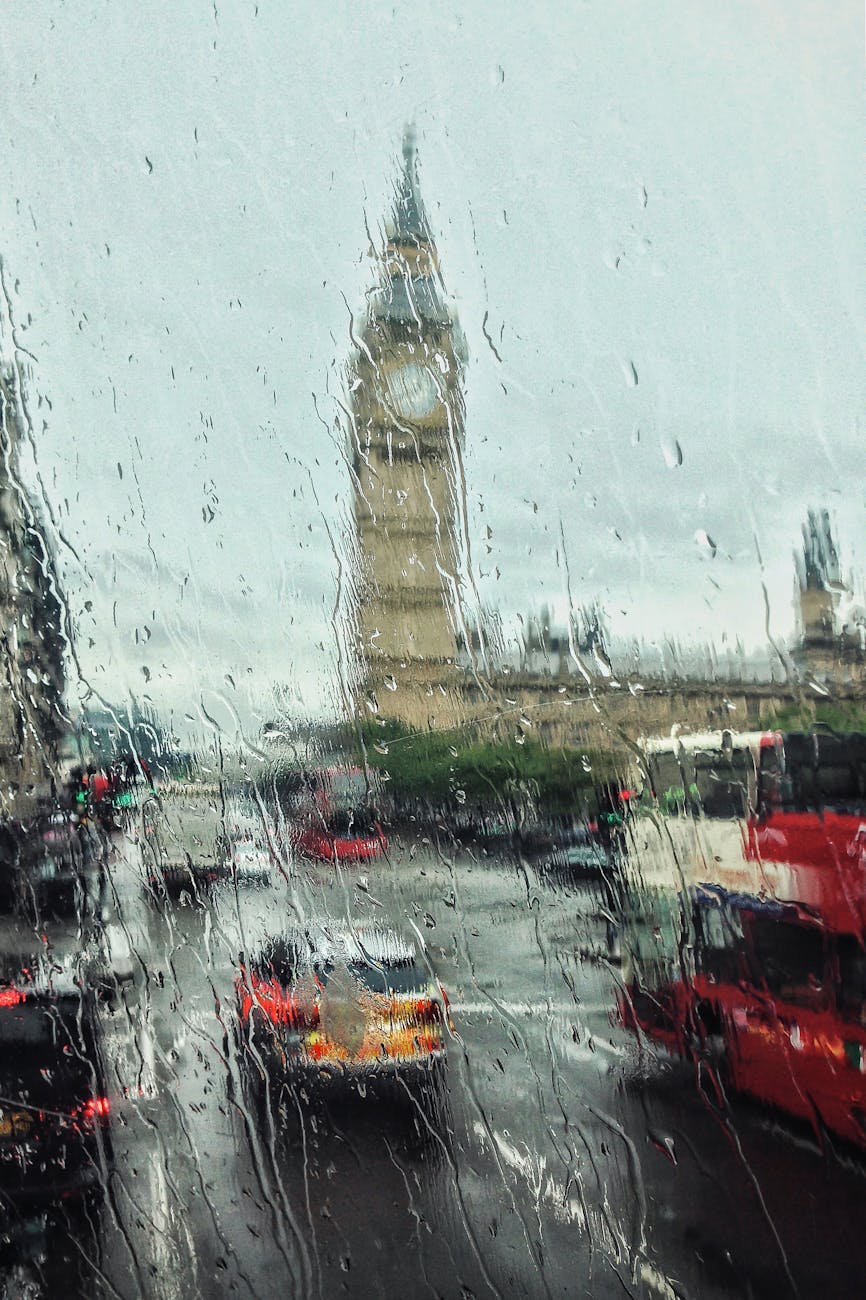
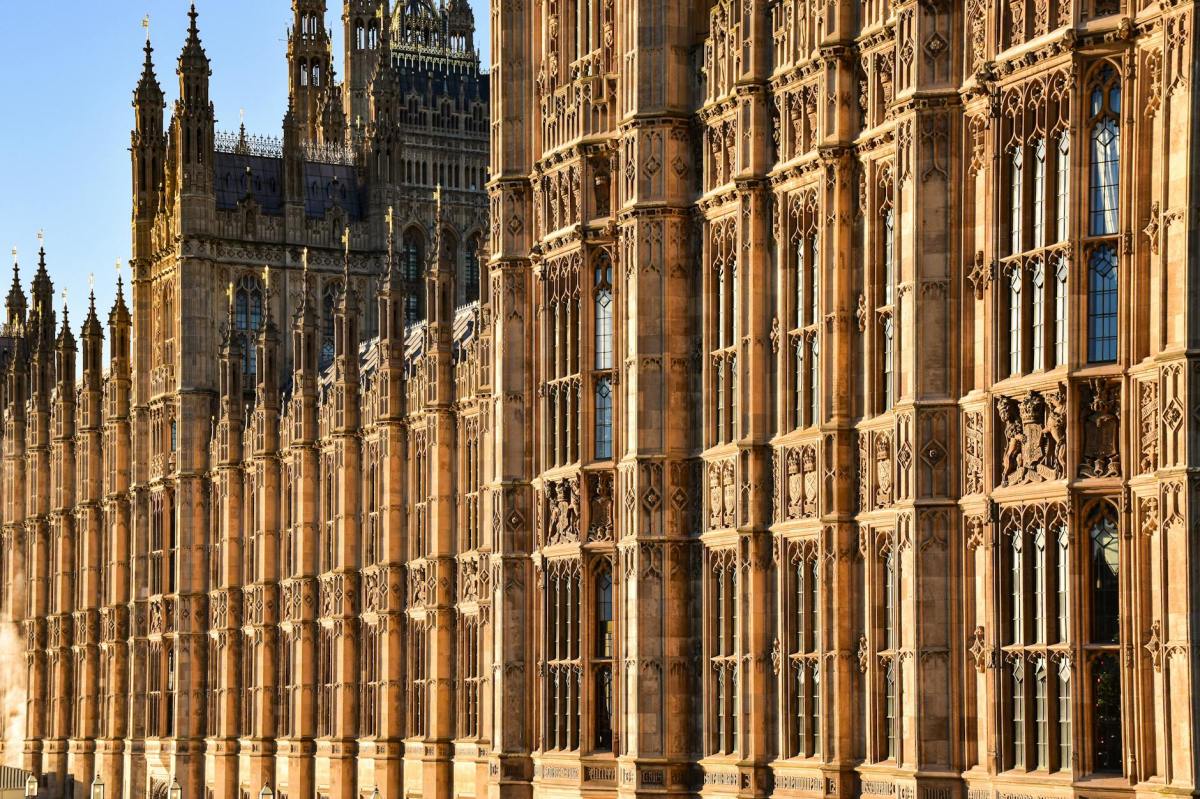
I wouldn’t for one moment propose that the palace of Westminster be demolished. It’s an iconic landmark. No, my point is that the building is entirely ill-suited to be a 21st century parliament building. What served well in the Victorian period now restraints and stultifies its occupants.

Across the great river Thames is another iconic building, London’s Country Hall. That’s no longer an important seat of local government. Throughout the country there are hundreds of former Town Halls, now put to other uses. Lots of listed buildings that are rightly preserved as part of our unique British heritage.

I’m reacting to the News story about the cost of repairs to the Houses of Parliament. Possibly six-decades of work at the cost of tens of billions of pounds. Parliamentarians, who may never see the work finished, will need to decide on different potential courses of action.

Let’s be clear. Six-decades ahead takes us to the year 2086. Those at school now will, they hope, be retired as the final lick of paint is applied. Not only that but who on earth can realistically predict the final cost to the taxpayer of such a never-ending project?

This brings home what real long-term planning is all about. Do we adopt a myopic vision based on sentimentality and stick with the existing palace of Westminster or take a different approach.

Buildings, their structure and form, do shape the way we behave. What would be the point of celebrated architecture if such was irrelevant to the human experience. This has been understood in both Germany and Australia.

British architect Norman Foster’s reconstruction of the Reichstag in Berlin[1], finished in 1999, transformed a 19th-century building into a modern, transparent seat of democracy.

The architecture of Parliament House[2] in Canberra is well worth a tour. To be able to walk over the hill, and on top of the building is a profound statement that suites Australians so well.

My view is that an ambitious nation would look at the next sixty years as an opportunity to forge an identity suited to the future not the past.

So, British Parliamentarians move out of Westminster and look for another solution.

The great River Thames is part of our national story in a way that other rivers are not. The River Severn may be longer, not by a lot, but it doesn’t have the navigation that made the Thames and the city of London so pivotal in our national story. What other locations on the River Thames would fit the bill? Likely more central but remaining well connected. My suggestion might shock some people and create an instant rejection.

Our national story is one of roads, rivers, canals and railways. Moving inland along the path of the River Thames, a fast efficient railway service leads to a large town, not yet a city. The ruins of Reading Abbey, founded by King Henry I in 1121 “for the salvation of my soul,” reminds me that a sense of continuity has its place. That’s apt. For the salvation of the souls of our elected representatives, why not choose Reading.

I’m not saying the famous Reading Gaol[3] could be repurposed. Anyway, it’s been sold. But there are numerous sites in that town where a new parliament building would shine a beacon of hope.


[1] https://www.fosterandpartners.com/projects/reichstag-new-german-parliament

[2] https://www.aph.gov.au/Visit_Parliament

[3] https://en.wikipedia.org/wiki/The_Ballad_of_Reading_Gaol

Mutuality in Aviation Safety

Back to the benefits of mutuality. That idea of working together for a common goal. It may seem bazar but instead I will start with the downsides of mutuality.

Parties who are in conflict often like to deny interdependency. It’s that instinctive feeling that we can go it alone. Highlighting that working with others turns out to be complicated, calculating and compromising. Surely much better to be that lone High Plains Drifter who lives day to day.

In the aircraft airworthiness discipline, I saw this happening during the lengthy process of the international harmonisation of technical requirements that took shape in the 1990s.

It’s not easy to say but a substantial number of aviation rules and regulations that are applied are written in blood. Ever since the first aircraft took to the skies there has been incidents and accidents. Each one presents an opportunity to gain experience. Tragic though they maybe, if there’s a positive outcome, it’s that measures are put in place to try to prevent similar occurrences happening again. This doesn’t aways work but it works often enough to make it the intelligent way forward. When that learning doesn’t take place, the result is condemnation and outcry[1].

So, imagine a situation where Party A has a rule that comes from a tragic aviation event and Party B does not have that rule, or see the need for that rule. Equally, where Party A is eliminating a rule that Party B views as a judicious measure for managing aviation safety risk.

Clearly, where safety is the goal, the harmonisation of technical requirements is not a trivial matter. Disagreements can put stress on relationship. It can from time-to-time cause people to walk off the playing field. To use an expression that became real at the 2025 Africa Cup of Nations football final. When the application of international rules doesn’t go the way people would like the results can be testing.

What I’m alluding to here is the early days of the technical harmonisation work that was done within what was then called the Joint Aviation Authorities (JAA) in Europe. And how that work interleaved with the work that was done to harmonise rules across the North Atlantic.

People did indeed walk off the playing field. One or two of them became ardent anti-Europeans. Maybe it was easier for younger technical staff to accommodate change. Nevertheless, each step that was taken to change or eliminate additional national technical requirements created tension. Maintaining sight of the greater goal of mutual benefit was demanding work. In fact, technical harmonisation is demanding work and always will be as such.

Across boundaries circumstances differ. My analogy is that of saying that it is no surprise that the Netherlands maybe concerned about bird strikes and overwater helicopter operations. At the same time Switzerland maybe more concerned about mountain waves and high-altitude helicopter operations. Each concern needs to be met. Priorities may vary.

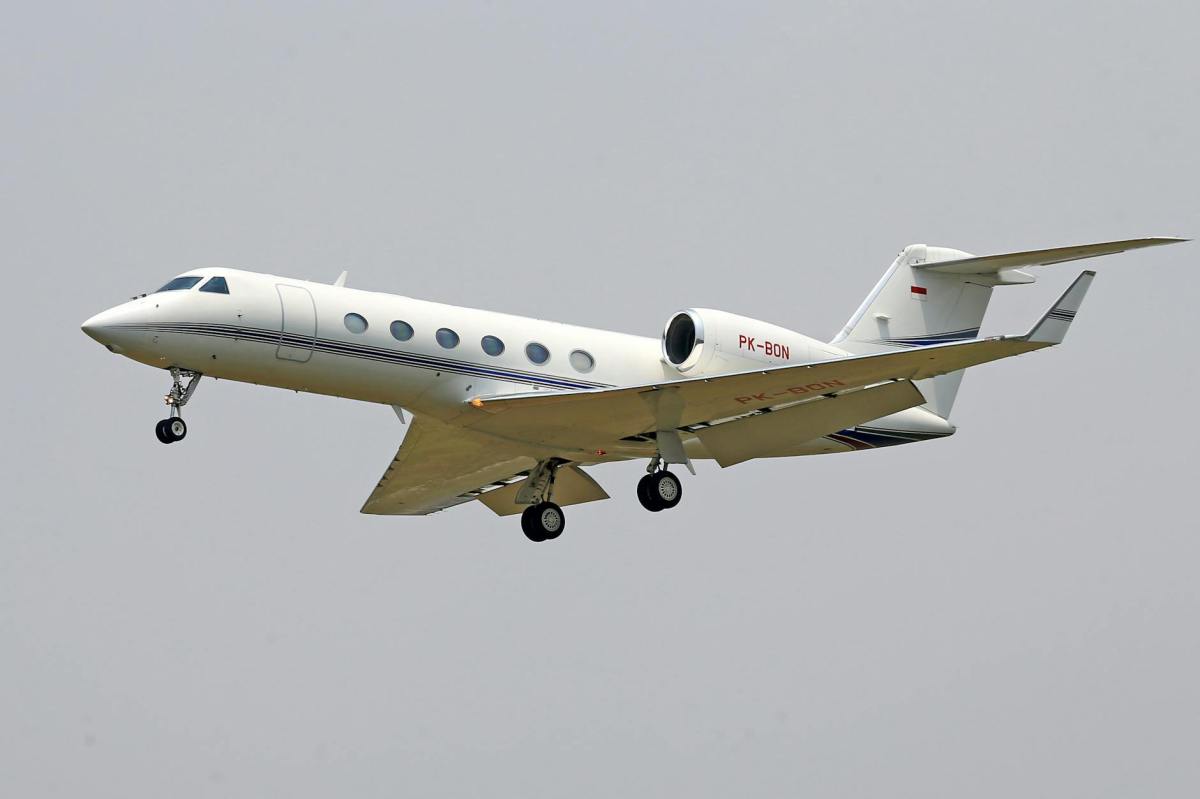
Recent headlines saying: “Trump Says He Is ‘Decertifying’ Bombardier Aircraft In US[2]” has a sour ring about it. Political pressure should not be the driver of aviation safety technical rules. It’s perfectly reasonable for aviation entities to compete aggressively in the commercial world. It’s idiocy to compete on aviation safety grounds. This is not new learning. This has been the case for at least the last half a century.

POST: A view Gulfstream Confirms Delay over Canadian Type Certification of Business Jets | Aviation International News


[1] https://www.ntsb.gov/news/press-releases/Pages/NR20260127.aspx

[2] https://aviationweek.com/business-aviation/aircraft-propulsion/trump-says-he-decertifying-bombardier-aircraft-us

Gardens and a mighty river

Let’s mix three interests of mine. It’s Monty Don[1] I must thank for this one. He’s recently been seen in a series that tours the Rhine searching out gardens of interest. His travels along the mighty Rhine in Germany brough him to a couple of places that I’m familiar with even though he left out one or two that are dear to me.

The three interests are travel, politics and gardening. A TV presenters’ job is a nice one to have when it opens the world to others. Glimpses of fascinating places and gripping stories.

Often over a weekend, by car or train, I’d explore the Rhine River between Cologne and Koblenz. In Cologne the river valley is wide, spreading leisurely over kilometres. In Koblenz it’s narrow with step sides dotted with vines clinging onto the rocks. The river’s dramatic landscapes have an identity that’s special.

Shame that Monty Don didn’t stop in Cologne, but I can imagine that there was a lot to squeeze into the time they had allotted for filming. He did stop in Bonn and started to tell the story of the modern history of that region. Bonn being the capital city of former West Germany.

Rhöndorf, Konrad Adenauer’s house and garden sit in stunning scenery overlooking the river[2]. It’s a place to visit for those with an interest in modern history, political life and the relaxation of gardening. Monty Don took the time to stroll around and talk about the roses and the drama of the life of Germany’s first chancellor after the war.

Further down stream Cologne was bypassed for a stop at the former industrial heartland of steel and coal. My advice to Monty Don would have been don’t miss the Botanical garden in Cologne[3]. This is a lush green and open space in the city that I often walked and stopped for a coffee. It’s easy to get to by tram being right next to the Zoo in the North of the city.

In the early spring the camellias are stunning[4]. It’s such a great experience for lifting one’s spirits after a dull wet winter. Go to the Botanical garden are revel in the bright colours.

The gardens are a mix of French, Italian and English influences. A quick reminder of the ebbing and flowing of influences that have swept the Rhine lands over the centuries. Don’t miss it.


[1] https://www.bbc.co.uk/programmes/m002px5m

[2] https://adenauerhaus.de/en/visit/rhoendorf

[3] https://www.cologne-tourism.com/arts-culture/sights/detail/flora-and-botanical-garden-cologne

[4] https://internationalcamellia.org/en-us/europe-gardens-of-excellence/flora-cologne-botanic-garden

Strengthening Partnerships

Is it time for a new European alliance? The sands seem to be shifting as geopolitics suffers the rumbles of a communal earthquake. It’s a time for those who share similar values to come together. An alliance of people’s who believe in liberty, rule of law and self-determination. However our world might be viewed it’s a place where it’s surely better to be part of a bigger community than it is to stand alone. Power can be dangerous in the hands of a few.

Now, I know that nationalist and separatist voices can be loud and often superficially appealing. Absolute autonomy, if there is such a thing, does mean fragmenting partnerships and breaking-up communities that work well together. Long term stability is accrued by working with others.

I live in a complex place called the United Kingdom (UK). It’s not one kingdom but several. Yesterday morning, I stood at the bases of a statue that remembers ancient times and a pivotal moment in a gathering of unity. Having grown up in Wessex, I’m acquainted with this monarch given the number of places where his name is elevated.

King Alfred the Great was born in 849, in the town of Wantage. No, that’s not the mythical King Aurthur. Alfred was an able leader whose legacy warrants the word “Great”. He drove off troublesome Viking invaders and unified part of Anglo Saxon England. You bet there were probably dissenters who predicted that a novel kingdom could never work.

Viking invaders made their mark everywhere they went. They had mastery of the seas and a stubborn determination to explore and exploit without bounds. I guess, in England even now there’s a little bit of them in all of us. The brutish aspects of Viking society were their downfall. Smarter, more educated and learned leaders, like Alfred outwitted them in the end.

Culturally, Greenland is European. I’d go as far to say so is a major proportion of western Canada. The people who inhabit that large icy island are the ancestors of the Vikings.  

The US has rightly recognised the need to strengthening Greenland’s security. Without doubt the best way to do that is via a reliable long-term partnership.

When the Vikings conquered a land, they forced its inhabitants to pay the Danegeld. To fight them King Alfred demanded service and taxes from landowners. You might say throughout history there’s no escaping death and taxes.

If Greenland is a mineral-rich territory, as is reputed, then it seems logical that some of that wealth be spent on security and defence. This matter doesn’t require the US to control Greenland. It does require the US and Europe to agree ways and means and work together.

It’s a massive counterproductive proposal to punish countries who disagree with a US take-over. Whacking tariffs on close partners is a way of making new conflicts and not boosting common interests. If the threat to this island territory is posed by Russia and China, then they must be quietly smiling.

Now, I know that nationalist and isolationist voices don’t see common security interests the way multilateralists do. Agreements need to be made in the frame of – what’s in it for me. It’s not just Greenland that needs a North Atlantic alliance to work, it’s all of us. The capacity to defend US and European interests in the Arctic is best served working in partnership.

Aside: I’ve never stepped on Greenland’s soil but have flown over it many times. The North Atlantic tracks that divide up the airspace run over both ocean and the tip of Greenland. Views from an aircraft window are of a vast wilderness.

Evolution of

Looking at the weird and wonderful picture of an unlikely lump of materials with wires hanging off, it’s easy to dismiss. A laboratory experiment that drew together theory and practice to produce a brand-new electrical device. Not something that occurred in nature. Even though its behaviour is of that of materials in nature.

Certainly, the implications of this experiment could not have been fully understood at the time. That said, progress to industrialise this new device was rapid. By the time of 1956, the “inventors” were awarded a Nobel Prize in Physics. In 1947, the transistor, was a fruitful combination of science and practical thinking in a laboratory where that was encouraged.

Bell Laboratories, given its history was a logical place for arguably the most important modern invention to be first put together. Arguing over “most important” there are several matters to consider. For one, how universal, how ubiquitous would this humble device become? Would it have a dramatic impact of everyday life for decades after its invention? Would it change every aspect of human organisation? Would its design, development and production become essential to the world? The simple answer – yes.

My first encounter with the germanium transistor was as a boy in the 1970s. Stripping them out of junked radios and record player amplifiers. Building simple circuits. PNP germanium junction transistors were tiny tin cans with three colour coded leads. With a soldering iron and a primitive breadboard there were plenty of designs in popular magazines to copy. Now, this is considered as vintage technology since germanium has long given way to silicon.

The clock, the radio, the bathroom scales, my shaver, my toothbrush, even in my bathroom every appliance contains circuits that are transistor based. It would be possible to live without some of these items, or at least substitute them with the mechanical versions, but that’s only for eccentrics, museums and heritage houses.

In 1947, the prototype transistor was on a bench being studied. It came along too late to play a part in the huge leap forward technology made during World War II. What became apparent is that the technology that had been developed using thermionic valves was convertible into a transistor-based versions. Size shrank and performance improved dramatically.

What’s my message? It’s another way of looking at so called artificial intelligence. Technology doesn’t come out of the blue. It doesn’t plot new pathways in the first years of its invention. It often takes things we already do and speeds them up or makes them cheaper or makes them more lethal.

We create another stepping stone upon which further developments can take place. So, maybe there is a South Sea Bubble about to burst. Much of the frantic investment that has taken place assumes that artificial intelligence is of itself a wonder. Let’s say it isn’t. The wonder is what it will allow us to do. Much of that side of the coin is a massive unknown. Much as the three who invented the solid-state transistor could not have envisaged tens of millions of them stuffed inside every computer chip on the planet.

Vintage germanium components are sough after by specialists. Apparently, audio amplifiers sound better to those who are sensitive to certain musical tones. Artificial intelligence has a proliferation of applications. A lot are gimmicks. Some are extremely serious.

POST: It’s often the boring stuff that can best be improved rapidly, note: One real reason AI isn’t delivering: Meatbags in manglement • The Register

Dynamics of Change

This theory of mine may have been voiced before. It’s a way of looking at the momentum behind progressiveness but with a reminder of the realities of the difficulties of change. Any progressive movement implies change. That change may not always be comfortable.

Ever looked at the teeth of a wood saw. There are a variety of geometries[1]. The overall purpose is the same regardless of the shape and size. Different materials too. A typical saw is unidirectional. Push in one direction to make a cut and withdraw to prepare for the next one.

Then look at our world of ever-increasing data. Piles of accumulated numbers. For the most part, as simple creatures, we plot “x” against “y” to get an image of how one parameter is related to another. In the real world, there’s a lot more axis and dimensions. More than a head full.

On one axis I could put that nebulous parameter “progress”. The horizontal axis, as it often is, that unidirectional human experience of time. So, “x” equals time, as the years clock by, and “y” equals a measure of human “progress”.

What do I plot on blank graph paper? Take the shadow of the saw tooth at an incline and arrange it so that it rises with time. Remember to get it the way round that suggest that the saw is being used. Depending upon the rate of the incline and the rake of the saw tooth, we go forward with time and then stop or reverse a small amount. However, the overall direction is always to climb. This is better drawn than written. 

How does this illustrate the mythical quality of human progress? Being a fan of both disproportionate relationships and pareto[2], I accept that things move at different rates subject to different stimulus. Sometimes fast with only a tiny push. Sometimes slow even with a massive amount of force applied.

Take, for example, the technical progress that was made, driven by the necessities of war, in the 1940s. Aeroplanes went from relatively crude flying machines and esoteric racers to incredibly capable craft that came to dominate the skies.

Now, take social progress at improving housing conditions in our country, over the last couple of decades, and the speed of improvement has been remarkably disappointing, to say the least. Pathetic would be a better description.

Progress, or lack of it, has a vast number of different characteristics. However, the main one that either delights us or troubles us is speed. The speed by which things change for the better. Swiftness of advance, or setback after setback and even moments of reversal. Just like a saw tooth. Great strides are made. Then difficult periods and reversals occur. It’s predicable what I’m going to write next. The western world is in one of those moments of ambition but backsliding and sluggish progress. Negativity abounds.

Is perspicacity the right word to use for my theory.? It’s crude. On the upside there’s an underlying positivity described in my simple model. Don’t look to the setbacks and stupidities of the day, look to the longer run “progress” that is in prospect. And help make it happen.


[1] https://www.blackburntools.com/articles/saw-tooth-geometry/index.html

[2] https://betterexplained.com/articles/understanding-the-pareto-principle-the-8020-rule/

Safety Differences

Are the safety standards for all large aeroplanes the same? No, they are not. I’m never sure if the public naively expect this to be the case. I’m sure it’s not something that goes through the mind of every air traveller. Looking up at an aeroplane, flying overhead, this is not a thought that instantly comes to mind. Even watching them take-off and land at a busy airport.

A large aeroplane is a large aeroplane – surely. Well, not exactly. Several issue come into play when addressing the safety standards for large civil transport aeroplanes. For example, when did the type of aeroplane first go into service? What is it being used for? Where is it flying to? How many people are on-board?

One place to start with any discussion on this subject is with the basics. For a start an aeroplane is heavier than air and its power driven. Immediately, two important factors pop out of that definition. One: weight counts. Two: operating engine(s) are needed.

Almost lost in the mists of time are the reasons for dividing the world of transport aeroplanes into two categories. Simply called – large and small.

Underlying this basic categorisation is an historic assumption. This is an assumption upon which civil aviation safety regulation has been built. Namely, that efforts need to be made to ensure large aeroplanes are safer than small aeroplanes. One way of looking at this is to consider a spectrum of risk, and several parameters of concern.

Let’s start with the question above – what is it being used for? A transport aeroplane can be used to carry cargo or passengers, often both. The number of crew and passengers carried can range from 1 to 850[1]. In fact, for large aeroplanes, there’s no upper limit written into international standards. However, the term “very large aeroplane” is coined for the upper end of weight or passenger numbers carried. Sadly, the very largest of these very large aeroplanes (cargo), the Antonov An-225 Mriya, was destroyed by war.

Although, a matter of primary concern is the number of passengers carried, and therefore at risk in the event of an incident or accident, the main dividing line in the regulatory landscape between large and small aeroplanes is weight.

To some extent this has a foundation. It could be viewed that in the event of an incident or accident any resulting impact will be more severe the greater the weight of the aeroplane. This is where a parameter called the MTOW, or Maximum Take-off Weight, comes in. This number includes the total weight of an aeroplane, crew, fuel, passengers, and cargo.

Today, we divide the world of large and small aeroplanes based on MTOW. Yes, the maximum number of passengers that can be carried comes into the equation too. The question I have is, should that be the number one consideration?


[1] https://www.airwaysmag.com/legacy-posts/top-10-largest-passenger-aircraft

Public Broadcasting Value

It seems to be the season to have a downer on the BBC. As the gloomy light of winter gathers all around. The trees are shedding their leaves and that hunkering down mentality is invading my thoughts. Lawns no longer need mowing. Soden with moss and leaf fall.

I understand the dislike that partisan commercial broadcasters have for publicly funded broadcasters. The question of a “level playing field” and “bias” is always likely to come up.

Making a living from commercial advertising is highly competitive. Demands never stop. Seeking income from a marketplace that rises and falls with fashion and fad. That’s hard. Admittedly, there’s the compensating factor of wealthy benefactors or owners, prepared to make a loss, pumping funds into like minded companies. Shifting sands of political influence.

So, looking across the aisle at a major broadcaster that gets funds from the public, as a matter of law, must seem rather disconcerting. Certainly, it’s the sort of issue the wealthy benefactors or owners of media are going to kick at. Some to the extent of wanting to destroy chartered institutions with an ethos unlike their own.

What is a “level playing field” in the British media landscape? Can there ever be such a thing? That’s not an easy question to address. Shifting sands of public likes and dislikes shape the playing field (sorry about the metaphor overload). What might have been considered as independent, objective and neutral in the 1990s is way different from that now, 30-years on.

The British media landscape is not static, nor should it be so. In the period of three decades digital communication has advances at lightning speed. The sheer diversity of channels of communication has multiplied (even if they do repeat the same messages).

One sign of a healthy debate is the self-flagellation that the BBC often undergoes. As an institution, doesn’t it like to agonise about itself. With good reason considering some of the grave errors it’s made in the past. Supporting presenters whose behaviours have been found to be appallingly bad, and even criminal.

Let’s not tar everyone with the same brush. To be able to make mistakes and then correct them, with a good degree of learning in-between, is a strength. Some partisan commercial broadcasters seem unable to do this with any conviction. They just move on.

A publicly accountable broadcaster has no choice but to stand in the dock and take a reprimand, when appropriate. That’s no reason to shut it down. It’s a reason to make sure lessons are learned and not forgotten.

Doing a simple intuitive cost-benefit analysis. Taking the BBC as an example. What it offers, when it works well, far outweighs the costs. Listing three points, these have significant value: unifying impact of having a trusted national broadcaster, quality, broad base and originality of its output and editorial independence (not selling products or ideology).

Overseas critics may get upset, now and then, but that’s for them to get over. There’s no way such critics should shape the future of the broadcast media in Britain. That would be untenable.

Exploring Airworthiness Knowledge

How many good books are there on aircraft airworthiness? I don’t suppose a lot of people are going to ask that question. General introductions to airworthiness are not necessarily bedtime reading. This thought came to my mind, this week, because I had some time to kill in a library. A particularly technical library in London[1]. It’s at the Institute of Engineering and Technology (IET).

Sited in a grand building on the banks of the River Thames. Savoy Place, as the name suggests, is next door to the famous hotel of the same name. What marks it out is a large statue, not of some long-forgotten stage actor or army general, but that of Michael Faraday[2]. His contribution to the modern world is enduring and undeniable.

I’ve been a member of this august engineering institute since my student days in the early 1980s. Then it was known as the IEE. One “E” being for Electrical. Our lectures encouraged us students to join and once done so they have us for life. Members worldwide have access to their books, databases and standards.

I could draw a thread between Faraday’s work and 21st century aviation. It’s a mighty wide thread and one that’s growing all the time. There are so many aspects of electromagnetism embedded in aviation. For example, without electric motors and servos, we’d still be controlling aircraft with strings and wires. Fine, hydraulics play their part too.

Technology has moved on. It continues to move. Electrification is displacing hydromechanical systems. The age of electric propulsion is getting closer as developers experiment with a myriad of different configurations of motors for different new aircraft types. More and more electrical power is needed to make modern aircraft tick.

In the IET’s library there are a few books with the word “airworthiness” on the cover. It’s a distinct niche. More often technical references contain huge amounts of material that concern or impact airworthiness, but the word itself is reserved for the more discerning.

One I picked off the shelf was “Airworthiness: An Introduction to Aircraft Certification and Operations” by Filippo De Florio[3]”. For me it’s full of familiar material. I was surprised at the level of detail and range of coverage. In its latest version, it’s reasonably up-to-date too.

One book that was not on the IET’s shelf is “Initial Airworthiness: Determining the Acceptability of New Airborne Systems” by Professor Guy Gratton. I believe he’s updating this book now.

There was a copy of “Aircraft System Safety: Assessments for Initial Airworthiness Certification” by Duane Kritzinger. Again, for me it’s full of familiar material.

Another book that was not on the IET’s shelf is “Aircraft Continuing Airworthiness Management: A Practical Guide for Continuing Airworthiness Engineers” by Daniel Olufisan.

What I’m wondering now is how many other contemporary books are there on this subject. That is up-to-date references. Yes, I know I could do a quick search to turn up an easy answer but that tells me nothing of the quality of the publications. All four above are worth a read.

Help me out with some suggestions – please.


[1] https://www.theiet.org/membership/library-and-archives

[2] https://www.faraday.cam.ac.uk/about/michael-faraday/

[3] https://www.amazon.co.uk/Airworthiness-Introduction-Aircraft-Certification-Operations/dp/0081008880